by in News

CGES Secures €15 Million Investment to Upgrade Tri-Nation Power Infrastructure in the Western Balkans

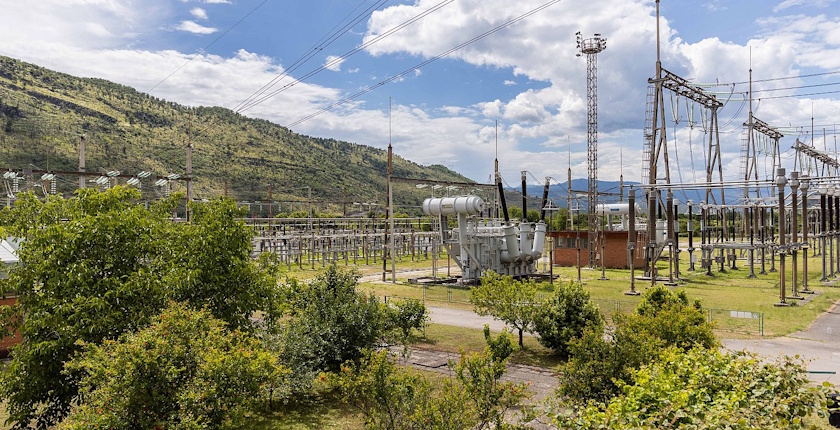
Crnogorski Elektroprenosni Sistem (CGES), Montenegro’s national transmission system operator, has successfully secured a €15 million loan to finance the modernization of the 220-kilovolt (kV) power line connecting Montenegro, Bosnia and Herzegovina, and Albania.

This strategic initiative is designed to enhance the efficiency and reliability of Montenegro’s domestic electricity transmission network while simultaneously fortifying cross-border energy connectivity throughout the Western Balkans. According to CGES, the project represents a critical step toward the broader regional integration of power systems.

The financial agreement was formally signed by CGES Chief Executive Officer Ivan Asanović, European Bank for Reconstruction and Development (EBRD) Vice President Mark Bowman, and Montenegrin Minister of Finance Novica Vuković. The Ministry of Finance backed the initiative by issuing a state guarantee, underscoring the government’s steadfast commitment to supporting strategic investments that bolster both national infrastructure and regional connectivity.

Detailing the technical improvements, CEO Ivan Asanović noted that the modernization project will effectively double the transmission line’s current capacity from 300 megawatts (MW) to approximately 600 MW. He characterized the upgrade as a foundational investment in a secure, stable, and integrated energy future for the region, resulting in a more resilient grid capable of meeting increasing systemic demands and facilitating deeper regional cooperation.

EBRD Vice President Mark Bowman echoed these sentiments, emphasizing that reinforcing transmission networks is essential for securing long-term energy security and regional integration in the Western Balkans. Bowman noted that the project will overhaul vital infrastructure in Montenegro, aligning with the EBRD’s mandate to foster sustainable and resilient infrastructural development.

Looking forward, this project falls under a broader capital expenditure strategy for CGES, which plans to invest a total of €200 million into transmission infrastructure over the next five years.

by in News

GCL Moves Knjaževac Solar Project Forward as Serbia’s Large-Scale PV Pipeline Expands

Chinese energy group GCL has advanced its plans for the Knjaževac solar power plant, a major photovoltaic project proposed for eastern Serbia and among the country’s largest developments currently in the pipeline.

The Municipal Council of Knjaževac has launched the process to draft a detailed regulation plan for the facility. A public consultation on the draft decision was held from February 3 to 5. Once the decision to prepare the plan is formally adopted, authorities will open a second public discussion lasting 15 days.

According to the draft decision, the initiative was filed by the prospective investor, Central Europe Energy Company, a Belgrade-registered entity. The company is 90% owned by China’s GCL Intelligent Energy (Suzhou), with the remaining 10% held by Central Europe Consulting Company, also based in Belgrade.

The project has already cleared an important grid-related milestone. In May 2025, Central Europe Energy Company signed a grid connection agreement with Serbia’s transmission system operator, Elektromreža Srbije (EMS). The signing was part of a broader package of 11 renewable energy projects contracted by EMS at the time. EMS said that, among nine solar projects included in that round, the Knjaževac photovoltaic plant carried the highest proposed capacity at 136 MW.

Municipality head Milan Đokić described the development as the largest investment in Knjaževac’s history, estimating its value at EUR 200 million, as reported by local outlet Knjaževačke Novine.

Planning documentation will cover roughly 267 hectares, spanning parts of the cadastral municipalities of Krenta, Ponor, Mučibaba, and Miljkovac within the municipality of Knjaževac. The preparation deadline for the detailed regulation plan is set at 12 months, and the decision also предусматривает a strategic environmental assessment.

Serbia’s solar market is growing from a relatively low base. The country’s largest operating solar park is currently the 27 MW facility installed by Nofar Energy, while the biggest project by planned capacity is CWP Europe’s 150 MW Solarina development.

GCL is active across most continents, with a core business centered on solar module and energy storage battery manufacturing, alongside the development of low-carbon energy solutions.

by in News

Montenegro’s TSO CGES to invest EUR 200 million

Montenegrin transmission system operator Crnogorski Elektroprenosni Sistem plans to invest EUR 200 million over the next five years, according to Ranko Redžić, manager of the company’s national dispatching center.

CGES is constantly improving and modernizing the system, as well as training employees, MINA reported.

According to Ranko Redžić, this yields results. One of them is a very low transmission system loss rate, which ranges from 1.6% to 1.7%, in line with the most efficient European systems, he added.

The most significant capital projects the company completed last year include the reconstruction of the Pljevlja 1 substation and the construction of the 150-kilometer Lastva-Pljevlja transmission line, which is expected to become operational soon.

The power line completes a 400 kV ring that will significantly improve the operational security of both the Montenegrin and neighboring transmission systems, Redžić stressed.

The completion of two 110 kV transmission lines in the north – Brezna-Žabljak and Žabljak-Pljevlja – is also planned

The completion of the project also creates conditions for connecting a significant number of renewable energy power plants, he explained.

Among the major projects is the upgrade of Lastva substation, which resolves the problem of excessively high voltages in the Montenegrin system. The issue is evident throughout the region.

The upgraded substation is expected to be put into operation by the end of January.

Redžić estimated that the total value of investments over the next five years will exceed EUR 200 million.

Among the upcoming projects, there is the completion of two 110 kV transmission lines in the north – Brezna-Žabljak and Žabljak-Pljevlja. CGES also intends to install the 400 kV Brezna substation, which would also enable the connection of significant renewable energy capacity.

The 400 kV link with Serbia would complete the Trans-Balkan Corridor

The reconstruction of the 220 kV transmission line from Bosnia and Herzegovina through Montenegro to Albania is also planned, along with the reconstruction of the substation at the Perućica hydropower plant and the replacement of transformers at Pljevlja 2 substation.

The upcoming construction of a 400 kV interconnection with Serbia, completing the Trans-Balkan Corridor, would create the conditions for a second line of the submarine cable between Montenegro and Italy, Redžić underscored.

The onshore transmission line would allow the installation of a number of new substations, enabling the connection of additional consumers and renewable electricity plants to the distribution network.

Redžić stressed that the expected date for coupling the Montenegrin and Italian electricity markets is the beginning of 2028.

by in News

Montenegro’s TSO CGES to invest EUR 200 million

Montenegrin transmission system operator Crnogorski Elektroprenosni Sistem plans to invest EUR 200 million over the next five years, according to Ranko Redžić, manager of the company’s national dispatching center.

CGES is constantly improving and modernizing the system, as well as training employees, MINA reported.

According to Ranko Redžić, this yields results. One of them is a very low transmission system loss rate, which ranges from 1.6% to 1.7%, in line with the most efficient European systems, he added.

The most significant capital projects the company completed last year include the reconstruction of the Pljevlja 1 substation and the construction of the 150-kilometer Lastva-Pljevlja transmission line, which is expected to become operational soon.

The power line completes a 400 kV ring that will significantly improve the operational security of both the Montenegrin and neighboring transmission systems, Redžić stressed.

The completion of two 110 kV transmission lines in the north – Brezna-Žabljak and Žabljak-Pljevlja – is also planned

The completion of the project also creates conditions for connecting a significant number of renewable energy power plants, he explained.

Among the major projects is the upgrade of Lastva substation, which resolves the problem of excessively high voltages in the Montenegrin system. The issue is evident throughout the region.

The upgraded substation is expected to be put into operation by the end of January.

Redžić estimated that the total value of investments over the next five years will exceed EUR 200 million.

Among the upcoming projects, there is the completion of two 110 kV transmission lines in the north – Brezna-Žabljak and Žabljak-Pljevlja. CGES also intends to install the 400 kV Brezna substation, which would also enable the connection of significant renewable energy capacity.

The 400 kV link with Serbia would complete the Trans-Balkan Corridor

The reconstruction of the 220 kV transmission line from Bosnia and Herzegovina through Montenegro to Albania is also planned, along with the reconstruction of the substation at the Perućica hydropower plant and the replacement of transformers at Pljevlja 2 substation.

The upcoming construction of a 400 kV interconnection with Serbia, completing the Trans-Balkan Corridor, would create the conditions for a second line of the submarine cable between Montenegro and Italy, Redžić underscored.

The onshore transmission line would allow the installation of a number of new substations, enabling the connection of additional consumers and renewable electricity plants to the distribution network.

Redžić stressed that the expected date for coupling the Montenegrin and Italian electricity markets is the beginning of 2028.

by in News

New round of talks between Montenegro and Masdar on strategic partnership

Representatives of the Government of Montenegro and Masdar discussed potential joint projects in the energy sector. The focus of the meeting was on solar energy, energy storage, and hydropower.

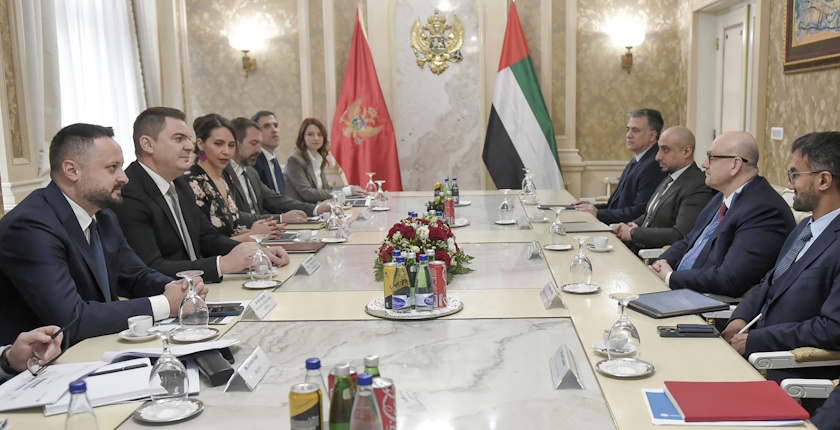
Minister of Energy and Mining of Montenegro Admir Šahmanović and the Minister of Public Works Majda Adžović met today at Villa Gorica in Montenegro’s capital Podgorica with Masdar CEO Mohamed Jameel Al Ramahi and his team.

It was the second meeting between Al Ramahi and Šahmanović in a short period. They met in early September.

The discussions now continued on top priority projects for the Government of Montenegro, ones that could be of mutual interest, according to the Ministry of Energy and Mining.

Priority should be given to projects that are the most technically advanced

Discussions will be intensified to define collaboration models, potential investments, and the selection of first projects to be implemented, the update reads.

Solar projects, including for floating solar power plants, alongside battery energy storage systems (BESS) and hydropower plants, have been identified as segments of special interest. These are also the areas where Masdar has significant engineering and technical experience, the ministry said.

montenegro masdar sahmanovic
Al Ramahi and Šahmanović (photo: Government of Montenegro/Saša Matić)

The two sides agreed to focus on projects that are the most technically advanced, environmentally sustainable, and aligned with the development of the power grid, to ensure their sustainable and efficient implementation.

Šahmanović: Montenegro’s strategic and long-term goal is to establish itself as a reliable and competitive player in the European energy market

Minister Šahmanović pointed out that the country’s strategic and long-term goal is to establish itself as a reliable and competitive player in the European energy market. He underscored that the development of energy infrastructure and renewable energy sources are among the government’s key priorities.

Officials participating in the meeting praised the planned construction of a second submarine cable line with Italy. It is an extremely wise and strategic investment that ensures Montenegro a stronger and more stable position in the European electricity market, they added.
Montenegro’s vision as an energy hub is fully aligned with the government’s development plans, Šahmanović stressed.

Minister of Public Works Majda Adžović highlighted the extensive experience of the United Arab Emirates in energy and infrastructure development in the public sector. It is of great importance for Montenegro’s activities in increasing renewable energy capacities, she added.

Masdar’s expert teams will continue technical talks with the management of EPCG and CGES

Masdar’s representatives have expressed readiness to continue technical discussions with the management of power utility Elektroprivreda Crne Gore (EPCG) and transmission system operator (TSO) Crnogorski Elektroprenosni Sistem (CGES).

The company’s expert teams will aim to identify priority and mature projects for joint implementation, the ministry said.

EPCG’s CEO Zdravko Dragaš and Ivan Mrvaljević, Executive Officer of EPCG’s Directorate for Development and Engineering, pointed out that the development of green energy is the company’s top priority.

A total of 200 MW in renewable energy projects are currently in development, they added.

Ivan Asanović, CEO of CGES, presented projects that are in the final stages of implementation.

by in News

Firms from Croatia, BiH, Serbia to build power line in North Macedonia

Croatia-based Dalekovod, Elnos from Bosnia and Herzegovina, and Serbian Kodar Energomontaža will jointly build electricity transmission infrastructure in North Macedonia.

Dalekovod said it signed a EUR 19.7 million contract with MEPSO, the transmission system operator of North Macedonia, as the lead member of a consortium that includes Elnos BL and Kodar Energomontaža.

The contracted works include the delivery and construction of a 400 kV power line from the 400/110 kV Bitola 2 substation, via the 400/110 kV Ohrid substation, to the North Macedonia – Albania border.

The project ensures long-term stability of the electricity system in the wider region

The new Ohrid substation is currently under construction, with Končar, another Croatian company, as contractor. Končar is the majority shareholder of Dalekovod since 2022.

The Croatian firm pointed out that the new power line in North Macedonia represents a significant infrastructure project ensuring long-term stability of the electricity system in the wider region.

Dalekovod: Strengthening position in the regional and European market

Construction is scheduled for completion by mid-2028.

Of note, all three companies are active on the territory of former Yugoslavia, as well as across Europe and even worldwide. The owners of Elnos and Kodar are individuals from Bosnia and Herzegovina and Serbia, respectively, while the largest shareholders of Dalekovod are the Government of Croatia and three foreign banks operating in the country.

Operations in the region, Europe, Africa

Dalekovod has subsidiaries in six countries, including Namibia. In October, the company concluded a EUR 100 million deal for the construction of a 400 kV power line in Sweden.

Elnos BL is part of Elnos Group based in Banja Luka, Bosnia and Herzegovina. The company, which recently marked a remarkable dual jubilee – 80 years of tradition and 30 years of modern business development, operates in 18 countries.

A week ago, it signed a contract with Power China Construction Group to build a connection to the transmission grid for the 300 MW Vetrozelena wind farm in Serbia.

Kodar Energomontaža, headquartered in Serbia’s capital Belgrade, has carried out numerous projects across Europe – from southeastern Balkans to Scandinavia, as well as in West Africa.

In March, the company inked a deal with Serbia’s transmission system operator Elektromreža Srbije (EMS) for the construction of a two-system 400 kV transmission line, part of the Trans-Balkan Electricity Corridor.

by in News

Slovenia’s TSO ELES joins European Network for Cyber Security

Slovenia’s transmission system operator ELES has joined the European Network for Cyber Security, reinforcing collaborative efforts to protect Europe’s electricity grid from evolving cyber threats.

The partnership will give ELES access to the European Network for Cyber Security’s (ENCS) collaborative threat intelligence, specialist training and technical expertise – strengthening its ability to detect, prevent and respond to cyber incidents targeting high-voltage networks across Slovenia and beyond, ENCS said.

The move comes amid rising pressure on Europe’s grid operators. According to the European Union Agency for Cybersecurity’s ENISA Threat Landscape 2025, operational technology – the backbone of electricity networks – faces an increasing range of cyber threats, with incidents growing in frequency and sophistication.

As nation-state activity intensifies and consumer-connected devices expand the attack surface, coordinated action to protect critical infrastructure has never been more essential, the network underlined.

Nijk: Europe’s power systems are only as strong as their weakest link

Of note, Slovenia started the development in March of a robust cybersecurity framework for the electricity sector, based on an AI system.

“Europe’s power systems are only as strong as their weakest link,” ENCS Managing Director Anjos Nijk stressed.

ELES’s new membership strengthens joint defences and brings valuable regional expertise to the table, he explained. As Slovenia’s grid underpins stability across Central Europe, its participation will help drive the shared strategies and capabilities needed to counter evolving cyber threats, Nijk added.

Rolih: Grid cybersecurity is a team effort

Gorazd Rolih, SOC Manager at ELES, recalled that grid cybersecurity is a team effort.

“Joining ENCS allows us to both contribute to and benefit from Europe-wide collaboration, sharing intelligence, best practices and operational insights that make every member stronger,” he said.

The European Network for Cyber Security is a non-profit membership organisation that brings together critical infrastructure stakeholders and security experts to deploy secure European critical energy grids and infrastructure.

Founded in 2012, ENCS provides cybersecurity solutions and counsel dedicated to the needs of national distribution system operators (DSO), transmission system operators (TSOs) and regulators.

by in News

Serbia eyes last quarter of 2027 for power market coupling with EU – SEEPEX CEO

Serbia is targeting the last quarter of 2027 for coupling with the European Union’s single day-ahead market, Serbian power exchange SEEPEX’s Managing Director Miloš Mladenović said.

Miloš Mladenović was one of the speakers at the Energy Connectivity, Resilience and Security in Southeastern Europe panel at the 14th International Forum on Energy for Sustainable Development in Skopje.

He recalled that a few weeks ago, the European Commission finally published the governance for the verification process regarding the transposition of the Electricity Integration Package (EIP) for market coupling by the contracting parties of the Energy Community.

SEEPEX would try to reduce the required time

Also, he added, it would took up to six months starting from the new year to implement the Market Coupling Operator Integration Plan (MCO IP).

“I think that in the middle of next year, we can start with this famous 18 months, which is regular time to implement the single day-ahead coupling (SDAC),” Mladenović stressed.

He underlined that within the extended ADEX family, with EPEX Spot and the transmission system operators (TSOs), which are shareholders, they would try to reduce the required time at the market coupling steering committee.

“Our common goal now is to try to catch this time slot, the last quarter of 2027,” he stated.

Mladenović noted that it is usual to use the first quarter of a year for the single day-ahead coupling (SDAC), and the last quarter for single intraday coupling (SIDC).

SEEPEX plans to proceed with intraday coupling with Hungary

“I hope that we would have understanding within the nominated electricity market operators (NEMOs) and the TSOs community to catch this thing and to have this last quarter of 2027 as a time slot for SDAC coupling,” he explained.

After that, SEEPEX plans, in his words, to proceed with intraday coupling with Hungary.

He pointed out that a few days ago, SEEPEX received positive feedback from the Italian Border Working Table (IBWT) regarding its initiative to couple Serbia with Bulgaria.

Now the request will be provided to national regulators for a confirmation letter, he added.

“I hope that for all other neighboring contracting parties of the Energy Community, the Serbia-Hungary coupling could be a vehicle to speed up the process,” Mladenović asserted.

European Commission to allow acceleration of market coupling

Mladenović also highlighted the experience Serbia had with the legal and regulatory side of the coupling process. “I will put business and technical parts aside, because I’m sure that my colleagues, both the power exchanges and the TSOs, are ready to implement all that is needed for the coupling,” he added.

The legal and regulatory process is, in his words, very demanding, because there are 10 grid codes to be transposed to align all the rules with the country’s market rules, with the transmission codes and with the legal framework.

He expressed doubt that the neighboring countries could achieve such speed.

“It could be some joint request to the European Commission to try to make coupling processes parallel. We insisted on this from the beginning. I hope that our colleagues from the region will get the green light to implement the project even before the legal and regulatory framework are in place,” Mladenović stressed.

He said he believes that the Serbia-Hungary coupling and the future Serbia-Bulgaria coupling could be a shiny start, leading soon to the entire region’s coupling with the EU internal market.

by in News

North Macedonia receives grant from France for grid modernization

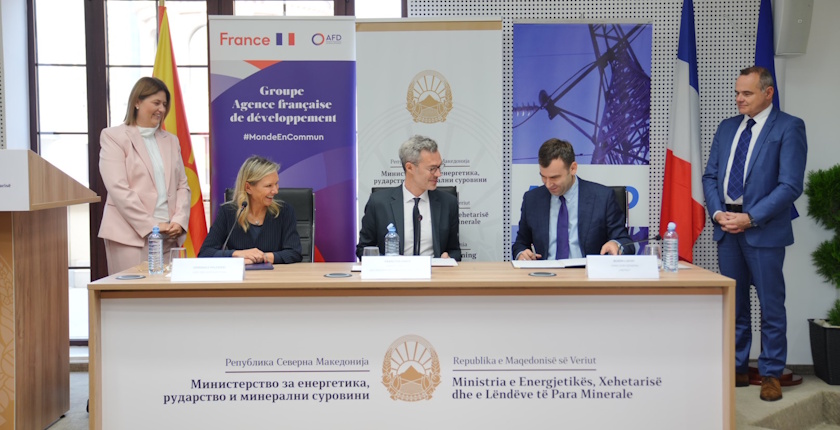
The transmission system operator of North Macedonia – MEPSO, France’s development agency Agence Française de Développement (AFD), and RTE International signed an agreement for a grant intended to support the Balkan country’s transmission system. At the same time, the Ministry of Energy, Mining, and Mineral Resources signed a joint declaration with AFD, officially welcoming the agency as a partner of North Macedonia’s Investment Platform for a Just Energy Transition.

The EUR 600,000 grant is for technical assistance for the modernization and digitalization of the transmission grid in North Macedonia, MEPSO said.

The project focuses on four areas: preparing system adequacy studies using the ANTARES market simulator, sizing system reserves, developing a methodology for calculating transmission losses and producing a feasibility study, and a project for substation digitalization.

Božinovska: AFD’s technical assistance will enable MEPSO to manage variability in the system more efficiently

As part of the project, experts from RTE International, a subsidiary of the French transmission system operator (TSO) RTE, have already held a training course for MEPSO’s engineers on the use of the ANTARES simulator, the Ministry of Energy, Mining and Mineral Resources said.

Minister Sanja Božinovska stressed that AFD‘s technical assistance would enable the company to manage more efficiently the variability resulting from increased participation of renewable sources and market fluctuations.

A more advanced and smarter grid means fewer outages, better use of clean energy, stronger regional connections, and greater system resilience – whether to weather conditions, demand fluctuations, or market instability, Božinovska noted.

Milevski: Pilot project will be launched for the digitalization of a 110 kV substation

According to RTE International CEO Veronika Milevski, the agreement combines advanced power system modeling, innovative reserve forecasting using artificial intelligence (AI), and a pilot project for the digitalization of a 110 kV substation.

This is a decisive step toward a more resilient, transparent, and competitive electricity grid, she pointed out.

MEPSO CEO Burim Latifi explained that the digital transformation pilot project is aimed at developing a fully digital substation with advanced protection, management, and monitoring systems.

Vince: AFD is committed to supporting a just and sustainable energy transition

It is a concrete step toward transforming MEPSO into a smarter, more efficient, and future-oriented TSO, he added.

Of note, AFD and RTE established collaboration with Montenegro’s TSO CGES in November last year. AFD also signed a memorandum of understanding with Albania’s power utility KESH in April.

Regarding the signing of the joint declaration, Sanja Božinovska said the partnership is improving the country’s ability to modernize its electricity system, integrate more renewables, and strengthen security of supply.

AFD is committed to supporting North Macedonia’s just and sustainable energy transition, according to the Deputy Director of the AFD Office for the Western Balkans, François Vince.

The signing of the two agreements was attended by French Ambassador Christophe Le Rigoleur.

Photo: Sanja Božinovska/Facebook
by in News

Turkey’s TEİAŞ signs USD 750 million loan contract with World Bank

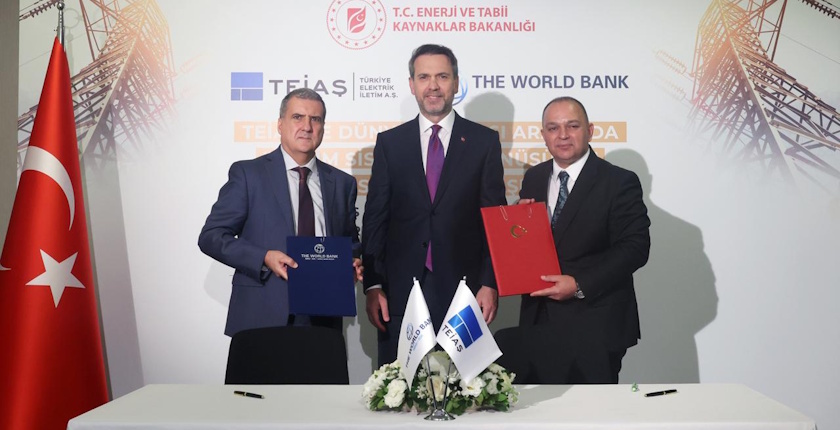
Turkish Electricity Transmission Corporation and the World Bank signed a USD 750 million loan agreement.

A USD 750 million loan will be used for the Transforming Power Transmission System Project. It would make the country’s energy future more reliable and efficient, Turkey’s transmission system operator (TSO) TEİAŞ said.

The agreement was signed in Istanbul vby the bank’s Country Director Humberto Lopez and Orhan Kaldırım, the company’s Chairman of the Board, in the presence of Minister of Energy and Natural Resources Alparslan Bayraktar, at the 11th Energy Efficiency Forum and Exhibition.

Bayraktar: Turkey plans to invest USD 28 billion in the transmission grid

“The World Bank and international financial institutions have a significant interest in Turkey’s energy infrastructure, particularly its electricity and natural gas sectors. Turkey is a hub country,” Bayraktar stated.

He recalled that the country plans to invest USD 28 billion in electricity transmission infrastructure by 2035.

The minister revealed that discussions on such projects are ongoing with financial institutions from both Asia and the West. Financing agreements can be expected in the foreseeable future, he added.

Lopez: The transition requires reliable transmission

World Bank Country Director Humberto Lopez stressed that Turkey’s clean energy ambitions depend on strong transmission infrastructure.

“Turkey has one of the most ambitious renewable energy plans, and this transition requires reliable transmission,” he said, as quoted by Anadolu Agency.

Lopez explained that it is very difficult for a new company to install solar or wind power facilities without a transmission grid connection secured. The USD 750 million investment aims to address the need and it is central to the government’s energy transition plan, he underlined.

The Transforming Power Transmission System Project marks the first phase of a USD 1.5 billion financing package aimed at expanding grid capacity, enhancing digital management, and accelerating the integration of renewable energy.

It will include feasibility studies for Turkey’s first high-voltage direct current (HVDC) transmission line, according to the article.