by in News

Serbia shelves plan for strategic partnership for 1 GW in wind farms

Serbia has revised its Baselines of the Energy Infrastructure Development Plan and Energy Efficiency Measures for the period up to 2028, with projections up to 2030. It defines priority projects in the energy sector.

The Baselines of the Energy Infrastructure Development Plan and Energy Efficiency Measures were adopted in mid-2023 at the proposal of the Ministry of Mining and Energy. In the new document, the construction of 1 GW wind farms is no longer among the priority projects. The plan was to involve with a strategic partner, similar to the project for 1 GW of solar power plants, which is currently being developed by state-owned power utility Elektroprivreda Srbije (EPS) with a strategic partner.

The development plan serves as a basis for the implementation of Serbia’s Energy Development Strategy and the National Energy and Climate Plan (NECP).

The ministry outlined projects across six sectors

The investment cycle planned for the upcoming strategic period represents the backbone of the Energy Development Strategy. It provides the foundation for further assessments and projections of the targeted energy mix through 2030 and 2050. It aligns with the international commitments undertaken in the process of European Union accession as well as with the obligations within the Energy Community, the document reads.

The plan includes projects in six sectors: electricity generation, transmission network, distribution network, natural gas, oil and petroleum products, and energy efficiency. It ranks the projects within each sector.

The most significant change in renewable energy is that the construction of wind farms with a combined capacity of 1 GW is no longer on the list of priority projects.

Solar power plants Kolubara and Morava on the priority list

The 1 GW of solar power and the Kostolac wind farm remained among the four most important endeavors, while the new items are the Morava and Kolubara photovoltaic projects. The Klenovnik solar power plant has been removed from the list. According to the document, the projects on the list are the most advanced.

In total, EPS has 41 projects for power generation or 20 less than in the original document.

Fewer projects, but more realistic

The authors explained that the number of renewable energy projects is lower, but more realistic and better optimized. The entire EPS investment portfolio across all areas requires significant funds and loans, so it would not be realistic to pursue a larger number of high-value projects that cannot be financially or physically implemented within a reasonable timeframe, the document underlined.

It was also taken into account that many private projects, mainly wind farms, are being developed through the auction system, so the focus of EPS’s projects is primarily on solar power plants, to create a balanced ratio between wind and solar power plants in the system. The company’s project for the wind farms with a strategic partner remained a backup option, in case an additional capacity is needed, according to the document.

There are new items on the list for the electricity distribution network

There were no changes in the transmission network segment. The priority projects are the third and fourth sections of the Trans-Balkan Corridor, the Pannonian Corridor, and Beogrid 2025. The list contains 66 investments, five fewer than in the original plan.

Changes have been made regarding investments in the power distribution network. The most important projects now are the 110/10 kV substations National Stadium and Surčin. Automation of the medium-voltage network was kept, together with the ongoing replacement of wooden poles with concrete ones and the replacement of electricity meters with smart ones.

The integrated system for remote monitoring, diagnostics, and control of the low-voltage distribution network has been removed from the list. Instead of replacing transformers at 10 kV, 20 kV, 35 kV, and 110 kV voltage levels, the new focus is on the reconstruction of 25 substations of 110/35 kV.

Planning the first district cooling systems

The energy efficiency part of the baselines was changed the most.

The previous document was primarily focused on reviewing and securing financial support for ongoing projects, while the current one is envisaging expanding the scope and considering new financial mechanisms and sectors that require additional support.

Among other initiatives, the Strategic Plan for the Decarbonization Policy of the District Heating and Cooling Sector in the Republic of Serbia is being prepared. It is a joint endeavour of the European Bank for Reconstruction and Development (EBRD), the Association of Serbian Heating Plants, and the Ministry of Mining and Energy.

The project aims to define steps to improve the district heating system, including heat storage, the use of heat pumps, utilization of heat generated from waste treatment, and the development of the first district cooling systems, according to the document.

Special attention will be devoted to developing guidelines for expanding the district heating system by connecting new users while simultaneously shutting down fossil fuel boilers. It will directly contribute to reducing CO2 emissions and pollution, the authors noted.
by in News

Greenpeace maps Croatia’s path to 100% renewable power by 2030

Croatia can fully transition to using only renewable electricity by 2030, according to Greenpeace. The organization presented its study: 100% Renewable by 2030 – A Plan for the Green Transition of Croatian Power Sector in the country’s capital Zagreb. Political will is the precondition for materializing the goal, it said.

The study was conducted by an expert team led by Professor Goran Krajačić from the Faculty of Mechanical Engineering and Naval Architecture in Zagreb. Of note, at the end of 2023, the share of electricity produced from renewables in total power consumption in the country exceeded 55%.

Greenpeace Croatia said the climate crisis, fueled by the fossil fuel industry, affects the entire world, including Europe and Croatia. The results are lost human lives and increasing material damage caused by extreme weather conditions, the organization noted.

Its ambitious goal for Croatia, to source all electricity from renewables by 2030, is based on a shift to solar and wind energy, as well as investments in the transmission network. The study puts the necessary solar power capacity at 5 GW, compared to 4.2 GW from wind.

In just five years, Greece, installed 7 GW of solar capacity, and Hungary added 5.5 GW

Greenpeace cites examples from the region. Croatia has five years until 2030, and the same period was enough for Greece to install 7 GW of solar capacity, while Hungary added 5.5 GW. Croatia has only recently reached 1 GW from photovoltaic system, despite ranking among the top countries in Europe in terms of solar potential, Greenpeace said.

According to Professor Goran Krajačić, the results of the study indicate that a firm political decision is needed to achieve 100% renewable electricity consumption in Croatia.

Andrić: A strong shift toward renewable energy is a strategic move for energy security, reduced dependence on fossil fuels, and economic opportunities

“Such a decision should include clear signals toward improving the power system, building and strengthening the grid and ensuring energy storage. Renewables also promote the democratization of society by involving citizens in energy communities to produce, store, and share energy,” Krajačić said.

Petra Andrić, program lead at Greenpeace in Croatia, stressed that a strong shift toward renewable energy as an ecologically sound decision. But it is also a strategic move for strengthening energy security, reducing dependence on fossil fuels, and creating economic opportunities, she added.

Calculation: large investments but even greater savings


Power generation mix

The authors estimate the costs of building facilities and underwater cables and strengthening cross-border grid capacities at EUR 12.2 billion by 2030. If it were financed through commercial loans at a 5% interest rate with a 25-year repayment period, the annual payment would be EUR 864 million, according to the calculation.

The repayment would be financed from savings and additional revenues, the study revealed.

Savings from allowances for CO2 emissions from electricity production, using 2023 as a reference year with a CO2 price of EUR 83 per ton, would amount to EUR 198 million by 2030.

The presentation of the study also featured a panel discussion

Fuel cost savings for electricity production were estimated at EUR 231.2 million in 2030, and profits from net exported electricity would bring in EUR 360 million.

The savings and profits would cover the annual repayments of loans needed to build the facilities, making them financially viable under commercial terms, the study claimed.

The event also hosted a panel discussion featuring Professor Krajačić, member of the Croatian Parliament Dušica Radojčić, Mario Stipetić (Ministry of Environmental Protection and Green Transition), Davor Škrlec (Faculty of Electrical Engineering and Computing – FER), Melani Furlan (Green Energy Cooperative – ZEZ), and Nina Domazet (Croatian Chamber of Commerce – HGK). It was moderated by Robert Pašičko from the United Nations Development Programme (UNDP).

by in News

Third Regional Power Sector Exchange in Ohrid: Power grids at core of energy transition

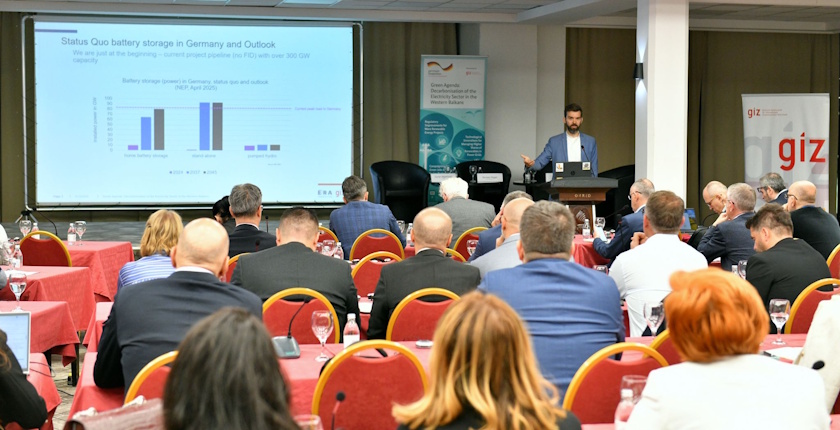
The third Regional Power Sector Exchange of the Western Balkans in Ohrid in North Macedonia gathered over 80 energy professionals from the region to discuss the future of electricity decarbonization and the urgent need to modernize power infrastructure.

Organised under the framework of the Regional Climate Partnership between Germany and the Western Balkans, the conference brought together representatives of transmission and distribution system operators, energy regulators, and energy ministries to accelerate coordinated action toward a greener, more resilient power system.

“No grids, no glory. This slogan captures the challenge in front of us. Without investment in power grids, adaptable regulation, and skilled professionals, the renewable energy transition cannot succeed,” Project Manager at GIZ Nicolas Heger said in his welcoming remarks.

Oberhuber: The Western Balkans have the potential to become a major exporter of clean electricity

Opening addresses were delivered by David Oberhuber, GIZ Country Director in North Macedonia, Anca-Iulia Cimpeanu, European Commission (DG ENER), and Davor Bajs, Energy Community Secretariat.

In his keynote speech, Oberhuber stressed the region’s strategic importance in the Regional Climate Partnership.

The Western Balkans has the potential to become a major exporter of clean electricity to Western Europe and a hub for investment and innovation in renewable energy, he said.

North Macedonia is advancing its energy transition by expanding renewables – solar power capacity reached 506 MW in 2023 – and reducing coal dependency, although thermal power plants still accounted for 47.3% of total electricity production in early 2024.

In 2023, renewables made up 33.15% of electricity generation, with households, transport, and industry as the top energy consumers.

To accelerate the shift, tailored support projects were launched. The Energy, Water Services and Municipal Waste Management Services Regulatory Commission is tackling the surge in renewables applications. Distribution system operator (DSO) EVN is focusing on smart grids and energy quality, and transmission system operator (TSO) MEPSO is exploring options to reduce balancing costs through regional market mechanisms.

Six tailored support projects presented

The event included three sessions on tailored support projects.

Professor Nermin Suljanović presented the project Concept on Data Exchange Between System Operators in Bosnia and Herzegovina.

The data platform enables automatic data exchange among all actors in the electricity market in Bosnia and Herzegovina, ensuring data interoperability and harmonized communication interfaces, according to Suljanović.

He also outlined the project Technical Specification and Requirements for Integration of Renewables into DSO Telecommunication Network.

E-mobility is not only related to energy but also to transportation, telecommunication, data security

A project titled Procedure for Handling RES Connection Requests to the Grid – Queue Management was presented by expert Miltos Aslanoglou, and the Roadmap for Creating a Legal and Regulatory Framework for EV Charging by expert Dejan Stojadinović.

“EU legislation on this matter is a good base for the Western Balkan countries to prepare relevant legal and regulatory frameworks. E-mobility is not only related to energy but also to transportation, telecommunication, data security, and other issues,” Stojadinović said.

Goran Majstrović, Deputy Director and Head of the Energy Transmission and Distribution Department at Energy Institute Hrvoje Požar (EIHP), gave an insight into the project Feasibility Analysis and Funding Assessment for using Dynamic Line Rating (DLR) on the Kosovo* Transmission Grid.

Simplification of Procedures for Prosumer Connection to the Distribution Network in the Federation of BiH was the name of the project introduced by expert Goran Dobrić.

The need for regionally integrated networks has never been greater

Blackouts in both Southern and Southeastern Europe have highlighted vulnerabilities in grid infrastructure amidst growing shares of renewable energy. The need for modern, flexible, and regionally integrated networks has never been greater.

The event was part of a wider regional project implemented by GIZ on behalf of the German government, supporting the integration of renewables and enhancing energy security across the WB6.

In just two years, the project has supported over 30 institutions, trained more than 135 energy professionals, and facilitated the development of the Action Plan for Power Grids in the Western Balkans, in cooperation with the Energy Community Secretariat.

Network redesigns are lagging behind renewables by seven to ten years

Goran Majstrović from Energy Institute Hrvoje Požar presented the Action Plan for Power Grids in the Western Balkans.

“The path to integration of renewables is not just replacing power plants but redesigning the entire system to accommodate them. Network redesigns are lagging behind renewables by seven to ten years,” he asserted.

In the plan, the required grid investments by 2030 in the six countries of the Western Balkans (WB6) are estimated at EUR 10 billion to EUR 14 billion. Investments in primary equipment are seen at EUR 6 billion to EUR 8 billion. As for secondary equipment (digitalization), the forecasted tally is EUR 4 billion to EUR 6 billion.

Phase 2 of the project Green Agenda: Decarbonisation of the Electricity Sector in the Western Balkans is scheduled for completion in 2028. The Regional Power Sector Exchange will remain a key platform for cooperation, helping ensure the energy transition in the region is just and inclusive.

* This designation is without prejudice to positions onstatus and is in line with UNSCR 1244/99 and the ICJ Opinion on the Kosovo declaration of independence.
by in News

BEF 2025: Technologies for energy transition are here, getting cheaper every day

Technologies for the energy transition already exist, and their use is increasing thanks to falling costs. Investors and bankers claim they are ready to invest and that money isn’t an issue. The missing part are upgraded transmission grids, along with policies and regulations to integrate everything into a suitable environment, according to investors and lenders gathered at Belgrade Energy Forum 2025.

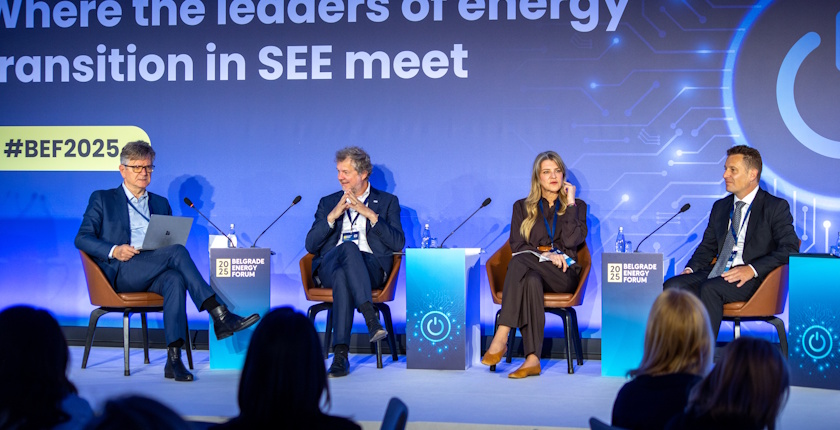
The third Belgrade Energy Forum, BEF 2025, welcomed four hundred participants from more than 30 countries from the region, Europe, and beyond. The two-day conference was organized by Balkan Green Energy News.

Participants in the panel Energy revolution underway – uniting efforts to deliver green, intelligent, and sustainable energy solutions were Maja Turković, Senior Vice President of CWP Europe, Aleš Prešern, Vice President and Head of Southeast Europe of Siemens Energy, and Christian Beynio, Head of Advisory of Kommunalkredit Austria AG.

According to panel moderator Mirza Kušljugić, a member of the Board of the Regional Center for Sustainable Energy Transition (RESET) from Bosnia and Herzegovina, the energy transition is actually a revolution, given the technological changes.

“The region is still burdened by tradition. We know the transition is inevitable, but we aren’t fully aware that it will be disruptive,” Kušljugić stated.

Technology is here, and so is financing

Mirza Kušljugić, Aleš Prešern and Maja Turković (photo: Balkan Green Energy News)

Maja Turković, Senior Vice President of CWP Europe, stressed that technology, currently undergoing a revolution, is the best card the world has in the transition. She even suggested that financing isn’t a problem and that there are more financial resources available than projects qualified to receive funding.

However, she is surprised by the rapid growth in solar power installations. Turković argued that market-based projects cannot achieve double-digit internal rates of return on equity. Part of the explanation may lie in the fact that panel prices have dropped by 60% over two years.

Battery prices have also fallen. The largest drop was last year, 40%, with a further 5% decline this year alone, according to Turković. Prices have slipped below EUR 100,000 per MWh.

Turković: Regarding CAPEX and technology, we’re ready

The latest trend is the integration of batteries with solar power plants. While transmission system operators in the region still don’t allow it, in some countries a grid connection approved for solar can also be used for batteries. “Regarding CAPEX and technology, we’re ready,” Turković underlined.

Aleš Prešern, Vice President and Head of Southeast Europe in Siemens Energy, is particularly impressed with the speed of change.

“We who are working in the energy sector are used to very slow changes. Energy was a conservative industry. In 2004, 1 GW of solar was built, but now data shows that it is how much is installed in one day. Batteries cost EUR 1 million per MWh not that long ago, and now they are ten times cheaper,” he noted.

Prešern: Transmission networks are the bottleneck of the transition

They are indeed dramatic changes, for which the existing power system wasn’t prepared. It is clear why Siemens Energy, as a technology company, considers transmission networks to be the bottleneck in the transition, Prešern said.

To illustrate the slowness of grid investments, he pointed to Austria, as one of the examples, where it took 10 years to build one important segment of the 400 kV network.

Both Turković and Prešern agree that nowadays the keyword is flexibility.

Maja Turković and Christian Beynio (photo: Balkan Green Energy News)

She explained there are operating battery management systems at low voltage levels that incorporate artificial intelligence and use market signals for activation when prices are low.

Prešern added that the required stability through balancing could be provided by gas power plants. Siemens Energy has never seen such high demand for gas turbines like today, he asserted.

Beynio: Don’t forget the non-banking institutions when looking in new financing

“If you ask about availability of financing, yes, it’s there,” Christian Beynio, Head of Advisory at Kommunalkredit Austria AG, confirmed. In his view, prices or, rather, the drop in prices of equipment, is the biggest innovation. Earlier, he said, it was a completely different game, heavily subsidized, while nowadays no subsidies are required per se.

The trend that Kommunalkredit Austria AG identified is the pooling of smaller assets, and a shift from financing projects toward financing developers and companies as corporates. It is yet to come to the region, he added.

Investment in grids, in his words, has to be initiated by the government. They have two solutions – go to the sovereign debt market or engage private investors. “Don’t forget the non-banking institutions when looking for new financing. This is a trend across Europe, and it will be relevant for the Balkans,” Beynio advised.

Battery projects won’t go so smoothly

Aleš Prešern (photo: Balkan Green Energy News)

Maja Turković expressed the belief that installing batteries won’t go as smoothly as solar. The main reason is the difficulty of securing a stable cash flow for batteries, unlike for production facilities. Cash flow enables financing, so batteries will likely need to be financed with internal funds, she underlined.

Turković noted that batteries are best monetized by providing system services and arbitrage, but pointed out they can also participate in capacity mechanisms, a scheme that could involve power purchase agreements (PPAs).

She said the development of the regulatory framework should be faster, to facilitate investments in batteries. Investors are ready to commit their funds to battery installation, and everyone in the market agrees that batteries are essential, Turković stressed.

Prešern: People and not technology are a guarantee that networks will exist and function properly

Amid the widespread discussions about technology and regulations, Aleš Prešern highlighted another issue. Energy, in his opinion, has always been an exciting sector, but the message hasn’t been getting through to young people in recent years. It was the case not only in the region but also in Europe, and beyond, leading to a shortage of skilled personnel.

However, he expressed the belief that things are changing and enthusiasm is returning. Prešern even suggested it could be a major advantage for the region, well known for its high-quality engineers.

Siemens Energy strives to employ as many good engineers as possible because, ultimately, people and not technology are a guarantee that networks will exist and function properly, he stressed.

The solution is also in using new technologies to better utilize existing grids

Christian Beynio (photo: Balkan Green Energy News)

The combination of rapid changes in the energy sector and slow investments in the grids threatens to put the transition to a standstill.

Better utilization of existing infrastructure could be the solution. Siemens Energy fits well there, as several years ago it established a division called Digital Grid. According to Prešern, the idea was to be quicker in data utilization, something that other sectors like automotive have long advanced, while energy has lagged.

The company recently acquired a Slovenian-Austrian firm that produces sensors installed directly on power lines, a technology called dynamic line rating. The devices provide real-time data about the conditions in power lines, potentially enabling their use beyond original design limits.

“With this technology, we believe we can increase the capacity of existing networks by an average of 30%,” Prešern revealed.

New technologies have changed bankers’ jobs as well

New technologies have changed bankers’ jobs as well, Christian Beynio admitted. He recalled that it was easy to finance wind farms in Serbia because they had feed-in tariffs from the government. The only risk element was the wind blowing or not blowing, Beynio said.

Nowadays there are merchant power producers that combine their facilities with batteries and use algorithms in electricity trading, he added. It means bankers need to sit with market consultants to identify all outcomes, he stressed.

“You won’t find singular cash flow streams. It’s going to be multi-dimensional and people simply need to adjust. It’s going to be more short term also on the lending side. It’s rather going to be corporate lending to people and companies who know what they are doing and can credibly demonstrate that with a track record. That is the digitalization impact we see”, Beynio said.

Maja Turković (photo: Balkan Green Energy News)
by in News

Đokić: Republic of Srpska will connect 250 MW of solar in next three years

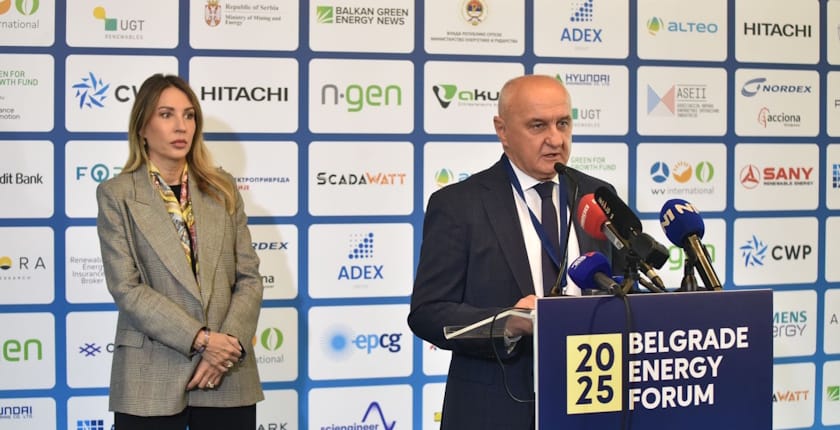
Over the next three years, the Republic of Srpska will connect 250 MW of new solar power plants to the grid, Minister of Energy and Mining Petar Đokić announced at Belgrade Energy Forum 2025 (BEF 2025), a two-day conference that kicked off today.

The Republic of Srpska, according to Đokić, has agreed concessions and partnerships for the construction of 2,200 MW of renewable energy power plants – wind, solar, and hydropower. Of the total capacity, state power utility Elektroprivreda Republike Srpske (ERS) has been awarded concessions for projects totaling 755 MW.

“The total value of the investments is about BAM 5.5 billion (EUR 2.81 billion), positioning the Republic of Srpska as a significant investor in the wider region,” he stressed.

Investments are needed in the transmission network

According to him, this is a great achievement considering the size and population of the Republic of Srpska, one of the two political entities of Bosnia and Herzegovina (BiH). However, these projects, which are planned to be realized in the next five years, will have to include investments in transmission capacities in order to upgrade the network.

With certain investments, according to him, the Republic of Srpska’s transmission network currently has the capacity to offtake all the electricity that will be produced in both the Republic of Srpska and the Federation of Bosnia and Herzegovina, the other political entity of BiH.

Đokić expects support from European financial institutions

He noted that this requires significant financial resources, adding that he expects cooperation with the European Union’s (EU) financial institutions, such as the European Bank for Reconstruction and Development (EBRD) and the European Investment Bank (EIB), as well as the World Bank.

Regarding the EU’s Carbon Border Adjustment Mechanism (CBAM), he said that measures have been taken to change the energy mix. Until recently, the share of fossil fuels was 62%, but it has now dropped to 54%, he noted.

By 2028, the Republic of Srpska will have two new hydropower plants, of 159 MW and 36 MW respectively, built by ERS, as well as one that is being finalized by a private investor, according to Đokić. “In the next three years, we will complete solar power plants with a total capacity of 250 MW, possibly more,” he said.

by in News

Investors in BiH developing 3,800 MW of wind, 12,500 MW of solar

Wind farms with a capacity of 3,800 MW and solar power plants with a capacity of 12,500 MW are currently in various stages of development in Bosnia and Herzegovina, according to the indicative plan for the development of production  2026-2035, published by the Independent System Operator in Bosnia and Herzegovina.

The goal of the ten-year plan is to provide information on projects initiated for the construction of new production capacities to be connected to the transmission system, according to the transmission system operator (TSO), Independent System Operator in Bosnia and Herzegovina (NOSBiH).

The plan is supposed to prioritize covering domestic consumption and capacity needs with domestic resources.

NOSBiH said investors continued in 2024 to apply with their renewable energy projects. The interest in grid connections wasn’t affected by the significant reduction in electricity purchase prices, especially for the hours when solar power plants typically produce, it added in the plan

A lack of transmission capacities could become an obstacle to the export of electricity

According to the register of the applications for grid connections, which Elektroprenos BiH manages, there are about 3,800 MW of proposed wind farms and 12,500 MW of photovoltaic facilities in various stages of development, NOSBiH underlined.

Results of an adequacy assessment showed that increasing production makes it possible to increase exports. BiH’s TSO warned that in such a scenario, the currently planned transmission capacity expansion wouldn’t be sufficient.

Another 100 MW of solar is seen coming online in BiH by the end of 2025

With the current production development plans, the system could be left without sufficient balancing capacities. NOSBiH therefore called for developing balancing capacities in parallel.

The document shows that four solar power plants of 206 MW in total were added last year to the transmission network in BiH: FNE Zvizdan (28.5 MW), SE Bileća (55 MW), FNE Hodovo (92.47 MW), and FNE Deling invest 1 (29.75 MW), together with one wind farm, VE Ivovik, of 84 MW. In February of this year, the Ivan Sedlo wind farm (25 MW) was also put online.

By the end of 2025, the start of trial operation of another five PV plants is expected, the plan showed. They would have 100 MW altogether: FNE Hodovo F1-F4 (11.96 MW), FNE Brotnjo (9.98 MW), FNE Polog 1-8 (7.99 MW), FNE Plavo Sunce 1-2 (40 MW) and FNE Livno 1-6 (27.6 MW).

Batteries can bridge the period until the transmission grid capacity becomes adequate

The plan anticipates a similar tempo of grid connections for 2026, too.

In that case, along with the integration of renewables into the distribution network and similar power plants coming online in neighboring countries, a congestion can appear in the transmission network, together with complications in operating the country’s transmission system from a regulatory point of view, NOSBiH said.

Battery energy storage systems can solve both potential issues in the medium term, until investments get the transmission grid to an adequate level, it suggested.

BiH needs battery capability of 225 MW and 450 MWh in total capacity

The company recalled that a year ago it produced a study, together with the Deutsche Gesellschaft für Internationale Zusammenarbeit (GIZ), provisionally called Operational Models for Battery Energy Storage Systems in the Balancing Market of NOS BiH.

They estimated the need for additional balancing based on hour-by-hour production profiles for facilities of 1,500 MW in total photovoltaic capacity and 1,000 MW of wind. The authors said a combined 225 MW in battery operating power is required and an overall capacity of 450 MWh.

The study also explored revenue generation opportunities for BESS, particularly through participation in the ancillary services market.

  • 1
  • 2