by in News

EU presents European Grids Package: faster permitting, stronger interconnections, lower energy bills

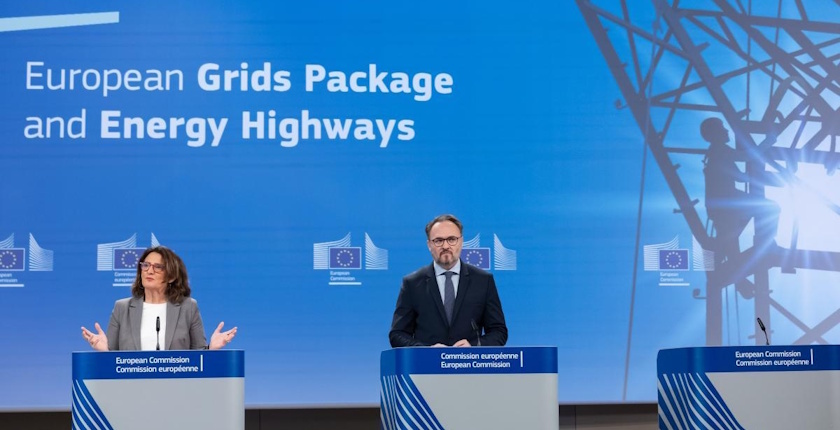
The European Commission presented the European Grids Package, a comprehensive plan to modernise transmission infrastructure, accelerate permitting procedures, and overcome bottlenecks in Europe’s electricity networks. It also unveiled the Energy Highways initiative, which consists of eight major infrastructure projects critical for energy security, renewable energy integration, and cross-border electricity market connectivity.

Energy infrastructure is the backbone of the energy system. Yet the EU’s energy network remains insufficiently integrated, and investment levels fall short of what is needed, a situation that directly affects household energy bills.

Ageing infrastructure and limited interconnection capacity are creating bottlenecks that slow the energy transition. Although some progress has been made within the existing EU legislative framework, the level of interconnection among member states remains inadequate. Several countries are not on track to meet the 15% interconnection target by 2030.

To address these challenges, the European Commission has presented the European Grids Package and Energy Highways initiative. The aim is to enable a more efficient flow of energy across the EU, integrate greater volumes of renewable energy into the system, and accelerate electrification.

Jørgensen: A truly interconnected energy system is the foundation of a strong and independent Europe

The Grids Package is designed to speed up permitting and ensure a fairer distribution of costs for cross-border infrastructure. It should also improve the use of existing infrastructure and accelerate the development of networks and other physical energy assets across the EU.

Among the measures is a new mechanism that allows the commission to initiate the search for additional infrastructure projects when existing initiatives do not cover identified cross-border needs.

“A truly interconnected and integrated energy system is the foundation of a strong and independent Europe. To achieve it, we need an energy infrastructure network of cables, pipes and grids that is up to date, fully interconnected, and that enables clean, affordable, homegrown energy to flow freely and securely to every corner of our union. This is exactly what we are proposing today: a common European energy project that supports affordable living, economic competitiveness, security, and decarbonisation,” said Dan Jørgensen, European Commissioner for Energy and Housing.

Permitting reform

Slow permitting remains one of the biggest bottlenecks for energy infrastructure and renewable energy projects in the EU.
Obtaining permits for transmission infrastructure currently takes more than five years on average, while renewable energy projects may face delays of up to nine years.

The Grids Package introduces simplified and accelerated permitting procedures. The commissioners have proposed setting time limits within which decisions must be taken for all types of projects. If the competent authority fails to respond within the deadline, the permit would be considered granted.

Permits for smaller projects would be issued through faster and more streamlined procedures

Permits for smaller projects would be issued through faster and more streamlined procedures. All processes would have to be fully digitalised, and national administrations would be required to have adequate staffing and technical capacity to process applications.

The commission is proposing to move away from the current first-come, first-served model and introduce a system that ensures timely and non-discriminatory access to the grid, one that balances social acceptance and industrial competitiveness.

Public and private financing

According to the commission’s estimates, EUR 1.2 trillion in investment will be needed for Europe’s electricity grid by 2040. Distribution networks account for EUR 730 billion within the sum, compared to EUR 240 billion for hydrogen infrastructure.

The commission said additional financing tools are required, including cost-sharing arrangements, arguing that cross-border infrastructure generates benefits that extend beyond the territory in which a project is located.

Another suggested solution is the formation of project firms (special purpose vehicles – SPVs) to attract additional private investment.

Given that grid infrastructure is largely financed through network tariffs, part of the burden falls on consumers. To ease this pressure, the commission announced it would boost financial support through the Multiannual Financial Framework (MFF), the EU’s regular seven-year budget, including a significant expansion of the Connecting Europe Facility (CEF). The tool is designed to support investments in new cross-border energy infrastructure and upgrades or rehabilitation of existing assets.

The current 2021–2027 EU budget contained EUR 5.8 billion for cross-border projects under CEF. For the 2028–2034 period, the commission said the amount would be raised almost fivefold, to EUR 29.91 billion.

On the private side, the EU is working on its Clean Energy Investment Strategy, to launch it in 2026 by outlining measures for private sector participation including institutional investors, as well as additional support from the European Investment Bank (EIB).

Energy Highways

The Energy Highways initiative comprises eight of the EU’s largest and most critical infrastructure projects, essential for energy security, renewable energy integration, and cross-border electricity market connectivity.

They have already been already listed as Projects of Common Interest (PCI) or Projects of Mutual Interest (PMI), but under the new initiative, they would receive elevated political priority, accelerated financing, and faster permitting.
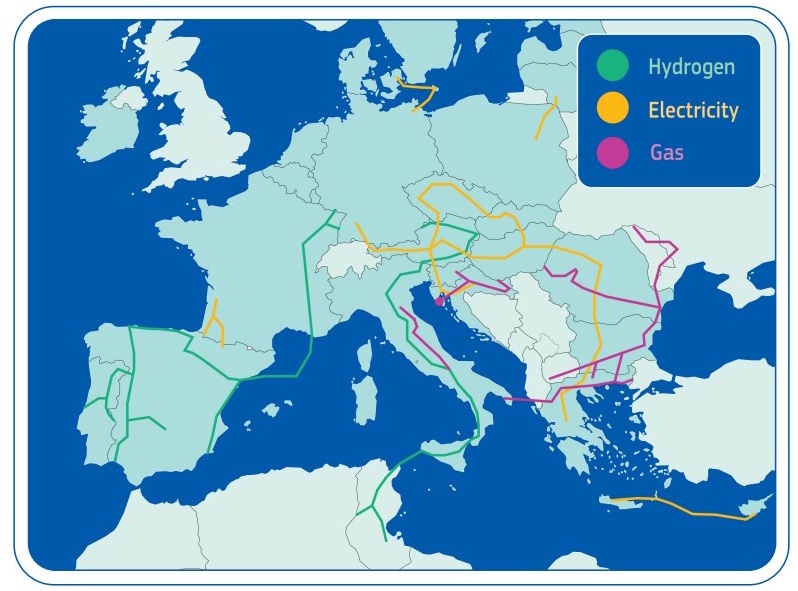
Energy Highways
Photo: European Commission

Among the projects are the reinforcement of interconnections across the Pyrenees to improve the integration of the Iberian Peninsula, the connection of Cyprus with continental Europe through the Great Sea Interconnector, as well as an upgrade of electricity links between the Baltic states, including the Harmony Link to Poland, which is essential for the full synchronisation of the region with the European grid.

The commission has also endorsed the establishment of Denmark’s hub on the island of Bornholm, which could, in the coming years, be connected to additional locations in the Baltic Sea.

Among the priorities are strengthening energy storage capacity in South-Eastern Europe

Among the priorities are strengthening energy storage capacity in South-Eastern Europe, as well as the modernisation of the Trans-Balkan Pipeline (TBP) for gas.

The list includes two hydrogen corridors. The southern one would connect Tunisia, Italy, Austria, and Germany, and the south-western corridor is a planned link between Portugal, Spain, France, and Germany. The commission has announced strong coordination and political support for the latter.

The commission views these projects as pillars of Europe’s future energy network, essential for lower electricity prices, greater system stability, and reduced dependence on fossil fuels.

In a regular legislative procedure, the proposals now move to the European Parliament and the Council of the EU for further deliberation.

by in News

EU presents European Grids Package: faster permitting, stronger interconnections, lower energy bills

The European Commission presented the European Grids Package, a comprehensive plan to modernise transmission infrastructure, accelerate permitting procedures, and overcome bottlenecks in Europe’s electricity networks. It also unveiled the Energy Highways initiative, which consists of eight major infrastructure projects critical for energy security, renewable energy integration, and cross-border electricity market connectivity.

Energy infrastructure is the backbone of the energy system. Yet the EU’s energy network remains insufficiently integrated, and investment levels fall short of what is needed, a situation that directly affects household energy bills.

Ageing infrastructure and limited interconnection capacity are creating bottlenecks that slow the energy transition. Although some progress has been made within the existing EU legislative framework, the level of interconnection among member states remains inadequate. Several countries are not on track to meet the 15% interconnection target by 2030.

To address these challenges, the European Commission has presented the European Grids Package and Energy Highways initiative. The aim is to enable a more efficient flow of energy across the EU, integrate greater volumes of renewable energy into the system, and accelerate electrification.

Jørgensen: A truly interconnected energy system is the foundation of a strong and independent Europe

The Grids Package is designed to speed up permitting and ensure a fairer distribution of costs for cross-border infrastructure. It should also improve the use of existing infrastructure and accelerate the development of networks and other physical energy assets across the EU.

Among the measures is a new mechanism that allows the commission to initiate the search for additional infrastructure projects when existing initiatives do not cover identified cross-border needs.

“A truly interconnected and integrated energy system is the foundation of a strong and independent Europe. To achieve it, we need an energy infrastructure network of cables, pipes and grids that is up to date, fully interconnected, and that enables clean, affordable, homegrown energy to flow freely and securely to every corner of our union. This is exactly what we are proposing today: a common European energy project that supports affordable living, economic competitiveness, security, and decarbonisation,” said Dan Jørgensen, European Commissioner for Energy and Housing.

Permitting reform

Slow permitting remains one of the biggest bottlenecks for energy infrastructure and renewable energy projects in the EU.
Obtaining permits for transmission infrastructure currently takes more than five years on average, while renewable energy projects may face delays of up to nine years.

The Grids Package introduces simplified and accelerated permitting procedures. The commissioners have proposed setting time limits within which decisions must be taken for all types of projects. If the competent authority fails to respond within the deadline, the permit would be considered granted.

Permits for smaller projects would be issued through faster and more streamlined procedures

Permits for smaller projects would be issued through faster and more streamlined procedures. All processes would have to be fully digitalised, and national administrations would be required to have adequate staffing and technical capacity to process applications.

The commission is proposing to move away from the current first-come, first-served model and introduce a system that ensures timely and non-discriminatory access to the grid, one that balances social acceptance and industrial competitiveness.

Public and private financing

According to the commission’s estimates, EUR 1.2 trillion in investment will be needed for Europe’s electricity grid by 2040. Distribution networks account for EUR 730 billion within the sum, compared to EUR 240 billion for hydrogen infrastructure.

The commission said additional financing tools are required, including cost-sharing arrangements, arguing that cross-border infrastructure generates benefits that extend beyond the territory in which a project is located.

Another suggested solution is the formation of project firms (special purpose vehicles – SPVs) to attract additional private investment.

Given that grid infrastructure is largely financed through network tariffs, part of the burden falls on consumers. To ease this pressure, the commission announced it would boost financial support through the Multiannual Financial Framework (MFF), the EU’s regular seven-year budget, including a significant expansion of the Connecting Europe Facility (CEF). The tool is designed to support investments in new cross-border energy infrastructure and upgrades or rehabilitation of existing assets.

The current 2021–2027 EU budget contained EUR 5.8 billion for cross-border projects under CEF. For the 2028–2034 period, the commission said the amount would be raised almost fivefold, to EUR 29.91 billion.

On the private side, the EU is working on its Clean Energy Investment Strategy, to launch it in 2026 by outlining measures for private sector participation including institutional investors, as well as additional support from the European Investment Bank (EIB).

Energy Highways

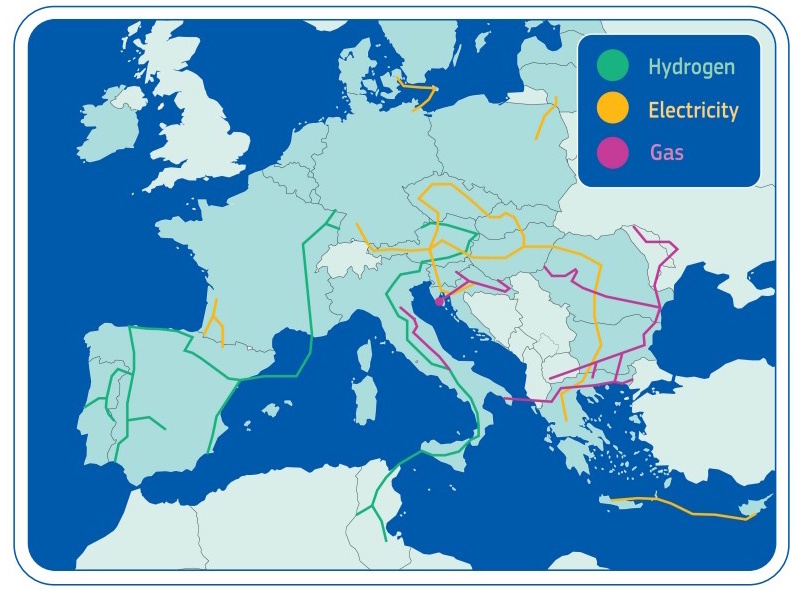
The Energy Highways initiative comprises eight of the EU’s largest and most critical infrastructure projects, essential for energy security, renewable energy integration, and cross-border electricity market connectivity.

They have already been already listed as Projects of Common Interest (PCI) or Projects of Mutual Interest (PMI), but under the new initiative, they would receive elevated political priority, accelerated financing, and faster permitting.

Energy Highways
Photo: European Commission

Among the projects are the reinforcement of interconnections across the Pyrenees to improve the integration of the Iberian Peninsula, the connection of Cyprus with continental Europe through the Great Sea Interconnector, as well as an upgrade of electricity links between the Baltic states, including the Harmony Link to Poland, which is essential for the full synchronisation of the region with the European grid.

The commission has also endorsed the establishment of Denmark’s hub on the island of Bornholm, which could, in the coming years, be connected to additional locations in the Baltic Sea.

Among the priorities are strengthening energy storage capacity in South-Eastern Europe

Among the priorities are strengthening energy storage capacity in South-Eastern Europe, as well as the modernisation of the Trans-Balkan Pipeline (TBP) for gas.

The list includes two hydrogen corridors. The southern one would connect Tunisia, Italy, Austria, and Germany, and the south-western corridor is a planned link between Portugal, Spain, France, and Germany. The commission has announced strong coordination and political support for the latter.

The commission views these projects as pillars of Europe’s future energy network, essential for lower electricity prices, greater system stability, and reduced dependence on fossil fuels.

In a regular legislative procedure, the proposals now move to the European Parliament and the Council of the EU for further deliberation.
by in News

Firms from Croatia, BiH, Serbia to build power line in North Macedonia

Croatia-based Dalekovod, Elnos from Bosnia and Herzegovina, and Serbian Kodar Energomontaža will jointly build electricity transmission infrastructure in North Macedonia.

Dalekovod said it signed a EUR 19.7 million contract with MEPSO, the transmission system operator of North Macedonia, as the lead member of a consortium that includes Elnos BL and Kodar Energomontaža.

The contracted works include the delivery and construction of a 400 kV power line from the 400/110 kV Bitola 2 substation, via the 400/110 kV Ohrid substation, to the North Macedonia – Albania border.

The project ensures long-term stability of the electricity system in the wider region

The new Ohrid substation is currently under construction, with Končar, another Croatian company, as contractor. Končar is the majority shareholder of Dalekovod since 2022.

The Croatian firm pointed out that the new power line in North Macedonia represents a significant infrastructure project ensuring long-term stability of the electricity system in the wider region.

Dalekovod: Strengthening position in the regional and European market

Construction is scheduled for completion by mid-2028.

Of note, all three companies are active on the territory of former Yugoslavia, as well as across Europe and even worldwide. The owners of Elnos and Kodar are individuals from Bosnia and Herzegovina and Serbia, respectively, while the largest shareholders of Dalekovod are the Government of Croatia and three foreign banks operating in the country.

Operations in the region, Europe, Africa

Dalekovod has subsidiaries in six countries, including Namibia. In October, the company concluded a EUR 100 million deal for the construction of a 400 kV power line in Sweden.

Elnos BL is part of Elnos Group based in Banja Luka, Bosnia and Herzegovina. The company, which recently marked a remarkable dual jubilee – 80 years of tradition and 30 years of modern business development, operates in 18 countries.

A week ago, it signed a contract with Power China Construction Group to build a connection to the transmission grid for the 300 MW Vetrozelena wind farm in Serbia.

Kodar Energomontaža, headquartered in Serbia’s capital Belgrade, has carried out numerous projects across Europe – from southeastern Balkans to Scandinavia, as well as in West Africa.

In March, the company inked a deal with Serbia’s transmission system operator Elektromreža Srbije (EMS) for the construction of a two-system 400 kV transmission line, part of the Trans-Balkan Electricity Corridor.

by in News

Slovenia and Italy to upgrade electricity interconnectors

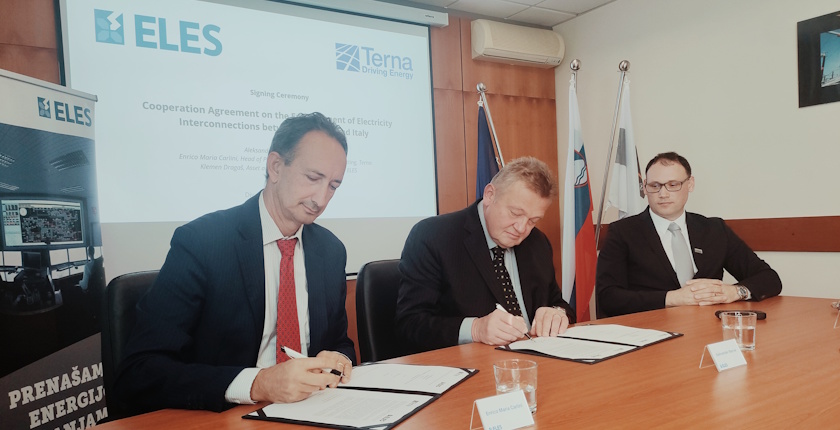
Slovenian transmission and distribution system operator ELES and Italian transmission system operator Terna agreed to upgrade their cross-border electricity network in an investment of EUR 250 million. The project aims to increase the transmission capacity between the two countries by 600 MW, strengthening supply and trade.

After a decade of coordination, ELES and Terna signed an agreement to raise the electricity transmission capacity between Slovenia and Italy by 600 MW or more than 50%. According to ELES, it is an important step in market integration and strengthening the reliability of the interconnected electricity system.

Interconnections between Slovenia and Italy are currently among the most heavily loaded ones in the Slovenian network, the country’s TSO pointed out.

As ELES further explained, with the growth of electricity imports and exports, there is an increasing need to strengthen transmission routes between the two countries. The company expects a rise in electricity imports in the countries gradually phasing out fossil fuel–based production to further increase the demand for cross-border transmission capacity.

The project consists of three upgrades

The project includes three main improvements. On the Slovenian side, the phase-shifting transformer at the Divača substation would be upgraded, alongside adding a third unit, which enables full utilization of the capacity of the 400 kV transmission line between Divača and Redipuglia (Sredipolje). The current transmission capacity, 1,200 megavolt-amperes (MVA), would be lifted to 1,800 MVA.

On the 220 kV transmission line between Divača and Padrice in Italy, low-sag conductors, capable of withstanding higher temperatures will be installed, ELES said. The transmission capacity would be doubled to 700 MVA.

On the Italian side, the existing 220 kV Padriče-Redipuglia connection and the Redipuglia substation are to be upgraded with a new phase-shifting transformer. It is crucial for managing internal power flows, the update reads.

“With an additional 600 MW of cross-border capacity, Slovenia is solidifying its role as a key electricity hub between Central and Southern Europe and as a reliable regional partner. This is a strategic investment in the future, ensuring reliability, resilience, and connectivity of our grid in the decades when electricity will become the main energy currency,” said ELES CEO Aleksander Mervar.

Slovenia’s share of the project is estimated at EUR 90 million

The total value of the project is EUR 250 million, with the Slovenian share estimated at EUR 90 million and the Italian side securing EUR 160 million. Pending all necessary permits and documentation, construction is planned to begin in 2029, and completion is expected by the end of 2031.

ELES announced it would seek European funds to finance the Slovenian side of the investment.

“The agreement not only strengthens the historic partnership between the two transmission system operators but also marks an important step toward developing and implementing innovative solutions that enhance the efficiency of transmission network investments. The agreement encourages system operators to introduce not only capital-intensive projects but also solutions with lower capital requirements that can increase net benefits and investment returns for all electricity system users,” said Enrico Maria Carlini, Head of Power System Planning and Permitting at Terna.

by in News

Croatia finally close to removing major obstacle to investments in renewables

After three years of delays, Croatia is finally close to adopting a methodology for the calculation of the grid connection fee for renewable power plants. Investors have repeatedly urged the authorities to enact the document, arguing it was the main obstacle to investments in renewable energy sources.

The Croatian Energy Regulatory Agency (HERA) said it has developed a draft methodology for determining the electricity grid connection fee. The public discussion, which began on October 23, lasts until November 21.

According to HERA, the effect of required investments in the transmission network on the network usage fee depends on the share of the connection fee in the total costs of developing the high and very high voltage network, as well as on the amount of grants.

It is possible to connect to the grid even before all technical conditions are met

The effect on the network usage fee will become evident when the relevant network reinforcements are completed, for example, in 10 to 15 years, the agency said.

The costs of developing the transmission network to achieve goals from the National Energy and Climate Plan (NECP) will be financed partly from the grid connection fee and partly from the network usage fee.

HERA pointed out that the legislative framework allows network users to connect even before all technical conditions met, by signing flexible connection agreements, which envisage the possibility of operational restrictions regarding connection capacity.

Personnel decisions have delayed the process of determining the fee

The Renewable Energy Sources of Croatia (RES Croatia) association repeatedly warned that the failure to determine the grid connection fee has halted projects worth around EUR 3 billion overall.

In mid-September, together with SolarPower Europe and WindEurope, RES Croatia sent a letter to the European Commission to raise concerns about the crisis in the country’s renewable energy sector.

According to domestic media, one of the main reasons for the delay in determining the grid connection fee was that HERA’s Management Board was incomplete for two years.

by in News

North Macedonia receives grant from France for grid modernization

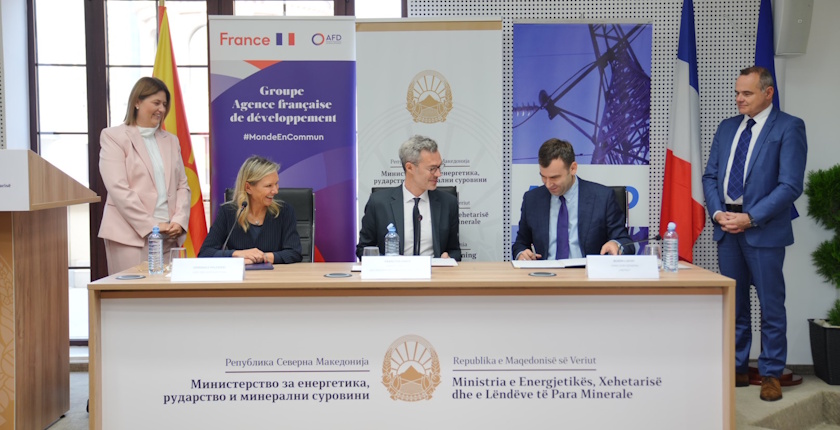
The transmission system operator of North Macedonia – MEPSO, France’s development agency Agence Française de Développement (AFD), and RTE International signed an agreement for a grant intended to support the Balkan country’s transmission system. At the same time, the Ministry of Energy, Mining, and Mineral Resources signed a joint declaration with AFD, officially welcoming the agency as a partner of North Macedonia’s Investment Platform for a Just Energy Transition.

The EUR 600,000 grant is for technical assistance for the modernization and digitalization of the transmission grid in North Macedonia, MEPSO said.

The project focuses on four areas: preparing system adequacy studies using the ANTARES market simulator, sizing system reserves, developing a methodology for calculating transmission losses and producing a feasibility study, and a project for substation digitalization.

Božinovska: AFD’s technical assistance will enable MEPSO to manage variability in the system more efficiently

As part of the project, experts from RTE International, a subsidiary of the French transmission system operator (TSO) RTE, have already held a training course for MEPSO’s engineers on the use of the ANTARES simulator, the Ministry of Energy, Mining and Mineral Resources said.

Minister Sanja Božinovska stressed that AFD‘s technical assistance would enable the company to manage more efficiently the variability resulting from increased participation of renewable sources and market fluctuations.

A more advanced and smarter grid means fewer outages, better use of clean energy, stronger regional connections, and greater system resilience – whether to weather conditions, demand fluctuations, or market instability, Božinovska noted.

Milevski: Pilot project will be launched for the digitalization of a 110 kV substation

According to RTE International CEO Veronika Milevski, the agreement combines advanced power system modeling, innovative reserve forecasting using artificial intelligence (AI), and a pilot project for the digitalization of a 110 kV substation.

This is a decisive step toward a more resilient, transparent, and competitive electricity grid, she pointed out.

MEPSO CEO Burim Latifi explained that the digital transformation pilot project is aimed at developing a fully digital substation with advanced protection, management, and monitoring systems.

Vince: AFD is committed to supporting a just and sustainable energy transition

It is a concrete step toward transforming MEPSO into a smarter, more efficient, and future-oriented TSO, he added.

Of note, AFD and RTE established collaboration with Montenegro’s TSO CGES in November last year. AFD also signed a memorandum of understanding with Albania’s power utility KESH in April.

Regarding the signing of the joint declaration, Sanja Božinovska said the partnership is improving the country’s ability to modernize its electricity system, integrate more renewables, and strengthen security of supply.

AFD is committed to supporting North Macedonia’s just and sustainable energy transition, according to the Deputy Director of the AFD Office for the Western Balkans, François Vince.

The signing of the two agreements was attended by French Ambassador Christophe Le Rigoleur.

Photo: Sanja Božinovska/Facebook
by in News

RES Croatia to Brussels: Renewables have no future in Croatia

RES Croatia, together with SolarPower Europe and WindEurope, has sent a letter to the European Commission to raise concerns about the crisis in Croatia’s renewable energy sector.

The three associations emphasized that for several years, 60 projects for investments in solar, wind, geothermal, and batteries have been blocked, and that if nothing is done, many of them would soon be abandoned.

Without urgent deblocking of renewable energy projects, Croatia will lose investments, increase fossil fuel imports, which already exceed 25%, and miss the European Union’s and national target of at least 42.5% of energy consumption coming from renewables by 2030, according to Renewable Energy Sources of Croatia (RES Croatia), SolarPower Europe and WindEurope.

The national organization warned that the government is gradually phasing out subsidies for electricity prices for citizens and entrepreneurs. At the same time, the development of renewable energy sources as the only sustainable solution for lower bills and lowering imports is at a complete standstill, it added.

Projects with a total capacity of 3.5 GW and investments of EUR 3 billion are blocked

Croatia is currently subject to infringement proceedings due to delays in implementing the European Union’s RED II and RED III directive. They aren’t just a piece of paper, but a mechanism to ensure energy security and independence, which is of strategic interest for Croatia and its citizens, RES Croatia underscored.

The organizations are urging the European Commission to use its tools to demand from the government to determine the grid connection fee, but at EUR 0 per kWh, open up the balancing market for renewable energy producers, and integrate battery energy storage systems (BESS) and electrification into national planning.

Currently, 60 projects for solar power plants, wind farms, geothermal power plants, and batteries with a total capacity of 3.5 GW and investments of EUR 3 billion are blocked, according to the letter, accompanied by an annex.

The domestic industry is unable to sign long-term PPAs

For these projects, the state has already charged EUR 25 million through energy approvals— the first in a series of documents that requires payment to the state, which, due to the blockage, are beginning to expire at the end of this year.

Organizations stressed that these projects are permanently losing the paid money, while local communities are losing significant revenues that would have been allocated to them from the implementation of renewable energy projects.

They also drew attention to the domestic industry’s inability to sign long-term power purchase agreements (PPAs) with renewable energy producers, securing more favorable market conditions and thereby increasing its competitiveness in European and global markets.

Of note, the European Commission advised Croatia in June to speed up the installation of renewable energy capacities.

If nothing is done, projects of as much as 2.5 GW overall will be abandoned as early as next week

The associations pointed out that the development of new projects larger than 10 MW has stalled since 2022 because the Croatian Energy Regulatory Agency (HERA) has not set a transmission network connection fee for renewable power plants.

Instead, they added, Croatia’s transmission system operator (TSO) HOPS is trying to shift the costs of network modernization – planned over ten years ago and not related to new projects – to new renewable energy projects.

The minister of economy said in March that the upcoming connection fee would be EUR 0 per kW

It is increasing the project cost by 30% to 40%, making them unprofitable, RES Croatia said.

Such a model for financing the network is not from European practice, because 80% of member states rely on EU funds and their national budgets, rather than on producers.

They also recalled that the minister of economy announced in March that a connection fee would be set at EUR 0 per kW and that developers would be offered flexible contracts to encourage investment in battery storage. But that promise has not yet been fulfilled.

The three organizations warn that if nothing is done, projects of up to 2.5 GW altogether would be abandoned as early as next week after HOPS’s decision,. It means companies would withdraw from the Croatian market and lose millions in investments that would have permanently lowered energy prices in the country, RES Croatia claimed.

The balancing market is not functional

An additional problem is the non-functional balancing market, according to the letter.

HEP Proizvodnja, a subsidiary of state-owned utility Hrvatska Elektroprivreda (HEP), is the dominant provider of balancing services, and often the only one. HOPS is legally obliged to ensure market-based procurement of these services, yet it is itself a wholly owned subsidiary of HEP.

It creates an obvious conflict of interest and undermines market competition, the signatories underlined.

“Despite the demonstrated technical ability of solar and wind power plants to provide balancing services, HOPS doesn’t allow these plants to participate in balancing markets. As a result, HOPS frequently activates extremely expensive balancing resources, often at maximum regulated prices even during hours of high renewable generation and positive market prices,” the letter reads.

Croatia has no serious electrification plan

The organizations pointed out that such pricing constitutes a clear violation of the EU principle that balancing services must reflect only the actual costs incurred by the TSO.

They also stressed that Croatia lacks a concrete electrification plan. In 2022, renewable energy accounted for only 2.4% of final energy consumption in transport, with electricity from renewables contributing just 0.2%.

The target for renewable electricity in transport by 2030 is only 5.8%, reflecting limited ambition compared to the EU ambitions, according to the letter.

Electrification of railways could significantly reduce emissions and accelerate the transition, however, it remains an untapped potential, the signatories organizations noted.

by in News

ELES, Hitachi Energy launch Next Generation Control System project

Slovenia’s transmission system operator ELES and Hitachi Energy have signed a strategic cooperation agreement for the implementation of their Next Generation Control System project.

ELES and Hitachi Energy plan to develop advanced digital solutions for transmission grid control centers, according to Slovenia’s TSO.

The Next Generation Control System project is a continuation of their cooperation within the internationally recognized and awarded NEDO project. The project has laid the foundation for collaboration between ELES and Hitachi, representing a key step in the said activities.

The companies will develop three key functionalities of the new generation

Within the project, the two companies intend to work on three core functionalities of the next generation.

An Enterprise Service Bus (ESB) is a software solution that connects various applications, enabling them to communicate and exchange data — even if they use different languages, protocols, or formats. In practice, it will be implemented for the system that determines operational limits.

Voltage Var Control is an upgrade to the existing voltage management system, introducing complex functions and advanced control methods.

The Common Information Model enhances the efficiency of network data models exchanged between different systems and organisations, particularly in the context of TSOs.

The project will last two years

The firms plan to implement and finance the two-year project by themselves. ELES would invest in improvements, while Hitachi Energy develops the agreed functions, to verify them together with the Slovenian state-owned company. Hitachi Energy intends to incorporate the new functionalities into its standard energy management system offering (Network Manager).

The agreement was signed by Aleksander Mervar, CEO of ELES, and Lars Wiklander, Business Operations Strategy & Planning Executive at Hitachi Energy. However, he was unable to attend the signing ceremony and conference.

The speakers at the event were Lazar Bizumić, Head of Product Management at Hitachi Energy; Jurij Klančnik, Transmission System Operation Director at ELES, and Janko Kosmač, Process Systems Manager at ELES, who is also the head of the technical part of the joint project.

Mervar: An important step in the digital transformation of the Slovenian electricity sector

Janko Kosmač, Aleksander Mervar and Lazar Bizumić (photo: ELES)

Aleksander Mervar highlighted the agreement as a significant step in the digital transformation of Slovenia’s electricity sector. At the same time, in his words, it reinforces the role of ELES and Slovenia as an innovative environment for developing advanced energy solutions.

“New digital solutions will enable better integration of various systems, smarter voltage management in the grid, and more efficient and transparent data exchange. This is a technologically advanced project that will significantly contribute to the safer, more efficient, and sustainable operation of the Slovenian electricity system. It is an important step in Slovenia’s green transition,” Mervar added.

Wiklander: The grid management software and systems ecosystem of the future must be built on a flexible, modular architecture

The grid management software and systems ecosystem of the future must be built on flexible, modular architecture to give TSOs and utilities the scale they need to manage a changing and dynamic grid, the flexibility to integrate proprietary and third-party applications, and the control and visibility necessary to manage and deliver a reliable, resilient power supply, Lars Wiklander asserted.

“This collaboration with ELES is an important proof point in our strategy to deliver the leading grid management ecosystem with Network Manager,” he pointed out.

by in News

Serbia launches construction of two transmission lines as part of BeoGrid 2025 project

Serbia has launched works as part of the BeoGrid 2025 project, aimed at improving the power transmission infrastructure in Serbia, the region, and Europe, as well as facilitating electricity offtake from renewable energy power plants in the South Banat region of Vojvodina.

The BeoGrid 2025 project, worth EUR 205 million, comprises six distinct components, according to Radoš Popadić, Assistant Minister of Mining and Energy in charge of the power engineering sector. He attended the start of works in Belgrade’s Surčin suburb together with Jelena Matejić, the general manager of Serbia’s transmission system operator, Elektromreža Srbije (EMS).

“Construction is being launched today on two new high-voltage transmission lines that will connect Belgrade and Novi Sad, with a total value of around EUR 22 million,” he said, adding that work on a substation in Belgrade is also expected to begin soon.

The project is valued at EUR 205 million

The substation will be connected to the Čibuk 1 substation [wind farm Čibuk 1] by a new 83-kilometer transmission line, ensuring a stable transmission of electricity produced from renewable energy sources in South Banat, as well as reducing strain on the existing network, Popadić explained.

Radoš Popadić and Jelena Matejić (photo: Ministry of Mining and Energy/Danilo Mijatović)

Two single-circuit 400 kV transmission lines, intended for connecting transmission line 450 (switching station Mladost – substation Novi Sad 3) to the future 400/110 kV substation Beograd 50, will have a total length of 25.5 kilometers.

EMS General Manager Jelena Matejić said that BeoGrid 2025 is of particular importance for Serbia, but also part of the broader North Continental South East (CSE) Corridor project, which includes doubling the existing 400 kV interconnection between hydropower plant Đerdap 1 and Portile de Fier in Romania.

Matejić: The North CSE Corridor is part of the European ten-year network development plan, TYNDP 2020

The North CSE Corridor project is part of the European ten-year network development plan (TYNDP 2020) and the regional investment plan (RgIP 2020). It is supported by the Romanian transmission system operator, Transelectrica, as well as the German development bank KfW, with a feasibility study.

The North CSE Corridor is of regional importance as it increases the transmission capacity between Serbia and Romania, helping create an integrated European electricity market, Matejić pointed out, adding that BeoGrid 2025 is also important for additional backup power supply for the EXPO 2027 project.

The project aims to enable the transmission of electricity generated from renewable sources in the South Banat region and to ease the load on the 220/110/35 kV Beograd 5 substation, which supplies a large part of Belgrade, particularly parts of New Belgrade and Zemun, EMS stated.

Popadić: The total value of all planned projects is EUR 1 billion

Photo: Ministry of Mining and Energy/Danilo Mijatović

Radoš Popadić recalled that large investments in the transmission network are underway.

“Serbia has recognized the importance of investing in the power transmission system to enable the integration of more renewable energy capacity, increase the exchange of electricity with neighbors, and ensure a secure, stable, and efficient supply to consumers. That is why we launched investments in interconnection with the transmission systems of eight neighboring countries, with EUR 500 million to be invested in priority projects by the end of the decade. The total value of all planned projects will amount to around one billion euros,” said Popadić.

BeoGrid 2025 is financed partly from the Serbian budget, as well as from EMS’ own funds. The project consists of six distinct components, or investments:

  • 400/110 kV substation Beograd 50;
  • Two-circuit 400 kV transmission line between substation Beograd 50 and Čibuk 1, including the installation of a 400 kV bay at switching station Čibuk 1;
  • Single-circuit 400 kV transmission lines for the integration of transmission line 450 (switching station Mladost – substation Novi Sad 3) into substation Beograd 50;
  • Two double-circuit 110 kV transmission lines for the integration of transmission line 104/8 (substation Stara Pazova – substation Inđija 2) into substation Beograd 50;
  • two double-circuit 110 kV transmission lines for the integration of transmission line 1178 AB (substation Beograd 5 – substation Beograd 9) into substation Beograd 50;
  • Double-circuit 110 kV cable between substation Beograd 50 and substation Beograd 49 (Airport).

Photo: Ministry of Mining and Energy/Danilo Mijatović

by in News

Clean energy, grid upgrade projects in Western Balkans to be backed under EU’s Growth Plan

The European Commission has proposed the first support package, of EUR 87.7 million, under the European Union’s Growth Plan for the Western Balkans, to help implement EUR 487.3 million worth of hydropower, solar district heating, and grid modernization projects in Albania, Montenegro, and Serbia. The package was announced following a high-level meeting between European Commissioner for Enlargement Marta Kos and Western Balkan partners in North Macedonia’s capital, Skopje.

The package, funded from the EUR 6 billion Reform and Growth Facility (RGF), set up under the Growth Plan, will be rolled out through the Western Balkans Investment Framework (WBIF). The proposal was made to the WBIF Operational Board, according to a press release from the commission.

The eight proposed projects include building a new generation unit and upgrading existing ones at Serbia’s Potpeć hydropower plant, which would increase its annual production to 236 GWh while reducing CO2 emissions. The investment is valued at EUR 72.1 million, with the RGF support amounting to EUR 15.8 million. The project is targeted for completion in 2030, according to the commission’s fact sheet.

Serbia could get support for introducing solar energy in district heating

The other project in Serbia is the construction of a 31 MW solar-thermal plant and 17 MW heat pump in Novi Sad, which will introduce renewable energy sources to the district heating system. The project would cost a total of EUR 114.3 million, with the RGF support at EUR 25 million. The targeted completion date is 2028.

In Montenegro, the package would support three projects. The first is an EUR 18.3 million investment in building a 38-kilometer 110kV overhead transmission line between Vilusi and Herceg Novi, aimed at increasing transmission capacity and reducing energy losses. It would receive EUR 3.1 million from the RGF.

The EU plans to back Montenegro’s SCADA roll-out

The second project in Montenegro is the introduction of SCADA in the power distribution system, estimated at EUR 26.5 million, with the proposed RGF support of EUR 5 million. The third one is a planned upgrade of the Brezna substation on the Trans-Balkan Electricity Corridor. The EUR 35.6 million investment would be backed with EUR 6.3 million from the RGF.

Albania plans to digitalize its transmission network in EUR 64.2 million project

The support package also includes Albania’s EUR 95.3 million investment in upgrading the Fierza hydropower plant, aimed at increasing its capacity by 10% and extending its lifespan by at least 30 years. The support from the RGF would amount to EUR 10.5 million. The other project to be supported in Albania is the EUR 64.2 million digitalization of the transmission network, which would receive 13.6 million from the RGF.

  • 1
  • 2