by in News

Albania Proposes Strategic Shift: State to Take Over Emergency Oil Reserves from Private Sector

Enea Karakaçi, Minister of Infrastructure and Energy (Ministry of Infrastructure and Energy), stated that one of the ministry’s principal priorities remains ensuring the uninterrupted supply of fuel to the market.

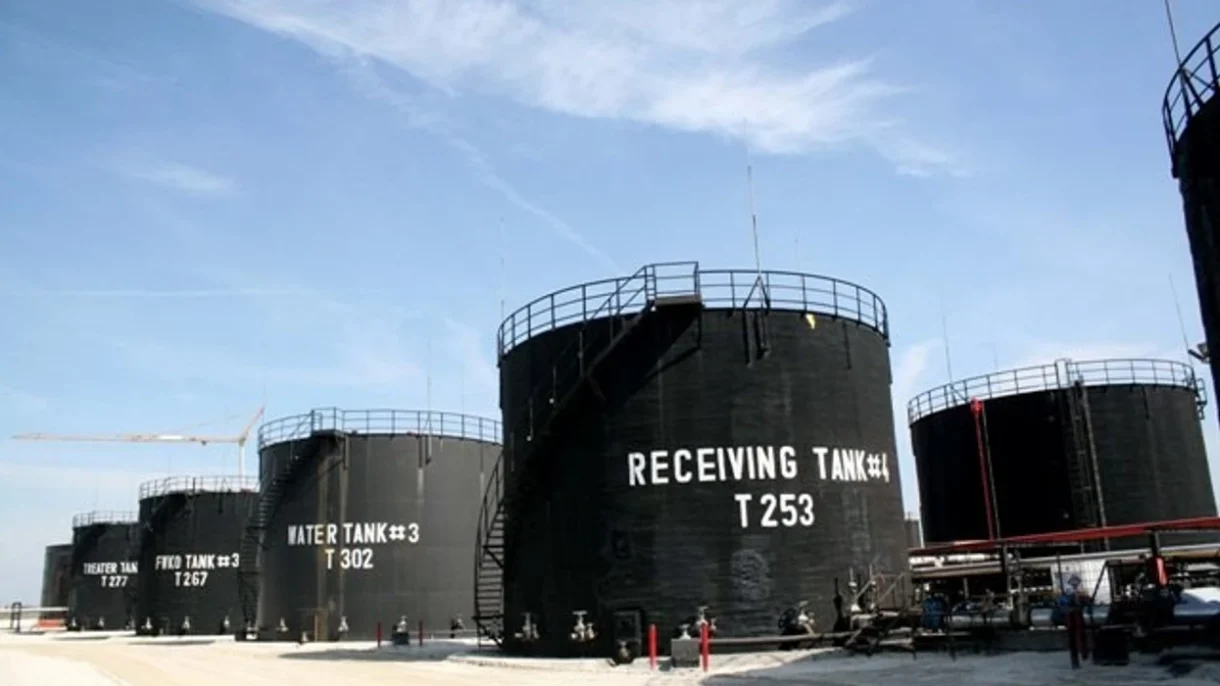
Minister Karakaçi announced that a new draft law on the oil reserve, expected to be approved by the government within two to three weeks, will transfer physical custody of the reserve from private operators to a state agency for up to 90 days.

“With respect to the reserve obligation, which is calculated based on last year’s daily turnover, we have notified all operators that they are required to hold a 30-day reserve, with the remainder contracted by other means, to ensure there is no shortage of hydrocarbons.

The blockade of the Strait of Hormuz has not affected supplies to our country.

The new draft law on the oil reserve, prepared in accordance with the European Union directive, will be adopted by the government within two to three weeks. Under the draft law, oil reserves will no longer be held by companies but by a state agency that will ensure the physical availability of hydrocarbons for up to 90 days.”

Minister Karakaçi also reported that retail inspections indicate no abuse in fuel pricing, and that company profit margins ranging from 13 to 14 lekë per litre are acceptable.

“The final retail price in Albania is largely determined by import costs, which makes domestic prices volatile. A cost of 147 lekë excluding VAT reflected the real cost of the product. This indicates a gross profit of 13 to 14 lekë, which is an acceptable margin. We have not observed price abuse, and therefore did not find it justified to convene the board.”

Prime Minister Edi Rama added that Albania does not produce petroleum suitable for final retail use, because the oil we extract is heavy crude. Processing it for consumer-grade fuel would require a refinery and entail high costs for conversion to a usable product.

“As history has shown, this oil has not proven suitable for direct consumer use, except for certain industrial applications.”

by in News

EU Eyes Urgent Gas Price Cap as Geopolitical Tensions Destabilize Energy Markets

The European Commission is weighing aggressive interventions in the energy market—including a potential cap on natural gas prices—to shield consumers and industries from a sharp spike in electricity costs. Speaking at a European Parliament plenary debate, Commission President Ursula von der Leyen signaled that the executive branch is preparing a suite of emergency measures to decouple gas prices from broader power bills.

Geopolitical Volatility Hits the Grid

The move comes as energy markets face renewed turbulence driven by the armed conflict involving the US and Israel against Iran. The escalation has severely disrupted shipping lanes in the Strait of Hormuz, a vital chokepoint for global oil and liquefied natural gas (LNG) supplies.

The impact on European benchmarks has been immediate and severe:

  • Late February: TTF gas traded at a relatively stable €31 per MWh.

  • Peak Surge: Following the escalation, prices spiked by 100%, briefly eclipsing €62 per MWh.

  • Current Standing: Prices have leveled off slightly but remain elevated at over €51 per MWh.

The “Merit Order” Dilemma

Under the EU’s current “merit order” system, electricity prices are determined by the most expensive power plant required to meet total demand. Because natural gas plants are frequently the final resources called upon to balance the grid, they effectively set the price for the entire market—even when cheaper renewables are available.

“It is crucial that we reduce the cost impact when gas sets the electricity price,” von der Leyen stated. “We are exploring better use of Power Purchase Agreements (PPAs), Contracts for Difference (CfDs), and direct gas price caps to break this link.”

Breakdown of the Average EU Electricity Bill

To address the crisis holistically, the Commission is analyzing the four primary drivers of consumer costs:

Component Share of Bill Commission Strategy
Energy Generation 56% Gas price caps, subsidies, and state aid.
Grid Charges 18% Increasing grid productivity to reduce waste.
Taxes & Levies 15% Encouraging member states to lower local burdens.
Carbon Costs (ETS) 11% Modernizing the Emissions Trading System.

Beyond Price Caps: A Long-Term Overhaul

While a gas cap serves as a “firebreak,” the Commission’s strategy extends to structural reforms. Von der Leyen emphasized that increasing the productivity of existing grids is a priority to ensure that renewable energy is not “wasted” during periods of peak production. Furthermore, the Commission aims to modernize the EU Emissions Trading System (EU ETS) to ensure carbon pricing remains a tool for transition rather than a prohibitive burden during supply shocks.

By targeting every component of the power bill—from the raw commodity cost to the underlying taxes Brussels hopes to stabilize a continent currently caught in the crosshairs of global conflict.

by in News

Albania Moves Toward Oil Security Reserves Amid Global Energy Volatility

The Albanian government has been working for several years to pass legislation governing the creation, maintenance, and management of minimum security reserves for crude oil and its refined products.

According to international standards, these emergency stocks are calculated at either 90 days of net imports or 61 days of average daily consumption, whichever is higher. These reserves are designed to be deployed during extraordinary circumstances, such as physical supply shortages or geopolitical crises.

The initial draft, proposed in February 2019, introduced a co-management formula between the state and the private sector—a departure from the current model where reserves are held entirely by private companies and refineries. Under the proposed framework, a public entity would manage 60 days of average consumption, while the remaining 30 days would remain the responsibility of private operators.

The legislative proposal envisioned the creation of a dedicated public body named the State Agency for Oil Security Reserves, operating under the jurisdiction of the Ministry of Infrastructure and Energy (MIE).

The Cost of Energy Security

The draft law stipulated that the agency would be self-financed through a dedicated fee levied on every liter of fuel purchased by refineries and wholesale companies. This mechanism would essentially introduce a new fiscal obligation, which is expected to translate into higher pump prices for final consumers.

While the project has undergone various internal government discussions since 2019, it was only in October 2025 that it was formally released for public consultation. The current draft maintains the previous structure: a non-profit public entity, now dubbed the Security Reserve Authority, under the MIE.

Key administrative details include:

  • Article 10: Fees for obligated parties will be collected by the Customs Authority during the collection of excise duties.

  • Article 11: Payers are required to submit payment data within 30 days of the end of each calendar month.

Despite the fact that the project has yet to be finalized, market operators anticipate additional costs totaling hundreds of millions of euros. These costs cover the procurement, storage, and logistics of the security stocks—burdens that are expected to increase operational costs for companies and, ultimately, prices for the consumer.

Global Context: Iran Conflict Risks New Energy Crisis

As Albania formalizes its domestic security measures, the escalation of conflict in the Middle East—specifically involving Iran—is sending shockwaves through global energy and financial markets. International economic analysts warn that a prolonged conflict could trigger severe supply disruptions, oil price spikes, and renewed inflationary pressures worldwide.

A primary concern is the potential for conflict to damage regional energy infrastructure or obstruct oil transit through the Strait of Hormuz, one of the world’s most critical energy corridors.

Market Analysis

In a recent analysis titled “War with Iran is a Nightmare for Oil and Gas Markets,” Bloomberg noted that a broad regional conflict has long been considered the “worst-case scenario” for the energy sector. The report emphasizes that the Persian Gulf remains a cornerstone of global energy supply, and any disruption there triggers an immediate market reaction.

Similarly, The Economist has warned of a significant shock to global markets. In an article titled “War in Iran Could Trigger the Biggest Oil-Market Shock in Years,” the publication highlights the extreme sensitivity of energy markets to regional tensions. Any disruption to tanker traffic could drastically reduce global supply and drive energy prices to record highs.

Financial and Economic Ripple Effects

The geopolitical tension has already impacted financial markets:

  • Safe-Haven Assets: Investors are pivoting toward gold and bonds.

  • Volatility: Stock markets are experiencing fluctuations as geopolitical risk premiums rise.

  • Inflation: Analysts warn that high oil prices ripple through the economy by increasing costs for transport, manufacturing, and food production.

Experts conclude that countries dependent on energy imports are the most vulnerable. European and Asian economies, in particular, face the prospect of surging production costs and new inflationary cycles if energy prices remain elevated.

by in News

The Double Squeeze: Europe’s Energy Sovereignty in the Shadow of Two Fronts

The European energy landscape has reached a critical inflection point as of early March 2026, characterized by the simultaneous escalation of two major geopolitical crises that threaten the continent’s industrial foundation and long-term energy security. The recent outbreak of direct hostilities between the United States, Israel, and Iran has fundamentally altered the global energy calculus, compounding the existing stresses of the prolonged Russia-Ukraine conflict. As an expert observer of these markets, it is evident that Europe is no longer just managing a transition away from Russian fossil fuels; it is now navigating a systemic “supply-chain fragmentation” that challenges its strategic autonomy on every front.

The most immediate and destabilizing factor is the conflict in the Middle East, which has seen the effective closure of the Strait of Hormuz following retaliatory strikes and the reported death of the Iranian Supreme Leader. This maritime blockade has paralyzed nearly 20% of the world’s liquefied natural gas (LNG) and oil supplies, with Qatar—a cornerstone of Europe’s post-2022 diversification strategy—forced to halt its production entirely. The market reaction has been swift and severe, with European gas futures surging by approximately 50% in the final week of February and early March. While the European Commission and industry leaders like Statkraft’s CEO Birgitte Vartdal have noted that Europe has fortunately passed the peak of winter heating demand, the physical security of supply is less of a concern today than the economic reality of the coming months. The real danger lies in the summer injection season; without Qatari and Persian Gulf volumes, analysts warn that European storage levels may only reach 70-75% by next winter, far short of the 90% mandate. This structural deficit ensures that any future cold spell will translate directly into extreme price volatility and potential industrial demand destruction.

Russian President Vladimir Putin has moved quickly to weaponize this Middle Eastern instability, framing the global price surge as a consequence of Western aggression and “erroneous” European energy policies. In a calculated maneuver, Putin has signaled that Russia is considering an early halt to its remaining gas exports to Europe, citing “commercial reasons” and the EU’s own plans to phase out Russian pipeline gas by 2027. By suggesting that it is more profitable to redirect these volumes to emerging Asian markets now, Moscow is attempting to pre-emptively sever the final energy ties with the West on its own terms. Furthermore, the Kremlin has heightened the sense of insecurity by alleging Ukrainian-backed plots to sabotage the TurkStream and Blue Stream pipelines, which remain vital for energy flows into Southern Europe and Türkiye. This rhetoric serves a dual purpose: it pressures European nations to reconsider their support for Ukraine while simultaneously driving up the risk premiums that domestic industries must pay for energy.

The European response has shifted toward a more aggressive form of “strategic autonomy,” as seen in the launch of the European Industrial Maritime Strategy and the EU Ports Strategy on March 4, 2026. These initiatives represent a belated recognition that energy security is inseparable from maritime and industrial sovereignty. By prioritizing the “Made in Europe” provision and focusing on high-tech shipbuilding and offshore wind support, the EU is attempting to build an infrastructure that can withstand the decoupling of global trade routes. However, as trade unions and industrial groups have pointed out, these long-term structural changes do little to mitigate the immediate “price shock.” The reliance on the spot market to replace lost Middle Eastern and Russian volumes has left European utilities competing with Asian buyers at record-high premiums, a situation that Statkraft warns will erode the competitiveness of energy-intensive sectors like chemicals and steel.

Ultimately, the confluence of the Iran crisis and the Russia-Ukraine war has exposed the fragility of Europe’s “bridge” strategy, which relied on replacing Russian pipeline gas with global LNG. The current paralysis of the Strait of Hormuz demonstrates that LNG is not a risk-free alternative but is instead subject to the same geopolitical vulnerabilities as pipelines, albeit across different geographic chokepoints. For Europe, the path forward is increasingly narrow: it must accelerate its demand-side response and the deployment of renewables while simultaneously bracing for a prolonged period of high inflation and supply-chain uncertainty. The coming year will likely be defined by a shift from “just-in-time” energy procurement to a “security-first” model, where the cost of resilience is high, but the cost of continued dependence is now proving to be unsustainable.

by in News

How Oil and Gas Prices Are Rippling Through Europe and the Balkans

The widening military confrontation involving Iran has triggered immediate turbulence in global energy markets, underlining once again the structural fragility of interconnected supply chains. Within days of escalation, Brent crude rose above 80 USD per barrel as markets reacted to fears of supply disruption and potential interference with maritime traffic in the Strait of Hormuz, a chokepoint through which roughly one-fifth of global oil trade transits (Reuters, 2026a). Even in the absence of a complete closure, the perception of heightened risk has increased tanker insurance costs and freight rates, reducing effective supply and embedding a geopolitical premium into global oil pricing.

Approximately 20% of global oil consumption and 20% of the world’s liquefied natural gas (LNG) transit the Strait of Hormuz. According to recent analysis by The Soufan Center, Iran has shifted its strategy from regional military confrontation to a “global economic shock event.” By targeting critical energy infrastructure—including drone strikes on Qatar’s Ras Laffan facility and Saudi Arabia’s Ras Tanura—Tehran has effectively neutralized the world’s “spare capacity” safety net.

In the first 72 hours of the conflict, Brent crude futures surged by over 10%, while European natural gas prices (Dutch TTF) skyrocketed by a staggering 50%. Analysts from Wood Mackenzie warn that if the blockade of the Strait persists, oil prices could comfortably shatter the $100-per-barrel mark, with worst-case scenarios projecting peaks of $140.

ICE Endex
Dutch TTF Natural Gas Futures

European Energy Security Under Renewed Pressure

Strategic analysis from the European Union Institute for Security Studies highlights that conflict involving Iran has implications extending well beyond the Middle East battlefield (European Union Institute for Security Studies [EUISS], 2026). Although the European Union imports limited volumes of Iranian hydrocarbons directly, it remains deeply exposed to global price formation mechanisms. Oil markets operate globally; a disruption anywhere reverberates everywhere.

The inflationary consequences are particularly concerning. As reported by the Financial Times, economists warn that a sustained energy price spike could complicate the European Central Bank’s monetary trajectory by reigniting cost-driven inflation across the eurozone (Financial Times, 2026). Higher crude prices feed directly into transport and manufacturing costs, while elevated gas prices influence electricity markets in member states still reliant on gas-fired power generation.

The International Energy Agency has consistently emphasized that limited spare production capacity globally leaves markets highly sensitive to geopolitical shocks (International Energy Agency [IEA], 2025). In such an environment, even the risk of disruption can produce disproportionate price movements, amplifying economic uncertainty across the continent.

Transmission of the Shock to the Western Balkans

While Western Balkan states do not rely directly on Iranian crude or gas, they are deeply integrated into European pricing structures. Wholesale gas contracts across Southeast Europe are often indexed to benchmarks such as the Dutch TTF. As those benchmarks climb, the impact is transmitted almost automatically into domestic procurement costs.

Regional analysis from Kosovo Online underscores the potential economic consequences for Southeast Europe if the conflict escalates further (Kosovo Online, 2026). The report notes that higher fuel and electricity prices would strain household budgets and industrial competitiveness in economies already operating with limited fiscal buffers. Energy poverty, already a structural concern in parts of the region, could intensify.

While Brussels debates strategic reserves, the Balkan countries are already facing a “fossilflation” crisis. Data from Vox News and Monitor reveal that in countries like Albania, fuel prices at the pump are expected to rise by 15–20 lek per liter within days.

The Balkans suffer from a unique “import-dependency” trap. Unlike Western Europe, which has more diversified energy portfolios and deeper pockets for subsidies, the Balkan economies have high “pass-through” rates. In Romania and Hungary, every 10% increase in oil prices translates to a direct and significant jump in the Consumer Price Index (CPI).

Macroeconomic and Political Implications

The broader economic implications extend beyond energy bills. Rising import costs worsen trade balances in energy-importing economies, increasing external vulnerability. For Balkan states seeking closer integration with the European Union, prolonged energy instability risks undermining economic convergence.

Kosovo Online analysts warn that economic stress triggered by sustained energy price hikes could generate secondary effects, including migration pressures and political instability (Kosovo Online, 2026). In smaller economies with limited social safety nets, rapid increases in living costs can quickly translate into political volatility.

At the European level, policymakers are monitoring the situation closely. Coordinated gas storage strategies and diversification efforts implemented after the 2022 energy crisis provide a degree of resilience. However, as the EUISS analysis makes clear, geopolitical risk in the Middle East remains a systemic vulnerability for Europe’s energy security architecture (EUISS, 2026).

Outlook: Volatility as the New Baseline

The trajectory of oil and gas prices now hinges on the scale and duration of the conflict. Should the confrontation escalate to directly affect major production or LNG export facilities in the Gulf, further price surges are likely. Conversely, rapid diplomatic de-escalation could reduce the geopolitical risk premium currently embedded in futures markets.

For Europe, the challenge lies in managing macroeconomic stability while reinforcing long-term diversification. For the Balkans, the stakes are more immediate: household affordability, industrial resilience, and political equilibrium. In a globalized energy system, geographic distance offers no insulation. Conflict in the Gulf transmits through freight markets, commodity exchanges, and supply contracts — and ultimately into consumer bills in Belgrade, Sarajevo, Skopje, and Pristina.

The unfolding crisis underscores a fundamental reality of modern energy economics: security, stability, and price are inseparable. When geopolitical tensions rise in one region, the economic consequences reverberate across continents.