by in News

EU solar jobs headed to first decrease in decade

Jobs in the European Union’s solar industry reached a record level last year, however they are dropping in 2025.

Nevertheless, the decrease in solar jobs this year could be only temporary, according to SolarPower Europe’s latest report.

Europe’s green job expansion continued in 20254, with EU solar jobs rising to a record high of 865,000. The sector’s 5% increase outperformed the wider EU labour market’s 0.8% growth, the EU Solar Jobs Report 2025 showed.

Most jobs, 86%, are provided by the solar deployment sector.

EU solar employment will face a temporary drop in 2025, of 5% decline to 825,000 jobs, due to slower solar deployment and manufacturing challenges, the update reads.

Nevertheless, the association expects solar workforce to grow over the coming years and reach 916,000 by 2029.

Solar delivers 825,000 quality jobs for Europe in 2025, said Walburga Hemetsberger, CEO of SolarPower Europe. It is incredible, she added.

“However, this falls short of the one million solar job mark we were hoping to reach by now, and for the first time in a decade, solar jobs growth has halted. We can’t ignore this warning. EU leaders have the opportunity to reverse course, stabilise the market, support EU solar manufacturers, and strengthen its skills strategy,” Hemetsberger stated.

The main reason for the decrease this year is a slowdown in residential solar. The share of EU rooftop solar workforce has been shrinking for the last three years, from 73% in 2022, to 59% in 2024, and it is projected to land at 56% in 2029, according to the report.

In July, the association estimated that the EU’s annual solar installations would come in weaker year-on-year in 2025 for the first time in a decade. The warning coincided with the month when solar power became the EU’s biggest electricity source for the first time.

Germany remained the leading EU country for employment

The largest national solar markets also represented the largest sources of solar employment in the EU.

Germany remained in the lead in employment last year, with around 128,000 direct and indirect full-time equivalent (FTE) jobs. However, the level tumbled from 154,000, registered in 2023, despite a jump in new installations to 17.2 GW from 15.1 GW.

Spain ranked second, with 122,000 FTEs. Italy saw significant growth, with the solar job market surpassing 100,000 workers, placing it third in the EU. Other top markets included Poland (90,000), France (66,000), Romania (62,000), and Hungary (47,000), the report adds.

SolarPower Europe issued ten policy recommendations for maintaining job growth:

  1. Establish a European solar skills intelligence hub.
  2. Scale and stabilize funding for renewable skills, with simplified access for small and medium-sized enterprises (SMEs).
  3. Map existing skills initiatives.
  4. Conclude sectoral agreements to enable large-scale retraining.
  5. Run coordinated campaigns to improve the attractiveness of technical green careers as well as apprenticeships and vocational training.
  6. Promote gender balance and diversity in solar careers.
  7. Develop cross-renewable career pathways and portable competence frameworks.
  8. Introduce a European solar skills passport.
  9. Adopt an electrification skills strategy that links photovoltaics with heat, mobility and storage.
  10. Invest in advanced digital and artificial intelligence (AI) training.
by in News

Power the Balkans: Optimizing Solar & BESS projects with RatedPower – webinar announcement

RatedPower, a leading provider of software for solar plant design and optimization, is organizing a free webinar to present its solutions that boost the efficiency and profitability of PV and battery storage projects. The online event, to be held on October 13 at 3 pm CEST, comes at a time when renewables are gaining momentum in the Balkans, increasing the need for complex planning and engineering and making digital solutions essential for project optimization.

In the upcoming webinar, which you can register for using the REGISTRATION LINK,  experts will showcase how RatedPower solutions automate and streamline the design of solar power plants and battery energy storage systems (BESS), maximize efficiency and return on investment, provide accurate reports for better decision-making, and enable seamless collaboration across teams, according to an announcement from the company.

“Digital solutions are becoming essential to streamline processes – from design and engineering to operations, reporting, and collaboration. By integrating advanced software tools, developers and engineers can save time, reduce costs, and maximize the efficiency and performance of their assets,” reads the statement.

RatedPower’s advanced software tools save time, reduce costs, and maximize performance

RatedPower, part of Enverus, a global software-as-a-service (SaaS) platform for the energy sector, offers a one-stop cloud-based solution for PV plant and BESS design and engineering as well as hybrid systems. Its end-to-end platform offers integrated services that cover design, engineering, procurement, and even operational optimization, ensuring a seamless lifecycle approach.

According to the statement, users have confirmed to have doubled their portfolio, increased their profitability by over 20%, and reduced the levelized cost of energy (LCOE) by 5%.

RatedPower is not limited to traditional solar. Its model adapts to hybrid renewable energy systems, BESS integration, and smart grid optimization, positioning it as a strategic partner for the next generation of sustainable energy solutions.

By harnessing real-world performance data and predictive analytics, it helps developers, investors, and operators make smarter, more profitable decisions, mitigating risk and maximizing ROI, reads the statement. The platform enables renewable energy professionals to automatically design, simulate, and optimize PV plants and storage systems.

Unlocking the Balkans’ renewables potential with RatedPower solutions

Headquartered in Madrid, Spain, RatedPower has a portfolio of thousands of projects across Europe, the Americas, Asia, and Africa, with a client base that includes leading developers, utilities, EPC (engineering, procurement, and construction) companies, and engineering firms.

Serving more than 480 companies and 5,800 users worldwide, RatedPower has designed over 64,000 projects worldwide and produced simulations for a total of 5.1 TW of capacity. The projects are supplying green energy to 13 million households, mitigating 18 million tons of CO₂ emissions.

RatedPower has a global footprint, but it views the Balkans as a key region for renewable energy growth.

“RatedPower is committed to empowering renewable energy professionals worldwide – and the Balkans represent one of the most exciting regions for renewable growth,” said Emil Trepin, Account Executive at RatedPower.

Photo: Emil Trepin, Account Executive at RatedPower

“Our software provides the precision, efficiency, and collaboration tools needed to take PV and BESS projects from concept to completion, helping to unlock the region’s true potential,” he stressed.

by in News

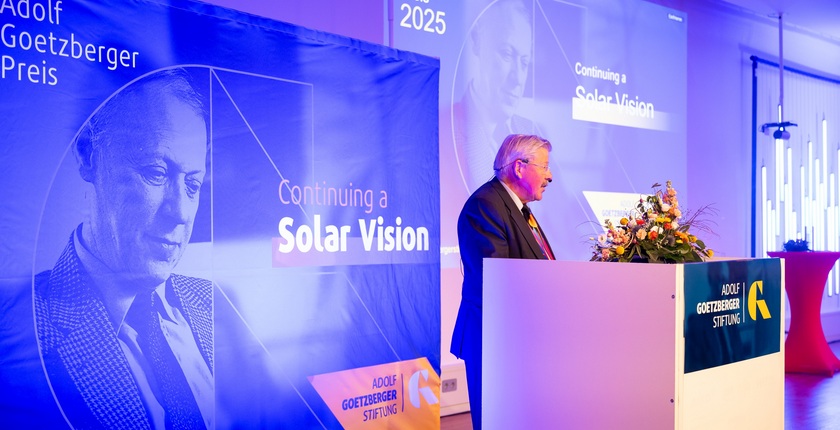
Adolf Goetzberger Award 2026: Apply with innovative solar solutions and win EUR 25,000

The Adolf Goetzberger Award, which recognizes innovation in solar, energy storage, smart grids, and power system efficiency, has invited applications for 2026, following a successful debut in 2025. The award once again spotlights developments that combine technological excellence with practical value and societal impact, according to the organizers.

The EUR 25,000 Adolf Goetzberger Award, named after German physicist and solar energy pioneer Adolf Goetzberger, honors individual contributions to forward-looking concepts, prototypes, or processes in photovoltaics, solar thermal energy, energy storage, smart grid integration, and system efficiency. Systemic and cross-disciplinary solutions are expressly welcome, the Adolf Goetzberger Foundation said.

The innovations should make a tangible contribution to sustainable energy system transformation

What matters is that the innovations address real-world technical and economic challenges and make a tangible contribution to the sustainable transformation of the energy system, reads a press release from the foundation, which is dedicated to promoting science and research, environmental protection, and climate action, with a particular focus on solar energy.

The inaugural Adolf Goetzberger Award was handed out in March 2025 to Heribert Schmidt for developing the HERIC® (highly efficient and reliable inverter concept) topology. The 2026 award ceremony will be held next spring.

Awarding innovation that makes the world a better place

“Innovation starts with a clear goal: making the world a better place. That’s the mission behind the Adolf Goetzberger Award. We aim to spotlight solutions that truly move the needle – technologically sound and socially relevant,” said Thomas Nordmann, Chair of the Adolf Goetzberger Foundation Board of Trustees.

This year’s award has an expanded scope

In addition to traditional entries from photovoltaics and solar thermal energy, the award now also invites cross-sectoral approaches, such as the smart combination of multiple technologies, advanced control and automation systems, innovative storage solutions (including power-to-X), the integration of heat pumps, or efficiency improvements in hybrid systems.

The award primarily targets applicants from Europe but is open to international individuals as well. In addition to the EUR 25,000 cash prize, recipients will receive a certificate recognizing their contribution to the energy transition. Applications can be submitted online at Goetzbergerstiftung.de.

by in News

Third Regional Power Sector Exchange in Ohrid: Power grids at core of energy transition

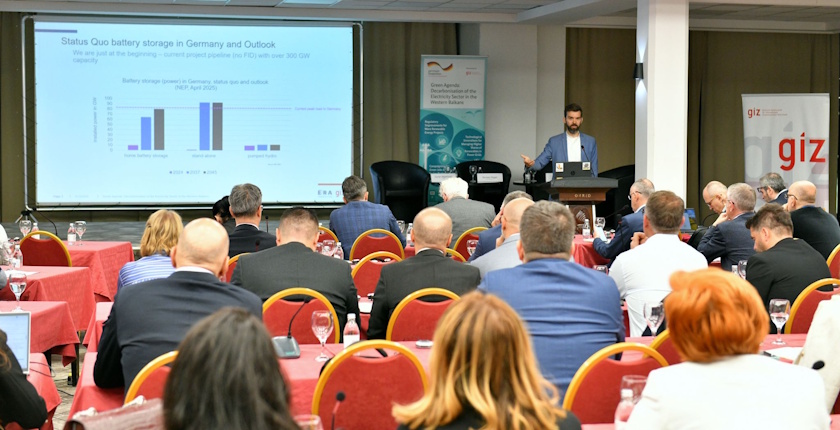
The third Regional Power Sector Exchange of the Western Balkans in Ohrid in North Macedonia gathered over 80 energy professionals from the region to discuss the future of electricity decarbonization and the urgent need to modernize power infrastructure.

Organised under the framework of the Regional Climate Partnership between Germany and the Western Balkans, the conference brought together representatives of transmission and distribution system operators, energy regulators, and energy ministries to accelerate coordinated action toward a greener, more resilient power system.

“No grids, no glory. This slogan captures the challenge in front of us. Without investment in power grids, adaptable regulation, and skilled professionals, the renewable energy transition cannot succeed,” Project Manager at GIZ Nicolas Heger said in his welcoming remarks.

Oberhuber: The Western Balkans have the potential to become a major exporter of clean electricity

Opening addresses were delivered by David Oberhuber, GIZ Country Director in North Macedonia, Anca-Iulia Cimpeanu, European Commission (DG ENER), and Davor Bajs, Energy Community Secretariat.

In his keynote speech, Oberhuber stressed the region’s strategic importance in the Regional Climate Partnership.

The Western Balkans has the potential to become a major exporter of clean electricity to Western Europe and a hub for investment and innovation in renewable energy, he said.

North Macedonia is advancing its energy transition by expanding renewables – solar power capacity reached 506 MW in 2023 – and reducing coal dependency, although thermal power plants still accounted for 47.3% of total electricity production in early 2024.

In 2023, renewables made up 33.15% of electricity generation, with households, transport, and industry as the top energy consumers.

To accelerate the shift, tailored support projects were launched. The Energy, Water Services and Municipal Waste Management Services Regulatory Commission is tackling the surge in renewables applications. Distribution system operator (DSO) EVN is focusing on smart grids and energy quality, and transmission system operator (TSO) MEPSO is exploring options to reduce balancing costs through regional market mechanisms.

Six tailored support projects presented

The event included three sessions on tailored support projects.

Professor Nermin Suljanović presented the project Concept on Data Exchange Between System Operators in Bosnia and Herzegovina.

The data platform enables automatic data exchange among all actors in the electricity market in Bosnia and Herzegovina, ensuring data interoperability and harmonized communication interfaces, according to Suljanović.

He also outlined the project Technical Specification and Requirements for Integration of Renewables into DSO Telecommunication Network.

E-mobility is not only related to energy but also to transportation, telecommunication, data security

A project titled Procedure for Handling RES Connection Requests to the Grid – Queue Management was presented by expert Miltos Aslanoglou, and the Roadmap for Creating a Legal and Regulatory Framework for EV Charging by expert Dejan Stojadinović.

“EU legislation on this matter is a good base for the Western Balkan countries to prepare relevant legal and regulatory frameworks. E-mobility is not only related to energy but also to transportation, telecommunication, data security, and other issues,” Stojadinović said.

Goran Majstrović, Deputy Director and Head of the Energy Transmission and Distribution Department at Energy Institute Hrvoje Požar (EIHP), gave an insight into the project Feasibility Analysis and Funding Assessment for using Dynamic Line Rating (DLR) on the Kosovo* Transmission Grid.

Simplification of Procedures for Prosumer Connection to the Distribution Network in the Federation of BiH was the name of the project introduced by expert Goran Dobrić.

The need for regionally integrated networks has never been greater

Blackouts in both Southern and Southeastern Europe have highlighted vulnerabilities in grid infrastructure amidst growing shares of renewable energy. The need for modern, flexible, and regionally integrated networks has never been greater.

The event was part of a wider regional project implemented by GIZ on behalf of the German government, supporting the integration of renewables and enhancing energy security across the WB6.

In just two years, the project has supported over 30 institutions, trained more than 135 energy professionals, and facilitated the development of the Action Plan for Power Grids in the Western Balkans, in cooperation with the Energy Community Secretariat.

Network redesigns are lagging behind renewables by seven to ten years

Goran Majstrović from Energy Institute Hrvoje Požar presented the Action Plan for Power Grids in the Western Balkans.

“The path to integration of renewables is not just replacing power plants but redesigning the entire system to accommodate them. Network redesigns are lagging behind renewables by seven to ten years,” he asserted.

In the plan, the required grid investments by 2030 in the six countries of the Western Balkans (WB6) are estimated at EUR 10 billion to EUR 14 billion. Investments in primary equipment are seen at EUR 6 billion to EUR 8 billion. As for secondary equipment (digitalization), the forecasted tally is EUR 4 billion to EUR 6 billion.

Phase 2 of the project Green Agenda: Decarbonisation of the Electricity Sector in the Western Balkans is scheduled for completion in 2028. The Regional Power Sector Exchange will remain a key platform for cooperation, helping ensure the energy transition in the region is just and inclusive.

* This designation is without prejudice to positions onstatus and is in line with UNSCR 1244/99 and the ICJ Opinion on the Kosovo declaration of independence.
by in News

Turkish Egesa Enerji to build two solar power plants in Serbia’s Vojvodina province

Turkish company Egesa Enerji has launched a project to build two solar power plants in Vojvodina, with a total peak capacity of 8.6 MW. The investor has signed an agreement with the contractors, and construction is slated to begin in the coming months, according to a statement by Serbian company Solarna energija budućnosti (SEB), which will supply the equipment.

One of the two solar power plants will be built in the village of Aradac near Zrenjanin, with a peak capacity of 4.2 MW, while the other one, of 4.4 MW, will be located in Odžaci. Both will be connected to the distribution grid, in line with a strategy for developing localized and decentralized electricity generation, according to the statement. Vojvodina is Serbia’s northern province.

The solar power plants will help decentralize power generation

The main contractor for the two turnkey projects is Serbian firm Electric Power Construction (EPC). The contractor consortium also includes Bey Han from Turkey, which has built over 250 MW of solar capacity in its home country.

The investor, Egesa Enerji, has completed a large number of projects in three countries and currently operates solar power plants with a total peak capacity of 170 MW, according to the Turkish company’s website.

Egesa Enerji operates solar power plants of 170 MW overall

The project is being carried out through Egesa Enerji’s subsidiary Temo Power, registered in Belgrade.

Vojvodina seen as priority area for investment in solar

In the statement, SEB said that Vojvodina, the part of Serbia with the lowest installed solar capacity, has been identified as a priority area for this type of investment.

“Such projects are exactly what Serbia’s distribution network needs most at this moment – local, stable production with clear timeframes and well-known technologies,” said Danilo Drndarski from the contractor consortium.

It is particularly important that the capacities are being deployed in Vojvodina, where there is a substantial imbalance between electricity consumption and local production, he added. Drndarski is the founder of SEB and EPC.

by in News

Serbia to invest EUR 60 million in renewables in district heating

Serbia plans to sign an agreement by the end of the year on introducing renewable sources in district heating plants, according to the Ministry of Mining and Energy.

Minister of Mining and Energy Dubravka Đedović Handanović met with Ambassador of Germany Anke Konrad and Director of Germany’s KfW Development Bank for Southeast Europe and Turkey Klaus Müller.

They discussed cooperation on ongoing projects in the energy sector and a plan for further investments in renewables and energy efficiency.

The minister highlighted the successful cooperation with KfW in the construction of biomass heating plants and the introduction of renewable energy in district heating systems. She recalled that four biomass heating plants have been installed.

In the coming years, new boilers will be installed in several heating plants

She noted that in the second phase of the project, in the coming years, heating plants in Prijepolje, Novi Pazar, Niš, Rača, Vranje and Majdanpek are envisaged to get new boilers.

By the end of the year, Serbia plans to sign an agreement on the introduction of renewables in district heating plants, namely solar technology and heat pumps, Đedović Hanadanović announced.

The investment is estimated at EUR 60 million, of which EUR 20 million would be a donation, thanks to the support of KfW, she added.

Serbia and Germany plan to strengthen cooperation

Đedović Handanović stressed the importance of the climate partnership with Germany and thanked for the support that the other country provides to Serbia in the modernization of the energy sector.

“We are grateful to the German government and the KfW Development Bank for their continuous support in different subsectors in energy, from district heating and energy efficiency to the development of new capacities from renewable energy sources,” she stated.

In line with its ambitions and reform goals in energy, Serbia intends to deepen cooperation with Germany through new projects.

Of note, the four heating plants were installed in Priboj, Mali Zvornik, Novi Pazar and Majdanpek. The agreement for the second phase of the project was signed in May last year.

by in Publication

Albania Solar energy

With solar energy, we distinguish usually two conversion types:  solar thermal, solar PV (or photovoltaic solar energy)

In this study we are focusing more on solar thermal energy. Solar thermal energy is the process where solar radiation is converted into thermal energy. The most common system is the solar water heater system (SWHS). The water is heating by the sun through a collector, usually placed on the roof of the building. The warm water is stored in a tank or directly used to heat the house or preheat another boiler.

Principle of a Solar Water Heating System

Principle of a Solar Water Heating System


Sometimes a distinction is made between active systems (such as a SWHS) and passive systems. An example for a passive system is a greenhouse that captures solar radiation without any additional process.

Background

The Preskot model is used for the assessment of the territorial distribution of solar radiation. The model has been adapted to the climate conditions of Albania, taking into consideration the multi-annual series of solar radiation (Mustaqi and Sanxhaku 2006). The following factors are considered as crucial in the assessment of solar radiation:

  • The geographic location of the country, which defines the possible theoretic potentials of the solar energy, taken from the horizontal surface of the earth.
  • Topography (closely connected to the scale of horizon hided from natural barriers), which defines the practical possible potential of the solar energy taken from the earth horizontal surface.
  •  Baric systems (their occasionally and time duration), which define the characteristics of the cloudiness regime

It is very clear that the last two factors have the major impact in the identification of the solar energy characteristics. The influence of both factors is at the same direction, the decrease of solar radiation towards the inner part of the territory. Concretely, the heliographic measure spots (at the same time the inhabited areas) are located at the end of the valleys of the rivers. As a result the horizon is relatively closed to the mountainous slopes. It is evident that the solar radiation quantity measured in the station is smaller that the one taken on earth surface located in a plateau or locations of a relative height. On the other side, analyzing the cloudiness regime in the territory, it results that, an average of 5 degrees in the field areas and of 6-7 degrees in the mountainous areas. Consequently, the reduction of the solar radiation can also be noticed.

The reducing effect of topography factor can be avoided by recommending areas as plateaus in considerable heights, with an open horizon. Meanwhile, it is important to point out that the effect of causality and the duration of baric systems can not be avoided because of the stochastic character of the atmospheric phenomena. The result of these factors is the distribution in the territory of the annual solar radiation, as presented in the following maps (figure 15 and 16).

Potential

As it can be seen from this map, Albania has a considerable energy coming through the solar radiation. This quantity varies from 1200 kWh/m2 in the northeast part of the country (the area than receives the lowest quantity of the solar radiation) up to 1600 kWh/m2 in Myzeqe area, which is the area that has a considerable quantity of this energy kind (Hido 2006). The average of daily solar radiation can change from a minimum of 3.2 kWh/m2 in the Northeast (day in Kukes) up to a maximum of 4.6 kWh/m2 in the South-Western (day in Fier). Therefore, Albania has an average of daily solar radiation of 4.1 kWh/m2, which can be considered as a good solar energy regime.

Figure 15 Territorial distribution of average daily solar radiation in Albania

Figure 15 Territorial distribution of average daily solar radiation in Albania

Figure 16 Territorial distribution of average quantity of sunshine hours in Albania

Figure 16 Territorial distribution of average quantity of sunshine hours in Albania


Most areas of Albania benefit more than 2200 hours of sunshine per year, while the average for the whole country is about 2400 hours. The Western part receives more than 2500 hours of sunshine per year. Fier has a record of 2850 hours. The number of the solar days in Albania has an average of 240 – 260 days annually with a maximum of 280 – 300 days annually in the South-Western part. The potential of solar thermal is not merely determined by irradiation characteristics (which positively considered in Albania) but also by availability of roof space and orientation and inclination of the roof, the collector and storage as well (Ecofys BV2006). More detail for some cities you will find on Annex B.

Installed capacity

The penetration of solar panel systems are used for thermal power production during the last decade increased from 0 to 23 GWh in 2001. Nevertheless, based on the surveys of National Agency of Energy (NAE), the number of the installed solar panels in 2003 is increased with 35% compared to 2002. In absolute values, the number of solar panels installed in 2003 was 2800 units, while in 2005 it is expected to go beyond 4000 units (MIE and NAE 2004).

Energy Efficiency Centre (EEC) has designed and implemented in kindergartens and schools three projects funded by EU in 2002-2003. The investment amount has been around 85000 EUR installing more than 200 m2 of solar panels. Based on the assistance of UNDP during 2003, an amount of 160 m2 of solar panels has been installed. The total of the investment reached 70000 USD (EEC 2002).

Nehemia Foundation, has installed 168 m2 solar panels and a contemporary heating systems in three schools of Pogradec with a beneficiary number of 650 students. In the framework of this project 28 m2 photovoltaic systems have been installed aiming to supply the computers and lightening system when power cuts.

Another significant project in the area of solar panels is currently under implementation. Global Environment Facility (GEF) through UNDP is supporting the Government of Albania to accelerate the market development of SWHS as one of the measures to reduce the growing electricity consumption and disparity between demand and the domestic power generation capacity. This country program aims at accelerating the market development of solar water heating. It is expected that the end of the projects meets the following: the installation of 75,000 m2 of new installed collector area, an annual sale of 20,000 m2 and with expected continuing

growth to reach the set target of 540,000 m2 of total installed SWH capacity by 2020 (UNDP 2005). The project is financed partly by GEF through UNDP, and Government of Albania as well as from other donors and private sector.

If Albania would develop the solar panels at similar level of Greece, the potential production of warm water would be equivalent to the energy production of 360 GWh thermo (or 75 MW thermo of the installed power). These amounts correspond to a total surface of 300,000 m2 (or 0.3 m2/family. The penetration in such countries as Israel, Greece, Turkey is actually over 0.45 m2/familje), which can be taken as a potential indicator for Albania for the coming 20 years.

Characteristic features for Albania

Figure 17 Daily average solar irradiation in some European countries.

Figure 17 Daily average solar irradiation in some European countries.

The position of Albania, which has a Mediterranean climate, generates favourable conditions for a sustainable development of the solar energy. The high intensity of solar radiation, its relatively long duration, the temperature and the air moisture are exactly the elements that contribute to this effect. The Mediterranean climate with a soft and wet winter and a hot and dry summer enables Albania to have higher potentials in solar energy use than the average of the European countries.

  • 1
  • 2