by in News

Electricity Production and Exports Rise Sharply in Albania in Q1 2026

Electricity production and exports increased significantly in the first quarter of 2026, while imports fell by more than half, according to data published by INSTAT on the country’s electricity balance.

Net domestic electricity production reached 3,647 GWh in the first three months of the year, compared with 2,234 GWh in the same period a year earlier, marking an increase of 63.2%. The growth was driven mainly by public hydropower plants, as well as private and concessionary hydropower producers, which together accounted for more than 93% of domestic production. Other producers, mainly photovoltaic plants, represented around 7% of total generation.

Gross electricity exports, including exchanges, rose to 1,503 GWh, up from 732 GWh in the first quarter of 2025, representing a year-on-year increase of 105.4%. At the same time, gross imports fell to 327 GWh, from 767 GWh, reflecting a decline of 57.4%.

As a result, the electricity exchange balance was positive at 1,177 GWh, while domestic production covered most of the country’s demand.

Public hydropower plants generated 1,667 GWh during the period, up 63% compared with the same quarter of the previous year. Production from private and concessionary hydropower plants reached 1,726 GWh, an annual increase of 66.8%. Meanwhile, other electricity producers, including photovoltaic plants, generated 254 GWh in the first quarter, compared with 176 GWh a year earlier, recording growth of 44%.

Electricity available for consumption increased by 8.9% compared with the first quarter of 2025, while final consumption reached 1,954 GWh, up 9.1% year-on-year.

Household electricity consumption increased by 8.8%, while consumption by businesses and other non-household consumers expanded by 9.5%. INSTAT also reported that network losses reached 516 GWh, or 8% higher than a year earlier. However, the share of losses in relation to electricity available for consumption declined slightly to 20.9%, from 21.1% in the first quarter of 2025.

Transmission losses increased by 31.9%, while distribution losses rose by 5.1%, according to official data.

TAB. 1 Electricity Energy Balance
MWh
Indicators Q1 2025 Q1 2026
A Available energy (A=1+2-3) 2.269.259 2.470.192
1 Domestic net production (1=1.1+1.2+1.3) 2.233.905 3.646.805
1.1 Thermal power plants 0 0
1.2 Hydropower plants (1.2=a+b) 2.057.523 3.392.739
a Public (a=a.1-a.2) 1.022.784 1.666.663
a.1 Gross production of public hydropower plants 1.032.261 1.679.355
a.2 Losses and own consumption 9.477 12.693
b Independent private and concessionary producers 1.034.740 1.726.076
1.3 Other producers — other renewable energy sources 176.381 254.066
2 Gross imports — energy received 767.187 326.815
3 Gross exports — energy delivered 731.833 1.503.429
B Electricity consumption (B=1+2) 2.269.259 2.470.192
1 Network losses (1.1+1.2) 477.816 515.817
1.1 Losses and own consumption in transmission 51.088 67.361
1.2 Distribution losses (1.2=a+b)1 426.728 448.456
a Technical losses in distribution 312.071 336.635
b Non-technical losses in distribution2 114.657 111.821
2 Use by consumers (2=2.1+2.2) 1.791.443 1.954.375
2.1 Household consumers 1.064.956 1.158.522
2.2 Non-household consumers 726.487 795.853
1 The breakdown of technical and non-technical losses consists of estimates carried out by operators active in the electricity sector.
2 Non-technical losses also include statistical differences arising from non-declarations of production and changes resulting from the timing of production measurement, which is shifted in relation to sales or consumption data.
⚡ Albania Electricity Balance · Q1 2026

Electricity Production and Exports Surge in Q1 2026

Official INSTAT data show that Albania’s electricity available for consumption increased by 8.9% year-on-year, supported by a strong rise in domestic generation and a sharp increase in exports.

Energy available 2,470 GWh ▲ +8.9% vs Q1 2025
🏭
Net domestic production 3,647 GWh ▲ +63.2% vs Q1 2025
🔌
Gross exports 1,503 GWh ▲ +105.4% vs Q1 2025
⬇️
Gross imports 327 GWh ▼ -57.4% vs Q1 2025

Q1 2025 vs Q1 2026: Electricity Balance

Indicator Q1 2025 Q1 2026 Change
by in News

Albania’s Solar Surge: Capital Inflows, Grid Pressures and a Market in Transition

Photovoltaic energy is attracting capital at an accelerated pace in Albania, emerging as a new investment pillar for both traditional energy players and diversified business groups. With licenses granted for nearly 980 MW of solar capacity and hundreds of megawatts already operational, the market is undergoing a structural transformation—shifting from overwhelming dependence on hydropower toward a more diversified generation mix.

Private investment in the sector is estimated at around €1.5 billion, encompassing solar, wind and hydropower projects. Yet the rapid expansion is placing mounting pressure on existing infrastructure, highlighting the urgent need for parallel grid investments. Without reinforcement of transmission and distribution networks, the growth of photovoltaics risks outpacing the system’s capacity to absorb new output. Once again, the private sector appears to be moving faster than institutions.

When Albania first adopted its legal framework “On Renewable Energy Sources” in 2017, few anticipated the scale of transformation that would unfold less than a decade later.

From Slow Beginnings to Accelerated Growth

The early years of renewable development, particularly solar, were marked by bureaucratic hurdles, limited institutional experience and an energy market still in reform. The turning point came through two key developments.

First, market liberalization opened space for self-producers—an expanding segment entitled to install capacities of up to 500 MWp. Second, and more decisively, the global energy crisis that erupted in October 2021 dramatically reshaped market dynamics.

Post-pandemic raw material inflation, surging energy demand driven by economic recovery, and the war in Ukraine—triggering disruptions in Russian gas supplies—sent shockwaves through global energy markets. In 2022, prices reached record highs. Albania spent nearly €500 million on electricity imports, while on the Hungarian exchange—an important regional benchmark—prices peaked at €1,037 per MWh.

Although prices later retreated, volatility remains a defining feature of the market. This climate of uncertainty has become a major catalyst for new energy projects. Authorities report more than €2 billion invested in Albania’s energy sector in recent years. Currently, over 700 MW of private photovoltaic capacity is operational, alongside approximately 400 MW installed by self-producers.

The development pipeline could lift total photovoltaic and wind capacity to around 1,500 MW, while more than 1,600 MW of storage projects are under study or seeking financial facilitation.

Licensing and Market Structure

Despite numerous projects in various administrative stages, only a portion have secured production licenses. The Energy Regulatory Authority (ERE) has issued 71 production licenses for photovoltaic plants, totaling approximately 980 MW of installed capacity.

Most licensed projects fall within the sub-2 MW category, which benefited from a simplified regulatory framework introduced several years ago. These smaller plants were approved through accelerated procedures and supported by reference tariffs set periodically by the regulator. Electricity is purchased by OSHEE Group under a scheme similar to that applied to priority hydropower producers.

At the same time, a growing number of independent producers operate in the liberalized market. Supply liberalization has pushed thousands of businesses to secure electricity via private contracts, creating a stable demand base for new generators.

Solar projects also benefit from technical flexibility: they can be commissioned in phases, allowing electricity production before full completion of investment works.

Production Growth and Flagship Projects

Photovoltaic output rose sharply in 2025. According to preliminary data from INSTAT for January–September, the category “Other Producers”—which includes solar plants—generated 775 GWh, doubling year-on-year. Even compared to full-year 2024 output of 506 GWh, nine-month 2025 production was 53% higher.

Solar accounted for roughly 15.3% of Albania’s net electricity generation during the same period—more than double its 2024 share. This proportion is expected to rise steadily as new plants enter operation.

Among the largest projects is the 140 MW Karavasta solar park, developed by Voltalia. Additional operational projects include Blue (130 MW combined), Nova Solar System (50 MW) and multiple 20 MW facilities in Ersekë.

Projects under development include GreeNNat Solar Park Ballsh (100 MW), Faethon (78.6 MW), Sunny Side Energy (50 MW, part of the Kastrati Group), and the 100 MW Spitalla Solar park, also owned by Voltalia.

The rapid growth of solar capacity is gradually reshaping Albania’s electricity mix—historically dominated by hydropower—reducing exposure to imports and cushioning the impact of extreme price swings in international markets.

Year Energy Production (Thousand MWh)
2019 25
2020 35
2021 40
2022 52
2023 88
2024 506
2025 (9-Months) 775

European Bank for Reconstruction and Development: Strong Potential, Grid Constraints

The European Bank for Reconstruction and Development (EBRD) has been instrumental in supporting Albania’s renewable transition, advising the government on early photovoltaic auctions, including Karavasta—the country’s first large-scale solar plant.

Ekaterina Solovova, EBRD Resident Representative in Albania, has emphasized that the country’s solar potential remains considerable due to favorable geography and high solar irradiation. However, large-scale integration requires adequate transmission infrastructure.

Recent EBRD support includes sustainability-linked financing for OSHEE, restructuring short-term liabilities into longer-term financing to free up investment for grid upgrades. The bank is also cooperating with OST on EU grant-funded technical projects: closing the national transmission loop and modernizing the Fier substation—currently among the most congested solar zones—and developing a new cross-border transmission line with Kosovo to enhance regional interconnection.

Through initiatives such as the Renewable Energy Market Acceleration Program (REMA), the EBRD has supported the allocation of roughly 800 MW of new renewable capacity via Contracts for Difference (CfD) schemes.

Albania stands at a critical juncture: rich in renewable potential but constrained by infrastructure that requires substantial upgrading to ensure system stability.

European Investment Bank: Solar Could Reach 1 GW by 2030

Alessandro De Concini, EIB representative in Albania, notes that while Albania’s green credentials are strong, they remain vulnerable due to hydropower dependence and climate variability.

Solar capacity could reach 1 GW and wind 600 MW by 2030, supported by recent reforms easing licensing and auction procedures. However, climate risks—floods, fires and landslides—could cost up to 7% of GDP by mid-century.

Albania’s energy strategy prioritizes supply security, diversification, competition and environmental protection, aligned with EU legislation. The EIB’s forward plans include infrastructure modernization to ensure year-round supply security and price stabilization.

Investor Appetite and Market Diversification

Government-backed auctions—facilitating land access and streamlining procedures—sparked early investment during the pandemic. Yet a growing number of investors have entered the sector without subsidies, relying instead on private land, private power purchase agreements and market-based strategies.

Besnik Leskaj, founder of Blessed Investment Group, explains that detailed analysis of photovoltaic technology costs and regional price trends pointed to a favorable long-term risk-return profile. The group, alongside Matrix Konstruksion, has invested in fully private solar projects, emphasizing financial discipline and direct market exposure.

The Blue Parks, spanning 230 hectares with 263,000 smart panels, aim to build a 1 GW portfolio over the medium term, with 400 MW currently under development. Wind energy (two 25 MW projects) and battery storage systems are also part of the strategy.

Supporting Industries and Vertical Integration

The solar boom has stimulated domestic supply chains, from workforce training to mounting structure manufacturing. Companies such as Emante sh.p.k have expanded into producing Magnelis steel support structures for ground-mounted systems, supplying projects including Nova Solar (74 MW) in Seman and Info-Telecom (101.5 MW) in Ballsh.

Rapid sector growth is encouraging vertical integration, with firms expanding into mounting accessories and specialized structures to enhance added value.

End-of-Life Challenges

As solar installations multiply, long-term waste management is emerging as a strategic issue. Panels have a 25–30 year lifespan, meaning the first wave of mass installations will soon approach end-of-life. The International Energy Agency estimates panel waste could reach tens of millions of tons by 2050.

While recycling is technically feasible, it is often not yet economically competitive. The European Union mandates extended producer responsibility for collection and recycling, while China is scaling industrial recycling plants. The US and Japan are experimenting with high-value material recovery models.

Albania will need to address this issue proactively to ensure sustainability extends beyond generation.

Credit Growth and Corporate Performance

Energy and tourism have been the most dynamic sectors in recent years, reflected in rising bank lending. According to the Bank of Albania, outstanding credit to the energy sector grew 19% to 47 billion lek (€470 million) by December 2025, representing 9% of total business lending.

Karavasta Solar, managed by Voltalia, generated revenues of 3.5 billion lek in 2024 and profits of approximately 2 billion lek, with a 57% margin. The plant produced 258.3 GWh last year—3.2% of domestic net output and more than half of total solar generation, according to ERE. Under its 15-year contract, 70 MW is sold at a regulated tariff (€24.89/MWh) and 70 MW on the free market.

Spitalla Solar (100 MW) follows a similar structure, though progress has been slower.

Blue 1 (50 MW), commissioned in May 2024 at Sheq Marinas, Fier, operates entirely in the free market—one of the first large projects outside support schemes. Owned 51% by Blessed Investment and 49% by Matrix Konstruksion, it generated revenues of 680 million lek and profits of 380 million lek in 2024, producing around 72,000 MWh—roughly 15% of total solar output.

Other players, such as EZ5 Energy and Nova Solar System (50 MW), are reporting rapid revenue and profit growth, underscoring solar’s emergence as one of Albania’s most profitable and strategically significant industries.

Company Revenue (2023) Revenue (2024) Pre-tax Profit (2023) Pre-tax Profit (2024)
KARAVASTA SOLAR 450 17,000 408 2,000
EZ-5 ENERGY 412 1,422 83 265
SPV BLUE 1 266 679 102 379

Albania’s solar expansion reflects a decisive shift in its energy landscape—driven by private capital, catalyzed by crisis and increasingly supported by multilateral finance. The next phase will depend on grid modernization, storage deployment and responsible lifecycle management. If these elements advance in tandem, Albania could consolidate its position as a regional renewable energy hub.

by in News

Fortis Energy and EBRD Partner to Finance Landmark 270 MW Solar-plus-Storage Project in Serbia

Fortis Energy and EBRD Partner to Finance Landmark 270 MW Solar-plus-Storage Project in Serbia

In a significant move for the Western Balkans’ energy transition, Fortis Energy has formalized a mandate letter with the European Bank for Reconstruction and Development (EBRD). The agreement initiates due diligence and structured negotiations for the long-term financing of a 270 MW solar photovoltaic (PV) plant, integrated with a 72 MWh battery energy storage system (BESS).

Located in the city of Sremska Mitrovica, west of Belgrade, the project is set to become the largest solar facility in both Serbia and the broader region.

Strategic Importance and Regional Impact

The mandate letter, signed by Fortis Energy’s leadership and the EBRD’s Sustainable Infrastructure Group, establishes the preliminary terms for a project aimed at bolstering Serbia’s national grid. According to Fortis Energy, the facility is a “demonstration of bankability,” signaling that large-scale renewable assets in Southeast Europe can meet rigorous international environmental and social sustainability standards.

The Sremska Mitrovica plant is expected to deliver substantial environmental and social benefits:

  • Annual Output: Estimated at over 365 GWh of clean electricity.

  • Household Impact: Capable of powering more than 105,000 households annually.

  • Carbon Mitigation: Forecasted to avoid approximately 182,000 tons of emissions per year.

Construction is scheduled to begin in the third quarter of 2026, with full commissioning targeted for the first quarter of 2028.

Technical Breakdown and EPC Partnerships

The development is being executed in phases. Earlier this year, Fortis signed an Engineering, Procurement, and Construction (EPC) contract with Kontrolmatik Technologies for the first phase, known as Noćaj 1.

Phase/Project Solar Capacity (MWp) Grid Connection (MW) Storage Capacity (BESS)
Noćaj 1 135 MW 90 MW 36 MWh
Full Sremska Mitrovica 270 MW 72 MWh
Erdevik (Proposed) 100 MW 74 MW 30 MWh

Fortis Energy and EBRD Partner to Finance Landmark 270 MW Solar-plus-Storage Project in Serbia

In a significant move for the Western Balkans’ energy transition, Fortis Energy has formalized a mandate letter with the European Bank for Reconstruction and Development (EBRD). The agreement initiates due diligence and structured negotiations for the long-term financing of a 270 MW solar photovoltaic (PV) plant, integrated with a 72 MWh battery energy storage system (BESS).

Located in the city of Sremska Mitrovica, west of Belgrade, the project is set to become the largest solar facility in both Serbia and the broader region.

Strategic Importance and Regional Impact

The mandate letter, signed by Fortis Energy’s leadership and the EBRD’s Sustainable Infrastructure Group, establishes the preliminary terms for a project aimed at bolstering Serbia’s national grid. According to Fortis Energy, the facility is a “demonstration of bankability,” signaling that large-scale renewable assets in Southeast Europe can meet rigorous international environmental and social sustainability standards.

The Sremska Mitrovica plant is expected to deliver substantial environmental and social benefits:

  • Annual Output: Estimated at over 365 GWh of clean electricity.

  • Household Impact: Capable of powering more than 105,000 households annually.

  • Carbon Mitigation: Forecasted to avoid approximately 182,000 tons of emissions per year.

Construction is scheduled to begin in the third quarter of 2026, with full commissioning targeted for the first quarter of 2028.

Fortis Energy’s Growing Regional Footprint

Headquartered in the Netherlands with key operational hubs in Istanbul and Belgrade, Fortis Energy is aggressively pursuing its goal of becoming a premier Green Baseload Independent Power Producer (IPP).

Beyond Sremska Mitrovica, the company is advancing a robust pipeline:

  • Erdevik, Serbia: A planned 100 MW hybrid plant with 30 MWh of storage.

  • Erseka, Albania: A 75 MW solar project with 25 MWh of storage, currently under construction.

  • Portfolio Growth: Fortis currently operates over 200 MW of renewable assets, with an additional 500 MW slated for deployment through 2027.

By integrating storage with solar and wind assets, Fortis is positioning itself to provide stable, renewable energy across Southeast Europe, supporting the region’s broader decarbonization objectives.

by in News

Albania’s Solar Gold Rush: Who Profits, Who Pays?

As Albania races to become a net exporter of electricity, dozens of vast solar parks have sprouted almost overnight on fertile farmland and pastures, igniting fierce resistance from local communities. In Fier’s village of Boçovë, a normally quiet farming district near the Seman delta, families woke one day to find heavy machinery digging up fields they had tended for generations. “It turned out a photovoltaic park was being built here, and our lands aren’t ours anymore,” complained Nikoll Ndoi, a local schoolteacher. Ndoi and his neighbours say they gained these plots in the early 1990s under Albania’s land-reform law (Law 7501), but were never issued legal titles and now discover the state has quietly expropriated them for solar panels. More than a dozen families in Boçovë are locked in a fight to reclaim their soil from a new small company, “Brevi Construction”, where it is mentioned in the media that it is affiliated with the family of Pëllumb Salillari. Such clashes are multiplying nationwide as the government greenlights hundreds of megawatts of solar capacity, prompting farmers and herders to denounce an “energy revolution” that is trampling their rights and livelihoods.

Residents of the Levan Administrative Unit protested again in the village of Boçova, after work began on their agricultural lands to install photovoltaic panels by the company "Brevi Construction", with administrator Afërdita Salillari.

Residents of the Levan Administrative Unit protested again in the village of Boçova, after work began on their agricultural lands to install photovoltaic panels by the company “Brevi Construction”, with administrator Afërdita Salillari.

The Albanian government, led by Prime Minister Edi Rama, has made a dramatic pivot from its traditional hydropower surplus to a sun‑driven future. Since 2018, the Council of Ministers approved dozens of solar park projects and the energy regulator (ERE) licensed over 70 private solar companies. The planned PVs are a total of nearly 1,000 MW, about 30% of Albania’s installed capacity and none of it is guaranteed for local use. Instead, most is slated for export to Italy and beyond. Ex-director of Energy Policies at Ministry of Infrastructure and Energy  Gjergj Simaku warns this is a “paradox”: Albania could end up exporting clean power while continuing to import fossil‑fuel electricity during winter. Simaku notes that 1 GW projects have no obligation to sell domestically, leaving local grids and consumers sidelined. Notably, Simaku does not address his own role during his long tenure at the Ministry of Infrastructure and Energy, where he was directly involved in shaping and implementing national energy policies. The governance gaps and regulatory weaknesses he now criticizes were also evident during the wave of small hydropower plant licensing over the past decade—a period marked by widespread concessions, limited oversight, and significant social and environmental consequences for local communities. The current tensions surrounding large-scale solar development bear striking similarities to that earlier expansion, raising questions about institutional continuity and accountability in Albania’s energy policymaking.

Municipal Public Assets Leased by Purpose of Use 2015 – 2024 (in hectares)

This policy u‑turn was codified in 2023 when the government amended the renewables law to allow solar farms on any land even vital grazing areas not just barren terrain. Green activists point out that at least half of Albania’s solar license rush is on former public pastures and forests. A recent survey by the All Green Center found many lease auctions were rushed, with no real competition or community input. “Support for green energy must not come at the expense of natural capital,” says environmentalist Ola Mitre. Birding expert Taulant Bino adds that multiple solar projects have been approved piecemeal, ignoring their cumulative impact on biodiversity. In fertile districts like Fier, dozens of solar parks now ring protected river deltas and migratory corridors. Normally one of Europe’s greenest electricity producers (90% hydro), Albania’s renewable expansion is outpacing environmental safeguards.

Locals report no meaningful consultations. In Boçovë, villagers say a developer quietly re‑zoned their family farms (marked on cadastral maps as “arable” or “forest”) into “unused state land” just as construction began. When the community complained to the Cadastre and Agriculture Ministry, nothing was fixed. In Darzezë (nearby Boçovë), elders who believed promised benefits (new roads, lighting) are now “disappointed,” saying “nothing was done, and they even took our water”. The local mayor’s office in Fier readily absolved itself of responsibility: “These projects aren’t licensed by local government,” Fier’s municipal response notes, adding only that it receives property taxes and nothing else. In effect, powerless villagers have found themselves squeezed: the state offers no legal recourse when it simply rents out “public” pastures to private developers.

A protest by residents of the village of Imshte in the Bubullimë unit in Lushnje.

Across the southwest, similar scenes played out. Last month in Imshtë (Lushnjë), about 70 farmers blocked the road to their police station, demanding authorities halt a planned solar park on 100 hectares they have grazed and farmed for 30 years. They accuse a local businessman, Elton Çekrezi, of quietly buying up the plot once officially designated as non‑transferable state land and forming a shell company SunXpower to install PV panels. MP Erion Braçe, who supports the Imshtë community, blasted the episode on social media as a “robbery of public land” by a clandestine “new agha,” warning that his supporters had been threatened during clashes with men bearing weapons. (Çekrezi’s family insists the land was legally bought at auction from former private owners, and they hold cadaster documents dating back to 1945 and 1998.) In Levan (Fier), villagers of Boçovë protested similarly when the company Bervi Construction began clearing fields they had cultivated for “almost 30 years”. Fourteen families, granted plots under the 1990s land law, but their claims were ignored, and now official records abruptly list the land under Brevi’s name. Farmers like Sandër Mujo have even petitioned prosecutors and the anti‑corruption SPAK agency, warning they will resort to self-vendication if the state does not intervene.

In August 2025, around 40 sheep farmers in Çërravë (Pogradec) held a rally after the local council moved to lease their one communal pasture (35.5 ha) to a solar investor. They decried the measure as a “direct violation of our livelihood” and threatened escalating protests if it proceeded. Independent councillor Arbër Male warned that the vote was a foregone conclusion with the beneficiary company “pre‑selected” by insiders. Such frustrations highlight a growing fear: that the clean‑energy drive is being hijacked by politically connected interests at the expense of ordinary Albanians.

A protest in the village of Çërrava, in the municipality of Pogradec

Critics say the evidence of cronyism is hard to dismiss. The Boçovë solar park was nominally awarded to “Albania Solar Power” (a tiny firm with €100,000 capital) owned by businessman Engjëll Agalliu yet locals see it as Pëllumb Salillari’s project in disguise. Likewise, in Imshtë a construction firm once run by Salillari is tied to Çekrezi’s land deal. Journalist investigations have exposed how clusters of permits went to companies tied to a few elite families, often without competitive bidding. (For example, four solar firms controlled by Armand Lilo’s relatives won megawatt‑scale licenses after a brief ministerial review.) The torrent of approvals has largely skipped formal auctions: as energy expert Simaku notes, “auctions have been forgotten; now licenses are given only on the free market, sold to us as if for domestic use but it’s not true”. NGOs also complain that municipalities have merely rubber‑stamped solar leases, lacking clear strategic planning on where solar parks are appropriate. All Green Center warns that so far, zero hectares of new PV forest have a strategic environmental assessment or master plan to guide them.

A protest in the village of Çërrava, in the municipality of Pogradec

Defenders of the solar boom argue Albania urgently needs a new generation after recent blackouts. The government’s National Energy Plan targets 54.4% renewables by 2030, so big solar projects are deemed necessary for “energy sovereignty”. Prime Minister Rama’s infrastructure ministry underscores that thousands of hectares of mostly unproductive land are available for lease; the projects will create green jobs and revenues. Indeed, Albania’s solar push aligns with EU climate goals and avoids new dams (and displacements) for hydropower. Statisticians note that in the past 10 years Albanian municipalities have leased about 6,350 hectares of public land for all purposes, with over a third (2,325 ha) of that just in 2024 mostly for solar parks. In total some 3,750 ha of state land are now contracted for renewable energy projects. Energy Minister Belinda Balluku, who is under investigation by SPAK, insists each plant needed both a Council of Ministers decision and technical approvals and that “everything is lawful, with environmental studies in place,” though she has not publicly addressed the growing protests.

Photovoltaic power plant in Kolonjë, residents in protest

Nevertheless, the ethical question remains stark. Who really benefits from this boom? Many locals answer: not them. Herders point out that solar panels are theoretically compatible with grazing (the technology allows it), yet companies invariably fence off and occupy the land outright. In Kolonjë, villagers say the developer (Turkish firm Fortis Energy & Construction) even redrew cadastral boundaries to claim around 400 hectares of steep pasture and riverbed (“zall”) that herders need for winter grazing. “If they put up panels, our village will have to leave,” one farmer warned, noting the man behind the project quietly acquired neighbouring plots over decades. Such tensions raise hard choices about property rights and the state’s role in declaring some lands sacrosanct for community use or not.

Protest against PV installation by local communities

Protest against PV installation by local communities

For now, many communities are calling for moratoria. Simaku and other analysts urge a strategic pause: map out priority corridors for solar (avoiding protected zones), require genuine public auctions and participatory planning, and bind new plants to domestic needs. Environmentalists warn that Albania’s decades‑old tradition of hydropower should not be cynically traded for a different form of energy dependence. “We risk exporting renewable energy and importing coal,” Simaku says. If that happens, the country may have allowed a green transition to line the pockets of the connected few rather than serve its people’s interests.

In the heated debate over Albania’s clean‑energy path, one thing is clear: expansion of renewables cannot be at the unchecked expense of farming communities. Without transparent governance and respect for local livelihoods, each new solar panel risks deepening rural distrust. Some farmers now speak of taking their case all the way to the European courts. Whether Albania’s solar revolution will shine on as a model of sustainability or become a catalyst for social unrest may hinge on whose voices are heeded in the fields, the villagers who till the earth, or the energy “czars” behind the grid.

by in News

Bulgaria’s Biggest Solar Plan Stalled in Court

Suhindol Solar Park Faces Legal Setback After Local and Environmental Complaints

Environmental organizations and residents in Suhindol, north-central Bulgaria, are pushing back against a planned EUR 450 million hybrid renewable energy project that would combine a 500 MW solar park with 1 GWh of battery storage. Opponents argue the development would significantly reduce available agricultural land in the municipality, while the investor says it is ready to implement environmental safeguards and a community support program.

Court Cancels Approval for Preliminary Works

Following complaints filed by environmental groups, the Administrative Court in Veliko Tarnovo overturned the approval for preliminary works on a hybrid power plant planned across 945 hectares (almost 9.5 square kilometers) near Suhindol.

The project is being led by Wabi-Sabi Alpha, a company linked to Austria-based Green Source Group. The firm had received the go-ahead two weeks earlier from the Regional Inspectorate of Environment and Water (RIEW) in Veliko Tarnovo.

500 MW Solar Park With 1 GWh Batteries

Through its project company, Wabi-Sabi Alpha plans to build a solar facility with 500 MW peak capacity, supported by battery storage designed for 250 MW operating power and 1 GWh capacity, as reported by Kapital.

If completed, it would become Bulgaria’s largest photovoltaic project, though the development is structured into five separate units. These would connect to the national transmission grid through a 400 kV substation.

The company secured municipal land under a 36-year lease, with total investment estimated at EUR 450 million.

Land Use Concerns: Arable Land and Pastures in Focus

Environmentalists, including the Bulgarian Society for the Protection of Birds (BSPB/BDZP), along with local residents, claim the investor began cutting trees and bushes before all procedures were completed.

Critics warn the project could affect:

  • Nearly 11% of the municipality’s arable land

  • Around 40% of its pastures

  • About 6% of Suhindol’s overall territory

While the hybrid power plant would physically cover about 30% of the designated project area—spread across multiple separate plots—opponents stress that the entire zone would be reclassified as industrial land.

Some local voices have also raised concerns about potential impacts on wildlife habitats, protected areas and species, and the proximity of archaeological sites. Opponents argue that the environmental assessment process was treated as a formality rather than a rigorous review.

Investor Offers Community Program and Compensation

Wabi-Sabi Alpha says it is prepared to go beyond the measures required by the environmental authorities. The firm has outlined a community program that includes:

  • Compensation for affected farmers

  • Covering electricity costs for several municipal buildings

  • Paying for street lighting, which it would also replace

  • Sponsorship support for the local football club, among other initiatives

Green Source’s Regional Footprint

Green Source Group is active across multiple markets in Central and Southeastern Europe, including Romania, Croatia, Serbia, Hungary, Slovakia, and the Czech Republic. The company established Wabi-Sabi Alpha together with LSG Group and Core Value Capital.

Wider Resistance to Large Renewable Projects

The dispute in Suhindol comes amid a broader trend in Bulgaria, where citizens and activist groups have campaigned in recent years against several large-scale renewable energy developments, often citing land use, biodiversity, and transparency concerns.

by in News

Semi-transparent solar systems not cost-efficient if transparency is above 50%

Semi-transparent solar systems are often presented as innovative and aesthetically appealing solutions. However, scientists from Spain warn that they are economically viable only up to a certain level of transparency. Levels above 50% have significantly lower system efficiency per unit area, resulting in higher electricity generation costs.

Researchers from the University of Jaén in Spain conducted a technical and economic analysis to assess the cost competitiveness of semi-transparent photovoltaic technologies (STPV). The study titled ‘Assessment of cost-competitiveness of semi-transparent photovoltaic systems’ and published in the journal Renewable Energy, shows that the costs are closely linked to the level of transparency.

“The paper introduces a cost framework that explicitly links transparency to module cost, structural cost, and system capex, using reference values from real utility-scale PV projects in Spain rather than idealized assumptions. The results explain why many STPV concepts look attractive on paper but struggle commercially, and where targeted policy instruments can realistically help without creating false expectations,” said the study’s lead author João Gabriel Bessa, in a statement to pv magazine.

The researchers analyzed a 1 MW semi-transparent ground-mounted solar system in Spain. The analysis examined total system costs, changes in module efficiency at different transparency levels, as well as the impact of increasing required surface area on the cost per watt and the levelized cost of electricity (LCOE).

Semi-transparent photovoltaic systems are commercially viable only with transparency of up to around 50%

LCOE represents the average cost of producing one unit of electricity over the entire lifetime of a power plant. It accounts for all project costs, from construction and financing to operation and maintenance, relative to total electricity generation, and is used as a key indicator for comparing the cost-effectiveness of different power generation technologies.

The researchers found that STPV remains commercially viable only up to transparency levels of about 50%. As transparency increases, the active solar cell area decreases, leading to lower electricity generation without a proportional reduction in the costs of non-cell materials.

The study’s authors also point out that balance-of-system (BOS) costs—which include all equipment, works, and infrastructure required for a photovoltaic plant to operate, excluding the solar modules themselves—increase with higher transparency levels. This is because the costs of mounting structures and direct current (DC) cabling scale with the physical area of the photovoltaic generators. By contrast, the costs of inverters, alternating current (AC) cabling, transformers, and other electrical equipment are largely independent of transparency levels.

Higher transparency, higher costs

To determine which financial and technical parameters have the greatest impact on LCOE, the researchers also conducted a sensitivity analysis.

Both analyses confirmed that total system costs rise as transparency increases. According to the study, a fully opaque system with zero transparency would have an installation cost of EUR 0.628 per W. As transparency increases, however, module efficiency declines, requiring a much larger area covered by photovoltaic modules to reach the same installed capacity.

At 50% transparency, module efficiency drops to around 10%, doubling the required surface area and increasing total system costs to EUR 0.904 per W. When transparency reaches 90%, efficiency falls to just 2%, requiring a fivefold increase in surface area and raising system costs to EUR 3.110 per W.

Bessa notes that with transparency above a band of 45% to 50%, LCOE rises sharply and exceeds typical market electricity prices, even in regions with high levels of solar irradiation, such as southern Spain.

“As transparency increases, power density declines faster than module costs, because non-cell components such as glass, encapsulation, framing, and logistics dominate the cost structure. This leads to a strong increase in EUR/W module costs, even when less silicon is used,” Bessa said.

The sensitivity analysis also showed that annual specific yield, expressed in kilowatt-hours per kilowatt of installed capacity, is the single most influential parameter affecting LCOE, outweighing even capital expenditure and financing conditions.

by in News

Semi-transparent solar systems not cost-efficient if transparency is above 50%

Semi-transparent solar systems are often presented as innovative and aesthetically appealing solutions. However, scientists from Spain warn that they are economically viable only up to a certain level of transparency. Levels above 50% have significantly lower system efficiency per unit area, resulting in higher electricity generation costs.

Researchers from the University of Jaén in Spain conducted a technical and economic analysis to assess the cost competitiveness of semi-transparent photovoltaic technologies (STPV). The study titled ‘Assessment of cost-competitiveness of semi-transparent photovoltaic systems’ and published in the journal Renewable Energy, shows that the costs are closely linked to the level of transparency.

“The paper introduces a cost framework that explicitly links transparency to module cost, structural cost, and system capex, using reference values from real utility-scale PV projects in Spain rather than idealized assumptions. The results explain why many STPV concepts look attractive on paper but struggle commercially, and where targeted policy instruments can realistically help without creating false expectations,” said the study’s lead author João Gabriel Bessa, in a statement to pv magazine.

The researchers analyzed a 1 MW semi-transparent ground-mounted solar system in Spain. The analysis examined total system costs, changes in module efficiency at different transparency levels, as well as the impact of increasing required surface area on the cost per watt and the levelized cost of electricity (LCOE).

Semi-transparent photovoltaic systems are commercially viable only with transparency of up to around 50%

LCOE represents the average cost of producing one unit of electricity over the entire lifetime of a power plant. It accounts for all project costs, from construction and financing to operation and maintenance, relative to total electricity generation, and is used as a key indicator for comparing the cost-effectiveness of different power generation technologies.

The researchers found that STPV remains commercially viable only up to transparency levels of about 50%. As transparency increases, the active solar cell area decreases, leading to lower electricity generation without a proportional reduction in the costs of non-cell materials.

The study’s authors also point out that balance-of-system (BOS) costs—which include all equipment, works, and infrastructure required for a photovoltaic plant to operate, excluding the solar modules themselves—increase with higher transparency levels. This is because the costs of mounting structures and direct current (DC) cabling scale with the physical area of the photovoltaic generators. By contrast, the costs of inverters, alternating current (AC) cabling, transformers, and other electrical equipment are largely independent of transparency levels.

Higher transparency, higher costs

To determine which financial and technical parameters have the greatest impact on LCOE, the researchers also conducted a sensitivity analysis.

Both analyses confirmed that total system costs rise as transparency increases. According to the study, a fully opaque system with zero transparency would have an installation cost of EUR 0.628 per W. As transparency increases, however, module efficiency declines, requiring a much larger area covered by photovoltaic modules to reach the same installed capacity.

At 50% transparency, module efficiency drops to around 10%, doubling the required surface area and increasing total system costs to EUR 0.904 per W. When transparency reaches 90%, efficiency falls to just 2%, requiring a fivefold increase in surface area and raising system costs to EUR 3.110 per W.

Bessa notes that with transparency above a band of 45% to 50%, LCOE rises sharply and exceeds typical market electricity prices, even in regions with high levels of solar irradiation, such as southern Spain.

“As transparency increases, power density declines faster than module costs, because non-cell components such as glass, encapsulation, framing, and logistics dominate the cost structure. This leads to a strong increase in EUR/W module costs, even when less silicon is used,” Bessa said.

The sensitivity analysis also showed that annual specific yield, expressed in kilowatt-hours per kilowatt of installed capacity, is the single most influential parameter affecting LCOE, outweighing even capital expenditure and financing conditions.

by in News

New round of talks between Montenegro and Masdar on strategic partnership

Representatives of the Government of Montenegro and Masdar discussed potential joint projects in the energy sector. The focus of the meeting was on solar energy, energy storage, and hydropower.

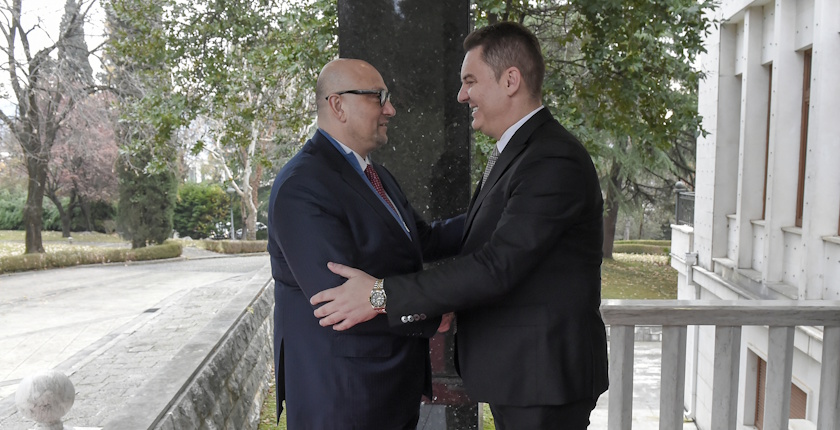
Minister of Energy and Mining of Montenegro Admir Šahmanović and the Minister of Public Works Majda Adžović met today at Villa Gorica in Montenegro’s capital Podgorica with Masdar CEO Mohamed Jameel Al Ramahi and his team.

It was the second meeting between Al Ramahi and Šahmanović in a short period. They met in early September.

The discussions now continued on top priority projects for the Government of Montenegro, ones that could be of mutual interest, according to the Ministry of Energy and Mining.

Priority should be given to projects that are the most technically advanced

Discussions will be intensified to define collaboration models, potential investments, and the selection of first projects to be implemented, the update reads.

Solar projects, including for floating solar power plants, alongside battery energy storage systems (BESS) and hydropower plants, have been identified as segments of special interest. These are also the areas where Masdar has significant engineering and technical experience, the ministry said.

montenegro masdar sahmanovic
Al Ramahi and Šahmanović (photo: Government of Montenegro/Saša Matić)

The two sides agreed to focus on projects that are the most technically advanced, environmentally sustainable, and aligned with the development of the power grid, to ensure their sustainable and efficient implementation.

Šahmanović: Montenegro’s strategic and long-term goal is to establish itself as a reliable and competitive player in the European energy market

Minister Šahmanović pointed out that the country’s strategic and long-term goal is to establish itself as a reliable and competitive player in the European energy market. He underscored that the development of energy infrastructure and renewable energy sources are among the government’s key priorities.

Officials participating in the meeting praised the planned construction of a second submarine cable line with Italy. It is an extremely wise and strategic investment that ensures Montenegro a stronger and more stable position in the European electricity market, they added.
Montenegro’s vision as an energy hub is fully aligned with the government’s development plans, Šahmanović stressed.

Minister of Public Works Majda Adžović highlighted the extensive experience of the United Arab Emirates in energy and infrastructure development in the public sector. It is of great importance for Montenegro’s activities in increasing renewable energy capacities, she added.

Masdar’s expert teams will continue technical talks with the management of EPCG and CGES

Masdar’s representatives have expressed readiness to continue technical discussions with the management of power utility Elektroprivreda Crne Gore (EPCG) and transmission system operator (TSO) Crnogorski Elektroprenosni Sistem (CGES).

The company’s expert teams will aim to identify priority and mature projects for joint implementation, the ministry said.

EPCG’s CEO Zdravko Dragaš and Ivan Mrvaljević, Executive Officer of EPCG’s Directorate for Development and Engineering, pointed out that the development of green energy is the company’s top priority.

A total of 200 MW in renewable energy projects are currently in development, they added.

Ivan Asanović, CEO of CGES, presented projects that are in the final stages of implementation.

by in News

Greece to hit its 2030 goal for solar power already next year

The Greek solar sector is at a crossroads, as growth and profitability will be dictated by energy storage installations.

The levelized cost of energy (LCOE) for fixed-tilt utility-scale photovoltaics in the country is EUR 33 per MWh, among the lowest in Europe, according to Wood Mackenzie. It is expected to drop further in the following years, landing at EUR 30 per MWh in 2030, after which it would reach EUR 40 per MWh in 2040, based on projections that Research Analyst Victoria Ortega showed at a Solarplaza event in Athens.

The Greek market is expected to add 2.5 GW of solar this year, with the total reaching 12.2 GW. In fact, the country will achieve its 2030 goal of 13.5 GW during 2026, said Policy Advisor Stelios Psomas of the Hellenic Association of Photovoltaic Companies (HELAPCO).

However, profitability in the PV segment has taken a hit, as a result of low wholesale prices and curtailments. Research group Baringa estimates that investments at risk of being delayed amount to EUR 2.25 billion.

More storage needed by 2030

In order to maintain momentum, the solar market needs energy storage. Standalone battery investments are at 6.4 GW in various stages of development and the first systems are projected to come online by next spring. HELAPCO warns that 8 GW would be needed by 2030 to balance the market.

Based on data from the Independent Power Transmission Operator (IPTO), grid connection offers have been given so far for storage units of a total of 1,468 MW in operating power and a guaranteed capacity of 3,420 MWh. It translates to 2.3 hours on average.

HELAPCO estimates that more support is needed for behind-the-meter systems, where it expects 300 MW to get a green light in 2026.

The sector also needs support for residential and commercial storage.

by in News

Croatia initiates project to harness solar energy along highways

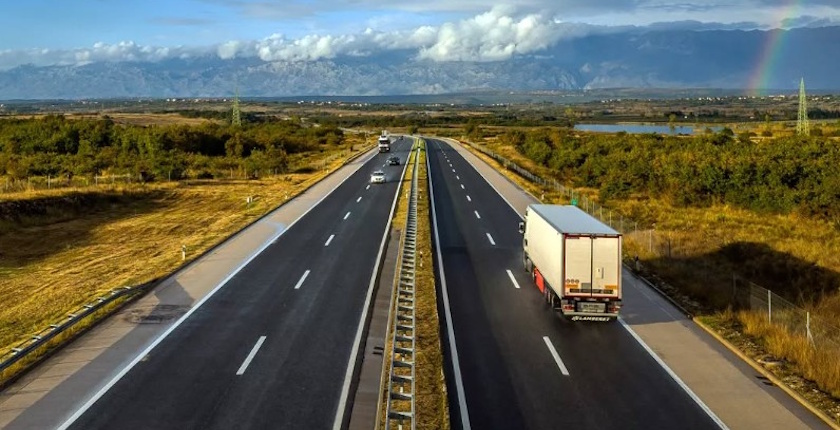
Croatia’s highway management enterprise, Hrvatske Autoceste, is implementing a project for solar power plants along its highways. The company plans to use the electricity for self-consumption and for electric vehicle chargers. It would reduce costs and increase its energy independence.

After a tender procedure, Hrvatske Autoceste (HAC) selected ETS Farago to produce project designs for photovoltaic plants at four locations on the A3 highway. It heads east from the capital Zagreb to the border with Serbia.

The job, covering 36 hectares, should be finished by March 2026. Along with the documentation, the selected company is required to submit an assessment of its advantages and disadvantages.

It would be followed by a techno-economic analysis and, if it is favorable, a tender for the installation of solar panels. It is the final step, expected not before 2027.

Slovenia and BiH have initiated similar projects

Of note, Slovenia and Bosnia and Herzegovina have initiated similar projects. Roadside locations could be a good solution for solar panels, given that such land is unused and alternatives are limited.

ETS Farago is tasked with preparing three versions for each of the four locations: Zagreb Plitvice (2.5 hectares), Rastovica (3.1 hectares), Sredanci (11 hectares), and Ivanja Reka (18 hectares). The first two are next to rest areas, while the other two are at interchanges.

HAC intends to install 259 electric vehicle chargers

The first model is for the production of electricity for self-consumption, with the surplus fed into the grid. Another option is self-consumption including battery energy storage systems (BESS). The third model is the complete sale of all electricity produced in the PV facilities.

The contract is estimated at EUR 11,400 excluding VAT.

HAC previously said that in addition to supplying its own facilities, such as toll booths, traffic maintenance and control centers, and street lighting, its project called solar highways is key to plans for expanding electric vehicle infrastructure.

The company intends to install 259 chargers on roads within five years.