
Montenegro’s CEDIS to invest EUR 30 million in distribution grid
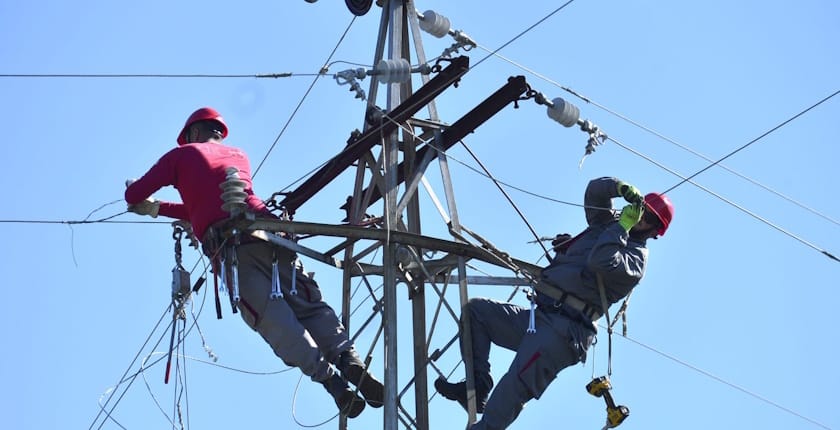
Montenegrin electricity distribution system operator CEDIS plans to invest EUR 30 million this year or EUR 6 million more than in 2024.
The increase in investments demonstrates greater ambitions year after year and that grid works are becoming more intensive and demanding, according to CEDIS.
The country’s distribution system operator (DSO) said it would increase capacity for the integration of new users, improve voltage conditions, strengthen reliability and security of power supply, and reduce losses.
The investments include projects planned to be started this year as well as ones already in motion, such as the modernization of six 35/10 kV substations.
CEDIS is building two substations
CEDIS pointed to several significant endeavors within the primary grid. The most significant ones are the construction of 35/10 kV substations Tivat 3 and Rijeka Crnojevića, and the modernization of the systems Buljarica-Kufin (110/35 kV) and Podgorica 7 (110/10 kV).
Seven 35/10 kV substations are up for reconstruction – Tuzi, Unač, Ptič, Andrijevica, Velika Plaža 1, Velika Plaža 2 and Čanj. The plan includes procuring new equipment for existing 35 kV transmission lines, worth about EUR 1.4 million.
The company is introducing SCADA and ADMS systems
CEDIS will use a EUR 35 million loan from the European Bank for Reconstruction and Development (EBRD) to roll out SCADA and ADMS systems, and to purchase smart meters.
The company highlighted SCADA and ADMS as a key step towards the modernization of the distribution network and the improvement of reliability, efficiency, and security of the power system.
Investments envisaged by the project Decarbonization of the Energy Sector of Montenegro, financed with a loan from the World Bank, are kicking off this year. Its subproject for increasing the operational efficiency of the power distribution grid comprises the reconstruction and modernization of substations, and improvement in the visibility of the distribution network.
EUR 5 million for energy infrastructure on Jaz-Tivat Boulevard
One of the largest investments is the installation of power infrastructure within the construction of the Jaz-Tivat Boulevard. The investment is estimated at EUR 5 million.
Projects within the secondary distribution grid are the construction of 268 substations of 10/0.4 kV, modernization of 10 kV transmission lines, and reconstruction of existing 10/0.4 kV substations. The planned works are valued at more than EUR 6 million.
CEDIS is continuing with the revitalization of the middle- and low-voltage grid. It earmarked EUR 9 million for this year for the purpose. The project is for the renewal of four 10 kV transmission lines and 52 substations of 10/0.4 kV and replacing 1,500 poles.
The installation of new meters and the relocation of measuring points will also be continued. The plan is to start phase 4 of the advanced metering management (AMM) project. The investment is estimated at EUR 12 million.
