by in News

OSSH Launches €4.4 Million Smart Meter Installation Project Across Albania

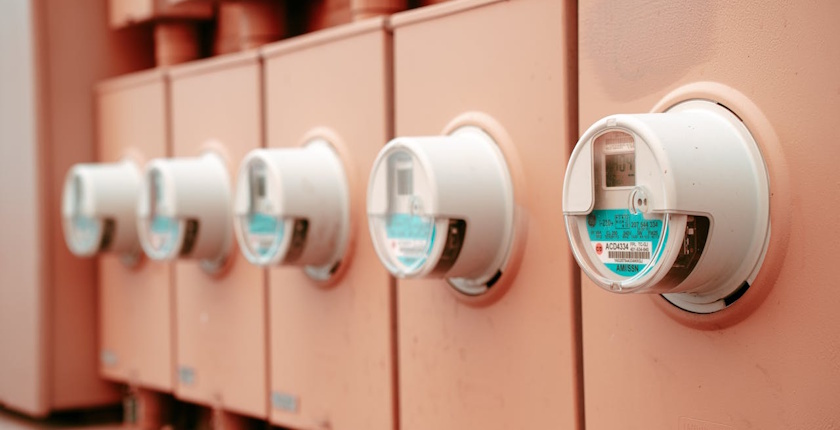
The Electricity Distribution System Operator (OSSH) plans to begin the installation of smart meters for end consumers.

This Thursday, the operator launched a procurement procedure through the public procurement system titled: “Installation of the Smart Metering System for End Consumers, within the Energy Balance Metering System in MV-LV Electrical Substations, and their integration into the OSSH metering platform,” with a total estimated fund of 432 million lekë, or approximately €4.4 million.

According to the tender documents, the investment will focus on areas with high electricity consumption and higher levels of network losses, with the aim of improving technical efficiency and strengthening control over electricity distribution.

As part of previous projects, OSSH has already installed thousands of smart meters in several regions across the country. In Durrës, during the 2023 investment phase, 1,752 intelligent energy balance metering systems were installed in MV-LV substations, while in 2024 an additional 848 smart meters were installed for end consumers supplied by these substations.

Meanwhile, in Tirana, on feeders F7 and F8 of the Kashar substation, 200 intelligent balance metering systems and 3,157 smart meters were installed for end subscribers.

According to OSSH, the expansion of the project is also linked to the growing number of consumers in these areas, driven by population growth and new urban developments, including construction projects carried out as part of the reconstruction efforts following the 2019 earthquake.

The company states that the investment is part of its strategy to gradually replace the analog metering system with smart technology, in accordance with the electricity law and the directives of the European Energy Community.

The operator emphasizes that maintaining the same communication technology is intended to ensure compatibility with existing investments and maximize the use of the infrastructure developed so far.

The tender foresees the installation of a total of 14,035 smart meters. The largest number will be installed at the Sallmone substation with 7,760 units, followed by Shkoza with 3,560 meters, Spitalla with 1,600, and Kashari with 1,115 smart meters.
by in News

Albania’s 2026 Electricity Law: Powering a Competitive, Secure, and Green Energy Future

The new draft Law on the Electricity Sector (2026) aims to overhaul Albania’s power framework for a competitive, secure and green market. Its stated objectives include guaranteeing secure and sustainable supply, deepening market liberalisation and consumer choice, and supporting climate goals. Government spokespeople emphasize moving “away from a centralized model” toward “a more open, more competitive, more flexible” market aligned with EU norms. Similarly, the Energy Community stresses that Albania must shore up security of supply (through EU-aligned risk-preparedness planning) and fully integrate its electricity market regionally. As one official put it, Albania needs to “shore up security of supply through EU-aligned risk-preparedness plans and achieve full market coupling with the EU”. In line with climate targets (Albania’s 2050 neutrality goal), the law also promotes renewables, efficiency and low-carbon flexibility. For example, a separate 2023 Renewables Law explicitly targets increased renewable use, reduced greenhouse gas emissions and sustainable rural energy access. The 2026 electricity law complements this by facilitating renewables integration (e.g. grid access, storage) while also formalizing consumer-friendly concepts like smart meters and dynamic pricing for a low-carbon economy.

Institutional Framework and the Regulator

A key element is the Energy Regulatory Authority (ERE). Under the draft law, ERE remains the independent regulator for electricity (and gas) with strengthened powers. Official briefings note that the new law “expands and makes more important” ERE’s role, explicitly giving it major competencies “for developing market rules, monitoring their operation and ensuring competition”. In practice, ERE already issues tariffs, licenses, and technical codes; the law likely reaffirms its authority over grid tariffs, network access and licensing. EU rules (Electricity Directive 2019/944 Art.59) require national regulators to be fully independent and impartial, and the Energy Community has advised Albania to “strengthen the independence and capacities of all authorities” including ERE. The draft law reportedly aligns with this: it clearly vests regulatory tasks in ERE, separating them from political control. Nonetheless, implementation depends on ERE’s capacity to handle new duties (e.g. oversight of cross-border markets) and to enforce the complex EU-aligned regime. The law will also designate the energy ministry as the risk-preparedness authority (see below), but ERE is expected to coordinate in emergencies and in implementing EU network codes.

Market Design and Competition

The new law fundamentally repackages the market model. Under the current 2015 law, Albania began liberalising in 2021–2025, opening the market by threshold and establishing the ALPEX exchange. Today, large consumers can choose suppliers, and ALPEX operates a day-ahead and intraday auction. The draft law continues this trend: it formally mandates third-party access to networks and the full operation of wholesale markets (day-ahead, intraday, balancing, and even derivatives trading) to ensure transparent price formation. In April 2023 Albania launched its day-ahead market, which in January 2024 was successfully coupled with Kosovo’s market – the first electricity market coupling in the Energy Community. Regional intraday auctions (so-called CRIDAs) between Albania and Kosovo followed in late 2024. The new law codifies these developments and sets the stage for eventual coupling with EU markets, subject to completing EU-market rules. Indeed, Energy Community analysts note that full alignment with EU rules (the Electricity Integration Package) through this law is essential for Albania to join the EU’s single day-ahead and intraday coupling.

At the same time, the law removes many legacy distortions. The current public service obligations (PSOs) – such as requiring the state generator KESH to supply the universal service provider (FSHU) at a government-set price – will be phased out or restructured. Ministry statements emphasize moving away from a model where “state actors had the largest decision-making” and towards one where competition is the basis of the market. In practice, this means eliminating price-setting interventions: for example, Albania’s wholesale market until now has been burdened by non-market contracts for network losses and for supplying captive consumers, which “does not meet the requirements” of EU market rules. The new law should require all grid services (transmission and distribution losses) to be procured on organized markets under competitive principles. It also formally establishes the market operator (ALPEX) as a Nominated Electricity Market Operator (NEMO) under EU law and extends ALPEX’s remit to ancillary markets. Unbundling is enforced: Albania’s transmission operator (OST) is already ownership-unbundled and ENTSO-E member, and distribution (OSSH) is a separate DSO. Clear rules on independent operation of networks and transparent tariff-setting are included to meet EU requirements.

Renewable Energy Integration and Low-Carbon Transition

Although Albania’s generation is dominated by hydropower, renewable integration is a priority. The new law addresses intermittency and grid flexibility: it introduces concepts like energy storage, active prosumers, aggregation and energy communities. For instance, it explicitly provides a legal basis for energy storage systems (to smooth renewable output) and for “active customers” who both consume and generate power. These mirror EU Directive 2019/944 provisions (articles on prosumers, dynamic tariffs and communities) that Albania has not yet fully transposed. The law also encourages technologies such as smart meters and even electric vehicle charging (“electromobility”) as flexibility tools. A separate Law 24/2023 already incentivises renewable deployment (through auctions, PPAs and CfDs) with the goal of reducing fossil imports and emissions. The electricity law complements this by guaranteeing renewables’ grid access and balancing: for example, under the renewables law temporarily-stored solar power is treated as delivered for subsidy purposes, a useful flexibility clause. In short, the legal framework is shifting to support a low-carbon mix: renewables get priority access to networks, and the market must accommodate their variability via storage and demand-side response. Energy efficiency is implicitly supported through demand participation measures, though detailed efficiency obligations remain part of separate legislation.

Security of Supply and Reliability

Ensuring continuous supply is a core aim. The law reportedly designates the infrastructure minister as the authority for risk preparedness and obliges that ministry to adopt a national risk-preparedness plan. This reflects EU Regulation 2019/941 (on gas supply risks), which Albania had missed implementing by its 2023 deadline. The draft law includes initial steps toward compliance: it provides for a risk plan and emergency protocols. In practice, this means formalising procedures for crisis response, including strategic reserves and demand curtailment rules. The law likely retains provisions for last-resort supply and universal service to protect consumers in shortages: under the current system, for example, the state generator KESH sells power to the universal supplier FSHU and to cover network losses. These contracts (often via contract-for-difference at regulated prices) are to be reformed.

Cross-border integration also enhances security. By coupling with neighbours, Albania gains access to wider regional capacity during droughts. Energy Community officials emphasize that full market coupling with Kosovo and eventually the EU “creates larger, more resilient markets” protecting against shocks. Albania’s new law strengthens this by setting clear rules for allocating cross-border capacity and operating bidding zones. Additional stress on reliability is addressed through mandated reserve capacities and balancing mechanisms: the law provides for the TSO to procure reserves and conduct redispatch if needed.

Nonetheless, challenges remain. Albania’s heavy reliance on hydropower (with seasonal rainfall variability) requires backup sources or storage. The law does not itself build new plants, so its impact on resource adequacy depends on fostering investment. Moreover, while emergency oil-stock regulations remain outdated (outside electricity law’s scope), the focus here is on electricity reserves. Overall, the draft law marks progress toward EU-style security measures, but full implementation will require secondary rules and investments in new capacity (or demand response) to ensure true reliability.

Consumer Rights and Protection

The draft law places consumers at the centre of the market. It acknowledges that consumers can also be producers, and it explicitly incorporates EU ideas of active customers, dynamic pricing contracts and citizen energy communities. In practice, Albania has already liberalized retail supply for most customers: all households and businesses above low-voltage can choose supplier. The state supply company FSHU (formerly OSHEE retail) continues as the universal service provider for small (0.4 kV) customers, and has been designated the supplier of last resort for larger low-voltage customers. Under the new law, these protections persist but in more defined forms. For vulnerable groups, the framework is improving: Albania now defines “energy-poor” and “vulnerable” households, bans disconnection for them, and offers subsidies (for heating and electricity) to the poorest. The law is expected to enshrine such protections, in line with EU norms (Directive 2019/944 requires special safeguards for vulnerable consumers).

However, some consumer-rights provisions must still be fleshed out. The Energy Community notes that novel rights – such as aggregation services, transparent billing, and consumer-driven demand response – have not yet been fully enacted. Similarly, current pricing interventions (like keeping FSHU rates regulated) “do not comply with” EU criteria, implying the law will need transitional rules to liberalize prices over time. To ensure transparency, the law should mandate clear billing, easy switching procedures and robust complaint mechanisms (all EU requirements). In sum, the draft law advances consumer empowerment (even heralding a “democratization” of the sector through communities and active customers), but its effectiveness will hinge on accompanying regulations detailing consumer rights, metering standards, and social safeguards as per EU directives.

Harmonization with EU Energy Acquis

A principal motive is alignment with the EU’s Clean Energy Package. The draft law explicitly aims to fulfill Albania’s energy chapter (15) accession commitments. It transposes key elements of the Electricity Directive and Regulation (2019/944 and 2019/943) – together known as the Electricity Integration Package – which govern market design, unbundling, and cross-border trade. For example, secondary legislation under these acts is already underway: in 2025 ERE approved a capacity allocation regulation (adopting CACM Regulation 2015/1222) to manage congestion. The law also enshrines EU-style unbundling (Albania’s OST was certified under ownership unbundling in 2017) and prepares for implementing remaining EU network codes (intra-day auctions 2017/1719 and balancing code 2017/2195 are in process).

Multiple EU directives come into play. Besides the electricity-specific rules, the law must be consistent with the Renewable Energy Directive (now RED II, 2018/2001, as partially reflected in Law 24/2023) and the Energy Efficiency Directive (2018/2002). It must meet EU requirements on state aid neutrality and competition as well. The Energy Community’s recent report underscores that Albania “should complete transposition of the EIP and… strengthen the independence and capacities of all authorities”. In sum, the 2026 law appears designed to maximize convergence: officials claim it will “ensure a high degree of alignment” with EU law. Yet gaps remain (EU country reports note missing adoption of e.g. Regulation 2019/941 on security of supply). The new law closes many gaps, but full compliance will require follow-up secondary legislation (grid codes, consumer rules, capacity markets) to operationalize EU norms.

Implementation Challenges and Outlook

Achieving the law’s vision will be challenging. Legacy market distortions must be unraveled carefully: KESH’s dominance and the public-service contracts for losses and captive load are deeply entrenched, and removing them could face resistance or temporary supply risks. The Energy Community warned that Albania’s PSOs, originally “temporary measures” during crises, still “threaten to impede efficient competition”. Regulatory capacity is another concern: the new regime is complex, and ERE and the ministry must issue numerous secondary rules (e.g. network codes, imbalance settlement procedures, risk plans) quickly. Reports note that even now, some network code implementations (like 15-minute settlement) have been postponed by ERE.

Integration efforts require investment. Building transmission links (to Greece, Macedonia, Italy) and reinforcing grids for bidirectional flow will determine how well cross-border trade can alleviate domestic shortages. Financing remains an issue: regulators and government must coordinate to fund smart metering and storage projects (as envisaged in the law). Socially, the phase-out of price controls must be balanced with protection for the poor; gaps between this law and existing subsidy programs could cause confusion if not harmonized. Finally, political commitment will be tested: the law’s success depends on steady implementation amid changing governments.

In summary, the draft law sets a forward-looking framework: it promises a liberalized, EU-harmonized market with empowered consumers and high renewable integration. If fully enacted and backed by robust secondary measures, it should significantly advance Albania’s goals of a competitive, secure and sustainable electricity sector. However, the road from law to reality involves filling regulatory gaps and overcoming institutional inertia; without that follow-through, key objectives (market liquidity, EU coupling, consumer protections) may fall short. Overall, the 2026 Electricity Law represents a critical step toward a modern Albanian power market – one that, if implemented effectively, aligns closely with best practices in the EU

by in News

MEMO Analysis Links Solar Output to Lower Day-Ahead Power Prices in North Macedonia

Electricity generation from solar power plants tends to push prices down on the power exchange, while reduced solar output is associated with price increases, according to an analysis by Ana Angelova, a market operations specialist at the National Electricity Market Operator (MEMO).

The analysis aimed to identify seasonal trends and highlight the relationship between photovoltaic (PV) generation, electricity consumption, traded volumes, and day-ahead prices on the North Macedonian power exchange. MEMO noted that the day-ahead market operates in an isolated mode.

Angelova used official power exchange data for 2024, focusing on hours when PV plant efficiency exceeded 30%.

Consumption remains broadly stable across the year

The findings point to a clear seasonal pattern. Electricity consumption stays relatively steady throughout the year, with only minor declines during spring and summer. PV generation, however, shows a pronounced seasonal swing—peaking in summer and reaching its lowest levels in winter.

Angelova also stressed that higher PV output coincides with increased traded volumes on the day-ahead market.

Prices bottom out in April, rise toward winter

According to the analysis, day-ahead prices are lowest in April, a period linked to milder weather, lower demand, and stronger solar production. From summer onward—and particularly during winter—prices trend higher, peaking in November.

The November price peak aligns with a combination of weak PV generation and higher consumption.

“Increased electricity generation from photovoltaic plants is associated with lower prices, while low generation leads to higher market prices, emphasizing the impact of renewable energy availability on price formation. The trend indicates that energy policies should focus on addressing weaknesses during the winter period and harnessing the potential of solar energy in summer,” Angelova wrote.

Proposed measures to strengthen renewables integration

north macedonia solar analysis memo power exchange ana angelova

Photo: MEMO

Angelova outlined several options to improve the integration of renewables—especially solar—into the power system. The proposed mechanisms include:

  • Flexible market mechanisms: introduction of a 15-minute trading interval, creation of an intraday market, dynamic tariffs, and guarantees of origin.

  • Energy storage technologies: battery energy storage systems (BESS) and pumped-storage hydropower plants.

  • Alignment with the European energy framework: adoption of ENTSO-E grid codes, coupling with the single European electricity market, deployment of smart meters, and use of financial instruments such as contracts for difference (CfD) and power purchase agreements (PPA).

by in News

Domac: No energy transition without much stronger grid investments

Croatia is investing only half as much in the electricity network as Slovenia and Austria, said Managing Director of North-West Croatia Regional Energy and Climate Agency (REGEA) Julije Domac. He warned that without an acceleration in grid investments, there are no renewable sources and no energy transition.

Croatia is about to overcome one of the biggest obstacles to investments in green energy, with its proposed methodology for the grid connection fee. However, there are several more bottlenecks in the sector, and they mostly also concern the electricity network.

The grid is apparently not among priority segments in Croatia, which depends to a large extent on electricity imports. The situation is similar throughout the Balkans and Europe, and beyond, and the basic question is who will cover the expenses as well as which projects are the most important for enabling the deployment of renewables. Among other difficulties, the administrative capacity for permitting for grid improvements and expansion is too weak, alongside complex environmental and spatial planning requirements.

Managing Director of REGEA Julije Domac outlined his view on the matter in a LinkedIn post. “Without an electricity network, there are no grid connections, no RES, no transition… There is more than 13 GW of solar and wind power projects under development today, but the network cannot integrate it without accelerated investments,” he wrote.

Photo: Julije Domac (REGEA)

Grid operators reacting with emergency measures instead of long-term strategy

The free capacity in the power distribution grid is estimated at 3.7 GW, but a large part is in areas with low interest for investing, Domac pointed out. Of note, he is also Croatian President Zoran Milanović’s special advisor on energy and climate.

“In the coastal area and Dalmatia, where the resources are the best, the network is near the maximum load in many parts – it means a malfunction of one element could jeopardize the system’s stability. To avoid that, the operators are already often turning to emergency measures in dispatching now: shutting down parts of the network, redirecting flows, pausing works. It is ‘putting out fires’ – and not a long-term strategy,” the head of REGEA said.

The regulated income from tariffs limits investments as the transition’s urgency isn’t acknowledged

Domac stressed that Croatia is investing less than EUR 20 per customer per year, only half as much as Slovenia and Austria. In his opinion, the tariff-based methodology is limiting investments. Namely, Croatian Transmission System Operator (HOPS) and HEP-ODS, the national distribution system operator, are funded through regulated income under the Croatian Energy Regulatory Agency (HERA), and the mechanism doesn’t acknowledge the urgency of the transition, according to the energy expert.

Another point is delayed digitalization, as Croatia has a much lower share of smart meters than neighboring Slovenia, where it surpassed 99%, or Italy, where the level is around 95%, he underscored. There is no domestic market for flexibility and no contracts with batteries and with consumers that could help ease the pressure on the grid, Domac claims.

In addition, he highlighted the sluggish grid connection procedure, saying it lasts ten years for wind power plants and four years for photovoltaics, the most in all European Union.

Grid connection costs can be covered with EU funding, green bonds

Domac is recommending to the authorities to introduce temporary connection points, with a controlled power delivery – limited until network enhancements are completed. HERA did envisage such a possibility in its draft methodology.

The grid connection fee for renewable electricity plants should be abolished, which was already promised, Domac recalled. It is an obstacle blocking 60 projects for 3.5 GW in total, he noted. It is the grid operator that should bear the cost and, aside from the tariff items, it can finance them through EU funds and green bonds, like most member states do, Domac added.

He expressed the belief that ten or so most important grid interventions should be accelerated – transformer stations and transmission lines in particular and especially in Dalmatia. Pilot projects for batteries and flexibility would pave the way for more grid connections without the wires, and public procurements need to be streamlined as well for works worth up to EUR 1 million, for instance, so that the replacement of one transformer doesn’t last twelver months, Domac asserted.

by in News

Croatia installs one million smart meters, Serbia reaches 650,000

Croatia has so far installed one million smart meters, while Serbia has reached 650,000. They make up 40% of all power metering devices in Croatia, compared to a 17% level in Serbia.

Digital or smart meters offer numerous advantages for consumers and distribution system operators (DSOs). The devices are a cornerstone of future distribution networks – smart grids that will allow consumers, including many prosumers, to both draw electricity from the network and inject it. Smart grids also enable consumers to provide various flexibility and demand response services.

The smart meters rollout in Croatia is being implemented across the country, with about 40,000 new devices installed per month. Croatia’s DSO HEP-Operator Distribucijskog Sustava (HEP ODS), a subsidiary of state-owned power utility Hrvatska Elektroprivreda (HEP), has previously announced that it intends to replace all 2.5 million devices by the end of 2029.

Nearly all users in the business category have received new devices

Installation of new meters is completely free of charge for customers. It takes about twenty minutes. HEP underlined that smart meters offer a range of benefits – enabling simpler and remote reading of consumption, more precise consumption management, better planning, and savings.

Danijela Žaja, chief of the metering and market support sector of HEP ODS, told RTL that more than one million smart meters have been installed so far for households and firms. In the business category, almost all meters have already been replaced, she said, Poslovni Dnevnik reported.

In her words, new devices help consumption management.

Serbia is financing new meters with loans

According to Ana Pavlović, head of the electricity markets support sector of neighboring Serbia’s DSO Elektrodistribucija Srbije (EDS), so far the company has installed almost 650,000 smart meters.

EDS plans to set up another 200,000 units in the next round, financed by a loan from the European Bank for Reconstruction and Development (EBRD), she said at a conference organized by Energija Balkana.

Out of the 200,000 meters, the cities of Čačak and Kraljevo are earmarked for 30,000 each, and 140,000 are for consumers in Niš. The next project is the installation of 400,000 smart meters, to be financed by a loan from the European Investment Bank (EIB).

Niš will be one of the first cities in Serbia to be almost entirely covered by smart meters, Pavlović stressed, as quoted by Tanjug.

by in News

Greece raises fines for power theft

Power theft has become a major issue for the Greek electricity market in recent years. The government has been increasing fines for offenders.

The combined damage from power theft and network losses in distribution amounted to EUR 100 million per month in 2022, with 18% of the supplied energy being lost as a result of power theft or network losses in distribution.

It compared to an average loss of 8% in the European Union, meaning that lawful Greek consumers took a heavy burden through their bills.

Suppliers: HEDNO must shoulder power theft cost

For 2025, the Hellenic Electricity Distribution Operator (HEDNO or DEDDIE) estimates that losses will reach 11.08%. However, actual ones are believed to be much higher, as the initial numbers for previous years had to be revised retroactively.

Electricity suppliers have warned of severe consequences for the entire market if the problem is not solved. The Hellenic Association of Energy Suppliers (ESPEN) has asked for HEDNO to shoulder the initial cost of power theft, instead of them, to be motivated to reduce it.

Smart meters and fines to provide solution

In order to address power theft, the Ministry of Environment and Energy lifted fines a few months ago. Instead of 70%, offenders pay 100% more than the reference price for their category. The baseline is an average of the previous six months. Vulnerable consumers are fined 50% more than the reference price.

Based on the last update by the Greek Regulatory Authority for Energy, Waste and Water (RAEWW or RAAEY), an offender with a household connection will pay 49.45 eurocents per kilowatt-hour, up from 47.22 eurocents, while the tariff for businesses is 56.42 eurocents. It rose from 54.21 eurocents per kilowatt-hour.

The levels are revised every six months, taking into account the total cost of supply for each category, including taxes and network charges.

The ministry also counts on smart meters, since they significantly reduce opportunities for power theft. Greece has lagged behind all other European countries in smart meters. HEDNO finally began mass installation this year, expected to reach one million devices annually from 2026 onwards.

by in News

Slovenia tops EU list for most smart power meters, Croatia among laggards

Slovenia is very close to equipping all electricity consumers with smart meters, while Croatia is within reach of achieving it in the non-home segment, but far behind in the household category, according to the latest data from the EU Agency for the Cooperation of Energy Regulators (ACER).

At the top of the list of European Union member states with the highest share of smart meters, three countries are fully equipped with modern smart meters, Naš stik reported.

All consumers in Sweden, Denmark, and Italy have such devices installed. They are followed by Finland, Estonia, Latvia, Luxembourg, Spain, and Portugal, all with 99% of households and 100% of non-household consumers equipped.

Germany is at the bottom of the table, with a rollout of just 2%

Next is Slovenia, with 97% overall. France reached 94% among households and 95% in the other category, while Malta is at 93% and 87%, respectively. Slovenia is expected to complete the process by the end of the year, the article added.

The laggards are Lithuania (51%, 95%), Belgium (46%, 79%), Poland (36%, 65%), Croatia (34%, 95%), Romania (27%, 45%), and Greece (12% altogether). Germany is at the bottom of the list, with a combined total of only 2%, according to ACER’s data.

Smart meters are one of the main components of the distribution grid upgrade

Croatia’s state-owned power utility Hrvatska Elektroprivreda (HEP) launched a tender last August worth EUR 86.5 million, for the purchase of smart meters. The company said at the time that it planned to install them at all metering points in the country by the end of 2029.

Smart meters are a crucial factor for modernizing distribution networks. It is necessary for the future power system, where consumers will play a very different role, generating electricity for self-consumption and through demand response and flexibility services.

by in News

Brussels to Croatia: Boost renewables, flexibility for cheaper industrial electricity

The European Commission advised Croatia to speed up the installation of renewable energy capacities and add non-fossil flexibility solutions, to reduce electricity prices for businesses.

Electricity prices for the corporate sector in Croatia in the first half of 2024 were the third-highest in the European Union, according to the European Commission.

At about EUR 0.244 per kWh, only Cyprus and Ireland had higher prices – EUR 0.2578 per kWh and EUR 0.256 per kWh, respectively.

“In the first half of 2024, Croatia had the third-highest electricity price in the EU for business/industrial consumers. This continues to hold back the cost competitiveness of Croatian companies,” the commission said in its Country Specific Recommendations under the 2025 European Semester: Spring Package.

Despite a record increase in solar capacity in 2024, by 397 MW, its share in electricity generation remains low, at less than 6%.

An increase in the uptake of large-scale renewables, including solar, is hampered by an uncertain regulatory framework

Against this background, faster roll-out of new renewable energy capacity, especially solar, and non-fossil flexibility solutions could help reduce price levels, the update reads.

The commission said an increase in the uptake of large-scale renewables, including solar, is hampered by an uncertain regulatory framework as the national energy regulator HERA is yet to adopt updated grid connection fees. The situation creates uncertainty for potential investors and has effectively prevented projects from securing financing, the European Union’s executive arm stressed.

Increased investment in the electricity grid, beyond what’s in Croatia’s National Recovery and Resilience Plan (NRRP), would be crucial for an uptake of renewable energy, according to the commission. In the short term, it would imply incentives for hybrid storage and renewable energy projects, the document reads.

Speed up rollout of smart meters

In 2023, only 24% of household consumers had smart meters installed, which is significantly less than the EU target of 80%.

To be able to fully capitalize on an increased uptake of renewable energy, significant funding for the rollout of smart meters – beyond the measures in the NRRP – and dynamic contracts will be needed to empower consumers and foster demand response, the commission noted.

It advised Croatia to review and simplify administrative procedures for installing renewable energy facilities, including in multi-apartment buildings, and for setting up energy communities.

The measures would help reduce the reliance on fossil fuels and increase the low number of registered energy communities, according to the commission.

by in News

Serbia shelves plan for strategic partnership for 1 GW in wind farms

Serbia has revised its Baselines of the Energy Infrastructure Development Plan and Energy Efficiency Measures for the period up to 2028, with projections up to 2030. It defines priority projects in the energy sector.

The Baselines of the Energy Infrastructure Development Plan and Energy Efficiency Measures were adopted in mid-2023 at the proposal of the Ministry of Mining and Energy. In the new document, the construction of 1 GW wind farms is no longer among the priority projects. The plan was to involve with a strategic partner, similar to the project for 1 GW of solar power plants, which is currently being developed by state-owned power utility Elektroprivreda Srbije (EPS) with a strategic partner.

The development plan serves as a basis for the implementation of Serbia’s Energy Development Strategy and the National Energy and Climate Plan (NECP).

The ministry outlined projects across six sectors

The investment cycle planned for the upcoming strategic period represents the backbone of the Energy Development Strategy. It provides the foundation for further assessments and projections of the targeted energy mix through 2030 and 2050. It aligns with the international commitments undertaken in the process of European Union accession as well as with the obligations within the Energy Community, the document reads.

The plan includes projects in six sectors: electricity generation, transmission network, distribution network, natural gas, oil and petroleum products, and energy efficiency. It ranks the projects within each sector.

The most significant change in renewable energy is that the construction of wind farms with a combined capacity of 1 GW is no longer on the list of priority projects.

Solar power plants Kolubara and Morava on the priority list

The 1 GW of solar power and the Kostolac wind farm remained among the four most important endeavors, while the new items are the Morava and Kolubara photovoltaic projects. The Klenovnik solar power plant has been removed from the list. According to the document, the projects on the list are the most advanced.

In total, EPS has 41 projects for power generation or 20 less than in the original document.

Fewer projects, but more realistic

The authors explained that the number of renewable energy projects is lower, but more realistic and better optimized. The entire EPS investment portfolio across all areas requires significant funds and loans, so it would not be realistic to pursue a larger number of high-value projects that cannot be financially or physically implemented within a reasonable timeframe, the document underlined.

It was also taken into account that many private projects, mainly wind farms, are being developed through the auction system, so the focus of EPS’s projects is primarily on solar power plants, to create a balanced ratio between wind and solar power plants in the system. The company’s project for the wind farms with a strategic partner remained a backup option, in case an additional capacity is needed, according to the document.

There are new items on the list for the electricity distribution network

There were no changes in the transmission network segment. The priority projects are the third and fourth sections of the Trans-Balkan Corridor, the Pannonian Corridor, and Beogrid 2025. The list contains 66 investments, five fewer than in the original plan.

Changes have been made regarding investments in the power distribution network. The most important projects now are the 110/10 kV substations National Stadium and Surčin. Automation of the medium-voltage network was kept, together with the ongoing replacement of wooden poles with concrete ones and the replacement of electricity meters with smart ones.

The integrated system for remote monitoring, diagnostics, and control of the low-voltage distribution network has been removed from the list. Instead of replacing transformers at 10 kV, 20 kV, 35 kV, and 110 kV voltage levels, the new focus is on the reconstruction of 25 substations of 110/35 kV.

Planning the first district cooling systems

The energy efficiency part of the baselines was changed the most.

The previous document was primarily focused on reviewing and securing financial support for ongoing projects, while the current one is envisaging expanding the scope and considering new financial mechanisms and sectors that require additional support.

Among other initiatives, the Strategic Plan for the Decarbonization Policy of the District Heating and Cooling Sector in the Republic of Serbia is being prepared. It is a joint endeavour of the European Bank for Reconstruction and Development (EBRD), the Association of Serbian Heating Plants, and the Ministry of Mining and Energy.

The project aims to define steps to improve the district heating system, including heat storage, the use of heat pumps, utilization of heat generated from waste treatment, and the development of the first district cooling systems, according to the document.

Special attention will be devoted to developing guidelines for expanding the district heating system by connecting new users while simultaneously shutting down fossil fuel boilers. It will directly contribute to reducing CO2 emissions and pollution, the authors noted.

by in News

Alarming rise in unpaid bills from electricity consumers in Greece

A steep rise in arrears was recorded last year in the Greek electricity supply market.

According to the latest report from the Regulatory Authority for Energy, Waste and Water (RAAEY or RAEWW), total debt for electricity rose by EUR 1 billion to EUR 3.4 billion in 2024.

It occurred despite a 10% reduction in retail electricity prices last year in the country.

Out of the total sum, existing customers owe EUR 1.74 billion to their suppliers. Another EUR 1.65 billion is debt by customers that have switched suppliers, leaving unpaid bills behind.

As for the EUR 1 billion of new debt, consumers in the mid-voltage account for EUR 400 million. They are large businesses and small industries. Another EUR 440 million is owed by various water utilities.

In December 2024, the Ministry of Environment and Energy passed a regulation subsidizing water utilities for EUR 200 million of their total debt. It means actual arrears in the segment were smaller, at EUR 240 million, but still sizeable.

Measures to reduce power theft

On top of increasing debt, the Greek market is also faced with a rise in electricity theft. In recent years, the phenomenon has worsened and is estimated to cost law-abiding consumers EUR 400 million per year.

The government and the regulator recently enacted strict fines to reduce theft. Offenders pay more than 100% over the normal power price for stolen quantities. The gradual installation of smart meters starting this year is also expected to help.

Suppliers warn of consequences

Power utilities must handle all the said liabilities. The Greek Energy Suppliers Association (ESPEN) has said that the issues indirectly increase power prices, as companies need to balance their budget through additional hedging and careful positioning.

ESPEN: Suffocating pressure as a result of high arrears

“The accumulation of large arrears causes suffocating pressure to the supply sector, raising prices and leading to negative effects for consumers,” it said.

Furthermore, suppliers asked the Hellenic Electricity Distribution Network Operator (HEDNO or DEDDIE) to waste no time in disconnecting consumers who owe money, in line with guidelines from the network code.

  • 1
  • 2