by in News

Slovenian DSO registers enormous interest in connecting BESS to distribution grid

Applications for 400 MW have been submitted for the connection of battery energy storage systems to the distribution grid, according to Elektro Ljubljana, one of the distribution system operators in Slovenia.

Slovenia’s distribution system operators (DSOs) are getting an increasing number of requests to connect battery storage systems directly to distribution substations. Notably, in early May, the five Slovenian DSOs fed more electricity into the transmission network than they drew from it for the first time, and for two consecutive days.

Matjaž Osvald, Executive Director of Operation and Development of the Distribution Network in DSO Elektro Ljubljana, pointed out that last summer the company observed increased investor interest in directly connecting batteries to distribution substations.

It issued installation terms for 90 MW, and requests for at least as much are waiting to be processed, he added.

Installation terms were issued for batteries with 90 MW in overall capability

However, the company estimated there could be at least 300 MW more in applications. Due to the technical limitations of existing substations, much less could be connected. Substations in the Elektro Ljubljana area are already overloaded and don’t allow additional connections of larger devices, Osvald explained.

Furthermore, upgrading or constructing new facilities is a lengthy process, he pointed out. Current delivery times for transformers alone are longer than two years, with financing also being an issue.

According to Osvald, batteries would be used to store energy from solar power plants, and three types of investors have emerged. One group wants to install batteries to provide system services for system operators on the European market or for electricity trading.

Three types of investors are submitting applications

The second and third batch aim to bring their projects to a certain stage of development and then sell them – either they would purchase land, obtain permits, and install a battery, or only buy land and obtain permits for energy storage.

Osvald expressed concern about the idea of using batteries solely to provide system services in the European market. In that case, there would be no benefits for the Slovenian distribution network, but it could create problems, he stressed.

Such use would occupy all available connection capacity in substations, which, with increasing electrification, could lead to no spare capacity for other grid users, according to Osvald.

He also pointed to the value of BESS for the distribution network in reducing peak loads and consumption.
by in News

Slovenia draws up first climate vulnerability, risks assessment for energy sector

In cooperation with the Jožef Stefan Institute, the Ministry of the Environment, Climate and Energy has issued the first national assessment of climate vulnerability and risks for the energy sector. The analysis shows that the sector is moderately vulnerable under current climate conditions.

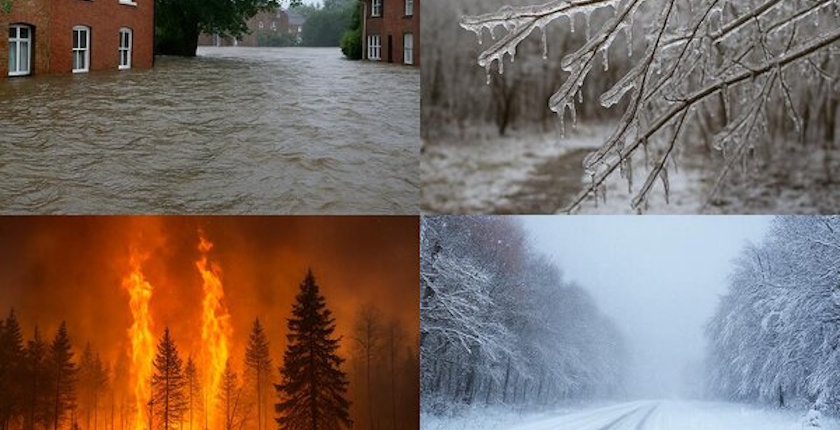
The main threats to the energy sector in Slovenia are floods, fires, storms, landslides, sleet and wet snow, heatwaves, and drought.

The assessment of climate vulnerability and risks for the energy sector was produced in line with the IPCC AR5 methodology and the national guidelines of the Faculty of Biotechnology.

The greatest threat to the energy sector are floods, which jeopardize fuel storage, substations, electricity distribution networks, and other elements of the supply chain, the ministry underscored.

The most important subsystem is liquid fuels

By using weighting and considering the current energy mix and the state of infrastructure, the most important subsystems for the functioning of the overall system are liquid fuels (34%) and electricity (33%), followed by natural gas (18%), solid fuels (10%), and heat (5%), the assessment reads.

This reflects a high dependence on imported liquid fuels and the key role of electricity in all consumption sectors, the ministry explained.
The overall weighted vulnerability score for the energy sector is 2.3 on a scale of one to five, with the electricity subsystem having the highest vulnerability, 2.6.

Electricity distribution grids, solar power plants, and fuel transport and logistic routes also show high vulnerability, according to the assessment.

Subsector ratings:

  • electricity subsector (2.6)
  • liquid fuel supply (2.2)
  • solid fuel supply (2.2)
  • natural gas supply (around 2.0)
  • heat supply (1.9)

Regarding individual elements of the sector, the most vulnerable are the electricity distribution network (3.5), electricity transmission system and imports (3), preparation of firewood, wood chips and pellets, and photovoltaic plants (3); vehicles/tanks for liquid fuels and vehicles/trucks for solid fuels, fuel stations, and other renewable energy sources (2.5).

The identified risks are expected to intensify in the future

The assessment reveals that Slovenia’s energy sector comprises critical elements whose failure could lead to significant supply disruptions.

It provides a technical basis and starting point for preparing a climate change adaptation strategy and for drafting measures such as strengthening infrastructure resilience, reviewing planning for new facilities, and incorporating climate risks into strategic documents and investment plans, according to the ministry.

Climate change scenarios indicate that the already identified risks will intensify in the future – especially floods, storms, and heatwaves.

The ministry said it would be necessary to implement adaptation measures to ensure a reliable energy supply.

by in News

Slovenian company Talum to install solar power plants on waste landfills

Aluminium producer Talum plans to install solar power plants of up to 60 MW overall. The project could boost utility-scale solar in Slovenia, where small PV facilities installed by firms and households account for almost the entire operating capacity of 1.5 GW.

Currently the largest solar power plant in Slovenia has a capacity of 7.1 MW. Located near the village of Krvavi Potok, it started operating in July.

Notably, the expansion of the Prapretno photovoltaic plant is underway – from 6 MW to 9.8 MW. The largest project is for the Družmirje floating solar plant, for 140 MW.

Talum told state news agency STA it is developing a project to install large solar power plants on the area of its two closed waste landfills in Kidričevo that have valid environmental permits, public broadcaster RTV SLO reported. The endeavor is in accordance with the Law on the Introduction of Devices for the Production of Electricity from Renewable Energy Sources as well as with sustainable policies, it added.

Talum is awaiting response from the Ministry of Natural Resources and Spatial Planning

The company’s project design envisages the installation of solar power plants with a total capacity of up to 60 MW at the landfills.

The company initiated a project approval procedure in July at the Ministry of Natural Resources and Spatial Planning, including additional studies. It said it would proceed with preparing the necessary documentation and other activities for the construction, after receiving a response.

It isn’t the first solar project for Talum. In 2023, it installed solar panels of 3.78 MW altogether on five buildings. Additionally, the company hosts two battery energy storage systems (BESS) on its land. NGEN commissioned a 15 MW / 30 MWh unit in 2020, and GEN-I inaugurated a 12 MW / 24 MWh facility a month ago. NGEN has also announced it would install a 70 MW BESS on the site.

Red sludge danger

Local NGO Gibanje za Kidričevo has objected to the project in a letter to Prime Minister Robert Golob and the European Commission.

Solar power plants shouldn’t be built on such sites, according to the group.

It recalled that in 2014, the European Commission classified red mud as hazardous mining waste, following an accident in Hungary four years earlier.

Talum responded that the red mud landfill has a valid environmental permit as a non-hazardous waste landfill.

The project design for the solar power plants envisages the implementation of additional measures on the closed landfills aimed at improving the state of the environment, the company explained.

Of note, Talum used to produce aluminum, but after closing its electrolysis facility, it switched to recycled aluminum products.

by in News

Serbia’s Vinča Institute, EDF to cooperate in nuclear energy

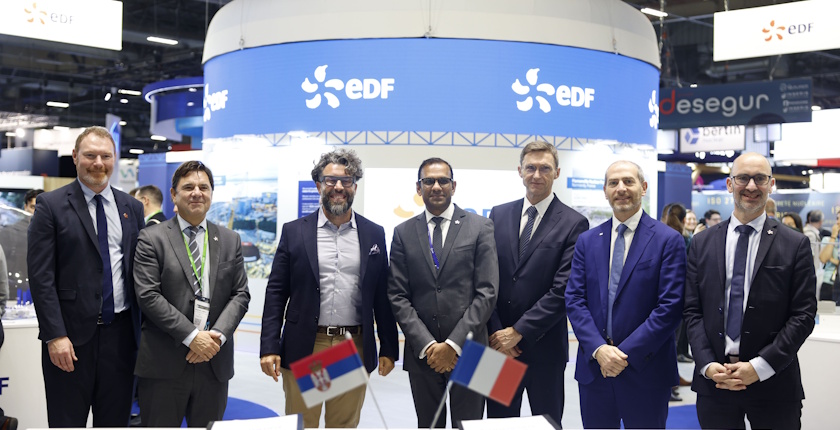
During the World Nuclear Exhibition in Paris 2025, the Vinča Institute of Nuclear Sciences signed a memorandum of cooperation with Électricité de France (EDF).

The Serbian Vinča Institute of Nuclear Sciences said its new memorandum of cooperation with French state-owned energy utility EDF establishes a framework for scientific, technological, and educational cooperation in the nuclear energy sector.

The document was signed by the Vinča Institute’s CEO Slavko Dimović and Vakisasai Ramany, EDF’s Senior Vice President for International Nuclear Development.

Four main sectors of cooperation

The deal envisages joint activities in the areas of scientific research cooperation, professional training and development of employees, international exchange, and public communication on nuclear topics, according to the institute.

The goal is to enhance knowledge, develop expertise, and promote informed public discussion about the potential role of nuclear energy in our country, the Vinča Institute revealed in a social network post.

serbia edf france nuclear energy memoradnum dimovic paris
Slavko Dimović and Vakisasai Ramany (photo: Vinča)

The International Institute of Nuclear Energy I2EN, founded by EDF, will play a key role in implementing the educational programs. It will organize joint academic projects, student exchanges, and research visits.

Dimović: The memorandum is a pledge that we are going to support the growth of young scientists and engineers

The Vinča Institute’s CEO Slavko Dimović stressed that the memorandum represents a continuation of the Serbian-French friendship and an important step toward strengthening the institute’s international cooperation and the exchange of knowledge with one of the world’s leaders in the nuclear energy sector.

The Vinča Institute has long stood as a pillar of scientific and nuclear excellence in Serbia and the region, in his view. EDF brings expertise, experience, knowledge and strong commitment to innovation and the future, Dimović added.

“This memorandum is not just a document, it’s a pledge that we are going to learn from each other, to support the growth of young scientists and engineers, and to promote and help public acceptance of nuclear energy in Serbia,” he underlined.

EDF is active in the region

The Government of Serbia and EDF signed a memorandum of cooperation in April 2024. A few months later, in September, EDF and Egis Industries were awarded a contract for a preliminary technical study for considering the peaceful use of nuclear energy.

France and EDF are very active in the energy sector in the region. The company has established cooperation with the Government of Montenegro, and with the country’s power utility Elektroprivreda Crne Gore (EPCG). France and Slovenia recently signed a declaration on cooperation in the nuclear energy sector, while EDF is in the race to build the new Krško 2 nuclear power plant.

On a bilateral level, Serbia has established contacts or started cooperation in the nuclear energy sphere with China, France, Russia, Slovenia, the United States, and South Korea.

by in News

France, Slovenia sign declaration on nuclear energy

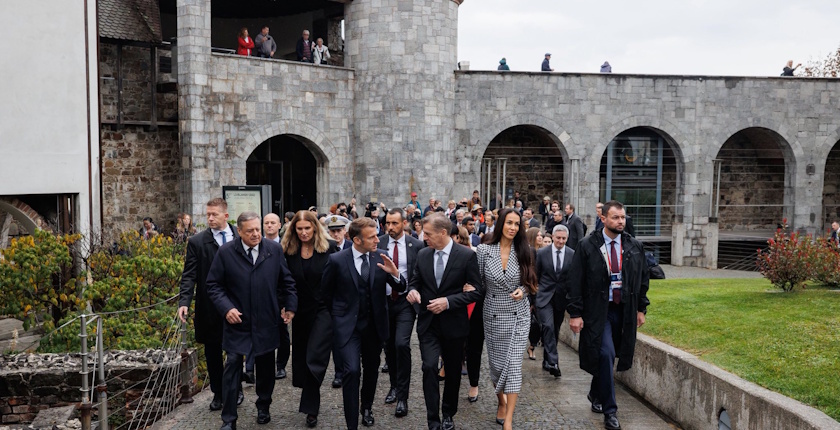
Slovenia and France have signed a declaration on cooperation in the nuclear energy sector. The document was signed during French President Emmanuel Macron’s visit to Slovenia.

Slovenia has been developing a project to build a new unit at the Krško nuclear power plant for several years. In early September, the project’s developer, GEN Energija, said that three reactor projects offered by EDF and Westinghouse had been assessed as technically feasible for the site of the future Krško 2 nuclear power plant.

According to the Slovenia Times, Macron and Slovenian Prime Minister Robert Golob committed to closer cooperation between the two countries, particularly in the economy and energy.

 Golob: France is a European nuclear power

The two countries signed an agreement on cooperation in the field of education and a declaration of intent to establish long-term cooperation in the nuclear energy sector.

According to Golob, France is a European nuclear power that is building its carbon-free future based on the development of this energy source. There is good cooperation between experts from the two countries, he recalled at a joint press conference in Slovenia’s capital, Ljubljana, stressing that the declaration opens up new opportunities.

Golob said he is convinced that between two equally qualified bidders for Krško 2, Slovenia will be able to choose the solution that best serves its long-term interests and that gives regional importance to the project.

The potential new power plant is not intended only for Slovenia

Krško 1 was built using US technology, but Golob also sees certain advantages in the French bidder, EDF. He revealed that the potential new power plant is not intended only for Slovenia, but would also enable Southeastern Europe to meet a significant portion of its electricity needs.

In October 2024, Slovenia canceled a referendum on building its second nuclear unit. However, GEN Energija continued to develop the project.

In July this year, the Ministry of Natural Resources and Spatial Planning initiated the preparation of a spatial plan for the second unit of the Krško nuclear power plant and invited the public to submit comments.

by in News

Slovenia begins preparations for closure of Velenje coal mine

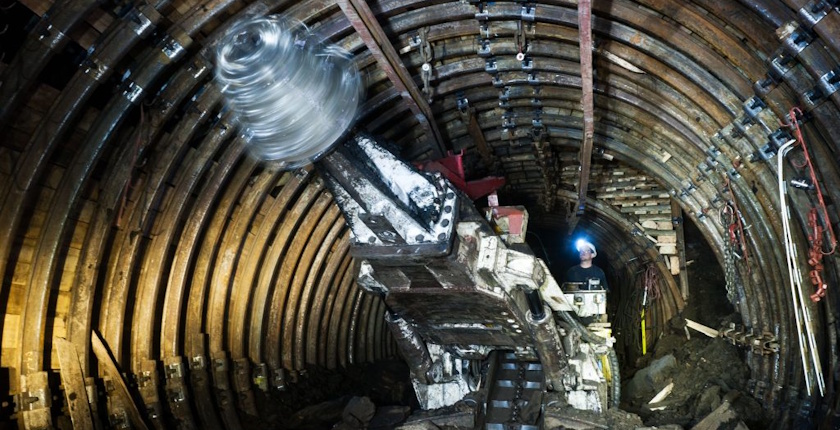
Slovenian Prime Minister Robert Golob visited the Savinja and Šalek region and the Velenje coal mine to present a draft law on the gradual closure of the mine. The event marked the beginning of a public debate on the document. Its implementation is estimated at EUR 1.1 billion. The trade union has raised concerns about the plan.

The Government of Slovenia has initiated a coal phaseout by assuming direct ownership of the Šoštanj coal power plant and coal mine Velenje from state-owned power utility Holding Slovenske Elektrarne (HSE). The first steps towards the closure of Termoelektrarna Šoštanj (TEŠ) have begun, and the decision makers have turned to Premogovnik Velenje.

Slovenia earlier closed the Trbovlje-Hrastnik mine in Zasavje. Zasavje and Savinja and Šalek (in Slovenian language: Savinjsko-šaleška regija – SAŠA) are two of 31 coal regions in the European Union.

Prime Minister Robert Golob held several meetings with representatives of local authorities in the towns of Šoštanj and Velenje, as well as with the management of the mine, union representatives, and businesspeople.

Golob: We have to take care of you because you took care of us

During the discussions, he emphasized that after the first reading of the draft law in the government, the document would be analyzed by the Economic and Social Council.

“We have to take care of you because you took care of us for so many years,” Golob said, as quoted by his government.

The government will, in his words, strive to protect the social security and jobs of miners and their families. Its goal is to reduce the uncertainty linked with the closure of the coal mine and the restructuring of the region, the prime minister added.

Golob: We have become aware of the workers’ concerns

Golob told workers’ representatives and mine management that the law on the coal mine closure would ensure they have a safe future and security, according to the update. He informed them that the law should enter parliamentary procedure by the end of the year.

“I understand the employees’ concerns, which is why I also attended the meeting with them. We became aware of their concerns before the government adopted the law,” he stated.

Golob claimed that solutions were found for 80% of workers’ demands, and that they would be included in the bill. He expressed confidence that the remaining 20% would be resolved at the Economic and Social Council in the coming weeks.

Trade union: The law must define what happens with employees and associated companies

Minister of Natural Resources and Spatial Planning Jože Novak explained that the government agrees with the management of the coal mine on all key elements, while negotiations with the unions are still ongoing, Naš Stik reported.

The management will prepare a twenty-year program for closure and remediation, Novak noted, and added that EUR 1.1 billion is necessary to implement the law.

According to the General Manager of Premogovnik Velenje Marko Mavec, the technical part of the draft law is appropriate, while the social aspect requires additional coordination.

The SPESS trade union President Simon Lamot pointed to controversial issues including the possibility of selling the HTZ Velenje subsidiary and uncertainties regarding early retirement.

The law must clearly define what happens to employees and associated companies – without that, there can be no talk of a just transition, Lamot stressed.

by in News

Slovenia allocates EUR 375 million for sustainable mobility

Slovenia has allocated EUR 835 million from the Climate Fund for climate change mitigation and adaptation. The funds should be used over the period 2025-2028.

The Government of Slovenia has adopted a decree on the allocation plan for the Climate Fund for 2025-2028. The plan follows the key measures from the previous plan for the period 2023-2026 and adds funds for 2027 and 2028. The amount is determined based on expected revenues from emission allowance auctions.

Emission allowances are part of the European Union Emissions Trading System (EU ETS).

The funds will be directed to sectors addressing the main climate challenges, both in mitigation and adaptation to climate change. Measures supporting the green transition and increasing the country’s resilience to climate change will also be supported, according to the Government of Slovenia.

EUR 121 million was allocated for decarbonizing the economy

The largest chunk will go to sustainable mobility – EUR 375 million. The funds will be used for investments in public transport – purchase of new trains and buses, renovation of ticketing and information systems, co-financing of zero-emission vehicles and charging infrastructure, promotion of cycling and walking, and shifting freight transport from roads to rail.

EUR 121 million is designated for decarbonizing the economy. The government will co-finance successful European Union projects, support the introduction of a circular economy and sustainable reporting for small and medium-sized enterprises, as well as investments in industrial decarbonization.

Energy renovation of public and residential buildings, measures to reduce energy poverty, and the construction of nearly zero-energy buildings are also part of the allocation plan. There is EUR 111 million for such activities.

EUR 26 million is set for awareness raising and education

EUR 95 million is designated for renewable energy sources. The funds will be used to replace outdated household heating devices with modern ones and heat pumps, as well as for energy storage, geothermal energy, and measures to increase the energy self-sufficiency of buildings.

The Climate Fund will support additional climate change adaptation measures. The activities include reducing flood risks, preserving biodiversity, adaptation in forestry and agriculture, and strengthening the resilience of local communities. The allocated funds amount to EUR 49 million.

Slovenia has envisaged EUR 12 million for international climate change financing and EUR 26 million for awareness raising and education.

  • 1
  • 2