by in News

Greece loses EU grant intended for renewable electricity for vulnerable consumers

The ambitious Apollo program, which the Greek government outlined in late 2023, is losing EUR 100 million. The European Union earlier approved the grant for investments in renewable energy and storage, intended to lower energy costs for vulnerable consumers through self-consumption.

The first phase of the Apollo program was envisaged to help vulnerable households. It aimed to support renewable energy projects, through auctions, of 400 MW to 500 MW overall, combined with battery systems.

Each of Greece’s 13 regions, also known as peripheries, would get a green power plant, and eligible consumers who join a local energy community get discounted electricity bills. Therefore, the program is in the form of virtual self-consumption. It is the first of its kind in the region that Balkan Green Energy News tracks.

Apollo fails to take off on time

The scheme was supposed to benefit from an EUR 100 million grant from the European Union’s Recovery and Resilience Facility (RRF). It is implemented via the National Recovery and Resilience Plan Greece 2.0.

However, Apollo was significantly delayed and now the deadlines are considered impossible to achieve, even if they are extended. It means RRF funds are going to be lost. Energypress reported that they have already been removed from the budget.

Namely, the issue is with the batteries. Now their costs would have to be covered entirely by the producers. In turn, they are expected to lock higher prices in Apollo’s auctions, possibly passing them on to end consumers and making the whole initiative less effective at combating energy poverty.

It should be noted that the rest of Apollo remains intact for the time being, despite the setback. The loss of funds concerns household consumers with special tariff A. Funding is still available, in theory, for the other category of vulnerable households, defined by different income criteria.

The entire initiative also aims to lower energy costs for municipal authorities, water utilities and irrigation associations. They haven’t been affected so far.

Standalone battery plants also at risk

Another Greek initiative, for subsidized standalone battery plants, faces very short deadlines. It is eligible for EUR 341 million in RRF funding. In total, projects for 900 MW overall have been selected through three auctions.

The first wave of investors should declare connection readiness this month, so their facilities can become operational by the end of 2025.

HAESS: Selected projects may not receive support

They have complained of a lengthy licensing process and logistical difficulties. The investors asked the Ministry of Environment and Energy for an extension.

In July, the Ministry of Finance submitted a request for the sixth RRF tranche, EUR 2.1 billion in grants, after completing 39 more targets. If it is approved by the administration in Brussels, Greece will have secured EUR 23.4 billion overall, or 65% of allotted funds.
by in News

Slovenia tops EU list for most smart power meters, Croatia among laggards

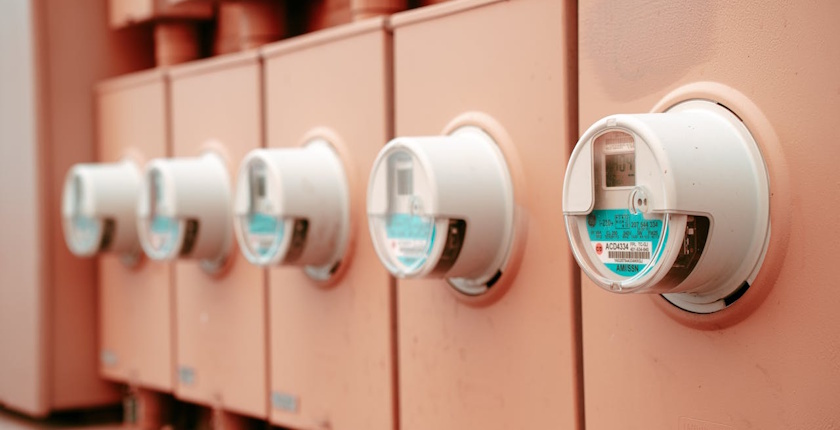
Slovenia is very close to equipping all electricity consumers with smart meters, while Croatia is within reach of achieving it in the non-home segment, but far behind in the household category, according to the latest data from the EU Agency for the Cooperation of Energy Regulators (ACER).

At the top of the list of European Union member states with the highest share of smart meters, three countries are fully equipped with modern smart meters, Naš stik reported.

All consumers in Sweden, Denmark, and Italy have such devices installed. They are followed by Finland, Estonia, Latvia, Luxembourg, Spain, and Portugal, all with 99% of households and 100% of non-household consumers equipped.

Germany is at the bottom of the table, with a rollout of just 2%

Next is Slovenia, with 97% overall. France reached 94% among households and 95% in the other category, while Malta is at 93% and 87%, respectively. Slovenia is expected to complete the process by the end of the year, the article added.

The laggards are Lithuania (51%, 95%), Belgium (46%, 79%), Poland (36%, 65%), Croatia (34%, 95%), Romania (27%, 45%), and Greece (12% altogether). Germany is at the bottom of the list, with a combined total of only 2%, according to ACER’s data.

Smart meters are one of the main components of the distribution grid upgrade

Croatia’s state-owned power utility Hrvatska Elektroprivreda (HEP) launched a tender last August worth EUR 86.5 million, for the purchase of smart meters. The company said at the time that it planned to install them at all metering points in the country by the end of 2029.

Smart meters are a crucial factor for modernizing distribution networks. It is necessary for the future power system, where consumers will play a very different role, generating electricity for self-consumption and through demand response and flexibility services.

by in News

Significant step for citizen energy in BiH – Republic of Srpska enables establishment of first renewable energy communities in region

The recent adoption of the rulebook on renewable energy communities in the Republic of Srpska is a big step in enabling citizens, local authorities, and businesspeople in Bosnia and Herzegovina to join forces and produce electricity for their own needs. It was a key step in introducing citizen energy. The concept is a great opportunity for the Balkans, because it can provide many benefits like lowering bills for consumers, and a sustainable energy transition, according to Damir Miljević, a member of the Regional Center for Sustainable Energy Transition (RESET) from BiH.

The new rulebook on renewable energy communities in the Republic of Srpska, one of the two entities making up Bosnia and Herzegovina, defines the activities of renewable energy communities (REC).

Energy transition consultant Damir Miljević explained to Balkan Green Energy News that REC refers to the production of electricity from renewables, while citizen energy communities (CEC) include all types of energy. The rulebook adopted by the Republic of Srpska, in his words, is the first in the region. It is focused on enabling the production of electricity for self-consumption (prosumers) primarily from renewable energy sources such as solar, wind, and hydro energy.

Energy communities are an opportunity for citizens and businesspeople lacking suitable roofs for photovoltaics

He says the rulebook finally created the conditions at the local level – where the energy transition is supposed to be conducted in the first place – for citizens, local authorities, and businesspeople to join forces and produce electricity by installing a facility together. They can use some of the produced electricity for their own needs and inject the rest into the grid.

Citizens and small entrepreneurs who don’t have suitable roofs for solar power plants and municipal authorities with many roofs at their disposal as well as their own land can jointly finance and use such facilities. They will benefit both on the individual and collective level, Miljević pointed out. Without the communities framework, it wouldn’t be possible, in his opinion.

“In addition, conditions are created through RES communities to cede a part of the energy that the community’s facility generates, if the members of the community agree, to vulnerable categories of the population, contributing to the fight against energy poverty that way,” said Miljević, who is among the speakers at the upcoming Belgrade Energy Forum 2025 (BEF 2025).

Miljević: Elektroprivreda Republike Srpske needs to do its part

The rulebook’s entry into force enabled citizens, local firms and local communities to establish renewable energy communities, Miljević said and added that the only serious remaining obstacle is the refusal of government-owned power utility Elektroprivreda Republike Srpske (ERS) to sign new supply contracts.

Prosumers in the entity can’t fully exercise their rights, despite an order from the Regulatory Commission for Energy of the Republic of Srpska, as they haven’t yet received the new supply contracts from ERS, he pointed out.

Citizen energy is a great opportunity for Balkan states

Damir Miljević (photo: Balkan Green Energy News)

Miljević stressed that rulebooks are among the steps in introducing citizen energy. Miljević noted that the other parts of BiH haven’t established regulatory frameworks. The Brčko District has no bylaws, while the Federation of BiH has adopted the rules for renewable energy communities, but hasn’t simplified its rules for connecting prosumers and the communities to the grid.

Production onsite for consumption should become priority in energy policies and for decarbonization efforts in the Western Balkans

In Miljević’s opinion, the resistance is enormous and partly caused by the lack of recognition of the importance and role of citizen energy in countries such as the Balkans.

In contrast to developed countries – for instance, household consumption in the European Union has a 25% share in total final electricity consumption – in BiH and Serbia it is 42%, and in Montenegro it amounts to around 50%, he noted.

It means the concept of producing for consumption onsite should be a priority in energy policy and for decarbonization efforts in the Western Balkans, Miljević stressed. It implies putting solar panels on roofs on a significant scale, which is the essence of citizen energy, he added.

Citizen energy isn’t a priority in domestic and international policies implemented in the region

In addition to reducing electricity bills for customers, the concept contributes to reducing distribution and transmission losses and required investments in new grid capacities and new large power plants, and improves the security of supply and energy independence of a country, according to Miljević.

Citizen energy, in his words, is the only solution for a safe and sustainable energy transition and decarbonization of domestic power consumption, but unfortunately it isn’t a priority in domestic and international policies implemented in the region.

The lobbying effect of investors in the market shouldn’t be underestimated either, nor the fear and resistance within the politics and state-owned power utilities to the decentralization, democratization, and demonopolization of power generation that citizen energy brings, Miljević concluded.

by in News

Montenegro’s power consumption grows 25%

Electricity consumption in Montenegro has risen by 25% over the past four years, driven, among other factors, by solar power expansion. The installed capacity of photovoltaic plants amounts to around 80 MW, and it is expected to exceed 100 MW by the end of the year.

Jovan Kasalica, executive manager of the supply department in power utility Elektroprivreda Crne Gore (EPCG), attributed the surge in electricity consumption both to a low price of electricity and the growing contribution of solar power plants.

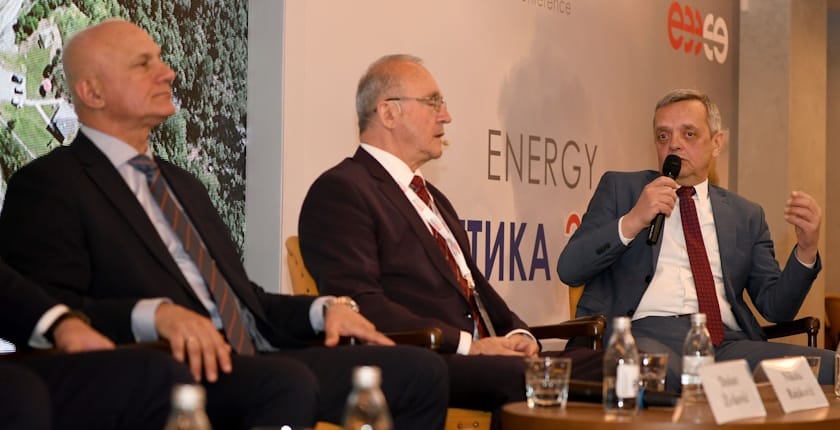
“The majority of this increase is linked to the heating sector, especially in central and northern Montenegro. We are making a significant contribution to decarbonization in the region, which we will document with precise data,” Kasalica noted at the international conference Energy 2025, held in the Zlatibor mountain in Serbia.

Rooftop solar is capacity is increasing

He said the development of the solar power segment was successful. Currently, nearly 80 MW of solar capacity is operational in Montenegro.

The Solari 3000+ and 500+ project brought online 30 MW of solar panels, and the second project, Solari 5000+, which aims for another 70 MW, is currently in advanced stages.

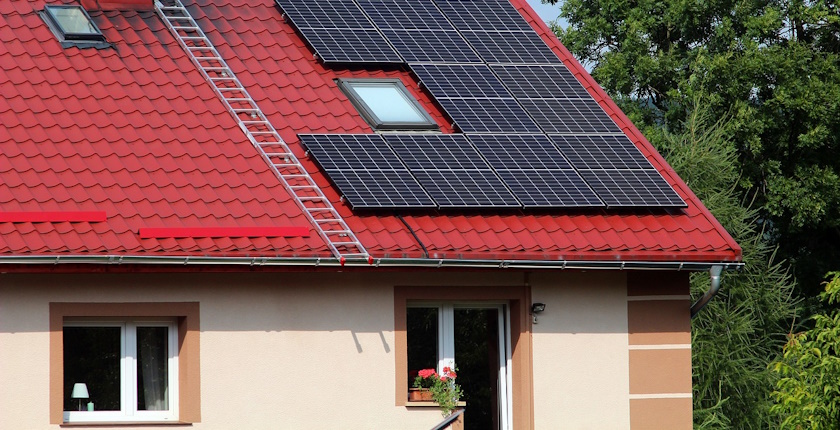
The initiatives focus on installing photovoltaics on the roofs of households and businesses, enabling citizens and entrepreneurs to produce electricity for self-consumption and become prosumers.

The Gvozd wind farm is set to be connected to the grid by the of the year

By the end of the year, it is anticipated that the total capacity of PV facilities in Montenegro will surpass the planned 100 MW, according to Kasalica.

He further noted that the company didn’t have any additional costs for the Solari 3000+ project, because the loans for the installation were switched to the funding facilities and consumers. The project has resulted in lower bills and greater energy efficiency, Kasalica said.

Additionally, he announced plans to connect the 54 MW Gvozd wind farm to the grid by the end of the year.

In addition to increasing the number of prosumers in Montenegro, EPCG plans to install ground-mounted solar power plants and to put online a total capacity of 200 MW within the next three years.

The company has also recently kicked off the main phase of the so-called ecological reconstruction of the Pljevlja thermal power plant. The only coal-fired facility in Montenegro won’t produce electricity until November.

by in News

Croatia changing law on renewables – new rules for prosumers, decentralized power production

The Government of Croatia has adopted the amendments to the law on renewable energy sources and high-efficiency cogeneration. They change rules for consumers producing electricity for self-consumption, facilitate the establishment of citizen energy communities and regulate decentralized energy production.

The amendments align the Croatian legislation with the European Union’s Renewable Energy Directive and bring benefits to citizens, entrepreneurs, and investors, the Ministry of Economy said.

One of important innovations is a new scheme for the production of energy for self-consumption. Instead of the current net metering mechanism, the new law introduces net billing. It values more fairly the surplus electricity that prosumers deliver to the grid, according to the ministry.

The grid costs charged to prosumers will be aligned with the actual amount of electricity that they take from the grid

Consumers – citizens and entrepreneurs that produce energy for their own needs, will pay grid costs matching the amount of electricity they actually take from it, enabling a sustainable and fair system for all users, the ministry added.

Existing prosumers will have ten years for the transition to the new scheme.

The bill enables the production of electricity for self-consumption in remote locations, provided that all metering points are registered with the same consumer. The ministry expects the measure to pave the way for greater investments, flexibility, and decentralized energy production.

Waste separation is a condition for granting incentives for waste incineration

The rules for establishing citizen energy communities have been simplified, to further strengthen their role in the energy transition. The amendments stricten the criteria for the sustainability of biofuels and they prohibit incentivizing the incineration of waste not from a system of separate collection.

The upcoming law sets the basis for a plan for the development of electricity infrastructure and storage capacities. It will create the conditions for greater integration of renewable energy sources into the grid, the ministry stressed.

“With this law we are taking an important step forward in the energy transition, ensuring a balance between the interests of citizens, the economy, and the energy system, and creating the foundations for a sustainable development of the Croatian energy sector in the long term,” Minister Ante Šušnjar stated.

  • 1
  • 2