by in News

Self-consumption photovoltaic systems in Greece must add remote control devices

Solar power facilities for self-consumption in Greece now require set point equipment.

The Hellenic Distribution Network Operator (HEDNO or DEDDIE) announced that owners of self-consumption installations of over 400 kW have eight months, until September 15, to make necessary upgrades. Set point equipment includes specialized telemetering devices that the network operator uses for remote control and curtailment of solar power production.

Such equipment was first added in 2024 in other categories of photovoltaics, to ensure that HEDNO can dial down production at times when renewable energy production exceeds demand in the country. The effort is aimed at ensuring system stability and avoiding blackouts such as the one that happened in Spain last April.

According to Energypress, so far 4,300 MW of renewables units connected to the distribution network have added set-point equipment, out of a total of 5,500 MW deemed necessary. The authorities are aiming for the majority of the capacity to be ready by spring to avoid overcapacity. It’s a season that traditionally brings high renewable energy production and low demand in Greece. In 2024 and 2025, very low wholesale prices and high curtailments became a regular occurrence in the springtime.

As for the transmission network, all required renewable electricity plants have made the necessary upgrades.

Producers must comply or be disconnected

HEDNO said the new requirement includes units both in the net metering and virtual net metering regimes, as well as the ones with and without storage.

Once proper upgrades have taken place, producers must submit a notification form to the distribution operator, along with necessary technical documents. Owners who do not comply in time, will be subject to disconnection from the grid, HEDNO said.

Its goal is to make horizontal curtailments from now on, only reducing production levels across photovoltaics, without having to shut down some of them entirely.


by in News

Self-consumption photovoltaic systems in Greece must add remote control devices

Solar power facilities for self-consumption in Grece now require set point equipment.

The Hellenic Distribution Network Operator (HEDNO or DEDDIE) announced that owners of self-consumption installations of over 400 kW have eight months, until September 15, to make necessary upgrades. Set point equipment includes specialized telemetering devices that the network operator uses for remote control and curtailment of solar power production.

Such equipment was first added in 2024 in other categories of photovoltaics, to ensure that HEDNO can dial down production at times when renewable energy production exceeds demand in the country. The effort is aimed at ensuring system stability and avoiding blackouts such as the one that happened in Spain last April.

According to Energypress, so far 4,300 MW of renewables units connected to the distribution network have added set-point equipment, out of a total of 5,500 MW deemed necessary. The authorities are aiming for the majority of the capacity to be ready by spring to avoid overcapacity. It’s a season that traditionally brings high renewable energy production and low demand in Greece. In 2024 and 2025, very low wholesale prices and high curtailments became a regular occurrence in the springtime.

As for the transmission network, all required renewable electricity plants have made the necessary upgrades.

Producers must comply or be disconnected

HEDNO said the new requirement includes units both in the net metering and virtual net metering regimes, as well as the ones with and without storage.

Once proper upgrades have taken place, producers must submit a notification form to the distribution operator, along with necessary technical documents. Owners who do not comply in time, will be subject to disconnection from the grid, HEDNO said.

Its goal is to make horizontal curtailments from now on, only reducing production levels across photovoltaics, without having to shut down some of them entirely.

by in News

Bulgaria proposes changes to electricity trading rules to include new market participants

The Energy and Water Regulatory Commission of has proposed its amendments to Bulgaria’s electricity trading rules.

The changes aim to align electricity trading rules with recent updates to the country’s Energy Act and a legal and operational framework for new categories of market participants, according to law firm CMS Bulgaria.

New categories include active customers (active buyers), citizen energy communities, self-consumers (prosumers) of electricity from renewable sources, and renewable energy communities.

The Energy and Water Regulatory Commission (EWRC) held a public consultation event today on its draft changes in electricity trading rules. Representatives of the three distribution system operators (DSOs), the Sofia Municipality and the Bulgarian Association for Electrical Engineering and Electronics (BASEL) participated in the discussion.

These changes are designed to encourage electricity production for self-consumption

These changes are designed to encourage electricity production for self-consumption, minimize distribution losses, and foster more predictable energy pricing, a CMS e-alert reads. Furthermore, the amendments would ensure the Bulgarian rules comply with EU law, specifically directives 2018/2001 and 2019/944 and Regulation 2019/943.

The proposed draft introduces several specific provisions to facilitate the participation of the said new entities, CMS stressed.

It explicitly defines how new participants can join the market and the types of contracts they are permitted to conclude.

The new rules allow for the grouping of different sites for joint electricity production or consumption. They also set technical mandates for commercial metering devices, including remote reading capabilities.

The new rules also define calculation of generated, shared and sold electricity

The authors outlined procedures for registering or deregistering participants and groups with network operators. The update would impose an obligation to maintain a public register of these participants.

The proposed rules define the calculation of generated, shared and sold electricity. The framework guarantees that data is exchanged between suppliers, network operators, and group members, ensuring it is reflected in monthly bills.

Stakeholders were invited to submit their proposals from January 8 until January 22, CMS underscored.

by in News

Bulgaria proposes changes to electricity trading rules to include new market participants

The Energy and Water Regulatory Commission of has proposed its amendments to Bulgaria’s electricity trading rules.

The changes aim to align electricity trading rules with recent updates to the country’s Energy Act and a legal and operational framework for new categories of market participants, according to law firm CMS Bulgaria.

New categories include active customers (active buyers), citizen energy communities, self-consumers (prosumers) of electricity from renewable sources, and renewable energy communities.

The Energy and Water Regulatory Commission (EWRC) held a public consultation event today on its draft changes in electricity trading rules. Representatives of the three distribution system operators (DSOs), the Sofia Municipality and the Bulgarian Association for Electrical Engineering and Electronics (BASEL) participated in the discussion.

These changes are designed to encourage electricity production for self-consumption

These changes are designed to encourage electricity production for self-consumption, minimize distribution losses, and foster more predictable energy pricing, a CMS e-alert reads. Furthermore, the amendments would ensure the Bulgarian rules comply with EU law, specifically directives 2018/2001 and 2019/944 and Regulation 2019/943.

The proposed draft introduces several specific provisions to facilitate the participation of the said new entities, CMS stressed.

It explicitly defines how new participants can join the market and the types of contracts they are permitted to conclude.

The new rules allow for the grouping of different sites for joint electricity production or consumption. They also set technical mandates for commercial metering devices, including remote reading capabilities.

The new rules also define calculation of generated, shared and sold electricity

The authors outlined procedures for registering or deregistering participants and groups with network operators. The update would impose an obligation to maintain a public register of these participants.

The proposed rules define the calculation of generated, shared and sold electricity. The framework guarantees that data is exchanged between suppliers, network operators, and group members, ensuring it is reflected in monthly bills.

Stakeholders were invited to submit their proposals from January 8 until January 22, CMS underscored.

by in News

New auction announced in Greece for 600 MW for electricity for vulnerable households

The Greek government specified terms and conditions for participation in a new kind of renewable energy auction, covering both wind and solar energy.

The auction comes as part of the Apollo initiative, aimed at reducing energy costs for vulnerable households across the country and fighting energy poverty. In total, 200 MW of solar plus batteries and 400 MW of wind will be auctioned.

Wind power projects of at least 60 kW may participate, with no limit set for photovoltaics. All applicants must have final connection terms from the distribution or transmission operator. Their remuneration will be based on a contract for difference (CfD). Investors can also gain a grant from European Union programs, the National Development Plan or other sources, according to the decree.

This will be a single-step static auction, with the offer price ceiling set at EUR 80 per MWh for wind projects and EUR 75 per MWh for photovoltaics with battery storage.

Equally important, the competition level is 40%, meaning that 60% of the offered capacity will be awarded up to a maximum of 600 MW. On top of that, at least three projects from different investors must participate in the process. Furthermore, no participant can apply for more than 25% of the total offered capacity, to ensure a level playing field.

Steep timeframe for selected projects

Concerning next steps, the Regulatory Authority for Energy, Waste and Water (RAEWW or RAAEY) is expected to officially proclaim the auction in the next few weeks, before the end of January. The regulator will also specify the letter of guarantee investors will have to submit, as well as the rest of the details. The submission of offers is expected to last by the end of February.

The ministry said the construction of solar farms with batteries must be completed by the end of 2027, while wind farms need to come online by September 2028.

Consumers who will benefit from cheaper renewable electricity will be notified via their power suppliers about their eligibility.

by in News

New auction announced in Greece for 600 MW for electricity for vulnerable households

The Greek government specified terms and conditions for participation in a new kind of renewable energy auction, covering both wind and solar energy.

The auction comes as part of the Apollo initiative, aimed at reducing energy costs for vulnerable households across the country and fighting energy poverty. In total, 200 MW of solar plus batteries and 400 MW of wind will be auctioned.

Wind power projects of at least 60 kW may participate, with no limit set for photovoltaics. All applicants must have final connection terms from the distribution or transmission operator. Their remuneration will be based on a contract for difference (CfD). Investors can also gain a grant from European Union programs, the National Development Plan or other sources, according to the decree.

This will be a single-step static auction, with the offer price ceiling set at EUR 80 per MWh for wind projects and EUR 75 per MWh for photovoltaics with battery storage.

Equally important, the competition level is 40%, meaning that 60% of the offered capacity will be awarded up to a maximum of 600 MW. On top of that, at least three projects from different investors must participate in the process. Furthermore, no participant can apply for more than 25% of the total offered capacity, to ensure a level playing field.

Steep timeframe for selected projects

Concerning next steps, the Regulatory Authority for Energy, Waste and Water (RAEWW or RAAEY) is expected to officially proclaim the auction in the next few weeks, before the end of January. The regulator will also specify the letter of guarantee investors will have to submit, as well as the rest of the details. The submission of offers is expected to last by the end of February.

The ministry said the construction of solar farms with batteries must be completed by the end of 2027, while wind farms need to come online by September 2028.

Consumers who will benefit from cheaper renewable electricity will be notified via their power suppliers about their eligibility.

by in News

Greece reboots Apollo program against energy poverty

The Greek government has redesigned and rebooted the Apollo self-consumption program, aimed at reducing energy costs for vulnerable consumers.

Initially, Apollo was introduced to support households, municipalities, water utilities and local irrigation organizations. Each of Greece’s 13 regions, also known as peripheries, would have a green power plant, and eligible consumers who join a local energy community get discounted electricity bills.

However, the first part, which included households, was not realized in time to draw EUR 100 million from the European Union’s Recovery and Resilience Facility (RRF). It expires in June 2026.

Tsafos: Both segments set for completion

“Apollo was one of the plans that we could not carry out in time, therefore we excluded it from RRF and increased funding to other initiatives, such as energy efficiency in houses,” Deputy Minister of Environment and Energy Nikos Tsafos explained earlier in December.

Now the government announced that the first phase would be continued using different funding sources, according to the new joint ministerial decree. In fact, the number of beneficiaries is higher than in the original version. A second phase would follow to support remaining consumer categories, based on a different decree.

“Our goal remains to complete both segments and we are trying to find new funding tools”, Tsafos added.

New auctions and deadlines

Based on the new plan, auctions will take place for 400 MW in wind farms and 200 MW in solar farms, with the second category being combined with battery storage. Selected wind power projects must be completed by September 30, 2028, and the ones for photovoltaics have until the end of 2027.

The decree also stipulates that auction participants may not be selected for more than 25% of total capacity offered in each auction. Every project must be mature, with final connection terms from a network operator.

Last but not least, solar farms without storage may also participate in the auction, as long as they include a battery afterwards in their license.

by in News

Greece reboots Apollo program against energy poverty

The Greek government has redesigned and rebooted the Apollo self-consumption program, aimed at reducing energy costs for vulnerable consumers.

Initially, Apollo was introduced to support households, municipalities, water utilities and local irrigation organizations. Each of Greece’s 13 regions, also known as peripheries, would have a green power plant, and eligible consumers who join a local energy community get discounted electricity bills.

However, the first part, which included households, was not realized in time to draw EUR 100 million from the European Union’s Recovery and Resilience Facility (RRF). It expires in June 2026.

Tsafos: Both segments set for completion

“Apollo was one of the plans that we could not carry out in time, therefore we excluded it from RRF and increased funding to other initiatives, such as energy efficiency in houses,” Deputy Minister of Environment and Energy Nikos Tsafos explained earlier in December.

Now the government announced that the first phase would be continued using different funding sources, according to the new joint ministerial decree. In fact, the number of beneficiaries is higher than in the original version. A second phase would follow to support remaining consumer categories, based on a different decree.

“Our goal remains to complete both segments and we are trying to find new funding tools”, Tsafos added.

New auctions and deadlines

Based on the new plan, auctions will take place for 400 MW in wind farms and 200 MW in solar farms, with the second category being combined with battery storage. Selected wind power projects must be completed by September 30, 2028, and the ones for photovoltaics have until the end of 2027.

The decree also stipulates that auction participants may not be selected for more than 25% of total capacity offered in each auction. Every project must be mature, with final connection terms from a network operator.

Last but not least, solar farms without storage may also participate in the auction, as long as they include a battery afterwards in their license.

by in News

Croatia initiates project to harness solar energy along highways

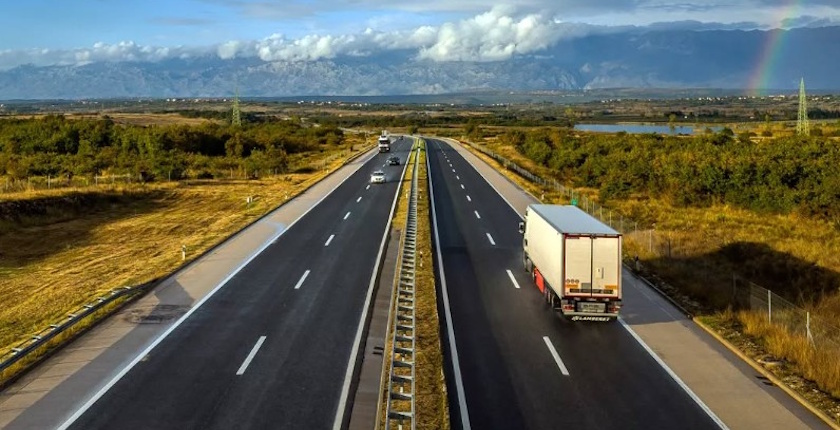
Croatia’s highway management enterprise, Hrvatske Autoceste, is implementing a project for solar power plants along its highways. The company plans to use the electricity for self-consumption and for electric vehicle chargers. It would reduce costs and increase its energy independence.

After a tender procedure, Hrvatske Autoceste (HAC) selected ETS Farago to produce project designs for photovoltaic plants at four locations on the A3 highway. It heads east from the capital Zagreb to the border with Serbia.

The job, covering 36 hectares, should be finished by March 2026. Along with the documentation, the selected company is required to submit an assessment of its advantages and disadvantages.

It would be followed by a techno-economic analysis and, if it is favorable, a tender for the installation of solar panels. It is the final step, expected not before 2027.

Slovenia and BiH have initiated similar projects

Of note, Slovenia and Bosnia and Herzegovina have initiated similar projects. Roadside locations could be a good solution for solar panels, given that such land is unused and alternatives are limited.

ETS Farago is tasked with preparing three versions for each of the four locations: Zagreb Plitvice (2.5 hectares), Rastovica (3.1 hectares), Sredanci (11 hectares), and Ivanja Reka (18 hectares). The first two are next to rest areas, while the other two are at interchanges.

HAC intends to install 259 electric vehicle chargers

The first model is for the production of electricity for self-consumption, with the surplus fed into the grid. Another option is self-consumption including battery energy storage systems (BESS). The third model is the complete sale of all electricity produced in the PV facilities.

The contract is estimated at EUR 11,400 excluding VAT.

HAC previously said that in addition to supplying its own facilities, such as toll booths, traffic maintenance and control centers, and street lighting, its project called solar highways is key to plans for expanding electric vehicle infrastructure.

The company intends to install 259 chargers on roads within five years.

by in News

Greek regulator steps in to prevent energy communities misuse

Legitimate energy communities have suffered in Greece, as private investors have been taking advantage of the status to promote disguised commercial projects.

Normally, energy communities are set up to help citizens, businesses and other special consumer groups to benefit from lower energy costs using renewable energy.

There are two categories: renewable energy communities (RECs) and citizens energy communities (CECs). They have priority in obtaining licenses compared to commercial investments. They are exempt from letters of guarantee and have access to national and European funding and a higher feed-in tariff.

A law was adopted in 2023 to restrict production licenses for energy communities. It also had the goal of excluding other market actors from participating. However, it appears that the attempt was unsuccessful.

A gap in the regulatory framework allowed private companies and individuals to create energy communities and benefit from the various licensing and financial benefits to promote projects that would otherwise not be eligible. In short, such investors appear as legitimate small participants, while actually representing larger private companies.

Psomas: Just 2.8% of installations are for self-consumption

By April 2025, energy communities installed facilities totaling 2.24 GW, of which just 62 MW (or 2.8%) for self-consumption. They also held about 22% of total licensed capacity for photovoltaics in the country, according to energy consultant Stelios Psomas.

The law stipulates that legal entities participating in REC and CEC management boards must be mutually independent and not connected directly or indirectly through other businesses or natural persons.

According to the Regulatory Authority for Energy, Waste and Water (RAAEY or RAEWW), the minimum of 15 legal entities to set up a community refers to 15 independent entities. Otherwise, there is no guarantee they would act towards the benefit of local communities and not as a vehicle to promote the commercial interests of individuals or business groups, it pointed out.

RAAEY said it would intervene to enforce the essence of the law more aggressively. It added that if irregularities are discovered, an energy community may lose its production license. The regulator revealed it would conduct investigations both due to complaints and on its own.

Greece downgraded because of lost EU funds

The government recently lost of EUR 100 million from the European Union’s Recovery and Resilience Facility (RRF), aimed at promoting self-consumption for vulnerable households through forming an energy community.

The loss of funds for the Apollo program triggered a downgrade by REScoop, the European federation of energy communities. It said there were no more dedicated European funds to support energy communities in Greece.

EECF to provide a second chance

Greek energy communities may gain another source of European funding through the European Energy Communities Facility (EECF).

More than 140 of them across Europe will be supported through the program with EUR 45,000 per project. Greece submitted 29 proposals in the recent first call that took place at the end of September. The final list of beneficiaries will be announced in December, with a second call expected in May 2026.

  • 1
  • 2