by in News

Landmark report demonstrates safety, cybersecurity, higher yield of SolarEdge PV systems

VDE Renewables found in its new report that SolarEdge’s advanced safety capabilities minimize photovoltaic system risks and effectively prevent fire hazards, while exceeding international PV safety regulations. SolarEdge has robust cybersecurity mechanisms, essential to mitigating risks associated with cyberthreats, and its solutions bring higher energy yields for both simple and complex roofs.

A new report by VDE Renewables, a subsidiary of the VDE Group, has demonstrated that SolarEdge’s inverter and Power Optimizer-based PV systems deliver measurable advantages in advanced safety, cybersecurity and higher energy production across a wide range of installation types.

In its in-depth assessment of Module-Level Power Electronics (MLPE) topology and SolarEdge’s approach to PV systems, the report highlights how SolarEdge’s advanced safety features reduce PV system vulnerabilities and exceed international PV safety standards. Reviewed and validated by VDE Renewables, the integration of multiple protective mechanisms including Sense Connect proactively identifies and addresses faulty connections long before abnormal temperature is reached.

SafeDC™, rapid shutdown, and module-level monitoring was reported to provide a proactive approach to risk mitigation to ensure a significantly higher level of protection for system operators, maintenance personnel, and emergency responders.

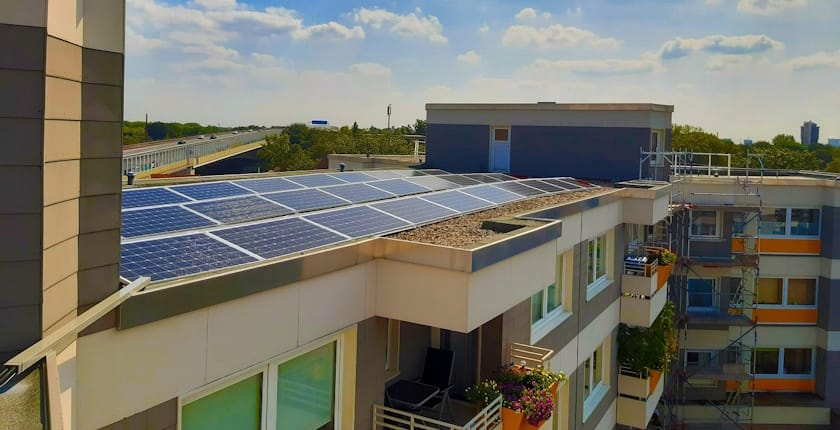
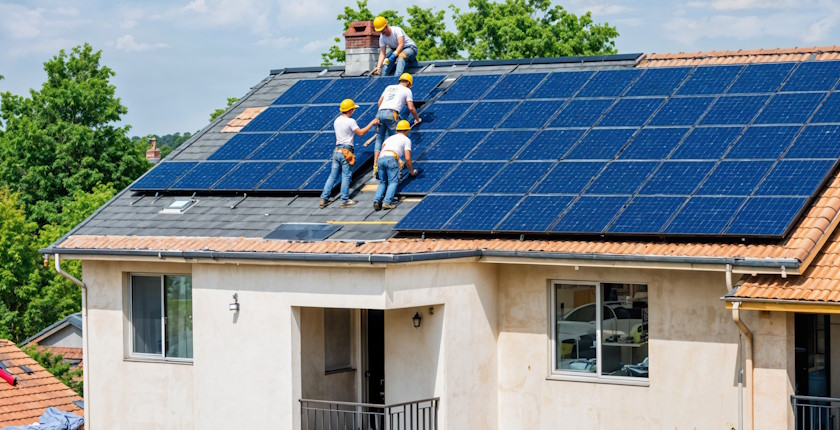
Photo: SolarEdge’s inverter + Power Optimizer solution shown to produce higher energy yields for both simple and complex roofs (4% and 10.5% more power, respectively)

Unsecure PV systems becoming more vulnerable to cyberthreats

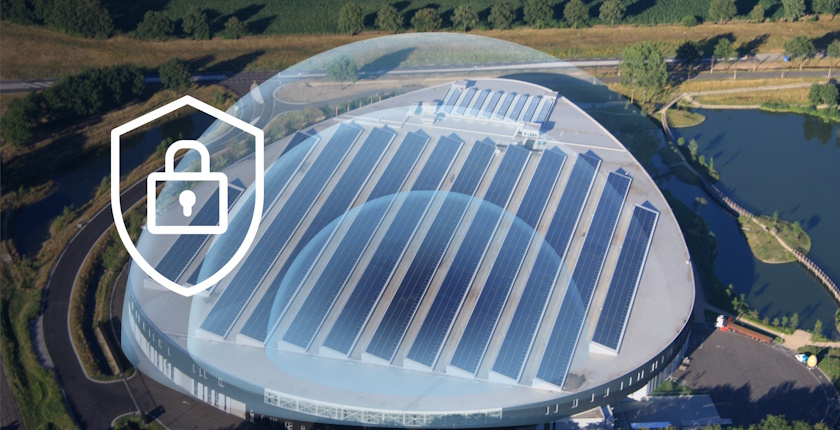
The VDE Renewables report also emphasizes cybersecurity as a top priority in PV systems, noting that as solar technology becomes increasingly digitized and interconnected, unsecure PV systems also become more vulnerable to cyberthreats.

With PV systems now integral to energy infrastructure, the consequences of cyberattacks can extend far beyond individual installations, raising wider concerns around grid security and resilience. In this context, VDE Renewables validated SolarEdge’s strong cybersecurity credentials, recognizing its comprehensive, built-in defence architecture and highlighting its robust cybersecurity mechanisms that mitigate risks associated with cyberthreats.

These mechanisms comply with leading international cybersecurity regulations, including IEC 62443, NIST Cybersecurity Framework, and ISO/IEC 27001. Additionally, SolarEdge’s solution includes encrypted communication protocols, secure remote firmware updates, multi-level access control, continuous monitoring, and penetration-tested system architecture.

SolarEdge provides residential solutions bolstering output on complex roofs by 10.5%

VDE Renewables also validated the performance of SolarEdge’s residential solution against leading traditional string inverter systems, even when using multiple MPPTs. The report confirms results that show a 4% increase in energy production on simple (single facet with no shading) rooftops and an impressive 10.5% increase on complex rooftops.

These gains are attributed to SolarEdge’s use of MLPE-based Power Optimizers and advanced Buck and Boost technology. The VDE Renewables report highlights the SolarEdge ONE energy optimization platform that helps maximize saving potentials with support for both fixed and dynamic electricity tariffs, as well as design advantages such as the ability to use longer strings, enabling lower BoS costs and larger systems within the same roof area – further contributing to overall energy yield.

Gruenewald: SolarEdge’s technology demonstrates its strategic market position in safety, cybersecurity, and performance

The report was sponsored by SolarEdge to evaluate its Power Optimizer-based PV system.

Arne Gruenewald, Project Manager Batteries and Energy Storage Systems, VDE Renewables: “Our assessment shows that SolarEdge’s technology demonstrates its strategic market position in safety, cybersecurity, and performance – criteria that are essential for the technology’s long-term viability and trust.”

VDE Group offers quality assurance services for the global renewable energy sector.

Christian Carraro, General Manager Europe, SolarEdge: “We welcome VDE Renewables’ validation of our technology, being a trusted partner for quality assurance, risk minimization and certification. As the solar industry grows and evolves, it’s essential that we continue to prioritize not just performance, but also safety and cybersecurity. This report encourages us to keep raising the bar and deliver technologies that support more powerful and secure energy solutions.“

About SolarEdge

SolarEdge is a global leader in smart energy technology. By leveraging world-class engineering capabilities and with a relentless focus on innovation, SolarEdge creates smart energy solutions that power our lives and drive future progress.

SolarEdge developed an intelligent inverter solution that changed the way power is harvested and managed in photovoltaic systems. The SolarEdge DC-optimized inverter seeks to maximize power generation while lowering the cost of energy produced by the PV system.

Continuing to advance smart energy, SolarEdge addresses a broad range of energy market segments through its PV, storage, EV charging, batteries, and grid services solutions.
by in News

Montenegro’s power consumption grows 25%

Electricity consumption in Montenegro has risen by 25% over the past four years, driven, among other factors, by solar power expansion. The installed capacity of photovoltaic plants amounts to around 80 MW, and it is expected to exceed 100 MW by the end of the year.

Jovan Kasalica, executive manager of the supply department in power utility Elektroprivreda Crne Gore (EPCG), attributed the surge in electricity consumption both to a low price of electricity and the growing contribution of solar power plants.

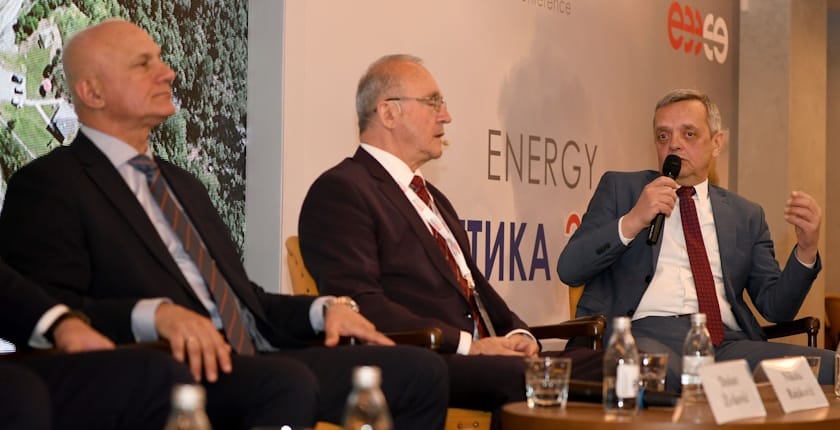
“The majority of this increase is linked to the heating sector, especially in central and northern Montenegro. We are making a significant contribution to decarbonization in the region, which we will document with precise data,” Kasalica noted at the international conference Energy 2025, held in the Zlatibor mountain in Serbia.

Rooftop solar is capacity is increasing

He said the development of the solar power segment was successful. Currently, nearly 80 MW of solar capacity is operational in Montenegro.

The Solari 3000+ and 500+ project brought online 30 MW of solar panels, and the second project, Solari 5000+, which aims for another 70 MW, is currently in advanced stages.

The initiatives focus on installing photovoltaics on the roofs of households and businesses, enabling citizens and entrepreneurs to produce electricity for self-consumption and become prosumers.

The Gvozd wind farm is set to be connected to the grid by the of the year

By the end of the year, it is anticipated that the total capacity of PV facilities in Montenegro will surpass the planned 100 MW, according to Kasalica.

He further noted that the company didn’t have any additional costs for the Solari 3000+ project, because the loans for the installation were switched to the funding facilities and consumers. The project has resulted in lower bills and greater energy efficiency, Kasalica said.

Additionally, he announced plans to connect the 54 MW Gvozd wind farm to the grid by the end of the year.

In addition to increasing the number of prosumers in Montenegro, EPCG plans to install ground-mounted solar power plants and to put online a total capacity of 200 MW within the next three years.

The company has also recently kicked off the main phase of the so-called ecological reconstruction of the Pljevlja thermal power plant. The only coal-fired facility in Montenegro won’t produce electricity until November.

by in News

Upgrade for prosumers to avoid grid curtailments costs up to EUR 1,000

To use electricity from their photovoltaic systems in periods when grid operators disconnect them to stabilize the system, citizens can install equipment that costs EUR 300 to EUR 1,000. Cyprus passed a bill enabling prosumers to switch to a zero-export mode.

Cyprus, the only non-interconnected European Union member state, is struggling to maintain the stability of its electricity system. Rapid growth of solar power capacity is increasing the episodes of overloads, when grid operators have to curtail their production. At the same time, sometimes sudden weather changes push production to a critically low level, which can also cause outages before oil-fired power plants step in to cover the deficit.

Still, the island country passed amendments last week to protect the right of prosumers to an interrupted power supply for their own needs. On the other hand, implementation isn’t cheap, and for some of them it would not be cost-effective.

Upgrading a PV system with a zero-export mode is not cost-effective if no one is usually home during work hours

Minister of Energy, Commerce and Industry George Papanastasiou said prosumers need to upgrade their photovoltaic systems to be able to keep consuming their electricity during curtailments. A switch for cutting off the solar panels from the grid, and leaving them directly connected to the home, costs some EUR 300, he added. But a prosumer will need to pay EUR 1,000 if the inverter doesn’t support the conversion, the minister explained.

Owners of PV systems need to calculate the curtailment costs and compare them to the investment that enables operating them in a so-called zero-export mode.

If no one is home on weekdays during work hours, when solar panels generate electricity, there are no substantial benefits, unless there is also a battery. And it makes the intervention much more expensive. Conversely, the new option is much more useful for most businesses.

Cyprus is rushing to introduce energy storage capacities and expand the curtailment systems throughout the power system.

by in News

Bulgaria suspends ill-designed solar energy support program

The Ministry of Energy of Bulgaria doesn’t intend to publish the second call for subsidies for households for solar panels with batteries and solar collectors. The program is partly covered by the European Union’s Recovery and Resilience Facility, so now the country risks losing the funds.

The Ministry of Energy of Bulgaria told Kapital that it does not plan to launch a second procedure to support households in purchasing and installing rooftop photovoltaic panels and solar water heaters. The measure was one of the few for citizens in the National Recovery and Resilience Plan (NRRP) rather than businesses or municipalities.

Through the first call, 1,500 households were selected for grants, worth some EUR 20.5 million in total. There is EUR 123 million for the entire scheme, called Support for Renewable Energy for Households. The solar power panel segment includes an option to install batteries as well.

Procedure too complicated

Initially there were fears that there would be more applications than the sum can cover, the article adds. But the procedure turned out to be so complicated that few people actually submitted documentation, the news outlet wrote. So now Bulgaria is about to lose the funds, after the European Commission already blocked the second NRRP tranche late last year.

The Ministry of Energy said it expects all the remaining contracts from the first round to be signed by the end of the month.

The program covers up to 70% of the costs for PV panels and 100% for solar collectors

According to Balin Balinov from Greenpeace, the government is once again demonstrating lack of commitment when it comes to energy poor households.

The program covers up to 70% of the costs for PV panels and 100% for solar collectors. But beneficiaries must buy them on their own and get reimbursed afterward. Notably, people who can afford such devices don’t want to deal with the bureaucracy, the report adds.

Installers struggling with backlogs amid tight deadlines

Moreover, Balinov said, there are hardly any firms available at the moment for installing solar panels, and the deadlines are short. Another issue is the lack of a net metering mechanism for rooftop and balcony photovoltaics. In such a setting, the electricity that beneficiaries generate would be subtracted from their bills.

The draft Law on Energy from Renewable Sources, currently in procedure in the National Assembly of Bulgaria includes the introduction of virtual net metering for prosumers and renewable energy communities. The deadline for approving an application for the installation of a solar power system of up to 20 kW would be just one month, the ministry pointed out.

Moreover, to get a grid connection, prosumers with up to 10.8 kW would only be required to notify the operator.

by in News

Kosovo* to subsidize solar panels for prosumers, solar thermal systems

Kosovo* is using an EU grant for public calls for families and firms to install solar power panels and solar thermal collectors. The subsidies for photovoltaics amount to EUR 250 per kW, or EUR 200 per kW for businesses that set up larger systems. There is a bonus for female-owned enterprises.

The Ministry of Economy of Kosovo* launched a mechanism to support households and micro, small, and medium-sized enterprises in investing in renewable energy. The measures are funded with a EUR 75 million grant from the European Union within its EUR 500 million direct budget aid package for the Western Balkans. It was approved at the height of the energy crisis, to subsidize the energy bills of households and businesses that were at high risk.

The authorities issued a call for photovoltaics for self-consumption for families and micro, small, and medium-sized enterprises. Households can apply for support for solar systems with capacities ranging from 3 kW to 7 kW. They will be subsidized with EUR 250 per kW to become prosumers but only up to EUR 1,750 overall.

Firms that build photovoltaic systems of 10 kW and more are entitled to as much as EUR 6,000 per beneficiary

For micro, small, and medium-sized enterprises, the subsidy will be EUR 250 per kW for capacities ranging from 3 kW to 9 kW. The maximum payment to one beneficiary is EUR 2,000. For capacities of 10 kW and above, future prosumers in the business sector will be subsidized with EUR 200 per kW or up to EUR 6,000 in total.

In cases where businesses are owned by women or are jointly owned by women holding at least 51% of ownership, the government will add EUR 200 to the subsidy.

The deadline for the first phase is May 31 or until all funds are reserved, on a first-come-first-served basis. Applications in the second phase will be accepted until September 30, according to the announcement.

Public call for solar thermal systems for firms expected in one week

The other call, which the ministry expects to be launched in mid-February, is for supporting micro, small, and medium-sized enterprises in investing in solar thermal systems, for water heating.

The share of subsidies is 40% of the investment value or up to EUR 4,000 in total.

Government promises pathways for investments

Kosovo’s Prime Minister Albin Kurti expressed commitment to the energy transition pathway.

“While we are working on projects with large capacities such as the solar auction, we are also pushing forward opportunities for our citizens to develop small-scale energy capacities for consumption and self-consumption. Not only are we reducing the burden on our system, but we are also empowering families and businesses to make sustainable and affordable choices,” he said.

The Law on Renewable Energy Sources has passed the first reading in parliament

It is a favorable time for investments in renewables, Minister of Economy Artane Rizvanolli claimed and highlighted the work on the Law on Renewable Energy Sources. It has passed the first reading in parliament.

The law will make the installation of solar systems more attractive and obligate operators to make it easier for citizens, she added. The energy strategy stipulates that citizens should be in the center with regard to development and benefit from the energy transition, Rizvanolli asserted.

Alessandro Bianciardi from the European Union Office in Kosovo* vowed to continue supporting the government’s initiatives in the sector. They are cooperating on the 2024-2027 agenda to boost the economy of Kosovo* and other Western Balkan countries with grants and subsidies in the energy sector, he stressed.

* This designation is without prejudice to positions onstatus and is in line with UNSCR 1244/99 and the ICJ Opinion on the Kosovo declaration of independence.
by in News

Bulgaria aims to make Europe’s biggest energy community

The Ministry of Energy, Electricity System Operator (ESO) and the Bulgarian Development Bank (BDB) are launching a solar power program for municipalities, schools, kindergartens, hospitals and small businesses. There are no upfront costs and the installations become the beneficiary’s ownership within eight years.

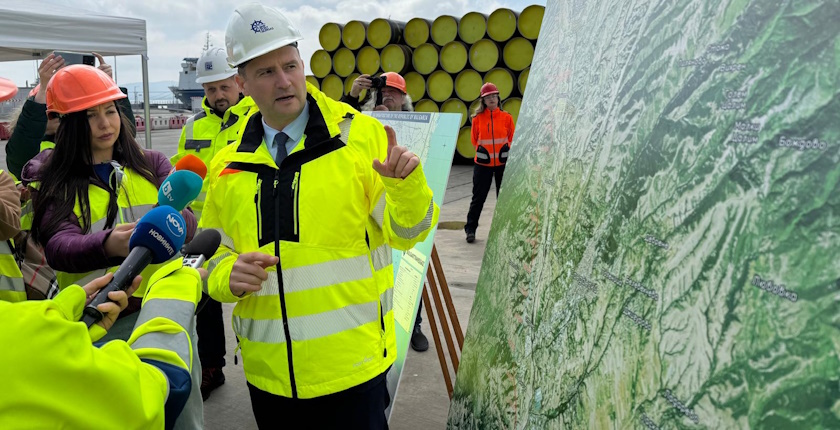
Minister Zhecho Stankov said the goal is to create the largest energy community in Europe and hinted that the government would finance the scheme with a green bond. He also declared the start of the regional Vertical Gas Corridor project in Bulgaria as the first pipes were delivered.

Every school and hospital in Bulgaria can become an electricity producer, Minister of Energy Zhecho Stankov stressed as he presented a financial support mechanism designed with the ambition to create the largest energy community in Europe. The model will benefit both the public sector and private business, he pointed out in the port city of Burgas at a ceremony marking the arrival of the first 4,000 pipes for the Bulgarian sections of the regional Vertical Gas Corridor.

The joint initiative with the country’s power transmission system operator ESO and the Bulgarian Development Bank is for the installation of solar panels with no upfront costs. Beneficiaries – municipalities, schools, kindergartens, hospitals and small businesses – would pay through energy savings and become owners in six to eight years, Stankov claimed.

Bulgaria mulls issuing green bond to finance sustainable energy

The minister also said the project could lead to the government’s first green bond to finance clean and locally produced energy available to a wide range of consumers.

For example, Burgas Municipality can equip all schools, hospitals, kindergartens and other facilities with photovoltaic panels without spending a penny from the local budget, Stankov explained.

Government to invest EUR 57 million in Vertical Gas Corridor

The Vertical Gas Corridor is envisaged to connect Greece, Bulgaria, Romania, Moldova and Ukraine. They plan to transport the fuel from liquefied natural gas (LNG) terminals Alexandroupolis and Revithoussa in Greece, and from the Caspian region, via the Southern Gas Corridor.

The government is fully funding the first stage of the project on Bulgarian territory, with EUR 57 million. The pipes for the pipelines came from India.

Stankov: Bulgaria will never again be left without natural gas

“Bulgaria will never again be left without natural gas,” said Minister Stankov. The capacity of the line between Kulata, on the border with Greece, and Kresna will be increased to 3.6 billion cubic meters per year from 2.3 billion, he added. The distance is 48.5 kilometers.

The most difficult part is between Mikrevo and Ribnik, where three kilometers will be built by horizontal drilling, the minister revealed. He explained there would be no aboveground work, so that nature and infrastructure wouldn’t be affected.

Another section, 80 kilometers, is from Rupcha to Vetrino. The purpose of the investment is to double the maximum annual flow toward Romania to 10 billion cubic meters, Stankov stressed. The last one, Tarnik-Piperovo, is 51 kilometers long.

The compressors on the corridor are reversible, allowing gas supply in both directions, the minister noted.

by in News

Number of prosumers in Romania spikes 79% in one year to 204,000

Prosumers in Romania operated 2.44 GW of capacity at the end of January or 63% more than one year before. Their number soared 79% to 203,984 and it is set to keep growing substantially with more government subsidies underway.

Once again, prosumers confirmed their role as the main pillar of Romania’s energy transition. Growth in the segment is fueled by government support, mostly through funds obtained via the European Union. The number of households, small firms and institutions with the status reached 203,984 by the end of January or a stunning 79% more than 12 months earlier. There were only 303 registered at the end of 2019!

Total capacity jumped 63% on an annual basis, to 2.44 GW, the National Energy Regulatory Authority (ANRE) said. Photovoltaic installations in Romania surged 57% last year, to 4.7 GW, according to the International Renewable Energy Agency (IRENA). It means prosumers still account for more than half.

The Environment Fund Administration (AFM) said it would propose a record EUR 442 million budget for the Casa Verde Fotovoltaice subsidy scheme for prosumers

The number of households was 180,617 two months ago, so roughly 2.4% are currently prosumers. They had 1.13 GW installed.

The remaining ones are legal entities, 23,277 of them, with 1.31 GW.

Most prosumers are in Ilfov county, almost 13,783, followed by Timiș (10,007) and Bihor (8,286).

The Environment Fund Administration (AFM) said it would propose a record EUR 442 million budget for Casa Verde Fotovoltaice. It is a subsidy program for the installation of solar panels, mostly for households. Last year the sum amounted to EUR 402 million.

This year the fund is introducing a scheme worth EUR 80.4 million for battery storage for prosumers. More than 66,000 candidates already applied for a maximum of EUR 6,000 per household for solar panels with storage systems.

President of the APCE association of prosumers and energy communities Dan Pîrșan said EUR 80.4 million for 2025-2026 enables one in four existing prosumers to install batteries and become almost energy independent.