by in News

Romania launches renewables auction for 3.5 GW

Following a successful first round, in which developers won government support for projects of 1.53 GW altogether, the Romanian Ministry of Energy issued another call, for 3.47 GW of wind and solar power capacity. The deadline for submissions is July 11.

The Ministry of Energy of Romania issued a public call for the second round of auctions under a mechanism for awarding contracts for difference (CfDs). With EUR 3 billion at hand, via the European Union’s Modernisation Fund, the country is supporting an overall 5 GW of wind and solar power capacity.

Developers can apply by July 11 for the remaining quotas of 2 GW for wind parks and 1.47 GW for photovoltaic facilities. In the first round, 21 participants won the subsidies for 1.1 GW and 432 MW, respectively.

Romania cuts ceiling prices

Ceiling prices for government support are lower this time. Wind power is at EUR 80 per MWh or EUR 2 per MWh under the previous maximum possible bid. The authorities slashed the cap for solar power to EUR 73 per MWh from EUR 78 per MWh.

The contracts for difference would last 15 years. The burden of administrative and electricity transmission expenses is passed on to consumers.

More leeway for large players as they are no longer limited to 25% of quota

Another difference is that the 25% cap on the maximum capacity awarded per applicant was scrapped, the documentation shows. In addition, there is a possibility to award up to 20% more capacity than in the nominal quota. Minister of Energy Sebastian Burduja explained that the idea is to avoid the risk of losing a large project with a marginal bid.

He noted that Radramo Power is developing the largest wind power project from the first auction, 245 MW. The Heliowin project, for 125 MW, is the biggest one in the PV segment. It belongs to Israeli company Econergy. Both proposed facilities will launch production by January 28, according to the schedule.

In the first phase, applicants will qualify with their technical offers. The plan is to open financial bids from eligible entities on August 13, and the winners would have until September 9 to sign the contracts. Romania’s transmission system operator Transelectrica has the task to evaluate the applications.
by in News

Serbia’s EPS signs PPAs for wind parks Alibunar 1, Alibunar 2

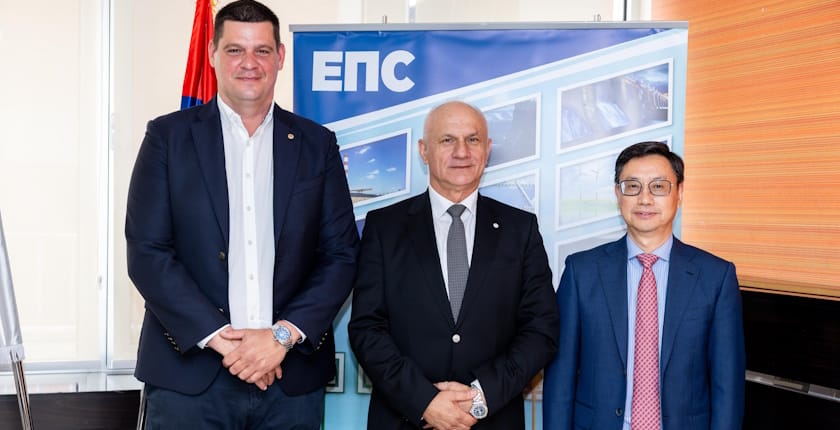
Serbian state-owned power utility Elektroprivreda Srbije will offtake electricity from future wind parks Alibunar 1 and Alibunar 2, of 168 MW in combined capacity. EPS’s Chief Executive Officer Dušan Živković and Project Director of WV-International in Serbia Lazar Lazendić signed today the power purchase agreements (PPAs) and the contracts for difference (CfD) and balancing responsibility.

Wind power projects Alibunar 1 (96.6 MW) and Alibunar 2 (71.4 MW) are among the winners from the latest round of auctions for market premiums for renewable energy in Serbia.

CEO of state-owned power utility Elektroprivreda Srbije (EPS) Dušan Živković signed the power purchase agreements (PPAs) and the contracts for difference (CfD) and balancing responsibility for the two planned facilities with Project Director of WV-International in Serbia Lazar Lazendić.

“EPS is committed to investing in the construction of power plants running on renewable sources, and this way we are strengthening our production portfolio and market position, and we actively support all investors in renewable energy sources. EPS will offtake all the generated electricity, the energy remains in Serbia, and the purchase and balancing price is set according to market principles, which incentivizes investors and enables additional profit for EPS. This energy will also give a substantial, additional security to the operations of our electricity system and to supplying citizens and companies,” Živković asserted.

Commitment to domestic market solidified

At the signing ceremony, Lazar Lazendić pointed out that the said success in auctions represents the materialization of important objectives in the development of the projects Alibunar 1 and Alibunar 2.

“Today’s signing of the contract with Elektroprivreda Srbije, encompassing market premiums, the purchase of electricity, and balance responsibility for our future wind farms solidifies our strong commitment to this market and plays a crucial role in driving Serbia’s energy transition forward,” he added.

Alibunar 1 and Alibunar 2 are SANY Renewable Energy’s first investment in Serbia

The special purpose vehicles, SPVs, or project firms for the two facilities are called Windvision Windfarm A and Windvision Windfarm B, respectively. They are majority owned by SANY Renewable Energy.

“The Alibunar 1 and Alibunar 2 wind farm projects are crucial for our company. SANY Renewable Energy is entering the Serbian market and the Western Balkans region through these projects. This will be the first installation of our wind turbines in these wind farms, serving as a model for our future expansion. We are eager to collaborate with local stakeholders and partners to enhance the country’s energy security,” said Zhou Fugui, Chairman of SANY Renewable Energy and member of the Board and Executive President of SANY Group.

WV-International is the gold sponsor of the Belgrade Energy Forum – BEF 2025, which will be held on May 14 and 15 in Serbia’s capital city, and SANY Renewable Energy is an exhibitor.

Živković: EPS obtained additional 2.6 GW from renewable sources

Živković also said that in the two rounds of auctions facilitated 850 MW of wind and solar power capacity and that, with investors that participated in the two rounds of auctions and other independent producers in Serbia, it already has an additional 2.6 GW from renewable energy sources.

The level will increase by 1 GW in 2028 from the self-balancing solar power plants that the company is developing with its strategic partner, the consortium of UGT Renewables and Hyundai Engineering, he added. “That’s when we expect the production from renewable energy sources to reach 50% of the total electricity production,” the head of EPS underscored.

by in News

Europe has record battery storage capacity growth in 2024 but expansion slows

New battery storage installations last year in Europe came in at an all-time high 21.9 GWh in capacity, though the leap wasn’t as impressive as in the previous years. The total reached 61.1 GWh. “If Europe has already entered the solar age, the battery storage age is just beginning,” said Walburga Hemetsberger, CEO of SolarPower Europe, which issued the annual report.

Europe marked the eleventh consecutive year of record-breaking battery storage installations – in capacity terms, the addition was 21.9 GWh. According to SolarPower Europe’s update, the new capacity was 15% bigger than in 2023, after effectively doubling for several years in a row.

The battery fleet ended December at 61.1 GWh. The growth rate in 2024 was 56%, compared to the 94% registered one year before.

The region that was tracked consists of the European Union, United Kingdom and Switzerland. The EU alone closed 2024 with 18.5 GWh in newly installed battery storage capacity.

“If Europe has already entered the solar age, the battery storage age is just beginning. With solar energy mainstreaming across the continent, now is the time for European decision makers to put batteries at the centre of a flexible, electrified energy system,” the organization’s Chief Executive Officer Walburga Hemetsberger stated.

She urged the European Commission to double down on its efforts and adopt an action plan as part of a broader energy system flexibility package. “The recent electricity outage in the Iberian Peninsula is a stark reminder of why this is important,” Hemetsberger pointed out.

BESS projection puts EU likely below 2030 target

In the most likely scenario, 29.7 GWh of battery storage will be installed this year, translating to a 36% annual growth in new capacity and 49% in total. The report anticipates a sixfold increase to 118 GWh added in 2029. It would bring the entirety of battery energy storage systems (BESS) to 399 GWh, of which 334 GWh in the EU.

However, it is far below the levels required to meet flexibility needs in a renewables-driven energy system, the annual report’s authors warned. A study showed that the EU needs 780 GWh by 2030 to fully support the transition.

This year the share of the new front-of-meter BESS, in the utility scale segment, is seen at 55%, against last year’s 40%. The absolute level would nearly double. As for behind the meter, commercial and industrial (C&I) systems grow to 12% from 10% of the new fleet while residential installations decline from 50% to 33% in 2025.

Drop in power prices from crisis levels faded appeal of battery storage capacity

Residential battery deployment declined by 11% in 2024 after years of rapid growth. The report attributes it to the drop in electricity prices when the energy crisis subsided, the removal or reduction of subsidies in key markets and a parallel decline in the deployment of residential solar power units.

Home batteries account for 57% of the whole cumulative level.

New large-scale grid batteries surged 79% against 2023, marking a turning point for utility-scale storage.

Last year new C&I installations were 17% bigger, remain below their potential and holding at one tenth of the whole capacity for several years now, the document shows. Companies in the segment generally invest in battery storage to maximize self-consumption from on-site photovoltaics, avoid peak demand charges and reduce reliance on backup diesel generators.

Additionally, solar and storage allow businesses to meet corporate sustainability targets by reducing carbon footprint of operations. Lastly, the electrification of production processes, heating, and transport fleets is driving unique use cases and a need for storage.

Spain lags but seen rebounding, reaching top five in 2025

The top growers and their positions in the chart were the same as in 2023: Germany (6.2 GWh), Italy (6 GWh), the United Kingdom (2.9 GWh), Austria (1.1 GWh) and Sweden (1 GWh). Together they had a 78% share in both new and cumulative installations.

Germany added slightly less on an annual scale than in 2023 amid a drop in newly installed residential units. Italy’s home battery segment also decreased, but the large-scale segment’s capacity surge brought the market to new heights. The UK experienced a temporary slump due to project delays at the large-scale level.

Last year Spain added less than 250 MWh in battery storage capacity, making it the 14th-biggest market in Europe. Overall it reached 1.7 GWh, of which 90% were small-scale systems.

The country’s new battery installations were 41% lower than in 2023. The Spanish market has been declining since 2022, but it is expected to enter the top five this year, with 1.3 GWh, amid a utility-scale segment’s revival.

BESS market requires level playing field

SolarPower Europe said the authorities need to encourage the participation of hybrid projects of solar and BESS in renewable energy auctions.

“Contracts for difference must be settled based on energy production rather than energy injection. This will allow the asset operator to receive the CfD for the PV asset while generating additional market-based revenues from the BESS. These extra revenues will eventually lead to lower bids from developers and reduce the support costs for society,” the document reads.

The EU must ensure transmission system operators (TSOs) procure balancing services in market-based procedures in which batteries can compete on a level playing field, the organization added. Some EU markets still rely on bilateral contracts that limit fair competition and exclude smaller storage assets, it underscored.

by in News

GWEC: Record wind power capacity was installed globally in 2024

New wind turbine installations reached an all-time high 117 GW last year, slightly above the 2023 level, Global Wind Energy Council (GWEC) revealed in its annual report. According to its calculations, China’s share in the additions was 68.2%. At the end of December, the country hosted 45.8% of all wind power capacity, which climbed to 1.14 TW.

The Global Wind Energy Council’s flagship Global Wind Report showed that new capacity hit a record in 2024 for the second time in a row, following two years of declines. The additions came in at 117 GW, compared to 116.6 GW in 2023. Global wind power capacity grew to 1.14 TW, GWEC found.

On the other hand, new offshore wind, 8 GW, was down from the previous 10.8 GW. The segment amounted to 8.8 GW in 2022 and the record 21.1 GW was achieved one year earlier.

In the new outlook, this year’s total new capacities are seen at 138.2 GW, climbing each year to hit a whopping 194.1 GW in 2030.

The new capacities in the update for 2024 are slightly different than in the statistics that the International Renewable Energy Agency (IRENA) published a month ago. Namely, it deducts decommissioned facilities from the additions, while GWEC doesn’t. Still, IRENA’s total offshore wind capacity is 3.8 GW lower than GWEC’s 83.2 GW. The onshore figure is negligibly higher, by 1.1 GW – GWEC measured 1.05 TW.

Photo: GWEC

GWEC warns of from tariffs risk, ideologically driven attacks on wind and renewables

GWEC warned of increasing policy instability in some markets, and pointed to the need to improve permitting, grid transmission and auctioning mechanisms to keep pace with the global trend for electrification, meet countries’ energy and climate targets and lessen reliance on volatile fossil fuels, while fulfilling globally agreed ambitions to triple renewable energy capacity by 2030.

The council pointed out that the headline numbers mask big disparities, with the lion’s share of installations taking place in a small number of key mature markets, including China and Europe.

Blackwell: Halting projects that are under construction threatens investment certainty

“While wind energy continues to drive investment and jobs, improve energy security and lower consumer costs, we are seeing a more volatile policy environment in some parts of the world, including ideologically driven attacks on wind and renewables and the halting of under construction projects, threatening investment certainty,” said GWEC’s Chief Executive Officer Ben Backwell.

He stressed that the impact of the tariff wars has yet to be calculated, and urged decision makers to ensure a stable market and free and fair trade.

China’s share of global capacity nearing 50%

New installations were registered in 55 countries. China maintained its absolute dominance: it added 79.8 GW, translating to 68.2% of the total. Moreover, at the end of December it hosted 521 GW of wind power or a stunning 45.8% of global capacity. IRENA’s data shows the shares at 70.5% and 46.1%, respectively.

On the global scale, the United States is a distant second in wind power additions, at 4.1 GW, as well as the overall capacity: 154.3 GW. The following three are Germany (4 GW), India (3.4 GW) and Brazil (3.3 GW), which surpassed Spain.

The United States is a distant second in both wind power additions and overall capacity

Europe’s new installations in 2024 were 13.8 GW, after 14.5 GW in the previous year. The overall capacity advanced to 251 GW. The region includes Turkey, which surged by 1.31 GW to 13.7 GW. The country accounted for 1.1% of all new capacity last year, earning it a spot in the top ten in the category.

Excluding China, onshore wind volume awarded in auctions and other procurement mechanisms doubled in 2024 to a record 53.5 GW, GWEC said. In Europe, it jumped 24% to 17 GW. Germany accounted for 11 GW. The offshore segment also hit an all-time high, 56.3 GW. Europe led the way with 23.2 GW, against 17.4 GW in China.

Photo: GWEC

Last year’s auctions may boost dormant floating wind power market

The rise of the floating wind turbine technology is stalling, as only 41.8 MW was installed. The level is similar to the previous year.

However, floaters accounted for 1.9 GW of the awarded capacity, of which 750 MW for three projects in France, 750 MW in South Korea and 400 MW in the United Kingdom, for Green Volt. It is the world’s largest proposed floating wind power investment, at up to 560 MW.

The 25.2 MW Provence Grand Large facility of three SGRE turbines was commissioned offshore France. Mingyang installed its 16.6 MW V-shaped floating turbine OceanX near Guangdong. After that, early this year, China Railway Rolling Stock Corp. (CRRC) installed a 20 MW floating turbine at a testing site offshore Shandong.

One technological breakthrough after another in China

GWEC highlighted other technological breakthroughs in China as well. Some new offshore turbines of 18 MW to 20 MW were first deployed while a batch of 16 MW machines also came online.

Dongfang Electric presented the largest (offshore) wind turbine, of 26 MW, while Goldwind manufactured the first 22 MW unit in December. Onshore, 10 MW models are scaling up, and SANY installed a 15 MW prototype. Of note, the Chinese company is participating at the upcoming Belgrade Energy Forum (BEF) in Serbia, on May 14 and 15, where it will have a stand.

The world’s highest wind farm, at an altitude of 5,200 meters, was commissioned in Tibet.

CRRC started testing a 20 MW floating wind turbine early this year

Mingyang (also known as Ming Yang) introduced wind blades of 143 meters in February 2024. Next, Goldwind and Sinoma Blades passed the static load test with 147-meter pieces.

SANY commissioned the world’s largest wind turbine test bench, for 35 MW. A 40 MW platform is under construction in Shantou, Guangdong.

by in News

Bulgaria grants EUR 587 million to 82 battery storage projects

Developers of 82 standalone battery storage projects in Bulgaria, for an overall 9.71 GWh in capacity, got approval for EUR 587 million in subsidies from the Ministry of Energy. Another 30 landed below the line, but the government intends to boost the program by EUR 120 million.

More than four months after the deadline for applications, the Ministry of Energy of Bulgaria ranked 112 projects for standalone battery energy storage systems (BESS). Through the RESTORE call for grants, it approved EUR 587 million for 82 of them, exhausting the budget.

The scheme is part of the National Recovery and Resilience Plan (NRRP), under the Recovery and Resilience Facility (RRF), which the European Commission controls.

The selected investments envisage an overall 9.71 GWh of storage capacity, compared to the target of at least 3 GWh. The aim is to provide balancing to enable a significant increase in the share of wind and solar power in the energy mix, as well as to ensure the security and stability of the country’s electricity system. The facilities will be connected to the grid at both the transmission and distribution levels.

Notably, Bulgaria is struggling to meet the conditions and deadlines for NRRP funding, including for battery projects. Moreover, the ministry apparently decided not to move forward with a second call for subsidies for households for solar panels with or without batteries, and for solar collectors. It risks losing the European Union’s funding.

Project underway for 125 MW battery system in Burgas

The largest selected investment is BESS Burgas. The project is worth EUR 90 million, of which the grant would cover 26.5%. The proposed facility would have 125 MW in operating power and a four-hour duration, translating to 500 MWh.

The list lacks data on planned capacities for many of the projects. Among them is the one from ContourGlobal Maritsa East 3 (Maritsa iztok 3), the operator of a coal power plant that recently ceased operations. The company intends to invest EUR 74.5 million, the fifth-highest amount. The ministry said it would provide 40% of the total.

The owner of the recently closed Maritsa East 3 coal power plant won a 40% subsidy for its EUR 74.5 million BESS proposal

Weapons and ammunition producer Arsenal 2000 won a 44% subsidy for its EUR 48.9 million project. It intends to install a BESS of 80 MW and 350 MWh. One of the selected proposals is called Verila Solar Park 2. The share of the approved grant in the EUR 65.7 million investment is 32%.

Toki Storage stands out among the beneficiaries with 11 approved projects of the same size and valuation: 10 MW, 40 MWh and EUR 6 million each. The grants would cover 30% to 39.3%.

NEK fails to qualify with its project for battery system at Topolnitsa hydropower plant

Out of 151 applications, 118 initially passed to the ranking stage. The ministry said they were worth a combined EUR 838 million. The 30 projects in reserve are worth EUR 212 million, it added.

They include proposals from coal plant operators Toplofikatsiya Pernik and Bobov Dol. The ministry rejected four projects, of which one from state-owned National Electricity Co. (NEK), for a 20 MWh battery unit at its Topolnitsa hydropower plant.

According to consulting firm New I, involved in more than 40% of the winners in the call, they are worth EUR 1.59 billion altogether, Bulgarian language EU Funds website reported. Requested support ranges between just below EUR 40,000 per MWh and EUR 80,000 per MWh, and the weighted average came in at EUR 60,000 per MWh, it revealed.

Many of the 151 projects were duplicated, the article adds.

Importantly, the government has proposed increasing the RESTORE program by EUR 120.6 million, which would be sufficient for at least 20 projects in the reserve group.

The ministry was supposed to select the beneficiaries by January. The deadline for drawing the EU funds is June next year, so the developers must rush to install their battery systems – but first they need to sign contracts with the government.

by in News

All applicants qualify for first wind power auction in Kosovo*

Three potential bidders met the legal, technical and financial criteria for the upcoming wind energy auction in Kosovo*, for a quota of 100 MW.

Ahead of its request for proposals in the competitive bidding process for wind power projects, the Ministry of Economy of Kosovo* confirmed that all applicants passed the qualifications stage. The quota is 50 MW to 100 MW and the plan is to support 150 MW in total in two rounds. Participants will bid for 15-year power purchase agreements (PPAs) and contracts for difference (CfDs).

The next phase will “start soon,” Minister of Economy Artane Rizvanolli said. It was due in March. International Finance Corp. – IFC, which is part of World Bank Group, and the United States Agency for International Development (USAID) have provided support for organizing the first wind power auction in Kosovo*.

According to the schedule, the call for the remaining capacity will be issued the second half of the year.

Six-month deadline for financial proposals

One applicant is a consortium of Notus Energy, based in Germany, and Stublla Energy from Kosovo*.

The ministry also received documentation from Akuo Energy from France and a consortium led by Güri̇ş, headquartered in Turkey. Both participated in the first solar power auction as well, held last year. The companies submitted documentation on February 20.

All met the legal, technical and financial criteria for the upcoming bidding, the ministry said. It revealed that the request for proposals would last half a year and vowed to conduct it in line with the highest transparency standards.

Potential investors can attend a planned presentation and submit questions regarding necessary documentation

In the meantime, the ministry and IFC are planning to hold a presentation for the qualified investors. After that, they can send questions.

The auction commission is responsible for assessing the fulfillment of the legal, technical, environmental and social criteria, before opening the financial proposals. The winner, among the companies and consortia that qualified, is the one offering the lowest price per megawatt-hour. The upper limit is EUR 80.2 per MWh.

Wind projects would be run by special purpose vehicles (SPVs), firms where the government would have a share of up to 49%. The Ministry of Economy intends to use the funds from the International Monetary Fund’s Resilience and Sustainability Facility (RSF) in the development of the 150 MW.

Power consumption far exceeded domestic supply last week

Among other developments in Kosovo*, which has the world’s highest share of coal in electricity production, consumers have received another warning.

Distribution system operator KESCO said last week, ahead of the Easter holiday, that domestic production capacity amounted to 315 MW from coal and 130 MW from renewable sources. Consumption was 43% higher than in the equivalent period of last year, surpassing 700 MW. Devices with high consumption should be used only when necessary, especially during peak hours, the company pointed out.

* This designation is without prejudice to positions onstatus and is in line with UNSCR 1244/99 and the ICJ Opinion on the Kosovo declaration of independence.
by in News

Kosovo* to measure wind potential for auctions, public projects

The Ministry of Economy of Kosovo* will install wind gauges this year at many locations to develop projects that it intends to auction or build capacities in public ownership or within public-private partnerships.

The government never had precise data on wind energy potential, as various potential investors measured it themselves, but they didn’t do it properly either, so Kosovo* is “a little behind” in the aspect, according to Minister of Economy Artane Rizvanolli. She told lawmakers that the ministry would set up anemometers and wind vanes in many places this year to determine wind speed and direction, Buletini Ekonomik reported.

The next step will be to conduct other preliminary studies, Rizvanolli explained. The ministry will develop them into projects for the first auctions or to install capacities in public ownership or within public-private partnerships, she revealed.

Data for foreign investors

The aim is to present foreign investors with exact information on wind potential, in her words. It will contribute the success rate and process transparency, for which the ministry was praised during the first auction, Rizvanolli stressed.

Kosovo* hosts two wind power plants. Bajgora (also known as Selac) has 102.6 MW in connection capacity. The Kitka facility, of 36 MW is planned for expansion.

There is an estimated 1 GW in overall potential in the locations of Çiçavica (also Čičavica, Çiçavica and Qyqavica), Zatriq (Zatrić), Budakovo (Budakova) and Kozhica (Kožica), the article adds.

Air Energy 2 intends to install two wind power plants of 34.8 MW each, in combination with a solar power plant. StubllaEnergy is also working on a hybrid power plant of 170 MW, of which 132 MW would be in wind turbines. Most projects have long been dormant.

Next up is 150 MW wind power auction

One month ago the Ministry of Economy published the names of companies that applied to qualify for Kosovo’s pilot renewable energy auction. They are competing for a contract for difference of CfD for a solar power project of 100 MW in indicated connection capacity.

The government plans auctions for a combined 950 MW in wind and solar power and battery storage in the next two years. First up would be a public call for 150 MW in wind power.

* This designation is without prejudice to positions onstatus and is in line with UNSCR 1244/99 and the ICJ Opinion on the Kosovo declaration of independence.
by in News

Kosovo* completes first solar power auction at EUR 48.88 per MWh

A consortium led by Switzerland-based construction company Orllati was selected to build and operate a solar park of up to 105 MW in connection capacity for 30 years including a 15-year contract for difference. The group won the first renewable electricity auction in Kosovo* with a bid of EUR 48.88 per MWh.

Almost a year since the initial public call, the Ministry of Economy in Prishtina completed its pilot solar power auction. Even though it raised the ceiling price in late December to EUR 75 per MWh from EUR 65 per MWh amid repeated delays, it was closed at EUR 48.88 per MWh.

Switzerland-based Orllati leads the winning consortium, consisting of companies from Germany and Kosovo*. The construction firm is led by Kosovar diaspora, officials said.

The victory in the electronic auction translates to the right to take land on lease for a photovoltaic park of 90 MW to 105 MW in total connection capacity and up to 117 MW in peak terms. Orllati agreed to build and operate the facility for 30 years, of which the first 15 years it would sell electricity under a contract for difference (CfD) equalling the winning price.

The government-owned land is in the cadastral zones of Kramovik and Petković (Guri i Kuq) in the municipality of Rahovec or Orahovac.

Auction terms were amended ten times

Two Turkish consortia participated in the auction – Çalik and Limak, and Güri̇ş İnşaat ve Mühendislik (Güri̇ş Construction and Engineering) – together with Akuo Energy, headquartered in France, and Egypt-based Elswedy Electric. It consisted of four rounds, the ministry said. The first one, with 43 bids, drove the price down to EUR 57 per MWh while the final level was reached in the third one.

Kosovo* intends to launch auctions this year for 45 MW in battery storage and 150 MW in wind power

Minister of Economy Artane Rizvanolli said the competitive process is ensuring affordability for citizens, strengthening the security of supply and the sector’s sustainability and enabling private investments. She revealed that the auction terms were amended ten times in line with investors’ suggestions.

The winner will invest more than EUR 70 million, according to the government, which is preparing to issue calls for auctions this year for 45 MW in battery storage and 150 MW in wind power. There is 950 MW in total in the pipeline, Rizvanolli noted, saying the potential investments are valued at an overall EUR 1.2 billion.

Ceiling price at Albania’s next auction will be EUR 59.97 per MWh

The bidding was organized with the support of the United States Agency for International Development (USAID). The renewable electricity auction model was developed with the European Bank for Reconstruction and Development.

Kosovo* hosts just two operational wind power plants and some hydropower and photovoltaic capacities.

For comparison, Romania is preparing its first solar power auction for CfDs with a maximum price of EUR 91 per MWh. Amid weak participation, the lowest price at Serbia’s first solar power auction, held last year, was EUR 88.65 per MWh, just 35 eurocents below the starting level.

The maximum acceptable price in Albania’s upcoming auction is EUR 59.97 per MWh. The two previous auctions, in 2021 and 2020, were similar to the latest one in Kosovo*. The government secured land for one large-scale project at a time and for one investor each. Voltalia was the winner both for Spitalla (EUR 29.89 per MWh) and Karavasta (EUR 24.89 per MWh).

* This designation is without prejudice to positions onstatus and is in line with UNSCR 1244/99 and the ICJ Opinion on the Kosovo declaration of independence.
by in News

Kosovo* adopts Law on the Promotion of the Use of Renewable Energy Sources

Only after the first auction was held, lawmakers in Prishtina enabled subsidizing renewable electricity plants through contracts for difference (CfDs). Passing the Law on the Promotion of the Use of Renewable Energy Sources, they also cleared the way for the introduction of guarantees of origin, a renewable energy operator and support fund, energy communities and energy storage in Kosovo*. The legislation includes provisions on self-consumption.

Kosovo’s parliament adopted the Law on the Promotion of the Use of Renewable Energy Sources. It won praise from the Energy Community Secretariat for aligning the legal framework with the Renewable Energy Directive. The international organization based in Vienna also commended the move toward sustainable energy development.

“This law will bring benefits to the private sector, through new concepts of consumer involvement in the energy sector and through the definition of procedures that must be done competitively. In this way, all enterprises are treated equally, benefiting from their competition which leads to lower prices and affordable costs for citizens,” the Ministry of Energy said.

Provisions for green heating, cooling, transportation

Among the objectives are increasing the security of supply and protecting the environment. The Law on the Promotion of the Use of Renewable Energy Sources includes provisions on the combined generation of heat and power (CHP or cogeneration).

The legislation covers the electricity sector, heating and cooling and transportation. The law cleared the way for incentivizing consumers to produce, store and sell the surplus of renewable electricity.

A system for guarantees of origin of electricity is envisaged to be rolled out as well. Notably, the Energy Regulatory Office (ERO) expects to establish a registry in June. The law stipulates that a renewable energy operator would be founded. The entity would manage a renewable energy support fund.

Liquid day-ahead market was necessary to have reference prices for CfDs

In addition, the legislation defines energy communities, energy storage activities and behind-the-meter installations for renewables self-consumers. Such units wouldn’t be able to inject electricity into the grid.

The adoption of the law was apparently on hold until the Albanian Power Exchange (ALPEX) set up a liquid day-ahead market. Kosovo* and Albania jointly launched the bourse. The reference price set in trading is necessary for obligations determined in contracts for difference (CfDs). The subsidies are awarded in renewable energy auctions.

On the other hand, the first such competitive bidding process was completed late last month, before the Law on the Promotion of the Use of Renewable Energy Sources was passed.

The Government of North Macedonia sent a similar bill to the national assembly a month ago.

* This designation is without prejudice to positions onstatus and is in line with UNSCR 1244/99 and the ICJ Opinion on the Kosovo declaration of independence.
by in News

Kosovo* issues terms for upcoming wind power auctions

The first wind power tenders in Kosovo* will be conducted in two rounds of 75 MW to 100 MW each. The Ministry of Economy published the draft criteria for participants. It intends to issue the first call in October.

Instead of a single first tender, the Ministry of Economy in Prishtina said it would auction off electricity from wind power projects in two rounds. Advised by the International Finance Corp. (IFC) and with support from the Energy Sustainable Activity (ESA) project of the United States Agency for International Development (USAID), Kosovo* issued the conditions for applicants.

Mirroring the first solar power auction, both tenders will consist of two stages: qualifications and proposals, according to the ministry. The approximate total quota is 150 MW and each bidding will be for 75 MW to 100 MW, it explained.

Second round to begin next year

The document lists preliminary requirements regarding project feasibility, sustainability and the bidders’ experience and capacities. The conditions can still change before the release of the tender documentation, the authorities pointed out.

The first call for qualifications is expected to be published in October and the qualified bidders will be invited to submit proposals early next year, the ministry revealed. It added that it intends to kickstart the second procedure in 2025.

IMF is funding wind tenders in Kosovo*

Kosovo* is tapping into the International Monetary Fund’s (IMF) Resilience and Sustainability Facility for the 150 MW endeavor. The ministry added that it would coinvest in wind energy projects under a public-private partnership mechanism. It would lower the risk for private investors, it said.

The locations for the projects are still unknown. Auction winners are entitled to power purchase agreements (PPAs), the announcement reads.

The documentation shows applicants would be required to submit production estimates per year over a 20-year period. The assessments must be carried out by independent and qualified wind energy consultants. The company or consortium will also be obligated to hire biodiversity specialists to conduct basic studies on birds and bats.

Eligible companies have experience in the development and operation of grid-connected renewable electricity plants of 60 MW in total. The minimum share of wind is 40 MW, of which one project must be bigger than 20 MW, the summary shows.

The government earlier said it was planning auctions for 950 MW including battery storage within two years.

* This designation is without prejudice to positions onstatus and is in line with UNSCR 1244/99 and the ICJ Opinion on the Kosovo declaration of independence.