by in News

Croatia prepares first bioeconomy strategy

The Government of Croatia has adopted the Draft Bioeconomy Strategy until 2035, which foresees investments of EUR 200 million.

The draft bioeconomy strategy until 2035 will provide a strategic planning framework for intensive sector development and contribute to the economic and social development of the country, according to the Government of Croatia.

The strategy defines the bioeconomy as all sectors and systems that rely on biological resources – animals, plants, microorganisms, and biomass from these sources, including organic waste.

The sectors of agriculture, forestry, fisheries, aquaculture, and the production of food, beverages, and tobacco are fully included in the bioeconomy, the document reads.

Of note, back in 2018 the European Commission has put forward an action plan to develop a sustainable and circular bioeconomy.

The strategy has two goals

Deputy Prime Minister and Minister of Agriculture, Forestry, and Fisheries David Vlajčić pointed out that the strategy defines the vision for the development of the bioeconomy. It will be achieved by 2035 through interventions, strategic projects, and activities, he explained.

The strategy has two strategic goals – the development of sustainable production and raw material markets and the increase of added value in the bioeconomy, the government said.

The achievement of the strategic goals will be financed by funds from European financial programs, co-financed by the state budget, Vlajčić added.

According to the minister, EUR 199 million is envisaged for the implementation of the strategy for the period from 2025 to 2027. For the period from 2028 to 2035, the financial framework would be defined later.

The draft envisages the construction of biomass distribution centers

To achieve the strategic goals, various mechanisms would be used, Vlajčić stressed.

These include the construction of biomass distribution centers, regulating the use of waste sludge, encouraging the construction and modernization of capacities in bioeconomy sectors, promoting the production of packaging from recycled materials, bio-based and biodegradable plastics, and conducting research and innovation related to the bioeconomy.

The strategy should also increase the utilization of by-products, residues, and waste from production and processing in the agriculture, forestry, and fisheries sectors and stimulate the biomass market.

The government adopted a decision on October 13 to initiate the development of the bioeconomy strategy by 2035. The Ministry of Agriculture, the Ministry of Economy and Sustainable Development, the Ministry of Science and Education, and the Ministry of Regional Development and European Union Funds have cooperated in the production of the draft.
by in News

From construction waste to circular economy: how STRABAG drives green transition

Today, the construction industry is at the crossroads between tradition and transformation. Accounting for approximately 40% of the global energy consumption and for more than 35% of the overall CO₂ emissions, this sector has a huge potential, as well as a responsibility to become one of the key leaders of change in environmental protection. It is this change where STRABAG in Serbia recognises its task and opportunity: through recycling and reuse of materials, solar energy consumption, electric vehicles and digital innovation, the company demonstrates that sustainability can be an integral part of every construction phase.

Acting responsibly, objectively and ethically, STRABAG operates in accordance with the highest integrity standards. Aiming to expand business operations to new areas, they develop innovative and creative approaches within defined frameworks, utilising resources regionally, purposefully and efficiently. Their goal is to become the market leader via automation and adoption of new technologies, while pledging to achieve climate neutrality and CO₂ emission reduction.

Circular economy in practice: second life of materials

Construction waste is no longer and must not be the end of a process, but the start of a new cycle. For instance, concrete that used to end up at a landfill is now treated as a valuable resource: after separating reinforced elements and crushing, the material is reused in construction, as an aggregate for bases, foundations or access roads. This reduces the need for exploiting natural resources, the volume of waste at landfills and CO₂ emissions resulting from transport and production of new materials. The approach confirms that the construction industry can be a generator of a circular economy, rather than just its observer.

By recycling materials, STRABAG enhances processes and rationalises costs, while setting a new benchmark in responsible resource management, thus following its strategic goal of transforming every construction site into a part of a closed, sustainable construction cycle by 2040.

“Our objective is to turn every tonne of waste into a resource in the next project – that is the essence of the circular approach,” STRABAG’s representatives say.

Solar energy and electric mobility: construction sites of the future

In line with STRABAG’s Work On Progress strategy and aiming to become climate neutral by 2040, the company is introducing photovoltaic (PV) panels at its facilities, construction sites and logistics and asphalt bases in Serbia. Solar systems enable a reduction of power consumption from the grid, as well as of CO₂ emissions, thus directly contributing to the company’s global objective.

Green transition also includes the transport segment. STRABAG is modernising its vehicle fleet and introducing e-vehicles and new-generation construction machinery, decreasing its fossil fuel consumption and overall carbon footprint. By combining solar energy sources and electric mobility, construction sites become self-sustainable, with more environmentally responsible and technologically advanced daily operations.

Digital tools – less paper, more efficiency

Not only does digital transformation in STRABAG represent the implementation of new technologies, but it also changes the method of managing each segment of a construction site. By introducing the SSO (Smart Site One) application, the process of planning, monitoring and optimising operations is fully digitalised, from asphalt transport to final installation phases. The app connects people, machinery and processes in real time, thus eliminating downtime, increasing efficiency and reducing fuel consumption and waste.

Furthermore, the company has developed the 5S application (based on the 5S principles – sort, set in order, shine, standardise, sustain), aimed at monitoring order, safety and implementation of the LEAN methods at construction sites. This digital tool enables daily on-site status monitoring, design of automatic reports in order to reduce the risk of injuries, for orderly construction sites with optimal resource use, while additional values: 6S (safety), 7S (team spirit) and 8S (sustainability), facilitate further the culture of safety, team spirit and environmental awareness.

With these applications, STRABAG connects digitalisation and sustainability, showcasing that modern construction can simultaneously be precise, efficient and environmentally responsible.

Journey to climate neutrality

STRABAG in Serbia is implementing an ambitious plan, harmonised with its global ESG strategy and climate neutrality goals. The focus is both on technological innovation and systemic change in the method of construction, use of resources and day-to-day operations.

Key objectives set by the company include the following:

  • 50% of recycled materials in construction processes by 2030
  • CO₂ emission reduction of 42% per project by 2030
  • Fully electric or hybrid vehicle fleet by 2035

Besides technical and infrastructure measures, STRABAG continuously invests in employee education via LEAN and sustainability training courses (training in environmental protection), promoting the principles of sustainable construction, energy efficiency and responsible resource management. As a result, sustainability within the company goes beyond restrictions of individual initiatives, becoming a part of the corporate culture and mindset in every segment of operations.

STRABAG’s sustainability story is more than a series of projects – it is a long-term strategy that changes the future perspective of the construction sector.

“Sustainability is not a trend, but a new foundation of quality. What we are building today must last for the generations to come,” STRABAG’s representatives concluded.

by in News

From construction waste to circular economy: how STRABAG drives green transition

Today, the construction industry is at the crossroads between tradition and transformation. Accounting for approximately 40% of the global energy consumption and for more than 35% of the overall CO₂ emissions, this sector has a huge potential, as well as a responsibility to become one of the key leaders of change in environmental protection. It is this change where STRABAG in Serbia recognises its task and opportunity: through recycling and reuse of materials, solar energy consumption, electric vehicles and digital innovation, the company demonstrates that sustainability can be an integral part of every construction phase.

Acting responsibly, objectively and ethically, STRABAG operates in accordance with the highest integrity standards. Aiming to expand business operations to new areas, they develop innovative and creative approaches within defined frameworks, utilising resources regionally, purposefully and efficiently. Their goal is to become the market leader via automation and adoption of new technologies, while pledging to achieve climate neutrality and CO₂ emission reduction.

Circular economy in practice: second life of materials

Construction waste is no longer and must not be the end of a process, but the start of a new cycle. For instance, concrete that used to end up at a landfill is now treated as a valuable resource: after separating reinforced elements and crushing, the material is reused in construction, as an aggregate for bases, foundations or access roads. This reduces the need for exploiting natural resources, the volume of waste at landfills and CO₂ emissions resulting from transport and production of new materials. The approach confirms that the construction industry can be a generator of a circular economy, rather than just its observer.

By recycling materials, STRABAG enhances processes and rationalises costs, while setting a new benchmark in responsible resource management, thus following its strategic goal of transforming every construction site into a part of a closed, sustainable construction cycle by 2040.

“Our objective is to turn every tonne of waste into a resource in the next project – that is the essence of the circular approach,” STRABAG’s representatives say.

Solar energy and electric mobility: construction sites of the future

In line with STRABAG’s Work On Progress strategy and aiming to become climate neutral by 2040, the company is introducing photovoltaic (PV) panels at its facilities, construction sites and logistics and asphalt bases in Serbia. Solar systems enable a reduction of power consumption from the grid, as well as of CO₂ emissions, thus directly contributing to the company’s global objective.

Green transition also includes the transport segment. STRABAG is modernising its vehicle fleet and introducing e-vehicles and new-generation construction machinery, decreasing its fossil fuel consumption and overall carbon footprint. By combining solar energy sources and electric mobility, construction sites become self-sustainable, with more environmentally responsible and technologically advanced daily operations.

Digital tools – less paper, more efficiency

Not only does digital transformation in STRABAG represent the implementation of new technologies, but it also changes the method of managing each segment of a construction site. By introducing the SSO (Smart Site One) application, the process of planning, monitoring and optimising operations is fully digitalised, from asphalt transport to final installation phases. The app connects people, machinery and processes in real time, thus eliminating downtime, increasing efficiency and reducing fuel consumption and waste.

Furthermore, the company has developed the 5S application (based on the 5S principles – sort, set in order, shine, standardise, sustain), aimed at monitoring order, safety and implementation of the LEAN methods at construction sites. This digital tool enables daily on-site status monitoring, design of automatic reports in order to reduce the risk of injuries, for orderly construction sites with optimal resource use, while additional values: 6S (safety), 7S (team spirit) and 8S (sustainability), facilitate further the culture of safety, team spirit and environmental awareness.

With these applications, STRABAG connects digitalisation and sustainability, showcasing that modern construction can simultaneously be precise, efficient and environmentally responsible.

Journey to climate neutrality

STRABAG in Serbia is implementing an ambitious plan, harmonised with its global ESG strategy and climate neutrality goals. The focus is both on technological innovation and systemic change in the method of construction, use of resources and day-to-day operations.

Key objectives set by the company include the following:

  • 50% of recycled materials in construction processes by 2030
  • CO₂ emission reduction of 42% per project by 2030
  • Fully electric or hybrid vehicle fleet by 2035

Besides technical and infrastructure measures, STRABAG continuously invests in employee education via LEAN and sustainability training courses (training in environmental protection), promoting the principles of sustainable construction, energy efficiency and responsible resource management. As a result, sustainability within the company goes beyond restrictions of individual initiatives, becoming a part of the corporate culture and mindset in every segment of operations.

STRABAG’s sustainability story is more than a series of projects – it is a long-term strategy that changes the future perspective of the construction sector.

“Sustainability is not a trend, but a new foundation of quality. What we are building today must last for the generations to come,” STRABAG’s representatives concluded.

by in News

EU simplifying CBAM exemption for electricity, improving emissions calculation

The European Union is further simplifying the Carbon Border Adjustment Mechanism (CBAM), but with stricter oversight and an extension to 180 steel- and aluminium-intensive downstream products. From January 1, importers of designated goods and commodities will be paying the emissions tax.

Among the novelties, countries in the Energy Community that transposed the relevant EU regulations are getting an opportunity for exemptions for CBAM for electricity earlier than initially planned. The new legislation is tackling the hurdles for electricity transit as well. The calculation of emissions on national levels in the same sector is becoming more favorable for the payers of the cross-border CO2 tax. There is even a possibility, in theory for now, to declare the actual emissions level, which would suit renewable energy producers.

In response to feedback from industrial producers and other stakeholders, the European Commission proposed measures to prevent circumvention of CBAM and strengthen its efficacy. The next step is to expand it to 180 manufactured products with high steel or aluminum content, 79% on average. The list mostly consists of machinery and hardware, and 6% of the items are household appliances.

From January 1, importers will be paying a carbon price within the Carbon Border Adjustment Mechanism, which is tied to the Emissions Trading System (EU ETS). It concerns aluminum, cement, electricity, iron and steel, hydrogen and fertilizers, and the expenses will spill over to their suppliers in third countries such as the Western Balkans and Turkey.

The charge for downstream products is planned to be rolled out in January 2028.

Striving for level playing field

The system gradually levels the field, by the beginning 2034, with producers of the same goods and commodities in the EU. The measures are introduced in the form of delegated and implementing acts. They enter into force if other institutions responsible for them, like the European Parliament, don’t block them.

Hoekstra: Our system was too broad, too clunky and had too many loopholes.

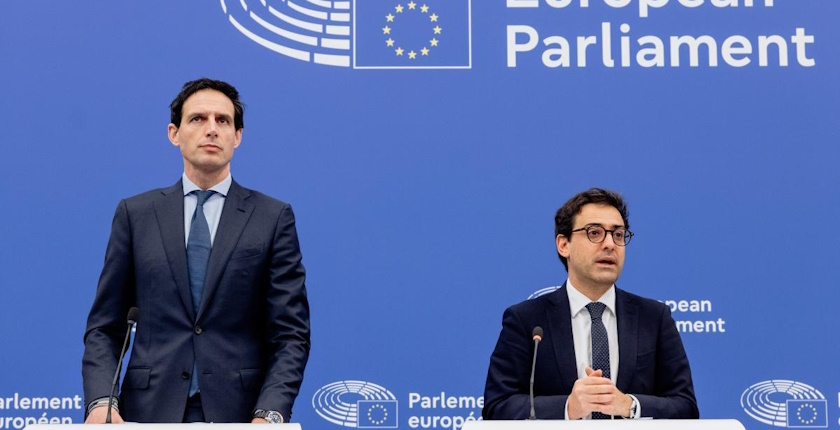
“CBAM makes sure there is a level playing field – that we’re not asking anything more, or asking anything less for those goods that come into the EU. And in doing so, we’re rewarding investments in low carbon… We’re not going to ask anything more from others, than we’re asking from ourselves. During the CBAM transition period, we learned important lessons. Our system was too broad, too clunky and had too many loopholes,” said European Commissioner for Climate, Net Zero and Clean Growth Wopke Hoekstra.

Thoroughly against evasion

The tax level is envisaged to be proportional to an established quantity of greenhouse gases released in production. However, if the authorities notice attempts to evade the levy, they can make the process of providing evidence stricter and, in the meantime, switch to a charge under the emissions factor of the particular country of origin.

“If I had to summarize these points in a few words, I would say: a simpler CBAM, more robust in its application, and fairer in its scope,” said the European Commission’s Executive Vice-President for Prosperity and Industrial Strategy Stéphane Séjourné.

Shortcut to exemption from CBAM for electricity

One of the measures is intended for easing the administrative burden for countries in the process of electricity market coupling with the EU, namely the Energy Community contracting parties.

There is going to be a possibility to sign an MoU with the European Commission with a detailed schedule

The commission may sign a memorandum of understanding with a third country, once the commission has assessed that the country has fully transposed the electricity market acquis, the proposal reads. The document would lay down details on the timeline for the CBAM exemption, including in relation to technical work still to be carried out between transmission system operators (TSOs), and for implementing a carbon pricing instrument equivalent to the EU ETS as far as electricity generation is concerned.

Hoekstra said technical adjustments to CBAM would be made to facilitate market coupling when the relevant countries are ready.

Import tax for electricity from Energy Community to be 30% lower on average

Stakeholder feedback and the experience with the implementation of CBAM during the transitional period – before the actual charge – demonstrated that the rules for electricity imports are overly rigid, the European commissioners added. In particular, they ascertained that progress in decarbonizing electricity production isn’t sufficiently acknowledged or encouraged.

Unlike with the goods, for electricity there is a default country-specific emissions value. It is based on production from fossil fuels and a five-year average. Coal is mostly dominant in the Western Balkans, except for Albania, which has a completely green mix. In addition, the conditions which must be met to declare actual emissions of electricity have proven to be almost impossible.

The proposed package is introducing solutions for electricity transit and cross-border PPAs

In the new setting, the national value will reflect the carbon intensity of all sources of electricity. The estimated taxes in the Energy Community would be over 30% lower on average.

The procedure is being streamlined for declaring actual emissions. On the other hand, at least in the Western Balkans, there has been almost no progress in that area. The proposed package is also introducing solutions for the hurdles in electricity transit through Energy Community Contracting Parties and cross-border power purchase agreements (PPAs).

Power imports from the Western Balkans account for 1% of the EU’s demand, but their share in Croatia, Bulgaria and Greece is significant, the European Commission explained. Importantly, exports of electricity to the EU represent some 58% of Montenegro’s exports to the EU, compared to 5% for Serbia and Albania.

Funds for maintaining competitiveness of domestic industrial producers in third countries

A fund has been launched to temporarily support EU producers of CBAM goods and mitigate carbon leakage risks. It addresses the competitiveness loss in third-country markets with a weaker climate policy and lower costs. Potential beneficiaries will have to demonstrate decarbonization efforts.

Th European commission is also preparing proposals for limiting scrap aluminum exports and using more scrap metal. Furthermore, it said pre-consumer metals scrap, from manufacturing, would come under CBAM.

by in News

Tens of thousands of tons of waste motor oil unaccounted for in Serbia

Waste motor oil is classified as hazardous waste as it can contaminate soil, water, and air. Although Serbian regulations for its management are clear, tens of thousands of tons are unaccounted for every year. Auto repair shops, obliged to dispose of it, often sell the material to individuals who use it for heating. Burning used motor oil is extremely dangerous because of the release of substances similar to chemical warfare agents into the air, warns Dejan Lekić from the National Ecological Association.

Just one liter of used motor oil can pollute up to one million liters of drinking water, making it one of the most harmful pollutants.

UAS, a Serbian association of auto repair shops, pointed out after the public debate on the draft Law on Waste Management that Serbia does not need cosmetic legal changes, but solutions to prevent the country from being buried under all types of hazardous and non-hazardous waste.

According to the latest report by the Serbian Environmental Protection Agency (SEPA), about 40,311 tons of oil were placed on the Serbian market in 2023. Of the 40,311 tons, only 440 tons of waste motor oil were processed in Serbia, and 1,660 tons were exported. It means 38,000 tons likely ended up in soil, sewage systems, waterways, or household furnaces.

Burning waste motor oil releases toxic substances

Dejan Lekić from the National Ecological Association, the creator of the xEco app for real-time air pollution monitoring, warned that waste motor oil must never be used as fuel in household stoves, nor discharged into soil or sewage.

“The only correct approach is to collect it and hand it over to licensed operators. Once the operator takes it, the oil can follow two paths: regeneration or destruction. Ideally, it is regenerated – technologically purified to produce base oil for reuse,” he explained.

Waste oil can be regenerated or destroyed

Regenerating waste oil is an example of the circular economy. From one ton of crude oil, only 2% can be turned into base oil, while 65% of collected waste oil can be processed into base oil.

“The second option is using it as a fuel, but only in specialized industrial facilities such as cement plants, which have furnaces operating above 1,200 degrees Celsius and appropriate filtration systems. Such facilities are the only ones that can safely destroy hazardous substances and prevent their release into the atmosphere,” Lekić asserted.

Using waste oil as fuel in household stoves is extremely dangerous to health

As it is cheap and easily available, waste motor oil is often used for heating in Serbia. But when burned in ordinary stoves, it releases large amounts of carcinogenic gases and heavy metals. According to Dejan Lekić, using waste oil for heating poses a serious threat to human health.

He explained that waste motor oil contains heavy metals such as lead, mercury, and cadmium, along with various additives. Regular stoves cannot reach temperatures high enough to burn these substances safely, so they are released directly into the air.

Lekić warned that incomplete combustion also produces extremely toxic compounds, including dioxins and furans – substances known to cause cancer and linked to severe neurological damage, hormonal disorders, and fertility problems. “People who burn this oil are literally releasing chemical warfare agents into their surroundings,” he said.

Serbia is among the top European countries in premature deaths caused by air pollution

Serbia is among the top European countries in premature deaths caused by air pollution, and it ranks first in Europe for lung cancer mortality linked to pollution, according to the World Health Organization. UAS, the Serbian group of car repair shops, described the situation as a “silent ecological catastrophe” that has been ongoing for decades and added that the system remains unable to stop it.

During the recent public debate on the new Law on Waste Management, the relevant ministry rejected most of the association’s proposals for managing waste oils. UAS emphasized that these suggestions were based on the best practices for reducing hazardous waste in the European Union and the region.

by in News

Green resilience: How Kyiv is shaping a sustainable future amid crisis

Balkan Green Energy News, the media partner of the 2025 Just Transition Young Voices Awards, is publishing the three winning articles. The Energy Community Secretariat organized the contest in collaboration with Bankwatch, CAN Europe, the CLEW Network, and the Regional Youth Cooperation Office. The aim is to promote young adults set to shape the climate, energy, and social landscape in the years ahead in the Energy Community region. 

Author: Kateryna Pereloma

Kyiv, the heart of Ukraine, is a city renowned for its golden domes, cultural depth, and enduring spirit. In recent years, especially since the full-scale invasion of Ukraine in 2022, the people of Kyiv have faced extraordinary challenges. But amid the destruction and uncertainty, a new kind of rebuilding has taken root – one that is greener, smarter, and focused on long-term sustainability.

When the war disrupted supply chains, energy infrastructure, and food systems, communities across Kyiv were forced to adapt quickly. What began as survival soon evolved into innovation. As energy security became a national priority, citizens and officials in Ukraine’s capital started reimagining what a more self-reliant and sustainable city could look like.

One of the most visible changes has been the rise of solar energy. While Ukraine had been developing renewables before the war as well, the conflict accelerated the adoption of decentralized energy sources.

In many neighborhoods, especially those affected by blackouts and grid instability, residents pooled resources to install rooftop solar panels, solar-powered water heaters, and even small-scale battery storage systems. Tenants’ associations in apartment buildings began using crowdfunding platforms to raise money for green energy upgrades. My neighbor, for example, spearheaded a project in our building to install solar panels that now help power our elevator and joint lighting systems.

Solar energy became lifeline for schools, hospitals, critical infrastructure

Schools and hospitals also embraced solar as a lifeline. Through international aid and local initiatives, dozens of Kyiv’s critical infrastructure facilities have been outfitted with renewable energy systems.

This isn’t just about environmentalism – it’s about resilience. When the power goes out during missile attacks or rolling blackouts, these systems keep vital services running. The city’s shift to green energy has become a form of defense as much as it is a commitment to sustainability.

Waste management has also undergone a transformation. Before 2022, recycling in Kyiv was limited and often inconsistent. But since the war began, grassroots recycling programs have surged. Volunteer-led sorting centers appeared in districts like Obolon, Podil, and Solomianskyi, where residents bring plastics, paper, electronics, and batteries.

These centers often operate out of garages, schoolyards, or community centers – and they’re staffed by locals determined to reduce waste and pollution. The Zero Waste Alliance Ukraine, a nonprofit that started as a small awareness campaign, has grown into a national network promoting sustainable consumption and waste reduction in cities like Kyiv.

Modernizing Kyiv’s subway system is priority

Public transportation is another area where the city has made strides. Although metro stations are damaged and they doubled as bomb shelters during attacks, Kyiv’s subway system remains one of the greenest forms of transport in the region. The city government, recognizing its importance, has prioritized its modernization.

The number of cyclists is rising, and so is the length of bike lines

Electric buses are being introduced, and there are pilot projects for low-emission zones in the city center.

The number of bicycle commuters has also increased significantly since fuel prices soared and road conditions became more unpredictable. I started biking to work last year, and I’ve noticed more bike lanes being marked, as well as more people making the same choice – not only for convenience but for the environment.

Local communities farming strawberries between buildings

Food systems are shifting, too. With imports disrupted and many large-scale farms in occupied or war-damaged areas, Kyiv residents began to grow food in unexpected places. Urban gardening took off in parks, on balconies, and even in underground shelters.

In our district, we turned a neglected courtyard into a communal garden with tomatoes, herbs, and strawberries. It’s not a large-scale solution, but it brings people together, reduces dependence on long supply chains, and fosters a deeper connection to the land.

Green startups popping up throughout Ukraine’s capital city

Crucially, these changes are being supported by a growing culture of green entrepreneurship.

Startups focused on eco-construction, sustainable packaging, and electric mobility are popping up throughout the city. One standout example is a Kyiv-based company that makes biodegradable packaging from hemp – a plant widely grown in Ukraine.

Another startup, EcoFactor, retrofits older buildings to improve their energy efficiency, employing many internally displaced people in the process. These green businesses don’t just support the environment; they offer livelihoods and hope amid uncertainty.

Youth and students are looking toward a sustainable post-war future

Perhaps most inspiring is the role of young people in this transition. Ukrainian youth have always been politically and socially active, but the war has heightened their sense of responsibility.

Environmental clubs in Kyiv universities are organizing climate literacy workshops, cleanup events, and public advocacy campaigns – even during air raid alerts. I recently attended a student-led event called Green Rebuild, where architecture and engineering students presented ideas for post-war reconstruction using sustainable materials and passive design principles.

It struck me that the generation growing up during war is also the one leading us toward a cleaner, more conscious future.

Even amid destruction, there can be creation

Our shift toward a green local economy isn’t linear or perfect. There are still challenges with funding, access to technology, and bureaucratic delays. And yet, what’s happening here is remarkable: a city under siege is laying the foundations for a sustainable future. We are proving that even amid destruction, there can be creation – that rebuilding a nation can also mean rethinking how we live, produce, and share.

In Kyiv today, sustainability is not just a political goal or a global trend – it’s a grassroots reality. It’s neighbors coming together to plant gardens, fix solar panels, sort recyclables, and imagine better ways of living. It’s resilience not only in the face of war, but in the face of climate change, inequality, and old ways of doing things.

The capital city’s story is still unfolding. But as we rebuild, we are building green – not because it’s fashionable, but because it’s essential. And in doing so, we’re showing the world that even in the darkest moments, there is light – and sometimes, that light comes from solar panels on a Kyiv rooftop.

by in News

City of Osijek has highest waste separation rate in Croatia

Osijek has reached a 57.92% waste separation rate in 2024, the highest score among the four largest cities in the country.

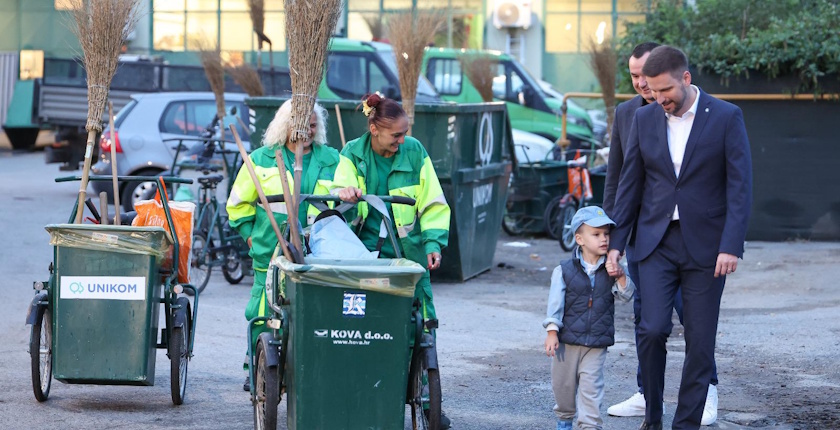
Osijek, with a share of 57.92% of separately collected waste, is again the best among large cities in Croatia, according to Mayor Ivan Radić. Because of the achievement, he visited the employees of the city’s waste utility Unikom in the early morning hours.

He stressed that the success is the result of responsible citizens who separate waste, the dedicated work of Unikom employees, and ongoing investments in infrastructure.

Osijek has four recycling yards, including a mobile one. They are able to separate 52 types of waste. There is also a composting facility. As the mayor pointed out, the local authority invests in consumer education, from kindergartens to its Eco City Waste Fest, because it aims to maintain and improve the achieved results.

Osijek is the only major Croatian city that doesn’t pay penalties for not achieving waste separation targets

Radić underlined that Osijek is the only large Croatian city that, thanks to waste separation above 50%, doesn’t pay penalties.

Municipal authorities in Croatia pay fines per ton of landfilled waste that was supposed to be separated and properly processed in line with waste management rules. The fine for 2025 was set at EUR 30 per ton. The obligatory separation rate for 2025 is 50%.

Unikom CEO Igor Pandžić highlighted that in 2024, a total of 36,000 tons of municipal waste were collected, of which nearly 21,000 tons were recyclable waste. The largest portion was biodegradable waste, thanks to the composting unit, into which the city continues to invest.

Osijek has maintained a waste separation rate above 57% for two consecutive years

Paper, plastic, glass, and metal accounted for over 9,000 tons, Pandžić said, and recalled that Osijek achieved a waste separation rate above 57% for two consecutive years.

He said more projects are underway, including the expansion of the composting facility and the establishment of a center for recycling bulky waste, which would further reduce the quantities ending up at the Lončarica Velika landfill.

In Pandžić’s words, they are important steps in terms of the circular economy. “What our fellow citizens separate, we process into a new product like compost, which then goes back into gardens and yards,” he explained.

At the meeting with the workers, the mayor and the CEO announced a 10% salary bonus as a reward for their work.

by in News

Researchers from Denmark, Serbia, Slovenia creating carbon footprint calculator for glass products

A group of researchers from Serbia, Slovenia, and Denmark is creating a completely new, scientifically based tool for assessing environmental impact – a carbon footprint calculator for glass products. The calculator can contribute to reducing the total greenhouse gas emissions in the sector to zero.

The project Glassmaking Tradition Meets Innovation is implemented by Slovenian organization Kreativno središče Center Rog, three entities in Serbia – Foundation Institute for Creative Entrepreneurship and Innovation, the Creative Glass Serbia initiative, and the Foundation for the Advancement of Economics (FREN) – and the Museum Sydøstdanmark from Denmark.

The calculator is based on an original and innovative methodology that will conduct an interdisciplinary analysis of different types of glass materials, especially glass waste, and the ways they can be creatively processed, according to Creative Glass Serbia.

Molnar: Glass practically never has to become waste

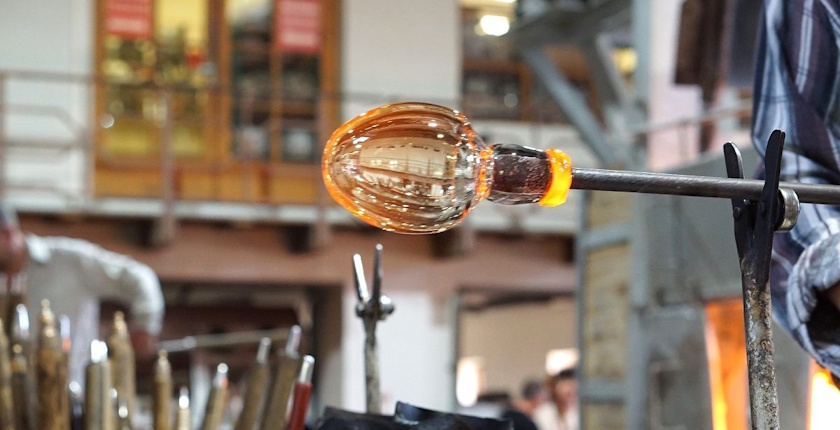
The tool will enable artists and creative entrepreneurs across Europe who work with glass to calculate the carbon footprint of various handcrafted glass items. With the help of the calculator, they will be able to reevaluate their materials, techniques, tools, designs, and ideas to develop more sustainable practices and create new values that are in line with modern ecological standards in an era when humanity is struggling with the consequences of climate change.

Photo: Creative Glass Serbia

Dejan Molnar from the Faculty of Economics at the University of Belgrade, a member of the project team, noted that glass is one of the most recyclable materials. Unlike, for example, plastic and metals, during recycling it doesn’t lose quality and it has a lower carbon footprint.

If used and recycled properly, glass practically never has to be considered waste, he pointed out.

In his words, the European Union recycles nearly 80% of glass packaging, with even more ambitious goals aiming to increase the recycled glass packaging rate to 90% by 2030.

In Serbia, 45% to 50% of glass packaging is recycled

“Unfortunately, the situation in this area is not as ‘bright’ in the Western Balkans region, nor in Serbia. In our country, recycling ranges between 45% and 50%,” said Molnar, who is also a member of FREN.

He recalled that currently there is no tool that assesses environmental standards during the production of glass products, and that buyers of artistic glass pieces are paying more attention to how green the products are.

Therefore, one of the most important results of the carbon footprint calculator will be very useful in a broader sense – to raise public awareness about environmentally sustainable and circular business models and ideas in glassmaking practices, he explained.

The calculator will be introduced in Serbia and Europe by the end of November. The project is co-financed by the European Union. It lasts from 2024 to 2027.

by in News

Council of Europe urges North Macedonia to improve environment, protect Romas from disproportionate risks

North Macedonia should bridge the gap between commitments and reality on human rights of Romas and environmental protection, the Council of Europe said. In his new memorandum, the organization’s Commissioner for Human Rights Michael O’Flaherty raised concerns about environmental risks disproportionately affecting Romas, including air and waste pollution, lack of sanitation and exclusion from public services.

As for broader environmental issues, the official noted that poor implementation of laws negatively impacts health and human rights, with cities like Skopje, Bitola, and Tetovo among the most polluted in Europe. O’Flaherty also warned of pressure on journalists and activists.

The Council of Europe Commissioner for Human Rights Michael O’Flaherty published a Memorandum on the Human Rights of Roma and on Issues Related to the Right to a Clean and Healthy Environment in North Macedonia, following his visit in April. He acknowledged the country’s significant efforts and political will to address human rights challenges faced by the Roma community.

Nevertheless, the official observed a gap between the policy framework and its implementation. O’Flaherty expressed concern that Romas continue to face discrimination, poverty and social exclusion. The government responded that relevant authorities would give careful attention to his recommendations.

The commissioner pointed to environmental risks disproportionately affecting Romas, including air and waste pollution, lack of sanitation and exclusion from public services.

Turning to broader environmental issues, he noted North Macedonia’s strong legal and policy framework and international commitments, including constitutional recognition of the right to a healthy environment, criminalizing ecocide and pledging to phase out coal. “Yet, poor implementation negatively impacts health and human rights, with cities like Skopje, Bitola, and Tetovo among the most polluted in Europe. Challenges remain in waste management, pollution control, and public access to environmental information,” the Council of Europe said.

Marginalized Roma communities disproportionately exposed to environmental hazards

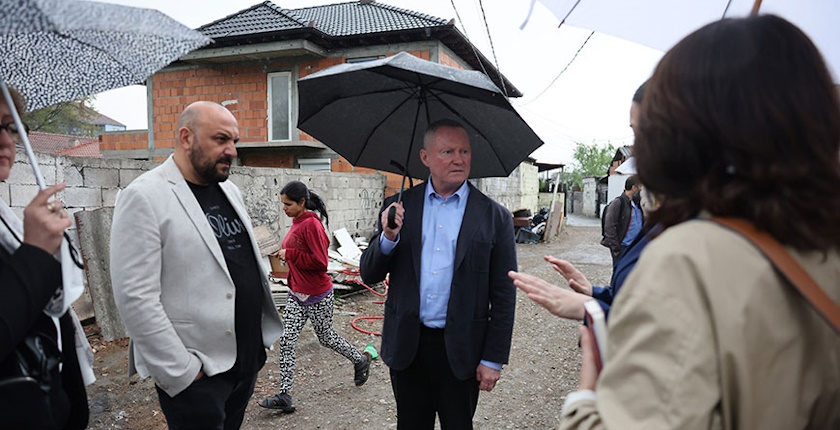
O’Flaherty was informed that marginalized Roma communities experience disproportionate exposure to environmental hazards due to poverty and their living conditions. He visited a settlement in Skopje that has not been legalized in Skopje.

In such settlements, Romas often live in precarious conditions, with dwellings prone to mould and lacking access to services that are essential for living in a healthy environment, including sanitation facilities, sewage systems and clean running water, the memorandum reads.

Air quality meters have been installed in other parts of the city of Skopje, but not in the Roma-dominated Šuto Orizari

“The commissioner is concerned that vulnerable Roma communities are overexposed to air pollution because of poor quality housing and because they burn wood, plastic and waste for heating, due to poverty and a lack of access to safe energy sources. This increases the risk of respiratory illnesses, chronic diseases and reduces life expectancy. In this regard, the commissioner notes that air quality meters, designed to measure spikes in pollution levels and warn the inhabitants, have been installed in other parts of the city of Skopje, but not in the municipality of Šuto Orizari,” mostly inhabited by Roma, the report adds.

The official was informed that areas inhabited by Romas are sometimes excluded from public garbage collection, exposing them to waste pollution and further health risks.

Efforts underway to provide jobs, equipment to informal waste recyclers

O’Flaherty highlighted the recent efforts to equip a local kindergarten in Šuto Orizari with solar panels for heating and to increase the number of parks. In addition, he said he was impressed by a social enterprise that works for the recognition of the contribution of informal waste recyclers to environmental protection and supports them by providing formal employment and electric tricycles for the transport of waste.

The commissioner recommended that the authorities design and implement measures to uphold the community’s right to a healthy environment, as enshrined in the constitution. It includes access to adequate housing, notably as regards the requirements of adequate location and access to public services like clean water, sanitation and the removal of waste and toxic waste.

Persistent challenges in waste management including illegal landfills

The Council of Europe’s Commissioner for Human Rights acknowledged that North Macedonia has ratified multiple international and regional conventions and agreements related to the protection of nature, the atmosphere, tackling climate change, and dealing with chemicals, waste, soil and industrial accidents. It is one of the few member states of the Council of Europe to have introduced the crime of ecocide.

On the other hand, O’Flaherty raised the issue of the lack of implementation of laws and strategic objectives. He is concerned about negative impacts on people’s health of high levels of air pollution, with three cities in the country – Skopje, Bitola and Tetovo – regularly exceeding safe levels of polluting particles and ranking among the 10 most polluted cities in Europe, and sometimes the world, according to the memorandum.

O’Flaherty acknowledged that serious environmental issues cannot be resolved overnight and praised North Macedonia for numerous efforts

The official wrote about the negative impacts on human rights and the environment posed by persistent challenges in waste management and the proliferation of illegal landfills, disproportionately affecting vulnerable communities including Romas.

Serious environmental problems cannot be resolved overnight, he underscored. The commissioner praised the government for efforts that include increasing the number of electric buses, tax reduction on other electric vehicles, work toward an energy system based on gas and the phasing out of coal, as well as ongoing projects to address toxic sites and illegal landfills.

Access to justice largely absent

O’Flaherty learned that access to justice in cases of environmental human rights violations, including the right to a healthy environment, has been largely absent in North Macedonia.

Individuals supported by nongovernmental organizations working on human rights and the environment were unsuccessful in several environmental court cases. The Macedonian Young Lawyers Association (MYLA or MZMP) reported having brought six cases since 2019 concerning air pollution, waste management and water pollution. They were dismissed, with courts arguing they do not have the competence to deal with such matters.

NGOs also report that in some cases the Aarhus Convention and international law are incorrectly interpreted by domestic courts.

The commissioner observed that environmental activists are generally free to carry out their work in North Macedonia. However, he expressed concern about an increase in the use of vexatious lawsuits or so-called strategic lawsuits against public participation (SLAPPs) to silence investigative journalists and activists.

One example is Investigative Reporting Lab Macedonia (IRL), a journalistic NGO. It was ordered to pay thousands of euros of legal costs in the context of a defamation complaint about its documentary entitled Conspiracy Against the Air. Threats of the use of legal defamation and smear campaigns online are also used to silence activists, the Council of Europe added in the memorandum.

[wpcc-iframe title=”Редакција | Заговор против воздухот | Eпизода 1 | ИРЛ” width=”500″ height=”281″ src=”https://www.youtube.com/embed/asdHr27RgqI?feature=oembed” frameborder=”0″ allow=”accelerometer; autoplay; clipboard-write; encrypted-media; gyroscope; picture-in-picture; web-share” referrerpolicy=”strict-origin-when-cross-origin” allowfullscreen=””]

by in News

APSTE: High state fees for PV panels, energy storage batteries inhibit electricity price decrease in Bulgaria

The Association for Production, Storage and Trading of Electricity (APSTE) warned that the government’s disproportionately high fees for photovoltaic panels and energy storage batteries are preventing the possibility of having permanently low electricity prices in Bulgaria. They also threaten the implementation of key projects under the National Recovery and Resilience Plan (NRRP).

The fees that the government charges don’t reflect the real recycling cost, given that they are five to 10 times higher than the average fees in the European Union, according to APSTE.

The product fee for solar panels is currently BGN 0.90 (EUR 0.46) per kilogram – over 11 times higher than the same levy in the Netherlands.

It increases the price of panels by about 35%, which leads to about a 10% increase in the cost of turnkey solar power plants, APSTE stressed.

The fees threaten the installation of 9,000 MWh of storage capacity

The impact is similar for lithium-ion batteries. With a rate of BGN 5.50 (EUR 2.81) per kilogram, the fee makes batteries nearly 19% more expensive. Another issue is that the cost isn’t foreseen in the business models of the projects financed under the National Recovery and Resilience Plan, according to the association.

It threatens the profitability of 9,000 MWh of storage capacity set to come online by the end of 2026, putting at risk one of the most important energy reforms in the country, the organization underlined.

Of note, in April, the Ministry of Energy approved EUR 587 million in subsidies for developers of 82 standalone battery storage projects, for an overall 9.71 GWh in capacity. The scheme is part of NRRP.

Gazdov: The government artificially increases the price of a panel by 35% and that of batteries by 19% 

The fees jeopardize future investments in battery energy storage systems (BESS), which are key to the operation of the electricity system and to reducing the price of electricity for end users, according to APSTE.

“It is absurd that the state artificially increases the price of a panel by 35% and that of batteries by 19% – just when solar power plants and storage systems are starting to provide a permanently low price for electricity,” APSTE chairman Nikola Gazdov stated.

In his words, there is no economic logic for the government’s fee for recycling batteries and solar panels in Bulgaria to be 10 times higher than in Central and Western Europe.

A similar case has occurred in Croatia. E.ON Croatia raised the issue of high waste fees on solar panels of EUR 300 per ton, up to six times more than in other European Union countries.

Outdated regulation threatens technologies that provide lower bills for people and industry

APSTE stressed that Bulgaria already covers a large part of its daily electricity consumption with solar energy, tumbling wholesale power prices to extremely low levels. Now BESS is starting to transfer the effect of cheap solar electricity to the evening peak consumption, when prices are traditionally higher.

At a time when Bulgarian households and businesses need cheap energy the most, outdated regulation with unreasonably high fees threatens technologies that already provide lower bills for people and industry, APSTE noted.

The association called on the government to urgently revise the regulation on product taxes, with the aim of bringing it to average EU levels:

  • Between EUR 50 and EUR 100 (BGN 100 to BGN 200) per ton, or BGN 0.10 to BGN 0.20 per kilogram of PV panels.
  • Between EUR 600 and EUR 1,000 per ton (BGN 1,200 to BGN 2,000 per tonne), or BGN 1.2 to BGN 2 per kilogram of lithium-ion batteries.

APSTE has submitted a letter addressing the matter to the Council of Ministers, the Ministry of Energy, and the Ministry of Environment and Water.

  • 1
  • 2