by in News

Fortis kicks off construction of solar power plant in Albania

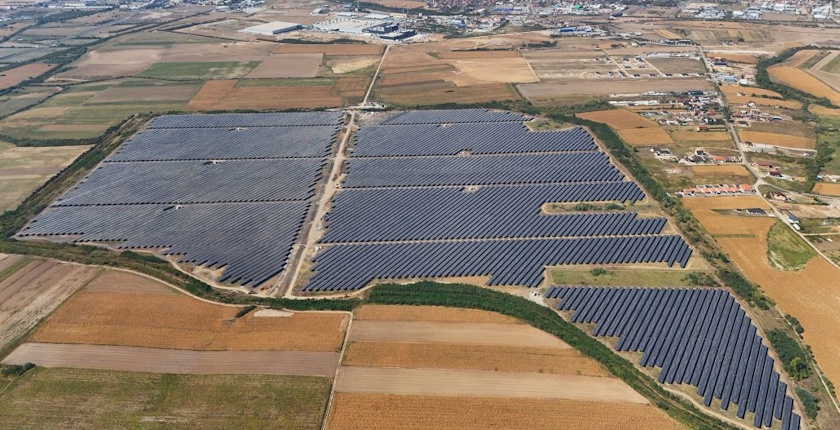
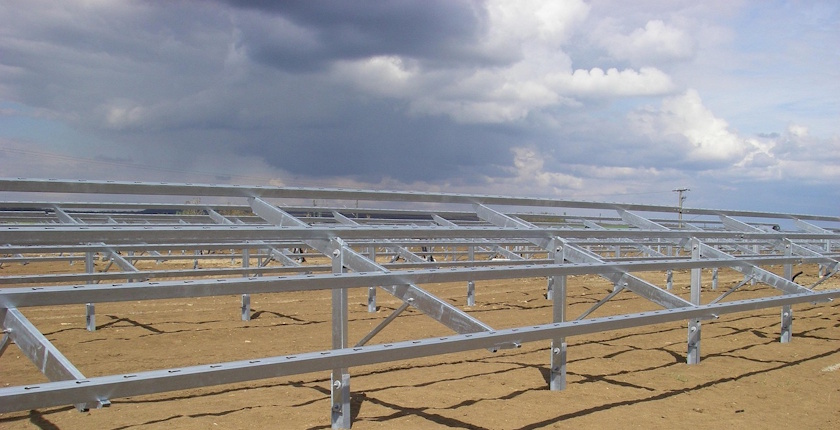
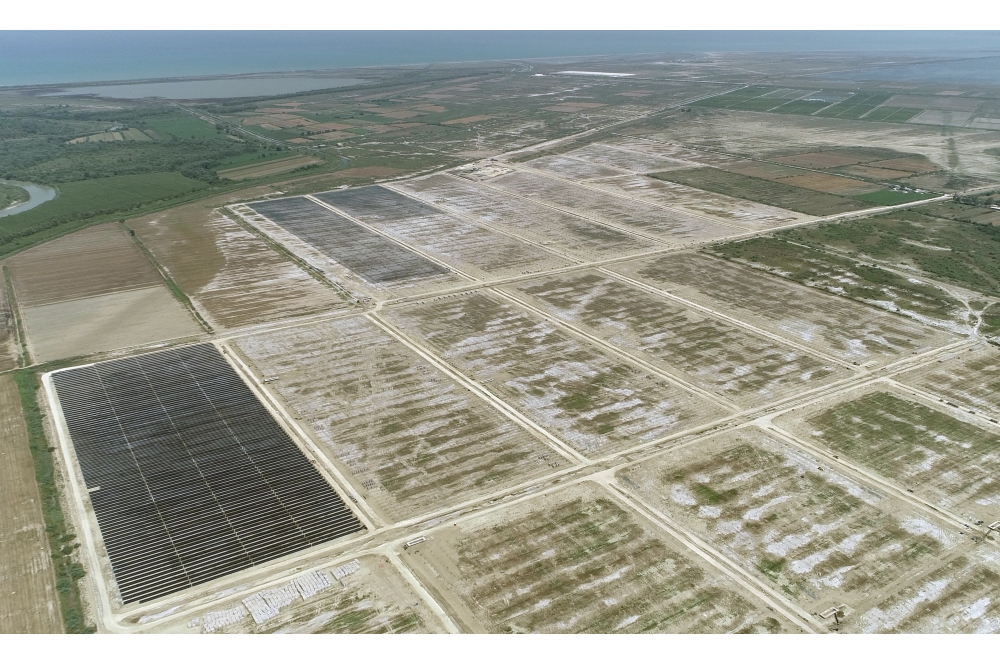
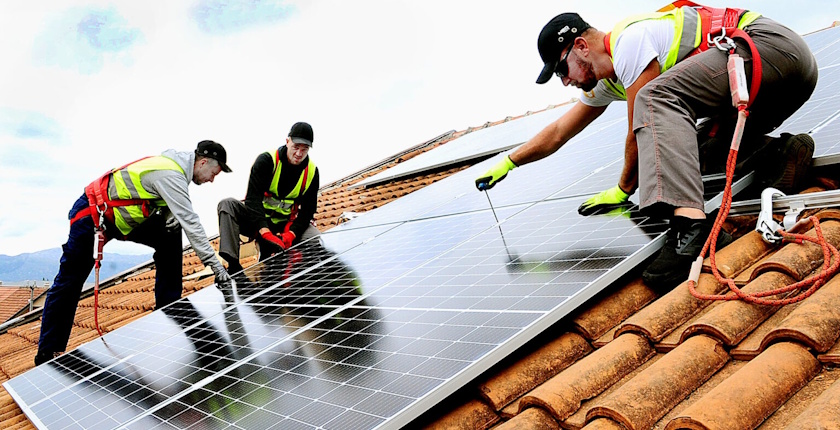
Fortis Energy has started the construction of solar power plant Ersekë with a capacity of 75 MW.

The Ersekë Solar Power Plant project in Albania has transitioned to the construction phase, featuring a total peak capacity of 75 MW, and it will be integrated with a 25 MWh battery energy storage system (BESS), Turkey-based Fortis Energy said.

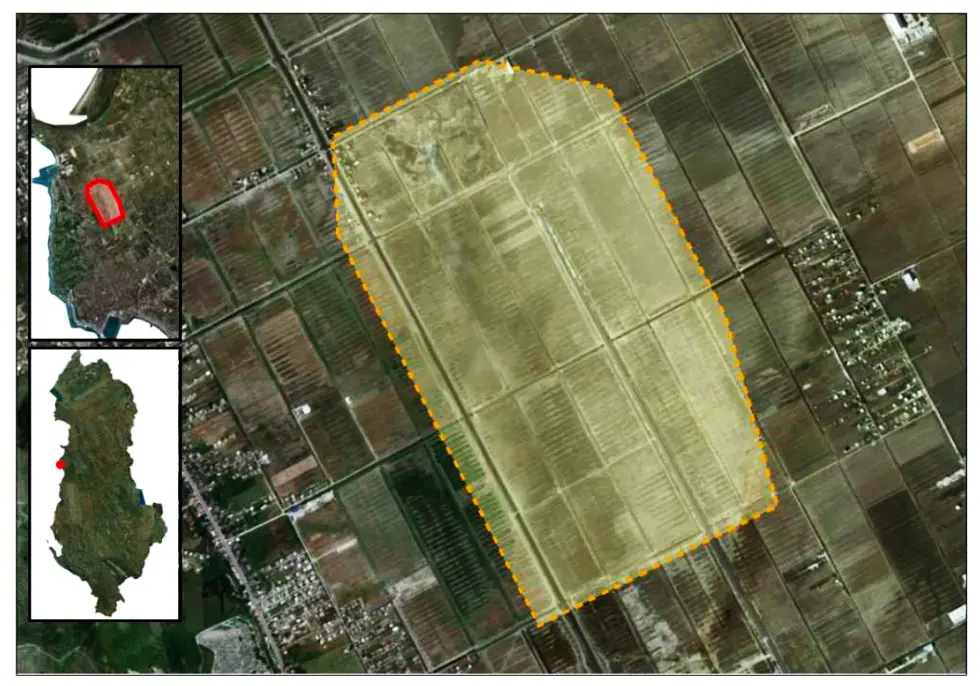
Following the formal approval, the company moved to the execution stage in the village of Taç-Lartë, in the municipality of Kolonja in the country’s southeast.

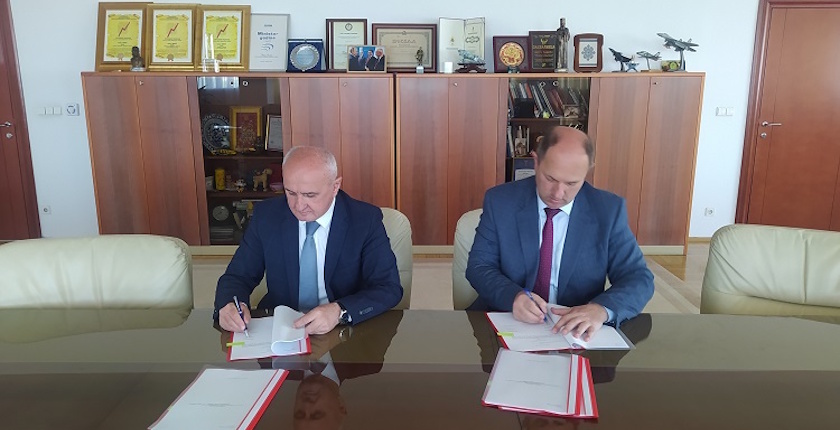
Of note, in June Fortis Energy received approval from the Albanian government for the construction of a photovoltaic plant. The company is allowed to operate the facility for 49 years from the entry of the decision into force.

The PV project is set to generate 135 GWh per year

Now the company recalled that the PV facility is set to generate 135 GWh per year of clean energy. It would mark a major milestone in Albania’s green energy transition by combining solar generation with advanced storage capabilities, it added.

Fortis, which was a bronze sponsor this year at Belgrade Energy Forum 2025 (BEF 2025), organized by Balkan Green Energy News, has also invited qualified suppliers and contractors to submit their inquiries for upcoming construction and procurement packages.

“We are looking for partners who share our commitment to health, safety & environment (HSE) excellence, technical precision, timely delivery,” the company stressed.

Fortis Energy is working on renewable energy projects totaling 2 GW

The facility must be built within 36 months from the entry of the decision into force, according to the government’s approval.

The 36 months for construction, ancillary works and commissioning are included in the said 49 years of the operation of the facility.

Of note, Fortis Energy is working on renewable energy projects of 2 GW altogether in Southeast Europe. One half of the planned capacity is for solar and wind power plants in Serbia.

Three months ago the company obtained a construction permit for a solar park of 270 MW on the territory of the city of Sremska Mitrovica in Serbia. The project includes a BESS of 36 MWh.
by in News

EPCG Solar Gradnja installs 36 MW of solar power in 2025

So far this year, EPCG Solar Gradnja has installed solar power plants with an overall capacity of 36 MW.

EPCG Solar Gradnja, a subsidiary of state-owned power utility Elektroprivreda Crne Gore (EPCG), specializes in the procurement, design, installation, and maintenance of photovoltaic systems.

Its main role is the installation of solar panels within the programs Solari 3,000+, Solari 500+, and Solari 5,000+.

The programs were launched by EPCG to enable households and businesses to install solar panels under favorable conditions and become prosumers.

EPCG Solar Gradnja pointed out that the results it achieved by December 1 have exceeded the plan for 2025.

The plan for 2025 was 30 MW

“Instead of the planned 30 MW, a total of 36 MW of photovoltaic systems was installed in the first 11 months,” the Board of Directors said after its sixth regular meeting.

The management added that it expects to end the year with a positive financial result.

Of note, EPCG said that since the establishment of EPCG Solar Gradnja in late 2021, the firm installed a total of 75 MW of solar power capacity by August this year. Montenegro currently doesn’t have any large PV plants, so the vast majority of the capacity is in very small PV systems.

The Board of Directors has reappointed Sanja Žugić as acting CEO for a period of six months, or until a competition or the selection of a CEO. The management highlighted good results as the main reason for its decision.

The priority is the implementation of large ground-mounted solar power plants

Due to the increased volume of work and further project development, the board adopted a new rulebook on the organization and the classification of jobs. It brings adjustments to the organization and redistribution of work tasks, EPCG Solar Gradnja said.

In the coming months, the firm’s priority will be the implementation of ground-mounted solar power plants. Two units of 40 MW each are in the pipeline, together with the installation of rooftop solar on an even larger scale, it added.

So far, EPCG Solar Gradnja has installed PV plants on nearly 9,000 roofs.

The board’s meeting was attended by the representatives of the unions. Procedures recommended by the Montenegro State Audit Institution were adopted at the meeting.

by in News

Montenegro launches second BESS tender but for drastically smaller capacity

Power utility Elektroprivreda Crne Gore has launched its second battery energy storage system procurement tender. The required capacity is drastically lower than in the first call.

The initial public procurement was canceled because state-owned energy company Elektroprivreda Crne Gore (EPCG) didn’t obtain approval from the Government of Montenegro to take a loan for a EUR 58 million project.

The new tender envisages the procurement of a battery between 100 kW and 130 kW, with 200 kWh to 260 kWh in capacity. This is a pilot project, and the procurement is valued at EUR 75,000.

The canceled purchase was for two battery energy storage systems (BESS), at 30 MW and 120 MWh each.

The battery will be used on the distribution network

Potential locations include hydropower plant (HPP) Perućica, EPCG’s steel mill Željezara Nikšić, and the Pljevlja thermal power plant.

In the new call, the winning bidder will be obliged to secure a location for installing and testing the pilot BESS, according to the documentation.

EPCG explained that over the previous three years, its projects Solari 3000+, 500+, and 5000+ enabled a strong pace of the addition of prosumer solar power plants to the low-voltage, distribution network in Montenegro.

Although distributed generation has clear financial and ecological benefits, its rapid growth simultaneously brings a string of technical challenges for the distribution network, which was historically developed solely for supplying consumers and for unidirectional energy flow, according to the tender’s documentation.

EPCG sees the installation of batteries in substations as a solution to technical challenges caused by prosumers

The company sees the installation of BESS units within 10/0.4 kV substations as the solution for these challenges.

These batteries would be charged during the hours when photovoltaic facilities have high output in order to reduce and prevent reverse power flow. The idea is to discharge BESS units during hours of peak consumption and low voltage.

The main goal is to minimize voltage deviations in areas that the substations cover, during periods of production and consumption fluctuations. It would increase the hosting capacity for new prosumers, and enhance the stability of the distribution grid under an increased PV plant integration.

Scalability of the battery is one of the conditions for the bidders set by EPCG.

by in News

Econergy secures financing for 87 MW Oradea solar plant in Romania

Econergy Renewable Energy has signed a EUR 40.5 million project finance agreement with UniCredit Bank for its 87 MW Oradea solar power plant in the Crișana region in north-west Romania.

The Oradea photovoltaic facility has been fully connected to the grid since August 2025, and is generating revenues, according to Israel-based Econergy.

The proceeds will be used for various purposes including refinancing of the loans spent to construct the power plant, the company explained.

Within a strategy to hybridize its Romanian solar portfolio, Econergy plans to add a 68 MW BESS component at the Oradea site.

It is the second project finance agreement secured with UniCredit

The expected investment in energy storage is about EUR 21 million, with an estimated annual contribution of EUR 8.4 million in revenues and EUR 6.7 million in EBITDA, based on the first five full operating years, the update reads.

The company said it is its second project finance agreement secured with UniCredit.

Econergy Group is operating in key European markets, including Germany, the UK, Italy, Spain, Romania, Poland, and Greece. It develops photovoltaic, wind, and energy storage projects.

The current project pipeline exceeds 14 GW, according to the company’s website.

Econergy is the owner of the largest PV facility in Romania

The company generates revenue by selling electricity, earning development and operation fees, and selling projects at various stages of development.

Of note, Econergy is the owner of the largest PV facility in Romania. In October it agreed to buy out Nofar’s 50% stake in the 155 MW Rătești solar power plant. The firm plans to add a 120 MW BESS.

Econergy has four PV plants in Romania. With the inauguration of Oradea, the company’s operational and ready-to-connect capacity in the country has reached 447 MW. It is building another 788 MW and expects to start the construction of 559 MW more by the end of 2025.

The project was developed with Phoenix Holdings.

by in News

Webinar summary: How to design PV and BESS in the Balkans faster and smarter with RatedPower software

RatedPower, a leading provider of software for PV plant and BESS design and engineering, has organized a webinar to present its solutions that make it faster and easier for developers and contractors to design and build PV and battery storage facilities, helping increase their efficiency and profitability. The online event included a step-by-step demonstration of how RatedPower’s cloud-based software tool creates simulations of PV plants, battery energy storage systems (BESS), and hybrid facilities to assess costs, performance, and profitability under various scenarios. The hosts also answered questions such as whether the software can be used for rooftop solar, how it accounts for terrain, what financial aspects it considers, and how user-friendly it is for non-technical staff. A recording of the webinar is available at this link.

The webinar opened with an overview of the main challenges that solar and BESS projects face in the Balkans, but also elsewhere in the world. These include a lack of collaboration between teams, difficulty finding investors for projects in the ready-to-build stage, insufficient documentation needed for permitting, lengthy manual calculations, and poor decision-making in feasibility studies.

Addressing common challenges in the Balkans

RatedPower was created precisely to address these problems, and today it provides services for a wide range of companies in the solar and BESS market, including well-known international players, it was explained at the webinar, hosted by Emil Trepin, Account Executive at RatedPower.

The company decided to expand to the Balkans because it is one of the fastest-growing regions in Europe when it comes to renewable energy projects. This, it was explained, is thanks to energy transition efforts, grid modernization, investment momentum, and state support for renewables across the region.

Much more than an engineering tool

RatedPower, part of Enverus, a global software-as-a-service (SaaS) platform for the energy sector, offers a cloud-based tool for designing ground-mounted PV plants of 1 MW and above, and up to 3-4 GW, as well as hybrid systems (PV plus BESS) and standalone battery storage projects.

The platform creates the fastest simulations in the industry, reducing design and engineering time by up to 90%, while helping increase project profitability by about 20%. It generates over 400 pages of ready-to-use documents, including bills of quantities, single-line diagrams, business plans, and much more.

The tool reduces design and engineering time by up to 90%

RatedPower’s software is much more than an engineering tool – it is a decision-making platform that combines the simulation of technical design, energy yield, and financial analysis, according to the hosts.

A step-by-step demonstration of how the platform works

During the demonstration, Matteo Menazzi, Technical Advisor at RatedPower, explained how the platform is used in practice. Since it is cloud-based, it can be accessed from any web browser and used simultaneously by several people working on the same project or on multiple projects.

The first step is to select a location on the map, taking into account various restrictions, such as roads, forests, and archaeological sites, and then add PV arrays, BESS, and other equipment.

Equipment, such as PV modules or battery containers, is selected from a pre-filled database or uploaded manually. The software then creates a full simulation in a matter of seconds, allowing users to test different modules or equipment and compare results.

Solar modules, batteries, and other equipment can be selected from a pre-filled database

In the layout phase, users can set the distance between rows, adapt the configuration to the terrain slope, and estimate the scope and cost of necessary earthworks.

The software also allows the customization of grid connection parameters, including voltage levels and line types (underground or overhead). It then automatically estimates substation size and electrical losses, and calculates the necessary cable lengths.

It calculates the amount of electricity that can be produced and injected into the grid, as well as financial performance. In addition, a large number of documents is automatically generated – from hourly energy yield and battery performance results to lists of necessary cables, bills of quantities, and 2D and 3D drawings.

Designs can be edited and saved as templates for future projects

It is important to note that any design created with the RatedPower software can be edited by moving, adding, or removing elements. Also, all inputs can be saved as a template, which can be used for another project, saving considerable time.

Designing battery storage systems with RatedPower

When it comes to batteries, users can choose a power conversion system and battery containers from the database, define the number of BESS blocks and their layout, and adjust the distances between containers to comply with fire safety regulations. They can also customize charging and discharging efficiency and use the optimization algorithm to adjust operations for maximum profitability.

It is also possible to choose between a fixed and a variable price. For variable prices, the software will upload the day-ahead price for the relevant market or allow users to upload their own price. The tool will also recommend the most profitable time to sell electricity.

Users can also choose whether to charge the batteries only from the PV plant or from the grid as well.

The software provides project cost estimates based on standard values or the user’s input

In the financial segment, RatedPower’s software will estimate the total cost of building a PV plant or battery system, based on standard values provided by the International Renewable Energy Agency (IRENA) and the US National Renewable Energy Laboratory (NREL).

However, input values can also be fully customized by the user, based on the price of solar modules, BESS units, or cables.

If you want to know more about RatedPower’s software, request a demo today.

by in News

Croatia’s HEP to install 90 solar power plants on rooftops of its facilities

Croatia’s power utility Hrvatska Elektroprivreda intends to install 90 solar power plants on its facilities across Croatia.

HEP ESCO, a subsidiary of Hrvatska Elektroprivreda (HEP), has launched a public procurement for the installation of 90 photovoltaic plants under a design-and-build model and on a turnkey basis.

The firm develops, implements, and finances energy efficiency projects based on the ESCO model.

The investment is estimated at EUR 5.3 million, and the deadline for submitting bids is November 3.

HEP ESCO plans to sign a contract with the best bidder within 90 days after selecting it. The deadline for the completion of works will be 18 months, according to the public call.

Five groups of solar power plants

The public call is divided into five geographical groups in Croatia.

Group 1 is for Zagreb and its surroundings. Solar panels would be installed at ten locations, with an estimated investment of EUR 1.2 million. Group 2 covers hydropower plants Zavrlje, Orlovac, Peruća, and Zakučaci in the coastal region of Dalmatia, as well as power distribution facilities. The works in the segment are valued at EUR 770,000, local media reported.

Four cities in the region of Slavonia make up the third group, with 20 locations. Solar panels would be installed for EUR 1.21 million in Virovitica, Požega, Vinkovci, and Vukovar.

HEP has over 50 solar power plants on the rooftops of its buildings and facilities

A total of 15 locations in the areas of Međimurje and Zagorje and the Sisak-Moslavina county, and including hydropower plant Ozalj, all in northwestern Croatia, are in the fourth group. The estimated value is EUR 1.1 million.

The value of the investment in Istria, Primorje, and Gorski Kotar is EUR 1.03 million. It entails the Fužine hydropower plant, Rijeka, Vinodol, and electricity distribution facilities.

Of note, HEP has more than 50 solar power plants on the rooftops of its buildings and facilities.

HEP Proizvodnja, HEP’s power production arm, has 12 PV plants on administrative buildings, thermal power plants and hydropower plants. The total capacity is about 1.5 MW. HEP ODS, the country’s distribution system operator, has another 44 solar power plants with a total capacity of 1.1 MW on its roofs.

by in News

Celje, Šoštanj among Slovenian municipal authorities pursuing energy independence

The City of Celje in Slovenia plans to install 11 solar power plants on its public buildings, and the Municipality of Šoštanj agreed contracted four such units. The photovoltaic systems would be part of energy communities. Šoštanj expects to save EUR 70,000 per year while Celje is counting on EUR 200,000.

Novo Mesto, another municipality in Slovenia, recently made a similar move toward achieving energy independence.

The total capacity of the solar power plants in Celje and Šoštanj is 1.9 MW. They have signed contracts with ECE, a subsidiary of state-owned power utility Holding Slovenske Elektrarne (HSE). The projects are funded from the National Recovery and Resilience Plan (NRRP) and by the two municipal authorities.

Šoštanj is set to get solar power plants with a capacity of 500 kW altogether, at four locations: the sports hall of the Karel Destovnik Kajuh elementary school, a music school, health center, and the Pilon Center.

The total investment is EUR 500,000, with the local authority receiving a EUR 450,000 grant via the NRRP.

Both municipal authorities now have energy communities

In Celje, approximately 1.4 MW would be installed at several locations including the Z’dežele Stadium, Celje Summer Pool, Celje Health Center, elementary schools and kindergartens.

The City of Celje secured a EUR 1 million grant from NRRP, and the total investment is estimated at EUR 1.4 million.

Sebastijan Roudi and Boris Goličnik (photo: Municipality of Šoštanj)

In addition to building solar power plants, the contract includes five years of maintenance, offtaking surplus electricity production, and supply during insufficient power generation. It also involves managing the energy community.

In Šoštanj, the energy community would involve more than 15 public buildings, and the one in the City of Celje would consist of PV units on more than 40 public buildings.

The two projects are scheduled for completion in December and November, respectively.

Šoštanj aims to produce 70% of the electricity consumed by its public buildings

When the power plants are built, the municipality expects to cover 70% of the consumption of all public buildings, and the third-largest city in Slovenia aims for a 15% share.

The Šoštanj project is envisaged for 500 MWh of clean electricity output per year, reducing electricity costs by about EUR 70,000. Total savings over the entire lifespan of the solar power systems is seen at EUR 2 million.

Celje’s PV plants would produce 1,462 MWh of energy annually and save approximately EUR 200,000, translating to around EUR 5 million throughout their service life.

Investment for the long-term benefit of the community

Mayor of Šoštanj Boris Goličnik said the contract signifies the continuation of the municipality’s vision of energy independence.

“This is an investment in the future, in the green transition, and for a permanent benefit of our community,” he stated.

According to Celje’s Mayor Matija Kovač, it is a strategic decision on managing energy, costs, and the environment in the future. He said the planned PV units are just the beginning.

Sebastijan Roudi, ECE CEO, asserted that as part of the HSE group, the firm places grea t emphasis on demanding energy projects, developing new billing models, and seeking ways to accelerate the green transition.

by in News

Zen Energy Group kicks off construction of hybrid PV-BESS project in North Macedonia

Luxembourg-based Zen Energy Group has started the installation of a hybrid energy project in North Macedonia, combining a solar power plant and a battery energy storage system.

A solar power plant with a battery energy storage system (BESS) could become the country’s second hybrid power plant, with Fortis Energy installing energy storage near Oslomej solar park.

Zen Energy Group kicked off the construction of a landmark solar plus storage project in North Macedonia, Yossi Edelstein, Chief Executive Officer of Zen Energy Group, wrote on LinkedIn.

From concept to construction, Zen Energy Group is making the future of energy a reality in the country, he added.

“We are proud to share that our 82 MW utility-scale solar project with 50 MWh BESS in North Macedonia has officially entered the construction phase,” Edelstein stated.

The PV plant will use LONGi bifacial solar panels

The company’s team kicked off earthworks, development of access roada and cut-and-fill activities. The project is scheduled to start delivering green electricity to the national grid by late April 2026 and to achieve full commercial operation date in August 2026, according to Edelstein.

The project marks another significant step toward advancing clean energy generation in the region, he added.

According to the firm’s website, the photovoltaic plant will be located near Negotino. It will use LONGi bifacial solar panels for the expected annual production of 124,198 MWh.

The financing was secured from NLB bank, the website reads.

The developer revealed that it has signed a power purchase agreement (PPA) for 10 years in total, with a six-year fixed price period.

Seven projects in the pipeline

Works near Negotino (photo: Zen Energy Group/LinkedIn)

Zen Energy Group is developing seven energy investments – for three solar parks, two wind farms, a standalone BESS, and a commercial and industrial (C&I) portfolio in the UK.

Wind farms Unirea (102 MW) and Traian (78 MW) are located in Romania, while two PV facilities in North Macedonia would have a total capacity of 137 MW. The Negotino endeavor is for 82 MW and the Armatus investment envisages 55 MW.

Solar project Hajdučica of 125 MW is planned in Serbia. All three PV plants would have BESS. The company is developing the Lacu Sarat standalone battery facility in Romania. If it were in operation now, it would be the largest BESS in Europe.

by in News

Green Energy or Green Corruption? Inside Voltalia’s Controversial Solar Concessions in Albania.

The Ministry of Infrastructure and Energy of Albania signed the Project Development Agreement with Voltalia for the construction of the photovoltaic plant in Remas – Karavasta (near the Lushnja area) with an installed capacity of 140 MW, where the power generation from 70 MW will be offered as part of the support measures at a price of 24.89 euros/Mwh to state owned company ( OSHEE GROUP , public company) for 15 years and 70 MW will be traded on the free market, supported by EBRD with 29M Euro loan. The Karavasta Solar Park entered production in January 2024 (EBRD, 2023).

Karavasta Solar PV 140MW farm production for year 2024

Karavasta Solar PV 140MW farm production for year 2024

The concession agreement in question leaves numerous concerns unsettled. Beyond its significant social and environmental consequences—strongly opposed by local communities due to its proximity to the Divjaka-Karavasta National Park—the project represents Voltalia’s expanding and contentious presence in Albania. This development looks to follow the trend of so-called “green” efforts in the country, which have long been marred by suspicions of green corruption.

For 2024, the Karavasta solar power plant reported total electricity generation of 258.38 GWh. Yet the Energy Regulator Authority’s (ERE) report does not disclose the destination of roughly half of that output — 129.19 GWh — which should be sold under a contractual tariff of €24.89/MWh (towards OSHEE group). That unexplained 50% gap in the balancing is striking. The same report shows that FTL sh.a the Free Market Supplier, purchased only 67.7 GWh from domestic photovoltaic producers, while the other amount of the total of 2,596 GWh were supplied including hydropower generation and purchased on the free market. Taken together, these figures reveal inconsistencies in market reporting and raise serious questions about transparency, corruption, contractual compliance, and the adequacy of regulatory oversight (MIE, 2020)

FTL sha Free Market Supplier part of OSHEE Group, 2024, purchasing electricity.

FTL sha Free Market Supplier part of OSHEE Group, 2024, purchasing electricity. Data source : ERE

The Karavasta Solar PV plant site is adjacent to Divjaka-Karavasta National Park, a Candidate Emerald Site under the Bern Convention encompassing Karavasta Lagoon Ramsar Site. The project site also partially overlaps with the Karavasta Lagoon Key Biodiversity Area (KBA) and Important Bird Area (IBA) designated for globally threatened bird species, important congregations of wintering and breeding waterbirds, and the endemic Albanian Water Frog.

The Ministry of Infrastructure and Energy Albania held an international bid procedure to build also the 100 MW Spitalla photovoltaic park in Durrës, which Voltalia SA won. According to the tender, 70 MW of the capacity would get subsidized compensation of €29.89/MWh for 15 years, with the remaining 30 MW sold on the free market. The Project Agreement and Power Purchase Agreement (PPA) were signed in June 2021, and the project is currently being implemented again by Voltalia SA.
Karavasta Solar project location. Other PV farms in new located into the protected areas and river bank.

Karavasta Solar project location. Other PV farms in new located into the protected areas and river bank.

The Ministry of Infrastructure and Energy Albania held an international bid procedure to build also the 100 MW Spitalla photovoltaic park in Durrës, which Voltalia SA won. According to the tender, 70 MW of the capacity would get subsidized compensation of €29.89/MWh for 15 years, with the remaining 30 MW sold on the free market. The Project Agreement and Power Purchase Agreement (PPA) were signed in June 2021, and the project is currently being implemented again by Voltalia SA (MIE, 2021).

In the case of the Spitalla Solar project, Voltalia SA has proceeded with internal tenders and begun constructing high-voltage lines, a substation bay, and the plant itself, despite failing to provide formal communication to stakeholders or local residents. No environmental and social impact assessment (ESIA), restoration plan, or archaeological survey has been presented, nor has any meaningful public hearing been conducted to date. The company is reportedly working with a well-connected local firm linked to government and political circles to produce the required reports and assessments—documents that, critics allege, exist largely on paper. Local communities, facing limited possibilities  for recourse, describe the project as shielded by a network of political protection and systemic corruption.

Spitalla Solar Project 100MW in Durres, Albania

Spitalla Solar Project 100MW in Durres, Albania . Data source: AKM

Voltalia SA established two local businesses  “Spitalla Solar” and “Karavasta Solar”  through its Dutch vehicle, Voltalia Management International B.V., which is registered in a country that may hinder transparency. Spitalla Solar has two foreign administrators, Bertrand Pierre Francis Tournier and Gustavo Manuel Ferreira Fernandes; the same people also run Karavasta Solar, the concessionaire for the Karavasta solar park, which has a 30-year concession. The fact that both Albanian companies are subsidiaries of a Dutch holding company raises valid concerns regarding ultimate beneficial ownership, corporate transparency, and regulatory control (Vox News, 2024).

It appears that Prime Minister Rama may have steered these projects toward associates tied to President Macron  a move critics describe as a political favour rather than a transparent procurement outcome. The 2020 Albanian Law on the Beneficial Ownership Registry was intended to reveal company shareholders, but its 25% disclosure threshold leaves room for concealing minority owners; consequently, a convicted individual or someone embedded in politics could remain undeclared if they hold under 25% of a company’s shares, even when that company wins public contracts. The planned 100 MW photovoltaic park is covered to be developed alongside the new Durrës Port and the Reconstruction zone  developments likely to reshape the local real-estate market. In this sensitive corridor, a French firm and a Dutch entity with opaque ownership structures were granted 121 hectares by the government for 30 years, a deal that raises serious questions about transparency, accountability and the protection of the public interest (MIE, 2020).

The financial advantages and drawbacks of concession agreements, compared to new production capacity outside such arrangements, are closely tied to contractual provisions defining the allocation of financial risk. According to a statement by Voltalia SA, concession contracts can shift this burden onto the Albanian state budget, effectively exposing public finances to potential liabilities—often without the public’s awareness.

By Ranier della Vecchia

by in News

Republic of Srpska awards concession for Trebinje 3 solar project

The Ministry of Energy and Mining of the Republic of Srpska, one of the two entities constituting Bosnia and Herzegovina, has awarded a concession to power utility Elektroprivreda Republike Srpske for the proposed Trebinje 3 solar power plant.

The Trebinje 3 photovoltaic plant would have an installed capacity of 53.63 MW and an estimated annual production of 85.5 GWh.

According to the ministry, construction is expected to be completed within the next four years. The concession has been granted for 50 years and the total investment value is BAM 84.2 million (EUR 43.1 million), the ministry said.

Before finalizing the concession contract, the concessionaire, state-owned Elektroprivreda Republike Srpske (ERS), delivered a one-off payment to the budget of the Republic of Srpska of BAM 842,049 (EUR 430,992).

Almost the entire amount of the concession fee will be allocated to the budget of the City of Trebinje

After the facility becomes operational, the concessionaire will be obligated to pay a fee of BAM 0.0055 (EUR 0.0028) per kWh of generated electricity to the budget of the Republic of Srpska. A 95% share is allocated for the budget of the city.

The concession agreement for the construction and operation of the Trebinje 3 solar power plant was signed by the Minister of Energy and Mining of the Republic of Srpska Petar Đokić, who will be among the speakers at Belgrade Energy Forum 2025 (BEF 2025), and ERS CEO Luka Petrović.

ERS already has two concessions for solar power projects

It is the third concession that the company received for solar power plants from the government. The first, for Trebinje 1, with a capacity of 73 MW, was awarded in 2020..It was followed by Trebinje 2, for 53 MW, awarded in 2022. Neither of the two PV plants has been constructed yet.

In March 2022, ERS announced Lugos Renewables was acquiring 70% ownership of the Trebinje 1 project, with ERS retaining control of the remaining 30%.

In February of this year, the Government of the Republic of Srpska approved concessions for two solar power projects. Their total capacity would be 110 MW.

  • 1
  • 2