by in News

MEMO Analysis Links Solar Output to Lower Day-Ahead Power Prices in North Macedonia

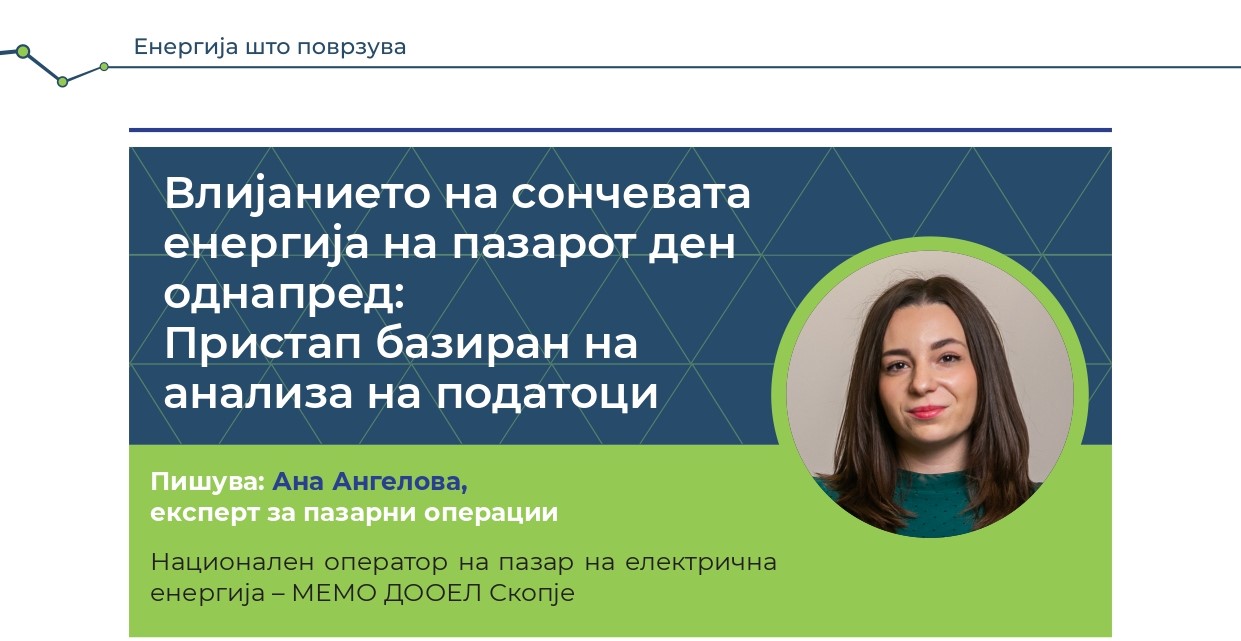
Electricity generation from solar power plants tends to push prices down on the power exchange, while reduced solar output is associated with price increases, according to an analysis by Ana Angelova, a market operations specialist at the National Electricity Market Operator (MEMO).

The analysis aimed to identify seasonal trends and highlight the relationship between photovoltaic (PV) generation, electricity consumption, traded volumes, and day-ahead prices on the North Macedonian power exchange. MEMO noted that the day-ahead market operates in an isolated mode.

Angelova used official power exchange data for 2024, focusing on hours when PV plant efficiency exceeded 30%.

Consumption remains broadly stable across the year

The findings point to a clear seasonal pattern. Electricity consumption stays relatively steady throughout the year, with only minor declines during spring and summer. PV generation, however, shows a pronounced seasonal swing—peaking in summer and reaching its lowest levels in winter.

Angelova also stressed that higher PV output coincides with increased traded volumes on the day-ahead market.

Prices bottom out in April, rise toward winter

According to the analysis, day-ahead prices are lowest in April, a period linked to milder weather, lower demand, and stronger solar production. From summer onward—and particularly during winter—prices trend higher, peaking in November.

The November price peak aligns with a combination of weak PV generation and higher consumption.

“Increased electricity generation from photovoltaic plants is associated with lower prices, while low generation leads to higher market prices, emphasizing the impact of renewable energy availability on price formation. The trend indicates that energy policies should focus on addressing weaknesses during the winter period and harnessing the potential of solar energy in summer,” Angelova wrote.

Proposed measures to strengthen renewables integration
north macedonia solar analysis memo power exchange ana angelova

Photo: MEMO

Angelova outlined several options to improve the integration of renewables—especially solar—into the power system. The proposed mechanisms include:

  • Flexible market mechanisms: introduction of a 15-minute trading interval, creation of an intraday market, dynamic tariffs, and guarantees of origin.

  • Energy storage technologies: battery energy storage systems (BESS) and pumped-storage hydropower plants.

  • Alignment with the European energy framework: adoption of ENTSO-E grid codes, coupling with the single European electricity market, deployment of smart meters, and use of financial instruments such as contracts for difference (CfD) and power purchase agreements (PPA).
by in News

HEP plans to build 91 MW solar power plant on Adriatic coast

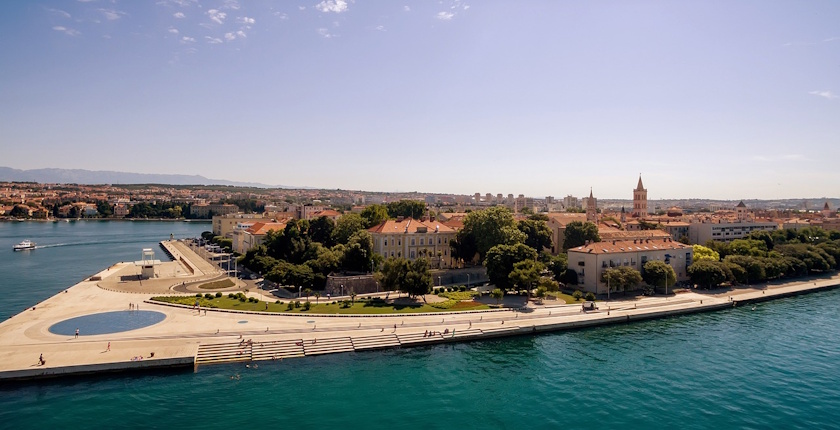
Croatian state-owned power utility Hrvatska Elektroprivreda (HEP) is planning to build a 91 MW solar power plant near the city of Zadar, on the Adriatic coast.

The photovoltaic facility will be slightly smaller than the 99 MW Korlat system – HEP’s largest, which it is building in nearby Benkovac. The company’s biggest two solar power plants will be located just a few dozen kilometers apart.

HEP plans to install the solar panels in the Crno area, eZadar reported. It is approximately six kilometers east of Zadar. The site is located within the planned Crno business zone.

Eleven solar power plants are planned near the Crno location

The power plant would span approximately 93 hectares. Its estimated annual electricity production is 119.8 GWh. HEP’s facility in Crno would consist of roughly 139,800 photovoltaic modules.

The news website pointed out that there are projects for 11 PV plants at locations within a ten-kilometer radius. They are intended to cover an area of about 483 hectares. None have been installed so far.

Neoen Renewables Croatia developed one of the projects, Vlaka, for 62.5 MW in peak capacity.

HEP is also planning 90 rooftop solar plants

The Korlat solar power plant, which will be the largest in Croatia, is being built by Chinese companies Shandong Electric Power Engineering Consulting Institute Corporation (SDEPCI) and Norinco International Cooperation.

Together with HEP’s first wind farm, commissioned in 2021, the Korlat solar plant is about to form the country’s first renewable hybrid energy park.

In addition to large ground-mounted PV facilities, HEP is planning to set up 90 solar power plants on its buildings across Croatia. Its subsidiary HEP ESCO is carrying out the project.

by in News

HEP plans to build 91 MW solar power plant on Adriatic coast

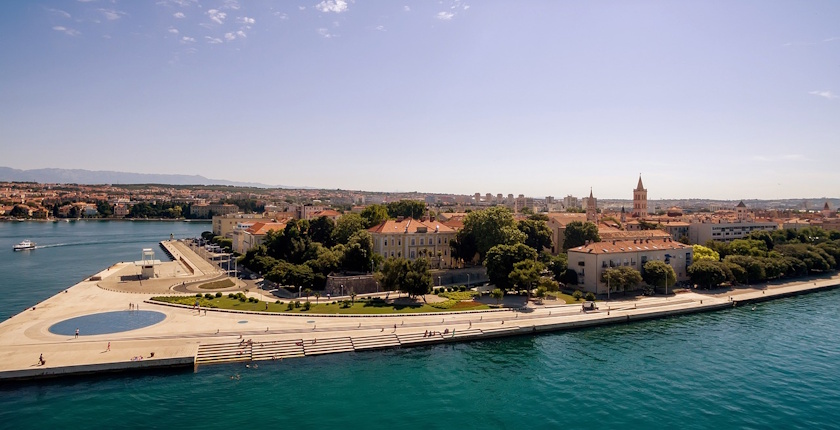
Croatian state-owned power utility Hrvatska Elektroprivreda (HEP) is planning to build a 91 MW solar power plant near the city of Zadar, on the Adriatic coast.

The photovoltaic facility will be slightly smaller than the 99 MW Korlat system – HEP’s largest, which it is building in nearby Benkovac. The company’s biggest two solar power plants will be located just a few dozen kilometers apart.

HEP plans to install the solar panels in the Crno area, eZadar reported. It is approximately six kilometers east of Zadar. The site is located within the planned Crno business zone.

Eleven solar power plants are planned near the Crno location

The power plant would span approximately 93 hectares. Its estimated annual electricity production is 119.8 GWh. HEP’s facility in Crno would consist of roughly 139,800 photovoltaic modules.

The news website pointed out that there are projects for 11 PV plants at locations within a ten-kilometer radius. They are intended to cover an area of about 483 hectares. None have been installed so far.

Neoen Renewables Croatia developed one of the projects, Vlaka, for 62.5 MW in peak capacity.

HEP is also planning 90 rooftop solar plants

The Korlat solar power plant, which will be the largest in Croatia, is being built by Chinese companies Shandong Electric Power Engineering Consulting Institute Corporation (SDEPCI) and Norinco International Cooperation.

Together with HEP’s first wind farm, commissioned in 2021, the Korlat solar plant is about to form the country’s first renewable hybrid energy park.

In addition to large ground-mounted PV facilities, HEP is planning to set up 90 solar power plants on its buildings across Croatia. Its subsidiary HEP ESCO is carrying out the project.

by in News

Petrović: ERS to launch construction of Trebinje 3, Hrgud this year

Power utility Elektroprivreda Republike Srpske plans to start the installation of the Trebinje 3 solar power plant and the Hrgud wind farm this year, according to CEO Luka Petrović.

Elektroprivreda Republike Srpske (ERS) already has projects in a ready-to-build phase through its subsidiary companies, Luka Petrović explained, Srpskainfo reported.

ERS is the dominant power producer and supplier in the Republic of Srpska, one of the two entities constituting Bosnia and Herzegovina.

The Trebinje 3 solar power plant, with a capacity of 53 MW, will be built first. The company has received a concession from the Government of the Republic of Srpska. The tender for construction will be launched soon, Petrović stressed.

Preparations for the Hrgud wind farm are also in the final stages, he added. Multi-year wind potential assessments and environmental studies have been completed. Petrović anticipates the start of construction this year. The planned capacity is 60 MW.

Wind energy attracts the most attention in the Republic of Srpska

The installation of the two power plants is expected to be finished by the end of 2027 or in early 2028, he asserted. The CEO added they would significantly contribute to the development of renewable energy sources.

He noted that wind energy attracts the most attention in the entity. The concessions commission of the Republic of Srpska has also awarded approvals for the construction of more than 1,200 MW of photovoltaic plants, Petrović recalled.

In his view, investments by private firms are dormant because solar power production is no longer profitable without battery energy storage systems (BESS).

Petrović: Many solar projects will not be completed

Solar energy prices are significantly lower than they were four to five years ago, Petrović added.

Many of these solar projects will not be finished, he underscored.

Of note, ERS decided late last year to revive the Hrgud wind project, which was halted after a decision by the German government.

The concession for the Trebinje 3 solar power project was awarded in April 2025.

by in News

Petrović: ERS to launch construction of Trebinje 3, Hrgud this year

Power utility Elektroprivreda Republike Srpske plans to start the installation of the Trebinje 3 solar power plant and the Hrgud wind farm this year, according to CEO Luka Petrović.

Elektroprivreda Republike Srpske (ERS) already has projects in a ready-to-build phase through its subsidiary companies, Luka Petrović explained, Srpskainfo reported.

ERS is the dominant power producer and supplier in the Republic of Srpska, one of the two entities constituting Bosnia and Herzegovina.

The Trebinje 3 solar power plant, with a capacity of 53 MW, will be built first. The company has received a concession from the Government of the Republic of Srpska. The tender for construction will be launched soon, Petrović stressed.

Preparations for the Hrgud wind farm are also in the final stages, he added. Multi-year wind potential assessments and environmental studies have been completed. Petrović anticipates the start of construction this year. The planned capacity is 60 MW.

Wind energy attracts the most attention in the Republic of Srpska

The installation of the two power plants is expected to be finished by the end of 2027 or in early 2028, he asserted. The CEO added they would significantly contribute to the development of renewable energy sources.

He noted that wind energy attracts the most attention in the entity. The concessions commission of the Republic of Srpska has also awarded approvals for the construction of more than 1,200 MW of photovoltaic plants, Petrović recalled.

In his view, investments by private firms are dormant because solar power production is no longer profitable without battery energy storage systems (BESS).

Petrović: Many solar projects will not be completed

Solar energy prices are significantly lower than they were four to five years ago, Petrović added.

Many of these solar projects will not be finished, he underscored.

Of note, ERS decided late last year to revive the Hrgud wind project, which was halted after a decision by the German government.

The concession for the Trebinje 3 solar power project was awarded in April 2025.

by in News

Sunotec advances Germany’s largest EEG hybrid power plant

Sofia-based solar and battery developer Sunotec announced a key milestone in the construction of the Hybrid Power Plant Zerbst. The company claims it is set to become Germany’s largest solar-battery hybrid power plant under the Renewable Energy Sources Act (EEG).

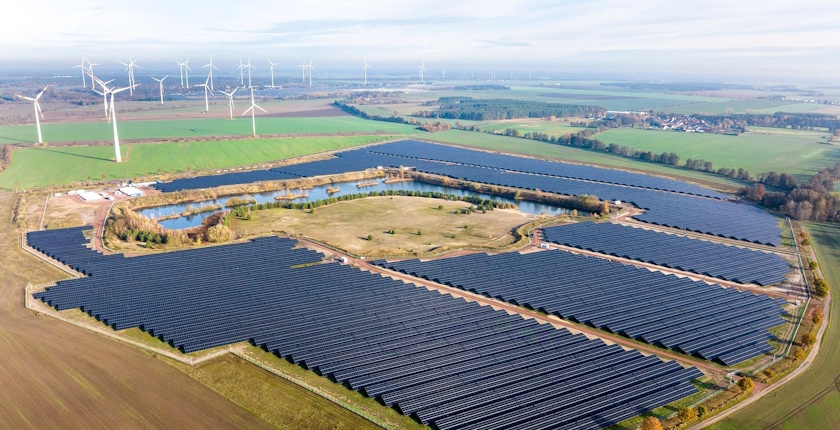
Located on a 41-hectare former gravel pit, the site combines 73,000 solar modules with a capacity of 46.4 MWp and a 57 MWh battery energy storage system (BESS).

The facility is designed and built to operate as a fully co-located hybrid asset, providing grid-supportive, dispatchable renewable power, Sunotec explained.

The project is being developed by Statkraft

The project is being developed by Statkraft. The Hybrid Power Plant Zerbst will deliver 50,000 MWh of renewable electricity per year. It is sufficient for 14,000 households.

This is the company’s first hybrid power plant in Germany and a proof of concept for its fully integrated, beyond-EPC delivery model, according to Sunotec.

The model is different from a traditional EPC contract. Sunotec implemented the core phases of the Zerbst hybrid power plant internally, including engineering, geotechnical assessments, and environmental planning.

Following completion, Sunotec will continue to manage the operations and maintenance of the PV plant.

​Atanasov-Lankes: we demonstrate the strength of Sunotec’s integrated model

This integrated approach reduces interfaces, eliminates fragmentation, and guarantees high-quality delivery, the company said.

“With the Hybrid Power Plant Zerbst, we demonstrate the strength of Sunotec’s integrated model and our ability to deliver complex systems at scale,” Zharin Atanasov-Lankes, Managing Director of Sunotec Germany, stressed.

He underscored that the project reflects the engineering depth and execution capability of the firm’s teams.

Over the last six months, Sunotec has made major steps in developing its operations in Europe.

In November 2025 the company signed an agreement with oil and gas major Shell on the development of battery energy storage systems in Central Eastern Europe. In July it has agreed with China-based Sungrow to install 2.4 GWh of BESSs.

by in News

Sunotec advances Germany’s largest EEG hybrid power plant

Sofia-based solar and battery developer Sunotec announced a key milestone in the construction of the Hybrid Power Plant Zerbst. The company claims it is set to become Germany’s largest solar-battery hybrid power plant under the Renewable Energy Sources Act (EEG).

Located on a 41-hectare former gravel pit, the site combines 73,000 solar modules with a capacity of 46.4 MWp and a 57 MWh battery energy storage system (BESS).

The facility is designed and built to operate as a fully co-located hybrid asset, providing grid-supportive, dispatchable renewable power, Sunotec explained.

The project is being developed by Statkraft

The project is being developed by Statkraft. The Hybrid Power Plant Zerbst will deliver 50,000 MWh of renewable electricity per year. It is sufficient for 14,000 households.

This is the company’s first hybrid power plant in Germany and a proof of concept for its fully integrated, beyond-EPC delivery model, according to Sunotec.

The model is different from a traditional EPC contract. Sunotec implemented the core phases of the Zerbst hybrid power plant internally, including engineering, geotechnical assessments, and environmental planning.

Following completion, Sunotec will continue to manage the operations and maintenance of the PV plant.

​Atanasov-Lankes: we demonstrate the strength of Sunotec’s integrated model

This integrated approach reduces interfaces, eliminates fragmentation, and guarantees high-quality delivery, the company said.

“With the Hybrid Power Plant Zerbst, we demonstrate the strength of Sunotec’s integrated model and our ability to deliver complex systems at scale,” Zharin Atanasov-Lankes, Managing Director of Sunotec Germany, stressed.

He underscored that the project reflects the engineering depth and execution capability of the firm’s teams.

Over the last six months, Sunotec has made major steps in developing its operations in Europe.

In November 2025 the company signed an agreement with oil and gas major Shell on the development of battery energy storage systems in Central Eastern Europe. In July it has agreed with China-based Sungrow to install 2.4 GWh of BESSs.

by in News

Elektroprivreda BiH to invest EUR 885 million over next three years

Government-controlled power company Elektroprivreda BiH plans to invest BAM 1.73 billion (EUR 884.6 million) over the next three years, according to its 2026-2028 business plan.

The investments would be financed through loans, and BAM 538 million (EUR 275 million) from own funds of Elektroprivreda BiH (EPBiH), which operates in the Federation of BiH. Of note, it is one of the two entities making up Bosnia and Herzegovina. The other one is the Republic of Srpska.

In line with available funds and restructuring plans, the company intends to continue investing in coal mines within the EPBiH group over the three-year period.

The goal is a stable and sustainable coal production at the volume needed for the planned operation of the thermal power plants, the utility said.

The previous business plan, for the 2025-2027 period, provided for investments of BAM 2.1 billion (EUR 1.074 billion).

The three-year period should be marked by the construction of a large number of PV plants

EPBiH has highlighted the construction of new renewable energy power plants as a long-term strategic and priority goal. The construction of several solar power plants at already identified locations are particularly significant, the plan reads.

The upcoming three-year period should be marked by the construction of a large number of PV facilities at multiple locations on mining sites, company-owned land, on the roofs of its own facilities and those of its customers, EPBiH explained.

EPBiH also plans to acquire operational renewable energy facilities as well as projects in development. The plan envisages the purchase or lease of land suitable for the construction of solar power plants.

Positive business performance and maintaining the position as the dominant electricity supplier in BiH are also outlined in the business plan, adopted by the company’s assembly.

Desulfurization and denitrification of flue gases projects are planned for two thermal power plants

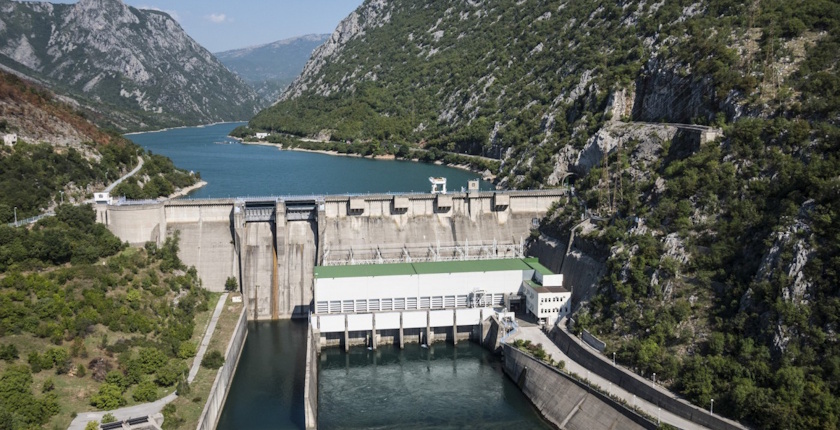
EPBiH has launched flue gas desulfurization and denitrification projects for its Tuzla and Kakanj coal-fired power plants. It would also upgrade unit 7 in Kakanj, unit 4 in Tuzla, and the Salakovac hydropower plant.

The document envisages the establishment of the distribution system operator (DSO), based on the provisions of the Law on Electricity of the Federation of BiH. It came into force in August 2023.

The law stipulates unbundling the distribution activity from EPBiH and establishing the DSO as a separate legal entity, a 100%-owned subsidiary, the company underlined.

by in News

Fortis kicks off construction of solar power plant in Albania

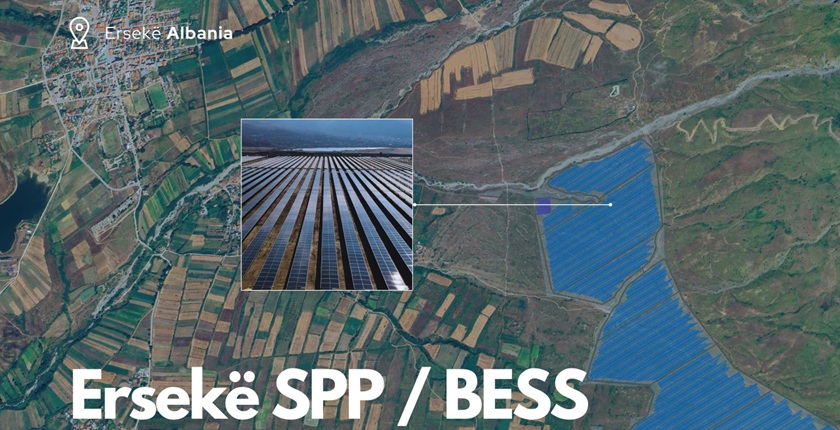
Fortis Energy has started the construction of solar power plant Ersekë with a capacity of 75 MW.

The Ersekë Solar Power Plant project in Albania has transitioned to the construction phase, featuring a total peak capacity of 75 MW, and it will be integrated with a 25 MWh battery energy storage system (BESS), Turkey-based Fortis Energy said.

Following the formal approval, the company moved to the execution stage in the village of Taç-Lartë, in the municipality of Kolonja in the country’s southeast.

Of note, in June Fortis Energy received approval from the Albanian government for the construction of a photovoltaic plant. The company is allowed to operate the facility for 49 years from the entry of the decision into force.

The PV project is set to generate 135 GWh per year

Now the company recalled that the PV facility is set to generate 135 GWh per year of clean energy. It would mark a major milestone in Albania’s green energy transition by combining solar generation with advanced storage capabilities, it added.

Fortis, which was a bronze sponsor this year at Belgrade Energy Forum 2025 (BEF 2025), organized by Balkan Green Energy News, has also invited qualified suppliers and contractors to submit their inquiries for upcoming construction and procurement packages.

“We are looking for partners who share our commitment to health, safety & environment (HSE) excellence, technical precision, timely delivery,” the company stressed.

Fortis Energy is working on renewable energy projects totaling 2 GW

The facility must be built within 36 months from the entry of the decision into force, according to the government’s approval.

The 36 months for construction, ancillary works and commissioning are included in the said 49 years of the operation of the facility.

Of note, Fortis Energy is working on renewable energy projects of 2 GW altogether in Southeast Europe. One half of the planned capacity is for solar and wind power plants in Serbia.

Three months ago the company obtained a construction permit for a solar park of 270 MW on the territory of the city of Sremska Mitrovica in Serbia. The project includes a BESS of 36 MWh.

by in News

Elektroprivreda BiH to invest EUR 885 million over next three years

Government-controlled power company Elektroprivreda BiH plans to invest BAM 1.73 billion (EUR 884.6 million) over the next three years, according to its 2026-2028 business plan.

The investments would be financed through loans, and BAM 538 million (EUR 275 million) from own funds of Elektroprivreda BiH (EPBiH), which operates in the Federation of BiH. Of note, it is one of the two entities making up Bosnia and Herzegovina. The other one is the Republic of Srpska.

In line with available funds and restructuring plans, the company intends to continue investing in coal mines within the EPBiH group over the three-year period.

The goal is a stable and sustainable coal production at the volume needed for the planned operation of the thermal power plants, the utility said.

The previous business plan, for the 2025-2027 period, provided for investments of BAM 2.1 billion (EUR 1.074 billion).

The three-year period should be marked by the construction of a large number of PV plants

EPBiH has highlighted the construction of new renewable energy power plants as a long-term strategic and priority goal. The construction of several solar power plants at already identified locations are particularly significant, the plan reads.

The upcoming three-year period should be marked by the construction of a large number of PV facilities at multiple locations on mining sites, company-owned land, on the roofs of its own facilities and those of its customers, EPBiH explained.

EPBiH also plans to acquire operational renewable energy facilities as well as projects in development. The plan envisages the purchase or lease of land suitable for the construction of solar power plants.

Positive business performance and maintaining the position as the dominant electricity supplier in BiH are also outlined in the business plan, adopted by the company’s assembly.

Desulfurization and denitrification of flue gases projects are planned for two thermal power plants

EPBiH has launched flue gas desulfurization and denitrification projects for its Tuzla and Kakanj coal-fired power plants. It would also upgrade unit 7 in Kakanj, unit 4 in Tuzla, and the Salakovac hydropower plant.

The document envisages the establishment of the distribution system operator (DSO), based on the provisions of the Law on Electricity of the Federation of BiH. It came into force in August 2023.

The law stipulates unbundling the distribution activity from EPBiH and establishing the DSO as a separate legal entity, a 100%-owned subsidiary, the company underlined.

  • 1
  • 2