by in News

Enery, Teva sign 15-year virtual PPA for solar, BESS in Bulgaria

Renewable energy firm Enery and Teva Pharmaceutical Industries have signed a 15-year hybrid power purchase agreement.

Under a financial or virtual power purchase agreement (PPA), a future solar power plant with two battery energy storage systems (BESS) will supply 60,000 MWh of electricity annually to Teva’s two plants in Bulgaria.

The landmark agreement is the first of its kind in the region to include green electricity supply from a newly built solar power plant with BESS and the longest one in Bulgaria so far, Enery said.

It is the Austrian company’s 15th PPA signed in the last four years across Central and Eastern Europe and the second one involving a Bulgaria-based offtaker.

The PPA sets a precedent for integrating storage within virtual PPA structures

Over the 15 years, the project is expected to avoid emissions of 15,840 metric tons of CO2 equivalent per year, supporting Teva’s goal to reduce scope 1 and 2 emissions by 46.2% by 2030.

The hybrid PPA also sets a precedent for integrating energy storage within virtual PPA (vPPA) structures, enhancing grid resilience and the value of renewable energy procurement, Enery stressed.

According to the company, the agreement will facilitate the construction of a photovoltaic park of 122 MW in peak capacity, equipped with two BESS installations at the site — one with a capacity of 70 MWh and another of 130 MWh. Located on non-arable land in the villages of Knizhovnik and Dolno Voyvodino in the Haskovo municipality, south Bulgaria, the Knizhovnik solar park is projected to produce 200 GWh of clean electricity per year.

Decktor: Teva is not only securing clean energy but also enhancing grid resilience and flexibility

“This agreement represents another significant step forward in our decarbonization journey,” said Josh Decktor, Teva’s Vice President and Global Head of Environment, Health, Safety and Sustainability.

By investing in a newly built solar asset with integrated storage, Teva is not only securing clean energy but also enhancing grid resilience and flexibility – key components of its strategy to meet its science-based targets, he added.

“We are proud that our projects are being realized thanks to an innovative partnership with companies that are proven leaders in their market niche, such as Teva, and demonstrate a strong commitment to the environment and society,” Enery’s Chief Commercial Officer Severin Vartigov stated.
by in News

Zen Energy Group kicks off construction of hybrid PV-BESS project in North Macedonia

Luxembourg-based Zen Energy Group has started the installation of a hybrid energy project in North Macedonia, combining a solar power plant and a battery energy storage system.

A solar power plant with a battery energy storage system (BESS) could become the country’s second hybrid power plant, with Fortis Energy installing energy storage near Oslomej solar park.

Zen Energy Group kicked off the construction of a landmark solar plus storage project in North Macedonia, Yossi Edelstein, Chief Executive Officer of Zen Energy Group, wrote on LinkedIn.

From concept to construction, Zen Energy Group is making the future of energy a reality in the country, he added.

“We are proud to share that our 82 MW utility-scale solar project with 50 MWh BESS in North Macedonia has officially entered the construction phase,” Edelstein stated.

The PV plant will use LONGi bifacial solar panels

The company’s team kicked off earthworks, development of access roada and cut-and-fill activities. The project is scheduled to start delivering green electricity to the national grid by late April 2026 and to achieve full commercial operation date in August 2026, according to Edelstein.

The project marks another significant step toward advancing clean energy generation in the region, he added.

According to the firm’s website, the photovoltaic plant will be located near Negotino. It will use LONGi bifacial solar panels for the expected annual production of 124,198 MWh.

The financing was secured from NLB bank, the website reads.

The developer revealed that it has signed a power purchase agreement (PPA) for 10 years in total, with a six-year fixed price period.

Seven projects in the pipeline

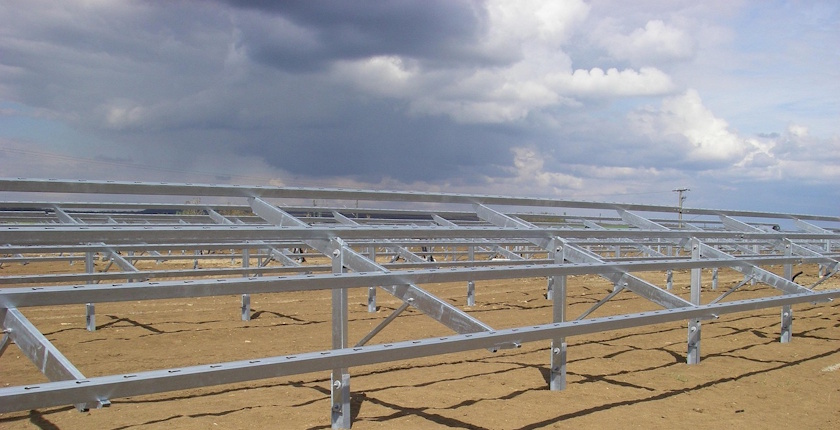
Works near Negotino (photo: Zen Energy Group/LinkedIn)

Zen Energy Group is developing seven energy investments – for three solar parks, two wind farms, a standalone BESS, and a commercial and industrial (C&I) portfolio in the UK.

Wind farms Unirea (102 MW) and Traian (78 MW) are located in Romania, while two PV facilities in North Macedonia would have a total capacity of 137 MW. The Negotino endeavor is for 82 MW and the Armatus investment envisages 55 MW.

Solar project Hajdučica of 125 MW is planned in Serbia. All three PV plants would have BESS. The company is developing the Lacu Sarat standalone battery facility in Romania. If it were in operation now, it would be the largest BESS in Europe.

by in News

Bulgaria, Romania offer much higher renewable energy project returns than Greece – HELLENiQ Energy

The newly purchased wind and solar projects in Romania and Bulgaria will bring much higher returns than ones in the Greek market, claims George Alexopoulos, Deputy Chief Executive Officer of HELLENiQ Energy.

HELLENiQ Renewables Romania, operating under Greece-based HELLENiQ Energy, bought a wind project in Scânteiesti in Galaţi in eastern Romania, with a licensed capacity of 96 MW, and a wind project in the Vaslui region, with a licensed capacity of 186 MW.

In addition, HELLENiQ Energy completed the purchase of a photovoltaic project of 123 MW in Haskovo region in southern Bulgaria, which marks the company’s entry into the country.

The company is facing delays in the Greek renewables market

“We achieved deals on three new projects at a ready-to-build phase in Romania and Bulgaria, which are effectively consistent with our announced strategy and they allow us to have better visibility of the achievement of the interim target of 1.5 GW in operation in the next few years,” the company’s CEO Andreas Shiamishis stressed at the presentation of the financial results from the second quarter and first half of 2025.

Unfortunately, he added, when it comes to the Greek renewables market, the company is facing delays, primarily because of Greek connection terms clarity.

The three new projects are much less susceptible to future curtailment

In the view of George Alexopoulos, Deputy CEO and GM Group Strategic Planning & New Activities, the three said projects are much less susceptible to future curtailment. They also bring notably much higher financial returns than what the company is observing in the Greek market, he said.

Alexopoulos stressed the construction of one project in Romania is starting immediately and that the company expects all the assets to be operational by 2028.

“We expect returns of 10% to 12%, which is considerably higher than Greece, and capex of approximately EUR 0.5 billion, which will be financed on a project finance basis, for the most part,” Alexopoulos explained.

by in News

RP Global gets EUR 12.2 million loan for Novalja solar project

RP Global has secured a EUR 12.2 million loan to build its Novalja solar power plant in Croatia.

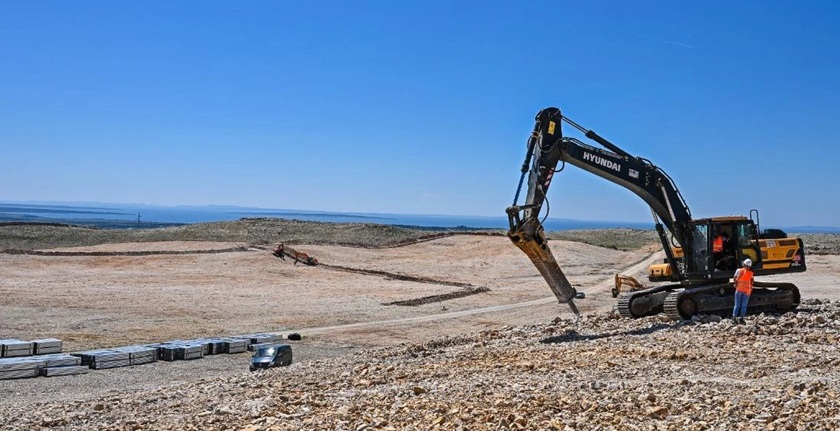
In late April, Austrian company RP Global began the construction of the Novalja photovoltaic plant at the Zaglava site on the island of Pag.

The European Bank for Reconstruction and Development (EBRD) said it approved a senior non-recourse project finance loan of up to EUR 12.2 million to RP Global Novalja d.o.o., owned by RP Global Energy GmbH, for the development and construction of the 21 MW Novalja PV plant in Croatia.

The project has been approved under the EBRD InvestEU Framework for Sustainable Transition.

The loan is divided into two tranches

The loan is split into two tranches: one amounting to a maximum of EUR 7.2 million, and the second of up to EUR 5 million, benefiting from a 20% first loss coverage under the EBRD InvestEU Framework for Sustainable Transition, the bank’s decision reads.

The total project cost is estimated at EUR 16.3 million.

The endeavor includes the installation of 35,776 photovoltaic panels. The expected annual electricity production is around 31,000 MWh, enough to supply about 12,000 households.

According to the EBRD, the project supports innovative offtake arrangements. It will combine a national renewables support with a merchant exposure in later years.

RP Global won premiums for its project at auctions

Last July, the Croatian Energy Market Operator (HROTE) awarded premiums for solar and hydropower plants with a total capacity of 420 MW. RP Global’s Novalja was among them, with 15 MW.

Back in 2022, the company said it intended to build wind farms and solar parks of 500 MW overall in Croatia over the next five years.

RP Global has completed two renewable energy projects in Croatia: the Danilo wind farm near Šibenik and the Rudine wind park near Dubrovnik.

Of note, the island town of Novalja could become one of the first in Croatia to begin the production of green hydrogen, and a rare example in the region. A project was launched in May.

by in News

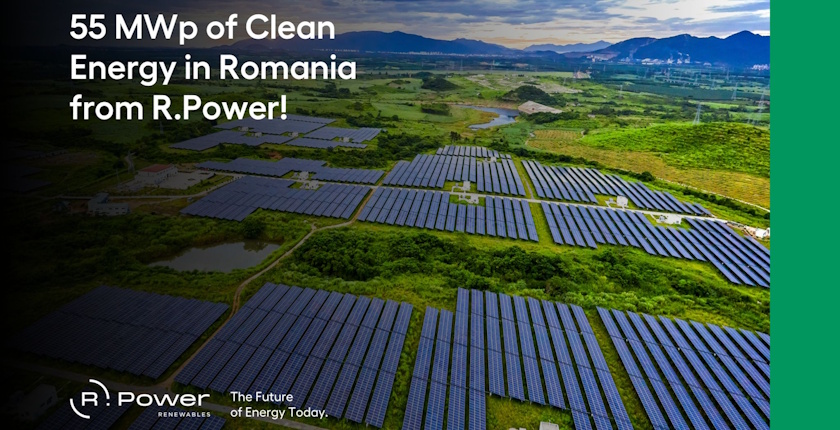
R. Power Renewables to start construction of 55 MW PV project in Romania

Polish company R. Power Renewables is about to build a solar power plant in Romania of 55 MW in peak capacity.

R. Power Renewables published the main details ahead of the start of construction of its Lazuri Solar Park, located in Satu Mare county in Romania.

The company said it is a major step forward in its commitment to expanding sustainable energy infrastructure in Central and Eastern Europe.

The works are set to begin before the end of September, according to the update. The facility is scheduled to come online in the third quarter of 2026.

The Lazuri Solar Park will be connected to the national grid through a newly constructed 110 kV switching station

The Lazuri Solar Park will be connected to the national grid through a newly constructed 110 kV switching station, implementing a loop-in/loop-out connection on the existing Vetiș–Abator 110 kV overhead transmission line, according to R. Power Renewables.

The project will not only contribute to Romania’s renewable energy targets but also strengthen local energy security and grid resilience, the Warsaw-based company underlined.

The solar farm of 55 MW in peak terms would generate approximately 70 GWh of clean electricity per year — enough to meet the annual needs of over 48,000 households and avoid nearly 17,000 tonnes of CO2 emissions.

Lazuri is one of five R. Power’s solar farms in Romania that secured a 15-year power purchase contract

Lazuri is one of five R. Power’s solar power projects in Romania that secured 15-year contracts-for-difference (CfDs) through the national auction scheme, the firm said and added that in total, it won support for 85 MW of installed capacity.

In December 2024, after years of delays, the Ministry of Energy finally selected projects of an overall 1.53 GW, slightly more than the quota, in the first round of auctions.

Wind and solar power projects are eligible for subsidies under the CfD scheme. The first round of auctions resulted with ten and eleven winning bids, respectively.

by in News

64 MW Stolac Solarni Park PV plant in BiH begins power generation

The 64 MW solar power plant Stolac Solarni Park, located near the city of Stolac in the Herzegovina region of Bosnia and Herzegovina, has been connected to the grid and has begun generating electricity. No further details have been disclosed, but the facility appears to be an extension of Hodovo, the largest photovoltaic plant in the country.

“We are proud to announce the successful grid connection of the Stolac Solarni Park photovoltaic plant in Bosnia and Herzegovina,” China-based solar technology company AIKO said in a statement. Developed by Tibra Pacific, the project has entered full operation and is now supplying clean solar power to the regional grid, according to the statement.

The company hailed Stolac Solarni Park as a major milestone, as AIKO and Tibra Pacific completed the grid connection of Europe’s first utility-scale solar project based on Back Contact technology. AIKO claims to have invented N-Type ABC (All Back Contact) technology.

AIKO disclosed few additional details about the project.

Stolac Solarni Park forms a key part of the largest grid-connected ground-mounted PV installation in BiH to date

With an installed capacity of 64 MW using AIKO modules, Stolac Solarni Park forms a key part of the largest grid-connected ground-mounted PV installation in BiH to date, AIKO noted. Originally launched in 2024, the project adopted AIKO’s innovative Stellar 1N+ ABC modules. The system is built on a fixed-tilt structure with an optimized layout to maximize land use.

According to Robert Brajković, Chairman of Tibra Pacific, the project marks a milestone for renewable energy in BiH.

Brajković: We needed technology that performs not just in labs, but on-site as well

“As the country’s largest operational ground-mounted PV plant, we needed technology that performs not just in labs, but on-site as well. AIKO’s modules delivered 12% more energy output and helped reduce electricity costs by 3% in the first phase, compared to the TOPCon setup. As a result, we transitioned the entire second phase to ABC. Their No.1 efficiency and consistency in real-world conditions set a new benchmark for us,” he said.

AIKO noted that Stolac Solarni Park represents more than a utility-scale project – it is a symbol of regional commitment to clean energy. “By deploying advanced PV technology at scale, the project supports BiH’s energy diversification goals,” the company said.

The two firms did not provide any additional information on the projects.

The largest photovoltaic plant in BiH is Hodovo, with a capacity of 92.5 MW, according to the Independent System Operator in Bosnia and Herzegovina. It is operated by Eco-Wat, a local firm owned by Tibra-Pacific. In December 2021, Eco-Wat said it intended to install a 150 MW solar park near Stolac. It appears the project has now reached its planned capacity.

In the same municipality in May, construction was launched on another solar project, with a capacity of 125 MW.

by in News

Kosovo* signs three agreements for 105 MW solar project

The Ministry of Economy has signed three agreements with the winners of the first renewable energy auction in Kosovo*, for a photovoltaic project with a grid connection of up to 105 MW.

Minister of Economy Artane Rizvanolli has signed an agreement with newly-founded Lindja Solar on the development of the solar power project selected in the first renewable energy auction.

The firm was founded by the winning consortium, led by Groupe Orllati. The remaining members are Holdigaz from Switzerland, ZPV from Germany and domestic solar panel producer and engineering, procurement, and construction (EPC) firm Jaha Solar, the ministry said.

KOSTT signed a PPA with the investors

Rizvanolli said the ministry also signed a land lease agreement with Lindja Solar. In addition, Transmission, System and Market Operator (KOSTT) signed a power purchase agreement (PPA) with the project firm.

The consortium led by Switzerland-based construction company Orllati was selected in early April to build and operate a solar park of up to 105 MW in connection capacity for 30 years, including a 15-year contract for difference (CfD).

The group won the first renewable electricity auction in Kosovo* with a bid of EUR 48.88 per MWh.

Officials stressed at the time that Orllati is run by businesspeople from the Kosovar diaspora.

The investment in the PV facility is estimated at EUR 70 million

Artane Rizvanolli now said that the successful auction would be the first of many that Kosovo* is preparing.

Orllati Chief Financial Officer Destan Orllati stressed that the project, covering 117 hectares, is part of the country’s push to boost renewable energy production. In addition to the production of clean energy, it will create jobs and stimulate the regional economy, he asserted.

According to the ministry, the four companies plan to invest a total of EUR 70 million in the project.

The agreements were signed by Orllati Managing Director Avni Orllati, Holdigaz Chairman and Managing Director Philippe Petitpierre, Chief Executive Officer of Jaha Solar Fadil Hoxha, CEO of ZPV  Peter Zehendner, Director of Lindja Solar Luisa Helms and the CEO of KOSTT Evetar Zeqiri.

* This designation is without prejudice to positions onstatus and is in line with UNSCR 1244/99 and the ICJ Opinion on the Kosovo declaration of independence.
by in News

Serbia’s first-ever tokenization in energy sector: Saraorci solar project yields 6% interest

The first tokenization in Serbia’s energy sector has been completed, with AVR Solar Park selling 80% of AVR Solar Tokens, worth EUR 600,300, out of EUR 725,000 on offer. The company emphasized that this innovative financing model has the potential to address the issue of unfavorable financing conditions in the Serbian market.

The recepits from the sale of AVR tokens will finance the expansion of the Saraorci solar power plant. The facility, with a capacity of 9,856 MW, was built by Power China and commissioned in May last year. Until a few days ago, along with the DeLasol plant, it was the largest photovoltaic plant in Serbia.

Marko Đurić, who is in charge of finance at AVR Solar Park, told Balkan Green Energy News that even during the construction of  Saraorci power plant, there was an idea to expand it and increase production by 10-12%. The annual output would rise from 15.1 GWh to 16.8 GWh, with the capacity remaining at 9.856 MW.

Đurić: The investors are struggling to meet financing requirements

“Our company had already invested significant funds in the preparatory works for the expansion. Among other things, we had already secured a building permit. With tokenization, we tried to raise the rest of the funding needed for the expansion,” he said, noting that the expansion has been completed.

According to Đurić, the construction of solar power plants in Serbia has slowed considerably. The demanding financing requirements, which investors find difficult to meet, are among the main contributors. In most cases, companies are required to have ten-year power purchase agreements (PPAs) at a fixed price.

However, PPAs on the Serbian market are signed for a maximum of five years, he noted.

In his words, a fixed price can be achieved through auctions, but this implies fixed income over 15 years, and there is no progress. Also, financial institutions cannot back a project unless the investors secure 60% of the cost from their own funds, which very few can do, according to Đurić.

Token buyers receive 6% interest

AVR Solar Park offered 7,250 tokens with a nominal value of EUR 100 apiece, payable in RSD. The initial offering of AVR Solar Tokens started on November 22, 2024, and ended on February 19.

Buyers of the token acquired the right to receive 10% of the principal at the end of each year and a fixed 6% interest. The minimum investment amount per investor was EUR 3,000. The tokenization was approved by the Securities Commission. The table below shows an example of an investment in 100 AVR Solar Tokens.

Digital tokens make it possible to bypass the bank as the chief intermediary in financing, and AVR Solar Park sees this as a benefit, especially for those who want to invest their money in a specific project – institutional investors or individual, small investors.

Đurić: the opportunity to be part of the green transition

The company has opted for tokenization as a way of financing, primarily because it enables transparency. “By purchasing AVR Solar Tokens, you not only ensure a stable financial return, but you also get the opportunity to be part of the green transition in the energy sector and thereby contribute to reducing pollution in our country and on our planet,” Đurić stressed.

Compared to other investment opportunities, investors in tokens could benefit from the fact that tokens are denominated in euros.

Also, the 6% interest is more than what any bank or bond offers, especially for such a long period, Đurić asserted. Another benefit for investors is the simplicity of investing in tokens as it can be done “from the comfort of one’s bed.”

How are token buyers protected?

Solar power plant Saraorci (photo: AVR Solar Park)

Đurić said there are various measures to reduce the risk for investors. First and foremost, the solar plant is fully operational, generating income.

“The return for investors is guaranteed based on a 10-year PPA signed with a licensed electricity trader. It could be annexed to add the output from the expanded facility. This contract is the biggest guarantee for the interest payments, enabling steady income,” Đurić pointed out.

In addition, the project also includes additional security measures. For example, if production is lower than projected, the contractor Boffetti Balcan, a subsidiary of Italy-based Boffetti SPA, is required to compensate for the difference. The project is also fully insured.

The construction of a new solar power plant is underway

AVR Solar Park said tokenization was a pilot project to test the market. The company also sees it as a crucial step toward the broader use of tokenization in Serbia and the region.

According to Đurić, the company aims to finance much larger projects in the future. Anyone who invested in this pilot project will have an advantage in investing in the next ones, he added.

The firm is currently building the Zvečka solar power plant, with a capacity of 9.95 MW, in the municipality of Obrenovac. The plan is to put it into operation by June 2026.

  • 1
  • 2