by in News

Petrović: ERS to launch construction of Trebinje 3, Hrgud this year

Power utility Elektroprivreda Republike Srpske plans to start the installation of the Trebinje 3 solar power plant and the Hrgud wind farm this year, according to CEO Luka Petrović.

Elektroprivreda Republike Srpske (ERS) already has projects in a ready-to-build phase through its subsidiary companies, Luka Petrović explained, Srpskainfo reported.

ERS is the dominant power producer and supplier in the Republic of Srpska, one of the two entities constituting Bosnia and Herzegovina.

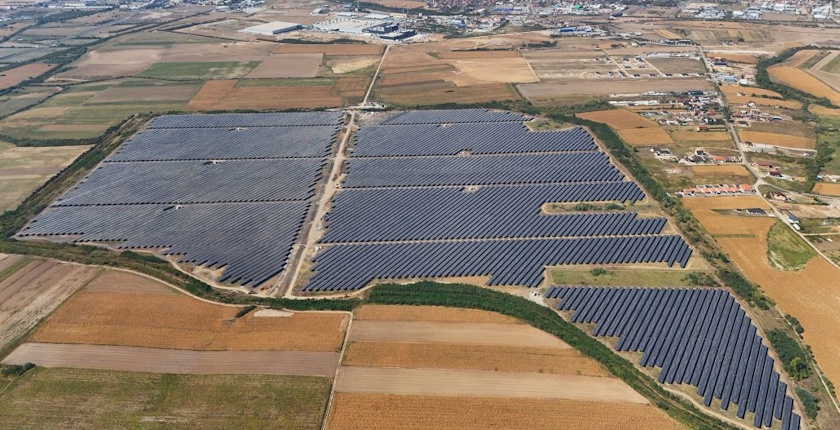
The Trebinje 3 solar power plant, with a capacity of 53 MW, will be built first. The company has received a concession from the Government of the Republic of Srpska. The tender for construction will be launched soon, Petrović stressed.

Preparations for the Hrgud wind farm are also in the final stages, he added. Multi-year wind potential assessments and environmental studies have been completed. Petrović anticipates the start of construction this year. The planned capacity is 60 MW.

Wind energy attracts the most attention in the Republic of Srpska

The installation of the two power plants is expected to be finished by the end of 2027 or in early 2028, he asserted. The CEO added they would significantly contribute to the development of renewable energy sources.

He noted that wind energy attracts the most attention in the entity. The concessions commission of the Republic of Srpska has also awarded approvals for the construction of more than 1,200 MW of photovoltaic plants, Petrović recalled.

In his view, investments by private firms are dormant because solar power production is no longer profitable without battery energy storage systems (BESS).

Petrović: Many solar projects will not be completed

Solar energy prices are significantly lower than they were four to five years ago, Petrović added.

Many of these solar projects will not be finished, he underscored.

Of note, ERS decided late last year to revive the Hrgud wind project, which was halted after a decision by the German government.

The concession for the Trebinje 3 solar power project was awarded in April 2025.

by in News

Petrović: ERS to launch construction of Trebinje 3, Hrgud this year

Power utility Elektroprivreda Republike Srpske plans to start the installation of the Trebinje 3 solar power plant and the Hrgud wind farm this year, according to CEO Luka Petrović.

Elektroprivreda Republike Srpske (ERS) already has projects in a ready-to-build phase through its subsidiary companies, Luka Petrović explained, Srpskainfo reported.

ERS is the dominant power producer and supplier in the Republic of Srpska, one of the two entities constituting Bosnia and Herzegovina.

The Trebinje 3 solar power plant, with a capacity of 53 MW, will be built first. The company has received a concession from the Government of the Republic of Srpska. The tender for construction will be launched soon, Petrović stressed.

Preparations for the Hrgud wind farm are also in the final stages, he added. Multi-year wind potential assessments and environmental studies have been completed. Petrović anticipates the start of construction this year. The planned capacity is 60 MW.

Wind energy attracts the most attention in the Republic of Srpska

The installation of the two power plants is expected to be finished by the end of 2027 or in early 2028, he asserted. The CEO added they would significantly contribute to the development of renewable energy sources.

He noted that wind energy attracts the most attention in the entity. The concessions commission of the Republic of Srpska has also awarded approvals for the construction of more than 1,200 MW of photovoltaic plants, Petrović recalled.

In his view, investments by private firms are dormant because solar power production is no longer profitable without battery energy storage systems (BESS).

Petrović: Many solar projects will not be completed

Solar energy prices are significantly lower than they were four to five years ago, Petrović added.

Many of these solar projects will not be finished, he underscored.

Of note, ERS decided late last year to revive the Hrgud wind project, which was halted after a decision by the German government.

The concession for the Trebinje 3 solar power project was awarded in April 2025.
by in News

Fortis kicks off construction of solar power plant in Albania

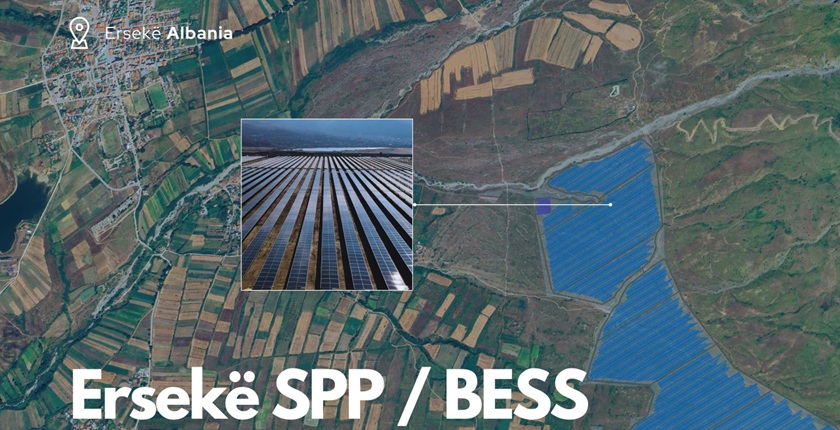
Fortis Energy has started the construction of solar power plant Ersekë with a capacity of 75 MW.

The Ersekë Solar Power Plant project in Albania has transitioned to the construction phase, featuring a total peak capacity of 75 MW, and it will be integrated with a 25 MWh battery energy storage system (BESS), Turkey-based Fortis Energy said.

Following the formal approval, the company moved to the execution stage in the village of Taç-Lartë, in the municipality of Kolonja in the country’s southeast.

Of note, in June Fortis Energy received approval from the Albanian government for the construction of a photovoltaic plant. The company is allowed to operate the facility for 49 years from the entry of the decision into force.

The PV project is set to generate 135 GWh per year

Now the company recalled that the PV facility is set to generate 135 GWh per year of clean energy. It would mark a major milestone in Albania’s green energy transition by combining solar generation with advanced storage capabilities, it added.

Fortis, which was a bronze sponsor this year at Belgrade Energy Forum 2025 (BEF 2025), organized by Balkan Green Energy News, has also invited qualified suppliers and contractors to submit their inquiries for upcoming construction and procurement packages.

“We are looking for partners who share our commitment to health, safety & environment (HSE) excellence, technical precision, timely delivery,” the company stressed.

Fortis Energy is working on renewable energy projects totaling 2 GW

The facility must be built within 36 months from the entry of the decision into force, according to the government’s approval.

The 36 months for construction, ancillary works and commissioning are included in the said 49 years of the operation of the facility.

Of note, Fortis Energy is working on renewable energy projects of 2 GW altogether in Southeast Europe. One half of the planned capacity is for solar and wind power plants in Serbia.

Three months ago the company obtained a construction permit for a solar park of 270 MW on the territory of the city of Sremska Mitrovica in Serbia. The project includes a BESS of 36 MWh.

by in News

Fortis kicks off construction of solar power plant in Albania

Fortis Energy has started the construction of solar power plant Ersekë with a capacity of 75 MW.

The Ersekë Solar Power Plant project in Albania has transitioned to the construction phase, featuring a total peak capacity of 75 MW, and it will be integrated with a 25 MWh battery energy storage system (BESS), Turkey-based Fortis Energy said.

Following the formal approval, the company moved to the execution stage in the village of Taç-Lartë, in the municipality of Kolonja in the country’s southeast.

Of note, in June Fortis Energy received approval from the Albanian government for the construction of a photovoltaic plant. The company is allowed to operate the facility for 49 years from the entry of the decision into force.

The PV project is set to generate 135 GWh per year

Now the company recalled that the PV facility is set to generate 135 GWh per year of clean energy. It would mark a major milestone in Albania’s green energy transition by combining solar generation with advanced storage capabilities, it added.

Fortis, which was a bronze sponsor this year at Belgrade Energy Forum 2025 (BEF 2025), organized by Balkan Green Energy News, has also invited qualified suppliers and contractors to submit their inquiries for upcoming construction and procurement packages.

“We are looking for partners who share our commitment to health, safety & environment (HSE) excellence, technical precision, timely delivery,” the company stressed.

Fortis Energy is working on renewable energy projects totaling 2 GW

The facility must be built within 36 months from the entry of the decision into force, according to the government’s approval.

The 36 months for construction, ancillary works and commissioning are included in the said 49 years of the operation of the facility.

Of note, Fortis Energy is working on renewable energy projects of 2 GW altogether in Southeast Europe. One half of the planned capacity is for solar and wind power plants in Serbia.

Three months ago the company obtained a construction permit for a solar park of 270 MW on the territory of the city of Sremska Mitrovica in Serbia. The project includes a BESS of 36 MWh.

by in News

North Macedonia’s ESM secures loans for investments in solar, hydro

North Macedonia’s power utility Elektrani na Severna Makedonija has secured EUR 97 million for the installation of the Bitola 3 solar power plant and revitalization of hydropower plants.

Elektrani na Severna Makedonija (ESM) said today it signed the contracts for a state guarantee and loans totaling EUR 97 million for two major energy projects.

This is an important step in strengthening North Macedonia’s energy transition, ESM added.

The company received EUR 87 million for the construction of the largest photovoltaic plant, Bitola 3. KfW allocated EUR 50 million, and the European Bank for Reconstruction and Development approved EUR 37 million.

The Hydropower Plants Revitalization Project is estimated at EUR 47.3 million

Another EUR 10 million from KfW will support the revitalization of ESM’s hydropower plants (HPPs), ESM explained.

According to the utility, the Hydropower Plants Revitalization Project, estimated at EUR 47.3 million and supported by a EUR 10 million EU grant, will increase annual hydropower generation by 50 GWh.

The agreements were signed by Minister of Finance Gordana Dimitrieska-Kochoska, EBRD representative Fatih Türkmenoğlu, KfW’s director for Kosovo* and North Macedonia Moritz Remé, and ESM CEO Lazo Uzunchev.

The ceremony was attended by Prime Minister Hristijan Mickoski and Minister of Energy, Mining and Mineral Resources Sanja Božinovska.

Uzunčev: We will increase domestic renewable capacity by over 200 MW

“With these capital investments, together with ESM, we are strengthening domestic energy production, ensuring stable electricity supply, and fostering sustainable economic development,” Gordana Dimitrieska-Kochoska underscored.

According to ESM CEO Lazo Uzunčev, the company’s strategic goals are being implemented with strong momentum.

“With ongoing solar and wind projects, including Bitola 3, we will increase domestic renewable capacity by over 200 MW in the next two to three years, while reducing CO₂ emissions by more than 260,000 tons annually,” he stressed.

Petra Drexler, Ambassador of Germany to North Macedonia, recalled that over the last years, Germany and the EU have continuously supported North Macedonia on its path toward a sustainable and resilient energy future.

* This designation is without prejudice to positions onstatus and is in line with UNSCR 1244/99 and the ICJ Opinion on the Kosovo declaration of independence.
by in News

Slovenia draws up first climate vulnerability, risks assessment for energy sector

In cooperation with the Jožef Stefan Institute, the Ministry of the Environment, Climate and Energy has issued the first national assessment of climate vulnerability and risks for the energy sector. The analysis shows that the sector is moderately vulnerable under current climate conditions.

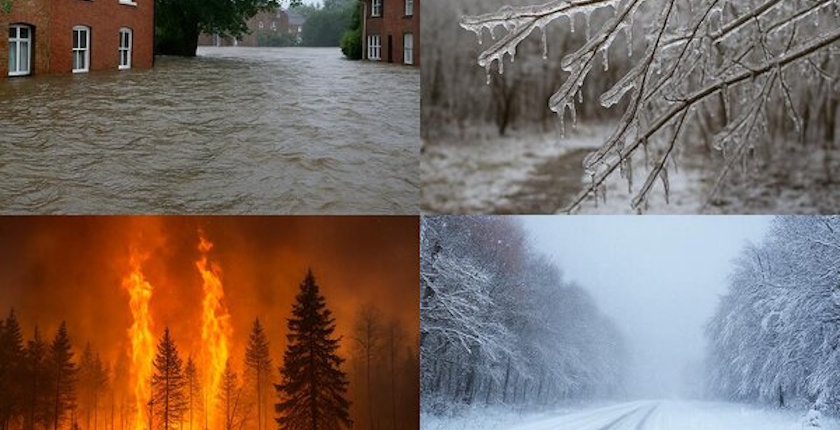
The main threats to the energy sector in Slovenia are floods, fires, storms, landslides, sleet and wet snow, heatwaves, and drought.

The assessment of climate vulnerability and risks for the energy sector was produced in line with the IPCC AR5 methodology and the national guidelines of the Faculty of Biotechnology.

The greatest threat to the energy sector are floods, which jeopardize fuel storage, substations, electricity distribution networks, and other elements of the supply chain, the ministry underscored.

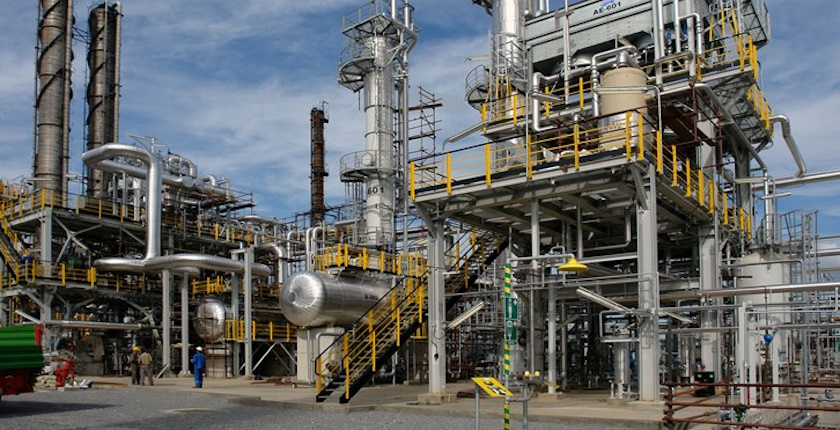
The most important subsystem is liquid fuels

By using weighting and considering the current energy mix and the state of infrastructure, the most important subsystems for the functioning of the overall system are liquid fuels (34%) and electricity (33%), followed by natural gas (18%), solid fuels (10%), and heat (5%), the assessment reads.

This reflects a high dependence on imported liquid fuels and the key role of electricity in all consumption sectors, the ministry explained.
The overall weighted vulnerability score for the energy sector is 2.3 on a scale of one to five, with the electricity subsystem having the highest vulnerability, 2.6.

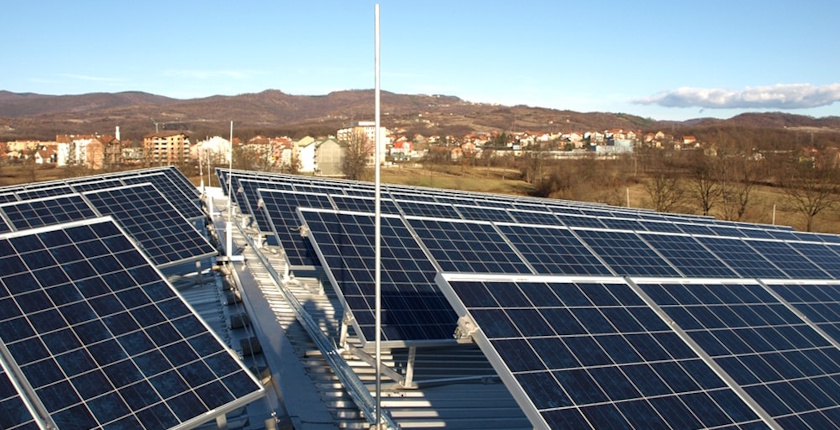
Electricity distribution grids, solar power plants, and fuel transport and logistic routes also show high vulnerability, according to the assessment.

Subsector ratings:

  • electricity subsector (2.6)
  • liquid fuel supply (2.2)
  • solid fuel supply (2.2)
  • natural gas supply (around 2.0)
  • heat supply (1.9)

Regarding individual elements of the sector, the most vulnerable are the electricity distribution network (3.5), electricity transmission system and imports (3), preparation of firewood, wood chips and pellets, and photovoltaic plants (3); vehicles/tanks for liquid fuels and vehicles/trucks for solid fuels, fuel stations, and other renewable energy sources (2.5).

The identified risks are expected to intensify in the future

The assessment reveals that Slovenia’s energy sector comprises critical elements whose failure could lead to significant supply disruptions.

It provides a technical basis and starting point for preparing a climate change adaptation strategy and for drafting measures such as strengthening infrastructure resilience, reviewing planning for new facilities, and incorporating climate risks into strategic documents and investment plans, according to the ministry.

Climate change scenarios indicate that the already identified risks will intensify in the future – especially floods, storms, and heatwaves.

The ministry said it would be necessary to implement adaptation measures to ensure a reliable energy supply.

by in News

Siemens Energy, Končar to install electrolyzer, solar power plant for INA

Siemens Energy and Končar will install an electrolyzer and a solar power plant for Croatian oil and gas company INA.

INA said it has signed two important contracts for the implementation of the green hydrogen production project at its Rijeka refinery.

By signing contracts with reputable companies, with a total value of EU 33 million, INA has secured the preconditions for the implementation of the first commercial green hydrogen production plant in Croatia, according to the update.

A contract with Siemens Energy and Končar was signed for the construction of a 10 MW green hydrogen production and distribution plant. The order is estimated at EUR 22.5 million excluding VAT.

INA has already secured the delivery of the electrolyzer

The second contract, worth nearly EUR 11 million excluding VAT, was signed with Končar. It envisages the construction of a 11 MW photovoltaic plant. The facility would supply electricity to the electrolyzer.

As part of the project, INA has already secured the electrolyzer, a key system for water electrolysis and hydrogen production from renewable sources. Its majority owner, Hungarian MOL, inaugurated its first 10 MW electrolyzer in April last year.

Green hydrogen is intended for use in transportation

The green hydrogen that would be produced is intended for the market, primarily for transportation purposes, and it could also be used in the refinery’s production process. The company recalled that, by a decision of the Ministry of Economy, it received a EUR 15 million grant from the National Recovery and Resilience Plan.

The program is for the production and distribution of hydrogen in transportation.

The hydrogen market in Croatia is in an early development phase. INA’s plant could produce about 1,500 tons of green hydrogen annually.

Of note, Croatia adopted a hydrogen strategy in 2022. The government subsidizes the installation of chargers for hydrogen fueled vehicles.

Ortutay: Hydrogen could open new market opportunities for INA

INA CEO Zsuzsanna Ortutay said European and national strategies consider renewable hydrogen a technology of the future.

The renewable hydrogen that INA will produce can open new opportunities for the company in the market, but also improve the sustainability of Rijeka refinery through emission reductions, Ortutay stressed.

According to Končar CEO Gordan Kolak, green hydrogen isn’t only a technology of the future but a key element for decarbonizing industry and transport.

As the main contractor for the construction of this plant, Končar confirmed its role as a reliable partner developing key expertise for the European energy infrastructure in the decades to come, Kolak added.

by in News

Slovenian company Talum to install solar power plants on waste landfills

Aluminium producer Talum plans to install solar power plants of up to 60 MW overall. The project could boost utility-scale solar in Slovenia, where small PV facilities installed by firms and households account for almost the entire operating capacity of 1.5 GW.

Currently the largest solar power plant in Slovenia has a capacity of 7.1 MW. Located near the village of Krvavi Potok, it started operating in July.

Notably, the expansion of the Prapretno photovoltaic plant is underway – from 6 MW to 9.8 MW. The largest project is for the Družmirje floating solar plant, for 140 MW.

Talum told state news agency STA it is developing a project to install large solar power plants on the area of its two closed waste landfills in Kidričevo that have valid environmental permits, public broadcaster RTV SLO reported. The endeavor is in accordance with the Law on the Introduction of Devices for the Production of Electricity from Renewable Energy Sources as well as with sustainable policies, it added.

Talum is awaiting response from the Ministry of Natural Resources and Spatial Planning

The company’s project design envisages the installation of solar power plants with a total capacity of up to 60 MW at the landfills.

The company initiated a project approval procedure in July at the Ministry of Natural Resources and Spatial Planning, including additional studies. It said it would proceed with preparing the necessary documentation and other activities for the construction, after receiving a response.

It isn’t the first solar project for Talum. In 2023, it installed solar panels of 3.78 MW altogether on five buildings. Additionally, the company hosts two battery energy storage systems (BESS) on its land. NGEN commissioned a 15 MW / 30 MWh unit in 2020, and GEN-I inaugurated a 12 MW / 24 MWh facility a month ago. NGEN has also announced it would install a 70 MW BESS on the site.

Red sludge danger

Local NGO Gibanje za Kidričevo has objected to the project in a letter to Prime Minister Robert Golob and the European Commission.

Solar power plants shouldn’t be built on such sites, according to the group.

It recalled that in 2014, the European Commission classified red mud as hazardous mining waste, following an accident in Hungary four years earlier.

Talum responded that the red mud landfill has a valid environmental permit as a non-hazardous waste landfill.

The project design for the solar power plants envisages the implementation of additional measures on the closed landfills aimed at improving the state of the environment, the company explained.

Of note, Talum used to produce aluminum, but after closing its electrolysis facility, it switched to recycled aluminum products.

by in News

Econergy secures financing for 87 MW Oradea solar plant in Romania

Econergy Renewable Energy has signed a EUR 40.5 million project finance agreement with UniCredit Bank for its 87 MW Oradea solar power plant in the Crișana region in north-west Romania.

The Oradea photovoltaic facility has been fully connected to the grid since August 2025, and is generating revenues, according to Israel-based Econergy.

The proceeds will be used for various purposes including refinancing of the loans spent to construct the power plant, the company explained.

Within a strategy to hybridize its Romanian solar portfolio, Econergy plans to add a 68 MW BESS component at the Oradea site.

It is the second project finance agreement secured with UniCredit

The expected investment in energy storage is about EUR 21 million, with an estimated annual contribution of EUR 8.4 million in revenues and EUR 6.7 million in EBITDA, based on the first five full operating years, the update reads.

The company said it is its second project finance agreement secured with UniCredit.

Econergy Group is operating in key European markets, including Germany, the UK, Italy, Spain, Romania, Poland, and Greece. It develops photovoltaic, wind, and energy storage projects.

The current project pipeline exceeds 14 GW, according to the company’s website.

Econergy is the owner of the largest PV facility in Romania

The company generates revenue by selling electricity, earning development and operation fees, and selling projects at various stages of development.

Of note, Econergy is the owner of the largest PV facility in Romania. In October it agreed to buy out Nofar’s 50% stake in the 155 MW Rătești solar power plant. The firm plans to add a 120 MW BESS.

Econergy has four PV plants in Romania. With the inauguration of Oradea, the company’s operational and ready-to-connect capacity in the country has reached 447 MW. It is building another 788 MW and expects to start the construction of 559 MW more by the end of 2025.

The project was developed with Phoenix Holdings.

by in News

City of Pirot in Serbia plans solar power plant on remediated unsanitary landfill

The City of Pirot plans to build a solar power plant on the site of a former unsanitary landfill when it is remediated. The move would strengthen its leadership position in Serbia regarding the use of renewable energy and environmental protection.

In 2013, Pirot opened a regional sanitary landfill, which cost EUR 11 million. It enabled the local authority to shut down an unsanitary landfill on the right bank of the Nišava river. However, the land still hasn’t been remediated and reclaimed.

Now the Ministry of Environmental Protection of Serbia has approved EUR 2 million for the works, Serbia’s public broadcaster RTS reported. With the completion of remediation, the possibility opens up for the six hectares of land in the country’s southeast to be repurposed.

Solar panels would be installed on three hectares

Mayor of Pirot Vladan Vasić said that the documentation for the remediation of the landfill is complete. The city intends to add EUR 500,000 to the EUR 2 million received from the government and complete the first phase. He plans for the second phase to be approved next year, to solve the decades-long issue in an environmentally acceptable way.

Vasić revealed one and a half to two hectares would be allocated for businesses, adding that the purpose of the remaining land is still under consideration.

A photovoltaic plant would be the most cost-effective solution

One idea is to install a 3 MW solar power plant that would supply electricity to the city authority, he pointed out.

Other ideas are a football stadium, a golf course, afforestation, and a park. The photovoltaic plant would be the most cost-effective solution, Vasić added.

Of note, there is a solar power plant on the roof of the building of public waste utility Regional Landfill Pirot. The 150 kW facility began operating in August last year. The city officials claim it is the largest PV plant in Pirot county.

The first cooperative solar power plants in Serbia are located on the Stara Planina mountain

Pirot is also developing a regional waste management center. In 2022, the city signed a contract for the construction of the second landfill body, a composting plant, and a biogas facility.

The additional segment would extend the operation of the sanitary landfill by 20 years, while the biogas collection system would enable the collection of methane from the landfill.

A system for treating construction waste to enable material recycling is planned as well.

As for solar energy, not far from the city, the Stara Planina mountain is the home of the first cooperative solar power plants in Serbia. The local authority participated in the project. They were put into operation last year.

In mid-2023, PV projects were under development for over 125 MW in total capacity on the city’s territory. Of note, this year Pirot became the 13th local authority to join the Clean Air Regions Initiative, initiated by the Energy Community Secretariat.

  • 1
  • 2