by in News

Albania Ranks Highest in Europe for Fuel Costs Relative to Purchasing Power, Doubling Regional Averages

Albania currently has the most expensive automotive fuel in Europe when adjusted for purchasing power and citizen income, imposing a disproportionate economic burden on consumers and businesses alike.

An analysis conducted utilizing 2026 per capita income data from the International Monetary Fund’s (IMF) Global Economic Outlook and current spot prices from Global Petrol Price, reveals a stark disparity between Albanian fuel costs and domestic earning power.

According to the IMF, Albania’s average per capita income for 2026 is projected at $12,000 annually, equating to roughly $33 per day. With domestic retail diesel prices currently hovering around 200 Albanian Lek (ALL) per liter approximately $2.40 at the current exchange rate an average Albanian citizen must allocate a staggering 7.2% of their daily income to purchase a single liter of diesel.

A Stark Regional and European Divide

Data indicates that this 7.2% threshold is the highest financial burden for fuel among all analyzed European nations. When compared to neighboring Balkan states, the economic strain on Albanian consumers is at least twice as high.

For context, purchasing one liter of fuel requires:

  • 3.7% of daily income in Serbia

  • 3.6% in Montenegro

  • 2.8% in Romania

  • 2.5% in Greece (which, despite having one of Europe’s most expensive nominal fuel markets, presents a much lower relative burden due to higher median incomes).

In absolute nominal terms, regional neighbors boast fuel prices averaging 15% to 30% lower than Albania, particularly in Kosovo and North Macedonia.

The contrast is even more pronounced when benchmarked against advanced European economies. In nations like Italy, France, Germany, and Belgium, a liter of fuel typically consumes less than 2% of daily income. Notably, the Netherlands which holds the highest absolute nominal fuel price in Europe requires its citizens to spend only 1.1% of their daily income per liter. This means the relative burden on a Dutch consumer is nearly seven times lower than that of an Albanian.

Even stripping away purchasing power parity, Albania ranks fifth outright in Europe for the highest nominal fuel prices, trailing only the Netherlands, Denmark, Norway, and Switzerland countries where fuel is marginally more expensive by just 10 to 30 cents per liter.

Heavy Taxation and “Rocket and Feather” Pricing Dynamics

Because fuel is a foundational component of transport and logistics, this skewed cost-to-income ratio actively drives up broader commodity prices and exacerbates household expenses. Industry analysts point to two primary domestic drivers for this inflated market: aggressive taxation and asymmetrical price transmission by market operators.

1. The Tax Burden: State levies account for an estimated 60% of the final retail price at the pump. The taxation structure per liter includes:

  • Excise Tax: 37–38 ALL

  • Circulation (Turnover) Tax: 27 ALL

  • Carbon Tax: 3 ALL

  • Value Added Tax (VAT): 20% applied to the final cumulative price.

2. Asymmetrical Market Responses: The Albanian downstream market consistently exhibits the “rocket and feather” effect. Retail prices react rapidly to upward shocks in global crude and refined product benchmarks, yet reductions are passed on to consumers at a noticeably sluggish pace during global downturns.

During periods of falling international prices in 2019 and 2024, fuel importers and distributors capitalized on the lag in price reflection, expanding their profit margins by 0.5 to 1 percentage point. Market operators routinely exploit the delayed localized response to global price drops, structurally padding profit margins at the expense of end-users.
by in News

Albania Moves Toward Oil Security Reserves Amid Global Energy Volatility

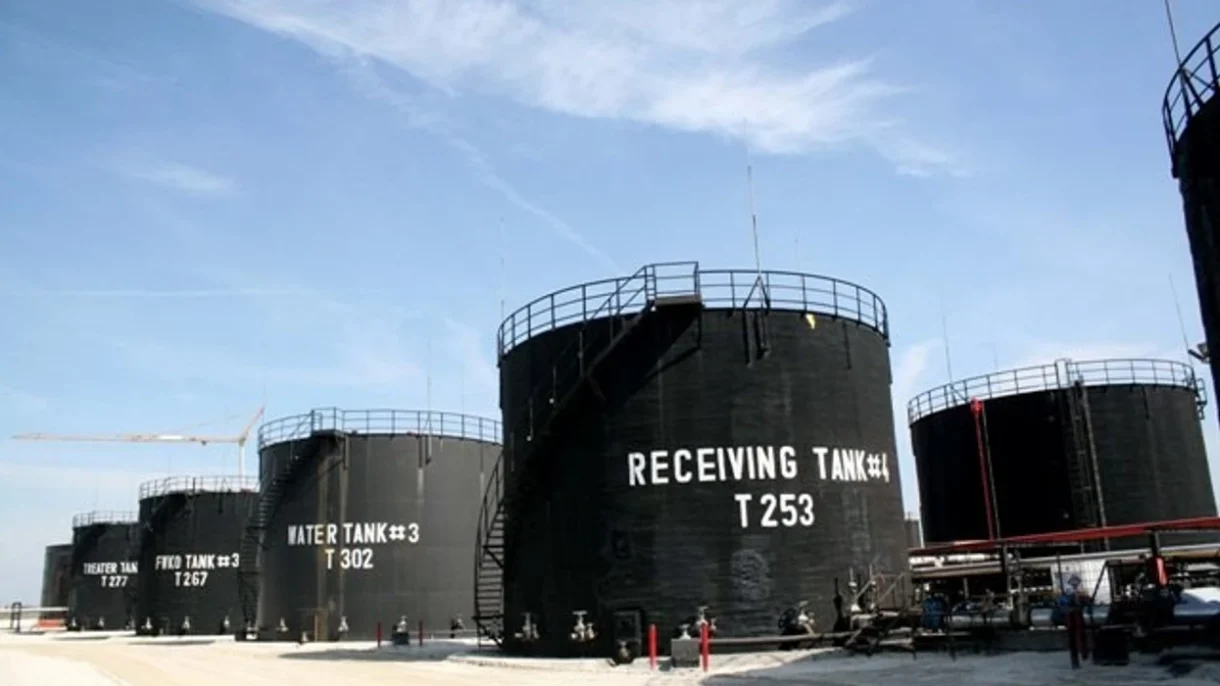
The Albanian government has been working for several years to pass legislation governing the creation, maintenance, and management of minimum security reserves for crude oil and its refined products.

According to international standards, these emergency stocks are calculated at either 90 days of net imports or 61 days of average daily consumption, whichever is higher. These reserves are designed to be deployed during extraordinary circumstances, such as physical supply shortages or geopolitical crises.

The initial draft, proposed in February 2019, introduced a co-management formula between the state and the private sector—a departure from the current model where reserves are held entirely by private companies and refineries. Under the proposed framework, a public entity would manage 60 days of average consumption, while the remaining 30 days would remain the responsibility of private operators.

The legislative proposal envisioned the creation of a dedicated public body named the State Agency for Oil Security Reserves, operating under the jurisdiction of the Ministry of Infrastructure and Energy (MIE).

The Cost of Energy Security

The draft law stipulated that the agency would be self-financed through a dedicated fee levied on every liter of fuel purchased by refineries and wholesale companies. This mechanism would essentially introduce a new fiscal obligation, which is expected to translate into higher pump prices for final consumers.

While the project has undergone various internal government discussions since 2019, it was only in October 2025 that it was formally released for public consultation. The current draft maintains the previous structure: a non-profit public entity, now dubbed the Security Reserve Authority, under the MIE.

Key administrative details include:

  • Article 10: Fees for obligated parties will be collected by the Customs Authority during the collection of excise duties.

  • Article 11: Payers are required to submit payment data within 30 days of the end of each calendar month.

Despite the fact that the project has yet to be finalized, market operators anticipate additional costs totaling hundreds of millions of euros. These costs cover the procurement, storage, and logistics of the security stocks—burdens that are expected to increase operational costs for companies and, ultimately, prices for the consumer.

Global Context: Iran Conflict Risks New Energy Crisis

As Albania formalizes its domestic security measures, the escalation of conflict in the Middle East—specifically involving Iran—is sending shockwaves through global energy and financial markets. International economic analysts warn that a prolonged conflict could trigger severe supply disruptions, oil price spikes, and renewed inflationary pressures worldwide.

A primary concern is the potential for conflict to damage regional energy infrastructure or obstruct oil transit through the Strait of Hormuz, one of the world’s most critical energy corridors.

Market Analysis

In a recent analysis titled “War with Iran is a Nightmare for Oil and Gas Markets,” Bloomberg noted that a broad regional conflict has long been considered the “worst-case scenario” for the energy sector. The report emphasizes that the Persian Gulf remains a cornerstone of global energy supply, and any disruption there triggers an immediate market reaction.

Similarly, The Economist has warned of a significant shock to global markets. In an article titled “War in Iran Could Trigger the Biggest Oil-Market Shock in Years,” the publication highlights the extreme sensitivity of energy markets to regional tensions. Any disruption to tanker traffic could drastically reduce global supply and drive energy prices to record highs.

Financial and Economic Ripple Effects

The geopolitical tension has already impacted financial markets:

  • Safe-Haven Assets: Investors are pivoting toward gold and bonds.

  • Volatility: Stock markets are experiencing fluctuations as geopolitical risk premiums rise.

  • Inflation: Analysts warn that high oil prices ripple through the economy by increasing costs for transport, manufacturing, and food production.

Experts conclude that countries dependent on energy imports are the most vulnerable. European and Asian economies, in particular, face the prospect of surging production costs and new inflationary cycles if energy prices remain elevated.