by in News

WindEurope: EU must boost investment in ports, ships to meet offshore wind targets

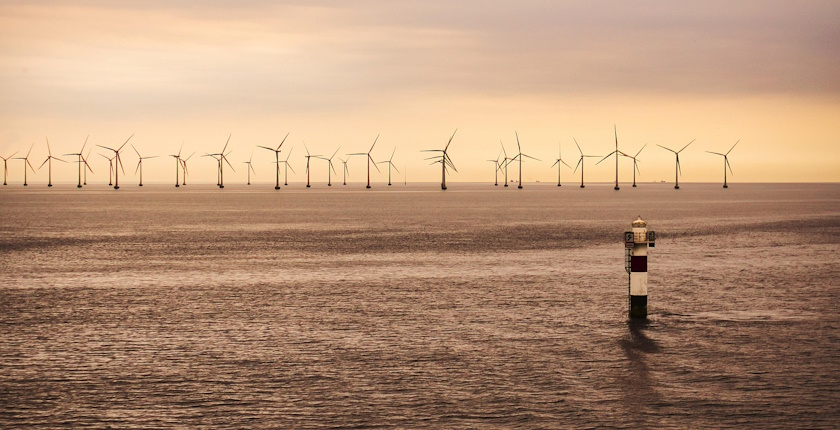
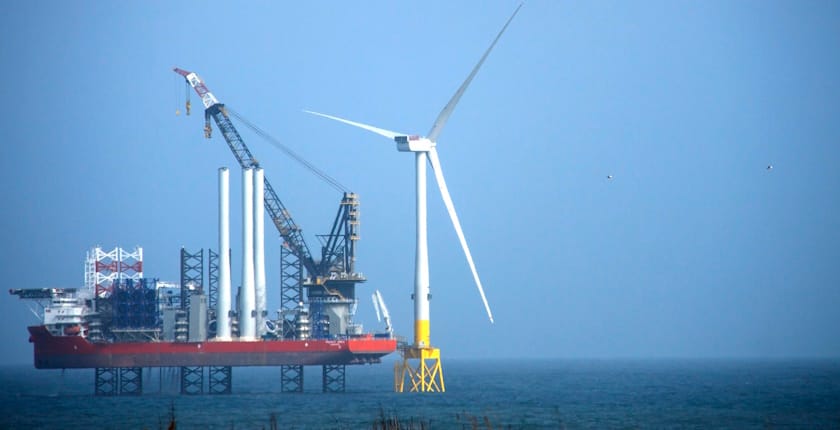
Europe needs to increase investment in ports and shipbuilding, which play a crucial role in offshore wind development, to achieve its goals in this energy segment, according to wind industry association WindEurope. The European Commission’s upcoming strategies for ports and the maritime industry are expected to create conditions for the necessary investment.

The European Union aims to increase its offshore wind capacity from 36.6 GW to 84 GW by 2030, but one of the most pressing challenges it faces is the lack of timely investment in vessel manufacturing and port infrastructure, WindEurope warns.

To meet its 2030 energy security targets, the EU must install at least 10 GW of offshore wind each year. After 2030, this figure will have to increase to 15 GW a year, says WindEurope, noting that robust and resilient port infrastructure and supply chain are key for the achievement of the offshore goals.

After 2030, the EU will have to install 15 GW of offshore wind a year

Over the past three years, over EUR 6.7 billion has been invested in port infrastructure and new vessels across the EU, but a further EUR 6.4 billion is required, the association explains, noting that the European Commission is now working on its EU Ports Strategy.

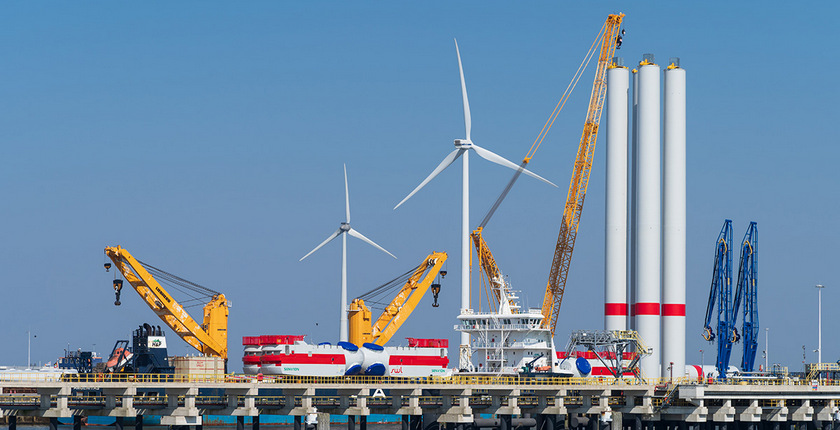
All offshore wind equipment is transported through ports, and they often serve as bases for the operation and maintenance of offshore wind farms. Ports also host local wind energy supply chains and offer space to store and, in the case of floating turbines, assemble large components, the association notes.

Investment in port infrastructure over the past three years has amounted to EUR 4.4 billion, which can ensure that the EU meets its offshore wind targets, but an additional EUR 2.4 billion is needed to put the bloc on track to achieve post-2030 offshore deployment goals, according to WindEurope.

To make this happen, the EU’s strategy must seek to mobilize additional funding, streamline permitting, and establish planning at the EU level, the association recommends.

A further EUR 4 billion in investment is needed for new ships to handle next-generation wind turbines

When it comes to vessels, they should be a key area of focus in the EU Industrial Maritime Strategy, which aims to enhance the competitiveness, sustainability, and resilience of Europe’s maritime manufacturing sector, WindEurope says.

In the past three years, the EU has invested at least EUR 2.3 billion in new vessels, but it will have to spend a further EUR 4 billion to keep pace with wind turbine technology innovation and handle the upcoming generation of turbines with capacities exceeding 15 MW, it explains.

The strategy should also enable the decarbonization of maritime operations by supporting the shift to clean fuels, such as electricity, ammonia, and hydrogen, and by providing funding for retrofitting vessels and building new zero-emission ships, according to WindEurope.
by in News

IRENA: 91% of new renewables units are more cost-effective than fossil fuel alternatives

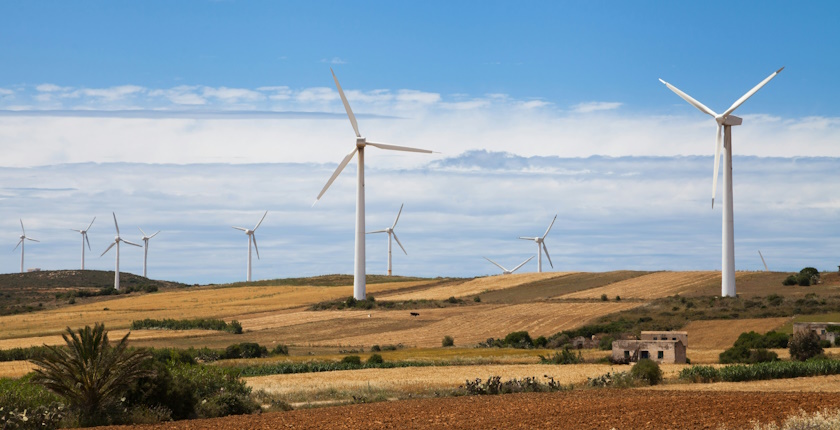
The fossil fuel age is crumbling, according to UN Secretary-General António Guterres. Renewables maintained their cost leadership in global power markets, the International Renewable Energy Agency said in an annual report. In 2024, onshore wind farms were the cheapest of all versus the lowest-cost fossil fuel alternatives, by 53% on average, while photovoltaic systems were 41% cheaper.

Onshore wind power was also the cheapest in levelized cost of electricity (LCOE) terms, followed by solar power. At the same time, 91% of newly commissioned utility-scale capacity was delivering power at a cost lower than for the cheapest electricity from new fossil fuel–fired units.

The Renewable Power Generation Costs in 2024 report confirmed the price advantage of renewables over fossil fuels, with cost declines driven by technological innovation, competitive supply chains and economies of scale, the International Renewable Energy Agency said. IRENA expects cost reductions to continue, but highlighted the short-term challenges.

Geopolitical shifts including trade tariffs, raw material bottlenecks, and evolving manufacturing dynamics, particularly in China, could temporarily raise costs.

Asia, Africa and South America, with stronger learning rates and high renewable potential, could see pronounced cost declines.

Higher costs are likely to persist in Europe and North America, driven by structural challenges such as permitting delays, limited grid capacity, and higher balance-of-system expenses, according to the update. In contrast, regions like Asia, Africa and South America, with stronger learning rates and high renewable potential, could see pronounced cost declines.

The organization pointed to the need for stable and predictable revenue frameworks to lower investment risk and attract capital.

“Clean energy is smart economics – and the world is following the money,” United Nations Secretary-General António Guterres stressed. In his view, the fossil fuel age is crumbling.

Capital costs inflating LCOE in developing countries

Mitigating financing risk is central to scaling renewables in both mature and emerging markets. Instruments such as power purchase agreements (PPAs) play a pivotal role in accessing affordable finance, while inconsistent policy environments and opaque procurement processes undermine investor confidence, IRENA added.

In many developing countries of the Global South, high capital costs, influenced by macroeconomic conditions and perceived investment risks, significantly inflate the levelized cost of electricity (LCOE) of renewables.

Onshore wind power production cheapest by far of all kinds of electricity

In 2024, onshore wind farms were the cheapest of all versus the lowest-cost fossil fuel alternatives, by 53% on average, while photovoltaic facilities were 41% cheaper. Of note, the cost of battery energy storage systems (BESS) declined by 93% from 2010 to 2024, to USD 192 per kWh.

Onshore wind remained the most affordable source of new renewable electricity, with a global weighted average LCOE at USD 0.034 per kWh (USD 34 per MWh), followed by new solar, at USD 0.043 per kWh, and new hydropower plants, USD 0.057 per kWh.

Again per the levelized cost of electricity, 91% of newly commissioned utility-scale renewables capacity was delivering power at a lower cost than the most affordable new fossil fuel–based units.

That said, LCOE increased slightly for solar power, by 0.6%. Onshore wind power was 3% more expensive than in 2023, compared to 4% for offshore wind and 13% for the bioenergy segment. Meanwhile, costs declined for concentrated solar power (CSP), by 46%, followed by electricity from geothermal units, 16%, and hydropower, which slipped 2%.

Solar and wind energy prices have begun to stabilize, which is a natural sign of market maturity, the authors underscored.

Photo: Renewable energy LCOE 2010-2024, in United States dollars per kilowatt-hour (IRENA)

Clear path to affordable, secure, sustainable energy

The addition of 582 GW of renewables capacity in 2024 led to significant cost savings, avoiding fossil fuel use valued at about USD 57 billion, new data shows. Looking at all renewables in operation, the avoided fossil fuel costs in 2024 reached up to USD 467 billion, IRENA’s Director-General Francesco La Camera stated.

New renewable power outcompetes fossil fuels on cost, offering a clear path to affordable, secure and sustainable energy, he pointed out.

by in News

ENTSO-E proposes delaying CBAM on electricity by one year

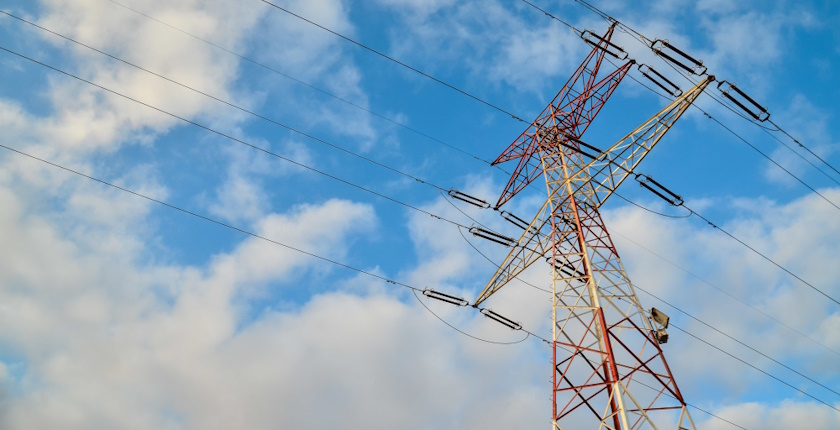
The European Network of Transmission System Operators for Electricity suggested to the European Commission to prolong the transitional period of the Carbon Border Adjustment Mechanism (CBAM) for electricity by one year, to January 1, 2027. It recommended an additional impact assessment, an analysis of possible exemptions for third countries as well as to exempt transmission system operators (TSOs).

In its new position paper, ENTSO-E supported the general principles of CBAM, but it warned against creating disproportionate administrative burdens and costs for TSOs. The pan-European body recommended exempting TSO activities from the CBAM scope, arguing there is a minimal risk of carbon leakage and pointing to their role in keeping the lights on and ensuring the security of the power system.

Moreover, ENTSO-E said an additional impact assessment is needed before the completion of the transitional period for electricity overall. The European Commission should also review in depth the list of third countries eligible for exemption, pending their adjustment to the European Union’s Emissions Trading System (EU ETS), it added.

The current criteria to calculate the actual emissions embedded in electricity production are impossible for importers to implement

“ENTSO-E encourages policy makers to use the targeted revision of CBAM part of the Omnibus simplification package on sustainability to postpone the definitive period as of 1 January 2027. It should also be noted that in its current form, the application of the provisions under CBAM regulation would have a major impact on the Energy Community countries and the UK imports,” the update reads.

Carbon leakage occurs when companies based in the EU move carbon-intensive production to countries with less stringent climate policies, or when EU products get replaced by more carbon-intensive imports.

CBAM was devised to bring CO2 prices for imported cement, iron and steel, aluminum, fertilizers, hydrogen and electricity to the same level as in EU ETS. Under the current rules, the EU will start charging CBAM at the beginning of January next year and gradually increase the tariffs to reach 100% at the start of 2034.

No provisions regulating implicit electricity trading

ENTSO-E acknowledged the role of the carbon border tax in putting a fair price on carbon emissions from carbon-intensive goods entering the EU, and to promote cleaner industrial production globally. Nevertheless, there are still many questions even about the current reporting obligations, it pointed out.

“TSOs adjacent to EU external borders are the most exposed to the concerns raised in this paper. It concerns a significant number of ENTSO-E members, almost one third of the EU members of the association,” the paper adds. In specific cases, the measures may also lead to efficiency losses, reduce EU competitiveness and reduce incentives for building and connecting offshore wind, it underscored.

Obstacles to importing electricity from third countries could contradict the goal of efficiently importing cheap green electricity

CBAM only assumes that electricity is traded with third countries through explicit allocation, not taking into account implicit trading. Like implicit electricity trading within the internal electricity market, there is no nomination on the interconnectors, only anonymous trading between markets, ENTSO-E explained.

“These obstacles to importing electricity from third countries could contradict the goal of efficiently importing cheap green electricity into the EU if applied also to third countries with robust decarbonisation policies and renewable energy sources. The current criteria to calculate the actual emissions embedded in electricity production make it impossible for importers to implement, mainly due to impossibility to trace the origin of the electricity,” the TSO network stressed.

CBAM would tax historical instead of actual emissions

The current default CO2 levels are based upon the carbon intensity of the five-year average through 2020, even though third countries made tremendous efforts in decarbonising their energy mix in the meantime, according to ENTSO-E. It suggested allowing such countries to be exempted if they verify their progress through proper data platforms.

ENTSO-E invited the European Commission to envisage a revision aligned with the current delay in CBAM implementing acts, stressing that it is impossible for the market to digest them before the end of the year.

Energy Community contracting parties, including the Western Balkans, are eligible for exemption from CBAM on electricity until 2030. The condition for each one is to couple its electricity market with an EU neighbor.

by in News

Equinor resumes New York offshore wind project of 810 MW after stop-work order lifted

Norway’s Equinor is resuming construction on its Empire Wind project off the coast of New York after the federal authorities lifted a stop-work order issued in mid-April. The project’s first phase, the 810 MW Empire Wind 1, is expected to generate electricity equivalent to the needs of 500,000 homes in the US state.

The construction of Empire Wind 1, the first offshore wind project to feed directly into New York’s power grid, began on April 1. However, the United States Department of the Interior, through its Bureau of Ocean Energy Management (BOEM), ordered the work to stop on April 16, pending the completion of a review.

On May 20, Equinor said its subsidiary Empire Offshore Wind has been informed by BOEM that the stop-work order had been lifted, allowing construction activities to resume.

“We appreciate the fact that construction can now resume on Empire Wind, a project which underscores our commitment to deliver energy while supporting local economies and creating jobs,” stated Anders Opedal, President and CEO of Equinor.

Commercial operation is planned for 2027

In a press release, the company majority-owned by the Government of Norway, explained that Empire Offshore Wind aims to be able to execute planned activities in the offshore installation window in 2025 and reach its planned commercial operation date in 2027, adding that the project is currently more than 30% complete.

The project’s second phase is planned to have 1,260 MW in capacity.

Since the early 2000s, the company has invested about USD 60 billion in energy projects in the United States, mainly in oil and gas, and more recently in low-carbon solutions, critical minerals, and renewables, reads the press release.

by in News

Romania to commission offshore wind study, targeting 3 GW by 2035

The Ministry of Energy of Romania launched a public call for expressions of interest for a study identifying areas in the Black Sea for concession agreements for offshore wind farms. It encouraged consortia of international and domestic firms and research institutions to apply.

Romania is gradually developing the legal framework for the start of the first offshore wind power projects in domestic waters in the Black Sea. Qualified companies and research institutions can express interest in conducting the necessary Specialized Study for the Delimitation of Offshore Areas that Can Be Concessioned for the Exploration, Construction, and Operation of Offshore Wind Power Plants, the Ministry 0f Energy said.

The country adopted the relevant law last year, followed by a roadmap.

“The study we are preparing will form the basis of strategic decisions on the concession of offshore perimeters and will provide investors with a clear vision, scientifically substantiated and in line with international best practices,” Minister of Energy Sebastian Burduja said. Interested entities can submit their expressions of interest by email by June 10.

Study to determine areas with offshore wind power potential of at least 800 MW each

The ministry said consortia of international and domestic firms are encouraged to apply. The World Bank estimated Romania’s wind power potential in the Black Sea at 76 GW.

The Energy Strategy 2025-2035 with a perspective until 2050 targets the first 3 GW by 2035, the announcement notes. Burduja said a year ago that the first facility could come online already in 2032.

Areas or perimeters will have a potential capacity of at least 800 MW each, according to the call. The study needs to establish the technical and strategic basis for the development of offshore wind farms in Romania’s Black Sea Exclusive Economic Zone.

Best practices, standardized methodology required

The task involves wind potential analysis, geotechnical and seabed studies, biodiversity and marine environment assessment and the connectivity to the national energy system. In the study, the selected contractor must include commercial navigation routes, fishing areas, existing submarine cables and pipelines, oil and gas exploration and production areas, military or national security zones and other
maritime uses and restrictions that may interfere with offshore wind development.

The work should be based on best practices and standardized methodology, the ministry pointed out. It said the offshore wind study implies collection and analysis of available metocean, geological, ecological, infrastructure and other data, use of GIS systems to overlay information layers (wind, depths, habitats and constraints), and modelling and calculations of estimated energy production.

by in News

Wind farms turn Greece into net exporter of electricity

Wind energy played a crucial role in turning Greece into a net electricity exporter last year, for the first time since 2000.

The country used to import a significant part of its electricity in previous years. Back in 2019, net imports amounted to 10 TWh or 18% of total consumption, according to Minister of Environment and Energy Nikos Tsafos. The situation changed and Greece became a net exporter in 2024 with 307 GWh.

The economic benefits are important. The balance was a negative EUR 400 million in 2019, compared to EUR 122 million on the upside last year.

The change is also evident in wholesale electricity prices. Greece used to be 34% more expensive than Bulgaria six years ago. Now the price is about 2% lower.

Tsafos added that wind energy has been the secret behind the trend. Greece has different wind characteristics compared to the rest of Southeastern Europe. At times, wind farms produce large quantities while in neighboring markets their output is low.

Offshore wind to further increase exports

Indeed, Greece aims to utilize its advantage even further by developing offshore wind farms. The National Energy and Climate Plan (NECP) foresees the installation of 1.9 GW by 2030 and 6.2 GW by 2035.

So far, progress has been slow apart from a few pilot projects currently underway. Initial offshore development zones have been identified and the national plan has been updated. However, a presidential decree has yet to be signed to define the exact terms for offshore projects.

Stefatos: Benefits from balancing renewable energy through offshore wind

After the latest geopolitical and trade developments, the global offshore wind power market faces issues regarding increased costs and uncertainty. However, the head of the Hellenic Hydrocarbons and Energy Resources Management Company (HEREMA), Aristofanis Stefatos, believes the potential benefits in Greece outweigh such concerns. “We should include in our calculation the benefit of balancing renewable energy in our energy mix through offshore wind,” he said recently.

Given their large capacity factor, offshore wind parks are expected to operate more as base capacity power plants than the traditional intermittent renewable energy units. A large part could go to exports.

by in News

Major offshore wind projects shelved in another blow to industry

Investors in offshore wind farms, especially European ones, are facing increasing losses – Ørsted decided to halt its Hornsea 4 project in the United Kingdom, while the United States stopped the construction of Equinor’s Empire Wind 1 facility.

After the energy crisis and the impact of Russia’s invasion of Ukraine, the resulting surge in inflation and the European industry’s weakening competitiveness, the offshore wind sector has suffered another blow from the drastic reversal of energy and climate policy in the United States. The administration of United States President Donald Trump turned against wind power, particularly offshore projects.

Meanwhile, China’s expansion in the sector is looking more and more like the case with solar power, where it has achieved absolute dominance on the global market. It is making it even more difficult for Western wind turbine producers and project developers to remain above water.

Ørsted announced that it is discontinuing its Hornsea 4 project in the United Kingdom “in its current form.” The Denmark-based developer and operator left the possibility of restarting the endeavor later “in a way that is more value-creating.”

The company won a contract for difference (CfD) at an auction in September for the 2.4 GW project, but it still couldn’t keep it afloat – financially, that is.

Hornsea 4 could have become the second-largest facility of its kind off European shores. The CfD is equivalent to GBP 83 per MWh in current prices.

Offshore wind expansion depends on potential returns for investors

Ørsted cited a continued rise in supply chain costs, higher interest rates, and an increase in the risk regarding the timeline. Group President and Chief Executive Officer Rasmus Errboe pointed out that the company made the move “well ahead of the planned final investment decision later this year.” He also mentioned adverse macroeconomic developments.

Breakaway costs are estimated at EUR 469 million to EUR 603 million, Ørsted said. It sees the impact on earnings before interest, tax, depreciation and amortization (EBITDA) at EUR 402 million to EUR 469 million. It includes a writedown of the offshore transmission assets and cancellation fees. The company expects to write down EUR 67 million to EUR 134 million in construction costs.

WindEurope: Costs can go up between bidding in an auction and procuring equipment, and auctions have to be fully indexed to reflect that

“The pause on Hornsea 4 shows how difficult it is to get offshore wind projects over the line. Costs can go up between bidding in an auction and procuring equipment, and auctions have to be fully indexed to reflect that. More broadly, the investors who make projects happen need a return,” WindEurope commented.

The association stressed that governments are responsible for making value achievable. “Then they’ll get the volumes they want,” the statement adds.

Empire Offshore project stopped in middle of construction in US

In probably the most drastic example of the offshore wind industry’s troubles in the US, the federal authorities forced Equinor to stop its Empire Offshore project last month. The Empire Offshore 1 segment, of 810 MW, was in the middle of construction! The Bureau of Ocean Energy Management (BOEM) ordered the halt pending a comprehensive review.

Notably, the Norwegian government-controlled company was developing the project under a contract with the State of New York. It is in a group of 17 US states and Washington DC which this week challenged, at a federal court in Massachusetts, Trump’s executive order on wind power.

At the end of March, Empire Wind had a gross book value of USD 2.5 billion, including South Brooklyn Marine Terminal, Equinor revealed. By that moment it drew USD 1.5 billion from the loan facility for the project.

by in News

MORE puts 43.2 MW wind park in northern Greece into regular operation

Motor Oil Renewable Energy (MORE) received the operating license for its 43.2 MW wind power plant near the border with North Macedonia. The facility was in test operation since the fourth quarter of 2023.

MORE has 839 MW in renewable electricity plants in operation, aiming to reach 2 GW by 2030. There is already almost 3 GW in the project pipeline. The subsidiary of oil refiner Motor Oil Hellas recently received the operating license for its Kellas (Kella) wind park in Amyntaio in the Western Macedonia region.

The facility was in test operation since the fourth quarter of 2023. It has 43.2 MW in nominal capacity, while the maximum is 40 MW. The wind power plant, consisting of nine Nordex N-149 turbines, is near the border with North Macedonia.

The parent company financed the endeavor by buying a EUR 41.3 million bond that a project firm issued. In 2023 it refinanced it with EUR 47 million. MORE said that it recently also completed a wind farm in Phocis (Fokida). The combined capacity with the one in Amyntaio is 65 MW.

Partnership with Terna Energy for Greece’s first offshore wind park

The renewable energy company is planning floating and conventional wind farms as well. Its joint venture with Masdar’s Terna Energy, called Aioliki Provata Traianoupoleos, is developing a 400 MW project for a site on the Ionian Sea between Alexandroupolis and the island of Samothrace. It would be Greece’s first offshore wind power plant.

MORE’s solar power joint venture with PPC Renewables, the green energy branch of government-controlled Public Power Corp., has received final connection offers earlier this month for 882.4 MW. Six locations, for 742.4 MW altogether, are in the Kozani region, a 92 MW project is in Kilkis and another one, of 48 MW, is in Serres, all in northern Greece.

The idea is to sell the electricity to the Greek industry through bilateral power purchase agreements (PPAs), as well as to support farmers participating in the GAIA program, with a special tariff.

The two renewable energy companies already have final connection offers for 300 MW and they expect another 311 MW soon. Separately, PPC and Motor Oil are planning a 50 MW hydrogen production facility, as Hellenic Hydrogen.

MORE invested over EUR 1.6 billion in past two years

MORE said it invested over EUR 1.6 billion in the past two years. It entered a partnership in 2024 in Romania with Premier Energy for solar power plants with storage. MORE’s battery projects are underway in Greece, too.

GEK Terna and Motor Oil have built an 877 MW gas power plant in Komotini, in the region of East Macedonia and Thrace. The facility is about to enter regular operation, Energypress reported.

by in News

GWEC: Record wind power capacity was installed globally in 2024

New wind turbine installations reached an all-time high 117 GW last year, slightly above the 2023 level, Global Wind Energy Council (GWEC) revealed in its annual report. According to its calculations, China’s share in the additions was 68.2%. At the end of December, the country hosted 45.8% of all wind power capacity, which climbed to 1.14 TW.

The Global Wind Energy Council’s flagship Global Wind Report showed that new capacity hit a record in 2024 for the second time in a row, following two years of declines. The additions came in at 117 GW, compared to 116.6 GW in 2023. Global wind power capacity grew to 1.14 TW, GWEC found.

On the other hand, new offshore wind, 8 GW, was down from the previous 10.8 GW. The segment amounted to 8.8 GW in 2022 and the record 21.1 GW was achieved one year earlier.

In the new outlook, this year’s total new capacities are seen at 138.2 GW, climbing each year to hit a whopping 194.1 GW in 2030.

The new capacities in the update for 2024 are slightly different than in the statistics that the International Renewable Energy Agency (IRENA) published a month ago. Namely, it deducts decommissioned facilities from the additions, while GWEC doesn’t. Still, IRENA’s total offshore wind capacity is 3.8 GW lower than GWEC’s 83.2 GW. The onshore figure is negligibly higher, by 1.1 GW – GWEC measured 1.05 TW.

Photo: GWEC

GWEC warns of from tariffs risk, ideologically driven attacks on wind and renewables

GWEC warned of increasing policy instability in some markets, and pointed to the need to improve permitting, grid transmission and auctioning mechanisms to keep pace with the global trend for electrification, meet countries’ energy and climate targets and lessen reliance on volatile fossil fuels, while fulfilling globally agreed ambitions to triple renewable energy capacity by 2030.

The council pointed out that the headline numbers mask big disparities, with the lion’s share of installations taking place in a small number of key mature markets, including China and Europe.

Blackwell: Halting projects that are under construction threatens investment certainty

“While wind energy continues to drive investment and jobs, improve energy security and lower consumer costs, we are seeing a more volatile policy environment in some parts of the world, including ideologically driven attacks on wind and renewables and the halting of under construction projects, threatening investment certainty,” said GWEC’s Chief Executive Officer Ben Backwell.

He stressed that the impact of the tariff wars has yet to be calculated, and urged decision makers to ensure a stable market and free and fair trade.

China’s share of global capacity nearing 50%

New installations were registered in 55 countries. China maintained its absolute dominance: it added 79.8 GW, translating to 68.2% of the total. Moreover, at the end of December it hosted 521 GW of wind power or a stunning 45.8% of global capacity. IRENA’s data shows the shares at 70.5% and 46.1%, respectively.

On the global scale, the United States is a distant second in wind power additions, at 4.1 GW, as well as the overall capacity: 154.3 GW. The following three are Germany (4 GW), India (3.4 GW) and Brazil (3.3 GW), which surpassed Spain.

The United States is a distant second in both wind power additions and overall capacity

Europe’s new installations in 2024 were 13.8 GW, after 14.5 GW in the previous year. The overall capacity advanced to 251 GW. The region includes Turkey, which surged by 1.31 GW to 13.7 GW. The country accounted for 1.1% of all new capacity last year, earning it a spot in the top ten in the category.

Excluding China, onshore wind volume awarded in auctions and other procurement mechanisms doubled in 2024 to a record 53.5 GW, GWEC said. In Europe, it jumped 24% to 17 GW. Germany accounted for 11 GW. The offshore segment also hit an all-time high, 56.3 GW. Europe led the way with 23.2 GW, against 17.4 GW in China.

Photo: GWEC

Last year’s auctions may boost dormant floating wind power market

The rise of the floating wind turbine technology is stalling, as only 41.8 MW was installed. The level is similar to the previous year.

However, floaters accounted for 1.9 GW of the awarded capacity, of which 750 MW for three projects in France, 750 MW in South Korea and 400 MW in the United Kingdom, for Green Volt. It is the world’s largest proposed floating wind power investment, at up to 560 MW.

The 25.2 MW Provence Grand Large facility of three SGRE turbines was commissioned offshore France. Mingyang installed its 16.6 MW V-shaped floating turbine OceanX near Guangdong. After that, early this year, China Railway Rolling Stock Corp. (CRRC) installed a 20 MW floating turbine at a testing site offshore Shandong.

One technological breakthrough after another in China

GWEC highlighted other technological breakthroughs in China as well. Some new offshore turbines of 18 MW to 20 MW were first deployed while a batch of 16 MW machines also came online.

Dongfang Electric presented the largest (offshore) wind turbine, of 26 MW, while Goldwind manufactured the first 22 MW unit in December. Onshore, 10 MW models are scaling up, and SANY installed a 15 MW prototype. Of note, the Chinese company is participating at the upcoming Belgrade Energy Forum (BEF) in Serbia, on May 14 and 15, where it will have a stand.

The world’s highest wind farm, at an altitude of 5,200 meters, was commissioned in Tibet.

CRRC started testing a 20 MW floating wind turbine early this year

Mingyang (also known as Ming Yang) introduced wind blades of 143 meters in February 2024. Next, Goldwind and Sinoma Blades passed the static load test with 147-meter pieces.

SANY commissioned the world’s largest wind turbine test bench, for 35 MW. A 40 MW platform is under construction in Shantou, Guangdong.

  • 1
  • 2