by in News

Renewables account turns red in Greece amid more low and negative power prices

Conditions in the Greek market have worsened in recent months for renewable energy producers, especially in the solar power segment, as a result of low and negative electricity prices.

So far in September, the total number of hours with a negative price in the day-ahead market (DAM) has reached 27. Prices usually fall slightly below zero, between EUR 0.01 per MWh and EUR 1, but for Sunday, September 21, they reached a negative EUR 14.8 per MWh.

In Greece, over 7 GW of renewable electricity plants with individual capacities above 400 kW operate under contracts for difference (CfDs).

Negative prices hurt producers. They receive no payment if the price is zero or below for two or more consecutive hours.

Low positive prices harm market operator

There is another issue, caused by a great number of barely positive prices during the day, when solar farms reach their maximum output. The so-called special purchase price for photovoltaics, determined once a month, has fallen steeply. In August it reached a record low of EUR 25 per MWh.

Namely, the Operator of Renewable Energy Sources & Guarantees of Origin (DAPEEP) pays a producer the difference between the special purchase price and the price in the CfD contract, which is much higher.

Therefore DAPEEP benefits from negative hourly prices, since it avoids some payments, but it loses much more from low positive prices.

Special renewables account swings back into red

The operator’s special renewables account reached a breakeven level at the beginning of this year, but turned steeply negative in recent months. The latest official data show a deficit of EUR 160 million for the period through July. Initially, a gap of EUR 173 million was projected for the end of 2025, so investors are worried.

Payments to producers remain unaffected so far and they continue in a timely fashion. Regardless, conditions in the market have made investments in solar energy less profitable. Certain players have chosen to abandon their projects. EDP Renewables and ABO Energy have decided to leave Greece altogether.

The trend has fueled demand for the purchase of solar farms benefiting from feed-in tariffs, as they are not affected by fluctuations in the wholesale market. According to information that Energypress obtained, such facilities are currently sold for around EUR 700,000 per MW.
by in News

US electricity prices soar 40% in H1 2025, outpacing EU’s 30% increase

In the first half of 2025, wholesale electricity prices in the European Union were about 30% higher than in same period of 2024, while a 40% increase was recorded in the United States. The penetration of negative prices in the EU continues, with their share doubling in H1 2025, according to the latest report of the International Energy Agency.

Wholesale electricity prices in the EU averaged around USD 90 per MWh as costs were mostly underpinned by natural gas prices, which were on average about 20% above the levels from 2024, IEA’s Electricity Mid-Year Update 2025 reads.

Prices saw upward pressure from a boost in fossil-fired generation due to a year-on-year drop in electricity generation from wind and hydropower.

While average power prices remained below the 2023 levels, they were higher than in 2019, according to IEA. The latter is a reference year because it was the last one before turbulences started – the COVID-19 pandemic, energy crisis, and the war in Ukraine.

Electricity prices in the Nordics remained the lowest in Europe

Latest futures prices in the EU average USD 80 per MWh for 2026, indicating a decline of around 15% from 2025, the report underlines.

High gas prices also affected the electricity market in the US, combined with colder weather. Power prices averaged around USD 48 per MWh. However, the increase was from a low base, as prices in the first half of 2024 were the lowest for the first half of the year since 2020, the report notes.

Average electricity prices in the Nordics remained the lowest in Europe, falling by more than 20% year-over-year in the first six months of 2025 to about USD 40 per MWh. It was the result of an increase in wind power generation and higher hydropower output, according to the report.

The update brings details on Germany, France, Japan, India, Australia, and the United Kingdom as well.

Occurence of negative prices doubled

IEA notes that the frequency of negative wholesale prices is increasing in various markets, underscoring the need for greater flexibility in supply and demand. The authors of the report propose appropriate regulatory frameworks and market designs to boost greater demand response and energy storage.

The share of hours with negative prices on the wholesale market reached 8% to 9% in the first half of the year in countries such as Germany, the Netherlands, and Spain – up from between 4% and 5% in 2024, the report reads.

The average price this year in the EU is expected to be twice as high as in the US and about 50% higher than in China

Electricity prices for energy-intensive industries continued to vary significantly across regions. After declining since their 2022 peak, they are expected to rise year-on-year in 2025 in the EU, driven by higher wholesale price levels.

The average price this year in the EU is expected to be twice as high as in the US and about 50% higher than in China, according to IEA projections. By comparison, in 2019, prices in the EU were approximately 50% higher than in the United States and 20% higher than in China.

The cost differences continue to pose challenges for the competitiveness of energy-intensive industries in the EU, IEA stressed.

by in News

Pexapark: PPA activity in Europe drops in first half of 2025

The number of power purchase agreements (PPAs) for renewables in Europe fell by 31% and the volume tumbled 26% in the first half of the year from the levels in the same period of 2024, Pexapark found. Germany and France registered sharp declines in the photovoltaics segment, but a surge in Italy and Spain has more than offset the drop.

The meteoric rise in deals for battery energy storage systems, BESS, is a clear sign of its maturity.

In its latest report, analytics and advisory firm Pexapark provided a detailed look into PPAs and contracts for battery energy storage systems in the first six months of 2025. It found that PPA activity shrank by more than a quarter in year-over-year terms, but not everywhere and not due to solar power.

Across 124 deals, 6.08 GW of renewable electricity capacity was contracted in the first half, which is 31% and 26% down, respectively, from the same period of 2024. Conversely, the average deal size advanced 5% to 48.2 MW.

Notably, the April-June period was much weaker than the first quarter of the year, with just 50 deals, but the volumes were almost evenly split.

The main technologies in the first half were solar power, 4.2 GW from 73 deals, onshore wind (1.4 GW and 32 PPAs), mixed technology (290 MW and nine deals) and offshore wind (134 MW and four deals). The result is proportionate to the picture from January through June 2024.

Despite concerns over saturation of demand for standalone solar, volumes have firmed. The 4.2 GW of solar capacity contracted under PPAs compares to 3.9 GW of the first half of last year. The deal count landed at 73, against 95, which is in line with the overall trend.

PPA activity in Germany plunged 84% in terms of volume

Solar offtake activity reveals a clear split in market momentum. It is slowing down in markets where cannibalization has worsened drastically and rapidly – such as Germany and France. In fact, Germany saw the largest decline in volumes – a remarkable 84% year-on-year decrease in terms of overall volumes, with 228 MW across eight deals in the last six months, versus 1.2 GW and 31 deals in last year’s equivalent.

There is stable or even upward appetite in markets which have had time to adjust to cannibalization and the lower valuation of solar production, or where cannibalization levels are still very low

Conversely, solar PPA activity in Italy and Spain spiked, more than making up for the said decline.

“These numbers support the hypothesis that there is stable, or even upward appetite in markets which have had time to adjust to cannibalization and the lower valuation of solar production – i.e., Spain, or cannibalization levels are still very low – such as Italy. Italy’s solar PPA volumes grew 184% year-on-year, with nearly an additional 700 MW procured compared to the same period last year. Corporate appetite in the country is growing, and so is deal size – with a 420 MW solar corporate deal announced in June comprising the country’s largest PPA ever recorded,” the analysis reads.

As for Southeastern Europe, OMV Petrom’s deal with Enery for their joint solar power project Gabare in Bulgaria was Europe’ third-largest PPA in June.

Flexibility monetization is opportunity for market players with right profile

In a market increasingly driven by flexibility monetization, today’s challenges – cannibalization, future capture dynamics and balancing risks – are becoming opportunities for market players with the right profile. And with corporate buyers more hesitant to pay premiums for solar, transactable prices are—perhaps for the first time in a while – closer to perceived fair value, according to the report’s authors.

Wholesale electricity prices in Sweden were negative for almost two fifths of the time in the first six months of 2025

Hourly periods with negative prices at wholesale electricity markets continued strong in the first half. Sweden maintained its top position by far, with most such events. There were 1,635 hours with negative prices from January until the end of June. It is a stunning 37.8% share of the entire period and already 63% of the tally from all last year.

The other jurisdictions that make up the top five in Europe: Finland, Germany, the Netherlands and Belgium, remained the same since 2024.

On average, European countries have already reached around 67% of the number of hours counted in 2024 as a whole. Norway hit 90%, Denmark 87% and Spain climbed to 86%, suggesting that last year’s records would fall.

Top five European markets by number of negative price hours, 2024 vs. the first half of 2025

BESS deal volumes already three times higher than in all 2024

The maturity of the BESS industry is clearly reflected in the deal count and contracted volumes over the past 18 months, with the trend increasingly pronounced in 2025.

Battery storage capacity being contracted under optimization or fixed-revenue offtake contracts (so-called floors and tolls, respectively) amounted to a total of 4.6 GW in capability and 9.2 GWh in capacity across 36 deals. It is just over three times more than in entire 2024 in both benchmarks. The deal count was 44% up from all last year.

The lion’s share of the deal count concerns BESS assets with a two-hour duration

The rapid growth was driven by a wave of new agreements in the two most advanced markets – Great Britain and Germany – alongside first-ever BESS deals emerging in Belgium, Poland, Greece, and Bulgaria. The lion’s share of the deal count concerns BESS assets with a two-hour duration, which the ratio of operating power and capacity also indicates.

Pexapark provides of price data, market intelligence, and advisory services for renewable energy. It was one of the knowledge partners at this year’s edition of Belgrade Energy Forum, organized by Balkan Green Energy News.

by in News

ACER’s Zinglersen: Integrate electricity markets to bolster flexibility as new era is already here

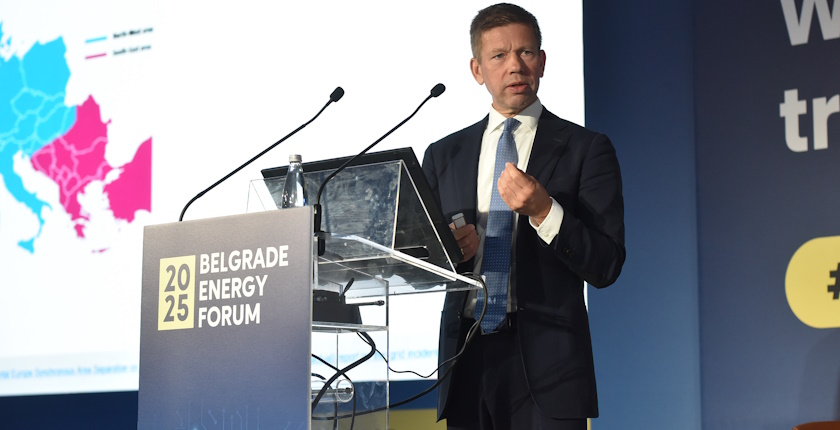
The surge in the number of hours with negative wholesale electricity prices in Europe made 2024 the second consecutive record year. According to ACER’s Director Christian Zinglersen, it means a new era is here. Speaking at Belgrade Energy Forum – BEF 2025, he called on governments, regulators and system operators to tackle the issue with more flexibility and reap the benefits of integrated electricity markets.

At EUR 81 per MWh, the average day-ahead power price in the European Union and Norway was lower last year than in 2021, when the energy crisis began. This is good news, but there are significant differences in price averages across the continent, Director of the EU Agency for the Cooperation of Energy Regulators (ACER) Christian Zinglersen asserted.

In a keynote speech at Belgrade Energy Forum, BEF 2025, he also pointed out that the percentage of days with significant price swings remained elevated. “This suggests that we need much more short-term flexibility in the system,” Zinglersen said.

[wpcc-iframe title=”Belgrade Energy Forum 2025 Christian Zinglersen, Director, ACER” width=”500″ height=”281″ src=”https://www.youtube.com/embed/c2JGLvLEInQ?feature=oembed” frameborder=”0″ allow=”accelerometer; autoplay; clipboard-write; encrypted-media; gyroscope; picture-in-picture; web-share” referrerpolicy=”strict-origin-when-cross-origin” allowfullscreen=””]

Prices in Romania, Bulgaria, Greece, Hungary among highest in Europe

In 2024, the share of time when prices were above EUR 150 per MWh landed at 6.1%, compared to 11.3% in the previous year and 66.7% in 2022. The number of days with price swings greater than EUR 50 per MWh accounted for a strong 70.4% of the total, though down from 77.1% in 2023 and 87.8% one year before.

The average price in Romania was virtually unchanged in 2024. It fell only 1% in Bulgaria and 5% in Hungary. Conversely, the drop was the strongest in Sweden, Norway, France and Belgium: 22% to 39%.

The average day-ahead electricity price in Romania was virtually unchanged last year, while in several countries it tumbled by at least 22%

Last year, prices were the highest across Italy, between EUR 106 per MWh and EUR 112 MWh, in Ireland (EUR 109 per MWh), Romania (EUR 104 per MWh), Bulgaria (EUR 103 per MWh) and Greece and Hungary (both EUR 101 per MWh).

Importantly, 2024 was the second consecutive record year in the number of hours with negative wholesale prices. Their share jumped to 2.8% from 1.9%.

“This is very significant and it shows we are already, in my view, in a new era. We’re not just embarking upon it. We’re there,” Zinglersen stressed.

Photo: ACER

Share of very low wholesale prices rallies back to level from 2020

As for the share of time with very low wholesale prices, it surged last year to 8.8%. The level was last seen in 2020, when the pandemic erupted and resulted in an unprecedented demand shock, ACER’s chief noted. He called on governments, regulators and system operators to tackle the issues with more flexibility.

Grid tariffs increasingly need to show what the system needs, in his view: more time nuance and more locational nuance. “That combination of an energy signal and a tariff signal should hopefully enable us to build more of what we need in the right places, as opposed to build what we don’t need, in the wrong places,” Zinglersen stated.

Integrated markets bring benefits

A policy brief that Brussels-based think tank Bruegel published last year pointed to the benefits of the integration of electricity markets. Among other factors, there is more security with fewer backup power plants and more flexibility with less investment in energy storage, together with lower capital costs. In 2022, ACER, based in Ljubljana, estimated benefits from cross-border trade alone at EUR 34 billion in the EU.

“It has very significant security of supply implications as well, to be in a very integrated-type jurisdiction,” Zinglersen underscored. But integrated markets come with tradeoffs, he said.

One of the examples is an incident in 2021 that split the Continental Europe synchronous area into two parts for an hour and reserves were pulled from across the continent. “But you can also bring the system much more quickly back together again,” Zinglersen said at the conference.

The same goes for the June 2024 blackout in the Balkans.

There are many solutions in Europe, but they are not evenly distributed

ACER’s director also recalled the power price decorrelation that affected Southeastern Europe and Hungary from July to September. He attributed some of the spikes in day-ahead prices to the lack of short-term flexibility, for instance batteries.

There are lots of technical solutions and frameworks in place across Europe, but they are not very evenly distributed, he added.

Zinglersen pointed to the opportunities and benefits of further integrating the electricity market of the Western Balkans region and the EU.

by in News

BEF 2025: Digitalization, open markets, time are major preconditions for flexibility services mainstreaming

Digitalization and massive use of data are crucial for providing flexibility services that bring benefits for transmission system operators and renewable energy producers. Aggregators and software firms have developed the technological solutions. However, the process, together with the introduction of flexibility platforms, requires a long time. The reforms also have to be accompanied by market liberalization and end consumers acting as active buyers, according to the participants of Belgrade Energy Forum 2025.

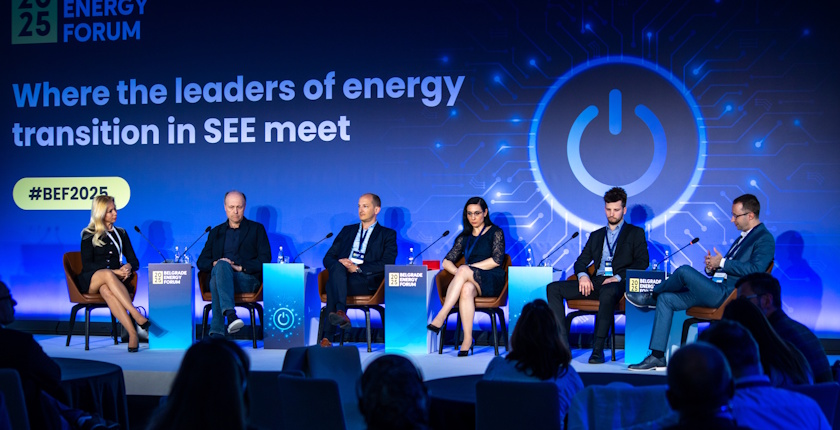
The panel on flexibility services called Market Flexibility: The Backbone of a Resilient Energy System was one of eight that were held at Belgrade Energy Forum 2025 (BEF 2025).

The conference, organized by Balkan Green Energy News, welcomed four hundred participants from more than 30 countries from the region, Europe, and beyond.

“Flexibility has been promoted in Europe as a buzzword, sometimes reflected as demand-side flexibility, but it represents so much more. It includes supply-side flexible assets like hydro, biomass, storage, as well as grid-side flexibility,” according to panel moderator Elena Boškov Kovacs, co-founder and CEO of Blueprint Energy Solutions, and a leading voice on market flexibility in Europe.

Serbia will introduce a flexibility services market

Elena Boškov Kovač and Roman Bernard (photo: Balkan Green Energy News)

Serbia’s transmission system operator (TSO) Elektromreža Srbije (EMS) is preparing to liberalize the ancillary services market. The country adopted the Law on Energy in November and implemented a large proportion of the European Union’s Electricity Integration Package (EIP) while the remaining parts will be transposed through bylaws.

“The balancing capacity market will be liberalized from next year. We will have new participants – active buyers and independent aggregators,” said Marko Zarić, Head of the Market Operations sector of EMS.

He stressed that the TSO is trying to ensure that no market participant is impaired by engaging flexibility resources or demand side response or a balancing service.

“EMS has finished drafting the new market code, which envisages dual balancing responsibility. We will launch a public debate on the act. The TSO estimates that it is the best solution to open the market of flexibility services,” he noted.

Bernard: Technology is on our side

NGEN CEO Roman Bernard expressed the opinion that the region is moving in the right direction, and suggested to regulators to look around and implement best practices. If the participants in the market are motivated, things will go forward, he added.

Back in 2019-2020, when NGEN started its operations in Slovenia, flexibility services were a pioneering job. The Slovenian energy company, the technology sponsor of the BEF 2025 conference, specializes in premium battery energy storage systems (BESS) and smart energy solutions.

According to Bernard, the balancing services market in the EU is well developed thanks to balancing platforms MARI (Manually Activated Reserves Initiative) and PICASSO (Platform for the International Coordination of Automated Frequency Restoration and Stable System Operation).

“We have 150 employees, and we can do everything. Technology is on our side and the sky’s the limit,” he stressed.

For example, NGEN solutions can provide monetization of battery energy storage systems (BESS), and the only thing that is needed is investors in such facilities.

Digitalization is the only way forward

Roman Bernard, Luka Renko and Magdolna Tokai (photo: Balkan Green Energy News)

The representatives of aggregators KOER and Alteo and software company CyberGrid all agreed that digitalization and the use of data are crucial for the energy transition.

Compared to NGEN and its use of BESS, Croatia-based KOER, a pioneer in virtual power plants in the region, is utilizing existing assets, like diesel generators, or employing the flexibility intrinsic to most manufacturing companies; for example, cement factories and wood manufacturers.

Existing assets work well, not just batteries, KOER COO Luka Renko stressed.

The only problem, in his words, is digitalization. The majority of the said firms aren’t ready to connect to the platform to be automatically switched on and off. The markets are getting faster and faster, so digitalization is the only way forward, Renko claimed.

Alteo, a leading Hungarian aggregator, also believes in lots and lots of data, which back up its scheduling and contribute to the security of supply.

Tokai: Alteo is looking for partners in the region

“Our superpower is providing scheduling services with the support of AI, including lots of data,” said Magdolna Tokai, Deputy CEO for International Relations and Corporate Services of Alteo.

Hungary has experienced a photovoltaic boom in the past four or five years, with the installation of almost 8,000 MW. It’s good for greening power production, but not from the perspective of a TSO, and that is where aggregators come into the picture, she added.

Alteo is combining conventional resources like gas-fired power plants with renewables. It currently has 140 MW in renewable resources, it manages 2,000 MW of third-party solar, and operates two virtual power plants. The company is providing the service to small photovoltaic facilities and the TSO.

Alteo is integrating solar energy in a product that is close to baseload, and placing it on the market. It translates to lower balancing costs for solar and a more stable product for the TSO, she explained.

Serbia is facing a challenge from the upcoming 1.2 GW of solar power

Alteo has just started implementing its new strategy for regional growth by exporting know-how on balancing services and providing flexibility to market players.

According to Nikolaj Candellari, Project Manager and Market Intelligence of CyberGrid, real-time data gives a TSO and other market participants the possibility to understand where they are.

He recalled that, over the years, the market went from 15-minute time stamps, down to one minute, and that now it is only two seconds. The improvement helps dealing with challenges, and CyberGrid knows a lot about such issues.

“For Serbia, the challenge comes with 1.2 GW of solar, which will be installed next year. So if you don’t see it as a challenge, ask yourself who needs 1.2 GW of energy at noon on Sunday,” Nikolaj said.

Over its 15 years of existence, CyberGrid developed good examples of how to exchange data with assets and TSOs.

“Assets are always the same, no matter the country, but to have this data exchange with TSOs, or even market platforms, that is something I think we need to do in the future in Southeastern Europe,” he stressed.

How to get to the future: properly liberalize markets

Luka Renko, Magdolna Tokai and Nikolaj Candellari (photo: Balkan Green Energy News)

Elena Boškov Kovač (Blueprint Energy Solutions) asked the panel participants what the solution is for addressing different types of flexibility assets including prosumers.

“How do we avoid getting stuck in the easy-to-commercialize part of the aggregation, and postpone the true demand response, which is needed to avoid the issues with negative pricing and electricity market swings?” she asked.

There is no dilemma for Nikolaj Candellari (CyberGrid): “I think we can connect everything, including households.”

It is something futuristic, he said. “We have to try to go as low as possible and connect everybody because, in the end, it’s not different if you have a 1 MW battery or 100 smaller residential ones” of 1 MW combined, Candellari asserted.

His company is currently implementing a project to integrate 150 batteries of 2 MW overall and put them on the market.

The batteries can drive the prices for end users down by 25% within five years

Candellari and Roman Bernard (NGEN) alike highlighted the factor of market motivation.

Bernard said motivation is created by the market. The imbalance price can go up to EUR 15,000 per MWh, and it is the signal and the motivation to fix everything, in his opinion.

He is convinced that batteries can lower the prices for end users by 25% within five years if dynamic prices are applied.

According to Nikolaj Candellari, participants will come to the market, as long as it’s not too regulated. As an example of a non-functional market, he mentioned Bulgaria, where the capacity price for downward regulation is zero.

“So, why would anybody join the market, if the capacity price is zero? Get the market running and you will get participants and capacity needed to balance it,” he said.

Tokai: We need a proper energy mix

Magdolna Tokai (Alteo) has a slightly different view of the markets. She recalled that episodes of negative prices are happening in Hungary, while that last August and September very high prices were recorded on HUPX, up to EUR 1,000 per MWh, and above EUR 500 per MWh in Croatia and Serbia.

“We have to be prepared for that, which is data, data, data, and the cooperation of all the market players, providing the proper energy mix, and the proper product for the TSO,” she pointed out.

Marko Zarić (EMS) stressed time as a vital ingredient for developing markets. A transition from the regulated market to the truly open market envisages multiple steps that take time, he said.

Flexibility platforms need time for implementation

Nikolaj Candellari and Marko Zarić (photo: Balkan Green Energy News)

Another big change are the balancing platforms developed by aggregators. Traditionally, TSOs were buying the same kind of standardized product, for example, SCADA, EMS, and other market applications, with more or less the same kind of functionalities.

Elena Boškov Kovač (Blueprint Energy Solutions) brought up the question of a more standardized approach. “Before we start talking about interoperability and connecting with everything else, would it be good to at least have platforms with similar kinds of functionalities and services provided?” she asked.

According to Luka Renko (KOER), every platform is structured in line with the needs of the operator. The communication platforms are more or less standardized, but it depends on what one needs in the background and what kind of assets they drive.

Piloting a flexibility platform can take years

The two aggregators, KOER and Alteo, developed their platforms because they couldn’t find a ready-made solution on the market.

A platform must have the ability to communicate with any other solution and to integrate new types of power plants and customers, Magdolna Tokai (Alteo) added.

Elena Boškov Kovač (Blueprint Energy Solutions) recalled that her company has implemented flexibility platforms since 2019, at the dawn of the opening of the flexibility market in Europe, and added that pilot projects for them take a long time.

“They require an immense amount of data. There’s a multitude of different stakeholders that need to support this, unlock the data, provide data resources. Piloting is incredibly important, and it can take years,” she pointed out.

Luka Renko (KOER) added that it took his company three to four years to start working as an aggregator in Croatia.

The future is bright, but we need to work on it

The panelists with Branislava Jovičić, Founder and Editor of Balkan Green Energy News (photo: Balkan Green Energy News)

Summarized, here are the messages of the session’s participants:

Bernard (NGEN): The end consumer will start acting as an active buyer.

Zarić (EMS): We see changes in the future.

Candellari (CyberGrid): Open the markets.

Tokai (Alteo): Give a chance to all market participants and types of production.

Renko (KOER): Digitalization will help.

Elena Boškov Kovač (Blueprint Energy Solutions) praised the companies that had their representatives at the panel for starting to develop solutions ahead of the market reform.

“It’s also a good message to the system of sometimes sleepy energy companies waiting for their proprietary vendors to offer them solutions,” Boškov Kovač stated.

by in News

Negative prices threaten future payments to Greek renewable energy producers

Greece’s special account for renewables, which covers support payments to renewable energy producers, turned positive again in 2024 after years of instability.

The account is currently manageable, according to data from the Renewable Energy Sources Operator & Guarantees of Origin (DAPEEP). The update is bringing certainty to the market and reassures investors that their power plants won’t come up short.

For the end of 2025, initial projections show a deficit of EUR 173 million, which would be covered by a EUR 70 million reserve and proceeds from the taxation of diesel sales.

Lower wholesale prices reduce income

However, DAPEEP’s leadership is concerned about the future balance. The reason is the effect of zero or negative wholesale power prices as they are becoming more common than before.

In the trading session for May 1 on the day-ahead market of the Hellenic Energy Exchange (HEnEx), a record low hourly price was registered, EUR 50 per MWh below zero. The event occurred amid high solar production in combination with low demand on a holiday, and similar conditions in neighboring markets. The authorities are expected to allow the formation of negative prices in the balancing market, starting in June. It is expected to lead to more common zero and negative prices.

Low market prices harm the special renewables account, according to DAPEEP’s new CEO Dimosthenis Voivontas. Consumers benefit in such situations but they reduce income for the operator.

So far, the exact effect of negative prices remains to be seen, as there is limited data to analyze. Nevertheless, energy storage must be brought online quickly, together with demand response capabilities, says Viovontas.

Producers switch off to avoid negative prices

Negative hourly prices have led producers to switch off their renewable energy plants lately in order to avoid a financial loss. It is making it more difficult for the Independent Power Transmission Operator (IPTO or ADMIE) to conduct daily scheduling. The authorities are worried that a sudden disconnection of large capacities could result in instability, in light of the recent blackout in Spain and Portugal.

The focus is on aggregators, which represent groups of renewable electricity facilities in the market. Currently they lack the means to completely control their production in real time. Discussions are underway about a mutually acceptable solution.

by in News

Episodes of negative power prices in Slovenia, Romania spread to workdays

Romania registered the first negative day-ahead electricity price for a workday. The phenomenon, which only used to occur on holidays and weekends, has emerged in Slovenia as well.

In spring and autumn, most of Europe occasionally faces periods of excessive power grid loads. The rapid rise in solar and wind power production and the lack of accompanying energy storage and flexibility capabilities are straining the system at times when demand is low. Advanced electricity markets countered the issue by introducing negative prices.

When prices hit zero or go below zero, the seller delivers electricity without compensation or even has to pay to the buyer, respectively. The phenomenon was normally reserved for holidays and weekends, but more day-ahead markets are now experiencing it for workdays as well.

Downward pressure in Romania from strong inflow of negatively priced electricity via Hungary

Romania saw its first such episode yesterday, on Sunday, in the session for today, Profit.ro reported. Prices in its day-ahead market are negative in five out of 24 periods of one hour, between 11:00 and 16:00.

The country is importing at almost 2 GW via Hungary and exporting at up to 1.5 GW to Bulgaria, the news website added. The article notes that renewable energy producers, especially in Germany, where prices are also negative, are exporting to other markets to ease the impact. They usually benefit from subsidies, so generating electricity isn’t necessarily unprofitable even when they sell at a loss.

In addition, shutting down and restarting power plants can be more costly than paying the other side to take excess output.

The level in Romania went to as low as EUR 6.18 per MWh below zero. But the daily average is EUR 76.54 per MWh. The peak, is EUR 198.16 per MWh, between 20:00 and 21:00, when there is no sunlight and prosumers only consume.

Negative prices turn Slovenia’s HSE into electricity consumer

Prices in Slovenia for today also came in negative between 11:00 and 16:oo, which is very rare for a workday, Naš stik reported. Among other factors, the two-day May 1 holiday shortens the current workweek. The lowest, between 14:00 and 15:00, is EUR 6.18 euros per MWh below zero.

In comparison, the lowest price for Sunday on the BSP Southpool exchange was EUR 104 per MWh under zero.

At one point during the Easter holiday, virtually all HSE’s production capacities were offline and the Avče pumped storage hydropower plant was storing electricity from the grid

“Last year, we had 219 hours in Slovenia when prices were negative. This year, we are already at number 72, and we have only just entered the critical period,” said Deputy Director of System Operations of ELES Aleš Donko. The company is Slovenia’s transmission and distribution system operator.

State-owned power utility Holding Slovenske elektrarne (HSE) found itself in an unusual situation during the Easter holidays because of negative prices.

“For a while, we were actually an energy consumer, not a producer, which is our core mission… Virtually all our power plants were shut down, and the Avče pumped storage hydropower plant was pumping water into the upper reservoir at full capacity,” Head of Operation Planning and Management Jernej Brglez said.

Portugal and Spain, which suffered major outages today together with France, both registered negative prices every day in the third week of April.

Also of note, Greece is preparing to introduce negative prices in the balancing market.