by in News

Slovenia Bolsters Energy Transition with €174 Million Grid Investments

Slovenia has taken a decisive step toward a decarbonized future, announcing a €174 million investment package dedicated to the comprehensive modernization of its national power transmission and distribution networks. This strategic initiative aims to bolster grid capacity, enhance supply reliability, and—most critically—facilitate the rapid integration of renewable energy sources into the national mix.

The project is supported by €59 million in co-funding from the European Union’s Modernisation Fund, a financial instrument fueled by the EU Emissions Trading System (ETS) designed to assist member states in meeting climate targets.

A Foundation for the Green Transition

Minister of the Environment, Climate and Energy, Bojan Kumer, formalized the initiative by signing four contracts and two strategic decisions with the CEOs of Slovenia’s six state-owned energy entities. The group includes the transmission system operator (TSO) ELES and five distribution system operators (DSOs).

“The energy transition actually begins with the grid,” Minister Kumer noted during the signing ceremony. “A strong, resilient network is the bedrock upon which our future energy autonomy and sustainability are built.”

Key Projects and Financial Breakdown

The modernization efforts are distributed across the country’s regional operators, focusing on infrastructure upgrades, digitalization, and increased transformer capacity.

Operator Project Focus Total Investment EU Support
Elektro Ljubljana Urban network upgrades, cabling, and digitalization €53.2 Million €19.6 Million
Elektro Gorenjska Upgrading Trata and Brnik substations €32.9 Million €14.9 Million
Elektro Maribor New 110 kV line (Murska Sobota – Lendava) €32.3 Million €11.1 Million
ELES (TSO) Upgrading 110 kV line (Dravograd–Velenje) €12.9 Million €5.7 Million
Elektro Celje Switchgear refurbishment & transformer replacement €11.0 Million €5.5 Million
Elektro Primorska Reconstruction of Vrtojba substation switchgear €3.5 Million €1.7 Million

The 2030 Vision: Scaling Smart Infrastructure

This current wave of investment is only the beginning of a broader strategic roadmap. Slovenia has secured over €300 million from the Modernisation Fund to be utilized through 2030, specifically earmarked for grid refurbishment, energy efficiency, and renewable deployments.

The Ministry is already preparing a subsequent public call, expected in April, which will allocate €69 million for smart electricity grid investments between 2026 and 2030. These funds will prioritize three pillars:

  1. Renewables Development: Strengthening the grid to handle intermittent wind and solar inputs.

  2. Electrification of Heating: Supporting the transition away from fossil-fuel boilers to heat pumps.

  3. E-Mobility: Building the infrastructure necessary for the widespread adoption of electric vehicles.

By reinforcing its electrical backbone today, Slovenia is ensuring that its infrastructure can meet the demands of a more electrified and sustainable tomorrow.
by in News

Electrica issues call for contractors for large PV parks in Romania

Romanian electricity supplier and distributor Electrica, in which the government holds almost 50%, published tenders via its subsidiaries for the second time for ready-to-build solar power projects. The peak capacities are 62.5 MW and 77.6 MW, and the second investment also involves battery storage. The company launched production in November at its Satu Mare 2 solar power plant, also known as Sunwind, of 27 MW.

Companies with the most advantageous offers from the technical and economic point of view will get the contracts for the construction of photovoltaic systems Satu Mare 3 and Bihor 1. Electrica, the investor, issued both calls a year ago, but canceled them in the meantime.

The Romanian Government owns 49.8% of the company, a power supplier and distributor, which also invests in renewables.

Electrica’s subsidiary New Trend Energy is responsible for the Satu Mare 3 project, of 62.5 MW in peak capacity. It is located in the commune of Doba in the Satu Mare county in the northwest. Inverters would enable the delivery of 57.9 MW to the grid.

The investment is estimated at RON 176.6 million (EUR 34.7 million) excluding value-added tax. Electrica expects to generate 70.2 MWh per annum. The deadline for applications is February 17.

BESS project is for 16.5 MWh in capacity and a 4 MW in operating power

Foton Power Energy, another subsidiary of Electrica, is seeking a contractor for a turnkey deal for Bihor 1. The PV plant would have 77.6 MW in peak capacity, and 77.4 MW in alternating current terms. It would consist of Trina’s bifacial solar panels of 595 W each.

The selected company will need to build a battery energy storage system as well, together with a transformer and fences, according to the document.

Both projects, with sites in northwestern Romania, have won subsidies from the Modernisation Fund

The BESS project is for 16.5 MWh in capacity and a 4 MW in operating power, earlier documents show. It would consist of eight Huawei units with a nominal size of 2.06 MWh each, the special purpose vehicle said. The project envisages the possibility of expansion of the battery storage facility to 75 MW and 150 MWh.

Total expected annual output amounts to 87.5 GWh. Foton Power Energy estimated the project at RON 220 million without VAT, which is EUR 43.2 million. Its site is in the communes of Cefa and Mădăraș in Bihor county, also in Romania’s northwest. Interested firms can submit bids by February 12.

Both Satu Mare 3 and Bihor 1 received state support via the European Union’s Modernisation Fund.

Electrica completed its third PV plant last month

In November, the company completed its Satu Mare 2 solar farm of 27 MW in peak capacity. The project firm is called Sunwind Energy. Electrica also operates PV plants Stănești and Vuturul with peak capacities at 7.5 MW and 12 MW, respectively.

The Crucea Est wind power project, worth eur 253 million, is for up to 138 MW and a BESS of 15 MW and 60 MWh.

In the report on the first nine months of 2025, Electrica wrote that it was developing four energy storage projects of 169.5 MWh altogether. In mid-October it initiated the procedures for 15 BESS facilities of 1 GWh in total.

Before that, in early September, the company signed a memorandum of understanding with Romgaz on the development of 400 MW in solar and storage. Electrica would be the main partner and the other company would hold a minority interest.

The projects are financed from a green bond issuance, which was the largest in Romania.

by in News

Electrica issues call for contractors for large PV parks in Romania

Romanian electricity supplier and distributor Electrica, in which the government holds almost 50%, published tenders via its subsidiaries for the second time for ready-to-build solar power projects. The peak capacities are 62.5 MW and 77.6 MW, and the second investment also involves battery storage. The company launched production in November at its Satu Mare 2 solar power plant, also known as Sunwind, of 27 MW.

Companies with the most advantageous offers from the technical and economic point of view will get the contracts for the construction of photovoltaic systems Satu Mare 3 and Bihor 1. Electrica, the investor, issued both calls a year ago, but canceled them in the meantime.

The Romanian Government owns 49.8% of the company, a power supplier and distributor, which also invests in renewables.

Electrica’s subsidiary New Trend Energy is responsible for the Satu Mare 3 project, of 62.5 MW in peak capacity. It is located in the commune of Doba in the Satu Mare county in the northwest. Inverters would enable the delivery of 57.9 MW to the grid.

The investment is estimated at RON 176.6 million (EUR 34.7 million) excluding value-added tax. Electrica expects to generate 70.2 MWh per annum. The deadline for applications is February 17.

BESS project is for 16.5 MWh in capacity and a 4 MW in operating power

Foton Power Energy, another subsidiary of Electrica, is seeking a contractor for a turnkey deal for Bihor 1. The PV plant would have 77.6 MW in peak capacity, and 77.4 MW in alternating current terms. It would consist of Trina’s bifacial solar panels of 595 W each.

The selected company will need to build a battery energy storage system as well, together with a transformer and fences, according to the document.

Both projects, with sites in northwestern Romania, have won subsidies from the Modernisation Fund

The BESS project is for 16.5 MWh in capacity and a 4 MW in operating power, earlier documents show. It would consist of eight Huawei units with a nominal size of 2.06 MWh each, the special purpose vehicle said. The project envisages the possibility of expansion of the battery storage facility to 75 MW and 150 MWh.

Total expected annual output amounts to 87.5 GWh. Foton Power Energy estimated the project at RON 220 million without VAT, which is EUR 43.2 million. Its site is in the communes of Cefa and Mădăraș in Bihor county, also in Romania’s northwest. Interested firms can submit bids by February 12.

Both Satu Mare 3 and Bihor 1 received state support via the European Union’s Modernisation Fund.

Electrica completed its third PV plant last month

In November, the company completed its Satu Mare 2 solar farm of 27 MW in peak capacity. The project firm is called Sunwind Energy. Electrica also operates PV plants Stănești and Vuturul with peak capacities at 7.5 MW and 12 MW, respectively.

The Crucea Est wind power project, worth eur 253 million, is for up to 138 MW and a BESS of 15 MW and 60 MWh.

In the report on the first nine months of 2025, Electrica wrote that it was developing four energy storage projects of 169.5 MWh altogether. In mid-October it initiated the procedures for 15 BESS facilities of 1 GWh in total.

Before that, in early September, the company signed a memorandum of understanding with Romgaz on the development of 400 MW in solar and storage. Electrica would be the main partner and the other company would hold a minority interest.

The projects are financed from a green bond issuance, which was the largest in Romania.

by in News

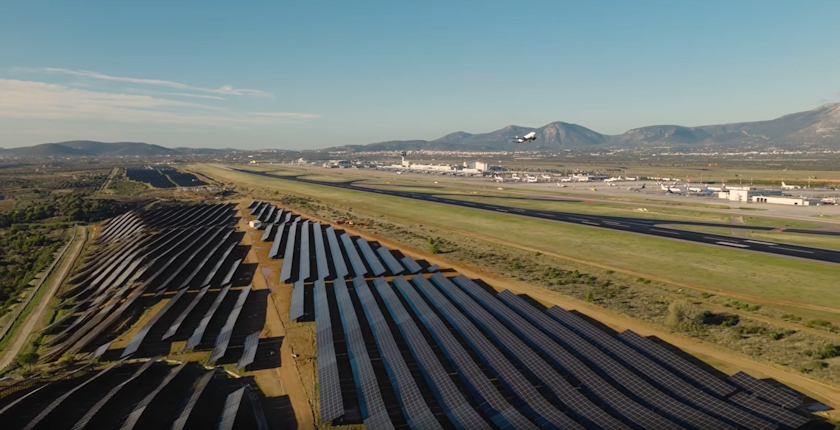
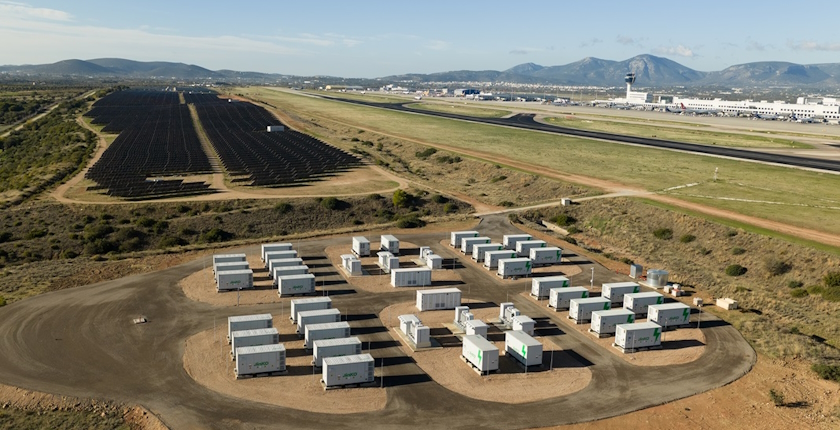
Athens International Airport builds biggest photovoltaic-BESS plant

Athens International Airport (AIA) Eleftherios Venizelos completed its comprehensive energy makeover program. It is now operating a photovoltaic facility of 51.5 MW and a battery energy storage system of 82 MWh. It is the largest hybrid power plant of its kind within the premises of any airport in Europe and, reportedly, even the entire world.

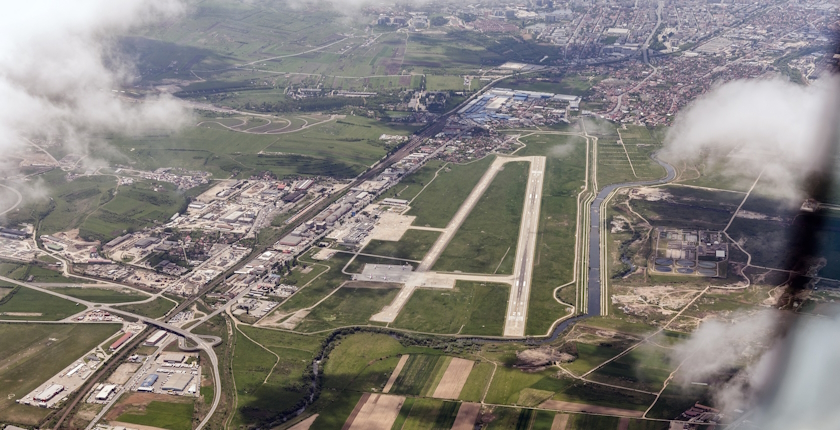
At the same time, the Bucharest Henri Coandă International Airport is about to build 12.6 MW in peak PV capacity and a BESS of 17.9 MWh, in the first phase of a larger project.

Following European and global trends, airports in Southeastern Europe are introducing resource, waste and wastewater management systems. Energy is the largest segment of the decarbonization push. With the completion of its Route 2025 program, Athens International Airport Eleftherios Venizelos covered all its electricity needs with photovoltaics, becoming the only such airport in Europe.

In the groundbreaking project, the operator extended the existing solar power plant by 35.5 MW in peak capacity, reaching 51.5 MW, and added a battery energy storage system. The facility has 124 MWh in nominal capacity, of which 82 MWh is usable.

The hybrid system is the largest of its kind inside the fence of any airport in Europe, while the Greek press has even called it the largest in the world. Some of the world’s largest airports are set to follow soon. For instance, IGA Istanbul Airport is investing EUR 212 million in an external solar power plant of 199.3 MW, in Eskişehir.

Athens International Airport builds biggest photovoltaic BESS plant
Photo: Athens International Airport

Hybrid power plant to keep Athens International Airport at net zero through 2046

AIA’s PV-BESS plant will generate an estimated 88 GWh per year, which is equivalent to the consumption of 22,000 households. The storage system is only for self-consumption. Importantly, the hybrid system can cover the entire planned expansion up to 2046, when the concession period ends.

AviAlliance, which controls 50.2% of the public-private partnership, is a wholly-owned subsidiary of Public Sector Pension Investment Board (PSP Investments) from Canada. The government holds 25.6% through Superfund, officially Growthfund – The National Fund of Greece.

AIA launched Route 2025 six years ago, with the aim to cut net greenhouse gas emissions to zero by the end of this year. It compares to the 2050 net zero goal of the European airports sector.

The Route 2025 program was worth EUR 70 million

The investments totaled EUR 70 million. A significant portion was financed through loans from the European Union’s Recovery and Resilience Facility (RRF), the update adds.

Heat pumps have eliminated the need for natural gas in buildings at AIA in normal winter conditions. The electric vehicle fleet consists of 19 buses, 13 follow-me vehicles and 29 vans. A network of chargers also serves passenger cars.

“In the airport company, we operate on the basis of the principle that sustainability, and environmental responsibility in particular, are and will increasingly be prerequisites for what we call the social license to operate and grow,” said outgoing Managing Director of AIA Yiannis Paraschis.

Two airports in Romania receive EU funds for solar-BESS projects

As for other recent developments in the Balkans, operators of two airports in Romania received grants via the European Union’s Modernisation Fund for solar power plants with battery storage.

National Company Bucharest Airports (CNAB) signed a contract for RON 132.04 million (EUR 25.9 million) excluding value-added tax. It is for 12.6 MW in peak PV capacity and a BESS of 17.9 MWh at the Bucharest Henri Coandă International Airport in Otopeni.

The entire investment amounts to RON 176.9 million (EUR 34.7 million) excluding VAT. The Romanian state-owned company said it is the first phase of a project for 31.5 MW and 30 MWh overall, valued at EUR 55.7 million.

Bacău International Airport George Enescu will build a solar power plant of 1.25 MW and a BESS of 2.06 MWh. Bacău County Council will also provide support for the on-site project on 2.2 hectares, worth more than EUR 4.9 million.

by in News

Athens International Airport builds biggest photovoltaic-BESS plant

Athens International Airport (AIA) Eleftherios Venizelos completed its comprehensive energy makeover program. It is now operating a photovoltaic facility of 51.5 MW and a battery energy storage system of 82 MWh. It is the largest hybrid power plant of its kind within the premises of any airport in Europe and, reportedly, even the entire world.

At the same time, the Bucharest Henri Coandă International Airport is about to build 12.6 MW in peak PV capacity and a BESS of 17.9 MWh, in the first phase of a larger project.

Following European and global trends, airports in Southeastern Europe are introducing resource, waste and wastewater management systems. Energy is the largest segment of the decarbonization push. With the completion of its Route 2025 program, Athens International Airport Eleftherios Venizelos covered all its electricity needs with photovoltaics, becoming the only such airport in Europe.

In the groundbreaking project, the operator extended the existing solar power plant by 35.5 MW in peak capacity, reaching 51.5 MW, and added a battery energy storage system. The facility has 124 MWh in nominal capacity, of which 82 MWh is usable.

The hybrid system is the largest of its kind inside the fence of any airport in Europe, while the Greek press has even called it the largest in the world. Some of the world’s largest airports are set to follow soon. For instance, IGA Istanbul Airport is investing EUR 212 million in an external solar power plant of 199.3 MW, in Eskişehir.

Athens International Airport builds biggest photovoltaic BESS plant
Photo: Athens International Airport

Hybrid power plant to keep Athens International Airport at net zero through 2046

AIA’s PV-BESS plant will generate an estimated 88 GWh per year, which is equivalent to the consumption of 22,000 households. The storage system is only for self-consumption. Importantly, the hybrid system can cover the entire planned expansion up to 2046, when the concession period ends.

AviAlliance, which controls 50.2% of the public-private partnership, is a wholly-owned subsidiary of Public Sector Pension Investment Board (PSP Investments) from Canada. The government holds 25.6% through Superfund, officially Growthfund – The National Fund of Greece.

AIA launched Route 2025 six years ago, with the aim to cut net greenhouse gas emissions to zero by the end of this year. It compares to the 2050 net zero goal of the European airports sector.

The Route 2025 program was worth EUR 70 million

The investments totaled EUR 70 million. A significant portion was financed through loans from the European Union’s Recovery and Resilience Facility (RRF), the update adds.

Heat pumps have eliminated the need for natural gas in buildings at AIA in normal winter conditions. The electric vehicle fleet consists of 19 buses, 13 follow-me vehicles and 29 vans. A network of chargers also serves passenger cars.

“In the airport company, we operate on the basis of the principle that sustainability, and environmental responsibility in particular, are and will increasingly be prerequisites for what we call the social license to operate and grow,” said outgoing Managing Director of AIA Yiannis Paraschis.

Two airports in Romania receive EU funds for solar-BESS projects

As for other recent developments in the Balkans, operators of two airports in Romania received grants via the European Union’s Modernisation Fund for solar power plants with battery storage.

National Company Bucharest Airports (CNAB) signed a contract for RON 132.04 million (EUR 25.9 million) excluding value-added tax. It is for 12.6 MW in peak PV capacity and a BESS of 17.9 MWh at the Bucharest Henri Coandă International Airport in Otopeni.

The entire investment amounts to RON 176.9 million (EUR 34.7 million) excluding VAT. The Romanian state-owned company said it is the first phase of a project for 31.5 MW and 30 MWh overall, valued at EUR 55.7 million.

Bacău International Airport George Enescu will build a solar power plant of 1.25 MW and a BESS of 2.06 MWh. Bacău County Council will also provide support for the on-site project on 2.2 hectares, worth more than EUR 4.9 million.

by in News

Quota surpassed at Romania’s bonus wind power auction

Romania apparently achieved moderately lower prices at its additional wind power auction for contracts for difference (CfDs) than in the regular round. According to a media report, nine bids were approved, for seven proposed facilities, and the winners include OX2, Qair and Zen Energy Group.

All wind farm projects in Romania that obtained the right to state support at the latest renewable electricity auction need to be completed by 2028. The Ministry of Energy and transmission system operator Transelectrica have approved 315.8 MW, compared to the targeted minimum of 290 MW, Economica.net learned.

The bonus round was organized because of a weak turnout in the regular, second wind power auction. Winners are eligible for 15-year CfDs, in a EUR 3 billion scheme covered via the European Union’s Modernisation Fund.

According to the report, the prices were also more favorable for the government than in the previous auction: between EUR 59.95 per MWh and EUR 74.9 per MWh, against EUR 65.17 per MWh to EUR 79.5 per MWh. The ceiling was the same, EUR 80 per MWh.

Cheapest two lots are part of same project

Naxxar Wind Energy Project Zenon won two lots, at 64.8 MW each, for the same project – Tudor Vladimirescu in Brăila county, northeast of Bucharest. The strike prices are EUR 59.95 per MWh and EUR 61.05 per MWh.

Owners of the special purpose vehicle are Renewable Investors and Kaizer Gerhard, an individual, both from Germany.

Aukera Project Company Beta has won a CfD contract for 27.2 MW in the proposed Făurei wind farm. The price is EUR 67.12 per MWh. It is owned by AtlasInvest, headquartered in Belgium.

In Romania, it is working on the projects for the Delesti wind farm in Vaslui county and the Gura Ialomiței storage facility in Ialomița. The battery would have 250 MW in operating power and a capacity of 500 MWh.

The first phase, of 300 MWh, is under construction. The company obtained a EUR 9.9 million grant last year through the National Recovery and Resilience Plan (NRRP or, in Romanian, PNRR) and signed a loan facility of EUR 60 million with Kommunalkredit Austria for the storage system.

OX2 wins CfDs for additional capacity for its future wind farms

Brăila Green Energy qualified for 12.4 MW of its Urleasca wind power project, at EUR 69.86 per MWh. The firm is controlled by OX2, which already won a CfD for a part of the same future facility.

The Sweden-based company also snatched 25.6 MW for its Cerchezu project. It is another winner from the previous round. This time, the South Wind subsidiary secured a contract at EUR 74.49 per MWh.

Clever Power has obtained 21 MW and 14 MW by bidding EUR 69.88 per MWh and EUR 72.92 per MWh, respectively. Both lots are for the same project: Falciu wind farm, envisaged to include storage. The company is controlled by Romanian investor Barbu Cristian, the article adds, citing a businesses registry.

AZ Market Construction won just 8 MW for its Bordei Verde wind project. It is eligible for EUR 74.74 per MWh. The firm is owned by France-based Qair.

Traian Energy, a subsidiary of Zen Energy Group from Luxembourg, is getting the highest price from the bonus round. The wind park would receive EUR 74.9 per MWh for the entire 78 MW.

by in News

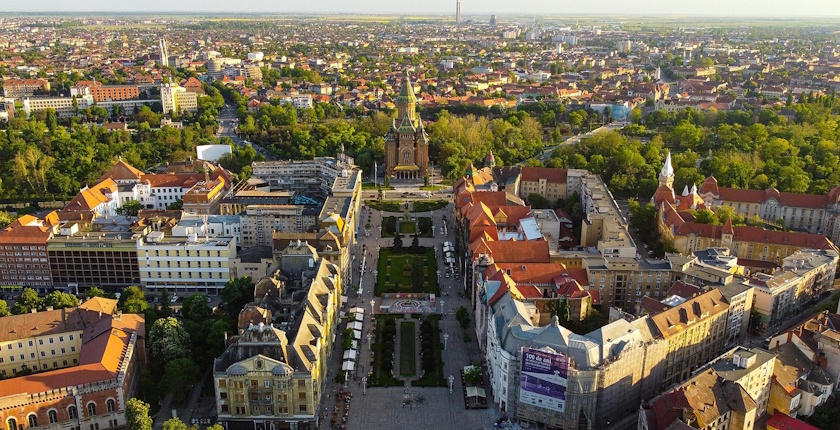
Romanian city of Timișoara nearing construction of its own solar park

Romania is experiencing strong growth in photovoltaic capacity, with 1.7 GW installed in 2024 alone. Local authorities are actively contributing to the energy transition. They include Timișoara, which will soon get its own solar power plant, of 5.6 MW.

According to data from the Romanian Photovoltaic Industry Association (RPIA), solar power plants with a total capacity of 1.7 GW were installed in Romania last year. The expansion is driven by accessible financing, legal reforms, simplified permitting procedures, and auctions for contracts for difference (CfD).

Local authorities, including counties, are one of the pillars of the country’s energy transition. For example, in the small town of Turceni in southwestern Romania, home to only about 7,000 residents, a EUR 380 million project was recently launched. The municipal authority signed an agreement with the European Investment Bank (EIB) for the construction of agrosolar parks, energy storage systems, and facilities for green hydrogen production and storage.

Timișoara is part of a growing group of local authorities developing solar power projects for their own needs

In northern Romania, the municipality of Târgu Lăpuș has established a public-private partnership with a company founded by Turkish and Romanian investors. The goal is to build a 200 MW solar power plant with an energy storage system. The investment is estimated at EUR 100 million.

Timișoara, the capital of Timiș county and the largest city in western Romania, has long been a part of the growing group of municipalities developing solar power projects for their own needs. Mayor Dominic Fritz and Minister of Environment Diana Buzoianu have signed a grant agreement for the construction of the city’s first solar park, of 5.6 MW, marking the start of the investment’s next phase.

The municipality will now launch the tender procedure for design and construction services. The solar power plant is expected to generate an average of 7.8 GWh of green energy annually.

Solar park to deliver direct benefits for the city

The total investment value is RON 32.2 million lei (EUR 6.3 million) including value-added tax. The project is conducted under the European Union’s Modernisation Fund, managed by the Ministry of Energy. The fund supports investments in renewable energy, energy efficiency, storage, grids, and just transition in 13 European Union member states with lower incomes. It uses the proceeds from the sale of greenhouse gas emission allowances under the EU Emissions Trading System (EU ETS).

“The solar park will bring direct benefits to the city – lower costs, reduced emissions, and more sustainable infrastructure. It is just one of the projects through which we are transforming Timișoara into a green and smart city, capable of producing a significant share of the energy it consumes from renewable sources,” said Fritz.

The solar power plant will cover two thirds of public lighting needs

PV panels will be installed near the wastewater treatment plant in the Freidorf district, on 20 hectares. The generated electricity will cover around two thirds of the city’s public lighting consumption. The facility would contribute to lowering greenhouse gas emissions with 4,800 tonnes of CO₂ equivalent annually.

The solar power plant is part of the local administration’s broader plan to switch to renewable energy sources and reduce pollution. Timișoara has also expressed interest in a state aid mechanism for the production and transport of geothermal energy for district heating and cooling systems, worth EUR 300 million, covered from the Modernisation Fund. Last year, the city signed a strategic partnership with OMV Petrom to utilize geothermal energy for district heating.

by in News

Romania issues call for additional wind power auction for 290 MW

Wind farm project developers in Romania can bid by November 24 for state aid in the form of contracts for difference (CfDs). The call was issued for an additional auction, for 290 MW, after the regular round was completed with more than a third of the quota remaining unallocated.

The Ministry of Energy of Romania and transmission system operator Transelectrica formally launched their third auction today under the CfD state aid scheme for renewable energy. The additional round is only for wind power projects.

Only 1.26 GW was allocated of the available 2 GW in the second, regular auction. It was held within a EUR 3 billion renewable energy program under the European Union’s Modernisation Fund and Romania’s National Recovery and Resilience Plan (NRRP or PNRR).

Aurora Energy Research has interpreted the lack of interest as an indication that developers may have seen more value outside the CfD framework: in power purchase agreements (PPAs) and merchant options. The firm recently said it expected strike prices near the EUR 80 per MWh ceiling.

Financial offers will be opened on December 2, the calendar shows

The maximum price is the same as the last time. Notably, the quota for the additional auction is just 290 MW. Developers have until November 24 to apply with projects of at least 5 MW each. In addition to the bid, they need to submit a technical offer proving eligibility.

Transelectrica, the CfD scheme operator, is due to open the technical offers on November 17. Financial offers of the qualified applicants will be opened on December 2, according to the schedule. The winners would need to sign their contracts for difference by December 18.

The CfDs are for a 15-year period. When the market price of electricity is lower than the price in the contract, the government pays the private operator the difference for the electricity that the beneficiary sells. When it’s the other way around, the producer returns the difference.

by in News

Aurora: Romania’s third CfD auction is key for 2030 targets as solar outpaced wind

Aurora Energy Research expects strike prices at the additional renewable energy auction in Romania, for the remaining wind power quota, to land near the ceiling, set at EUR 80 per MWh. In the previous round, there was strong competition between the bidders for the photovoltaic segment, while developers of wind energy projects may have seen more value in PPAs and merchant options.

Increased costs and stricter eligibility rules constrained wind participation in Romania’s second contracts-for-difference (CfD) round in August, which fell short of the 2 GW wind target. Developers may have seen more value outside the CfD framework, according to Aurora experts, who stressed that power purchase agreements (PPAs) and merchant options offer higher returns than the capped CfD strike prices.

Solar projects showed stronger economics, with strike prices between EUR 35 per MWh and EUR 45 per MWh, compared to wind at EUR 65 per MWh to EUR 79.5 per MWh.

“Using the same commercial operation date for both PV and wind projects has disincentivised wind participation in CfD rounds, since wind developments are far more complex. Their permitting, grid connection, and EPC timelines are significantly longer than solar, making the uniform deadline misaligned with project realities,” said Project Leader at Research Associate at Aurora Energy Research Filippos Falieros.

Dedicated auctions can influence market dynamics

As wind is essential for achieving 2030 renewable targets, the Romanian Ministry of Energy invited developers to submit expressions of interest for mature wind projects only, with contracts expected to be signed by the end of 2025. The third auction will focus on wind energy solely, with a maximum strike price set at EUR 80 per MWh, and Aurora expects strike prices near the ceiling.

In the second auction, accepted wind power bids were between EUR 65 per MWh and EUR 79.5 per MWh

The move underscores the growing divergence in Romania between solar’s strong economics and wind’s slower progress, while also showing how policy adjustments – such as dedicated auctions – can influence market dynamics.

CfD state aid scheme was approved through Modernisation Fund

The overall CfD scheme is supported by EUR 3 billion in total state aid that the European Union approved through the Modernisation Fund, aiming to keep costs low for consumers.

Established in 2013, Aurora Energy Research provides power market forecasting and analytics for critical investment and financing decisions. Headquartered in Oxford, it operates out of 17 offices worldwide covering Europe, North and South America, Asia and Australia.

The firm’s comprehensive services include market outlook packages for energy industry participants, advisory support, and software solutions. Aurora fosters diversity with a team of one thousand experts with backgrounds in energy, finance, and consulting, offering expertise across power, renewables, storage, hydrogen, carbon, and fossil commodities.

by in News

Airport in Cluj-Napoca secures grant for battery-backed solar park

International Airport Avram Iancu Cluj will cover more than half of the costs for a 5 MW solar power plant, with a battery energy storage system of 12 MW, from European funds. It expects the facility to cover more than 60% of its electricity needs.

Civilian airports throughout Southeastern Europe are building dozens of solar parks and rooftop photovoltaic systems to increase their energy autonomy and achieve cost savings. Some of the capacity is backed up by battery energy storage systems (BESS). International Airport Avram Iancu Cluj in Romania is set to join the group with a project worth EUR 10.7 million including value-added tax.

The Ministry of Transport and Infrastructure declared it eligible for EUR 6 million grant from the European Union’s Modernisation Fund. The operator is controlled by the Cluj County Council.

Cluj International Airport to save EUR 1 million per year

International Airport Avram Iancu Cluj in Transylvania serves Cluj-Napoca, Romania’s second-largest city. With the green light for EU funding, it can proceed with the PV project of 5 MW with an energy storage unit of 12 MW in operating power. The airport expects the facility to cover more than 60% of its electricity consumption.

The airport in northwestern Romania serves Cluj-Napoca, the country’s second-largest city

The system would span eight hectares and include more than 7,500 solar panels. It is intended only for self-consumption. Cost savings amount to an estimated EUR 1 million per year. The initially planned capacity of the solar park was 2 MW.

“In the context of rising energy prices and budgetary constraints, energy independence is one of the major objectives we are focusing on. The investment in a photovoltaic park at Cluj Airport, from non-reimbursable funds, is a notable achievement and creates the premises for financial stability and achieving energy independence,” said Cluj County Council President Alin Tișe.

Gearing up for rising emissions costs

The airport’s General Manager David Ciceo stressed that heat pumps are also part of the plan to decarbonize and increase energy autonomy. President of the Board of Directors Viorel Federiga noted it is an important step toward meeting new international requirements.

For instance, the EU plans to extend the EU Emissions Trading System (EU ETS) to all flights from the European Economic Area (EEA). Currently it only covers the flights within the region and toward the United Kingdom and Switzerland. A scheme called EU ETS 2, to be launched in 2027, will include buildings and road transportation.

Within its efforts to reduce carbon emissions, Cluj International Airport added another electric bus to its vehicle fleet, to take passengers to and from aircraft. It can carry 110 people. The bus, which cost EUR 830,000, features a battery that allows for an autonomy of over 300 kilometers.

The airport projected the number of its passengers this year at 3.4 million.

  • 1
  • 2