by in News

Dozens of airports in Southeastern Europe invest in solar power, energy efficiency

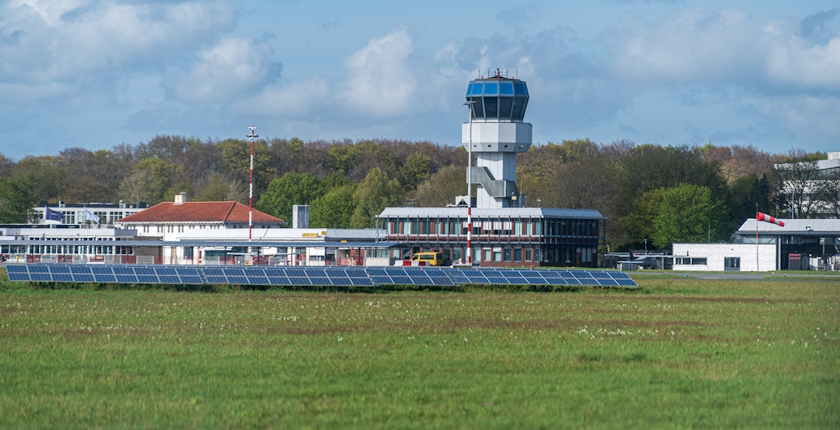
Airports in Istanbul and Athens are becoming completely self-reliant with their large solar power projects. Many other airports in Southeastern Europe are investing in photovoltaics as well. Together with energy efficiency, electric mobility and waste and wastewater management projects, they aim to decarbonize their operations and reduce their environmental impact.

Surfaces around infrastructure such as railways and motorways are convenient for solar power as there are few alternatives for their use and the technology can directly provide them with electricity. Airports, too, have embraced the global trend of introducing photovoltaics and electrifying operations, and Southeastern Europe is no exception, with several notable investments.

The largest ones in Istanbul and Athens are about to switch 100% to solar power, which would make them some of the first in the world. In addition, airports in the region are increasing energy efficiency and rolling out electric vehicle fleets. They are introducing resource, waste and wastewater management systems to decarbonize their operations and reduce their environmental impact.

Airport operator in Albania expanding to solar power market

In other recent news, the operator of Kukës International Airport Zayed in Albania’s northeast is in the process of obtaining a license to generate and trade electricity. Namely, the company, Global Technical Mechanics, received a concession five months ago in consortium with local construction firm Bami to build and operate a 12 MW solar power plant.

The location at the village of Shtiqen is in the municipality of Kukës. The airport, built with investments by Emaar Properties from the United Arab Emirates, was inaugurated in 2021. However, it ceased operations in the meantime as Wizz Air withdrew from the facility.

The entire Vlora International Airport, which is under construction, will be covered with solar panels, Albanian officials said earlier. The PV project is for 5.2 MW. A consortium led by Swiss-based Mabco Constructions is building and financing the construction. The firm is part of Mabetex Group, controlled by Behgjet Pacolli, Kosovar businessman and former president, deputy prime minister and foreign minister.

Zagreb Airport starts with small PV unit

Zagreb Airport, which installed a 250 kW photovoltaic unit this year, said it plans to expand it soon. In addition, it switched to 100% renewable energy supply.

Like other airports in the region, the main one in Croatia replaced conventional, halogen lighting with LED. The operator has committed to cutting its emissions in accordance with the recommendations from the Intergovernmental Panel on Climate Change (IPCC).

Zagreb Airport is renovating its buildings and increasingly using solar energy for heating water. Interestingly, it plans to switch from diesel-fueled generators to hydrogen-ready systems.

Athens to integrate strong battery with its arrays

Athens International Airport Eleftherios Venizelos commissioned an 8.05 MW solar park in 2011, followed by another one in 2023, with 15.8 MW in peak capacity.

This year two more units with a combined peak capacity of 35.5 MW are coming online, together with a battery energy storage system (BESS) of 82 MWh.

The operator of Turkey’s largest airport is completing a photovoltaic park of nearly 200 MW and aiming to cover almost all its energy needs from renewable sources by the end of the decade

IGA Istanbul Airport reported that its greenhouse gas emissions in 2024 were 10.5% lower than its goal. Moreover, its operator increased its 2030 renewable energy target from 50% to 90%.

Namely, it expects its Eskişehir solar farm of a whopping 199.3 MW to begin operations before the end of the year. The location spans 300 hectares and the investment amounts to EUR 212 million. The PV park will generate an estimated 340 GWh per year.

Dalaman Airport hosts world’s largest rooftop solar power plant among airport terminals

Several other airports in Turkey are also decarbonizing their electricity systems. TAV Airports Holding (TAV Havalimanları Holding), part of Groupe ADP, completed a solar power plant 6.7 MW in peak capacity at its Milas-Bodrum Airport in the country’s southwest. Within the same project for setting up PV systems at parking areas, the Izmir Adnan Menderes Airport is getting a 5.9 MW unit.

The Izmir Adnan Menderes Airport is getting a 5.9 MW solar power system at parking areas

Dalaman Airport, near Bodrum, operates a solar power plant of 8.3 MW in peak capacity. It is the world’s largest on the roof of an airport terminal building.

The facility now covers more than 55% of its consumption from solar energy. The investment was worth EUR 5.4 million. The operator, YDA Airport Investment and Management, has vowed to reach 100% in phase two. The airport has completely switched to electric vehicles.

In 2023, airports Milas-Bodrum, Gaziantep, Erzurum and Ordu-Giresun all commissioned smaller PV systems.

Romanian operators leaning on EU funds

Iași International Airport is about to expand its 1 MW solar power plant, installed in 2023. It was the first in Romania in the sector. The management intends to add 5 MW and a 2 MW energy storage unit.

The investment will reportedly be supported with a grant from the European Union’s Modernisation Fund. The hybrid power plant is supposed to cover a fifth of the electricity consumption of the facility in Romania’s far northeast.

Maramureş International Airport (AIM) is also seeking funding, for a system of 2.6 MW in peak capacity on parking canopies. It would include battery storage.

The PV unit would feature 25 inverters of 100 kW each. The project, worth EUR 12.1 million, should be complete by the end of next year, the management said. The facility is in Romania’s northwest, near the border with Ukraine and Hungary.

Cluj International Airport Avram Iancu said in December that it would install a PV system with batteries. It claimed it would make it energy independent in 2026. According to the facility’s website, the solar power project is for 2 MW.

Bacau International Airport George Enescu is another one that applied for funds. The management envisages a 1.25 MW solar power unit and a BESS of 2.1 MWh in capacity, to fully cover electricity consumption.

Sibiu International Airport is developing a project for a ground-mounted unit of 1.7 MW in peak capacity. The site is two kilometers from the terminal.

The management is expecting to cover the costs mainly with a grant via the Modernisation Fund. It said the PV park would be completed within a year and a half and suggested that it would introduce electric cars and buses and charging stations.

Notably, National Company Bucharest Airports (CNAB) has a geotermal energy project.

Hermes Airports equipped its two facilities with PV systems in 2023

Hermes Airports commissioned two solar power plants in Cyprus two years ago. The unit at Larnaka International Airport has 3.5 MW in peak capacity and the one at Pafos International Airport has 1.1 MW. They cover 25% and 30%, respectively, of the facilities’ electricity needs.

Belgrade Nikola Tesla Airport in Serbia commissioned a PV system of 1 MW in peak capacity in 2022. The facility’s concessionaire, Vinci Airports, has also set up solar-powered LED lighting.

International airports in Sarajevo and Tuzla in Bosnia and Herzegovina unveiled plans for PV systems a few years ago.
by in News

Battery storage investors in Romania rapidly expanding project pipeline

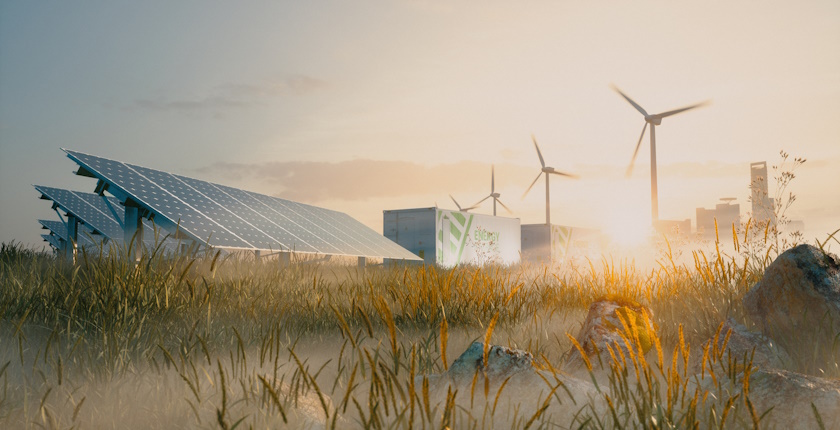
In an accelerating investment wave, companies in Romania are combining BESS with solar power, hydropower and wind power, or building standalone energy storage facilities. The group includes R.Power, Hidroelectrica, Engie and more big names.

Recent updates about investments in battery energy storage systems (BESS) in Romania indicate the technology is becoming another pillar of the country’s energy transition alongside wind power. For several years now, photovoltaics, and prosumers in particular – including municipal authorities, have dominated the scene. Geothermal energy is another emerging segment.

The government has provided incentives both for households and utility-scale battery storage. Companies are combining batteries with solar and wind power as well as hydropower capacity.

Investing in BESS colocated with renewable electricity plants or as standalone facilities in Southeastern Europe enables income from high spreads between wholesale power prices in daily trading. It is especially significant given the increase in the occurrence of zero and negative prices.

Notably, neighboring Bulgaria has earmarked massive funds for support to BESS investments while also focusing on pumped storage hydropower projects. Greece also held several rounds of auctions for battery storage.

R.Power to start building 127 MW standalone battery

R.Power is investing in BESS in Romania, which is one of its strategic markets, together with Poland, where it is headquartered, and Italy, Germany, Spain and Portugal. Battery storage makes up 17.5 GW or more than half of its total development pipeline in Europe.

The company said it would hybridize its existing and future PV assets and scale the integrated capacity to several gigawatts in the coming years. It has over 1.2 GW of projects for standalone BESS in Romania. “And that’s just the beginning,” R.Power said.

It obtained EUR 15 million in funding for a future 127 MW facility. It is about to start building the BESS in Scornicești in Olt county, west of Bucharest. R.Power is planning to complete it in a year. The battery energy storage system would have a duration of two hours, translating to 254 MWh in capacity. The project received funding from the National Recovery and Resilience Plan (NRRP or, in Romanian, PNRR).

Still, in the company’s view, further legislative changes are needed to fully harness the potential of the technology.

Hidroelectrica to add large battery to Iron Gate 2 hydroelectric plant

State-owned Hidroelectrica, the largest electricity producer in Romania, wants to install a battery storage system at Iron Gate 2 (Porțile de Fier 2) on the Danube. Located on the border with Serbia, it is the second-largest hydroelectric plant in the country, at 252 MW in nominal capacity. The complex, which the two countries share, is known as Đerdap in Serbian.

The BESS would have 64 MW in nominal power and a four-hour duration (256 MWh), Profit.ro reported. Hidroelectrica plans to use it for providing balancing services to the national electricity system (SEN) and adjust the time intervals of its hydropower production.

The contract for the installation of the facility is estimated at EUR 61.2 million plus value-added tax, according to the article. It would be integrated with the hydroelectric plant. The company is receiving bids from potential contractors by August 28.

French Engie has BESS projects for its existing PV plant, wind park

France-based Engie’s subsidiary in Romania intends to install a BESS at its newest solar power plant, of 37.2 MW in peak capacity, in Ariceștii Rahtivani. It commissioned the PV facility in June. The location is north of Bucharest, in Prahova county.

The battery energy storage system project is for 20 MW in operating power and 80 MWh. It would consist of 16 containers, 192 inverters and four transformer units.

The wind park in Băleni will reportedly add a small BESS facility

Engie Romania is working on another investment, through its Alizeu Eolian project firm. It plans to add batteries to a 50 MW wind park in Băleni, Galați county, which was built in 2013.

The company obtained the building permit last year. It also got clearance two months ago for connecting the BESS with a 110/20 kV transformer station via an underground line. Economica.net learned that the battery storage facility would have 5 MW and a two-hour duration, costing the firm EUR 2 million.

Engie’s project was included in the reserve list last September after a public call for support to battery storage. The Ministry of Energy selected 13 applications for grants from NRRP. Another 25 passed, but remained below the line.

Government bolstering battery investments with grants

The state aid scheme was worth EUR 103.5 million, of which EUR 79.6 million came from the European Union’s Recovery and Resilience Facility (RRF).

Among the beneficiaries are Electrica, in which the government holds just under 50%. Renovatio Trading. OMV Petrom, Public Power Corp. (PPC) and Verbund have projects on the B list.

For its 65 MWh project in Toplița in Harghita county, in eastern Transylvania, Renovatio Trading is buying the equipment from Trina Storage. The firm is part of Trina Solar.

Visual Fan is winning major contracts for the procurement and installation of batteries

Allview Energy, part of Romanian company Visual Fan, is handling the alternating current (AC) side in Renovatio Trading’s investment.

In addition, Visual Fan became the contractor for a BESS within Eurowind Energy’s Teiuș solar park.

The Danish developer intends to deploy a 117 MWh energy storage unit with lithium-iron-phosphate (LFP) batteries, within a year. It valued the project at over EUR 16.6 million. The companies said they would carry out the works in partnership with TQM Services and Voltlink. The investment includes the battery management system and liquid cooling.

In June, the ministry approved a EUR 3.4 million grant from the EU’s Modernisation Fund to Termoficare Oradea. It has a project for a 10 MW solar park with a 15 MWh storage unit, worth EUR 18.6 million altogether.

Austria’s Verbund conducting EUR 22.7 million project

Verbund has almost all the permits for a BESS project at its 226 MW wind farm in Casimcea in Tulcea county. The company headquartered in Austria said it has secured financing as well and that it is already contracting the equipment.

The wind farm was commissioned in 2012. The energy storage segment would have up to 50 MW and up to 100 MWh. It would be located at the Alpha Wind Nord section of the existing facility, of 81 MW.

Still, the basic variant’s size will be 48.3 MW, with 76 MWh in capacity, according to Profit.ro. There would be 34 containers at the site selected for the BESS.

The majority government-controlled utility values the investment at EUR 22.7 million, of which more than EUR 10.7 million is for the storage facility itself. The location spans five hectares.

After coming up short in the public call, Verbund submitted the project for a grant from the Modernisation Fund.

In mid-May, Romania hosted 240.7 MW of battery capability and a total capacity of 404.9 MWh.

by in News

Romania preparing EUR 300 million in subsidies for geothermal heating, cooling

The Romanian Government has drafted a state aid mechanism for the production and transport of geothermal energy for district heating or cooling systems. The proposed scheme would be worth EUR 300 million, sourced from the European Union’s Modernisation Fund.

In addition to solar and wind energy, hydropower and battery energy storage systems, Romania is increasingly counting on geothermal potential for its energy transition and decarbonization efforts. The government in Bucharest is preparing EUR 300 million in subsidies for geothermal district heating or cooling systems, Profit.ro reported.

It drafted a state aid package that would be covered from the Modernisation Fund. It is a tool for supporting investments in renewables, energy efficiency, storage and networks and a just transition in 13 European Union member states with lower incomes. The funds are from the proceeds of the sales of greenhouse gas emission certificates within the EU Emissions Trading System (EU ETS).

The proposed subsidies are aimed at the production and transport of heat from geothermal energy, including modernization projects, to the points of connection with the district heating network, according to the document.

No need for auction as budget is sufficient for all mature projects

The budget would be divided into EUR 50 million per year through 2030. The funds are intended to cover the net additional costs of the projects – funding gaps. Typically, they are determined as the difference between the net present value of the factual scenario and the counterfactual scenario over the life of the project, the update reveals.

The government estimated that nine projects would split the available funds

There would be nine beneficiary projects, translating to EUR 33.3 million each, the government estimated. Eligible are thermal energy producers and municipal authorities and their units.

There won’t be a competitive bidding process for allocating the state aid, as the Ministry of Energy received too few mature proposals since 2023, within its exploratory public call, the document adds. The government has concluded the budget would cover the potential demand.

Bucharest, Timișoara among potential beneficiaries

State-owned Electrocentrale București (ELCEN), which produces thermal energy for the district heating system in the capital Bucharest, and National Company Bucharest Airports (CNAB), are among the entities interested in the subsidies.

Bucharest’s Sector 1 administrative authority and the Municipality of Timișoara are in the group as well. The latter, Romania’s fifth-largest city, established cooperation last year with OMV Petrom for district geothermal heating.

The article noted that Green Tech International, listed on the Bucharest Stock Exchange (BSE or BVB), is on the list. It operates geothermal wells in Călimănești-Căciulata in the country’s south. The company also supplies heat and sanitary hot water in Nădlac in Arad county in the northwest.

One other company interested in the state aid scheme is Transgex. The city of Oradea, where it is based, inaugurated an 18 MW geothermal district heating plant two months ago.

The government recently launched a EUR 56 million grant program for municipal authorities for geothermal energy projects.

In other relevant news from Southeastern Europe, Slovenia launched a EUR 51.2 million cofunding package for green district heating and cooling ten days ago, for companies and cooperatives.

by in News

Slovenia publishes call for incentives for wind, solar power projects

Solar and wind power projects with or without energy storage that are on Slovenia’s priority list can be submitted for grants from the European Union’s Modernisation Fund. The round is worth EUR 29.5 million and the deadline is January 7. Notably, of the 1,117 projects for renewables and cogeneration approved for state support so far, only 254 were completed by the end of 2024.

The Ministry of the Environment, Climate and Energy launched a public call for cofunding under a mechanism for the modernization of energy systems in Slovenia and improvement of energy efficiency. It is for projects for solar and wind power plants, with or without storage, from the so-called A list of indicative, priority investments.

Eligible companies can receive support from the EU’s Modernisation Fund under the RES Scheme (Part A). It was approved by the European Investment Bank. The list was published in March of last year.

Total planned support amounts to over EUR 84 million and the selected projects must be completed by the end of September 2030. The deadline for submissions in the current round is January 7, 2026.

The grants can cover up to 45% of the costs for photovoltaic and wind power systems and a maximum of 30% of the electricity storage segment, the documentation shows. Storage capacity must be at least 0.75 kWh per kW of the nominal capacity of the power plant.

All five eligible projects are within state-owned HSE Group

There are 21 items on the A list and most are power grid investments. Only five are for renewables, of which Dravske elektrarne Maribor (DEM) is present with its controversial Ojstrica wind farm project, the proposed expansion of the Zlatoličje-Formin solar park, and the ZOOP photovoltaic project for 9.9 MW in peak capacity on the former Pobrežje waste landfill.

The largest priority investment among the ones that can apply in the current round is HSE’s proposed floating PV plant with batteries

The company is part of state-owned Holding Slovenske elektrarne – HSE. Another subsidiary on the list, Soške elektrarne Nova Gorica (SENG), intends to expand its recently commissioned Kanalski Vrh solar power plant.

HSE itself has the largest project – for the Družmirje floating solar power plant, which would include storage. It also plans to produce green hydrogen using electricity from the facility.

Few completed energy production projects among ones selected through public calls

The Energy Agency of Slovenia has so far approved 1,117 renewables and cogeneration projects to enter the support scheme, selected through 13 public calls. The combined planned capacity is 794 MW, of which there were 996 renewable energy projects, for 682 MW.

However, only 254 endeavors, with 112.6 MW altogether, were completed by the end of last year. In the previous round, the agency selected 507 projects, for a total nominal capacity of just over 259 MW, mostly for PV plants.

Of note, lengthy procedures, strict environmental rules and local opposition are keeping Slovenia at the bottom of the European Union’s wind power capacity chart in the European Union. The country hosts just three standalone wind turbines and DEM has contracted the fourth one.

by in News

EU’s Modernisation Fund disburses EUR 3.66 billion for clean energy projects in nine countries

Energy modernization projects in nine member states of the European Union will receive a total of EUR 3.66 billion from the Modernisation Fund, in the largest disbursement to date from the facility financed by carbon pricing revenues, according to a press release from the European Commission. The selected projects focus on renewable energy, grid upgrades, energy storage, and energy efficiency.

The largest beneficiary of the latest disbursement is Poland, which will receive EUR 1.33 billion for its projects, followed by the Czech Republic, with EUR 1.05 billion, and Romania, with EUR 712.3 million. Hungary will get EUR 181.3 million, Croatia EUR 170 million, and Greece EUR 113.6 million. The rest will go to Latvia (EUR 40 million), Lithuania (EUR 37 million), and Slovenia (EUR 19.7 million).

Croatia will finance renewable heat production and zero-emission transportation, and Slovenia will upgrade power grid to integrate renewables

In Croatia, EUR 80 million will be used for the production and use of heat from renewable energy sources and energy efficiency improvement in heating and cooling systems. The rest will go to investments in zero-emission transportation. In Slovenia, the funding will facilitate renewables integration through the modernization and development of the electricity transmission and distribution network.

Greece, which became a Modernisation Fund beneficiary in January 2024, intends to replace urban diesel buses with new electric buses, improve energy efficiency in municipal swimming pools, and switch the heating and cooling systems in its greenhouse infrastructure to renewables.

In Romania, the funding will help improve the energy efficiency of facilities covered by the European Union’s Emissions Trading System (EU ETS), support the contract-for-difference (CfD) scheme for onshore wind and solar, and finance the installation of solar and wind power plants for self-consumption in the agricultural and food sectors and public institutions. It is also intended for investments in new solar, wind, and hydropower capacities and to support the modernization and rehabilitation of the district heating network.

In the Czech Republic and Lihtuania, the funding will support energy storage projects

Other example projects include investments in storage capacity for renewable electricity in the Czech Republic, investments in large-scale energy storage capacities in Lithuania, and a clean air program in Poland that focuses on energy efficiency improvements and heat source replacements in single-family houses, according to the press release.

The investments will reduce greenhouse gas emissions in the energy, industry, and transportation sectors, improve energy efficiency, and help the beneficiary states meet climate and energy targets, the commission said.

The projects will also help improve people’s everyday lives, by reducing bills, improving public services, creating jobs, and making the energy transition real, fair, and beneficial for all, according to Teresa Ribera, the European Commission’s Executive Vice-President for Clean, Just and Competitive Transition.

With this latest round of funding, the total disbursements from the Modernisation Fund since January 2021 have climbed to EUR 19.1 billion. The fund is financed by revenues from the auctioning of emission allowances under the EU ETS.

by in News

Grants for public institutions’ solar projects in Romania top EUR 500 million

The Romanian Ministry of Energy has signed 29 more grants to public entities for investments in solar power plants for self-consumption, bringing the total number of projects under the program to 1,046. The latest round of grants is worth EUR 11.3 million, putting the total sum approved so far at EUR 502 million.

The 29 grants, financed from the European Union’s Modernisation Fund, will help build solar power plants with a total installed capacity of 9.13 MW at schools, hospitals, city halls, and other institutions across Romania. It brings the total installed capacity supported under the program to over 403 MW, according to a press release from the Ministry of Energy.

The latest batch of projects puts the total planned capacity at over 403 MW

In many cases, installed renewable capacities cover up to 70% of the energy needs of public institutions, the ministry noted.

Romania’s outgoing Minister of Energy Sebastian Burduja hailed the program as a “paradigm shift,” noting that Romania was already in a new energy era, with local communities no longer just consumers, but active participants.

“Over the past two years, the Ministry of Energy has consistently provided support to local public authorities that understood the importance of investing in energy production for their own consumption. We have made funds available, simplified procedures, and worked side by side with beneficiaries so that the projects move forward quickly,” Burduja stated in a Facebook post.

The latest round of contracts covers public entities in 18 counties across the country: Arad, Argeș, Bacău, Brăila, Călărași, Constanța, Dâmbovița, Galați, Brașov, Gorj, Hunedoara, Maramureș, Mehedinți, Olt, Sibiu, Suceava, Teleorman, and Timiș.

The number of contracts has increased from 633 in March

In March, the ministry said it had signed 633 contracts, worth a combined EUR 339 million, of which EUR 294 million was from the Modernisation Fund. Total planned capacity at the time was 237.4 MW.

by in News

Romania launches renewables auction for 3.5 GW

Following a successful first round, in which developers won government support for projects of 1.53 GW altogether, the Romanian Ministry of Energy issued another call, for 3.47 GW of wind and solar power capacity. The deadline for submissions is July 11.

The Ministry of Energy of Romania issued a public call for the second round of auctions under a mechanism for awarding contracts for difference (CfDs). With EUR 3 billion at hand, via the European Union’s Modernisation Fund, the country is supporting an overall 5 GW of wind and solar power capacity.

Developers can apply by July 11 for the remaining quotas of 2 GW for wind parks and 1.47 GW for photovoltaic facilities. In the first round, 21 participants won the subsidies for 1.1 GW and 432 MW, respectively.

Romania cuts ceiling prices

Ceiling prices for government support are lower this time. Wind power is at EUR 80 per MWh or EUR 2 per MWh under the previous maximum possible bid. The authorities slashed the cap for solar power to EUR 73 per MWh from EUR 78 per MWh.

The contracts for difference would last 15 years. The burden of administrative and electricity transmission expenses is passed on to consumers.

More leeway for large players as they are no longer limited to 25% of quota

Another difference is that the 25% cap on the maximum capacity awarded per applicant was scrapped, the documentation shows. In addition, there is a possibility to award up to 20% more capacity than in the nominal quota. Minister of Energy Sebastian Burduja explained that the idea is to avoid the risk of losing a large project with a marginal bid.

He noted that Radramo Power is developing the largest wind power project from the first auction, 245 MW. The Heliowin project, for 125 MW, is the biggest one in the PV segment. It belongs to Israeli company Econergy. Both proposed facilities will launch production by January 28, according to the schedule.

In the first phase, applicants will qualify with their technical offers. The plan is to open financial bids from eligible entities on August 13, and the winners would have until September 9 to sign the contracts. Romania’s transmission system operator Transelectrica has the task to evaluate the applications.

by in News

Croatia grants EUR 30 million to firms for renewables, energy efficiency

The Croatian government has approved EUR 30 million in grants to businesses for investments in renewable energy production and energy efficiency measures.

The Ministry of Environmental Protection and Green Transition and the Environmental Protection and Energy Efficiency Fund (EPEEF or FZOEU) have awarded 46 grant contracts to companies for projects focused on generating electricity from renewables and energy efficiency in the processing industry.

The proposals were selected via the European Union’s Modernisation Fund under the public calls ‘Production of electricity from renewable energy sources in the processing and heating industry’ and ‘Investment in energy efficiency measures and high-efficiency cogeneration in the processing industry’.

The ministry has received 141 applications

A total of 141 project proposals were submitted within the first call, with 103 involving photovoltaic plants and one for a biomass power facility. The second public call attracted 37 projects.

According to Luka Balen, manager of the Environmental Protection and Energy Efficiency Fund, the contracts should serve as business drivers for entrepreneurs promoting renewable energy production and supporting the green transition.

Energy self-sufficiency and renewable energy production are key priorities of the Government of Croatia, he argued.

Projects with a total value of almost EUR 90 million have received grants

Minister of Environmental Protection and Green Transition Marija Vučković revealed that EUR 30 million was allocated to the projects, with a total value exceeding EUR 87 million.

In her words, they are intended for the production of electricity from renewable sources and measures for energy efficiency and highly efficient cogeneration in the processing industry. Vučković pointed out the projects would result in significant electricity savings and a reduction in greenhouse gas emissions.

The companies will benefit from cost savings, opportunities to adopt new technologies, and a quick rise in income, the minister added.

Of note, the Modernisation Fund is an EU program financially supporting upgrades in energy systems and the improvement of energy efficiency in 13 lower-income member states.

Established in 2018 for the 2021-2030 period, it aims to help the beneficiary countries achieve their climate targets and the objectives of the European Green Deal. It is financed by revenues from the auctioning of emission allowances under the EU Emissions Trading System (EU ETS).

by in News

Eurowind Energy completes its 60.2 MW solar park in Romania

Eurowind Energy’s 60.2 MW photovoltaic park in Transylvania will be put into operation in late April, Minister of Energy Sebastian Burduja said. The facility is joining the almost 600 MW in new capacity funded from the National Recovery and Resilience Plan. In addition, the ministry prepared a EUR 450 million package of grants for companies for energy efficiency and self-consumption.

After 14 years of doing business in Romania, Denmark-based European Energy is materializing its first major endeavors in the country. Minister of Energy Sebastian Burduja revealed that the company’s solar power plant in Teiuş would be commissioned by the end of the month.

The location is in the Transylvania region. Eurowind Energy received EUR 15 million from the government for the project. It costs EUR 47.2 million in total, or EUR 55 million with value-added tax. Construction began a year ago. The system in Alba county will generate an estimated 104 GWh per year.

Burduja said almost 600 MW of capacity has been commissioned within the projects that Romania funds through the National Recovery and Resilience (NRRP or, in Romanian, PNRR).

Eurowind Energy has major renewables projects lined up in Romania, Bulgaria

Eurowind Energy, based in Hobro, Denmark, is one of the biggest wind and solar power developers in Romania.

The Danish company recently signed a 12-year virtual power purchase agreement (PPA) with Autoliv in Romania, for the supply of electricity from the Pecineaga wind park. Eurowind Energy is preparing to put the facility into operation.

It is also building a 238 MW solar power plant in Yambol in neighboring Bulgaria, with Renalfa IPP. They plan to add wind turbines and batteries.

EUR 450 million available for firms for energy efficiency, self-consumption

At the same event, Burduja said the ministry is launching two calls worth EUR 450 million combined. They are intended for support to the energy-intensive industry.

The package for is for companies. It consists of EUR 150 million for energy efficiency – the replacement of outdated equipment – and more than EUR 300 million for the production of electricity for self-consumption.

The Ministry of Energy has set an extremely ambitious target of 2.5 GW of new capacity to be put into operation this year, Burduja stressed. It is two times more than in 2023. Active energy storage capacity is nearing 400 MWh, he added.

In the energy efficiency call, fims can receive as much as EUR 30 million each from the Modernisation Fund. The self-consumption segment is for the ones with available land and projects for photovoltaic parks or even wind farms and micro hydropower plants.

According to the International Renewable Energy Agency (IRENA), Romania increased its solar power capacity at the end of last year by 57% to 4.7 GW. Most of it is from prosumers. The wind power segment is picking up, but slowly, after a stagnation that began a decade ago.

  • 1
  • 2