by in News

Albania Proposes Strategic Shift: State to Take Over Emergency Oil Reserves from Private Sector

Enea Karakaçi, Minister of Infrastructure and Energy (Ministry of Infrastructure and Energy), stated that one of the ministry’s principal priorities remains ensuring the uninterrupted supply of fuel to the market.

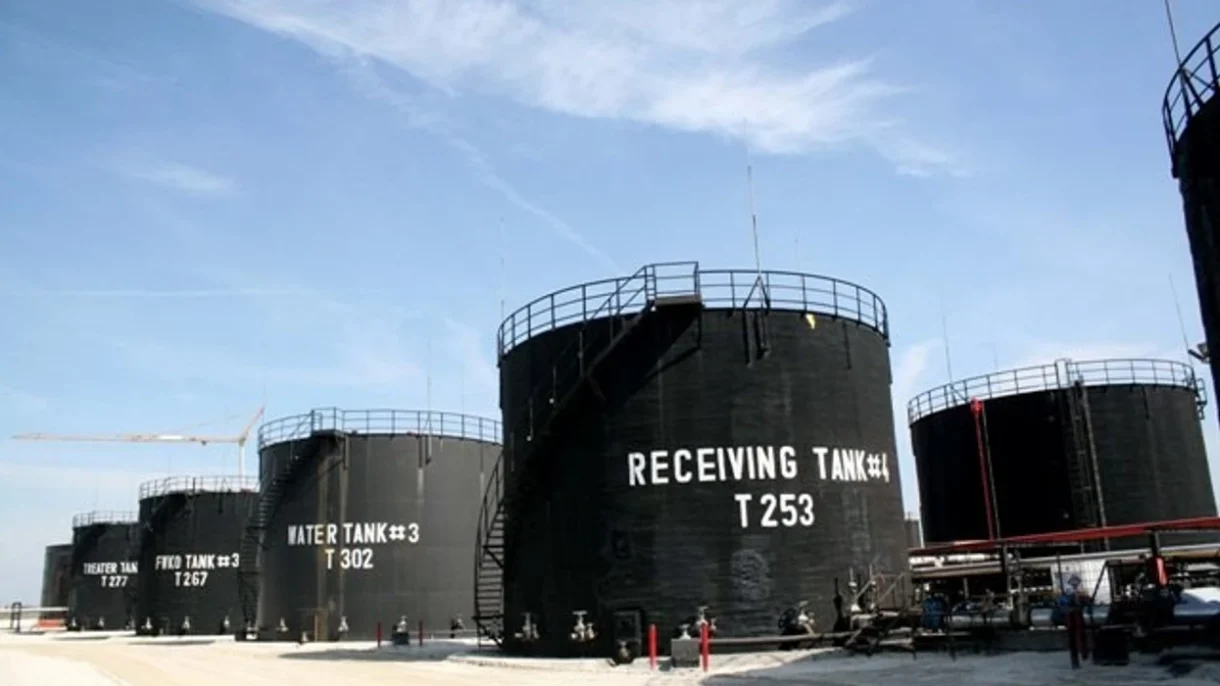
Minister Karakaçi announced that a new draft law on the oil reserve, expected to be approved by the government within two to three weeks, will transfer physical custody of the reserve from private operators to a state agency for up to 90 days.

“With respect to the reserve obligation, which is calculated based on last year’s daily turnover, we have notified all operators that they are required to hold a 30-day reserve, with the remainder contracted by other means, to ensure there is no shortage of hydrocarbons.

The blockade of the Strait of Hormuz has not affected supplies to our country.

The new draft law on the oil reserve, prepared in accordance with the European Union directive, will be adopted by the government within two to three weeks. Under the draft law, oil reserves will no longer be held by companies but by a state agency that will ensure the physical availability of hydrocarbons for up to 90 days.”

Minister Karakaçi also reported that retail inspections indicate no abuse in fuel pricing, and that company profit margins ranging from 13 to 14 lekë per litre are acceptable.

“The final retail price in Albania is largely determined by import costs, which makes domestic prices volatile. A cost of 147 lekë excluding VAT reflected the real cost of the product. This indicates a gross profit of 13 to 14 lekë, which is an acceptable margin. We have not observed price abuse, and therefore did not find it justified to convene the board.”

Prime Minister Edi Rama added that Albania does not produce petroleum suitable for final retail use, because the oil we extract is heavy crude. Processing it for consumer-grade fuel would require a refinery and entail high costs for conversion to a usable product.

“As history has shown, this oil has not proven suitable for direct consumer use, except for certain industrial applications.”

by in News

Albania’s Water Infrastructure Investments Surpass €150 Million in 2025

Investments in Albania’s water supply and sewerage sector reached a significant milestone in 2025, exceeding 15.6 billion ALL (approximately €156 million). This surge in funding reflects the government’s intensified efforts to modernize aging infrastructure and meet European Union environmental standards.

According to official data from the Ministry of Infrastructure and Energy, the 2025 budget execution for the Water Supply and Sewerage (WSS) sector underscores a strategic priority to ensure 24-hour water availability and drastically reduce technical and administrative losses.

Strategic Objectives and Financial Allocation

The total investment of 15.6 billion ALL was channeled through several key pillars. The primary focus remains the rehabilitation of distribution networks in major urban centers and the expansion of wastewater treatment capabilitiesa critical requirement for the country’s tourism-driven economy and its EU integration path.

Government officials noted that these investments are part of a broader master plan aimed at making the sector financially self-sufficient. Historically, the Albanian water sector has struggled with high levels of “Non-Revenue Water” (NRW)—water that is produced but “lost” before it reaches the customer through leaks or unauthorized consumption.

Institutional Reform and Aggregation

The 2025 investment peak coincides with the ongoing sector reform, which involves the “aggregation” or merging of municipal water utilities into larger regional entities. This consolidation is designed to improve management efficiency, optimize human resources, and create economies of scale that allow for better maintenance and service delivery.

By centralizing operations, the government aims to reduce the heavy reliance on state subsidies, directing more funds toward capital investments rather than covering the operational deficits of smaller, inefficient utilities.

International Support and Key Projects

A substantial portion of the €150 million investment portfolio is supported by international development partners. High-impact projects are currently being co-financed by:

  • KfW (German Development Bank): Focusing on the modernization of networks in coastal and northern regions.

  • The World Bank: Supporting the National Water Supply and Sanitation Sector Modernization Program.

  • The European Union (IPA Funds): Specifically targeting wastewater treatment plants to protect Albania’s coastline and rivers.

Key projects highlighted in the 2025 report include the ongoing overhaul of the Tirana water network, which seeks to secure a continuous supply for the capital’s growing population, and critical interventions in the Durrës and Vlora regions to support the booming hospitality sector.

Looking Ahead

While the €150 million figure represents a record high, experts suggest that sustained investment will be required over the next decade to fully modernize the national grid. The Ministry of Infrastructure and Energy emphasized that the focus for the remainder of the year will be on monitoring the performance of the newly aggregated regional utilities to ensure that the capital infusion translates into tangible improvements for Albanian citizens and businesses.

by in News

Tender for new Porto Romano terminal fails after sole bidder withdraws

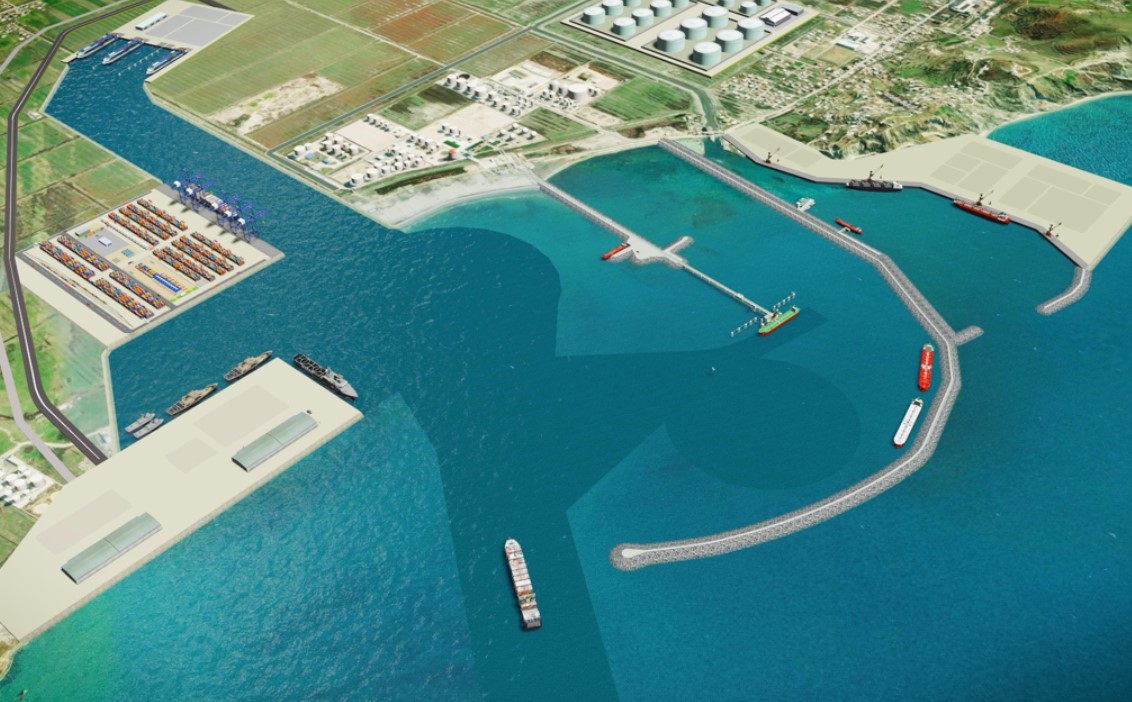
The public tender for the construction of Albania’s new commercial port in Porto Romano has collapsed after the single remaining bidder withdrew from the competition. Minister of Infrastructure and Energy Enea Karakaçi confirmed on Wednesday that the company pulled out of the project, citing escalating economic pressures.

“We are facing the withdrawal of the only bidder left in the race for purely economic reasons linked to rising costs,” Minister Karakaçi stated. “As a result of the current crisis, overall construction expenses have surged, and the bidder has used this to justify their exit. The commission will now proceed according to established protocols.”

Addressing the setback, Karakaçi echoed recent remarks by the Prime Minister, suggesting that external forces have actively sought to undermine the infrastructure initiative. “There are various actors attempting to stall and sabotage this critical national project for diverse reasons, including economic motives,” he noted. Despite the hurdle, he emphasized the government’s resolve: “We will devise an alternative strategy. No actor will be able to stop this project, as it is vital to the country’s economic development.”

The Minister also moved to assuage concerns over potential logistical disruptions, clarifying that the delay in selecting a new contractor will not affect daily operations at the existing Port of Durrës. The transition is inherently tied to the “Durrës Marina” real estate development—which will eventually occupy the current port’s territory under a state agreement—but that project is still only in its preliminary phase.

In the interim, the Albanian government is continuing its collaboration with international engineering consultancy Royal Haskoning to reassess the technical and financial criteria for prospective companies interested in taking over the new port’s development.

A Fraught Bidding Process

The ambitious project, officially titled the “New Integrated Commercial Port of Durrës in Porto Romano – Phase I,” was launched by the Durrës Port Authority in 2024 with an estimated budget limit of 39.3 billion Albanian Lek (ALL). The initial phase of construction was projected to span 1,220 days, or approximately three and a half years.

Porto Romano

However, the procurement process has been marked by strict filters and legal friction. In April 2025, the Bid Evaluation Commission announced that only two entities Archirodon Construction and Van Oord Dredging and Marine Contractors had passed the technical pre-qualification stage. Major industry players, including Webuild and a consortium led by Jan De Nul, were disqualified.

This led to a legal clash when the Jan De Nul consortium filed a formal complaint with the Public Procurement Commission (KPP). The KPP ultimately dismissed the appeal in late April 2025, allowing the contracting authority to move forward.

By September 2025, the competition had narrowed entirely. Open procurement data revealed that only one qualified economic offer remained to proceed to the contract signing a final step that has now been derailed by the company’s sudden withdrawal.

by in News

Albania Moves Toward Oil Security Reserves Amid Global Energy Volatility

The Albanian government has been working for several years to pass legislation governing the creation, maintenance, and management of minimum security reserves for crude oil and its refined products.

According to international standards, these emergency stocks are calculated at either 90 days of net imports or 61 days of average daily consumption, whichever is higher. These reserves are designed to be deployed during extraordinary circumstances, such as physical supply shortages or geopolitical crises.

The initial draft, proposed in February 2019, introduced a co-management formula between the state and the private sector—a departure from the current model where reserves are held entirely by private companies and refineries. Under the proposed framework, a public entity would manage 60 days of average consumption, while the remaining 30 days would remain the responsibility of private operators.

The legislative proposal envisioned the creation of a dedicated public body named the State Agency for Oil Security Reserves, operating under the jurisdiction of the Ministry of Infrastructure and Energy (MIE).

The Cost of Energy Security

The draft law stipulated that the agency would be self-financed through a dedicated fee levied on every liter of fuel purchased by refineries and wholesale companies. This mechanism would essentially introduce a new fiscal obligation, which is expected to translate into higher pump prices for final consumers.

While the project has undergone various internal government discussions since 2019, it was only in October 2025 that it was formally released for public consultation. The current draft maintains the previous structure: a non-profit public entity, now dubbed the Security Reserve Authority, under the MIE.

Key administrative details include:

  • Article 10: Fees for obligated parties will be collected by the Customs Authority during the collection of excise duties.

  • Article 11: Payers are required to submit payment data within 30 days of the end of each calendar month.

Despite the fact that the project has yet to be finalized, market operators anticipate additional costs totaling hundreds of millions of euros. These costs cover the procurement, storage, and logistics of the security stocks—burdens that are expected to increase operational costs for companies and, ultimately, prices for the consumer.

Global Context: Iran Conflict Risks New Energy Crisis

As Albania formalizes its domestic security measures, the escalation of conflict in the Middle East—specifically involving Iran—is sending shockwaves through global energy and financial markets. International economic analysts warn that a prolonged conflict could trigger severe supply disruptions, oil price spikes, and renewed inflationary pressures worldwide.

A primary concern is the potential for conflict to damage regional energy infrastructure or obstruct oil transit through the Strait of Hormuz, one of the world’s most critical energy corridors.

Market Analysis

In a recent analysis titled “War with Iran is a Nightmare for Oil and Gas Markets,” Bloomberg noted that a broad regional conflict has long been considered the “worst-case scenario” for the energy sector. The report emphasizes that the Persian Gulf remains a cornerstone of global energy supply, and any disruption there triggers an immediate market reaction.

Similarly, The Economist has warned of a significant shock to global markets. In an article titled “War in Iran Could Trigger the Biggest Oil-Market Shock in Years,” the publication highlights the extreme sensitivity of energy markets to regional tensions. Any disruption to tanker traffic could drastically reduce global supply and drive energy prices to record highs.

Financial and Economic Ripple Effects

The geopolitical tension has already impacted financial markets:

  • Safe-Haven Assets: Investors are pivoting toward gold and bonds.

  • Volatility: Stock markets are experiencing fluctuations as geopolitical risk premiums rise.

  • Inflation: Analysts warn that high oil prices ripple through the economy by increasing costs for transport, manufacturing, and food production.

Experts conclude that countries dependent on energy imports are the most vulnerable. European and Asian economies, in particular, face the prospect of surging production costs and new inflationary cycles if energy prices remain elevated.

by in News

Albania’s Solar Gold Rush: Who Profits, Who Pays?

As Albania races to become a net exporter of electricity, dozens of vast solar parks have sprouted almost overnight on fertile farmland and pastures, igniting fierce resistance from local communities. In Fier’s village of Boçovë, a normally quiet farming district near the Seman delta, families woke one day to find heavy machinery digging up fields they had tended for generations. “It turned out a photovoltaic park was being built here, and our lands aren’t ours anymore,” complained Nikoll Ndoi, a local schoolteacher. Ndoi and his neighbours say they gained these plots in the early 1990s under Albania’s land-reform law (Law 7501), but were never issued legal titles and now discover the state has quietly expropriated them for solar panels. More than a dozen families in Boçovë are locked in a fight to reclaim their soil from a new small company, “Brevi Construction”, where it is mentioned in the media that it is affiliated with the family of Pëllumb Salillari. Such clashes are multiplying nationwide as the government greenlights hundreds of megawatts of solar capacity, prompting farmers and herders to denounce an “energy revolution” that is trampling their rights and livelihoods.

Residents of the Levan Administrative Unit protested again in the village of Boçova, after work began on their agricultural lands to install photovoltaic panels by the company "Brevi Construction", with administrator Afërdita Salillari.

Residents of the Levan Administrative Unit protested again in the village of Boçova, after work began on their agricultural lands to install photovoltaic panels by the company “Brevi Construction”, with administrator Afërdita Salillari.

The Albanian government, led by Prime Minister Edi Rama, has made a dramatic pivot from its traditional hydropower surplus to a sun‑driven future. Since 2018, the Council of Ministers approved dozens of solar park projects and the energy regulator (ERE) licensed over 70 private solar companies. The planned PVs are a total of nearly 1,000 MW, about 30% of Albania’s installed capacity and none of it is guaranteed for local use. Instead, most is slated for export to Italy and beyond. Ex-director of Energy Policies at Ministry of Infrastructure and Energy  Gjergj Simaku warns this is a “paradox”: Albania could end up exporting clean power while continuing to import fossil‑fuel electricity during winter. Simaku notes that 1 GW projects have no obligation to sell domestically, leaving local grids and consumers sidelined. Notably, Simaku does not address his own role during his long tenure at the Ministry of Infrastructure and Energy, where he was directly involved in shaping and implementing national energy policies. The governance gaps and regulatory weaknesses he now criticizes were also evident during the wave of small hydropower plant licensing over the past decade—a period marked by widespread concessions, limited oversight, and significant social and environmental consequences for local communities. The current tensions surrounding large-scale solar development bear striking similarities to that earlier expansion, raising questions about institutional continuity and accountability in Albania’s energy policymaking.

Municipal Public Assets Leased by Purpose of Use 2015 – 2024 (in hectares)

This policy u‑turn was codified in 2023 when the government amended the renewables law to allow solar farms on any land even vital grazing areas not just barren terrain. Green activists point out that at least half of Albania’s solar license rush is on former public pastures and forests. A recent survey by the All Green Center found many lease auctions were rushed, with no real competition or community input. “Support for green energy must not come at the expense of natural capital,” says environmentalist Ola Mitre. Birding expert Taulant Bino adds that multiple solar projects have been approved piecemeal, ignoring their cumulative impact on biodiversity. In fertile districts like Fier, dozens of solar parks now ring protected river deltas and migratory corridors. Normally one of Europe’s greenest electricity producers (90% hydro), Albania’s renewable expansion is outpacing environmental safeguards.

Locals report no meaningful consultations. In Boçovë, villagers say a developer quietly re‑zoned their family farms (marked on cadastral maps as “arable” or “forest”) into “unused state land” just as construction began. When the community complained to the Cadastre and Agriculture Ministry, nothing was fixed. In Darzezë (nearby Boçovë), elders who believed promised benefits (new roads, lighting) are now “disappointed,” saying “nothing was done, and they even took our water”. The local mayor’s office in Fier readily absolved itself of responsibility: “These projects aren’t licensed by local government,” Fier’s municipal response notes, adding only that it receives property taxes and nothing else. In effect, powerless villagers have found themselves squeezed: the state offers no legal recourse when it simply rents out “public” pastures to private developers.

A protest by residents of the village of Imshte in the Bubullimë unit in Lushnje.

Across the southwest, similar scenes played out. Last month in Imshtë (Lushnjë), about 70 farmers blocked the road to their police station, demanding authorities halt a planned solar park on 100 hectares they have grazed and farmed for 30 years. They accuse a local businessman, Elton Çekrezi, of quietly buying up the plot once officially designated as non‑transferable state land and forming a shell company SunXpower to install PV panels. MP Erion Braçe, who supports the Imshtë community, blasted the episode on social media as a “robbery of public land” by a clandestine “new agha,” warning that his supporters had been threatened during clashes with men bearing weapons. (Çekrezi’s family insists the land was legally bought at auction from former private owners, and they hold cadaster documents dating back to 1945 and 1998.) In Levan (Fier), villagers of Boçovë protested similarly when the company Bervi Construction began clearing fields they had cultivated for “almost 30 years”. Fourteen families, granted plots under the 1990s land law, but their claims were ignored, and now official records abruptly list the land under Brevi’s name. Farmers like Sandër Mujo have even petitioned prosecutors and the anti‑corruption SPAK agency, warning they will resort to self-vendication if the state does not intervene.

In August 2025, around 40 sheep farmers in Çërravë (Pogradec) held a rally after the local council moved to lease their one communal pasture (35.5 ha) to a solar investor. They decried the measure as a “direct violation of our livelihood” and threatened escalating protests if it proceeded. Independent councillor Arbër Male warned that the vote was a foregone conclusion with the beneficiary company “pre‑selected” by insiders. Such frustrations highlight a growing fear: that the clean‑energy drive is being hijacked by politically connected interests at the expense of ordinary Albanians.

A protest in the village of Çërrava, in the municipality of Pogradec

Critics say the evidence of cronyism is hard to dismiss. The Boçovë solar park was nominally awarded to “Albania Solar Power” (a tiny firm with €100,000 capital) owned by businessman Engjëll Agalliu yet locals see it as Pëllumb Salillari’s project in disguise. Likewise, in Imshtë a construction firm once run by Salillari is tied to Çekrezi’s land deal. Journalist investigations have exposed how clusters of permits went to companies tied to a few elite families, often without competitive bidding. (For example, four solar firms controlled by Armand Lilo’s relatives won megawatt‑scale licenses after a brief ministerial review.) The torrent of approvals has largely skipped formal auctions: as energy expert Simaku notes, “auctions have been forgotten; now licenses are given only on the free market, sold to us as if for domestic use but it’s not true”. NGOs also complain that municipalities have merely rubber‑stamped solar leases, lacking clear strategic planning on where solar parks are appropriate. All Green Center warns that so far, zero hectares of new PV forest have a strategic environmental assessment or master plan to guide them.

A protest in the village of Çërrava, in the municipality of Pogradec

Defenders of the solar boom argue Albania urgently needs a new generation after recent blackouts. The government’s National Energy Plan targets 54.4% renewables by 2030, so big solar projects are deemed necessary for “energy sovereignty”. Prime Minister Rama’s infrastructure ministry underscores that thousands of hectares of mostly unproductive land are available for lease; the projects will create green jobs and revenues. Indeed, Albania’s solar push aligns with EU climate goals and avoids new dams (and displacements) for hydropower. Statisticians note that in the past 10 years Albanian municipalities have leased about 6,350 hectares of public land for all purposes, with over a third (2,325 ha) of that just in 2024 mostly for solar parks. In total some 3,750 ha of state land are now contracted for renewable energy projects. Energy Minister Belinda Balluku, who is under investigation by SPAK, insists each plant needed both a Council of Ministers decision and technical approvals and that “everything is lawful, with environmental studies in place,” though she has not publicly addressed the growing protests.

Photovoltaic power plant in Kolonjë, residents in protest

Nevertheless, the ethical question remains stark. Who really benefits from this boom? Many locals answer: not them. Herders point out that solar panels are theoretically compatible with grazing (the technology allows it), yet companies invariably fence off and occupy the land outright. In Kolonjë, villagers say the developer (Turkish firm Fortis Energy & Construction) even redrew cadastral boundaries to claim around 400 hectares of steep pasture and riverbed (“zall”) that herders need for winter grazing. “If they put up panels, our village will have to leave,” one farmer warned, noting the man behind the project quietly acquired neighbouring plots over decades. Such tensions raise hard choices about property rights and the state’s role in declaring some lands sacrosanct for community use or not.

Protest against PV installation by local communities

Protest against PV installation by local communities

For now, many communities are calling for moratoria. Simaku and other analysts urge a strategic pause: map out priority corridors for solar (avoiding protected zones), require genuine public auctions and participatory planning, and bind new plants to domestic needs. Environmentalists warn that Albania’s decades‑old tradition of hydropower should not be cynically traded for a different form of energy dependence. “We risk exporting renewable energy and importing coal,” Simaku says. If that happens, the country may have allowed a green transition to line the pockets of the connected few rather than serve its people’s interests.

In the heated debate over Albania’s clean‑energy path, one thing is clear: expansion of renewables cannot be at the unchecked expense of farming communities. Without transparent governance and respect for local livelihoods, each new solar panel risks deepening rural distrust. Some farmers now speak of taking their case all the way to the European courts. Whether Albania’s solar revolution will shine on as a model of sustainability or become a catalyst for social unrest may hinge on whose voices are heeded in the fields, the villagers who till the earth, or the energy “czars” behind the grid.

by in News

Fier and Lushnja, the main destination for photovoltaic parks in Albania

The Ministry of Infrastructure and Energy in Albania has announced on Monday that it has received 10 new expressions of interest for the construction of photovoltaic parks in the country.

The requirements of various companies for the construction of these plants have been numerous throughout the summer after the approval of tariffs that the government will apply. The price of 100 euros per MWh for the purchase of electricity and various support schemes has caused many to run after the renewable resources.

Although so far, all requests have come for solar photovoltaic plants and none for the Wind Farm plants.

Fier and Lushnja areas have also received the most numerous applications, 5 only in the latest announcement, but added dozens of other requests since August. Along with the high level of solar irradiance supply throughout the year, and good flat terrain is a factor that has caused Myzeqeja Region to emerge in the demands of private investors.

In the Darëzezë area in Fier region, company SOLAR RENEWABLE ENERGY seeks to utilize 3.6 hectares of land to install a 2MW plant. The value of the investment amounts to 1.7 million euros.

Even in Seman Fier region, the company “3AD Energy” wants to use 2.34 hectares to set up a 1.75 MW photovoltaic park. The investment here amounts to 2.3 million euros.

In Lushnja region, “Plug” area, a temporary joint venture of three companies seeks to invest 3.9 million euros. This joint venture has asked the MEI to use a 10-hectare surface to install a 5MW power plant.

Again in Lushnja region, the temporary association of companies “FAVINA 1” SH.A. and “ARTYKA 2” SH.PK, has expressed the interest to build a 2MW photovoltaic park. The investment in the region thus adds an additional value of 2 million euros.

The company “Favina” wants to invest 2 million euros in Fier, to set up an 8 hectare plant of 2 MW.

Again  the company “Favina 1” wants to repeat the same investment in the Korca region. In Korça, a similar investment is required by the companies “HIDROCENTRALI QARR & KALTANJ”, as well as “REJ” sh.a.

In Pilur of Himara region, the company “Max Energy” wants to utilize 3 hectares of land to install a 2 MW photovoltaic park. This investment will reach the value of about 1.92 million euros.

In Durres, Solar – Expert Society wants to utilize 2.5 acres of land to set up a 1.98 MW plant with an investment value of 2.7 million euros.

The Solarium Society wants to build a 1.99 MW photovoltaic park in Vora near Tirana, utilizing 2.53 hectares of land. Here, too, the investment amounts to 2.7 million euros.

The total investment for this block of interest expressions published by the Ministry reaches 23.2 million euros and will increase the country’s power capacity by 22.7 MWh.