by in News

EU lawmakers urge for rule of law in Jadar lithium project in Serbia

A group of members of the European Parliament is asking the European Commission to demand from the Government of Serbia to comply with domestic and European law as regards Rio Tinto’s disputed Jadar lithium mining project. They pointed out that arresting and intimidating opponents who criticize the proposed investment is unacceptable. The European lawmakers invited Serbian activists to the European Parliament. Without strict rules, transparency and respect for local communities, things can end badly in mining, the Left’s Jonas Sjöstedt warned.

Rio Tinto is expecting to have its controversial lithium mining project Jadar in Serbia declared strategic by the European Union. Serbia and the European Commission have signed a memorandum of understanding for a strategic partnership in sustainable raw materials, battery value chains and electric vehicles. The Anglo-Australian mining giant’s proposed investment was met with years of fierce resistance from the local population and environmentalists.

Now a group of members of the European Parliament is also raising the issue of the persecution of activists, corruption and the risks to water, nature and public health.

Of note, Balkan Green Energy News has published a chronological overview of the key events in the development of the Jadar project since 2001, when the company arrived in Serbia.

The movement includes people from other areas in the country and neighboring Bosnia and Herzegovina with sites for the exploration of lithium and various minerals, as well as various mining operations.

Some mining companies leaving their waste behind for others to tackle

Completing their visit to Serbia, three EU lawmakers from the Left claimed that the Government of Serbia has many questions to answer about the Jadar project.

“My experience is that if you don’t put up strict demands on mining companies, if you don’t have transparency, if you don’t have respect for local communities, things can end really badly when it comes to mining,” MEP Jonas Sjöstedt stressed at a press conference.

He added that in northern Sweden, where he is from, some mining companies have extracted minerals for a short while before leaving without cleaning up first.

Sjöstedt: Multinationals take advantage of countries if they can

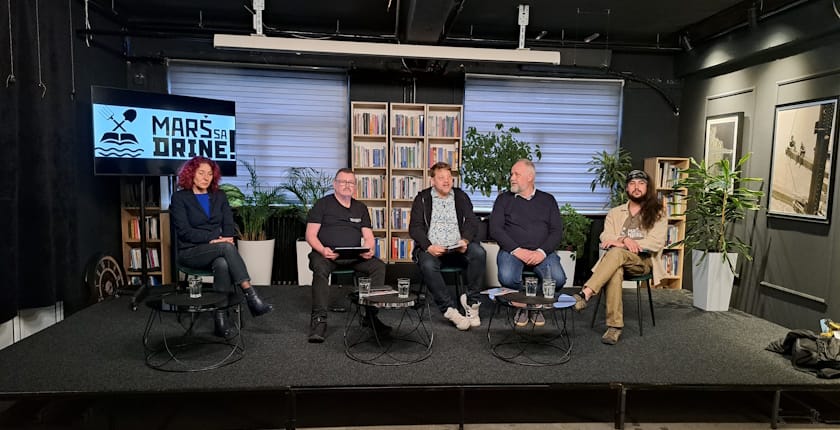
“That’s why it’s so important, so vital to listen to local communities. To have full respect for those who raise environmental concerns. And to not accept corruption or adapt legislation to the wishes of the multinational companies. Because they take advantage of countries if they have the chance,” Sjöstedt said at the event, organized by the Marš sa Drine activist group.

The environmental concerns in the Jadar area are real, especially about the quality of water for millions of people, in his view. If all the questions are not answered how toxic underground water and waste will be treated, it could be a very risky project, Sjöstedt pointed out.

“I’m also deeply worried about all the things we have heard about corruption. That it is possible for big multinational businesses to get their way with Serbian authorities by giving them economical benefits or making a contract that is not fully publicly available. I think that’s a really bad start of big industrial projects,” he asserted.

The level of intimidation against protesters including arbitrary arrests is unacceptable, according to Sjöstedt. “To be able to organize, to freely express your political will, it’s really the essence of democracy and that is what is at stake. Serbia is at a crossroads for the democratic development of the country,” he underscored.

Jadar is unique in natural harmony

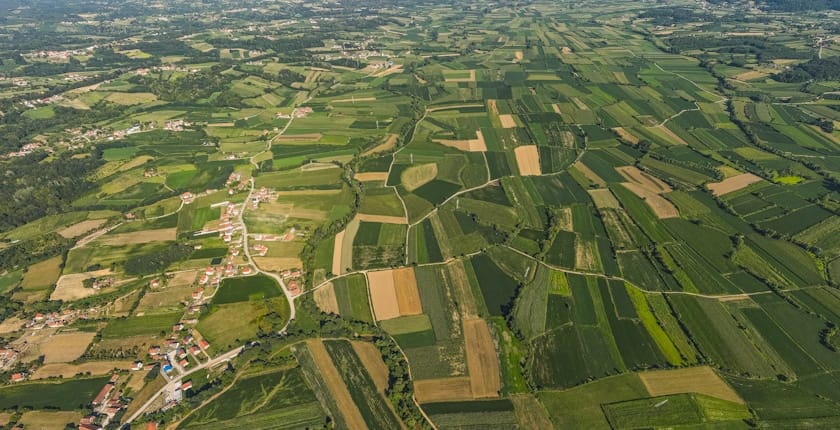
The MEPs from the Left vowed to bring activists from Serbia to the European Parliament. Professor Ljiljana Tomović from the Faculty of Biology in Belgrade said at the event that the Jadar area and the adjacent Rađevina in western Serbia are one of the best examples of harmony between natural and human habitats.

They are unique, not only in Serbia, but in most parts of the Balkans, in her view. Tomović noted that more than 3,100 scientists and professors sent a letter to the European Commission to give up on the project.

All deals must be published

Rio Tinto has a long track record of environmental disasters and human rights violations, said EU lawmaker Per Clausen.

“There are legitimate reasons to meet this project with skepticism. Unfortunately, this is not an isolated case in Serbia. Other mining projects, including those financed and operated by Chinese interests, have already led to serious environmental damage and the destruction of nature. Widespread corruption and attacks on democratic rights are part of everyday reality. This is why there is no trust that Serbian authorities will prioritize the needs of local people, the environment or the preservation of nature,” he added.

Voices that should be heard are being silenced, the MEP from Denmark said.

Without democratic control over shared resources, the door opens to corruption and corporate exploitation, MEP Per Clausen warned

“This is not just about biodiversity. It’s about basic survival,” he stressed.

Without democratic control over shared resources, the door opens to corruption and corporate exploitation, Clausen warned.

“We ask the EU Commission to demand that the Serbian government complies with the law in both Serbia and the EU, and give total transparency about all elements of the deal between the EU and Serbia and the deal between the state and the mining company,” he stated.

True democracy means that natural resources belong to the people and are managed correctly for the common good, according to Clausen.

Let’s not replace fossil fuels with another form of environmental destruction

The group met with scientists, locals and representatives of the civil society. “We visited some test drillings and nothing lives around them due to the toxic substances. We cannot achieve the green transition by appeasing our industry and destroying nature and wildlife. In this process, we must not exchange environmental destruction caused by oil and gas for another form of environmental destruction,” said Sebastian Everding.

The German MEP said research should be supported to replace lithium in battery technology “with something that has less impact on the environment and the climate.”
by in News

Activists in northeastern BiH to obstruct Majevica lithium mining project

Switzerland-based Arcore and Canadian company Rock Tech Lithium are planning to excavate lithium, boron and magnesium ore and process it near Lopare in northeastern Bosnia and Herzegovina. Citizens and activists from the area surrounding the Majevica mountain are opposing the project, together with people from the border area in neighboring Serbia.

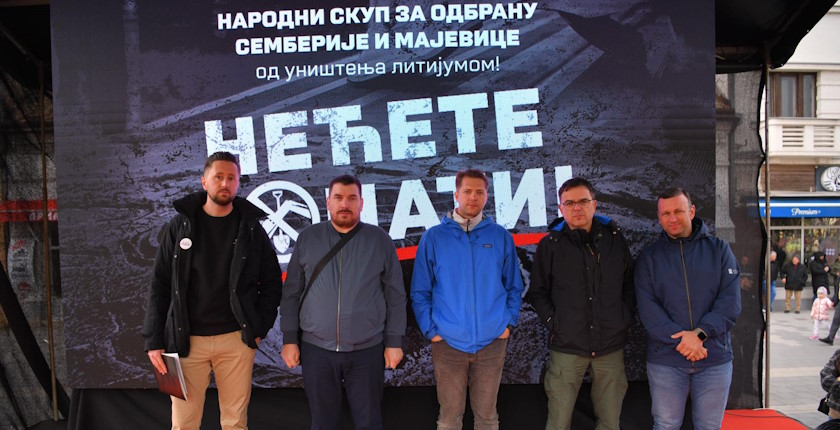
Supported by the local authority, citizens from both entities in BiH and environmental activists have gathered in the city of Bijeljina at another protest against the plans to mine lithium as well as rare metals. Among the participants were the inhabitants of border areas in neighboring Serbia, where Rio Tinto is developing a controversial project for mining and processing jadarite, a unique lithium mineral. Based on the results of its exploration, Swiss firm Arcore submitted a request to the Government of the Republic of Srpska in February for a concession for a mine on the Majevica mountain.

Around the same time, it also agreed with Canadian company Rock Tech Lithium to establish a joint venture that would include the location in northeastern BiH.

Investors want to produce lithium sulfate on site

According to the partners, they plan to start delivering in 2030 the lithium sulfate produced on site to Rock Tech Lithium’s future converter in Guben, Germany. The facility would process the raw material to get battery-grade lithium hydroxide.

The lithium, boron and magnesium deposit is in Lopare municipality, they added. The investment in Brandenburg was in the final financing phase when the agreement was signed, the two companies have revealed. They estimated that 600,000 tons of lithium carbonate equivalent can be obtained from the proposed mine.

The next step is to complete the prefeasibility study. Rock Tech Lithium holds 75% of the JV. Arcore claims that the location contains at least two million tons of lithium carbonate and that it can be exploited for 65 years.

In addition, President of the Republic of Srpska Milorad Dodik said in early March that the entity and Hungary are preparing an agreement on mining rare metals.

Bijeljina, Lopare and Majevica are all in the Republic of Srpska. The country’s other entity is called the Federation of Bosnia and Herzegovina, where activists in the nearby city of Tuzla and municipalities like Čelić are warning of the potential environmental impact of lithium mining and other shady projects.

Environmentalists demand Majevica to be protected as nature park

Environmentalist groups earlier requested from the Republic of Srpska to impose a moratorium on geological exploration and mining on the mountain.

Environmentalist associations submitted a petition with over 6,000 signatures for a moratorium on geological exploration and mining in Majevica

“This gathering was envisaged to have a regional character as today the citizens of several cities and municipalities have come together. Entire northeastern BiH is in the scope, as Majevica is our joint mountain. We all share the same water, same air and we live on the same land. We organized a civic initiative and we collected more than six thousand signatures and demanded for Majevica to become a nature park,” said Snežana Jagodić Vujić from the Eko put association based in Bijeljina.

In her opinion, the rich part of the world is building for its clean energy while destroying the environment and people in the poorer part of the world.

Semberija plain and Sava basin area are under threat as well

Head of the Municipality of Lopare Rado Savić said opening a mine in Majevica would jeopardize Lopare as well as Semberija, Posavina – areas around the river Sava, all wildlife downstream from its tributary Gnjica, and the Janja, which flows into the Drina river. “Unless there are other development projects, we don’t need mining either,” he added.

Machines shall not pass through any village, Adi Selman from Tuzla-based activist group Karton revolucija told the crowd. “We promise tonight that, if it is necessary, we will be chasing them away with our pickaxes and hoes and that, even if we are left all alone in this world, we will never give up on the fight to save our Majevica, Semberija and Posavina”, he stressed.

There is no rich mining town in the world and no lithium mine near a populated place or in a nature park, Bijeljina Mayor Ljubiša Petrović claims. “We won’t allow a handful of strongmen to destroy, for other people’s interests and profits, what was created for generations – our water, land and life,” he stated.

by in News

EU mission in Serbia handed 100,000 signatures against declaring Rio Tinto’s Jadar a strategic project

Informal environmentalist organization Eko Straža has submitted a letter to the Delegation of the European Union to Serbia urging the EU not to grant strategic status to Rio Tinto’s Jadar project in the country. The letter opposing the lithium mining and processing project is backed by the signatures of 100,000 citizens.

Bojan Simišić of Eko Straža said the signatures had been submitted because of the European Commission’s upcoming decision on strategic projects to produce critical raw materials in third countries. The decision is expected to be adopted this week, Fonet reported.

The letter, supported by 100,000 signatures, is the first concrete step by environmental associations and citizens after the announcement that the EU could grant Jadar the status of a strategic project. The site of Rio Tinto’s underground mine and processing unit is near the Western Serbian city of Loznica.

The EU has adopted the first list of strategic projects

On Tuesday, the European Commission approved the first 47 strategic projects, within EU territory, for the production of critically important raw materials. According to the announcement, the decision on the potential selection of proposals for facilities in third countries will be adopted at a later stage.

Under the EU’s Critical Raw Materials Act (CRMA), such strategic projects are eligible for administrative and financial support.

Shortly after the decision was announced, Serbian President Aleksandar Vučić said that within seven or eight days, the EU would also declare the Jadar lithium project as strategic. He made the claim the same evening in Brussels, where he met with the bloc’s top officials.

Eko Straža: If the EU designates Jadar as strategic, protests will follow

Eko straža stressed that the EU does not have jurisdiction to designate Jadar as a strategic project. The organization also pointed out that Jadar was canceled by the Serbian government’s decision in 2022.

“If the EU puts the Jadar project on its list of strategic projects, we will press ahead with protests. However, we will no longer address the Serbian government, which has resigned, but will instead turn to international institutions,” said Eko Straža.

Balkan Green Energy News has compiled a chronological overview of the most important events concerning Jadar since 2001, when Rio Tinto established a subsidiary in Serbia.

by in News

City of Tuzla seeks to block lithium mining on Mount Majevica

Two weeks after the local authorities and residents of the municipality of Lopare voiced their opposition to plans to open a lithium mine on Mount Majevica, the City of Tuzla sent a similar message. A few days ago, the Tuzla city council adopted a document requesting a ban on the mining of lithium and similar metals within a 40-kilometer radius over concerns for the environment and public health.

In the document, adopted on March 27, the local authorities express concern about the ongoing procedure to grant a concession for a lithium mine at Majevica to Arcore AG, as well as about the agreement between the Republic of Srpska and Hungary on rare earth mining, signed on March 3, 2025.

State authorities urged to initiate an environmental impact assessment

The city council demands an urgent review of the potential environmental impact of these projects on Tuzla and the wider area and calls on the Government of the Federation of Bosnia and Herzegovina and the Council of Ministers of Bosnia and Herzegovina to promptly initiate a procedure to assess their environmental impact, including the potential pollution of groundwater and rivers.

The City of Tuzla demands that the competent institutions of Bosnia and Herzegovina immediately launch an international environmental protection mechanism, including the implementation of the Aarhus Convention, to ensure public participation and prevent any harmful impacts of lithium mining. It also calls on the National Assembly and the Government of the Republic of Srpska to suspend the concession award process until an independent environmental study is conducted.

Neighboring municipalities invited to act together against lithium mining

In the document, Tuzla invites neighboring municipalities to join forces and create a joint plan to prevent lithium mining in the area of ​​Mount Majevica, while also recalling that in September 2024, Tuzla adopted a declaration strongly opposing the lithium mining plans.

The protest in Lopare in mid-March was attended by residents and activists from the neighboring towns and municipalities, including Bijeljina, Banjaluka, Šipovo, Brčko, Fojnica, Maglaj, and Tuzla.

by in News

Serbian organizations, academic community urge EU against declaring lithium project Jadar strategic

The National Convention on the European Union in Serbia has sent a letter to European officials, expressing concern over the potential consequences of designating Rio Tinto’s Jadar lithium project as an EU strategic project. The body warns that such a decision could further erode the support for the country’s European integration. Members of the academic community and numerous citizens also urged the administration in Brussels to reject the company’s application.

The National Convention on the European Union is a platform for cooperation and consultations between civil society and the Government of Serbia in the EU accession negotiation process. It sent the letter to European Commission President Ursula von der Leyen, High Representative of the EU for Foreign Affairs and Security Policy Kaja Kallas, Commissioner for Enlargement Marta Kos, European Commission Vice-President for Prosperity and Industrial Strategy Stéphane Séjourné, and Commissioner for Trade and Economic Security Maroš Šefčovič. The convention expresses concern over the possible consequences of including the Jadar lithium project in the EU’s list of strategic projects under the Critical Raw Materials Act (CRMA).

“Given the immense public distrust surrounding the preparation process of the Jadar project, its designation as a project of strategic importance to the European Union, especially in the current geopolitical climate and during Serbia’s institutional and societal crisis, would further undermine citizens’ confidence in the benefits of European integration. Additionally, the long-term geopolitical orientation of Serbia could be affected, potentially jeopardizing the political stability of the Western Balkans,” the letter states.

The convention added that Serbian citizens’ trust in the European Union has been eroded, pointing to the results of a recent public opinion survey. For the first time, more citizens have expressed opposition to EU membership than support for European integration, the body stressed.

EU strategic projects and reactions

The European Commission has approved the first 47 strategic projects in EU territory for important raw materials. The decision for candidate projects in third countries, including Serbia, has been postponed. Under the EU’s Critical Raw Materials Act, such strategic projects are eligible for administrative and financial support.

Shortly after the European Commission’s decision, Serbian President Aleksandar Vučić stated in Brussels that the EU would declare the Jadar project strategic “in seven or eight days.”

Together with nongovernmental organizations and community associations from Romania, Germany, Spain, and Portugal, the Marš sa Drine group from Serbia reacted to the European Commission’s decision, and later also to Vučić’s statement. They said they would legally challenge the strategic status designation for disputed mining projects.

The convention recalled that over 60% of Serbian citizens currently oppose the Jadar project, which includes technology that has never been deployed anywhere in the world.

Citizens’ opposition to the Jadar project should be understood primarily as a reflection of distrust in Serbian institutions

“This opposition primarily reflects a deep mistrust in Serbian institutions and their ability to impartially assess the public interest in such a complex project, as well as to enforce environmental and other regulatory standards should the project proceed,” the document reads.

Transparency in decision making has been lacking, and the reactions of Rio Tinto have been inadequate, it added.

“The local community was not adequately informed about earlier phases of research or the project’s potential consequences. Furthermore, the documents forming the basis of the draft environmental impact assessment study have yet to be made public, further fueling doubts about the objectivity and thoroughness of the decision-making process,” the convention said.

It warned that including projects in Serbia in the list of EU strategic projects, before the rule of law is established and before compliance with European environmental standards is ensured, could be perceived as support for maintaining the current state of affairs.

Letters to the European Commission

Environmentalist organization Eko straža previously submitted a letter to the representatives of the European Union in Belgrade, supported by 100,000 citizens with their signatures. They urged the European Commission to leave Jadar off the list of strategic projects.

In addition to the general public, the academic community has also voiced its opposition and concern. Around 2,800 of its members of Serbia’s academic community signed an initiative to reject the Jadar project.

The academic community and a group of student protesters submitted letters to the EU Delegation in Serbia, addressed to the European Commission, opposing the designation of the Jadar project as strategic.

“The right to clean water, land, nature, and health must take precedence over corporate profit,” the Serbian student blockade organization wrote on its Instagram account.

The Kreni-promeni movement also submitted a petition, signed by more than 300,000 citizens, demanding from the EU to reject the Jadar proposal.

  • 1
  • 2