by in News

Rio Tinto halts lithium mining project Jadar in Serbia

Rio Tinto has suspended its lithium mining project Jadar in Serbia, Bloomberg learned from the company’s internal documents.

The suspension of the Jadar project, valued at USD 2.95 billion, is among the first decisions of Rio Tinto’s new CEO Simon Trott.

Bloomberg wrote that it saw an internal company memo revealing that the investment in Serbia would be switched to a care and maintenance regime, making it dormant.

“Given the lack of progress in permitting, we are not in a position to sustain the same level of spend and resource allocation,” the document reads.

According to the same source, Rio Tinto still considers Jadar an important lithium deposit that could play a significant role in Serbia and Europe’s energy transition.

The European Union has designated the project as strategically important. The race for lithium and other rare metals is intensifying due to China’s growing dominance.

Rio Tinto confirmed the contents of the memo.

The company told Blic that it “remains in Serbia” and that the Jadar project is entering a phase involving an assessment of project costs and resources. “Our focus will be to support our employees through the transition process, and to continue fulfilling our legal obligations to the local community as responsible landowners in the Jadar valley,” it added.

New investments and company restructuring

Trott became CEO in August, and the decision to suspend the Jadar project is part of efforts to streamline the business and focus on faster growth opportunities.

He reorganized Rio Tinto by dividing it into segments for iron, aluminum and lithium, and copper.

According to the memo, the company’s current head of lithium Paul Graves will leave the company.

Last year, Rio Tinto acquired Arcadium Lithium for USD 6.7 billion, gaining access to three lithium projects in development. At the same time, it is investing heavily in the Rincon lithium project in Argentina.

Due to oversupply in the lithium market, prices remain around 85% below their 2022 peak, the article adds.

Rio Tinto is the world’s second-largest mining company by market value. The Jadar mining and processing project, based on the mineral jadarite, discovered in 2004 in the Jadar valley in western Serbia, has faced strong opposition from the country’s citizens, environmental activists, and part of the expert community for many years. Balkan Green Energy News has published a chronological overview of the key events in the development of the Jadar project since 2001, when Rio Tinto arrived in Serbia.

Trott is scheduled to deliver his first strategic presentation on the company’s further development and restructuring on December 4 in London, during Rio Tinto’s Capital Markets Day.
by in News

Germany seeks Bolivia’s lithium as project Jadar in Serbia stalls

Germany is rushing to secure the supply of lithium from Bolivia in talks with the new government, but also to enable domestic mining operations. At the same time, Rio Tinto’s controversial project Jadar in Serbia seems dormant despite nominal support from Brussels and Berlin.

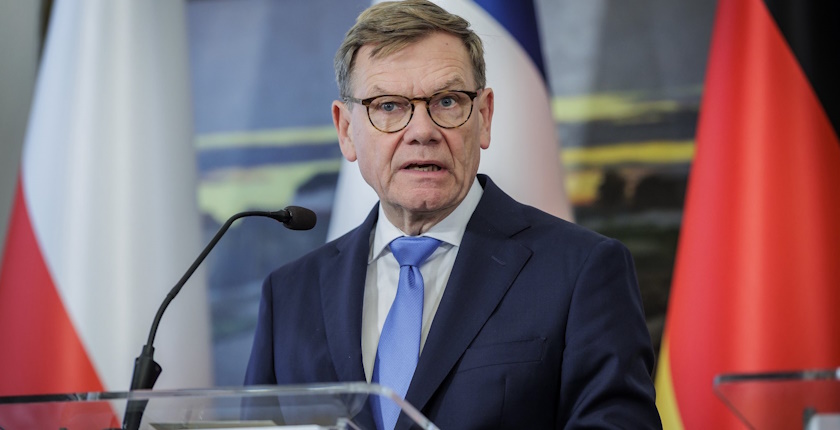
In a statement before his arrival in Bolivia, Germany’s Federal Minister of Foreign Affairs Johann Wadephul didn’t mince words.

“Our potential for cooperation is significant. Bolivia is rich in raw materials, especially lithium, which is indispensable for our energy transition, for electric mobility and for many other sectors in Germany. Bolivia also offers impressive opportunities regarding rare earth elements,” he pointed out.

First in line to speak to Bolivia’s new head of state about lithium

Wadephul noted that he is meeting the Bolivian government under President Rodrigo Paz Pereira on his third day in office “and the first real day of work.” The top German diplomat is inviting the Latin American country to join the upcoming agreement between the European Union and the Southern Common Market (Mercosur).

The race for lithium and rare earths is intensifying amid China’s dominance and the tariff wars that United States President Donald Trump’s administration is pursuing.

In Wadephul’s view, Bolivians want a way out of the ongoing economic crisis. “President Paz has announced plans to open Bolivia to the world. Bolivia has our full support in this,” he added.

Bolivia holds the world’s largest lithium reserves. Before Paz came to power, left-wing governments limited access to foreign miners for two decades.

Rio Tinto’s investment in Serbia slows down amid political turmoil

Germany has signaled that it would use its raw materials fund for support to domestic lithium mining projects that are under review. Notably, there are also investments in the extraction of the alkali metal from underground and geothermal waters, which means without excavation.

The foreign policy chief is in Bolivia at a time when Rio Tinto’s lithium mining project Jadar in western Serbia seems dormant, despite winning a strategic investment status from the European Union five months ago.

Germany was earlier very interested in the endeavor. Former Chancellor Olaf Scholz attended the signing of a memorandum of understanding in July 2024 between the EU and Serbia for a strategic partnership in sustainable raw materials, battery value chains and electric vehicles,

Serbia expects the environmental impact assessment for project Jadar to be completed in a year and a half

Speaker of the National Assembly of Serbia Ana Brnabić recently said the environmental impact assessment for project Jadar would “probably” be completed in 18 months. The next step would be to decide whether to go ahead with it.

Importantly, Serbia is in political turmoil for a whole year now.

Lithium ion batteries are necessary for electric cars, smartphones and laptops, as well as for solar and wind power plants. The demand is steadily growing.

Balkan Green Energy News has published a chronological overview of the key events in the development of the Jadar project since 2001, when Rio Tinto arrived in Serbia.

Rare earths are found in consumer goods such as smartphones and television screens, as well as in electric car engines, semiconductors and turbines.

by in News

Serbia plans new mining law to align legislation with EU rules on critical raw materials

Serbia’s Ministry of Mining and Energy has launched a public consultation on a preliminary framework for a new law on mining and geological exploration. One of the goals of the new law is to align national legislation with European Union regulations on critical raw materials, sustainable development, and the circular economy.

The law will be harmonized with the EU’s Critical Raw Materials Act and the European Green Deal, to gradually align Serbia’s regulatory framework with the EU’s goals for sustainable mining, climate neutrality, and secure minerals supply, according to a document outlining the basis for the draft law.

Earlier this year, the European Commission included a lithium mining project in Serbia among the EU’s strategic projects for critical raw materials. Rio Tinto’s Jadar project is the only one on the list that involves the extraction of lithium and boron.

Lithium mining in Serbia is among the EU’s strategic projects for critical raw materials

Regarding harmonization with EU regulations, Serbia intends to introduce standardized reporting systems in line with the Pan-European Reserves and Resources Reporting Committee (PERC) standards, the UN Framework Classification for Resources (UNFC), and the Petroleum Resources Management System (PRMS), as well as implement ESG principles, which integrate environmental, social, and governance requirements into all phases of geological exploration and mining.

The main objective of the new law is to establish a modern, transparent, and efficient system for managing mineral and other geological resources in line with sustainable development standards, while strengthening the role of the state as the owner and steward of the country’s natural resources, according to the document.

It further highlights the need for more clearly defined mechanisms to ensure the application of sustainable mining principles and compliance with environmental standards, in line with advanced global practices. Investors’ obligations regarding environmental protection, land reclamation, and site remediation should be more precisely regulated during exploration and mining.

Investors’ obligations concerning environmental protection need to be more clearly defined

Improving the legal framework for granting exploration and mining rights is of particular importance, the document states. This would be done through models that ensure greater legal certainty, more efficient oversight, and consistent application of environmental and social standards, in line with sustainable mining principles.

The new law will also set clear criteria for identifying and protecting strategic mineral deposits, and ensure they are included in spatial and development plans. This would enable long-term protection of national interests in the field of mineral resources.

The law will digitalize permitting procedures for exploration and mining

The law will envisage digitalization and electronic processing in all administrative phases through a unified information system that enables electronic application and permitting, while allowing public access to data on exploration and mining fields.

The new law is also intended to ensure gradual alignment with European policies in the fields of green and digital transition.

The public consultation will be open until November 11, during which time citizens and organizations can submit proposals, comments, and suggestions.

by in News

Neptune energy confirms huge lithium carbonate reserves in Germany

Neptune Energy, a German company known for oil and gas exploration and production, obtained the country’s first lithium production license last year, and now it has confirmed resources of 43 million tons of lithium carbonate equivalent (LCE) in the Altmark region of Saxony-Anhalt. It could reshape the outlook for battery raw material supply in Germany and Europe.

Primarily engaged in oil and gas exploration and production, Neptune Energy has been investing increasingly in low-carbon and renewable energy projects.

The company was the first in Germany to obtain a production permit for lithium. It also holds three exploration licenses for lithium in the Altmark region of the state of Saxony-Anhalt.

Natural gas has been produced in the Altmark region for more than half a century. Numerous old and active wells still provide access to deep underground layers including saltwater.

In November last year, Neptune Energy started a pilot project for lithium extraction from such brine with French technology partner Geolith. The company uses an environmentally friendly process known as direct lithium extraction (DLE) from brine. It involves no open pit mining, no evaporation ponds, and minimal land requirements.

The company has launched its third pilot project for direct lithium extraction from brine

In June, the company commissioned a second pilot plant, supplied by California-based Lilac Solutions, producing battery-grade lithium using an ion exchange process. The second pilot was completed in August, ahead of its original schedule to run until 2026.

A third pilot project has been underway since mid-September to evaluate an adsorption process. Subject to further mining permits, a demonstration phase with a fully integrated extraction plant will follow as the next step toward commercial production, the company said.

Altmark holds reserves of 43 million tons of lithium carbonate equivalent

Neptune Energy’s initial internal estimate was that the Altmark region hosted 70 million tons of lithium carbonate, enough to extract 25,000 tons annually – sufficient for batteries for about 500,000 electric vehicles. An independent evaluation by Sproule ERCE confirmed resources of 43 million tons of LCE. Although lower than the original estimate, northern Saxony-Anhalt still hosts one of the world’s largest project-based lithium resources.

Since lithium is a key raw material for electric-vehicle batteries and energy storage, and Germany, with its strong automotive industry, currently depends on imports, information about lithium reserves in Altmark could have a significant impact on the domestic and European markets.

“This new assessment underscores the great potential of our license areas in Saxony-Anhalt. This enables us to contribute significantly to the German and European supply market for the critical raw material lithium,” said Andreas Scheck, Neptune Energy’s CEO.

by in News

Three cities reviving protests against Rio Tinto’s lithium project in Serbia

Opponents of Rio Tinto’s plan to mine and process a lithium and boron ore called jadarite in western Serbia held a protest in Loznica. Representatives of local activist group Ne damo Jadar announced that such gatherings would be organized in the nearby cities of Valjevo and Šabac as well.

Several thousand people demonstrated in the western Serbian city of Loznica against Rio Tinto’s project Jadar, marking what could be the start of another in a string of protests, which began in 2021. Activists from the area said rallies would be held in neighboring cities, too, with a possibility of expansion throughout the country.

Marijana Petković from the Ne damo Jadar group accused the authorities of breaking the law by approving new infrastructure to be built for the planned lithium and boron mining operation and a processing facility. Rio Tinto filed in February for connecting a future 110 kV transformer station to the grid. The activists are also upset because of indications that the company expects to get approval for an exploitation field. It would imply priority in mining the unique lithium and boron ore, called jadarite.

The Lotel television station in Loznica never came to the Gornje Nedeljice village nor has it given the opportunity to the opponents of the Jadar project to speak, said Nebojša Petković from local group Ne damo Jadar

At the protest, the building of local media outlet Lotel was spray-painted and a poster saying “disturbing content” was glued onto it.

“They don’t have any big influence, but they do on a part of the population in Loznica. And they never came to Nedeljice to film what we have, those houses of ours that are whole, nor to film the demolished houses. They never produced a single report. They never gave the opportunity to us or to experts, not a single opponent of the Jadar project, to come to their television studio,” Nebojša Petković from Ne damo Jadar told N1 TV.

The village of Gornje Nedeljice, where the activist group is based, is the site of the proposed mine and processing plant.

Nebojša Petković pointed out that national TV stations of France, Italy and Sweden and other countries and even one from Japan have reported about the Jadar project.

Next protest scheduled for July 24 in Valjevo

The next protest is scheduled for July 24 in Valjevo, and one will probably be held in Šabac, according to Nebojša Petković. He stressed that further activities in the three cities would be coordinated. Exploratory drilling has been conducted around Valjevo and Šabac, too, prompting numerous protests.

Petković jokingly called the three cities the Serbian Bermuda triangle and expressed hope that other areas in Serbia would join the resistance.

The planned investment has been countered by some of the biggest and most widespread protests ever held in the country, in several waves. The European Commission approved a strategic status in early June to the Jadar project.

Balkan Green Energy News has a chronological overview of the key events since 2001.

Nearby lithium project across the river Drina, in BiH, also faces resistance

Notably, in a repeated vote held recently in the National Assembly of the Republic of Srpska, a civic initiative to declare Majevica a natural park failed to receive sufficient support from lawmakers. The mountain is near Jadar, on the other side of the Drina river, in Bosnia and Herzegovina. The Republic of Srpska is one of the two political entities making up Serbia’s neigboring country, and the other one is called the Federation of BiH.

Activists are also demanding an urgent moratorium on the approval of concessions for exploration and exploitation of ores and other resources.

Citizens in the area have held multiple rallies against the local lithium mining project, supported by local authorities.

by in News

Turkish renewables firm to drill for geothermal lithium

Margün Energy intends to search for lithium in geothermal waters in Seferihisar in western Turkey, where it took over a 12 MW geothermal power plant. It also launched a project to add a photovoltaic unit of 5.4 MW to the existing facility and create a hybrid power plant.

Turkey, the fourth in the world in geothermal power capacity, also has significant potential for lithium extraction. The production of the mineral used in batteries can increase the cost-effectiveness of geothermal energy projects. Margün Energy, listed at the Istanbul Stock Exchange since 2021, said it would conduct exploration works on 3,125 hectares in Izmir province.

The company recently bought a geothermal power plant in the area for USD 16 million from RSC Elektrik. The 12 MW facility is in Kavakdere in Seferihisar district. Margün Energy denied speculation that it would mine lithium.

If it finds a valuable amount of the mineral in geothermal water, it will build an extraction plant, according to the update. Margün Energy issued the statement after local residents expressed concern over potential environmental damage from lithium mining.

“We have not obtained any mining permits. Furthermore, Margün Energy is not a mining company… Mining lithium, which is used in battery production, and extracting lithium from geothermal fluid by separating it are very different things,” the announcement reads.

Margün Energy to look for precious metals as well

The company said it would continue its investments in geothermal energy such as electricity production and greenhouse farming, arguing it would create jobs for locals. It suggested it could extract carbon dioxide for commercial use as well.

Margün Energy added it would explore the presence of precious metals in geothermal fluids.

Planned PV unit to generate 10 GWh per year

In addition, it submitted a proposal to the country’s Energy Market Regulatory Authority (EMRA or EPDK) for the installation of a photovoltaic unit with 5.4 MW in peak capacity. It would be added to the existing facility, creating a hybrid power plant. The solar power system would generate 10 GWh per year and increase revenue by USD 1.05 million, the company estimated.

The PV plant would lift Margün Energy’s total capacity to 135.4 MW. The company mostly operates solar power plants and works as a contractor for engineering, procurement and construction (EPC) and operations and maintenance.

Notably, it owns the largest stake in Enda Energy Holding. The affiliate operates four hydropower plants, five wind power plants, one geothermal power plant and three solar power plants of 200 MW altogether.

Margün Energy rallied 109% since the beginning of the year.

by in News

EU’s strategic status for Rio Tinto’s lithium project risks fueling tensions in Serbia

After the European Commission declared Rio Tinto’s project Jadar a strategic raw materials project, the company and Serbian officials claimed it implies the strictest environmental protection standards and that it would enable the creation of up to 20,000 highly qualified jobs. The opposition and local and environmentalist activists vowed to continue to resist the plan to launch a lithium mine and processing facility, and accused the European Union of colonialism.

The addition of the planned lithium mine near the city of Loznica in Serbia to the EU’s strategic projects for essential raw materials has again stirred up public controversy in the country, after several waves of social unrest. Rio Tinto stressed that it remains committed to dialogue with all stakeholders.

Brnabić: It’s not true that Serbia is a European mining colony

Both the global mining giant and Serbia’s National Assembly Speaker Ana Brnabić claim that project Jadar would enable the creation of up to 20,000 jobs. The environmental standards for similar projects in the EU will need to be completely replicated, she asserted. It also shows that it’s not true that Serbia is a European mining colony, like what certain people said, Brnabić added.

“We won’t be exporting our lithium, but use it for improving the standard of living,” she stated.

Of note, the European Union only endorsed the mining segment of the project as strategic, while Rio Tinto has also published plans for a processing facility for jadarite, a lithium and boron mineral.

Ecological Uprising’s leader Aleksandar Jovanović Ćuta says decision is death sentence

Member of parliament Aleksandar Jovanović Ćuta called on citizens, students and environmentalist organizations to an “all-out mobilization” and added that they wouldn’t allow lithium to be mined. He is the most prominent figure in the Ekološki ustanak (Ecological Uprising) movement. “A death sentence has been signed for everything in the Jadar valley that breathes, lives, moves and flows,” and the population in the affected area in western Serbia was “designated the destiny of becoming environmental refugees,” in his opinion.

“Anyone who includes such projects in their agendas, whether it is the European Union or Russia – such people don’t want anything good for us,” Jovanović said.

The opponents of project Jadar are accusing the EU and Serbian authorities of colonialist relations

The Kreni-promeni (Go-Change) movement, which has representatives in local parliaments in the largest cities, recalled that the Government of Serbia abolished the Jadar project in early 2022, following large environmental protests and blockades. “The latest attempts to revive the project were preceded by the controversial ruling of the Constitutional Court, which Kreni-promeni deems synchronized and contrary to the principles of the rule of law and the constitutional separation of powers,” its statement adds.

The country’s parliament never voted on a people’s initiative, signed by over 38,000 citizens, even though it was legally obligated to.

Assigning the strategic status is a new proof of colonial policy toward Serbia, which is supposed to secure raw materials for the stumbling automotive industry in the EU, according to Novi DSS, a right-wing parliamentary opposition party. There can be no jadarite mining, it stressed in its reaction.

Not enough transparency or local population’s participation in decision making

The EU’s strategic projects lack proper safeguards, transparency, and local involvement – putting human rights, indigenous rights, and environmental protection at serious risk, the EU Raw Materials Coalition (EURMC) said in a statement published by the European Environmental Bureau (EEB), a network of environmentalist groups.

It risks repeating colonial patterns of resource extraction, they warned. Several selected projects from the new list are in countries outside of the EU with weak industrial governance systems, nongovernmental organizations underscored.

Matković: The EU just added fuel to the fire

Endorsing project Jadar despite unresolved legal, environmental, and social issues suggests a troubling disregard for public opposition and due process, EEB said. The move risks reigniting tensions on the ground, it warned.

“The EU just added fuel to fire. It backed an authoritarian regime and a corporation against whom 63% of the population now stand to fight at a time when the entire country is under blockade and violence. The EU will thus lose support in Serbia and the region and probably cause further social unrest. The fact that the Serbian President Aleksandar Vučić announced the board’s decision more than a week before it was public, also raises questions of legitimacy behind the decision,” said Aleksandar Matković, a research associate from the Institute of Economic Sciences in Belgrade, Serbia.

EU fueling euroscepticism

Berlin-based Heinrich Böll Stiftung – Foundation argued that with its new move, the EU ignored the lack of rule of law in Serbia and intense domestic opposition to Rio Tinto’s investment in Serbia.

“Activists and students involved in the pro-democracy movement argue that the EU’s endorsement undermines democratic voices and risks fueling Euroscepticism in the region. With Serbia’s government under pressure from ongoing protests and corruption allegations, the EU’s move is seen as politically damaging and potentially destabilizing,” it said.

The foundation is in close relations with German opposition party Alliance 90/The Greens.

Balkan Green Energy News has published a chronological overview of the key events since 2001, when Rio Tinto arrived in Serbia.

by in News

European Commission declares Jadar project in Serbia one of its strategic projects for critical raw materials

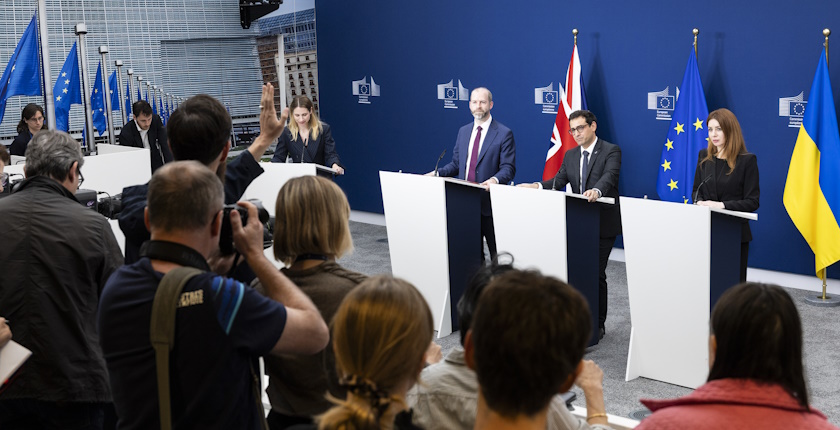
The European Commission published the list of the first 13 strategic projects for raw materials outside of the European Union. One of them is project Jadar in Serbia. It is the only one for lithium and boron. Notably, it got the strategic status only for extraction, even though Rio Tinto said it would also build a processing plant.

After adopting 47 strategic projects in line with the Critical Raw Materials Act (CRMA) in March, today the European Commission added another 13, for locations outside of the EU’s borders. They include Rio Tinto’s controversial project Jadar in Serbia, for lithium and boron. The aim is to diversify the sources of supply and increase economic security, but alongside strengthening value creation in third countries, according to the update.

“Europe needs raw materials to succeed in our industrial and climate ambitions. The EU requires stable, secure and diversified supply chains,” said the European Commission’s Executive Vice-President for Prosperity and Industrial Strategy Stéphane Séjourné.

Photo: European Commission

Strategic projects across globe

The first 13 strategic projects outside of the EU are in Canada, Greenland, Kazakhstan, Norway, Serbia, Ukraine, Zambia, New Caledonia, Brazil, Madagascar, Malawi, South Africa and the United Kingdom. They require EUR 5.5 billion in total capital investment to start operations, the European Commission said.

Séjourné revealed that investors filed 49 applications.

Project Jadar in western Serbia, near the city of Loznica, is the only one for lithium and boron. Interestingly, the European Commission only endorsed the extraction segment, even though Rio Tinto has said it would build a processing facility as well. According to today’s announcement, the investment aims to contribute to the supply of lithium – battery grade, and boron for metallurgy.

Several waves of mass rallies against project Jadar have been held throughout Serbia

The local population in the Jadar valley, environmentalist organizations and a number of experts have been opposing Rio Tinto for several years now, citing the lack of transparency and the risks for health, nature and agriculture, and especially the potential pollution of water sources. They held several waves of large countrywide protests.

Balkan Green Energy News has published a chronological overview of the key events since 2001, when Rio Tinto arrived in Serbia.

The mining giant is conducting project Jadar through its Serbian subsidiary Rio Sava Exploration.

Most projects are for graphite, cobalt, nickel

Most of the other endeavors entail the extraction and processing of graphite, cobalt and nickel. The remaining ones are for mining tungsten, rare earth elements, manganese and copper. A project conducted both in Greenland and Norway is for the extraction and processing of graphite.

Rare earth elements have a key role in producing high-performance magnets used in wind turbines or electric motors for renewable energy technologies and electromobility. Boron is used in the automotive, renewable energy, aerospace and defence sectors.

Lithium ion batteries are currently the dominant technology in the electricity storage segment, excluding pumped storage hydropower plants. The alkali metal has a range of applications: from consumer electronics and electric vehicles to stationary facilities within renewable power plants or for grid balancing.

The selected projects meet the environmental, social and governance standards stipulated in CRMA, together with technical feasibility, the EU executive said. They are eligible for support by the European Commission, member states and financial institutions, including “contacts with relevant offtakers,” it added.

Kokanović: We continue resistance

Local activist from the Ne damo Jadar group Zlatko Kokanović said the academic community and the Serbian Academy of Sciences and Arts (SANU) have clearly rejected Rio Tinto’s lithium project. He also claimed that 63.5% of citizens also oppose it, apparently citing results of a recent survey.

The European Commission’s decision doesn’t guarantee environmental standards, Kokanović told Beta news agency. “It is quite hypocritical from a Europe promoting the rule of law, democracy, freedom of speech, a healthy environment and clean air, water and soil. To the detriment of our health and the health of our children, they want to take our lithium and turn us into a waste dump so that they live healthy,” he stated.

There isn’t any such mining project in a densely populated area and on fertile land anywhere in the world, the activist argued. “It is essentially an experimental facility. They don’t have answers to all questions and their main slogan is: ‘We will try to reduce risks’. We now live without risks, we don’t need to reduce them. If an incident happens, they will say that they are acknowledging the mistake, that they will try not to repeat it, and they will apologize. We don’t have anything from it,” Kokanović underscored.

Separately today, he vowed to continue the resistance with all allowed and forbidden and available means. Kokanović resides in the village of Gornje Nedeljice, the site of the proposed mine.

by in News

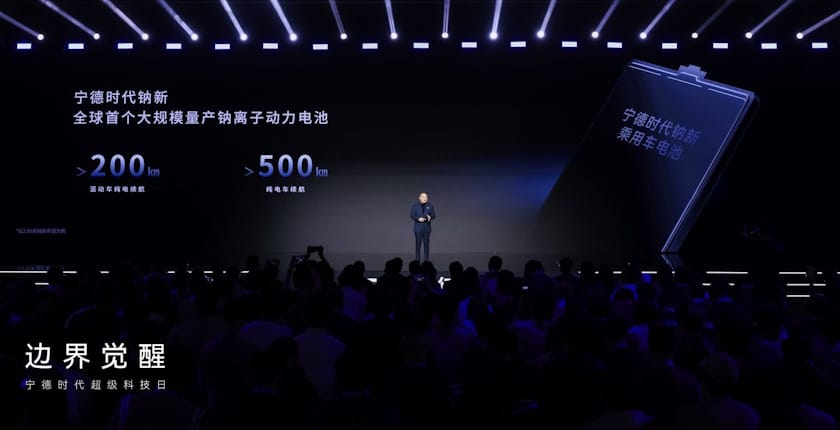
CATL: World’s first mass-produced sodium ion battery is here

Chinese battery producer CATL has unveiled Naxtra, claiming it is the world’s first mass-produced sodium ion battery. At its inaugural Super Tech Day, the company also showcased a battery that sets a new global record for superfast charging technology.

Naxtra breaks resource constraints and strengthens the foundation of the new energy industry, according to Contemporary Amperex Technology Co. Ltd. (CATL), one of the world’s biggest battery producers. Back in 2021 the company presented first generation of sodium ion batteries.

Batteries for electric vehicles and energy storage systems are predominantly made using lithium ion technology. However, the technical solution comes with environmental risks because of lithium production in mines and salt flats. The race is on to find a better one and sodium ion could be the winner.

CATL underlined that Naxtra Battery breaks through the performance boundaries of the material itself, allowing mass production of sodium ion batteries for the first time.

Naxtra Battery product line has two units

“With sodium’s inherent safety and abundant reserves, it efficiently reduces dependence on lithium resources and strengthens the foundation of new energy technologies, while promoting energy utilization from single resource dependence to energy freedom,” the press release reads.

Naxtra passenger EV Battery (photo: CATL)

The Naxtra Battery product line has two units: the Naxtra passenger EV Battery and the Naxtra 24V Heavy-Duty Truck Integrated Start-Stop Battery. Both are capable of performing across the full temperature range from minus 40 to as high as 70 degrees Celsius, redefining the extreme temperature limitations of batteries, CATL said.

The Naxtra passenger EV Battery retains 90% usable power at minus 40 degrees and achieves an energy density of 175 Wh per kilogram, the highest among sodium ion batteries worldwide, and comparable to LFP batteries, the update reads.

In terms of safety, it is a transformative breakthrough

CATL said the system provides a 500-kilometer range and that it can achieve over 10,000 cycles, significantly reducing maintenance costs. In terms of safety, it is a transformative breakthrough from “passive defense” to “intrinsic safety,” the manufacturer claimed.

According to the company, Naxtra 24V Heavy-Duty Truck Integrated Start-Stop Battery boasts over eight years of service life and reduces total lifecycle costs by 61% from the level in traditional lead-acid batteries.

Compared to lead-acid batteries, it is more efficient, eco-friendly, and economical, driving commercial vehicles into a lead-free era where vehicles and batteries age as one, the company claims.

Shenxing Superfast Charging Battery offers robust power across all temperature ranges

On the same occasion, the company presented two more “groundbreaking EV battery products,” as it called them.

The Freevoy Dual-Power Battery introduces a pioneering cross-chemistry system design that transcends the limitations of single technology paths to meet customized user needs. The second-generation Shenxing Superfast Charging Battery, with its peak 12C charging rate, sets a new global record for superfast charging technology, according to CATL.

The company stressed that Shenxing Superfast Charging Battery is the world’s first LFP system featuring both an 800-kilometer range and a 12C peak charging rate. With a peak charging power of 1.3 MW, it achieves 2.5 kilometers of range per second of charging, virtually eliminating the frustration of waiting, according to the press release.

Additionally, the device provides robust power across all temperature ranges and states of charge.

by in News

Turkey aims to become major lithium producer with its geothermal wells

Turkey is using only 10% of its geothermal potential, according to Chairman of the Geothermal Power Plant Investors Association (JESDER) Ufuk Şentürk. He said existing wells alone could open the way for the country to become one of the world’s major producers of lithium.

Studies are underway to determine the accessibility of valuable minerals in Turkey’s geothermal waters. There are already some one thousand wells with 100,000 tons of water coming out every hour, Chairman of JESDER Ufuk Şentürk told Anadolu Agency Energy Terminal. He pointed to the potential for the extraction of lithium, cesium, selenium and silicon.

Turkey is utilizing only 10% of its geothermal potential, Şentürk stressed. An inventory is under development of wells that were drilled to find oil and left unused, he added. The temperatures are as high as 150 degrees Celsius and the said resources can provide heat for 5,000 hectares of greenhouses, the organization’s chief said.

Researchers have found a lithium source in Turkey of 20 parts per million in geothermal water

The İzmir Institute of Technology (İYTE) and Afyon Kocatepe University have been conducting studies for two years, within the Turkish-German Energy Partnership, on obtaining minerals, Şentürk noted. He said there are 100 parts per million of lithium in one geothermal source in Germany, while 20 parts per million were found in Turkey.

Investment costs are much lower without exploratory drilling, if lithium is extracted from geothermal water already coming to the surface. The head of JESDER, Geothermal Power Plant Investors Association, estimated that Turkey could produce 35,000 tons per year and said global production came in at 36,000 tons last year.

“Even if we obtain 10%, we will still be one of the countries with the largest lithium resources in the world,” he stated.

Volumes of lithium extracted from geothermal waters are still symbolic

As Şentürk didn’t elaborate, it remains unclear if he compared the country’s potential to the output from so-called direct lithium extraction (DLE) or perhaps evaporation from brine pumped from underground. They make up one tenth and one quarter, respectively, of the 240,000 tons of lithium produced last year in the world. The rest is mined.

A different benchmark, the lithium carbonate equivalent or LCE, is almost five times larger. Additionally, about 5% of lithium ion batteries are recycled. The volumes of lithium extracted from geothermal waters are still symbolic.

Investors are betting on the combination with geothermal energy, to make lithium production cost effective, as it is found in very small quantities in underground water. Direct extraction of the alkali metal from water has an immeasurably lower environmental impact than mining.

Existing geothermal power plants can provide heat to 4,000 hectares of greenhouses

Şentürk pointed out that Turkey hosts 65 geothermal power plants of 1.74 GW overall. They generated 11.2 TWh in 2024 of the total 350 TWh.

Geothermal energy currently heats 7,000 hectares of greenhouses in Turkey and 160,000 homes, Şentürk said. The Ministry of Agriculture and Forestry is providing incentives for greenhouse zones of 2,800 hectares in total. But existing geothermal power plants alone could, with such support, provide for 3,500 to 4,000 hectares of greenhouses, the association’s chief estimated.

On a global scale, Turkey trails only the United States, Indonesia and the Philippines in geothermal power. Nevertheless, after several years of rapid growth, it only added 120 MW in capacity since 2020.

A recent study, conducted within the project called Li+Fluids, showed geothermal waters in north Germany and its Thuringia state contain between 0.39 and 26.5 million tons of lithium. The country’s demand for 2030 is projected at 0.17 million tons.

  • 1
  • 2