by in News

Coal plant operator KEK to begin construction of Solar4Kosovo PV plant

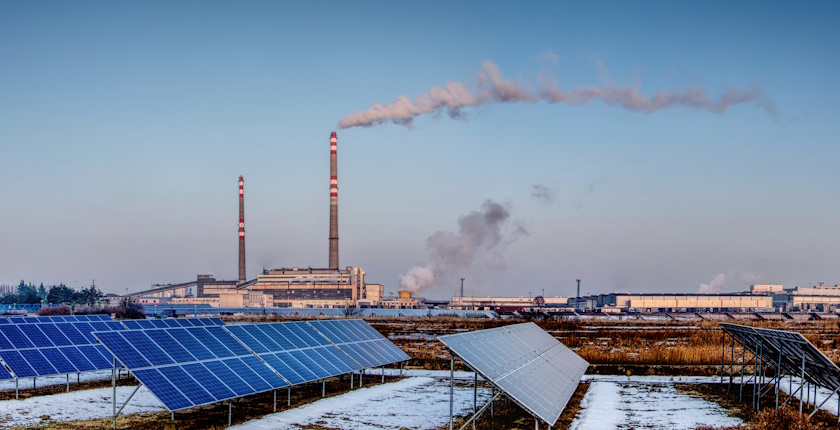
Government-controlled Kosovo Energy Corp. (KEK) said it is preparing to start building its Solar4Kosovo 1 photovoltaic plant near Prishtina. It informed the local community that agricultural and other activities weren’t allowed anymore on the designated land.

After four years of planning. a former coal ash dump is about to be turned into the biggest solar power plant in Kosovo*. KEK is running the Solar4Kosovo 1 project at a site near its Kosovo A power plant near Prishtina.

The area is in the municipalities of Obiliq (Obilić) and Fushë Kosovë (Kosovo Polje). The government-owned power utility said it is preparing to begin construction works. The project is for 100 MW in connection capacity, translating to 120 MW in peak capacity.

The update mainly affects residents of Dardhishtë and Mërlak in Kryshevc (Kruševac) in Obiliq municipality. Agricultural and other activities aren’t allowed anymore, the company announced. It explained that so far it tolerated the use of its property there by the local community.

KEK obtained EUR 32 million EU grant

The financing for the Solar4Kosovo facility is part of the European Union’s Economic and Investment Plan for the Western Balkans of EUR 9 billion in grants. The package is aimed at mobilizing a total of EUR 30 billion.

The European Investment Bank is providing a EUR 33 million loan. The EU has approved a EUR 32 million grant via its Western Balkans Investment Framework (WBIF), while Germany’s KfW Development Bank is lending EUR 29 million to KEK. The investment was earlier estimated at EUR 107 million overall.

Annual output estimated at 169 GWh

The proposed solar power plant is expected to produce 169 GWh per year. It would have an underground connection to the existing substation at the Kosovo A thermal power plant.

Notably, Kosovo* is dependent on the obsolete Kosovo A and Kosovo B coal plants for almost all its electricity.

The other part of the Solar4Kosovo project is for a solar thermal facility for the capital city’s district heating system. The site is in the village of Shkabaj (Orlović) in Obiliq municipality. The investment includes a 20 MW network extension.
* This designation is without prejudice to positions onstatus and is in line with UNSCR 1244/99 and the ICJ Opinion on the Kosovo declaration of independence.
by in News

Serbia launches construction of two transmission lines as part of BeoGrid 2025 project

Serbia has launched works as part of the BeoGrid 2025 project, aimed at improving the power transmission infrastructure in Serbia, the region, and Europe, as well as facilitating electricity offtake from renewable energy power plants in the South Banat region of Vojvodina.

The BeoGrid 2025 project, worth EUR 205 million, comprises six distinct components, according to Radoš Popadić, Assistant Minister of Mining and Energy in charge of the power engineering sector. He attended the start of works in Belgrade’s Surčin suburb together with Jelena Matejić, the general manager of Serbia’s transmission system operator, Elektromreža Srbije (EMS).

“Construction is being launched today on two new high-voltage transmission lines that will connect Belgrade and Novi Sad, with a total value of around EUR 22 million,” he said, adding that work on a substation in Belgrade is also expected to begin soon.

The project is valued at EUR 205 million

The substation will be connected to the Čibuk 1 substation [wind farm Čibuk 1] by a new 83-kilometer transmission line, ensuring a stable transmission of electricity produced from renewable energy sources in South Banat, as well as reducing strain on the existing network, Popadić explained.

Radoš Popadić and Jelena Matejić (photo: Ministry of Mining and Energy/Danilo Mijatović)

Two single-circuit 400 kV transmission lines, intended for connecting transmission line 450 (switching station Mladost – substation Novi Sad 3) to the future 400/110 kV substation Beograd 50, will have a total length of 25.5 kilometers.

EMS General Manager Jelena Matejić said that BeoGrid 2025 is of particular importance for Serbia, but also part of the broader North Continental South East (CSE) Corridor project, which includes doubling the existing 400 kV interconnection between hydropower plant Đerdap 1 and Portile de Fier in Romania.

Matejić: The North CSE Corridor is part of the European ten-year network development plan, TYNDP 2020

The North CSE Corridor project is part of the European ten-year network development plan (TYNDP 2020) and the regional investment plan (RgIP 2020). It is supported by the Romanian transmission system operator, Transelectrica, as well as the German development bank KfW, with a feasibility study.

The North CSE Corridor is of regional importance as it increases the transmission capacity between Serbia and Romania, helping create an integrated European electricity market, Matejić pointed out, adding that BeoGrid 2025 is also important for additional backup power supply for the EXPO 2027 project.

The project aims to enable the transmission of electricity generated from renewable sources in the South Banat region and to ease the load on the 220/110/35 kV Beograd 5 substation, which supplies a large part of Belgrade, particularly parts of New Belgrade and Zemun, EMS stated.

Popadić: The total value of all planned projects is EUR 1 billion

Photo: Ministry of Mining and Energy/Danilo Mijatović

Radoš Popadić recalled that large investments in the transmission network are underway.

“Serbia has recognized the importance of investing in the power transmission system to enable the integration of more renewable energy capacity, increase the exchange of electricity with neighbors, and ensure a secure, stable, and efficient supply to consumers. That is why we launched investments in interconnection with the transmission systems of eight neighboring countries, with EUR 500 million to be invested in priority projects by the end of the decade. The total value of all planned projects will amount to around one billion euros,” said Popadić.

BeoGrid 2025 is financed partly from the Serbian budget, as well as from EMS’ own funds. The project consists of six distinct components, or investments:

  • 400/110 kV substation Beograd 50;
  • Two-circuit 400 kV transmission line between substation Beograd 50 and Čibuk 1, including the installation of a 400 kV bay at switching station Čibuk 1;
  • Single-circuit 400 kV transmission lines for the integration of transmission line 450 (switching station Mladost – substation Novi Sad 3) into substation Beograd 50;
  • Two double-circuit 110 kV transmission lines for the integration of transmission line 104/8 (substation Stara Pazova – substation Inđija 2) into substation Beograd 50;
  • two double-circuit 110 kV transmission lines for the integration of transmission line 1178 AB (substation Beograd 5 – substation Beograd 9) into substation Beograd 50;
  • Double-circuit 110 kV cable between substation Beograd 50 and substation Beograd 49 (Airport).

Photo: Ministry of Mining and Energy/Danilo Mijatović

by in News

Germany supports Serbia in clean energy supply, environmental protection

The Republic of Serbia and Germany’s KfW Development Bank signed a loan agreement on July 18 for EUR 135 million for the second phase of the credit program Green Transition Development Policy Operation (DPO II).

The signatures underscore the joint activities by Germany and Serbia aimed at a climate-compliant and socially just energy transition, said Chargés d’Affaires ad interim Carsten Meyer-Wiefhausen from the Embassy of the Federal Republic of Germany in Serbia. “We will continue to be with Serbia on this path and support its reform efforts,” he stressed.

Within the financing for the reforms, the World Bank, French Development Agency (AFD) and the German KfW Development Bank are supporting the Republic of Serbia in conducting its ambitious reform agenda. The goal is to accelerate the transition to energy from clean sources and align with EU standards in environmental protection and climate.

Series of reforms through DPO II

Several successful reforms have been materialized within DPO II, among which:

  1. Promoting investments that are acceptable in environmental and climate terms: Public investments are graded under environmental criteria and with regard to the risk of natural disasters, and with models developed solely for the purpose. The citizens of Serbia benefit from the government’s more sustainable investment decisions.
  2. Enhanced transparency in the public budget: The Government of the Republic of Serbia has committed to publishing information on the execution of the public budget, not only at the end of the fiscal year, but also during the year. It improves the transparency of public expenditures, primarily concerning investments in environmental and climate protection.
  3. Affordable energy prices: The Government of the Republic of Serbia has rolled out temporary targeted subsidies for households with low income, like citizens with low pensions. The share of households receiving such aid has grown from 2.7%, registered in 2021, to last year’s 8%.
  4. Improvement in waste disposal: Aligning with EU standards brings a better approach to sanitary landfills, namely from 42% (2021) to last year’s 50%. The citizens of Serbia benefit from improved waste disposal and a cleaner environment.
  5. Prepared for CBAM: Since this year, large industrial facilities and power plants report their CO2 emissions in line with EU standards. That way Serbia is more prepared for the upcoming full implementation of the European Carbon Border Adjustment Mechanism (CBAM) for carbon prices. For instance, the country would be able to price CO2 emissions and charge them.

Financing reforms within climate partnership

Germany’s contribution to financing reforms is an integral part of Germany’s climate partnership with Serbia and the entire Western Balkans. The purpose of the partnership is to support Serbia’s work on achieving its national climate goals and adapting to climate change. The key goal of the partnerships is for the transformation that is necessary to meet climate goals, in the interest of Serbian citizens, to be socially just, a just transition.

This year, Serbia and Germany are celebrating the 25th anniversary of their development cooperation. In the meantime, KfW financed projects worth EUR 2.5 billion in Serbia.

by in News

Serbia’s EMS starts construction of third section of Trans-Balkan Corridor

The foundation stone was laid today in Serbia for the third section of the Trans-Balkan Electricity Corridor. The investment amounts to EUR 100 million. It entails a high-voltage overhead power line of 109 kilometers between Obrenovac and Bajina Bašta, equipping two new switchyards in the Obrenovac transformer substation and upgrading the Bajina Bašta substation to 400 kV. The fourth and last section, with the interconnections with Bosnia and Herzegovina and Montenegro, is planned to be completed in 2028.

Serbian Minister of Mining and Energy Dubravka Đedović Handanović said at the groundbreaking ceremony for the third section of the Trans-Balkan Corridor that it is the most important project for the transmission system not only in the country but in Southeastern Europe.

“What highways are for transportation, high-voltage power lines are for energy, and today we are beginning the works on the new part of the most important energy highway,” she said in Obrenovac and added that the segment would enhance the security of supply for consumers in western Serbia.

The third section of the Trans-Balkan Electricity Corridor involves the construction of an overhead power line of 109 kilometers on 309 towers, equipping two new switchyards in the Obrenovac substation and lifting the voltage level in the Bajina Bašta substation to 400 kV.

The project is financed with a EUR 64.5 million loan from Germany’s KfW Development Bank, a grant from the European Union via its Western Balkans Investment Framework (WBIF) of approximately EUR 21 million, and own funds of the Serbian transmission system operator Elektromreža Srbije (EMS), according to the state-owned company’s announcement. The third section is worth EUR 100 million, of which EUR 71 million is for the overhead power line.

“With the completion of the entire project, we will additionally strengthen the links with Bosnia and Herzegovina and Montenegro and beyond, with Italy,” Đedović Handanović stated.

She recalled that significant transmission grid investments are planned in the next five years, including the construction of the Pannonian Corridor toward neighboring Hungary. The priority projects in the segment are worth EUR 500 million in total, the minister revealed.

“I expect the contractors not to be late with the works, so that the project is completed within two and a half years, as it is planned,” Đedović Handanović stressed.

Matejić: Final section to be finished in 2028

General Manager of EMS Jelena Matejić said the construction of the entire Trans-Balkan Corridor is worth more than EUR 200 million. She noted that it includes 323 kilometers of 400 kV power lines, voltage level upgrades for two transformer stations and switchyards in three of them.

The investments in the Trans-Balkan Corridor are estimated at more than EUR 200 million altogether

“Except this section, the third one, we will also have the fourth, for which the funds have been secured, and it will be finished in 2028,” Matejević asserted.

The old lines in western Serbia of 220 kV will be replaced with new, 400 kV systems, which will create possibilities for connecting the planned Bistrica pumped storage hydropower plant to the grid, according to EMS. The contractor is Kodar Energomontaža, and the works are expected to be completed by 2027.

EU donated EUR 38.3 million for Trans-Balkan Electricity Corridor

Head of the EU Delegation in Serbia Emanuele Giaufret pointed out that the funds the EU has earmarked for the current section are part of wider support.

“The EU has secured a EUR 38.3 million donation for the whole Trans-Balkan Corridor, together with KfW’s favorable loans. Over the years, the EU has earmarked more than EUR 1 billion for the energy sector in Serbia. This project is important for the rest of Europe as well, because it will contribute to the creation of a wider, integrated system, which will enable a more stable supply to consumers on the entire continent, as well as to avoid problems in the future,” he stated, as quoted by EMS.

The first section of the Trans-Balkan Corridor, from the city of Pančevo near Belgrade to the Romanian border, was finished in 2017. The second one, between Kragujevac and Kraljevo in central Serbia, is operational since 2022. It included substation upgrades in the two cities. The fourth section needs to connect Bajina Bašta with nearby Višegrad in Bosnia and Herzegovina, and with Pljevlja in Montenegro.

by in News

Serbia to invest EUR 60 million in renewables in district heating

Serbia plans to sign an agreement by the end of the year on introducing renewable sources in district heating plants, according to the Ministry of Mining and Energy.

Minister of Mining and Energy Dubravka Đedović Handanović met with Ambassador of Germany Anke Konrad and Director of Germany’s KfW Development Bank for Southeast Europe and Turkey Klaus Müller.

They discussed cooperation on ongoing projects in the energy sector and a plan for further investments in renewables and energy efficiency.

The minister highlighted the successful cooperation with KfW in the construction of biomass heating plants and the introduction of renewable energy in district heating systems. She recalled that four biomass heating plants have been installed.

In the coming years, new boilers will be installed in several heating plants

She noted that in the second phase of the project, in the coming years, heating plants in Prijepolje, Novi Pazar, Niš, Rača, Vranje and Majdanpek are envisaged to get new boilers.

By the end of the year, Serbia plans to sign an agreement on the introduction of renewables in district heating plants, namely solar technology and heat pumps, Đedović Hanadanović announced.

The investment is estimated at EUR 60 million, of which EUR 20 million would be a donation, thanks to the support of KfW, she added.

Serbia and Germany plan to strengthen cooperation

Đedović Handanović stressed the importance of the climate partnership with Germany and thanked for the support that the other country provides to Serbia in the modernization of the energy sector.

“We are grateful to the German government and the KfW Development Bank for their continuous support in different subsectors in energy, from district heating and energy efficiency to the development of new capacities from renewable energy sources,” she stated.

In line with its ambitions and reform goals in energy, Serbia intends to deepen cooperation with Germany through new projects.

Of note, the four heating plants were installed in Priboj, Mali Zvornik, Novi Pazar and Majdanpek. The agreement for the second phase of the project was signed in May last year.

by in News

Kosovo* gets EUR 12.6 million for waste management

Kosovo Landfill Management Company (KMDK) has signed a EUR 12.6 million grant agreement with Kosovo’s* Ministry of Finance, Labor and Transfers and Germany’s KfW Development Bank for waste management in Prishtina, Prizren and Gjilan.

The European Union provided the funding while the KfW would be in charge of the project implementation.

Kosovo Landfill Management Company (KMDK) CEO Dardan Velija said the project is essential for the company and Kosovo*. The activities would drastically change the condition of landfills operating without adequate permits, he added.

The sites would be transformed into sanitary ones with modern infrastructure in line with European standards and environmental regulations.

According to Minister Hekuran Murati, the project aims to improve the quality of life of citizens by securing a cleaner environment. It would provide adequate infrastructure for waste management, he noted.

Müller: It is urgent to take action in this sector

KfW’s director for Southeast Europe and Turkey Klaus Müller expressed the bank’s willingness to support the Government of Kosovo. It is urgent to take action in this sector, to overcome the problems with waste and to finish the project on time, he stressed.

The signing was attended by KfW’s director for Kosovo* and North Macedonia Moritz Remé, leader of the German Development Cooperation at the Embassy of Germany in Kosovo* Daniel Alker, and Deputy Head of Cooperation at the EU Office in Kosovo Alessandro Bianciardi.

Of note, in August last year, the EU suspended grants and investments in wastewater treatment systems in Kosovo* as part of sanctions against Prime Minister Albin Kurti and his government.

At the time, Mayor of Hani i Elezit Mehmet Ballazhi said the EU suspended a wastewater treatment project that was supposed to tackle pollution including asbestos. The town and municipality on the border with North Macedonia is also known as Elez Han and Đeneral Janković.

* This designation is without prejudice to positions onstatus and is in line with UNSCR 1244/99 and the ICJ Opinion on the Kosovo declaration of independence.
by in News

Serbia’s TSO EMS inks contract for Obrenovac – Bajina Bašta power line within Trans-Balkan Corridor

Serbia’s transmission system operator Elektromreža Srbije signed a contract for the construction of a two-system 400 kV transmission line from the Obrenovac substation to the Bajina Bašta substation.

The power line from the Obrenovac substation to the Bajina Bašta substation is part of the third section of the Trans-Balkan Corridor for the transmission of electricity, a project of national and regional significance, TSO Elektromreža Srbija (EMS) said.

The Trans-Balkan Corridor connects Romania, Serbia, Bosnia and Herzegovina, Montenegro and Italy.

Apart from the transmission line, the third section comprises equipping two switchyards in the Obrenovac substation and upgrading the Bajina Bašta substation to 400 kV.

The job was awarded to Kodar Energomotaža at an international tender

The transmission line will be 109 kilometers long. The start of construction is planned for April, while the completion is expected in 2027.

The project is financed by EMS, a donation from the Western Balkans Investment Framework (WBIF), and a loan from Germany’s KfW Development Bank.

The EUR 71 million contract was signed by EMS CEO Jelena Matejić and Mladen Žujković, the representative of Kodar Energomontaža, the contractor. The company was selected after a complex international tender, according to Serbia’s TSO.

The first section of the Trans-Balkan Corridor, from Pančevo to the Romanian border, was completed and put online in December 2017.

The second section was finished in June 2022. It consisted of transmission lines between Kragujevac and Kraljevo and upgrading the substations in the two cities.

Matejić: Serbia is a crucial electricity hub in this part of Europe

The corridor plan also has a fourth section. It envisages a double 400 kV power line between the substations in Bajina Bašta in Serbia, Višegrad in Bosnia and Herzegovina and Pljevlja in Montenegro.

“The Trans-Balkan electricity transmission corridor is certainly one of the most important infrastructure projects to safeguard a stable supply of electricity in our country. It will also enable the integration of the electricity market and position Serbia as a crucial electricity hub in this part of Europe,” Matejić stressed.

The importance of the Trans-Balkan Corridor was demonstrated recently by the commissioning of the second system within the transmission link between Romania and Serbia. It increased the cross-border transmission capacity by 80% – from 500 MW to 900 MW.

by in News

New Power Line to Link Albania to Macedonia

eulineA German bank loan of 50 million euros opens the way for the construction of 126km high voltage 400kV line from Elbasan in Albania to Bitola in Macedonia, designed to integrate the energy trade in the region. 

Albania’s government on Tuesday will sign an agreement for a loan of 50 million euros with the German state-owned development bank KfW, that will open the way for the construction of a high-voltage 400kV interconnection line with Macedonia.

The project that in Albania will start in Elbasan and will end in Bitola in Macedonia has been mulled for a long time between the two governments.

The total cost is estimated at 70 million euros. Besides the loan from KfW, funds will come from the Albanian Transmission System Operator, OST, and from the EU.

Once financial cover for the project is arranged, work in the field is expected to start at the beginning of 2017 and finish in 2018.

The new energy line with Macedonia comes after Kosovo and Albanbia finished another high-voltage 400kV power line that will enable higher levels of energy exchange between mostly lignite-powered generation capacities in Kosovo and the hydro-generation capacities of Albania.

Pajtim Bello, chairman of the Supervisory Board of OST, told BIRN that the construction of the line with Macedonia will complete Albania’s plan to connect itself with its neighbours by land.

“After the high inter-connection voltage lines that we built with Montenegro, Greece, and Kosovo, Macedonia is the last one. After that, Albania will finally able to transmit and receive energy from all over the region,” he stated.

Bello said the the project was important in terms of integrating regional systems of electricity, increasing energy security and enabling Albania and Macedonia to develop an energy market.

The project also creates new energy opportunities for the south of Albania. “We aim to stimulate the Fieri region – a big local energy consuming area – to returning to an energy production region. The interconnection line will enable access for energy production through gas, wind, and sun,” he said.

In December 2015, when the project was first floated at a roundtable of officials of the two countries, the Albanian Energy Minister, Damian Gjiknuri, said the high-voltage line with Macedonia would not only connect up the regional energy market but create opportunities for energy transmission to Italy as well.

“The line will open up an opportunity for a connection by an underwater cable with Italy and the European Union,” he stated.

  • 1
  • 2