Himara Opens EU-Funded Plant to Protect Ionian Sea
A year ago, the view from Argjileo hill told an uncomfortable story. Across the bay from Himara’s port, the Ionian Sea was visibly darkened by a plume of untreated wastewater flowing into the water. Today, that stain is gone—and so are the lingering signs of coastal pollution.
Himara has inaugurated a new Wastewater Treatment Plant, a major infrastructure upgrade designed to stop untreated sewage from reaching the Ionian Sea. Local officials and project partners say the facility is a decisive step for environmental protection, public health, and sustainable coastal development in one of Albania’s most visited seaside destinations.
EU and German Funding Drives a “Flagship” Coastal Investment
The plant was built under the Rural Water Supply Programme IV, financed by the European Union and the German Government, and implemented by KfW in close coordination with the Albanian Development Fund.
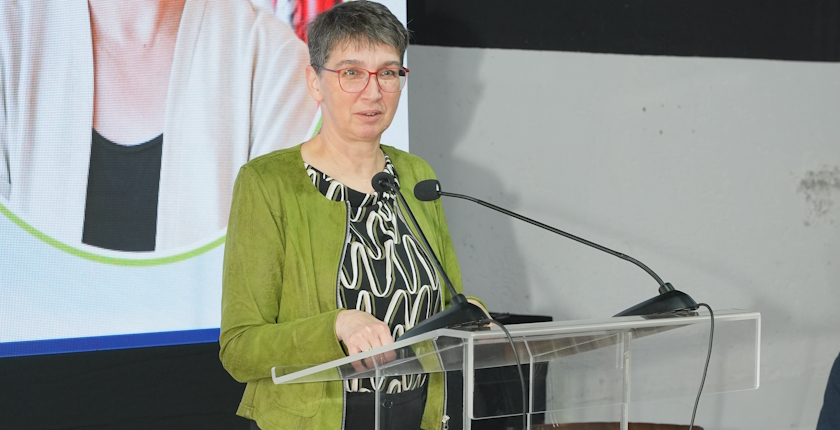
Ms Mara Drochner, Director of the KfW Office in Albania, said the project shows how targeted investments in water and sanitation can improve quality of life while protecting the environment. She added that the facility supports alignment with EU environmental standards, contributing to Albania’s broader EU accession path.
Capacity for 16,000 Residents—Expandable to 24,000Located outside the city on the site of a former septic tank, the plant currently serves a population equivalent of 16,000 residents. A second phase is planned to expand capacity to 24,000 inhabitants, reflecting Himara’s growth and seasonal influx.
Project Manager Endrit Mullalli from “PWT Wasser und Abwassertechnik” said the plant uses a fully biological treatment process that meets EU standards, removing carbon and nitrogen without relying on chemicals.
How the Treatment Process Works
The system follows several stages, starting with pre-treatment before biological purification begins:
-
Coarse screening: Mechanical screens remove large debris carried through the sewer system, such as bottles, wood pieces, and textiles.
-
Removal of fats and oils: Grease is extracted to prevent disruption to the biological process.
After pre-treatment, wastewater enters two large aeration tanks, where biological purification takes place through aeration and denitrification. In these tanks, bacteria and microorganisms (biomass) feed on organic matter, breaking down carbon compounds and enabling nitrogen removal.
Sludge Handling and Safe Discharge Into the Sea
Following biological treatment, the water moves into sedimentation tanks where sludge settles. The sludge is then thickened and mechanically pressed to reduce water content, creating a soil-like dry mass. It is transported to Pilur, Himara’s waste management site, where solar drying further reduces moisture.
According to Mullalli, the final sludge product can be used safely for fruit trees and flowers, but not for vegetables.
Before discharge, the remaining treated water undergoes a final step: chemical-free ultraviolet (UV) disinfection. The goal is to protect swimmers, marine life, and sensitive coastal ecosystems, including Himara’s Posidonia seagrass. The outflow is released at a depth of 25 metres through roughly 200 metres of underwater piping installed under the project.
Real-Time Monitoring With SCADA
The plant is monitored online via a SCADA system, supported by regular laboratory analyses. Sensors continuously track dissolved oxygen levels, while blowers are automatically adjusted through SCADA to maintain target values.
Sewer Network Upgrades and Pumping Stations Added
The project also rehabilitated and expanded Himara’s sewerage network, including:
-
New pressure and corrugated piping
-
Household connections and manholes
-
Septic tank improvements
-
Six pumping stations to channel wastewater to the plant
-
Electrical works and grid connections
-
Two vacuum trucks—one for septic tank emptying, another for cleaning and flushing
Built for Seasonal Tourism Peaks
Himara’s population surges in summer, and the plant is designed to match that demand. It treats a minimum of 1,800 cubic metres per day in winter and up to 5,000 cubic metres per day in summer.
It operates with two parallel treatment lines—one sufficient for winter operations, with both lines used during the summer peak.
Municipality: Cleaner Sea, Fewer Odours, Stronger Tourism
For the Municipality of Himara, the change is already visible. Thimjo Gjinuci, an administrator in the municipality, said the plant has eliminated sea pollution and unpleasant odours, helping improve the experience for residents and tourists alike. He noted that two nearby campsites now benefit from a cleaner environment.
The municipality plans to connect Livadh’s sewage system to the facility and is also considering smaller plants for Qeparo and possibly Dhërmi.