by in News

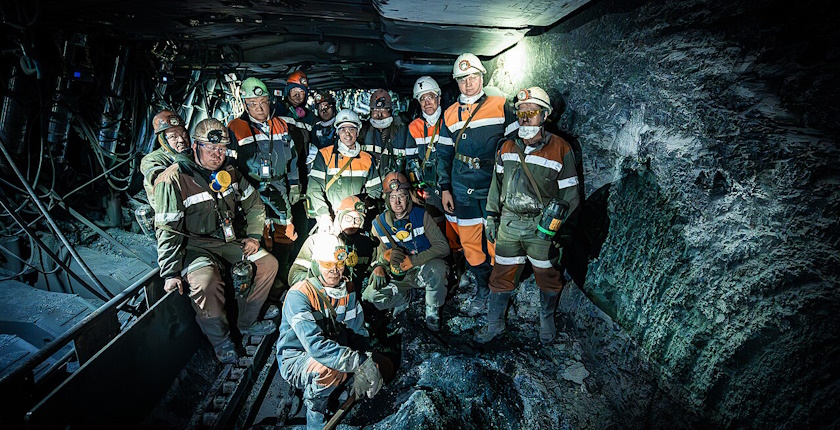
Worrying results of coal, overburden production in BiH’s power utility

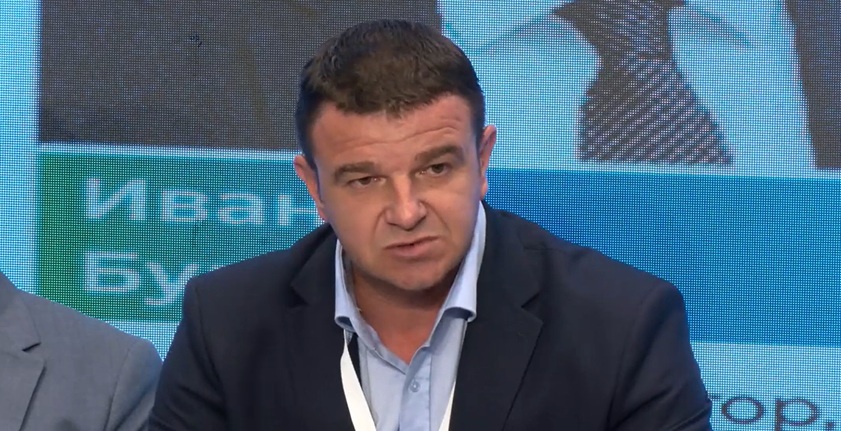
Coal deliveries to thermal power plants in the first half of the year reached 73% of the plan, while only 43% of the overburden excavation target was achieved, warned Sanel Buljubašić, CEO of Bosnia and Herzegovina’s state-owned power utility Elektroprivreda Bosne i Hercegovine (EPBiH).

Increasing coal production is the only way to stabilize the energy system in the Federation of Bosnia and Herzegovina (FBiH), Sanel Buljubašić told state news agency Fena. Focus.ba republished the report.

FBiH is one of the two entities making up BiH. The other one is the Republic of Srpska.

The chief executive pointed to the significance of coal, stressing that 80% of EPBiH’s production comes from coal power plants, with hydropower plants providing the remainder.

Of note, the company recorded a loss of BAM 45.47 million (EUR 23.25 million) for the first half of this year. BiH’s electricity imports were 4.5 times higher than in the same period of 2024.

Buljubašić: We will fulfill our obligations only if the mines fulfill theirs

Buljubašić recalled that the Government of FBiH raised the price of coal at the beginning of 2024 and signed a new collective agreement in the mining sector to demonstrate its commitment to improving working conditions for miners and their status.

The coal mines are operating under an entity called EPBiH Concern. They must produce the planned quantities of coal, which have been jointly agreed and contracted, the CEO underscored and added that EPBiH would meet its obligations only if the mines do the same.

Buljubašić said RMU Breza and RMU Đurđevik are facing the most pressing issues while that RU Kreka is making its best result of the past three years. Coal mine operators RU Kreka, RMU Kakanj, and RMU Abid Lolić have increased production, he added.

Of the nearly 5,000 workers, 1,226 are occupationally disabled

The company head said EPBiH Concern’s mines employ 4,967 workers, of whom 1,226 are occupationally disabled. Additionally, on average, between 1,500 and 1,700 employees are absent every day for various reasons, such as annual leave or sick leave.

In his words, restructuring would imply a program for surplus workers at RMU Zenica, closing mines that are technologically and economically unviable and continuing investments by procuring equipment for economically viable mines to increase productivity.

One of the main problems is the devastated coal deposits, a result of years of delay in overburden excavation, Buljubašić stressed.

Just transition includes mine shutdowns, installation of solar power, batteries, and the use of biomass

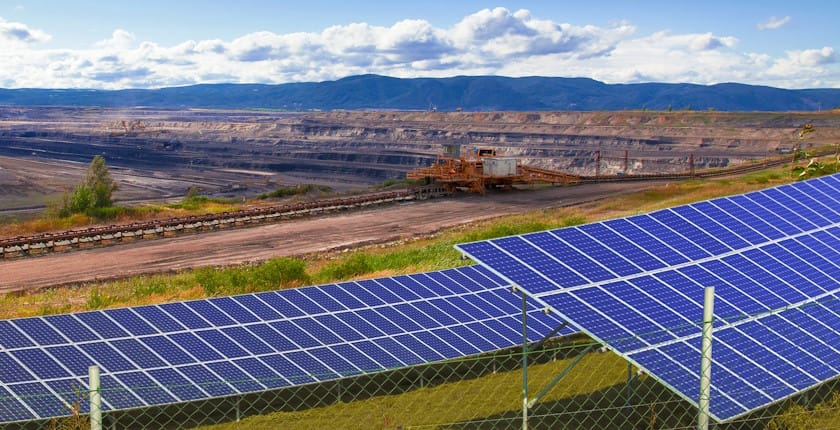
The just transition project in BiH’s coal regions, estimated at BAM 160 million (EUR 81.8 million), is being implemented with a World Bank loan. Most of the funds will be spent on closing mines and taking care of surplus employees of RMU Zenica, repurposing RU Kreka’s land, building the 12.2 MW Dubrave photovoltaic plant, repurposing the land of RMU Banovići and installing another solar power plant, of 15 MW, the CEO explained.

He pointed out that the authorities are preparing a law on the closure of Zenica mines — the first such legislation in BiH.

Green investments within a just transition platform for coal regions can include the construction of battery energy storage systems (BESS) and fast-growing biomass plantations, according to Buljubašić.

He announced that EPBiH would soon present its Prosumer 5000+ project and a long-term development plan for EPBiH for the period 2025-2050, within the energy sector development strategy.
by in News

Greek coal region of Megalopolis opens new chapter after lignite

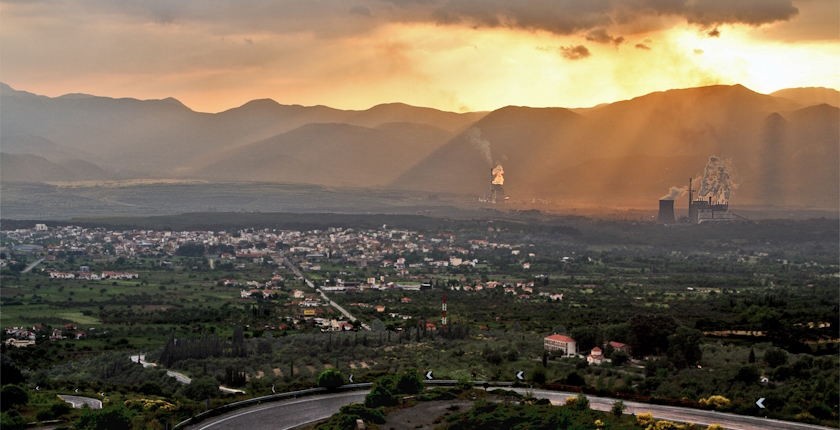
Last year, for the first time in decades, no smoke rose out of coal plants in the Peloponnese peninsula. The last two units had 500 MW together. Megalopolis is one of the two coal regions in Greece, along with Western Macedonia in the country’s north.

According to Public Power Corporation (PPC or DEI) the units Megalopolis-3 and Megalopolis-4 have now been permanently retired. Under the government-controlled utility’s plan to phase out coal completely next year, all such power plants stopped operating by now, with the exception of Ptolemaida 5, of 660 MW, which entered into operation last year. To maintain the security of supply, two units are kept in reserve, also in Western Macedonia in northern Greece.

PPC has produced a study for the reconstruction of the Megalopolis thermal power station, intending to accommodate other activities. Similar works are already underway in the local lignite mine.

New energy investments underway

The group’s investment plan involves various renewable energy and storage projects in Megalopolis to support the area’s energy transition. It is building two photovoltaic farms of 125 MW each, as part of a 490 MW cluster in the area.

The plan includes a 181 MW pumped storage hydropower station in the former lignite mine.

Based on the government’s Just Transition Development Program, Megalopolis will also host a battery factory, by Enercells, as well as two data centers, by Eunice and Kiefer, of 5 MW each. The investments have been approved by the Ministry of Economy and Finance, to seek funding from the European Union’s Just Transition Fund (JTF).

PPC expressed the belief that data centers are important for coal regions. Earlier this year, the group’s CEO George Stassis said they are ideal for such investments as the land and grid connections are already available. PPC is planning a 300 MW data center in Western Macedonia, but it hasn’t announced anything similar for Megalopolis yet.

by in News

Serbia adopts Just Energy Transition Plan until 2030

Serbia now has a Just Energy Transition Plan until 2030. The document contains suggested measures for the mitigation of the impact of reducing fossil fuel use, primarily coal, so that workers, firms and communities aren’t left behind.

Following last month’s completion of the public consultation process regarding the proposed Just Transition Action Plan, the Government of Serbia passed, at its last session, the Just Energy Transition Plan of the Republic of Serbia until 2030. The document leans on the Integrated National Energy and Climate Plan (INECP or NECP)

It lays out sustainable energy policy measures that would need or could be undertaken. The point is in reducing fossil fuel dependence and improving security and efficiency of electricity supply by switching to renewable energy sources, and in an energy efficiency boost.

A just transition aims to promote environmentally sustainable economies in a way that is fair and inclusive for all

“A just transition aims to promote environmentally sustainable economies in a way that is fair and inclusive for all – workers, businesses and communities – by creating opportunities for decent work and leaving no one behind. This initiative should not be seen as a fixed set of rules, but as a dynamic process based on dialogue with a focus on addressing the concerns and needs of local populations and affected stakeholders,” the plan reads.

The approach is based on mitigating the negative effects of the energy transition process. It implies significant investments in retraining and reskilling, to assist workers in adjusting to new industries, as well as education, the plan adds.

It highlights the importance of incentivizing the development of new industries, and supporting small and medium-sized enterprises, which can enable alternative sources of income and employment.

Electricity system collapse in December 2021 marked as turning point?

Until December 2021, domestic electricity production met domestic needs, although even before that, the power system had been making maximum efforts for many years to provide sufficient amounts of electricity or, rather, provide sufficient amounts of coal for the operation of thermal power plants, the document notes.

There is no elaboration on the time reference, but that’s when a major outage struck coal-fired thermal power plants of state-owned power utility Elektroprivreda Srbije (EPS). Of note, it was one in a string of serious incidents in the electricity system.

Coal plants are old and they mostly don’t comply with environmental standards

“The fact is that existing electricity generation plants are old and most of them are not in line with new operating conditions and standards when it comes to environmental protection. Therefore, it is quite clear that in the case of the Serbian energy sector, the energy transition should lead to a radical change in the structure of sources and methods of electricity production,” according to the plan.

Coal plants, open pit mines could be replaced with wide range of activities from culture to gas power plants

Listed among the possibilities for repurposing coal plants and coal mine land after shutting them down are green power plants (but also gas-fueled energy facilities), launching industrial production, logistical and commercial activities, together with sports, culture, education, agriculture, tourism and waste management.

In 2023. there were 25,288 employees in thermal power plants (22.2%) and coal mines (77.8%), the document notes. The oldest coal plant, Kolubara A of 239 MW, was built in 1956, and the newest unit is Kostolac B3, of 350 MW. It came online last year.

“Social dialogue mechanisms should be established to ensure that the voices of all stakeholders are heard and their concerns are addressed. This includes consultations with trade unions, local self-governments and civil society organisations,” the Just Energy Transition Plan of the Republic of Serbia until 2030 suggests.

Expenses are envisaged at EUR 75.4 million, of which EUR 12 million would be for incentives for entrepreneurship and self-employment and EUR 60 million for improving business structure at existing industrial parks.

Carbon pricing system to make coal power plants in Serbia increasingly uncompetitive

One section covers the upcoming rollout of charges within the European Union’s Carbon Border Adjustment Mechanism (CBAM). The tax affects imports of a group of raw materials and electricity. Third countries can be exempted if they establish their own carbon pricing and emissions trading systems.

“In order to balance the economic and environmental impacts of the introduction of domestic carbon pricing in Serbia, a phased approach could be adopted, starting with a modest carbon price and gradually increasing it. Support for affected industries, such as subsidies for low-carbon technologies and worker retraining programs, along with recycling revenues to finance green projects and providing direct rebates to citizens, can mitigate negative effects,” the plan adds.

NGOs have criticized the action plan draft for only describing preparatory activities

Actually, proceeds from greenhouse gas emissions allowances in the EU are used only for the green economic transition, and it is similar with most environmental levies.

The introduction of a carbon tax mechanism will make domestic coal-fired power plants increasingly uncompetitive, especially in regional electricity markets, the government warned.

Nongovernmental organizations and associations earlier criticized the draft, arguing that it delays the energy transition until 2030, only lists preparatory activities and that, inter alia, there is no targeted date for ending the use of coal for electricity production.

In any case, a just energy transition requires defining deadlines and projects and securing funds exclusively for the said purposes. Otherwise the market will trample coal plants and mines, and it will probably happen abruptly, which would jeopardize energy security and employment. Such effects are already tangible in Southeastern Europe, especially in Bosnia and Herzegovina, as well as in Bulgaria and Slovenia.

by in News

Germany supports Serbia in clean energy supply, environmental protection

The Republic of Serbia and Germany’s KfW Development Bank signed a loan agreement on July 18 for EUR 135 million for the second phase of the credit program Green Transition Development Policy Operation (DPO II).

The signatures underscore the joint activities by Germany and Serbia aimed at a climate-compliant and socially just energy transition, said Chargés d’Affaires ad interim Carsten Meyer-Wiefhausen from the Embassy of the Federal Republic of Germany in Serbia. “We will continue to be with Serbia on this path and support its reform efforts,” he stressed.

Within the financing for the reforms, the World Bank, French Development Agency (AFD) and the German KfW Development Bank are supporting the Republic of Serbia in conducting its ambitious reform agenda. The goal is to accelerate the transition to energy from clean sources and align with EU standards in environmental protection and climate.

Series of reforms through DPO II

Several successful reforms have been materialized within DPO II, among which:

  1. Promoting investments that are acceptable in environmental and climate terms: Public investments are graded under environmental criteria and with regard to the risk of natural disasters, and with models developed solely for the purpose. The citizens of Serbia benefit from the government’s more sustainable investment decisions.
  2. Enhanced transparency in the public budget: The Government of the Republic of Serbia has committed to publishing information on the execution of the public budget, not only at the end of the fiscal year, but also during the year. It improves the transparency of public expenditures, primarily concerning investments in environmental and climate protection.
  3. Affordable energy prices: The Government of the Republic of Serbia has rolled out temporary targeted subsidies for households with low income, like citizens with low pensions. The share of households receiving such aid has grown from 2.7%, registered in 2021, to last year’s 8%.
  4. Improvement in waste disposal: Aligning with EU standards brings a better approach to sanitary landfills, namely from 42% (2021) to last year’s 50%. The citizens of Serbia benefit from improved waste disposal and a cleaner environment.
  5. Prepared for CBAM: Since this year, large industrial facilities and power plants report their CO2 emissions in line with EU standards. That way Serbia is more prepared for the upcoming full implementation of the European Carbon Border Adjustment Mechanism (CBAM) for carbon prices. For instance, the country would be able to price CO2 emissions and charge them.

Financing reforms within climate partnership

Germany’s contribution to financing reforms is an integral part of Germany’s climate partnership with Serbia and the entire Western Balkans. The purpose of the partnership is to support Serbia’s work on achieving its national climate goals and adapting to climate change. The key goal of the partnerships is for the transformation that is necessary to meet climate goals, in the interest of Serbian citizens, to be socially just, a just transition.

This year, Serbia and Germany are celebrating the 25th anniversary of their development cooperation. In the meantime, KfW financed projects worth EUR 2.5 billion in Serbia.

by in News

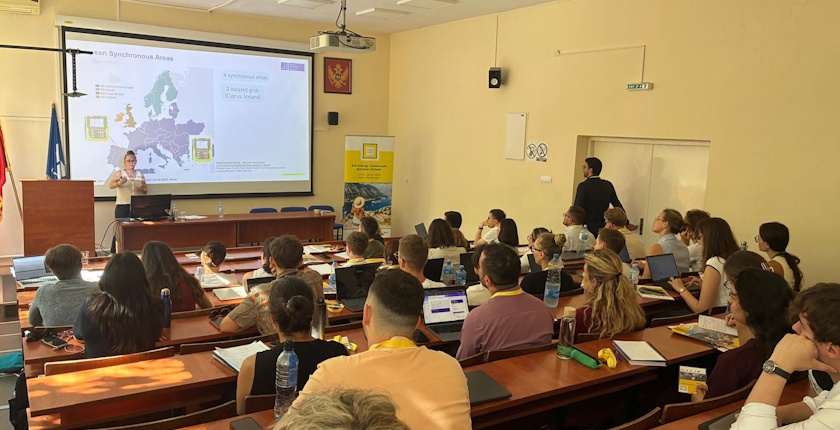
Ninth Energy Community Summer School gathers 40 participants in Montenegro from 28 countries

The ninth Energy Community Summer School has kicked off in Montenegro, gathering 40 participants from 28 countries.

On July 19, forty young professionals and researchers from 28 countries convened at the Faculty of Maritime Studies in Kotor, Montenegro, to dive deep into the pressing technical, political, and economic issues driving the energy transition, according to the Energy Community Secretariat.

“The energy transition is no longer a distant goal—it’s happening now, shaped by technology, driven by policy, and tested by crises,” Artur Lorkowski, Director of the Energy Community Secretariat, said in his welcoming address.

Lorkowski: A successful and just transition depends on bringing together diverse people and perspectives

A successful and just transition depends on bringing together diverse people and perspectives to learn and exchange ideas—just as the secretariat does each year at this summer school, and as it has done for two decades across the Energy Community: building connections, aligning energy rules, and driving the shift to cleaner, more secure energy systems in our region, according to Lorkowski.

The 2025 edition attracted 242 applications from 58 countries. At the end of the selection procedure, 40 participants representing 28 countries were selected: 18 from Energy Community contracting parties, one from an observer country, 18 from EU member states (including seven from the Visegrád Group), and the remainder from Switzerland, South Africa, and the United States.

Among them, 27 hold a master’s degree and 13 have a PhD.

The seven-day program is organized by the Energy Community Secretariat, in collaboration with the International Visegrad Fund, Friedrich-Ebert-Stiftung – Dialogue Southeast Europe (FES-SOE), and Montenegro’s state-owned companies – power utility Elektroprivreda Crne Gore (EPCG), and distribution system operator Crnogorski Elektrodistributivni Sistem (CEDIS).

The Energy Community’s long-standing commitment to building the next generation of leaders

Since its launch in 2016, the initiative has also been supported by Polis University (Tirana), Comenius University (Bratislava), Jagiellonian University (Krakow), Masaryk University (Brno), and REKK (Budapest).

The Summer School reflects the Energy Community’s long-standing commitment to building the   next generation of leaders—those who will drive long-term integration, cooperation, and sustainable energy transformation across the region, the secretariat pointed out.

Throughout the week, participants will work closely with leading experts from academia, industry, and policymaking circles to examine real-world approaches to transforming energy systems.

Through lectures, case studies, and collaborative discussions, they will explore how innovation, cross-border cooperation, and policy reform can drive decarbonization while supporting economic development and regional stability, according to the secreatariat.

by in News

Energy Community marks 20th anniversary as integration pillar for Southeastern Europe

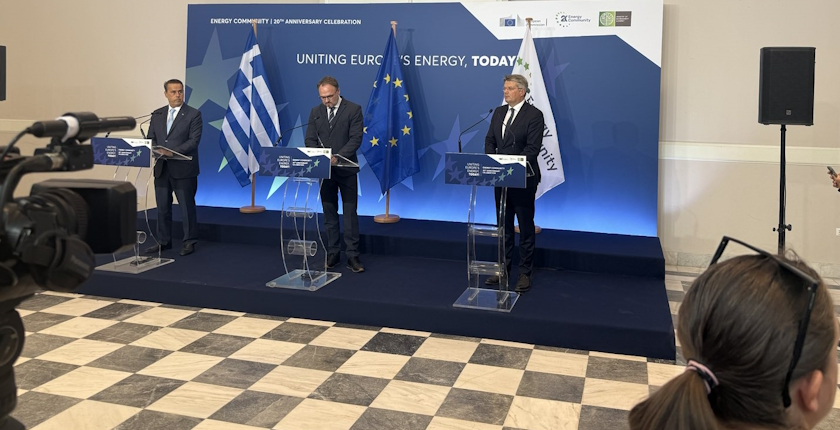
The Energy Community Ministerial Council held its annual informal meeting in Athens, where the organization was founded twenty years ago. No contracting party is expected to meet the criteria for exemption from the Carbon Border Adjustment Mechanism (CBAM) in the electricity sector – the European Union is due to start charging the CO2 tax on January 1 – but the European Commission could propose amendments.

The Energy Community promotes integration, reforms and investments across the region, top officials stressed.

Ministers from the Energy Community contracting parties convened today at the Informal Ministerial Council in Athens to mark the organization’s 20th anniversary. The Energy Community Treaty, establishing the Energy Community, was also signed in the Greek capital. The purpose of the organization is to create a more integrated market, help attract investment and speed up decarbonization by aligning with the European Union’s rules on energy, environment and competitiveness.

In recent years, close cooperation has enabled the contracting parties to strengthen the security of supply, particularly against the backdrop of the ongoing Russian war in Ukraine, the Energy Community Secretariat said. During the annual gathering, hosted by the Greek Ministry of the Environment and Energy, the ministers underlined the need for an accelerated integration with the EU, grounded in delivering a secure, resilient energy transition.

Ministers agreed to revise capacity calculation regions

Many contracting parties are close to completing the reforms needed to launch the 18-month countdown to electricity market coupling – including full legal alignment under the Energy Community’s Electricity Integration Package and the appointment of nominated electricity market operators (NEMOs). If transposition is verified as compliant by the European Commission and the Energy Community Secretariat, integration will be initiated with the EU’s Single Day-Ahead Coupling (SDAC) and Single Intraday Market Coupling (SIDC).

Ministers made a breakthrough in regional coordination, backing a proposal by EU transmission system operators to revise capacity calculation regions (CCRs), now under review by the EU energy regulator ACER – Agency for the Cooperation of Energy Regulators. Recognizing the proposal’s importance for an effective operation of the interconnected grid, they called for swift follow-up, including the operationalization of regional coordination centers (RCCs) and system operation regions (SORs).

The aim is to boost electricity flows and grid security, especially along the north-south corridor of the Balkans, while laying the groundwork for full EU market coupling.

Decarbonization must accelerate ahead of CBAM implementation in 2026

To avoid disruptions to regional electricity trade, clarifying CBAM rules for electricity is a priority for the ministers, the secretariat pointed out. The EU is set to begin charging the carbon border tax on January 1.

Lorkowski: Electricity market integration and decarbonisation are two sides of the same coin

As no contracting party is expected to meet the exemption criteria by then, a proportionate and context-sensitive application of the mechanism is essential, as supported by active engagement in the European Commission’s ongoing call for evidence that precedes the future amendments of the CBAM regulation to be possibly proposed by the European Commission, in the secretariat’s view.

“Electricity market integration and decarbonisation are two sides of the same coin. The green energy transition unlocks meaningful integration with the EU market – and vice versa. Only by aligning policy, infrastructure, and pricing can contracting parties fully realise the benefits of clean, secure, and affordable energy,” said Energy Community Secretariat Director Artur Lorkowski.

The ministers called for carbon revenues to support vulnerable communities and mobilize investment in clean energy, stressing that just transition financing must go hand in hand with policy reforms.

Energy Community Treaty is now cornerstone of Europe’s energy architecture

Born out of crisis and shaped by cooperation, the Energy Community Treaty has become a cornerstone of Europe’s energy architecture, Lorkowski stressed. What began as an unlikely experiment in regional integration has grown into a dynamic framework – extending the EU’s internal energy market, strengthening energy security, and advancing the clean energy transition across South-Eastern and Eastern Europe, he asserted.

Energy Community contracting parties can fully integrate their electricity markets with the EU before joining it

“Our contracting parties are now on the cusp of a major breakthrough: full electricity market integration with the EU – even ahead of accession. This is the product of two decades of reform, dialogue, and trust-building. With the right political will, we can move from transposition to transformation,” Lorkowski stated.

In his view, Greece is the window for the Energy Community contracting parties to the liquefied natural gas (LNG) market and the access point to the European electricity system. Close cooperation with the Western Balkans has economic benefits for Greece – but beyond the economy, it is also about security and stability, Lorkowski said at the event.

Energy Community pioneered extension of EU energy market

Over the past two decades, the Energy Community has brought the EU closer to its neighbours, pioneering the extension of the trade bloc’s energy market across its borders, promoting integration, reforms and investments across the region, according to European Commissioner for Energy and Housing Dan Jørgensen.

“Now it is time to look ahead at our shared future based on a greener, sustainable and resilient system which will bring cheaper energy and more security to all,” he said.

Separately, in an interview with Kathimerini, Jørgensen noted that Southeastern Europe experienced electricity price spikes last summer, mainly in the evening hours, due to a lack of cross-border capacity and sufficient flexibility. The only solution is further infrastructure and market integration, as costs are separated and benefits are multiplied, he opined.

For every EUR 2 billion invested annually in cross-border infrastructure, the potential benefits reach up to EUR 5 billion, the commissioner added.

Papastavrou: Southeastern Europe’s is at disadvantage as its electricity market is not fully integrated with EU

Southeastern Europe is still not fully integrated with the EU, which is a structural disadvantage for citizens, said Minister of Environment and Energy of Greece Stavros Papastavrou.

“I am very optimistic after the first session of the meeting, because all the contracting parties expressed commitment, a strong commitment, to market coupling,” he stated. Papastavrou said a lot of work is required in the electricity sphere to bridge the gap for the prosperity of citizens and the entire region.

Energy integration is one of the pillars of EU accession

Energy integration is not just a technical issue – it is one of the fundamental pillars of the EU accession process, the minister told his counterparts from the Energy Community.

“Greece, too, has faced the same challenges that many of you are experiencing today. Back in 2005, our energy system was almost entirely dependent on lignite, by more than 60%. Today, we have reduced lignite use by an impressive 91% – a clear demonstration of our strong commitment to a clean, sustainable, and resilient energy future,” he stated.

Serbia’s Đedović Handanović sees possibility for market coupling with Hungary already next year

Serbia was the first in the region to fulfill the conditions for market coupling with the EU, the country’s Minister of Mining and Energy Dubravka Đedović Handanović said. She urged for the verification process to be accelerated, so that Serbia can connect with the Hungarian market in 2026 and, through it, with the other EU member states.

The minister acknowledged the challenge of the upcoming full implementation of CBAM.

Photo: Minister Dubravka Đedović Handanović (Nenad Kostić / Ministry of Mining and Energy)

Serbian institutions analyzed the available options from the study that the European Commission published. “We think that carbon pricing should be introduced gradually, in phases and fairly, with support from funds from the European Union,” she said.

The minister stressed that revenues from carbon taxes would be directed, like in the EU, to decarbonization, renewables, energy efficiency, just transition and support to companies.

“Without an adequate period of time for the transition from coal to renewable energy sources, without modernizing the network, increasing RES capacities and adjusting the industry, higher carbon costs can only increase the financial pressure on our industry and consumers, which is already happening in the EU, instead of resulting in a significant emissions reduction in the short term. Solving these issues requires careful planning, a phasein and the EU’s targeted financial support, so that climate goals would be aligned with the economic reality,” Đedović Handanović said.

She recalled that EU member states had more than two decades to gradually adjust to carbon emission levies. Đedović Handanović affirmed that Serbia is willing to continue its alignment with the EU’s energy and climate policy.

“All the reform measures that we are conducting are primarily for the benefit of our citizens and companies, and we won’t make decisions overnight that would jeopardize our energy stability,” she said.

by in News

Open call for green hydrogen high-efficiency CHP pilot plant in northern Greece

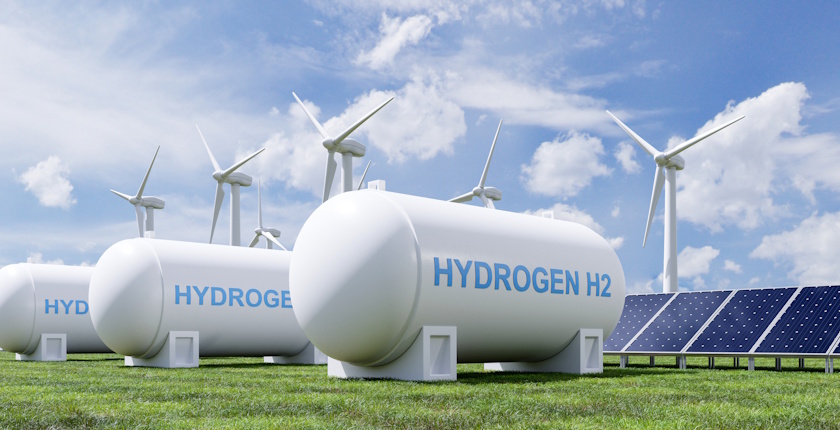
Greece’s Alternate Minister of Economy and Finance Nikos Papathanasis has launched an open call for the installation and operation of a high-efficiency combined heat and power (CHP) unit using fuel cells powered by green hydrogen. The site for the pilot project is in the Western Macedonia coal region in the country’s north. It is part of the government’s Just Development Transition Programme 2021–2027.

Western Macedonia is Greece’s main coal region, and the other one is Megalopolis in the Peloponnese. The country is transforming the economies of the two areas toward clean and smart technologies, largely with funding from the European Union and aiming at a just transition.

The open call signed by Alternate Minister Nikos Papathanasis for the installation and operation of a pilot unit for high-efficiency combined heat and power (CHP) facility, running on fuel cells, has a total budget of EUR 7.87 million. The facility would utilize green hydrogen produced in electrolyzers powered by renewable electricity.

The energy would be used to provide 24/7 power and heat to the Bodosakeio General Hospital of Ptolemaida, the Chemical Process & Energy Resources Institute (CPERI) in the same city and the Daycare Center for People with Disabilities in the municipality of Eordaia.

The deadline for proposal submission is October 31

The deadline for the submission of proposals is October 31, with immediate evaluation of applications.

The project is for the construction of a pilot CHP unit and a photovoltaic park on municipal land in Eordaia.

According to the announcement from the Ministry of Economy and Finance, the flagship initiative aims to showcase and implement cutting-edge energy and environmental technologies, contributing to the region’s energy transition and decarbonization efforts.

In April, Public Power Corp. (PPC) announced a EUR 5.8 billion investment plan to support the transition of Western Macedonia. The endeavor consists of the decommissioning of old assets and the rollout of new energy technologies.

According to the decarbonization timeframe, Ptolemaida 5 will be the last coal plant in the country, continuing to operate until the end of 2026. It is set to be converted to a gas power plant with a capacity of 350 MW. PPC is also open to upgrading it to 500 MW or even 1 GW.

The plan also includes: 2.1 GW of solar PV capacity, with one 550 MW project nearing completion in a former lignite mine, 860 MW of energy storage, including pumped hydro and battery systems, and a 300 MW data center, planned to be scaled up to 1 GW.

by in News

NGOs request withdrawal of draft just transition action plan in Serbia

Eighteen non-governmental organizations have criticized Serbia’s draft just transition action plan and called for the creation of a new document with concrete measures and activities. The Ministry of Mining and Energy said the adoption of the action plan should enable the establishment of an institutional framework for managing a just transition and define the most important activities up to 2030.

The Ministry of Mining and Energy recently published a draft just transition action plan and launched a public debate. The plan foresees investments of EUR 88 million.

The presentation of the draft took place yesterday in the Chamber of Commerce and Industry (PKS) in Belgrade. The public debate began on May 21 and ended today.

According to the Renewables and Environmental Regulatory Institute (RERI) and the Belgrade Open School, with support from 16 organizations, the ministry announced at the debate in PKS that the energy transition would be postponed until 2030 and that the proposed measures would be limited to preparatory activities aimed at preventing the negative outcomes of the energy transition.

The NGOs called for the development of a new draft with concrete measures and activities for a just transition.

The organizations urged the EBRD to check if the drafting and adoption of the document is in line with its standards

They called on the ministry to restart the preparation of the draft in line with the standards of the Law on the Planning System and the Energy Community’s guidelines for planning the just transition. They also urged the European Bank for Reconstruction and Development (EBRD) to compare the document’s drafting and adoption process against its environmental and social protection standards.

Of note, the draft is the result of a project funded by the EBRD. The NGOs outlined five main shortcomings.

The public debate was supposed to be organized in Lazarevac, Obrenovac, Kostolac, Požarevac, and other locations where the residents will be most affected

The first is that the public was neglected (the 20-day period for public debate is insufficient; no presentations were held in Lazarevac, Obrenovac, Kostolac, Požarevac, or other places where the residents will face the greatest and most direct impact). Another one is legal baselessness.

The third objection relates to the fact that the measures are neither precise nor substantive but only preparatory (most of the proposed measures are either preparatory or require additional analyses and research). The next item is that half a million euros are envisaged for updating recently adopted acts (it is not specified which strategies, laws, and bylaws need to be amended).

Finally, the civil sector criticized the fact that there is no precise date for phasing out coal-fired electricity production (it prevents affected communities and workers from making rational and informed decisions).

Zlatković: The draft action plan serves as an introduction to a broader energy transition process

Aleksandar Zlatković – second from left (photo: Ministry of Mining and Energy)

Aleksandar Zlatković, advisor to the minister of mining and energy and head of the working group for the preparation of strategic documents at the ministry, said that the draft action plan represents an operational framework for the specification of the strategic goals defined in the Integrated National Energy and Climate Plan until 2030, with a vision to 2050 (INECP), and the Energy Development Strategy until 2040, with projections to 2050.

The proposed measures include support for workers and communities in transition, strengthening local economies, education, and retraining, as well as capacity building for local authorities.

The detailed elaboration and identification of priority territories and targeted measures will be carried out by bodies that are planned to be established

According to Zlatković, the document also serves as an introduction to a broader energy transition process and establishes the institutional framework for setting up the bodies that would systematically manage and plan the just and energy transition processes.

“It is important to emphasize that the action plan provides only illustrative examples for some potentially affected regions. The detailed elaboration and identification of priority territories and targeted measures will be carried out through the work of the newly formed bodies, primarily after the adoption of the decarbonization plan of Elektroprivreda Srbije (EPS),” Zlatković stated. The state-owned power utility is expected to produce the document by the end of the year, he added.

by in News

Future Green Business conference highlights role of Croatian companies, EU-Africa partnership in climate action

The International Institute for Climate Action (IICA) held its third international Future Green Initiative conference on climate change. The event in Zagreb was dedicated to the role of the business and financial sectors in mitigating climate change. President of IICE Marija Pujo Tadić said Europe wants other states and the main global players to join its ambitious climate targets and action.

Abze Djigma, one of the most prominent African negotiators on the global climate, was a special guest and keynote speaker at the conference. In her words, a just transition isn’t possible without African mineral resources, and Africa is ready to cooperate in the sector, with mutual respect.

Within the trajectory to reaching climate neutrality by the mid-21st century, the EU and its member states intend to determine an intermediate 2040 target of 90% for greenhouse gas emission cuts. It implies a rapid switch to a low-carbon and sustainable economy. The International Institute for Climate Action (IICA) is contributing to the efforts through training, communications and awareness raising for the business and financial sectors and the facilitation of networking.

With its activities, IICA promotes knowledge exchange and strengthening social and personal responsibility toward sustainability. It helps companies adapt their operations and governance to the requirements for stable growth, to tackle the climate crisis.

At its third international conference Future Green Business, the institute gathered Croatian and EU officials and Croatian company executives. The event in Zagreb was titled How the Business and Financial Sector Can Contribute to Climate Change Mitigation (EU & Africa).

Reliable partners are exceptionally important for transition to sustainable economy

President of IICA and Special Advisor-Envoy for Climate Action of the Government of Croatia Marija Pujo Tadić stressed that the conference was a reflection of the recently held 3rd European Union – African Union Ministerial Meeting, which marked 25 years of the partnership. The aim of the event in Zagreb was to highlight the significance of cooperation, particularly in the context of the climate crisis, for the corporate and financial sectors.

The EU is Africa’s biggest trade partner as well as the biggest investor and donor of development and humanitarian aid

“Both continents inevitably have to undergo their path of transforming the economy to a sustainable economy. And on that path, it is exceptionally important to have reliable partners. Europe and Africa are an example with their strong global cooperation of 25 years, directed toward peace, security, governance, prosperity and a human dimension,” Pujo Tadić underscored.

In her view, Africa is EU’s geopolitical priority at a time of increased geopolitical instability. Marija Pujo Tadić recalled that the EU is Africa’s biggest trade partner as well as the biggest investor and donor of development and humanitarian aid.

“Europe remains committed to its climate goals and ambitions and it is calling on other states and the main players to join these ambitious goals and action, and all other countries to meet their national commitments in the runup to COP30 in Brazil,” she asserted.

The conference featured a panel discussion between the representatives of large Croatian companies in the spheres of industrial production, logistics and finance.

Čović Vidović: EU’s Africa policy is no longer developmental but directed toward market-based partnerships

Deputy Head of the European Commission Representation in Croatia and the Head of Press and Media Andrea Čović Vidović said the Council of the EU has just announced that the administration in Brussels and member states mobilized EUR 28.6 billion of international climate finance from public and EUR 7.2 billion from private sources in 2023.

“That support is increasingly targeted not only towards adaptation and mitigation, but towards strategic partnerships, such as with Africa, our very important partner for a sustainable future,” she stated.

The European Commission is spearheading change through legislative initiatives that shape the global climate transition, Čović Vidović stressed. “As for our policy toward Africa, it is no longer developmental. It is aimed at market-based partnerships for mutual benefits. Of course, also for the benefit of the global climate,” she added.

Decisions that political, business leaders make at climate negotiating table affect everyone

A special guest and keynote speaker at the conference was Princess of the Mossi people of Burkina Faso and Co-Chair of the UNFCCC Paris Commitee on Capacity-building Abze Djigma. She has been participating in international climate negotiations for the last two decades.

Abze Djigma highlighted the significance of the concept of just transition. Both political and business leaders need to be aware that their decisions in climate talks affect everyone, and especially that they have the responsibility to improve living conditions, in her words.

At their recent meeting, the European Union and African Union considered the possibilities for cooperation in the critical minerals segment, Abze Djigma noted. A just transition is not possible without African mineral resources, and Africa is ready for cooperation in that field with mutual respect, she underscored.

It is not fair that licenses issued to foreign mining companies enable them to access the international finance market and the billions for their investments, while neither the African countries hosting their projects nor the domestic economy can’t use the asset that way, Abze Djigma asserted. It is why the legal framework needs to include provisions on ownership shares for the government and local firms, so that there are joint opportunities, she explained.

Abze Djigma also promotes empowering youth, the less fortunate and women through, for instance, enabling access to sustainable and affordable energy in rural areas.

Private sector has responsibility but also unique chance to be part of solution

Without systemic and determined action, global temperature will keep growing, with ever more serious consequences for the economy, society and nature, said Croatia’s State Secretary at the Ministry of Environmental Protection and Green Transition Tanja Radić Lakoš.

“The business and financial sectors have the responsibility, but also a unique chance to become part of the solution, with their tools, knowledge and capital. Enterprises that integrate climate change management, climate risks, into the core of their strategies, not only contribute to environmental protection, but become more resilient, more competitive and more attractive to investors,” she asserted.

 Radić Lakoš: Social fairness must be an integral part of the green transition

Radić Lakoš stressed that Croatia would utilize European and national funds for the green transition in a targeted and transparent manner, making sure that no one is left behind.

“Social fairness must be an integral part of the green transition, as it is not a privilege, but the right of all our citizens,” she added and pointed out that the country is eligible for EUR 1.26 billion from the EU’s Social Climate Fund (SCF). Radić Lakoš noted that Croatia is adding EUR 420 million to the sum. SCF is intended for financial support to vulnerable households and enterprises.

The funding contributes to climate objectives through the decarbonization of transportation, improvement of the energy efficiency of buildings and the creation of green jobs.

Croatia getting EUR 1.3 billion by 2030 from proceeds from sales of CO2 certificates

Furthermore, Croatia is receiving the proceeds from the sales of carbon certificates via the Modernisation Fund, Radić Lakoš recalled. The amount allocated to the country until 2030 currently has a market value of EUR 1.3 billion. The funds are intended, among other uses, for the decarbonization of heating systems, energy efficiency measures and low-carbon road transportation.

Another five public calls are envisaged this year, worth an overall EUR 285 million from the Modernisation Fund

So far there were three calls, where 224 beneficiaries were awarded a total of EUR 80 million. There are five more calls envisaged for 2025 and they are worth a combined EUR 285 million, of which part of the support will go through financial instruments, Radić Lakoš added.

In the 20 years since its inception, the Environmental Protection and Energy Efficiency Fund (EPEEF or, in Croatian, FZOEU) conducted almost 60,000 sustainable development and green transition projects, its Director Luka Balen told the audience at the event. “As we can see, climate change is not an issue for the future. It is a matter of everyday life,” he stated.

by in News

Western Balkans urged to step up just transition measures

In its new guidelines for the just transition, the Energy Community Secretariat highlighted the lack of policies and measures in its contracting parties in the Western Balkans. The concept implies incorporating a people-centred and regionally tailored approach, in national energy and climate planning, to phasing out fossil fuels while providing targeted support to those most affected. Just transition plans can help attract investments.

The Energy Community Secretariat published the Policy Guidelines on Just Transition as part of integrated energy and climate planning. It aims to assist the contracting parties in aligning with their legal obligations. The international organization called on them to adopt dedicated just transition plans (JTPs) or roadmaps, matching their national energy and climate plans (NECPs). The criticism of the Western Balkans mostly concerns the lack of policies and measures in the NECPs.

Of note, Serbia issued its draft Just Transition Action Plan last month. The World Bank approved a EUR 79.9 million loan and a EUR 2.89 million grant for the purpose, to the Federation of Bosnia and Herzegovina, one of the two entities constituting BiH.

Signing the Sofia Declaration in 2020, the Western Balkans committed to decarbonizing their economies to net zero by 2050

The secretariat recommended that the contracting parties improve their reporting on the matter as well. The just transition is a people-centred and regionally tailored approach to phasing out fossil fuels while providing targeted support to those most affected by the process, it pointed out.

In the Sofia Declaration on the Green Agenda for the Western Balkans, adopted in 2020, six contracting parties in the region committed to decarbonizing their economies and the 2050 climate neutrality objective.

A just transition implies support to affected workers and communities, addressing energy poverty, promoting inclusive governance, and ensuring fair access to the benefits of the transition, according to the guidelines. The economies would need to switch to clean, secure and affordable energy for all, the document notes.

Average coal power plant is almost five decades old

In most contracting parties, coal-based electricity generation is still dominant, characterised by low efficiency and high levels of emissions of carbon dioxide and pollutants.

Coal plants in the Western Balkans are between 34 and 67 years old, with an average age of 46 years in 2023. It entails risks to the security of electricity supply, the Energy Community Secretariat warned.

For comparison, it provided an overview of the situation in the European Union. The authors noted that Romania has no national JTP, but that it developed six territorial just transition plans or TJTPs. They cover the coal regions of Hunedoara, Gorj, Dolj, Galați, Prahova and Mureș.

Due to the insufficient level of integration of just transition in NECPs and the decision by many Energy Community contracting parties to create separate policies and measures in the form of just transition plans, the secretariat recommends that they develop them replicating the structure and content of TJTPs and base them on lessons learnt from European Union member states.

Authorities should support firms, job creation, equal opportunities

JTPs should be based on a granular identification of territories most impacted by decarbonisation, supported by thorough socio-economic and environmental impact assessments.

According to the guidelines, decision makers should support economic stakeholders such as micro, small and medium-sized enterprises and startups. It applies to the creation of firms, too, including through business incubators and consulting services. Workers and jobseekers need upskilling, reskilling and training, the update reads.

Women’s labour market participation and entrepreneurship, as well as equal pay, play an important role in ensuring equal opportunities

Women’s labour market participation and entrepreneurship, as well as equal pay, play an important role in ensuring equal opportunities, the document adds.

“Although no dedicated financing is currently available solely for just transition in the Energy Community, the preparation of comprehensive and credible just transition plans can significantly increase the chances of mobilising both public and private funding in the future. Just transition plans can serve as strategic investment roadmaps,” the authors of the guidelines underscored.