by in News

Hidroelectrica installs battery storage facility at its Crucea Nord wind park

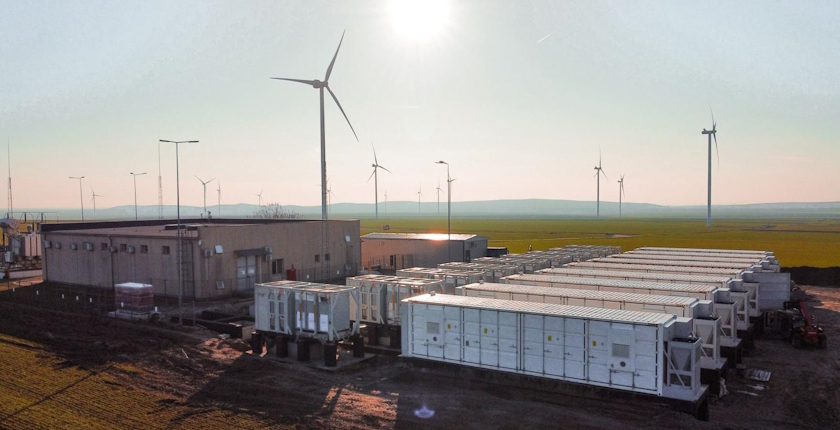
Hidroelectrica’s battery energy storage system (BESS) of 36 MW and 72 MWh, co-located with its Crucea Nord wind park in Romania’s southeast, is on track to come online more than a year earlier than initially planned.

The future energy hub around the village of Crucea in Romania’s Dobruja (Dobrogea) region will soon get its first hybrid power plant. Hidroelectrica, the country’s biggest electricity producer, said the BESS project at its only wind park, Crucea Nord, is 80% finished.

It means the battery storage facility is set to enter operation already in May, the state-owned hydropower plant operator said. It earlier planned to launch production in the summer of 2027.

The BESS will have 36 MW in operating power and a two-hour duration. It translates to 72 MWh in capacity. The system is co-located with a 108 MW wind park, built in 2014. Crucea Nord has been making significant losses due to unfavorable balancing obligations.

The contractors are Romania-based Prime Batteries Technology and Enevo Group

All nine units, supplied by domestic battery manufacturer Prime Batteries Technology (PBT), have been installed by December 30, Hidroelectrica revealed. The other contractor in the consortium is Enevo Group. After first setting up a small battery, the utility selected them in April through a tender.

Prime Batteries manufactures lithium-ion batteries and provides energy storage solutions for the automotive, smart grids, and industrial sectors. The startup is headquartered in Cernica near Bucharest. The other company is Romanian as well.

The deal is worth RON 79.8 million (EUR 15.7 million) excluding value-added tax.

Hidroelectrica operates 188 hydropower plants totaling 6.4 GW in capacity. According to Romania’s transmission system operator Transelectrica, the country hosts BESS facilities with an overall capability of 494 MW and a storage capacity of 913 MWh.

by in News

Hidroelectrica installs battery storage facility at its Crucea Nord wind park

Hidroelectrica’s battery energy storage system (BESS) of 36 MW and 72 MWh, co-located with its Crucea Nord wind park in Romania’s southeast, is on track to come online more than a year earlier than initially planned.

The future energy hub around the village of Crucea in Romania’s Dobruja (Dobrogea) region will soon get its first hybrid power plant. Hidroelectrica, the country’s biggest electricity producer, said the BESS project at its only wind park, Crucea Nord, is 80% finished.

It means the battery storage facility is set to enter operation already in May, the state-owned hydropower plant operator said. It earlier planned to launch production in the summer of 2027.

The BESS will have 36 MW in operating power and a two-hour duration. It translates to 72 MWh in capacity. The system is co-located with a 108 MW wind park, built in 2014. Crucea Nord has been making significant losses due to unfavorable balancing obligations.

The contractors are Romania-based Prime Batteries Technology and Enevo Group

All nine units, supplied by domestic battery manufacturer Prime Batteries Technology (PBT), have been installed by December 30, Hidroelectrica revealed. The other contractor in the consortium is Enevo Group. After first setting up a small battery, the utility selected them in April through a tender.

Prime Batteries manufactures lithium-ion batteries and provides energy storage solutions for the automotive, smart grids, and industrial sectors. The startup is headquartered in Cernica near Bucharest. The other company is Romanian as well.

The deal is worth RON 79.8 million (EUR 15.7 million) excluding value-added tax.

Hidroelectrica operates 188 hydropower plants totaling 6.4 GW in capacity. According to Romania’s transmission system operator Transelectrica, the country hosts BESS facilities with an overall capability of 494 MW and a storage capacity of 913 MWh.
by in News

Hidroelectrica to set up joint venture with EDF for 1 GW pumped storage project

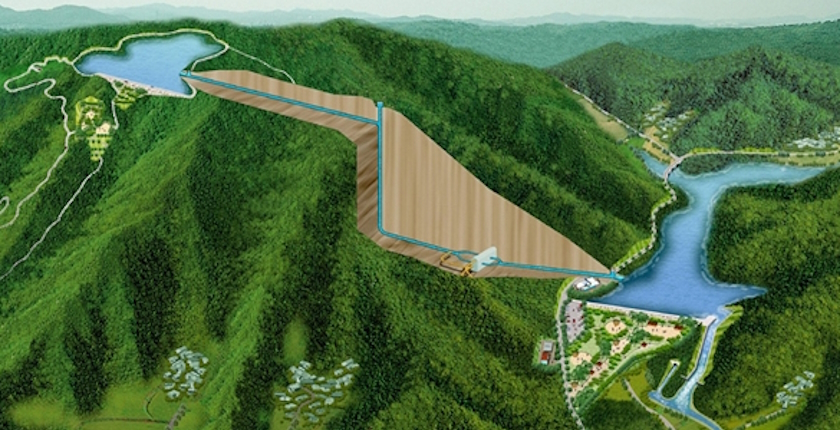
After numerous failed attempts for half a century, Romania intends to revive the Tarnița-Lăpuștești pumped storage hydropower project in tandem with France’s EDF. State-owned Hidroelectrica published a proposal to its shareholder assembly to establish a 50%-50% joint venture for the 1 GW endeavor. The utility also intends to buy the Frasin-Pângărați pumped storage facility when Hidro Blue Energy builds it.

The plans for Tarnița-Lăpuștești date back to mid-1970s. According to a feasibility study from 2008, updated in 2014, the pumped storage hydropower plant on the river Someşul Cald in Romania would consist of four units of 250 MW each. After numerous failed attempts, the Ministry of Energy sat with the representatives of Japanese Itochu and French EDF last year to discuss the project.

In November 2024, Romania signed a memorandum of understanding with Itochu. The latest update came from government-controlled hydropower plant operator Hidroelectrica. It has just scheduled an extraordinary general meeting of shareholders for January 27.

Romania may fast-track Tarnița-Lăpuștești project

In a stock exchange filing, Hidroelectrica said it is proposing a joint undertaking with EDF Power Solutions International, where both state-owned companies would have equal stakes.

The location for Tarniţa-Lăpuşteşti is 30 kilometers from Cluj-Napoca, Transylvania’s biggest city. The river is called Meleg-Szamos in Hungarian.

The old study envisages five to seven years of construction. Within a legislative push to unlock dormant hydropower projects, the project could be given a priority status. In that case, it would be exempted from some permits including the obligation to conduct the study all over again.

Hidroelectrica plans to buy Frasin-Pângărați pumped storage hydropower plant upon its commissioning

In another item for the meeting, Hidroelectrica seeks approval for obtaining advisory services with regard to its intention to acquire, upon commissioning, the Frasin-Pângărați pumped storage hydropower plant.

A company called Hidro Blue Energy is working on the project for 300 MW. The location is in Neamț County in the northeast. Lake Bicaz would be the facility’s lower reservoir.

Hidroelectrica said it would update shareholders about the upcoming refurbishment of pumped storage systems Petrimanu, Jidoaia and Lotru, downstream of the Dorin Pavel hydropower plant. The utility has awarded the contract to Electromontaj, with Elin Motoren, Voith Hydro and Butan Grup as subcontractors.

The project is worth EUR 97.9 million, excluding value-added tax.

Hidroelectrica is also rehabilitating hydroelectric plants Gogoșu, Bradișor and Stejaru.

The company has RON 56.23 billion (EUR 11.04 billion) in market capitalization, according to data from the Bucharest Stock Exchange. The government has an 80.1% share.

by in News

Romania’s Hidroelectrica struck by worst hydrology so far

Romanian state-owned hydropower operator and electricity supplier Hidroelectrica is expecting record-low output this year amid a severe drought. However, it entered the winter season with much higher water reserves than in 2024. The company projected its annual profit at EUR 590 million.

Chronic drought and heat in Southeastern Europe may require countries in the region to invest massively in desalination. Whether a result of climate change or what skeptics consider a cyclical phenomenon, it is heavily impacting the economy and nature.

There is a trend of decreasing water levels in rivers, lakes and reservoirs. It spells uncertainty for hydropower projects, especially for ones on small watercourses, very sensitive to drought. Following extreme declines in water levels in hydropower reservoirs in Bosnia and Herzegovina, Serbia and Greece, Romania’s Hidroelectrica also sounded the alarm.

The state-owned utility and electricity supplier expects record-low production in 2025, just above 11 TWh, President of the Board of Directors Bogdan Nicolae Badea said at the Focus Energetic conference, as quoted by Agerpres.

It is the driest year so far, he stressed. Output is seemingly weaker even than in 2012, when the company fell into insolvency.

Weather effect weakening, but it’s no time to relax

Conversely, Hidroelectrica expects its profit to reach RON 3 billion (EUR 590 million) this year, Badea revealed. Furthermore, he pointed out that water reserves are at around 73%, compared to 64% from the same period of 2024.

The chief executive said he has noticed a pattern change and estimated that the pressure has been reduced in terms of the impact of weather factors on the energy sector. “But I don’t think it’s time to relax. Because, from what I have observed statistically in previous years, even if there were situations in which we had milder winters, in which episodes of extreme cold lasted less, these issues can arise at any time,” he explained.

Free market is only way for correct electricity pricing

Badea said he was “extremely happy” because of the return to the free market, arguing it is the only way for correct pricing. Hidroelectrica recently announced that it has surpassed one million household and non-household customers in the end-consumer supply market.

The company has 188 hydroelectric plants with a total capacity of 6.4 GW, and the Crucea wind farm of 108 MW.

by in News

Romania’s Hidroelectrica to equip hydropower plants with battery storage

Romanian state-owned power utility Hidroelectrica will install storage on all its run-of-river hydropower plants, to be able to switch the supply of surplus electricity to the evening peak, according to interim CEO Bogdan Nicolae Badea.

Hybrid power plants are all the rage. Two- and even three-way combinations between batteries and solar and wind power plants have become more and more popular over the past few years, as they enable steadier and more predictable supply. But energy storage can have a meaningful role in tandem with hydropower as well, and interim President of the Board of Directors of Hidroelectrica Bogdan Nicolae Badea revealed plans for such investments.

Namely, impoundment hydroelectric plants control the flow from the reservoir through the dam, so much of their production can be adjusted to demand. Run-of-river facilities can store little to no water, which is why the Romanian state-owned hydropower plant operator intends to add energy storage to its entire operational portfolio in the segment, Badea explained.

Goal is to lower daily price spreads at power exchange

The idea is to switch the supply of electricity from times of surplus within the day to the evening peak, the interim CEO stressed at the Profit Energy.forum. There are seven to eight slots a day at the electricity exchange with very low or negative prices, and others with excessive prices, Badea pointed out.

“Even in free market conditions and affected by external crises, the cost borne by consumers could be somewhat lower than today if Romania had energy storage capacities, so that daily consumption peaks are in balance with production peaks,” the interim CEO underscored.

Price caps hurting Romanian state budget

Romania caps power prices, which harms the state budget, Badea noted and said there are two ways to achieve a balance.

“The first solution is a systemic one – and here all the important participants in the energy sector must invest – and Hidroelectrica is doing this, investing primarily in diversification. We have a wind farm in operation today. We are investing a lot in the storage area and we are trying to combine renewable sources, hydro, photovoltaics, floating photovoltaics,” he stated.

Hidroelectrica signed a contract in April with a consortium of Romanian companies Prime Batteries Technology and Enevo Group, for a lithium ion battery energy storage system at its Crucea Nord wind farm.

Hidroelectrica is investing in storage, solar power and hybrid power plant projects

The company also plans to integrate a BESS with hydropower plant Iron Gate 2 (Porţile de Fier 2) on the Danube. The project is valued at EUR 61.2 million. Some hydropower plants are set to be equipped with rooftop photovoltaic systems.

Badea was also the company chief from 2017 to 2023. He was recently reappointed, after he was the chief investment officer for almost two years.

For the first six months of this year, hydrological data shows a situation reminiscent of the critical moment when the company entered insolvency, in 2015, Badea added. However, unlike that period, today Hidroelectrica is a profitable, stable company and a pillar of the energy system, he stressed.

by in News

Bajramović: Investments of BAM 1.4 billion needed for distribution grids in BiH

Necessary investments in Bosnia and Herzegovina’s electricity distribution grids by 2030 amount to BAM 1.4 billion (EUR 716 million), according to Zijad Bajramović, chairman of the Bosnia and Herzegovina committee of the International Council on Large Electric Systems (CIGRE).

The growing installation of power plants utilizing renewable energy sources is creating congestion in transmission and distribution networks, so the limited available capacity for their connection is an issue across the entire region, Zijad Bajramović told state news agency Fena. Nezavisne Novine republished the report.

An additional burden on the distribution network is expected from the electrification of transportation and increased electricity use for heating and cooling.

Energy storage is a solution for the problems emerging in the grid

Bajramović explained that new 110 kV substations are necessary, as is the completion of the ongoing transition to the 20 kV voltage level. Attention should also be paid to integrating prosumers, especially the households that both produce electricity, with solar panels on their roofs, and consume it.

He highlighted balancing as well as maintaining voltage conditions and supply quality as the main challenges from the rise in renewable electricity capacity on the grid. Energy storage is a solution for the issues.

Batteries can prevent renewables generation curtailments

Bajramović expects battery energy storage systems to play an increasingly significant role in relieving network congestion.

BESS, in his words, are a flexibility tool for absorbing excess generation locally, and temporarily easing the pressure on the transmission grid. They can prevent curtailments of power generation from variable renewable sources, he added.

Bajramović recalled that calculations have showed batteries of 225 MW / 450 MWh in total would be necessary to connect 1,500 MW of solar power capacity and 1,000 MW of wind power to the transmission network.

An increase in distribution network tariffs would provide funds for investment in strengthening and modernizing the distribution network, in his view.

Batteries are being installed at a rapid rate around the world as well as in the region. Not only private companies, but also state-owned utilities such as Romania’s Hidroelectrica and Montenegro’s Elektroprivreda Crne Gore (EPCG) are investing in such projects.

by in News

Battery storage investors in Romania rapidly expanding project pipeline

In an accelerating investment wave, companies in Romania are combining BESS with solar power, hydropower and wind power, or building standalone energy storage facilities. The group includes R.Power, Hidroelectrica, Engie and more big names.

Recent updates about investments in battery energy storage systems (BESS) in Romania indicate the technology is becoming another pillar of the country’s energy transition alongside wind power. For several years now, photovoltaics, and prosumers in particular – including municipal authorities, have dominated the scene. Geothermal energy is another emerging segment.

The government has provided incentives both for households and utility-scale battery storage. Companies are combining batteries with solar and wind power as well as hydropower capacity.

Investing in BESS colocated with renewable electricity plants or as standalone facilities in Southeastern Europe enables income from high spreads between wholesale power prices in daily trading. It is especially significant given the increase in the occurrence of zero and negative prices.

Notably, neighboring Bulgaria has earmarked massive funds for support to BESS investments while also focusing on pumped storage hydropower projects. Greece also held several rounds of auctions for battery storage.

R.Power to start building 127 MW standalone battery

R.Power is investing in BESS in Romania, which is one of its strategic markets, together with Poland, where it is headquartered, and Italy, Germany, Spain and Portugal. Battery storage makes up 17.5 GW or more than half of its total development pipeline in Europe.

The company said it would hybridize its existing and future PV assets and scale the integrated capacity to several gigawatts in the coming years. It has over 1.2 GW of projects for standalone BESS in Romania. “And that’s just the beginning,” R.Power said.

It obtained EUR 15 million in funding for a future 127 MW facility. It is about to start building the BESS in Scornicești in Olt county, west of Bucharest. R.Power is planning to complete it in a year. The battery energy storage system would have a duration of two hours, translating to 254 MWh in capacity. The project received funding from the National Recovery and Resilience Plan (NRRP or, in Romanian, PNRR).

Still, in the company’s view, further legislative changes are needed to fully harness the potential of the technology.

Hidroelectrica to add large battery to Iron Gate 2 hydroelectric plant

State-owned Hidroelectrica, the largest electricity producer in Romania, wants to install a battery storage system at Iron Gate 2 (Porțile de Fier 2) on the Danube. Located on the border with Serbia, it is the second-largest hydroelectric plant in the country, at 252 MW in nominal capacity. The complex, which the two countries share, is known as Đerdap in Serbian.

The BESS would have 64 MW in nominal power and a four-hour duration (256 MWh), Profit.ro reported. Hidroelectrica plans to use it for providing balancing services to the national electricity system (SEN) and adjust the time intervals of its hydropower production.

The contract for the installation of the facility is estimated at EUR 61.2 million plus value-added tax, according to the article. It would be integrated with the hydroelectric plant. The company is receiving bids from potential contractors by August 28.

French Engie has BESS projects for its existing PV plant, wind park

France-based Engie’s subsidiary in Romania intends to install a BESS at its newest solar power plant, of 37.2 MW in peak capacity, in Ariceștii Rahtivani. It commissioned the PV facility in June. The location is north of Bucharest, in Prahova county.

The battery energy storage system project is for 20 MW in operating power and 80 MWh. It would consist of 16 containers, 192 inverters and four transformer units.

The wind park in Băleni will reportedly add a small BESS facility

Engie Romania is working on another investment, through its Alizeu Eolian project firm. It plans to add batteries to a 50 MW wind park in Băleni, Galați county, which was built in 2013.

The company obtained the building permit last year. It also got clearance two months ago for connecting the BESS with a 110/20 kV transformer station via an underground line. Economica.net learned that the battery storage facility would have 5 MW and a two-hour duration, costing the firm EUR 2 million.

Engie’s project was included in the reserve list last September after a public call for support to battery storage. The Ministry of Energy selected 13 applications for grants from NRRP. Another 25 passed, but remained below the line.

Government bolstering battery investments with grants

The state aid scheme was worth EUR 103.5 million, of which EUR 79.6 million came from the European Union’s Recovery and Resilience Facility (RRF).

Among the beneficiaries are Electrica, in which the government holds just under 50%. Renovatio Trading. OMV Petrom, Public Power Corp. (PPC) and Verbund have projects on the B list.

For its 65 MWh project in Toplița in Harghita county, in eastern Transylvania, Renovatio Trading is buying the equipment from Trina Storage. The firm is part of Trina Solar.

Visual Fan is winning major contracts for the procurement and installation of batteries

Allview Energy, part of Romanian company Visual Fan, is handling the alternating current (AC) side in Renovatio Trading’s investment.

In addition, Visual Fan became the contractor for a BESS within Eurowind Energy’s Teiuș solar park.

The Danish developer intends to deploy a 117 MWh energy storage unit with lithium-iron-phosphate (LFP) batteries, within a year. It valued the project at over EUR 16.6 million. The companies said they would carry out the works in partnership with TQM Services and Voltlink. The investment includes the battery management system and liquid cooling.

In June, the ministry approved a EUR 3.4 million grant from the EU’s Modernisation Fund to Termoficare Oradea. It has a project for a 10 MW solar park with a 15 MWh storage unit, worth EUR 18.6 million altogether.

Austria’s Verbund conducting EUR 22.7 million project

Verbund has almost all the permits for a BESS project at its 226 MW wind farm in Casimcea in Tulcea county. The company headquartered in Austria said it has secured financing as well and that it is already contracting the equipment.

The wind farm was commissioned in 2012. The energy storage segment would have up to 50 MW and up to 100 MWh. It would be located at the Alpha Wind Nord section of the existing facility, of 81 MW.

Still, the basic variant’s size will be 48.3 MW, with 76 MWh in capacity, according to Profit.ro. There would be 34 containers at the site selected for the BESS.

The majority government-controlled utility values the investment at EUR 22.7 million, of which more than EUR 10.7 million is for the storage facility itself. The location spans five hectares.

After coming up short in the public call, Verbund submitted the project for a grant from the Modernisation Fund.

In mid-May, Romania hosted 240.7 MW of battery capability and a total capacity of 404.9 MWh.

by in News

Hidroelectrica seeks to buy wind, solar projects totaling 520 MW

Romanian state-owned hydropower plant operator Hidroelectrica, the largest electricity producer in the country, is looking to take over a 250 MW wind farm project under development and a total of about 270 MW of solar projects.

Hidroelectrica’s plan is to acquire the companies that own the rights, permits, land, and other assets related to the renewable energy projects under development, according to a report by Profit.ro.

The plan is to acquire the companies developing the wind and solar projects

The Romanian power utility is currently selecting consultants to conduct due diligence on the projects and the development companies, before making acquisition decisions.

Hidroelectrica operates 188 hydropower plans, with a combined capacity of 6.4 GW, and only one wind park, of 108 MW. The wind park, Crucea Nord, should soon get a battery energy storage system of 36 MW under a contract signed in April this year.

In May, Hidroelectrica hired a contractor for installing its first photovoltaic plants. The solar panels, with a total capacity of 2.96 MW, are to be deployed on the roofs of 20 hydroelectric plants, in an investment valued at EUR 1.77 million.

Hidroelectrica plans to install photovoltaic panels at 20 hydropower plants and build a floating solar plant

In June, the company selected a contractor for its first floating solar power plant, of 10 MW, which would be installed on the reservoir of the Ipotești hydroelectric plant. Hidroelectrica said at the time that it intended to obtain know-how from the construction and operation of the pilot floating solar system and replicate the concept elsewhere.

Hidroelectrica has also invited bids for installing a battery energy storage system (BESS) with a nominal power of 64 MW at the Iron Gate 2 (Porțile de Fier 2) hydropower plant on the Danube. It would be used to provide balancing services to the national electricity system and adjust the time intervals of hydropower production at Iron Gate 2.

The company’s profit in the first half of 2025 dropped 41% against the same period a year earlier, to RON 1.587 billion (EUR 313.6 million) as revenue fell 16% to RON 4.315 billion (EUR 852.7 million). Its total power output decreased 27% year-on-year to 6,068 GWh, pushing electricity purchases up 62% to 674 GWh, according to Profit.ro.

by in News

Court suspends Hidroelectrica’s hydropower project by stopping deforestation

An almost complete hydropower project that was launched in the late 1980s in Romania is stuck again as a court in Cluj suspended a government’s decree that allowed clearing 31 hectares of forest. Hidroelectrica’s endeavor on the Răstolița river is for 35.2 MW.

What was labeled by the Romanian media as the last big investment of Nicolae Ceaușescu’s regime is again on an extended hold. The Cluj Court of Appeal suspended a government decree from earlier this year that allowed the deforestation of 31 hectares for a 35.2 MW hydropower plant on the Răstolița river in Transylvania.

The project, launched in 1989, is 90% finished. In June, the same court suspended the environmental permit.

Răstolița project has special status

The government declared Răstolița a renewable energy project of major public interest in 2022. It exempted it from the obligation to carry out an environmental impact assessment study and the ban on reducing the national forest fund.

Nongovernmental organizations Declic and Bankwatch Romania, which submitted the complaint, pointed out that deforestation continued between the two rulings. The location of the Răstolița hydropower project, run by state-owned Hidroelectrica, is part of the Călimani National Park.

The two groups have argued that the technical documentation is more than three decades old, ignoring climate change, biodiversity and public safety. The affected area is vital for flood prevention and the conservation of species, they pointed out.

Conversely, the government claimed the project would actually reduce the risk of flooding and enable water supply and the management of the Mureș river and its tributaries.

Romania already invested over EUR 200 million

The facility in Mureș county was planned to be commissioned in November. In January, the authorities approved the expropriation of 55 hectares of forest.

Average electricity production in the first phase is estimated at 46.3 GWh per year, and it would reach 117.5 GWh in the final stage. The reservoir would be 5.6 kilometers long. Investments made so far are valued at more than EUR 200 million.

Former Minister of Energy Sebastian Burduja reacted to the new ruling by calling it “economic sabotage.” He is a member of the Chamber of Deputies, the lower house of Romania’s parliament.


by in News

Hidroelectrica to begin construction of its pilot floating photovoltaic plant

Romanian state-owned hydropower plant operator Hidroelectrica picked the contractor for a 10 MW floating solar power plant, its first, on the reservoir of the Ipotești hydroelectric plant.

Hidroelectrica awarded the contract for the construction of the Proiect Pilot Nufărul floating photovoltaic system.

The pilot project could open the way for the installation of a group of such facilities, also on the Olt river and in a joint venture with Abu Dhabi Future Energy Co. (Masdar).

Pilot floating plant is part of wider push for synergy of photovoltaic technology with hydropower

Notably, Hidroelectrica picked the contractor last month for setting up solar panels on the roofs of its 20 hydroelectric plants. They are on the middle and downstream parts of the Olt river as well.

The site for the 10 MW pilot project is the reservoir of the 57 MW Ipotești hydropower plant. Hidroelectrica conducted the procurement through a tender, which it valued at EUR 9.3 million excluding value-added tax. The utility awarded the deal to Waldevar Energy, which won with a bid of EUR 7.7 million excluding VAT.

The firm’s subcontractors are Marine Research, S.C. DHI-SW Project, and Makor Energy Solutions.

Project implementation is limited to 14 months, of which the works would last ten months.

Hidroelectrica to learn from new investment to replicate it

The floating power plant will consist of bifacial photovoltaic panels of 620 W, inverters of 100 kW, energy optimizers and four transformer stations, the documentation reveals. Annual output is estimated at 13.4 GWh. The floaters would be made of high-density polyethylene (HDPE).

The facility would be connected to the grid via the Ipotești hydropower plant.

Hidroelectrica pointed out that it aims to diversify the production portfolio and capitalize on synergy between solar and hydropower. The state-owned hydropower operator intends to obtain know-how from the construction and exploitation of the pilot system and replicate the concept elsewhere.

The turnkey contract includes design, purchases, assembly, installation, testing and commissioning.

Hidroelectrica operates 188 plants with a capacity of 6.4 GW overall. It has one wind farm, Crucea Nord, of 108 MW.

  • 1
  • 2