by in News

Share of coal power in Finland nearly zero as cogeneration plant shuts down

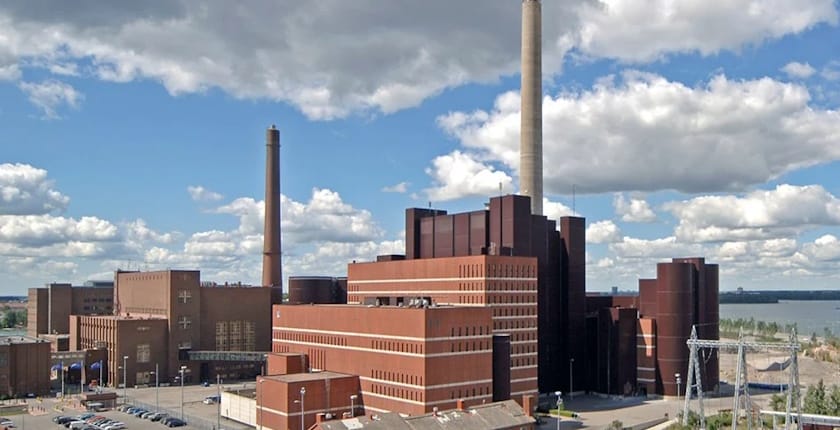
Helsinki’s municipal energy company Helen closed its last coal facility. Together with the country’s remaining plants that use the solid fossil fuel, Salmisaari accounted for just 0.8% of the electricity mix in 2024. The Government of Finland earlier set May 1, 2029, as the coal exit date.

Two years ago, the Olkiluoto 3 nuclear reactor of 1.6 GW, the strongest in Europe, entered commercial operation. Apparently it helped the energy system of Finland to almost eliminate coal from the board. Helen, controlled by the local authority of the capital Helsinki, closed its Hanasaari B plant in 2023, leaving the Salmisaari combined heat and power (CHP) facility as the only one using coal. This week the company shut it down.

Finland is now using neglectable quantities of coal. Salmisaari has 177 MW in power capacity and 300 MW for heat. Together with the country’s remaining three coal power plants, it accounted for a mere 0.8% of the electricity mix last year, Coal-Free Finland and Beyond Fossil Fuels said.

Moreover, coal amounts to just 30% of fuel in Vaskiluoto 2. The facility mostly uses biomass. The operator of the Martinlaakso coal unit is eliminating fossil fuels from regular operations next year. The third one, Meri-Pori, is in strategic reserve.

Share of coal in Finland is marginal

Finland will retain reserve coal capacity for security of supply purposes, which can be deployed if necessary, Helen said. In addition, some energy companies use small amounts of coal in their energy production for peak, reserve and security of supply reasons, it added. The law forbids using coal in energy production after May 1, 2029.

Wind power output more than doubled in Finland since 2020, reaching a quarter of the total. At the same time, coal-fired generation plummeted 73% while fossil gas is down 82%, according to the report. “Finland has shown what’s possible when clear political signals are matched with rapid investments in renewable power,” said Deputy Campaign Director at Beyond Fossil Fuels Cyrille Cormier. The group called on the authorities to double down on renewables and clean flexibility.

Finnish energy experts can pull off impossible tasks

Helen delayed the closure of Salmisaari by a year. Coal still accounted for 64% of the company’s district heating supply in 2022!

The utility managed to slash its greenhouse gas emissions by more than 80% since 1990. It aims to reach 95% by the end of the decade.

“Helen giving up coal and, at the same time, foreign imported energy with regard to it, will remain a significant part of our country’s industrial history and shows that Finnish energy expertise enables actions that initially seemed impossible,” Chief Executive Officer Olli Sirkka said.

Helen transitioning to clean solutions

Helen is shifting to clean solutions. It enables operating more profitably with lower prices, the CEO pointed out. A range of facilities are under construction.

Heat production is mainly moving to heat pumps – utilizing waste and environmental heat – electric boilers, energy storage and sustainable biofuels. Helen will lean on wind, nuclear energy, hydropower and photovoltaics for electricity.

The new units in Salmisaari will be two electric boilers of a combined 100 MW, in combination with a heat pump of 33 MW in external capacity, as well as a 153 MW plant burning wood pellets. Helen is planning a 200 MW electric boiler facility of four units in Hanasaari, able to store 1 GWh of heat. It would currently be the biggest in Europe.

Helsinki has the ambition to reach climate neutrality by 2030, though including external offsets. It would eliminate them within the following ten years, which means only the city’s carbon sinks are included in the equation. The next step is turning carbon negative.

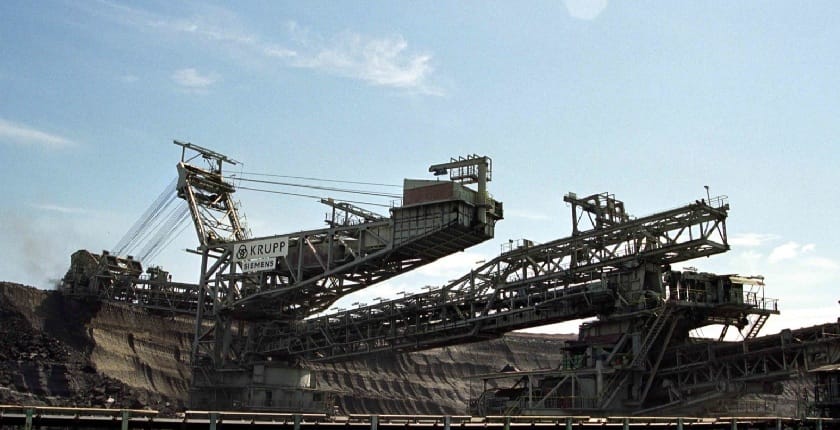
Market forces are decimating the remaining coal power capacity in Europe as it is expensive because of emissions rights and strict environmental regulations, as well as inflexible. Germany, Poland, Slovenia, the Czech Republic, Serbia, Montenegro, Bosnia and Herzegovina, Kosovo* and Turkey have the largest shares of coal in power production in the European Union and Southeastern Europe. Their phaseout deadlines are all after 2030, but the situation is changing fast.
* This designation is without prejudice to positions onstatus and is in line with UNSCR 1244/99 and the ICJ Opinion on the Kosovo declaration of independence.
by in News

PPC plans EUR 5.8 billion makeover of Western Macedonia coal region, including data centers

Public Power Corp. (PPC) presented a EUR 5.8 billion investment plan for the coal region of Western Macedonia in northern Greece. It held the ceremony in the retired Kardia 2 lignite-fired power plant.

According to PPC’s chairman and CEO George Stassis, the endeavor consists of the decommissioning of old assets and the rollout of new energy technologies.

Stassis: Western Macedonia can reinvent itself

PPC, or DEI in Greek, said it would return to the government 8,000 hectares of coal land that it no longer needs, after completely restoring it. All equipment, such as 400 kilometers of lignite conveyor belts, cooling towers and excavators, are planned to be recycled up to 95%.

According to the decarbonization timeframe, Ptolemaida 5 will be the last coal plant in the country, continuing to operate until the end of 2026. It is set to be converted to a gas power plant with a capacity of 350 MW. PPC is also open to upgrading it to 500 MW or even 1 GW.

New photovoltaics, storage underway

“Western Macedonia can reinvent itself using new technology,” said the CEO.

The group aims to install a total of 2.1 GW in photovoltaics across the region. A 550 MW solar power plant in the former lignite mine of Ptolemaida is almost complete. It will be the biggest in the Balkans. Separately, a group of clusters of 940 MW is under construction within the Meton joint venture with German RWE.

Energy storage is another major segment in PPC’s investment plan. Within the next three years, it aims to funnel EUR 940 million for a total capacity of 860 MW. It includes two pumped storage hydropower projects. The one in Kardia is for 320 MW and an eight-hour storage duration, and the other in the South Lignite Field – 240 MW and a 12-hour duration. The projects are worth EUR 430 million and EUR 310 million, respectively.

Equally important, battery storage units of 300 MW altogether would be installed in Amyndaio, Akrini, Meliti and Kardia in the country’s main coal region. The other one is Megalopolis in the Peloponnese.

PPC plans a 50 MW hydrogen production facility together with Motor Oil, as Hellenic Hydrogen, and a cogeneration plant to cover district heating needs from the end of 2026.

Large 300 MW data center

Last but not least, the Greek group aims to create a 300 MW data center, as part of an investment of EUR 2.3 billion. A subsidiary in fiber optic cables would upgrade the telecommunication links with Thessaloniki and Igoumenitsa to improve data flow in Greece and abroad.

If conditions are favorable, PPC would further upgrade the data center to 1 GW, increasing its investment by EUR 5.4 billion.

Greek Prime Minister Kyriakos Mitsotakis said at the event that existing infrastructure in Western Macedonia is a great advantage.

by in News

Kosovo* adopts Law on the Promotion of the Use of Renewable Energy Sources

Only after the first auction was held, lawmakers in Prishtina enabled subsidizing renewable electricity plants through contracts for difference (CfDs). Passing the Law on the Promotion of the Use of Renewable Energy Sources, they also cleared the way for the introduction of guarantees of origin, a renewable energy operator and support fund, energy communities and energy storage in Kosovo*. The legislation includes provisions on self-consumption.

Kosovo’s parliament adopted the Law on the Promotion of the Use of Renewable Energy Sources. It won praise from the Energy Community Secretariat for aligning the legal framework with the Renewable Energy Directive. The international organization based in Vienna also commended the move toward sustainable energy development.

“This law will bring benefits to the private sector, through new concepts of consumer involvement in the energy sector and through the definition of procedures that must be done competitively. In this way, all enterprises are treated equally, benefiting from their competition which leads to lower prices and affordable costs for citizens,” the Ministry of Energy said.

Provisions for green heating, cooling, transportation

Among the objectives are increasing the security of supply and protecting the environment. The Law on the Promotion of the Use of Renewable Energy Sources includes provisions on the combined generation of heat and power (CHP or cogeneration).

The legislation covers the electricity sector, heating and cooling and transportation. The law cleared the way for incentivizing consumers to produce, store and sell the surplus of renewable electricity.

A system for guarantees of origin of electricity is envisaged to be rolled out as well. Notably, the Energy Regulatory Office (ERO) expects to establish a registry in June. The law stipulates that a renewable energy operator would be founded. The entity would manage a renewable energy support fund.

Liquid day-ahead market was necessary to have reference prices for CfDs

In addition, the legislation defines energy communities, energy storage activities and behind-the-meter installations for renewables self-consumers. Such units wouldn’t be able to inject electricity into the grid.

The adoption of the law was apparently on hold until the Albanian Power Exchange (ALPEX) set up a liquid day-ahead market. Kosovo* and Albania jointly launched the bourse. The reference price set in trading is necessary for obligations determined in contracts for difference (CfDs). The subsidies are awarded in renewable energy auctions.

On the other hand, the first such competitive bidding process was completed late last month, before the Law on the Promotion of the Use of Renewable Energy Sources was passed.

The Government of North Macedonia sent a similar bill to the national assembly a month ago.

* This designation is without prejudice to positions onstatus and is in line with UNSCR 1244/99 and the ICJ Opinion on the Kosovo declaration of independence.
by in News

Energy efficiency, renewables in rural communities in Serbia’s Zlatibor region

Author: Stevan Vujasinović

The population in rural areas in the municipalities of Priboj, Čajetina and Arilje in Serbia have been heavily affected for years with frequent and prolonged interruptions in electricity supply. The interruptions not only disturb everyday life but they also substantially hinder the development of family businesses, especially in tourism and agriculture. However, solutions do exist.

Regional Development Agency Zlatibor almost simultaneously marked World Energy Efficiency Day (March 5) and International Women’s Day (March 8) last week. On the occasion, it organized “energy discussions” with members of women’s associations in rural areas of these municipalities, and the main topics were energy efficiency and renewable energy sources for rural households.

The Zlatibor mountain is one of Serbia’s main tourist and skiing resorts. It partly spans the territories of Priboj, Čajetina and Arilje.

Energy needs and challenges in rural households

“We are without power for several hours at a time in the winter. It is not only discomfort, but a serious problem for heating and preserving food, and especially for us who have guests in rural tourism”, said one of the participants at a discussion in Čajetina. The event gathered the members of the Čajetina Rural Women’s Association and Zlata association.

It became clear from the discussions that there is great interest in installing solar panels, among private households as well as hospitality facilities. However, the access to these technologies is often difficult because of high initial costs and complex procedures for obtaining subsidies, which despite growth in the available volume for the purpose still don’t meet all the existing demand.

High initial expenses and complex procedures for obtaining subsidies make the availability of solar panel installations more difficult

The problem is exacerbated by the fact that many houses in the villages were built illegally, making it more difficult to access energy efficiency subsidies. Besides, the calls are too often only accessible for the beneficiaries that already have initial capital to invest, while the village population often doesn’t know about them.

The Municipality of Čajetina acknowledges the significance of energy efficiency. Last year it issued a public call for cofunding energy efficiency measures in family houses and apartments. However, targeted support for users with the vulnerable energy buyer statuses still hasn’t been provided. Assistance could additionally improve the availability of these measures to the wider population, and in fact the very people who need help the most.

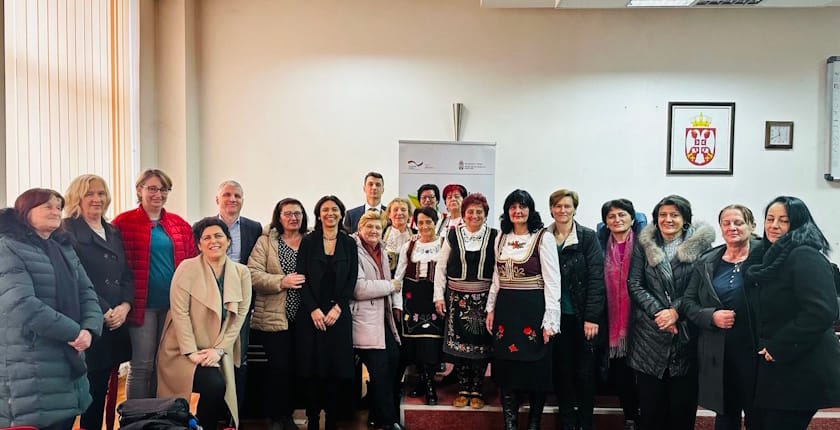
Photo: Members of the Čajetina Rural Women’s Association and Zlata association (Miloš Radojević)

Possibilities for using renewable energy sources

One of the key conclusions of the discussion was that solar panels and heat pumps can significantly improve the situation. Aleksandar Macura from RES Foundation pointed out that the law already enables households to produce their own energy and exchange it with state-owned power utility Elektroprivreda Srbije (EPS). “There are sufficient examples of good practice – around 2,500 households in Serbia already use rooftop power plants and work as buyers-producers,” Macura stated.

Buyers-producers are Serbia’s legal category for prosumers.

Nevertheless, solar panels still require initial investments of several thousand euros, which is an insurmountable obstacle for many. The participants in the discussion proposed solutions such as subsidized loans with delayed payment, in installments, to make the technology more accessible both to retirees and socially disadvantaged persons.

Assembling and energy communities

Another important aspect of the discussion was the possibility of establishing energy communities. In line with European regulations, Serbia is opening the space for joint production and use of solar energy within local communities.

It means any village council could install a solar power plant and distribute the energy among households. It would be especially useful for women running family businesses in agriculture and tourism, as it would provide them with a stable energy source without leaning on an unpredictable power distribution network.

Wood is traditional but inefficient energy source

Wood biomass usage still dominates in many rural households. Some said in Arilje: “Wood is irreplaceable” and “we believe in wood!” However, for people in villages, wood is almost never, even though it is the most accessible, never the most efficient solution for heating. It is partly because of moisture in the solid fuel, and mostly because of inefficient devices.

There are fewer and fewer people in the countryside, so it is getting more difficult and more expensive to timely obtain the wood felling and preparation service, even in one’s own forest. “We have been using wood for decades, but who today can afford quality dried wood? We often heat ourselves using wet wood, which only increases consumption and air pollution,” said one of the participants in an event in Arilje, describing her experience. It was attended by women from two associations: Sibirka and Ariljka.

Photo: Members of associations Sibirka and Ariljke (Miloš Radojević)

How to proceed?

It is clear that rural communities mustn’t be left behind in the energy transition process. Solar panels, energy communities and subsidies for more efficient heating are solutions that can bring concrete changes. However, the key to success lies in a greater accessibility of these solutions for all citizens, regardless of their financial situation or the place of residence.

Energy sustainability in rural communities is not just a matter of comfort but also of the survival and development of local communities. If we want villages to be vital and economically stable, it is necessary to facilitate a stable, sustainable and affordable energy source for them. Through smart investments, better subsidy organization and the development of energy communities it is possible to significantly improve the quality of life in these areas. In addition, additional training in the usage and maintenance of energy-efficient systems can contribute to a greater deployment of the technologies.

The energy discussions with the women of the Zlatibor county was organized within the project Improving the Use of Sustainable Energy in the Zlatibor region, financed by the German Organization for International Cooperation (GIZ) by order of the Government of the Federal Republic of Germany (Federal Ministry for Economic Cooperation and Development – BMZ).