by in News

Strengthening Europe’s Energy Sovereignty: The Imperative of a Clean Heat Transition

While often framed as a macroeconomic abstraction, Europe’s reliance on fossil fuel imports carries direct, tangible consequences for millions of households. Domestic energy security is fundamentally tied to the home; space and water heating account for 77.6% of the average EU household’s energy consumption, with approximately one-third of these homes relying on gas. By 2025, 90% of the EU’s gas supply was sourced from third countries, creating a strategic vulnerability to energy coercion that endangers the stability of millions of residences.

Diversification vs. Decarbonization: The REPowerEU Challenge

Historically, Russia served as the primary architect of Europe’s gas supply. In the wake of the full-scale invasion of Ukraine, the EU successfully pivoted, slashing Russian imports from 45% to 12%. This shift was codified through the REPowerEU Regulation, which aims to secure energy independence by permanently banning Russian fossil gas.

However, the broader imperative is not merely to swap suppliers, but to reduce gas demand entirely. This requires equal commitment to the other two pillars of the 2022 REPowerEU Plan: energy conservation and an accelerated clean energy transition. Current projections are sobering:

  • Heat Pump Shortfall: Europe is currently on track to meet only half of its deployment targets.

  • Demand Impact: This lag means fossil gas demand will likely only decrease by 60% of 2024 Russian import levels, rather than the intended 120%.

Bridging the €78 Billion Funding Gap

Achieving a clean heat transition requires significant capital. A study by LCP Delta for the Cool Heating Coalition identifies an annual investment gap of €78 billion through 2050. At present, combined public and private sector contributions cover only half of this requirement.

To close this disparity, Europe must look toward smarter fiscal reallocation:

  • Subsidy Realignment: The EU currently directs approximately €111 billion per year toward fossil fuel subsidies. Redirecting this capital toward renewable solutions would effectively bridge the clean heat funding gap.

  • Innovative Business Models: Policymakers should incentivize “social leasing” frameworks. This requires updating the Consumer Credit Directive to ensure these schemes are covered by robust consumer protection laws.

  • The Role of ETS2: The upcoming ETS2—which prices emissions from buildings and road transport—will be a pivotal market driver. When paired with the Social Climate Fund, it provides a mechanism to finance the transition while shielding the most vulnerable consumers.

The Path to Strategic Autonomy

The postponement of ETS2 for one year in December 2025 sent a confusing signal to the clean heat market. There is no longer room for delay. Member States must utilize this additional window to aggressively support the shift to decarbonized heating, remediate housing inadequacies, and reduce the energy load of the continent’s worst-performing buildings.

Since 2022, the EU has demonstrated remarkable resilience in reducing its dependence on Russian energy. However, as new geopolitical shocks emerge, Europe must prioritize the elimination of all strategic vulnerabilities. The legal framework exists; the transition now requires the political resolve to see it through.


by in News

Austrian EET rolls out AI-powered device to simplify home electricity metering

Austrian startup Efficient Energy Technology (EET) has developed an electricity metering solution called the Virtual Meter, which measures residential electricity consumption through a single connection within the home’s power network. The device, powered by artificial intelligence (AI), eliminates the need for a conventional hardwired meter, reduces system complexity for home energy storage and heat pumps, and provides real-time consumption data, the company claims.

The Virtual Meter, which can be integrated directly into any home energy device through a standard socket or any point on the home’s power network, deduces the total energy consumption accurately, reliably, and in real time, according to EET.

AI-powered Virtual Meter derives and delivers consumption data in under one second

The device uses AI-powered load identification to measure the total net electrical load of the entire home on single-phase or three-phase residential grid connections, with data delivered in under one second. It can be plugged in anywhere via a standard earthed wall socket or a wired connection, requiring a physical link to only one phase.

Instead of directly measuring current, the Virtual Meter continuously observes the voltage of one phase and detects the tiny changes that occur whenever a device switches on or off on any of the three phases of a household, the company explains. In this way, it infers the home’s total consumption.

The solution reduces the costs and complexity of home batteries and heat pumps

The Virtual Meter reduces system complexity and installation and component costs for manufacturers of devices such as home batteries, EV chargers, heat pumps, home energy management systems (HEMS), and other residential energy products, delivering a smoother, more transparent experience for end-customers.

The solution is compatible with all common grid configurations and utility meter types, and its design ensures interruption-free data availability, EET says, adding that the Virtual Meter can be integrated directly into other energy products or used as a standalone solution.

by in News

Austrian EET rolls out AI-powered device to simplify home electricity metering

Austrian startup Efficient Energy Technology (EET) has developed an electricity metering solution called the Virtual Meter, which measures residential electricity consumption through a single connection within the home’s power network. The device, powered by artificial intelligence (AI), eliminates the need for a conventional hardwired meter, reduces system complexity for home energy storage and heat pumps, and provides real-time consumption data, the company claims.

The Virtual Meter, which can be integrated directly into any home energy device through a standard socket or any point on the home’s power network, deduces the total energy consumption accurately, reliably, and in real time, according to EET.

AI-powered Virtual Meter derives and delivers consumption data in under one second

The device uses AI-powered load identification to measure the total net electrical load of the entire home on single-phase or three-phase residential grid connections, with data delivered in under one second. It can be plugged in anywhere via a standard earthed wall socket or a wired connection, requiring a physical link to only one phase.

Instead of directly measuring current, the Virtual Meter continuously observes the voltage of one phase and detects the tiny changes that occur whenever a device switches on or off on any of the three phases of a household, the company explains. In this way, it infers the home’s total consumption.

The solution reduces the costs and complexity of home batteries and heat pumps

The Virtual Meter reduces system complexity and installation and component costs for manufacturers of devices such as home batteries, EV chargers, heat pumps, home energy management systems (HEMS), and other residential energy products, delivering a smoother, more transparent experience for end-customers.

The solution is compatible with all common grid configurations and utility meter types, and its design ensures interruption-free data availability, EET says, adding that the Virtual Meter can be integrated directly into other energy products or used as a standalone solution.

by in News

Athens International Airport builds biggest photovoltaic-BESS plant

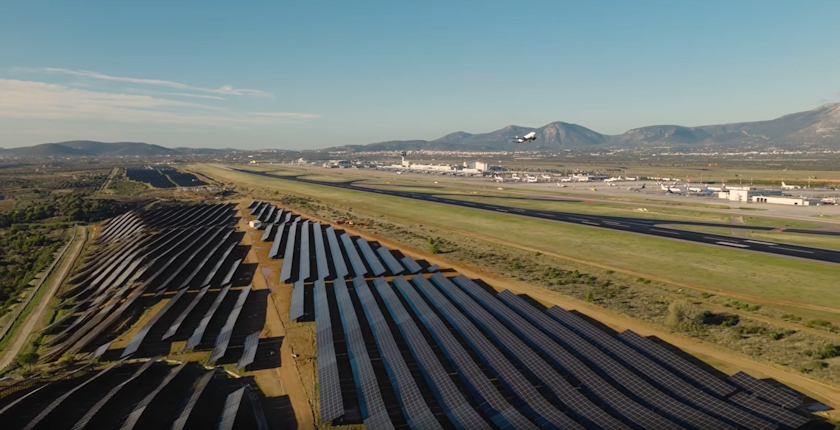
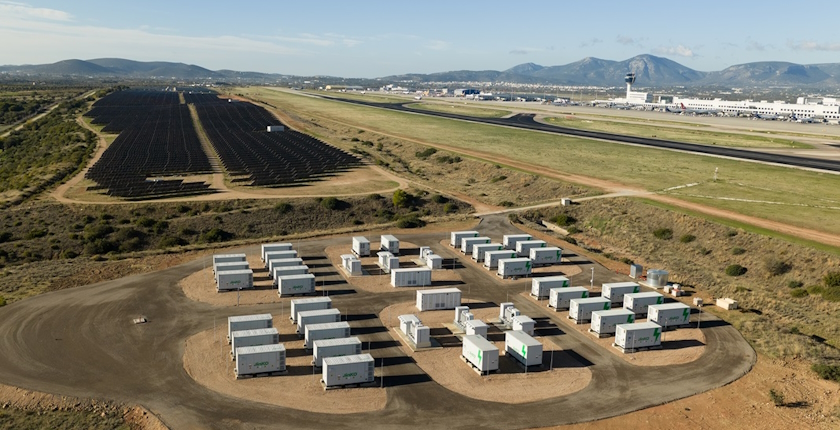
Athens International Airport (AIA) Eleftherios Venizelos completed its comprehensive energy makeover program. It is now operating a photovoltaic facility of 51.5 MW and a battery energy storage system of 82 MWh. It is the largest hybrid power plant of its kind within the premises of any airport in Europe and, reportedly, even the entire world.

At the same time, the Bucharest Henri Coandă International Airport is about to build 12.6 MW in peak PV capacity and a BESS of 17.9 MWh, in the first phase of a larger project.

Following European and global trends, airports in Southeastern Europe are introducing resource, waste and wastewater management systems. Energy is the largest segment of the decarbonization push. With the completion of its Route 2025 program, Athens International Airport Eleftherios Venizelos covered all its electricity needs with photovoltaics, becoming the only such airport in Europe.

In the groundbreaking project, the operator extended the existing solar power plant by 35.5 MW in peak capacity, reaching 51.5 MW, and added a battery energy storage system. The facility has 124 MWh in nominal capacity, of which 82 MWh is usable.

The hybrid system is the largest of its kind inside the fence of any airport in Europe, while the Greek press has even called it the largest in the world. Some of the world’s largest airports are set to follow soon. For instance, IGA Istanbul Airport is investing EUR 212 million in an external solar power plant of 199.3 MW, in Eskişehir.

Athens International Airport builds biggest photovoltaic BESS plant
Photo: Athens International Airport

Hybrid power plant to keep Athens International Airport at net zero through 2046

AIA’s PV-BESS plant will generate an estimated 88 GWh per year, which is equivalent to the consumption of 22,000 households. The storage system is only for self-consumption. Importantly, the hybrid system can cover the entire planned expansion up to 2046, when the concession period ends.

AviAlliance, which controls 50.2% of the public-private partnership, is a wholly-owned subsidiary of Public Sector Pension Investment Board (PSP Investments) from Canada. The government holds 25.6% through Superfund, officially Growthfund – The National Fund of Greece.

AIA launched Route 2025 six years ago, with the aim to cut net greenhouse gas emissions to zero by the end of this year. It compares to the 2050 net zero goal of the European airports sector.

The Route 2025 program was worth EUR 70 million

The investments totaled EUR 70 million. A significant portion was financed through loans from the European Union’s Recovery and Resilience Facility (RRF), the update adds.

Heat pumps have eliminated the need for natural gas in buildings at AIA in normal winter conditions. The electric vehicle fleet consists of 19 buses, 13 follow-me vehicles and 29 vans. A network of chargers also serves passenger cars.

“In the airport company, we operate on the basis of the principle that sustainability, and environmental responsibility in particular, are and will increasingly be prerequisites for what we call the social license to operate and grow,” said outgoing Managing Director of AIA Yiannis Paraschis.

Two airports in Romania receive EU funds for solar-BESS projects

As for other recent developments in the Balkans, operators of two airports in Romania received grants via the European Union’s Modernisation Fund for solar power plants with battery storage.

National Company Bucharest Airports (CNAB) signed a contract for RON 132.04 million (EUR 25.9 million) excluding value-added tax. It is for 12.6 MW in peak PV capacity and a BESS of 17.9 MWh at the Bucharest Henri Coandă International Airport in Otopeni.

The entire investment amounts to RON 176.9 million (EUR 34.7 million) excluding VAT. The Romanian state-owned company said it is the first phase of a project for 31.5 MW and 30 MWh overall, valued at EUR 55.7 million.

Bacău International Airport George Enescu will build a solar power plant of 1.25 MW and a BESS of 2.06 MWh. Bacău County Council will also provide support for the on-site project on 2.2 hectares, worth more than EUR 4.9 million.

by in News

EU4CAET project pre-selects 43 ideas for first renewable energy communities in BiH

A total of 43 project ideas from 28 local authorities for establishing the first renewable energy communities in Bosnia and Herzegovina have been pre-selected to receive assistance under the EU for Collective Action for Energy Transition project.

The EU for Collective Action for Energy Transition (EU4CAET) project is jointly financed by the European Union and the German Federal Ministry for Economic Cooperation and Development (BMZ). Under the slogan ‘Together for Energy Transition,’ the EUR 3 million project is implemented by GIZ.

The initiative aims to empower local municipalities, citizens, and private actors to develop sustainable energy solutions that create jobs, improve energy efficiency, and advance climate goals, according to the EU Delegation to Bosnia and Herzegovina.

A total of 51 municipalities submitted 89 project ideas

In the project’s development phase, 51 municipalities submitted a total of 89 project ideas, such as solar power plants, heat pumps, biomass heating systems, public lighting upgrades, and electric vehicle charging stations.

The proposed projects also included kindergartens, youth centers, sports halls, theaters, health centers, and other public facilities. Following the evaluation, 28 local self-governments submitted their first concept notes, and 43 ideas were pre-selected.

“The final selection, based on detailed concept notes, is currently ongoing. The number of final projects will depend on the quality of submitted concepts and available funding under EU4CAET,” the Communication Office of the Delegation of the EU to BiH & EU Special Representative in BiH told Balkan Green Energy News.

The evaluation will begin in January 2026

The deadline for the pre-selected local authorities to submit their detailed concept notes was December 20. The evaluation of the submitted concepts will begin in January 2026.

Selected local authorities will be invited to present and discuss their ideas in more detail, according to the Communication Office.

The strongest concepts will receive assistance for capacity development, business planning, feasibility studies, and the preparation of technical design documentation.

The 28 municipalities pre-selected for further evaluation are as follows: Bijeljina, Bileća, Centar Sarajevo, Doboj, Donji Vakuf, Drvar, Goražde, Ilijaš, Kakanj, Kalesija, Laktaši, Maglaj, Milići, Modriča, Mostar, Novi Grad, Novi Travnik, Novo Sarajevo, Šamac, Sokolac, Srebrenica, Teslić, Travnik, Višegrad, Vogošća, Zenica, Živinice, and Zvornik.

BiH does not yet have renewable energy communities, but one of its two entities – the Republic of Srpska – managed to adopt the necessary regulations for their establishment in May this year, becoming the first in the region to do so.

Hahr: The grant call is planned for February 2026 and 2027

Mareike Hahr, Head of EU4CAET, said the project is now focused on tailored technical assistance to further refine the ideas and prepare high-quality applications for the grant call, planned for February 2026 and 2027.

“What has been particularly encouraging is the remarkable level of interest and readiness shown by local communities from both entities to ‘enter new terrain’—to propose their own project concepts, explore innovative solutions, and actively shape their energy future,” she explained.

by in News

Athens International Airport builds biggest photovoltaic-BESS plant

Athens International Airport (AIA) Eleftherios Venizelos completed its comprehensive energy makeover program. It is now operating a photovoltaic facility of 51.5 MW and a battery energy storage system of 82 MWh. It is the largest hybrid power plant of its kind within the premises of any airport in Europe and, reportedly, even the entire world.

At the same time, the Bucharest Henri Coandă International Airport is about to build 12.6 MW in peak PV capacity and a BESS of 17.9 MWh, in the first phase of a larger project.

Following European and global trends, airports in Southeastern Europe are introducing resource, waste and wastewater management systems. Energy is the largest segment of the decarbonization push. With the completion of its Route 2025 program, Athens International Airport Eleftherios Venizelos covered all its electricity needs with photovoltaics, becoming the only such airport in Europe.

In the groundbreaking project, the operator extended the existing solar power plant by 35.5 MW in peak capacity, reaching 51.5 MW, and added a battery energy storage system. The facility has 124 MWh in nominal capacity, of which 82 MWh is usable.

The hybrid system is the largest of its kind inside the fence of any airport in Europe, while the Greek press has even called it the largest in the world. Some of the world’s largest airports are set to follow soon. For instance, IGA Istanbul Airport is investing EUR 212 million in an external solar power plant of 199.3 MW, in Eskişehir.

Athens International Airport builds biggest photovoltaic BESS plant
Photo: Athens International Airport

Hybrid power plant to keep Athens International Airport at net zero through 2046

AIA’s PV-BESS plant will generate an estimated 88 GWh per year, which is equivalent to the consumption of 22,000 households. The storage system is only for self-consumption. Importantly, the hybrid system can cover the entire planned expansion up to 2046, when the concession period ends.

AviAlliance, which controls 50.2% of the public-private partnership, is a wholly-owned subsidiary of Public Sector Pension Investment Board (PSP Investments) from Canada. The government holds 25.6% through Superfund, officially Growthfund – The National Fund of Greece.

AIA launched Route 2025 six years ago, with the aim to cut net greenhouse gas emissions to zero by the end of this year. It compares to the 2050 net zero goal of the European airports sector.

The Route 2025 program was worth EUR 70 million

The investments totaled EUR 70 million. A significant portion was financed through loans from the European Union’s Recovery and Resilience Facility (RRF), the update adds.

Heat pumps have eliminated the need for natural gas in buildings at AIA in normal winter conditions. The electric vehicle fleet consists of 19 buses, 13 follow-me vehicles and 29 vans. A network of chargers also serves passenger cars.

“In the airport company, we operate on the basis of the principle that sustainability, and environmental responsibility in particular, are and will increasingly be prerequisites for what we call the social license to operate and grow,” said outgoing Managing Director of AIA Yiannis Paraschis.

Two airports in Romania receive EU funds for solar-BESS projects

As for other recent developments in the Balkans, operators of two airports in Romania received grants via the European Union’s Modernisation Fund for solar power plants with battery storage.

National Company Bucharest Airports (CNAB) signed a contract for RON 132.04 million (EUR 25.9 million) excluding value-added tax. It is for 12.6 MW in peak PV capacity and a BESS of 17.9 MWh at the Bucharest Henri Coandă International Airport in Otopeni.

The entire investment amounts to RON 176.9 million (EUR 34.7 million) excluding VAT. The Romanian state-owned company said it is the first phase of a project for 31.5 MW and 30 MWh overall, valued at EUR 55.7 million.

Bacău International Airport George Enescu will build a solar power plant of 1.25 MW and a BESS of 2.06 MWh. Bacău County Council will also provide support for the on-site project on 2.2 hectares, worth more than EUR 4.9 million.

by in News

EU4CAET project pre-selects 43 ideas for first renewable energy communities in BiH

A total of 43 project ideas from 28 local authorities for establishing the first renewable energy communities in Bosnia and Herzegovina have been pre-selected to receive assistance under the EU for Collective Action for Energy Transition project.

The EU for Collective Action for Energy Transition (EU4CAET) project is jointly financed by the European Union and the German Federal Ministry for Economic Cooperation and Development (BMZ). Under the slogan ‘Together for Energy Transition,’ the EUR 3 million project is implemented by GIZ.

The initiative aims to empower local municipalities, citizens, and private actors to develop sustainable energy solutions that create jobs, improve energy efficiency, and advance climate goals, according to the EU Delegation to Bosnia and Herzegovina.

A total of 51 municipalities submitted 89 project ideas

In the project’s development phase, 51 municipalities submitted a total of 89 project ideas, such as solar power plants, heat pumps, biomass heating systems, public lighting upgrades, and electric vehicle charging stations.

The proposed projects also included kindergartens, youth centers, sports halls, theaters, health centers, and other public facilities. Following the evaluation, 28 local self-governments submitted their first concept notes, and 43 ideas were pre-selected.

“The final selection, based on detailed concept notes, is currently ongoing. The number of final projects will depend on the quality of submitted concepts and available funding under EU4CAET,” the Communication Office of the Delegation of the EU to BiH & EU Special Representative in BiH told Balkan Green Energy News.

The evaluation will begin in January 2026

The deadline for the pre-selected local authorities to submit their detailed concept notes was December 20. The evaluation of the submitted concepts will begin in January 2026.

Selected local authorities will be invited to present and discuss their ideas in more detail, according to the Communication Office.

The strongest concepts will receive assistance for capacity development, business planning, feasibility studies, and the preparation of technical design documentation.

The 28 municipalities pre-selected for further evaluation are as follows: Bijeljina, Bileća, Centar Sarajevo, Doboj, Donji Vakuf, Drvar, Goražde, Ilijaš, Kakanj, Kalesija, Laktaši, Maglaj, Milići, Modriča, Mostar, Novi Grad, Novi Travnik, Novo Sarajevo, Šamac, Sokolac, Srebrenica, Teslić, Travnik, Višegrad, Vogošća, Zenica, Živinice, and Zvornik.

BiH does not yet have renewable energy communities, but one of its two entities – the Republic of Srpska – managed to adopt the necessary regulations for their establishment in May this year, becoming the first in the region to do so.

Hahr: The grant call is planned for February 2026 and 2027

Mareike Hahr, Head of EU4CAET, said the project is now focused on tailored technical assistance to further refine the ideas and prepare high-quality applications for the grant call, planned for February 2026 and 2027.

“What has been particularly encouraging is the remarkable level of interest and readiness shown by local communities from both entities to ‘enter new terrain’—to propose their own project concepts, explore innovative solutions, and actively shape their energy future,” she explained.

by in News

Serbia’s EPS mulls using heat pumps at its hydropower plants

State-owned power utility Elektroprivreda Srbije intends to commission a study of the potential use of heat pumps at four hydropower plants in southwestern Serbia. The call lasts until February 10.

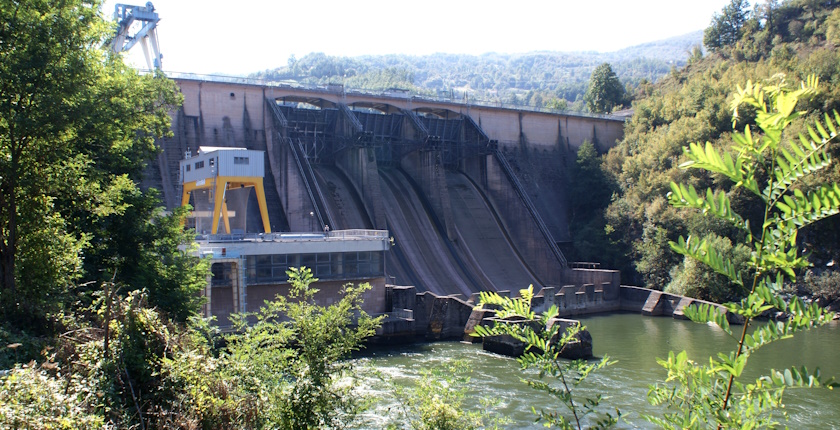
As technology advances, energy companies are increasingly turning to solutions based on renewable sources as well as combining them with existing systems that also don’t pollute, while emitting little to no greenhouse gases. Serbian state-owned Elektroprivreda Srbije (EPS) is heading in the same direction. It launched a tender for technical documentation – a study on the possibilities of deploying heat pumps in the structures of Limske hidroelektrane. It is a business unit operating four hydropower plants.

The aim is to improve the efficiency of the utilization of energy. Bids are accepted until February 10. Notably, the types of possible heat pumps isn’t determined.

With an estimated budget of RSD 3.8 million (EUR 32.400), the contractor will have 150 days to deliver the service.

Limske hidroelektrane, based in the town of Nova Varoš, has hydropower plants in the Lim river basin in southwestern Serbia. It is part of EPS’s branch Drinsko-limske hidroelektrane.

The contractor must propose a solution and calculate the energy efficiency and climate gains

The call is for a total of 2,450 square meters covered by climatization systems. The management building accounts for 1,300 square meters, and the rest is in the hydroelectric plants: Uvac, Kokin Brod, Bistrica and Potpeć, a machinery workshop and storage room.

EPS said the study needs to include an analysis of the current heat consumption, with an overview of available solutions for the use of alternative or renewable sources of heat or the improvement of existing systems. The goal is to increase energy efficiency and promote the utilization of renewable energy sources, the call reads.

The contractor would suggest a solution and outline the drop in greenhouse gas emissions. The task involves calculating the investment return period and delivering the list of regulations.

by in News

Subsidies for green heating approved for 100,000 Greek homes

The Greek Ministry of Environment and Energy published the first list of households that will benefit from the national program for modernizing heating systems.

In total, more than 100,000 households have been accepted, of which 5,000 are classified as vulnerable. The renewable heating program had an original budget of EUR 223 million, with support from the NextGenerationEU fund, but it was later enlarged to EUR 647 million. It takes place under the RePowerEU policy initiative and the National Recovery and Resilience Plan Greece 2.0.

The initiative supports energy upgrades of buildings and the substitution of older heating systems using fossil fuels, with new ones based on renewable energy. Notably, Greece set a goal for a 52.6% share of renewable heating by 2030, according to its National Energy and Climate Plan (NECP). In 2023, the level reached 26.2%, therefore there is a long distance to cover.

Most buildings in the country currently use either heating oil or natural gas. The goal is to shift to green technologies such as heat pumps or rooftop solar water heaters. These solar systems are especially popular in Greece, since the scorching sun provides ample thermal energy to convert into hot water, even during winter months. They also have a high domestic added value, as they are mainly constructed by Greek companies.

At least 50% of the cost covered

Support is provided for the general public according to income criteria, with 50% to 60% of the cost covered. Beneficiaries get up to EUR 1,020 for their energy upgrades.

As for vulnerable households, there are no income criteria and they get up to EUR 6,000 for each installation.

More applications are expected to be approved in the following months, as Greece aims to complete the program before June 2026, when the EU’s Recovery and Resilience Facility (RRF) reaches its end.

by in News

Novi Sad plans to build waste-to-energy cogeneration plant

The City of Novi Sad plans to produce electricity and heat from solid municipal waste and has invited bids for a preliminary feasibility study for a cogeneration plant that would burn processed waste from a planned regional waste management center. Surplus energy could be stored within the future solar thermal system.

Serbia’s capital, Belgrade, already has a combined heat and power plant (CHP) that uses municipal waste. As such facilities exist all over Europe, Novi Sad’s district heating enterprise Novosadska toplana specified in the public call that the study must include an overview of relevant examples and best practices.

The document is to assess the feasibility of obtaining energy from waste processed into refuse-derived fuel (RDF) and solid recovered fuel (SRF). The fuel would be produced in a mechanical-biological treatment (MBT) plant for biodegradable waste within the future regional waste management center for Novi Sad and the municipalities of Bačka Palanka, Bački Petrovac, Beočin, Žabalj, Srbobran, Temerin, and Vrbas, according to the public call.

The bid submission deadline is December 15, and the study must be completed within 180 days of the contract signing. The job is valued at RSD 22 million.

The purpose of the study is to provide a preliminary assessment of the potential for and benefits of using available solid fuel from waste for high-efficiency cogeneration for the city’s needs, as well as the feasibility of building a CHP plant fueled by RDF and SRF, according to the public call.

The cogeneration plant could burn up to 40,000 tons of solid waste fuel per year

The MBT plant at the regional waste management center is expected to produce between 30,000 and 40,000 tons of solid fuel for cogeneration. The planned location of the plant, along with a fuel storage facility, is adjacent to the existing landfill in Novi Sad, according to the documentation.

The preliminary feasibility study should propose the optimal site for the cogeneration plant, taking into account the infrastructural capacity for connection to Novi Sad’s district heating system and the distance from the fuel storage facility.

The authorities suggest that the site should be in the vicinity of the TE-TO cogeneration plant in Novi Sad, Serbia’s second-largest city, due to its excellent connections to the power grid and the city’s district heating system. In addition, this site will host a planned solar thermal system, whose underground storage facility would be able to store excess energy from the waste-to-energy plant during the summer.

Surplus energy could be stored in the future solar thermal system

The project has secured an EUR 85 million loan from the European Bank for Reconstruction and Development (EBRD) and a grant of EUR 24.7 million from the Western Balkans Investment Fund (WBIF). The system will have a storage capacity of around 870,000 cubic meters, solar collectors with a total capacity of 31 MW, heat pumps with a capacity of 17 MW, and two electric boilers with a combined capacity of 60 MW, according to the EBRD website.

The bank said the launch of the public procurement is expected on November 26.

The proposed location for the cogeneration plant should also take into account Novi Sad’s newly-built heating plant, Majevica, which is expected to become operational by the end of the year.

The study should propose the optimal technology for solid fuel incineration, a preliminary design for the cogeneration plant, as well as systems for flue gas cleaning and ash management, according to the documentation.

Since the City of Novi Sad plans to apply for grants from international institutions and funds for the preparation of technical documentation and further project development, the public call states that the study should be carried out in line with the methodology of international financial institutions such as the World Bank, the German development bank KfW, and the EBRD, including a financial analysis and an assessment of CO₂ emission reductions.