by in News

Slovenia sells Europe’s first sustainability bond, worth EUR 1 billion

Slovenia accessed the international markets with its inaugural sustainability-linked bond, oversubscribed by more than 6.5 times. The interest payable can grow or drop by 50 basis points depending on the country’s progress in cutting greenhouse gas emissions. It is the first-ever sustainability-linked bond issue from a European sovereign, the Ministry of Finance pointed out.

Bankers and fund managers flocked around the first sustainability-linked bond that Slovenia offered in the market. Demand reached over 6.5 times more than the EUR 1 billion available, with a 10-year maturity. It is also the first-ever sustainability-linked bond issue from a European sovereign, the Ministry of Finance pointed out.

The country’s Sustainability Bond Framework is also in line with the Green Bond Principles of the International Capital Market Association – ICMA, and it takes into account the Green Bond Standard of the European Union. The proceeds from sustainability bonds are for financing or refinancing eligible green or social projects.

If Slovenia doesn’t achieve a 35% cut in total greenhouse gas emissions by 2030, relative to the 2005 baseline, the interest payable on the note will increase by 50 basis points, commencing nine years after the settlement date. If the emissions cuts surpass 45%, the rate will go 50 points lower, the documentation shows.

High demand resulted in a drop in the price spread from 70 to 61 basis points above the benchmark

The initial price guidance was at 70 basis points above the mid-interest rate swap as benchmark. Strong demand, including EUR 435 million in joint lead managers (JLM) interest, slashed the spread to 61 points. The note has a 3.125% fixed-rate coupon, reoffer yield of 3.155% and reoffer price of 99.746%, the ministry revealed.

As for the geographical distribution of the buyers, 23% are in the United Kingdom or Ireland, 20% is in the region comprising Belgium, Netherlands and Luxembourg, and 15% are from Germany, Austria or Switzerland. Next is Southern Europe, with 12%, followed by Slovenia’s 11%, a 9% Nordics share and 5% for France.

Asset managers amounted to 54% of the total sum. Central banks and other official institutions, at 18%, were just barely ahead of other banks (17%). Insurance and pension funds purchased 5% and hedge funds now hold 4% of the issue.
by in News

EU outlines measures for 90% emissions cut by 2040

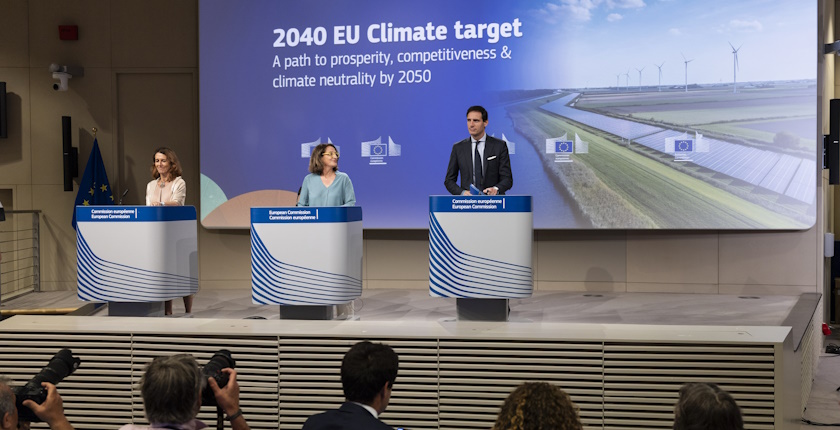
The European Commission proposed an amendment to the European Climate Law, setting a 2040 target of a 90% reduction in net greenhouse gas emissions from the 1990 level. The outlined measures would give certainty to investors, promote innovation and business competitiveness and increase energy security, according to the European Union’s executive body.

The EU is closing in on its 2030 goal to slash annual net emissions by 55% from the 1990 baseline, according to the European Commission’s recent report on national energy and climate plans (NECPs). It is part of the efforts to reach climate neutrality by mid-century. Today the EU’s top executive body formally outlined the proposal for the next intermediate target – 90% by 2040.

It is in the form of an amendment to the European Climate Law, which entered into force in July 2021. In the meantime, the 27-member bloc adopted a 2030 legislative package known as Fit for 55.

The European Parliament and the Council of the EU now need to discuss and adopt the amendment.

Nature-based and industrial carbon removals will play an increasingly important role in reaching the targets, the European Commission pointed out. It implies domestic permanent carbon removals within the Emissions Trading System (EU ETS) to compensate for residual emissions from hard-to-abate sectors. Such systems need to scale up significantly by 2040, the commissioners said.

More pragmatic, flexible trajectory toward 90% reduction in emissions by 2040

The proposal sets out a more pragmatic and flexible way to reach the milestone, the European Commission claimed.

“Aligned with the EU Competitiveness Compass, Clean Industrial Deal and Affordable Energy Action Plan, the proposed 2040 climate target takes fully into account the current economic, security and geopolitical landscape and gives investors and businesses the predictability and stability they need in the EU’s clean energy transition. By staying the course on decarbonisation, the EU will drive investment in innovation, create more jobs, growth, increase our resilience to impacts of climate change and become more energy independent,” the statement adds.

Von der Leyen said industry and investors require a predictable direction on the path to the climate goal

“As European citizens increasingly feel the impact of climate change, they expect Europe to act. Industry and investors look to us to set a predictable direction of travel,” said European Commission President Ursula von der Leyen.

Today’s proposal is based on an impact assessment and advice from the Intergovernmental Panel on Climate Change (IPCC) and the European Scientific Advisory Board on Climate Change. The adoption follows engagement with member states, the European Parliament, stakeholders, civil society and citizens since the commission’s recommendation in February 2024.

EU eyeing international carbon credits

The commission vowed to consider a limited role for high-quality international carbon credits, starting in 2036, and greater flexibility across sectors to help achieve targets in a cost-effective and socially fair way. For instance, a member state would have the possibility to compensate for a struggling land use sector with an overachievement in reducing emissions from waste and transportation.

Emphasis is also on the competitiveness of the European industry and a level playing field with international partners. Among the guidelines is technological neutrality.

Fiscal incentives are under consideration for clean tech and industrial decarbonization projects.

The commission highlighted its Clean Industrial Deal State Aid Framework, adopted last week, and the simplification of the Carbon Border Adjustment Mechanism (CBAM). It also issued a recommendation on tax incentives for investments in clean technologies and industrial decarbonization.

Measures on affordable energy to scale up manufacturing of grid components and support power purchase agreements, the pilot for the upcoming Industrial Decarbonisation Bank, the forthcoming Chemicals Industry Action Plan and the sectorial dialogues with stakeholders are among the actions that will help deliver the Clean Industrial Deal, the commissioners explained. Their draft seven-year budget, officially called Multiannual Financial Framework, is due to be unveiled next month.

WindEurope urges for annual targets for renewables

Reacting to the announcement, WindEurope said EU member states would need to translate the 90% ambition into clear annual goals for the deployment of wind and other renewables for the period 2031-40.

“Otherwise the 2040 target will remain academic,” the organization underscored.

by in News

Montenegro publishes NECP for public consultation – sole coal plant planned for shutdown in 2041

State institutions, companies, organizations, and individuals have until August 6 to deliver their suggestions and comments about the draft National Energy and Climate Plan of Montenegro. It sets the provisional date for taking the Pljevlja coal power plant, the only one in the country, at 2041, but the authors pointed out that it primarily depends on a just transition and the security of electricity supply.

Montenegro’s long-awaited draft National Energy and Climate Plan (NECP) sets out the key 2030 targets for greenhouse gas emission cuts, share of renewable energy sources in gross final energy consumption, and energy efficiency.

The document, also known for its acronym INECP, in which the first letter stands for integrated, was published for the public consultation phase. It lasts until August 6. The Ministry of Energy and Mining called on the interested public – local authorities and other state institutions, the expert and scientific communities, associations, organizations, companies and individuals, to send their comments and suggestions.

“The energy and climate policy isn’t just a task for the government – it is a joint responsibility. That is why I am inviting all stakeholders, and especially nongovernmental organizations, to use this opportunity and contribute to the creation of a realistic, ambitious and just plan,” Minister Admir Šahmanović stated.

Renewables target can be surpassed

National goals match the ones adopted within the Energy Community. The targeted primary energy consumption in 2030 amounts to 0.92 million tons of oil equivalent. Under the business-as-usual scenario (with existing measures – WEM), the benchmark is expected to land at 1.04 million. With additional measures (WEM), the trajectory moves closer to the objective, projected at 0.97 million tons of oil equivalent.

The goal for final energy consumption is 0.73 million tons of oil equivalent. Existing measures result in 0.82 million, and added ones in 0.77 million tons of oil equivalent.

The share of renewable sources in transportation could reach 24.4% instead of only 7.2%

Montenegro fares better with its expected share of renewables in gross final energy consumption, against the 50% target. In the WEM scenario, it reaches 42.5%, and the WAM projection is 53.3%.

Without additional measures, renewable sources have a 66.3% share in electricity production. The document’s authors calculated that it could grow to 79.4%. As for transportation, the range is from 7.2% to 24.4%. In heating and cooling, the possible progress from the results of current measures is only 0.4 percentage points, reaching 49.2%.

The targeted reduction in emissions is 55%, the same as in the European Union. It translates to 2.42 million tons of carbon dioxide equivalent in the final year of the current decade. With existing measures, the curve touches 3.06 million in 2030, and with added ones the result is 2.4 million tons of CO2 equivalent.

Retirement of Pljevlja coal plant depends on socio-economic situation in northern region

Oil derivatives, which are all imported, participated in the 2022 final energy consumption with 47.3%, followed by electricity, 33.3%. Wood fuel is the next item, with 18.7%. The share of coal is only 0.7%, because almost the entire output goes to thermal power plant Pljevlja, the only such facility in Montenegro.

The overall electricity production capacity at the end of 2023 was 1.07 GW. The Pljevlja coal plant, which is currently under reconstruction, has 225 MW.

According to the projection, the Pljevlja coal plant is in cold reserve after 2040

The provisional date for its shutdown is 2041, but it primarily depends on the success of the just transition process and maintaining the security of electricity supply, the NECP reads. It also shows the Pljevlja coal plant in cold reserve after 2040.

In addition, taking it offline requires supplying end consumers under favorable conditions, while minding the overall socio-economic situation in the country’s northern region, where the coal mines and the power plant are, the authors explained. They noted as well that an energy storage pilot project is under consideration for the site of the Pljevlja facility.

Electricity sector’s self-sufficiency varying due to dependence on hydrological conditions

The country’s two large hydropower plants Piva and Perućica have 342 MW and 307 MW in capacity, respectively.

There are 38 other hydroelectric units in Montenegro, of which the smallest one is 200 kW. The biggest facility, Vrbnica (6.75 MW), is owned by a firm with the same name, registered in the capital Podgorica.

The high share of hydropower plants in electricity production, implying dependence on hydrology, is the main reason of the variability of the level of self-sufficiency of the national energy balance year after year, the NECP says.

There are two wind power plants on the grid: Krnovo (72 MW) and Možura (46 MW), while the third one, called Gvozd, is under construction. The project envisages 54.6 MW in the first phase.

There are only five independent solar power plants. The biggest one, Čevo, has 4.4 MW in nominal capacity and a 3.25 MW connection. Nevertheless, units operated by prosumers reached 75 MW altogether, according to one entry, though the numbers are lower in other parts of the NECP.

by in News

Croatia earmarks EUR 1.6 billion for Social Plan for Climate Policy

Croatia plans to achieve an efficient and just green transition by implementing its EUR 1.6 billion Social Plan for Climate Policy.

The Ministry of Environmental Protection and Green Transition has presented the Social Plan for Climate Policy and the European Union’s upcoming Emissions Trading System 2 (EU ETS 2) in Croatia’s capital Zagreb.

The event was organized as part of the process of developing the country’s Social Plan for Climate Policy. According to the ministry, the document outlines the green transition and includes measures and investments that would benefit vulnerable households, micro businesses, and users of transportation services.

The plan is being prepared within the framework of the Social Fund for Climate Policy, which is part of the EU’s Fit-for-55 legislative package. The aim is to reduce greenhouse gas emissions by 55% by 2030 from the 1990 level.

The social plan will be funded with proceeds from EU ETS 2

The new EU ETS 2 will cover CO2 emissions from buildings, road traffic, and small firms. Funding for the social plan will be secured from proceeds from the supplementary carbon pricing mechanism.

Minister Marija Vučković noted that after the public debate is over, the Social Plan for Climate Policy needs to be sent to the European Commission for adoption.

“With more than EUR 1.6 billion, our goal is to secure an efficient and just green transition that won’t leave behind the most vulnerable members of our society – households at risk of energy poverty, micro enterprises with limited adaptation capacities, but also the citizens that have difficulties accessing public transportation,” she pointed out.

The ministry is aware of the challenges that the transition carries, so it places special focus on mitigating socio-economic consequences and preventing risks affecting the most vulnerable people, as well as on education.

The plan defines various measures

The plan includes various measures. Some examples are renovating family houses with the worst energy performances, improving the availability of public transport in suburban, rural, and remote areas, subsidizing the purchase of vehicles with zero emissions, and providing direct financial incentives.

Representatives of the ministry Ana Juras and Predrag Božac described the operation and the establishment of the new part of the Emissions Trading System and presented the sectors that it would cover. They also spoke about the first round of measures and investments from the plan.

In another presentation, the audience learned the effect of EU ETS 2 on the prices of fossil fuels, the ministry said.

by in News

Croatia among EU’s top three emitters of methane from oil, gas industry

Croatia is one of the three European Union member countries with the highest methane emissions from the oil and natural gas industry, according to research by Greenpeace Croatia and the Clean Air Task Force (CATF). Greenpeace Croatia noted that methane has 84 times greater global warming potential than carbon dioxide on a 20-year timescale.

Methane emissions from oil and gas infrastructure in Croatia have been comprehensively analyzed for the first time, according to Greenpeace Croatia.

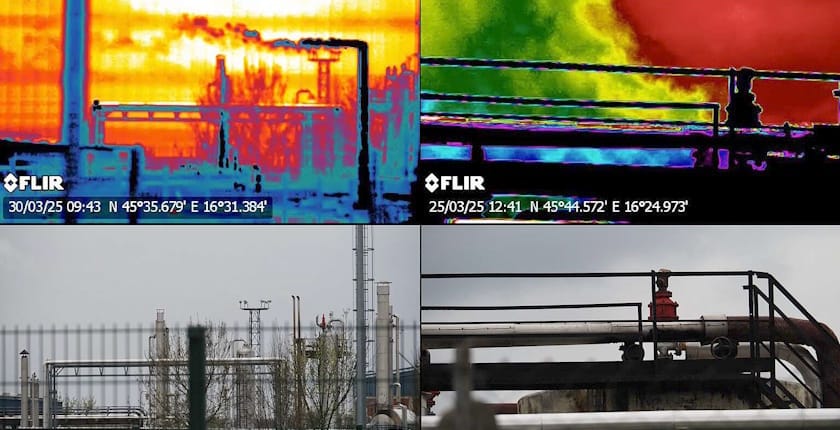
“Methane hunter” Théophile Humann-Guilleminot from the international climate organization Clean Air Task Force (CATF) has examined more than 500 locations all around the world. He also recently visited 27 locations in Croatia, measuring methane emissions at all but one of them.

Greenpeace stressed it is an astonishing 96% of the investigated sites and the highest score by CATF in any EU member state.

Emissions were documented in detail by CATF at each site

The two organizations have visited several locations in Croatia with facilities for the production, transportation, and storage of oil and gas. The infrastructure is owned or operated by INA, Plinacro, and Okoli Underground Storage.

At 26 locations, methane emissions were documented in the form of gas release, venting, and flaring, which could also harm human health, Greenpeace underlined.

CATF carefully documented emissions at each location using infrared (IR) videos and IR and digital photos. The collected evidence is part of the group’s Cut Methane campaign in Europe and the world.

Humann-Guilleminot: Companies are releasing methane and accelerating climate change, all in pursuit of short-term profits

Théophile Humann-Guilleminot said the research strongly confirmed what scientists have been warning about for years – methane is leaking or being released along the entire oil and gas supply chain.

From the vast gas fields of Texas to Plinacro’s pipelines, companies are releasing methane and accelerating climate change, all in pursuit of short-term profits, he added. In his words, out of all the countries he visited, Croatia ranks amongst the worst three in terms of results.

“The scenes of methane gushing from open, rusted reservoirs in the Ivanić-Grad area, as well as leaks from wells at the Okoli location, are extremely worrying. During the energy crisis, this level of waste demonstrates a clear disregard for the climate and Croatian citizens,” Humann-Guilleminot stated.

Andrić: Greenpeace calls on the government to take seriously the implementation of new regulations on methane

Petra Andrić from Greenpeace Croatia pointed out the researchers could have assumed that methane emissions would be registered in some locations, but that they couldn’t have predicted such shocking results.

“Greenpeace is calling on the Government of the Republic of Croatia to take seriously the implementation of the new regulations on methane. In the long term, it is even more important to phase out fossil gas by 2035 and ban new gas and other fossil projects. The solutions are energy efficiency and renewable energy sources, in which Croatia has enormous potential, especially solar and wind,” she stressed.

Eszter Mátyás from Greenpeace Central and Eastern Europe said the new regulations would be much stricter for the operators in the fossil fuel industry. Therefore they will have to regularly carry out measurements and submit reports to regulatory bodies to prevent the release of methane from their infrastructure, she added.

by in News

Ember: Warming’s 2024 share of global power demand rise was covered with fossil fuels

According to Ember’s new figures, renewable energy sources met almost three quarters of last year’s increase in the world’s electricity demand. Together with nuclear energy, they would have covered almost the entire jump if it wasn’t for the share attributed to the annual increase in temperatures. Looking at it the other way around, the need for additional cooling accounted for the overwhelming part of the rise in fossil fuel use, and at the same time the resulting additional emissions contributed to the acceleration of global warming.

The share of low-carbon sources rose to a historic 40.9% of global output in 2024. Photovoltaics made up 55.2% of renewable electricity production growth. Hungary, Greece and Bulgaria are among the world’s strongest solar power producers while Turkey has one of the highest power demand growth rates.

Taken together, wind and solar power, hydroelectric plants, other renewables and nuclear energy amounted to 40.9% of global electricity generation in 2024. One year earlier, the level was 39.4%. Last year’s share was the highest since the 1940s, when the global electricity system was fifty times smaller, Ember said in its Global Electricity Review 2025. 

At the time, there was only hydropower and some biomass on the list. Solar power has been the main factor of change over the past several years, and so has China.

Global electricity demand jumped 4% last year or 1.17 PWh, amplified by heatwaves, and reached an all-time high of 30.9 PWh. Periods of higher temperatures in another hottest year ever drove up demand for cooling. The relative increase in 2023 was 2.6%.

Hydropower remained the largest source of low-carbon electricity (14.3%), followed by nuclear (9%). Wind (8.1%) and photovoltaics (6.9%)  are rapidly gaining ground and together they overtook hydro in 2024, while nuclear’s share reached a 45-year low.

Renewables meet 73.2% of growth in world power demand

Renewable power sources accounted for 858 TWh of added output. The previous record of 577 TWh was set two years earlier, as hydropower dropped in 2023, also mostly because of heat.

EVs, heat pumps, data centers and other new drivers of power demand more than doubled their share in annual growth in five years

Renewables met 73.2% of growth in demand and nuclear energy covered 5.9%. Together, they nearly accounted for all growth except the temperature effects, and the rest was from fossil fuels.

Interestingly, looking at it the other way around, the need for additional cooling accounted for the overwhelming part of the rise in fossil fuel use. Of course, the resulting additional emissions contributed to the acceleration of global warming.

Fossil fuel use would have remained almost unchanged if temperatures didn’t grow, the think tank claims. Global power sector emissions rose by 1.6% to a new all-time high of 14.6 billion tonnes of CO2.

But at least the demand for cooling during the day mostly runs in parallel to solar power production. Moreover, the pace of energy storage capacity increase still isn’t keeping up with the growing need to balance photovoltaics and wind power, as they depend on the weather.

However, the update focuses only on one indicator, within the annual growth in power demand. The system is much more complex and fossil fuels weren’t only and directly used for cooling. There is also the matter of distribution across segments from the entire output.

New drivers of demand such as electric vehicles, heat pumps and data centers contributed roughly the same to annual demand growth as the temperature effect, but more than twice as much as they did five years before.

China nearing one third of global electricity demand

China’s electricity demand surged 6.6% or by 623 TWh, which accounted for more than half of the global rise. Its 10.07 PWh in total was 32.6% of the overall figure. Five years before the country was at 28%. Renewables and nuclear energy covered 81% of its demand increase.

China’s per capita electricity use overtook France’s for the first time last year

The United States is number two overall, with 4.4 PWh in 2024 or 14.3% of the global level. China’s per capita electricity use overtook France’s for the first time, and was five times that of India’s.

Turkey’s growth rate, 5.6%, was among the highest on the planet. In absolute terms, demand jumped 18 TWh.

Photovoltaics beat coal power in 2024 in EU

Solar power production spiked by a stunning 29%, which was a six-year high, or by 474 TWh. Photovoltaics were the largest segment of new electricity for the third year in a row and grew the fastest for the 20th straight year. Total output reached 2.13 PWh.

Global solar power capacity reached 1 TW in 2022 after decades of growth, but it surpassed 2 TW only two years later. China amounted to 53% of the increase in PV generation in 2024.

Solar power topped coal power output in the European Union for the first time. As for the share of domestic production, Hungary tops the global list, with 25%. Chile is second at 22%, and Greece is third and best, with 22%, among the countries that Balkan Green Energy News mainly tracks.

Bulgaria is also in the main chart, coming in ninth on a global scale, with 14.4%.

As for solar power production per capita, Australia leads by far with 1.87 MWh, followed by the United Arab Emirates (1.29 MWh) and Greece, also at 1.29 MWh on a rounded basis. Hungary is seventh in the category, at 971 kWh per person.

In the rest of Southeastern Europe, Turkey sticks out as tenth on the planet in hydropower output, at 75 TWh. Albania has the fourth-highest share of domestic production, 97%.

Notably, Kosovo* tops the list of coal’s share in electricity production, with 92%. Bosnia and Herzegovina and Serbia still seem pretty much stuck with the technology. They are fifth and sixth, respectively, both at 63% on a rounded basis.

* This designation is without prejudice to positions onstatus and is in line with UNSCR 1244/99 and the ICJ Opinion on the Kosovo declaration of independence.
by in News

Trump administration suspends USD 20 billion in emissions reduction funding

The US Environmental Protection Agency (EPA) has frozen USD 20 billion in funding for greenhouse gas reduction projects, citing, among other things, concerns over potential fraud, waste, and abuse, news agencies reported. The move prompted a lawsuit by environmental NGO Climate United Fund, one of the beneficiaries of the program aimed at financing thousands of green energy and climate action projects.

The funding was appropriated by Congress under former President Joe Biden, but the new US administration, led by Donald Trump, decided to freeze it, the reports noted. The Greenhouse Gas Reduction Fund, commonly known as the green bank, was launched in 2022.

The green bank was launched under the Biden administration

In a statement, the EPA said that the Justice Department and the Federal Bureau of Investigation (FBI) were now reviewing the program. Lee Zeldin, the EPA’s new chief, said that “EPA will be an exceptional steward of taxpayer dollars dedicated to our core mission of protecting human health and the environment, not a frivolous spender in the name of ‘climate equity,’” according to news agencies.

The EPA also said it would seek to use the green bank funds “with enhanced controls.”

Over the weekend, Climate United Fund, which had been awarded nearly USD 7 billion under the program to finance clean energy and climate-friendly projects, sued the EPA, demanding access to the funds.

Climate Action Fund had been awarded nearly USD 7 billion for thousands of projects

The organization also sued Citibank, though which the money was to be disbursed, for withholding the funds, according to reports.

In April 2024, it was announced that the EPA had selected eight recipients, including Climate United Fund, to be awarded a total of USD 20 billion in grants to finance tens of thousands of projects aimed at combating climate change and promoting environmental justice. The money was formally awarded in August.

  • 1
  • 2