by in News

EU Approves €405 Million Greek Aid Scheme for Energy-Intensive Industries

The European Commission has approved a €405 million Greek state aid scheme designed to reduce electricity levies for energy-intensive industries, aiming to strengthen the competitiveness of domestic manufacturers and prevent production from relocating outside the European Union.

According to the Commission, the measure complies with EU state aid rules and is targeted at sectors with high electricity consumption that are exposed to intense international competition.

EU officials stated that the scheme is intended to mitigate the risk of carbon leakage — a situation in which companies move industrial operations to countries with less stringent climate regulations, potentially increasing global greenhouse gas emissions.

The newly approved mechanism replaces a previous Greek support scheme that received European Commission approval in December 2018.

Under the framework, eligible companies will benefit from reductions ranging between 75% and 85% on electricity-related levies, depending on the level of their exposure to energy costs and international market pressures. However, beneficiaries will still be required to pay a minimum levy of 50 euro cents per megawatt-hour.

The program also introduces environmental obligations for participating companies. Beneficiaries must either implement recommendations identified through energy audits, invest at least 50% of the financial support received into projects that significantly reduce greenhouse gas emissions, or ensure that at least 30% of their electricity consumption is sourced from carbon-free energy.

The European Commission concluded that the measure is “necessary and appropriate” to reduce the risk of industrial relocation while remaining aligned with EU climate objectives and competition regulations.


by in News

Davos: China reaffirms green agenda as US slams EU’s net-zero goal

At the World Economic Forum (WEF) in Davos, China reiterated its commitment to green development, in contrast to the United States, whose secretary of commerce said America should rely on oil and gas instead of pursuing a green transition and criticized the European Union’s (EU) net-zero target. US President Donald Trump, for his part, described the energy transition as a “scam” that caused an energy collapse in Europe.

Speaking at the WEF Annual Meeting 2026 in Davos, Switzerland, Chinese Vice Premier He Lifeng emphasized China’s resolve to reduce its greenhouse gas emissions, adding that the country’s upcoming five-year plan would keep the focus on green growth fueled by solar, batteries, and electric vehicles (EVs).

China’s Vice Premier urged other countries to help combat emissions

He also urged other nations and foreign companies to collaborate with China on creating “a green and prosperous future.”

“We invite enterprises from all over the world to embrace the opportunities from the green and low-carbon transition, and work closely with China in such areas as green infrastructure, green energy, green minerals, and green finance,” He said in a speech at Davos.

In contrast, US Commerce Secretary Howard Lutnick criticized the EU’s solar and wind development, as well as its net-zero goal, adding that the green transition is not something the US should pursue. Lutnick also said that the world should focus on coal as an energy source rather than renewables, according to reports.

In January 2025, President Donald Trump signed executive orders reversing much of the previous administration’s climate policy and withdrawing the US from the Paris Agreement once again.

US Commerce Secretary claims seeking net zero without battery production would make the EU subservient to China

“Why are you going to do solar and wind? Why would Europe agree to be net zero in 2030 when they don’t make a battery? So, if they go 2030, they are deciding to be subservient to China, who makes the batteries,” Lutnick said.

“Why would the US, which has oil and natural gas, try to convert to all-electricity? China does not have oil and natural gas – electricity and electric cars make perfect sense to them,” Lutnick said at a WEF panel.

According to news agencies, Lutnick’s harsh criticism of Europe at a VIP dinner on Tuesday made European Central Bank President Christine Lagarde walk out of the event.

Trump slams “the green new scam” and claims China sells wind turbines to others, but does not build its own wind farms

For his part, Trump also criticized the EU’s transition to renewables, claiming that the US had avoided “the catastrophic energy collapse which befell every European nation that pursued the green new scam.” He also described the green transition as “perhaps the greatest hoax in history.”

In his speech in Davos, the US president claimed that wind farms “lose money” and that China only sells wind turbines without building any wind farms itself.

“They sell them to the stupid people that buy them. They don’t use them themselves,” Trump said, adding that China has only built a “couple of wind farms” in order to “show people what they could look like.”

According to available data, China has the largest wind power capacity in the world, at around 600 GW.

by in News

Davos: China reaffirms green agenda as US slams EU’s net-zero goal

At the World Economic Forum (WEF) in Davos, China reiterated its commitment to green development, in contrast to the United States, whose secretary of commerce said America should rely on oil and gas instead of pursuing a green transition and criticized the European Union’s (EU) net-zero target. US President Donald Trump, for his part, described the energy transition as a “scam” that caused an energy collapse in Europe.

Speaking at the WEF Annual Meeting 2026 in Davos, Switzerland, Chinese Vice Premier He Lifeng emphasized China’s resolve to reduce its greenhouse gas emissions, adding that the country’s upcoming five-year plan would keep the focus on green growth fueled by solar, batteries, and electric vehicles (EVs).

China’s Vice Premier urged other countries to help combat emissions

He also urged other nations and foreign companies to collaborate with China on creating “a green and prosperous future.”

“We invite enterprises from all over the world to embrace the opportunities from the green and low-carbon transition, and work closely with China in such areas as green infrastructure, green energy, green minerals, and green finance,” He said in a speech at Davos.

In contrast, US Commerce Secretary Howard Lutnick criticized the EU’s solar and wind development, as well as its net-zero goal, adding that the green transition is not something the US should pursue. Lutnick also said that the world should focus on coal as an energy source rather than renewables, according to reports.

In January 2025, President Donald Trump signed executive orders reversing much of the previous administration’s climate policy and withdrawing the US from the Paris Agreement once again.

US Commerce Secretary claims seeking net zero without battery production would make the EU subservient to China

“Why are you going to do solar and wind? Why would Europe agree to be net zero in 2030 when they don’t make a battery? So, if they go 2030, they are deciding to be subservient to China, who makes the batteries,” Lutnick said.

“Why would the US, which has oil and natural gas, try to convert to all-electricity? China does not have oil and natural gas – electricity and electric cars make perfect sense to them,” Lutnick said at a WEF panel.

According to news agencies, Lutnick’s harsh criticism of Europe at a VIP dinner on Tuesday made European Central Bank President Christine Lagarde walk out of the event.

Trump slams “the green new scam” and claims China sells wind turbines to others, but does not build its own wind farms

For his part, Trump also criticized the EU’s transition to renewables, claiming that the US had avoided “the catastrophic energy collapse which befell every European nation that pursued the green new scam.” He also described the green transition as “perhaps the greatest hoax in history.”

In his speech in Davos, the US president claimed that wind farms “lose money” and that China only sells wind turbines without building any wind farms itself.

“They sell them to the stupid people that buy them. They don’t use them themselves,” Trump said, adding that China has only built a “couple of wind farms” in order to “show people what they could look like.”

According to available data, China has the largest wind power capacity in the world, at around 600 GW.

by in News

Serbia rolls out taxes on greenhouse gas emissions, imported carbon-intensive products

The Serbian Law on Greenhouse Gas Emissions Tax and Law on Carbon-Intensive Product Imports Tax, both at EUR 4 per ton of CO2 equivalent, are coming into effect on January 1. It is the country’s answer to and equivalent of, respectively, the European Union’s Carbon Border Adjustment Mechanism (CBAM). Notably, several bylaws are still required for the new legislation to be enforced.

The National Assembly of Serbia passed the Law on Greenhouse Gas Emissions Tax and Law on Carbon-Intensive Product Imports Tax today, without accepting any of the opposition’s proposals for changes in the two bills.

On January 1, importers of electricity, cement, iron and steel, aluminum, hydrogen and fertilizers to the European Union will start paying the CBAM carbon dioxide tax. If the country of origin also has a CO2 pricing system and the EU recognizes it, the sum will be deducted from CBAM.

The domestic greenhouse gas emissions tax is Serbia’s answer to the cross-border levy, while with the new import tax it is establishing a corresponding mechanism. Both are EUR 4 per ton of CO2 equivalent, covering also nitrous oxide (N2O) and perfluorocarbons (PFCs).

They are intended to lower pollution, improve energy efficiency, incentivize the deployment of renewable energy and secure a more equal position for the Serbian industry in the domestic and international markets, according to the sidenotes.

Both laws to enter into force on January 1, when EU also starts charging CBAM

The first of the two taxes is for big industrial emitters in the sectors of cement, fertilizers, iron and steel, aluminum and electricity. Both laws are coming into effect on January 1, just like the CBAM charge. However, several bylaws are still required for Serbia to enforce the new legislation.

The CBAM tax is envisaged to rise every year until in 2034 it becomes equal as the prices of greenhouse gas emission certificates in the EU’s Emissions Trading System (EU ETS). Electricity is different, as the amount will from the start correspond to the carbon intensity of the country of origin’s entire production mix.

According to Special Advisor at Serbia’s Economics Institute Ljubo Maćić, charging CBAM will prevent power market coupling between Serbia, other Energy Community contracting parties and the European Union, and discourage investment in renewables.

Of note, the administration in Brussels plans to expand the mechanism to other segments that EU ETS covers.

No electricity in carbon imports tax

The Law on Carbon-Intensive Product Imports Tax doesn’t cover electricity because of technical limitations and a lack of a precise taxing methodology.

The tax on imported carbon-intensive products covers only the entities that import five or more tons of the designated products per year

Importers are taxed based on emissions embedded in the production of the goods from abroad, but they will be able to use tax credits if an emissions levy has already been paid in the country of origin, similar to the EU system. The obligation is only for companies importing five or more tons of designated products per year.

Serbia imports an estimated 3.5 million tons of carbon-intensive products per year.

CO2 tax scope limited to larger producers

The CO2 tax law will be applied to firms obligated to have a license for emissions from their plants. Mostly they are large and medium-sized companies. Fifty companies have obtained such licenses for 92 facilities. They measure emissions data, in line with the Law on Climate Change, and send them to the Ministry of Environmental Protection.

The production of synthetic fertilizers and nitrogen compounds, cement, pig iron, steel and ferroalloys, aluminum and electricity accounts for over 57% of emissions in Serbia and more than 90% within the national monitoring and reporting system.

Tax deductions for large electricity producers that invest in decarbonization

A payer of the greenhouse emissions tax that predominantly generates electricity, accounting for at least 80% of its income in the previous annual tax period, is eligible for a tax credit amounting to 20% of the sum that it invested in decarbonization measures, the law stipulated.

The deduction can’t exceed 80% of the due tax. The government determines the said measures.

The greenhouse gas emissions tax envisages incentives for the taxpayers to finance green projects, the just transition and protection of vulnerable households

In addition, entities that pay the tax are eligible for incentives, from the state budget, for financing climate and energy transformation through investing in renewables and energy efficiency, innovative low-carbon technologies, decarbonization of industrial production, green construction and support to the just transition and protection of vulnerable households.

Proceeds from the tax “can be invested in green transition projects,” the sidenote reads, while there is still no dedicated decarbonization fund.

by in News

Earth would become 2.8 degrees warmer by 2100 without additional measures

The United Nations Environment Programme (UNEP) has released its annual Emissions Gap Report 2025: Off Target, assessing the state of global greenhouse gas emissions. The document outlines the gap between where global emissions are headed – based on announced national policies and pledges – and what is needed to meet international temperature targets.

Ten years after the adoption of the Paris Agreement, UNEP claims the accord has played a key role in lowering global temperature projections and spurring the development of renewable energy, policies, and targets. Due to countries’ slow progress in reducing emissions, the world is likely to exceed the Paris Agreement’s target of limiting warming to 1.5 degrees Celsius above pre-industrial levels, possibly within this decade.

Under the Paris Agreement, countries are required to submit their nationally determined contributions (NDCs) every five years — their plans for reducing emissions and adapting to climate change.

Implementation of current policies alone would lead to a warming of 2.8 degrees

The report states that by September 30, 2025, only 64 signatory countries, responsible for 63% of global emissions,  had submitted or announced NDC plans with mitigation targets for 2035. However, just 13 countries, accounting for less than 1% of global emissions, have updated their reduction targets.

In addition to the lack of progress in commitments, the report highlights a massive implementation gap. “In addition to the lack of progress in pledges, a huge implementation gap remains, with countries not on track to meet their 2030 NDCs, let alone new 2035 targets,” the report warns.

According to the report, full implementation of all NDCs would lead to a temperature rise of between 2.3 and 2.5 degrees Celsius by the end of the century, compared to last year’s projected range of 2.6 to 2.8 degrees. Implementation of current policies alone would result in a warming of 2.8 degrees, slightly lower than the 3.1 degrees that were projected in last year’s assessment.

Implementing all NDCs by 2035 would cut emissions by 12%-15% from the 2019 levels. However, if the United States withdraws from the Paris Agreement, the reduction would drop to between 9% and 11%.

It is far below the 35% reduction needed to limit warming to two degrees and the 55% required to stay within 1.5 degrees Celsius.

Greenhouse gas emissions continue to rise

Global emissions of greenhouse gases: carbon dioxide (CO2), methane (CH4), nitrous oxide (N2O), and fluorinated gases (F-gases), reached a record 57.7 billion tons of CO2 equivalent last year or 2.3% more than in 2023.

The largest share of emissions comes from the combustion of coal, oil, and gas, about 69% of the total. Combined emissions of CH4, N2O, and F-gases make up about 24%. In addition to fossil fuels, deforestation and land use change were key drivers of the sharp rise in emissions in 2024, according to the report.

Developed countries account for 77% of global emissions

The world’s most developed countries, the G20 group (Argentina, Australia, Brazil, Canada, China, France, Germany, India, Indonesia, Italy, Japan, Mexico, Russia, Saudi Arabia, South Africa, South Korea, Turkey, the United Kingdom, the United States, and the European Union), are responsible for 77% of global emissions, while the least developed countries contribute just 3%.

The largest emitters are China, the US, India, the EU, Russia, and Indonesia. The biggest absolute increase was recorded in India, followed by China and Indonesia, which is also among the world’s most populous nations. Meanwhile, emissions in the EU fell by 2.1%.

Paris Agreement goals are still achievable – but barely

“Urgent and stringent emission reductions” are essential to achieve the goals of the Paris Agreement, yet new NDCs and the current geopolitical context offer little reassurance that such reductions will be realized, the authors stressed.

UNEP Executive Director Inger Andersen emphasized that the pace of change is insufficient, pointing out that emission reductions are “still possible – just.”

“Proven solutions already exist. From the rapid growth in cheap renewable energy to tackling methane emissions, we know what needs to be done. Now is the time for countries to go all in and invest in their future with ambitious climate action – action that delivers faster economic growth, better human health, more jobs, energy security, and resilience,” she said.

To reverse every 0.1 degrees Celsius of warming, about 220 billion tons of CO2 must be removed

To offset every 0.1 degrees Celsius of global temperature rise, approximately 220 billion tons of CO2, equivalent to five years of global emissions, would need to be removed from the atmosphere. While many impacts cannot be fully reversed, UNEP underscores that the 1.5-degree target remains a legal, moral, and political obligation for all governments.

“Scientists tell us that a temporary overshoot above 1.5 degrees is now inevitable – starting, at the latest, in the early 2030s. And the path to a livable future gets steeper by the day. But this is no reason to surrender. It’s a reason to step up and speed up. 1.5 degrees by the end of the century remains our North Star. And the science is clear: this goal is still within reach. But only if we meaningfully increase our ambition,” UN Secretary-General António Guterres said in his message on the report.

by in News

EU waters down its 2040 climate target in runup to COP30 in Brazil

The Council of the European Union upheld the proposed 90% emissions cut target for 2040 ahead of the United Nations Climate Change Conference COP30 in Brazil, but with substantial workaround possibilities. In addition, the environment ministers failed to define the 2035 ambition, leaving the desired reduction in the amount of released greenhouse gases in a range of 66.25% to 72.5%.

Faced with declining competitiveness due to high energy prices and its strict climate and environmental standards, the EU is loosening its decarbonization goal. Following a marathon session in Brussels, the so-called Environment Council kept the desired greenhouse gas emissions reduction by 2040 at 90%, against the 1990 level, to take it to the COP30 event in Belém, Brazil. However, the competent ministers making up the body allowed several important flexibilities to avoid a last-minute stalemate.

Namely, the Council of the EU approved an updated nationally determined contribution (NDC) of the 27-member bloc and individual states to submit it at the Conference of the Parties of the UN Framework Convention on Climate Change (UNFCCC). Political leaders are gathering tomorrow, while COP30 formally lasts from November 10 to 21.

Following the 2020 NDC and its 2023 update, the new one covers the period up to 2035.

Outsourcing climate improvements instead of domestic decarbonization

On the path to eliminating net emissions by 2050, the EU is sticking with its nominal 2040 goal. On the other hand, in the latest version, the environment ministers allow “an adequate contribution of high-quality international credits in a manner that is both ambitious and cost-efficient.”

In particular, five percentage points of the 90% can be met via emission cuts promised outside the EU, and governments would be allowed to outsource a further five points, Greenpeace warned. It means they would buy carbon credits abroad as offsets.

EU is counting on purchases of other countries’ carbon credits for offsets

“The European Scientific Advisory Board on Climate Change [ESABCC] had called for emissions cuts of 90%-95% by 2040, and had stressed that this target must be for domestic reductions to climate pollution, not cuts outsourced to other countries. Environment ministers also agreed that the European Commission should reopen and water down the climate target in the case of high energy prices, a perceived negative economic impact or in light of technological advances. To reach a deal with reluctant countries, ministers also agreed to delay the start of the EU’s carbon market for pollution from cars and heating systems, extend pollution permits for heavy industry and exempt some ‘low-carbon’ fuels under the internal combustion engine phaseout,” the organization added.

The carbon market in question is the planned Emissions Trading System 2 (EU ETS 2). The Environment Council proposed to delay its establishment by a year, until 2028, and work on measures for a smooth launch.

“According to the ESABCC, only 16% of offsets have delivered genuine emissions reductions. But if they were high-quality offsets, they would be costly, and relying on them would divert investment from transforming the EU’s own industries, economy, and workers,” World Wide Fund For Nature (WWF) pointed out.

Indicative range for 2035 goal entirely below required efforts

The protracted discussions between the EU’s national governments also delayed the announcement of the EU’s indicative climate target for 2035, under the Paris Agreement. It is supposed to be submitted at the UN Climate Change Conference COP30.

“Ministers failed to agree a firm 2035 target, instead keeping a previously agreed range of 66.25% to 72.5% emission cuts, even the upper end of which is inconsistent with a credible pathway to the proposed 90% cut for five years later, undermining the EU’s position as a climate leader at COP30,” Greenpeace stressed.

Climate-competitiveness-independence tradeoff

The European Parliament’s Committee on Environment, Public Health and Food Safety (ENVI) is expected to discuss the matter soon. After a plenary vote, the institution would negotiate with the Council of the EU and European Commission.

“We need climate, competitiveness and independence. All three are crucial and going forward we need to ensure that one doesn’t come at the expense of the other. This morning, the environment and climate ministers of all member states reached a pragmatic, ambitious deal which ensures that,” said European Commissioner for Climate, Net-Zero and Clean Growth Wopke Hoekstra.

by in News

North Macedonia launches decarbonization guide for small businesses

The Economic Chamber of North Macedonia has developed the country’s first decarbonization guide for small businesses. The digital tool is intended to help North Macedonia’s economy adapt to international climate rules, including the European Union’s carbon border tax (CBAM).

The decarbonization guide provides detailed instructions on the most effective ways for local companies to reduce their carbon footprint as part of the global fight against climate change, according to the Economic Chamber of North Macedonia.

The key feature is a carbon footprint calculator that covers nearly 60 different energy sources and refrigerants. Information is also available on EU and domestic climate regulations, as well as funding opportunities, such as subsidies.

The platform offers practical case studies and success stories of leading companies to highlight the benefits of clean energy, according to the chamber.

Božinovska: The decarbonization guide marks a turning point in the country’s green transition

The guide was developed in cooperation with the advisory team of the European Investment Bank (EIB) and the Delegation of the EU to North Macedonia.

The guide was presented in the country’s capital, Skopje, at a gathering attended by more than a hundred entrepreneurs from all sectors of the North Macedonian economy.

Sanja Božinovska (photo: Economic Chamber of North Macedonia)

“The decarbonization guide is a turning point in our country’s green transition, equipping businesses with the tools they need to act now,” said Sanja Božinovska, North Macedonia’s Minister of Energy, Mining and Mineral Resources.

The guide is designed to help companies reduce greenhouse gas emissions and adapt to international climate rules, while, as the chamber says, preserving competitiveness.

One of these rules is the EU’s tax on the import of carbon-intensive goods, the Carbon Border Adjustment Mechanism (CBAM), which is set to take effect on January 1, 2026.

The guide is available on the website of the Economic Chamber of North Macedonia

This digital tool will help North Macedonia move towards a low-carbon economy, the chamber added.

The guide is available on the chamber’s website in the form of an interactive platform. Its development was financed by EIB Global.

Björn Gabriel, Head of EIB Representation in North Macedonia, has said that the guide comes at a crucial time as North Macedonia advances its green transition and prepares for upcoming carbon regulations.

According to Head of the Delegation of the EU to North Macedonia Michalis Rokas, decarbonization, energy efficiency, and renewable energy sources are powerful tools for building a more innovative, resilient, and competitive economy.

If every small and medium-sized enterprise (SME) takes at least a few significant steps toward greener business practices, the combined impact on more than 68,000 firms will be truly transformative, claims Rokas.

Michalis Rokas (photo: Economic Chamber of North Macedonia)

by in News

Powering the Future with Sustainable Energy – North Macedonia to host 14-IFESD forum on October 28-30

Over 300 officials, policymakers, experts, business leaders, scholars and civil society representatives are gathering in Skopje on October 28 at the three-day International Forum on Energy for Sustainable Development (14-IFESD). Key topics include energy connectivity, energy security, a just energy transition and international energy cooperation.

The 14th International Forum on Energy for Sustainable Development (14-IFESD) will be held from October 28 to 30 at the Hotel Holiday Inn Skopje in North Macedonia. This year’s theme, From Goals to Action: Powering the Future with Sustainable Energy, will guide discussions among more than 300 participants, including officials, policymakers, energy experts, business leaders, scholars and civil society representatives.

They will discuss critical topics such as energy connectivity, energy security, just energy transition, international energy cooperation and collective efforts to accelerate the implementation of the United Nations 2030 Agenda for Sustainable Development.

The forum will serve as a platform for shaping actionable strategies to accelerate progress toward global sustainable energy goals

The Ministry of Energy, Mining and Mineral Resources is organizing the event in collaboration with the UN Development Programme (UNDP) Country Office in North Macedonia and the five regional commissions: UN Economic Commission for Europe (UNECE), UN Economic and Social Commission for Asia and the Pacific (UNESCAP), UN Economic Commission for Latin America and the Caribbean (UNECLAC), UN Economic Commission for Africa (UNECA) and Economic and Social Commission for Western Asia (ESCWA).

Last year’s IFESD was held in Bangkok.

The speakers list includes Prime Minister Hristijan Mickoski, Minister of Energy, Mining and Mineral Resources Sanja Božinovska, Energy Community Secretariat Director Artur Lorkowski and Minister of Energy and Mining of Montenegro Admir Šahmanović.

The forum will serve as a platform for shaping actionable strategies to accelerate progress toward global sustainable energy goals, the organizers said.

One of the segments on the first day of 14-IFESD is dedicated to opportunities for the mitigation of methane emissions from the coal sector. It will take place in a hybrid format – onsite and online.

by in News

Serbia proposes taxes on greenhouse gas emissions, imported carbon-intensive products

The Ministry of Finance of Serbia launched public consultations on the draft Law on Greenhouse Gas Emissions Tax and Law on Carbon-Intensive Product Imports Tax, both at EUR 4 per ton of CO2 equivalent.

On January 1, importers of electricity, cement, iron and steel, aluminum, hydrogen and fertilizers to the European Union will start paying the CBAM carbon dioxide tax. If the country of origin also has a CO2 pricing system and the EU recognizes it, the sum will be deducted from CBAM.

The greenhouse gas emissions tax won’t be a new fiscal burden, but an incentive for modern and cleaner production, the Ministry of Finance of Serbia stressed in its public consultation call on what it said would be two key laws for the country’s green transition. It intends to charge producers and importers of certain goods EUR 4 per ton of CO2 equivalent.

The draft Law on Greenhouse Gas Emissions Tax and draft Law on Carbon-Intensive Product Imports Tax are intended to lower pollution, improve energy efficiency and secure a more equal position for the Serbian industry in the domestic and international markets, according to the announcement.

The public consultation process lasts until October 21, the deadline for submitting comments and suggestions. Presentations and discussions are scheduled for October 8 and October 15 in Belgrade, and online meetings are to be held on October 10 and October 17.

Both laws to enter into force on January 1, when EU also starts charging CBAM

The first of the two taxes is for big industrial emitters in the sectors of cement, fertilizers, iron and steel, aluminum and electricity. The ministry added that it is targeting January 1 for both laws to come into effect.

On the same date, the EU is set to start charging its Carbon Border Adjustment Mechanism (CBAM) tax on imported electricity, the other said goods as well as hydrogen. If the country of origin also taxes CO2 and the EU recognizes its system, the sum that was paid will be deducted from CBAM.

The CBAM tax is envisaged to rise every year until in 2034 it becomes equal as the prices of grenhouse gas emission certificates in the EU’s Emissions Trading System (EU ETS). Of note, the plan is also to expand the mechanism to other segments that EU ETS covers. The price has held above EUR 75 per ton of CO2 equivalent in the past month.

Institutional infrastructure isn’t sufficiently developed to roll out domestic ETS

The draft Law on Carbon-Intensive Product Imports Tax, envisaged as an equivalent to CBAM on the home market, doesn’t include hydrogen (and neither does the other draft), due to negligible production, while electricity wasn’t included because of technical limitations and a lack of a precise taxing methodology, the ministry explained.

The tax on imported carbon-intensive products would cover only the entities that import more than five tons of the designated products per year

Importers would be taxed based on emissions embedded in the production of the goods from abroad, but they will be able to use tax credits if an emissions levy has already been paid in the country of origin, similar to the EU system. The obligation is only for companies importing more than five tons of designated products per year.

The government opted for a tax instead of an ETS because “an emissions trading system requires a developed institutional infrastructure and market mechanisms that currently aren’t completely established,” an accompanying document reads.

Importantly, an independent verification system is under development.

The taxes would cover CO2, nitrous oxide (N2O) and perfluorocarbons (PFCs).

CO2 tax scope limited to certain larger producers

The ministry pointed out that the draft law wasn’t made to be applied extensively, but only to the firms obligated to have a license for emissions from their plants. Mostly they are large and medium-sized companies. The increase in administrative expenses would be limited, as the entities in the group already measure emissions data, in line with the Law on Climate Change, and send them to the Ministry of Environmental Protection.

The production of synthetic fertilizers and nitrogen compounds, cement, pig iron, steel and ferroalloys, aluminum and electricity accounts for over 57% of emissions in Serbia and more than 90% within the national monitoring and reporting system.

Tax deductions for large electricity producers that invest in decarbonization

A payer of the greenhouse emissions tax that predominantly generates electricity, accounting for at least 80% of its income in the previous annual tax period, is eligible for a tax credit amounting to 20% of the sum that it invested in decarbonization measures, the draft shows.

The deduction wouldn’t exceed 80% of the due tax. The government determines the said measures.

The draft greenhouse gas emissions tax envisages incentives for the taxpayers to finance green projects, the just transition and protection of vulnerable households

In addition, entities that pay the tax would be eligible for incentives, from the state budget, for financing climate and energy transformation through investing in renewables and energy efficiency, innovative low-carbon technologies, decarbonization of industrial production, green construction and support to the just transition and protection of vulnerable households.

In the short term, the new fiscal obligation can cause a moderate increase in production costs for facilities with significantly high emissions, the ministry said. Then there is a possibility, over the long term, for a moderate indirect effect on prices of some products, like construction materials and energy, but it would be limited and gradual, the law’s authors claim.

by in News

EPBiH receives EUR 2 million from KfW for green, market-oriented transformation

Germany’s KfW Development Bank is donating EUR 2 million to Elektroprivreda Bosne i Hercegovine (EPBiH). The funding is for the acceleration of the energy transition and strengthening market mechanisms in Bosnia and Herzegovina’s state-owned power utility. The grants cover monitoring carbon dioxide emissions and related reporting as well as the development of a decarbonization roadmap and a virtual power plant project.

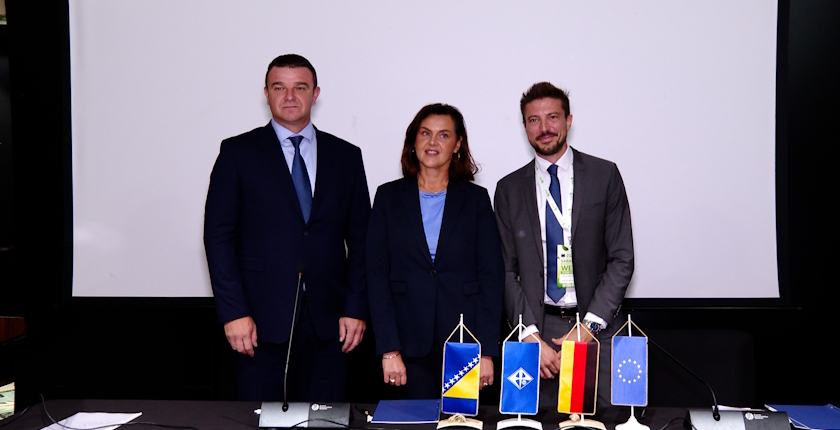
General Manager of Elektroprivreda BiH Sanel Buljubašić and the company’s Executive Director for Economic Affairs Sanela Jurišić signed an agreement with KfW’s Head of the Division of Energy and Transport in Southeast Europe and Turkey, Pablo Obrador, on EUR 2 million in grants.

Germany’s development bank approved the funds within the program Supporting Market-Oriented Green Transformation in the Eastern Neighbourhood and Western Balkans, on behalf of the European Union. It is supported by European Fund for Sustainable Development Plus.

EPBiH committed to sustainable decarbonization

The deal is aimed at supporting the institutional capacities of EPBiH for managing its green transition and corporate transformation.

The funding is part of the program Supporting Market-Oriented Green Transformation in the Eastern Neighbourhood and Western Balkans

“The project that we are developing with KfW bank represents an important step toward speeding up the energy transition and strengthening sustainable market mechanisms in our company. With this milestone, Elektroprivreda BiH confirms its commitment to sustainable decarbonization as well as strengthening competitiveness through investments in green technology,” CEO Buljubašić stated.

Experts to participate in development of CO2 emissions tracking plan, establishment of virtual power plant

The grants are earmarked for technical support, which includes financing the services of expert consultants for a plan for monitoring CO2 emissions and related reporting, their support in producing a decarbonization roadmap, in corporate sustainability reporting and the establishment of a virtual power plant. Additionally, a part of the funds will be for technical support in the materialization of strategic guidelines defined in EPBiH’s energy transition and decarbonization strategy until 2050.


“We have invested in renewable energy sources before, and the signing of the contract represents a new chapter in our cooperation. I express hope that the new systems will be implemented soon and I express the bank’s preparedness to support Elektroprivreda BiH’s new green energy business models,” KfW’s representative Pablo Obrador said, as quoted by Bosnia and Herzegovina’s state-owned utility.

Alongside supporting EPBiH’s corporate reforms, the grant funding will be used for improving the company’s commercial efforts aimed at strengthening market preparedness and the improvement in strategic positioning within the rapidly developing energy sector.

  • 1
  • 2