by in News

Federation of BiH secures EUR 83 million for just transition of coal regions

Bosnia and Herzegovina has secured EUR 83 million for a just transition project, which includes installing renewable power plants, social protection measures, and skills development in coal regions.

The funds are for the Federation of BiH, one of the two entities constituting Bosnia and Herzegovina.

The Board of Executive Directors of the World Bank has approved a EUR 79.90 million loan and a EUR 2.89 million grant to support Bosnia and Herzegovina’s National Energy and Climate Plan, enhance energy independence, foster job opportunities, and strengthen local economies in former coal regions.

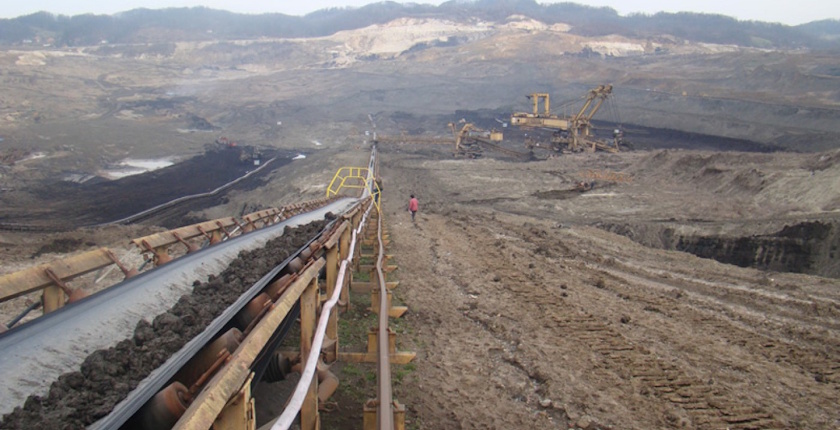
It explained that the Just Transition in Select Coal Regions of Bosnia and Herzegovina Project would help repurpose post-mining lands in Banovići, Zenica, and Kreka, and facilitate the closure of underground works in Zenica. The project entails support for the installation of renewable energy systems at Banovići and Kreka mines.

The project has four components

The measures also involve social protection and skills development for workers and communities seeking opportunities outside the coal sector, the international financing institution noted.

The project will be implemented by the Federal Ministry of Energy, Mining and Industry and the state-owned RMU Banovići coal mine operator and power utility Elektroprivreda Bosne i Hercegovine (EPBiH). It has four components.

The first focuses on enhancing the capacity of coal regions, their entities, and the state-level government to manage a just transition. It will support the Committee on Just Transition at the State Level, a state-level knowledge platform, and capacity building of the Interministerial Committee on Just Transition in the Federation of BiH.

The project includes the land repurposing master plans in Banovići, Zenica, and Kreka

Technical assistance to relevant FBiH ministries to enhance the existing regulatory laws on labor transitions will be provided.

Component 2 supports the repurposing of select post-mining lands in Banovići, Zenica, and Kreka, and closure of specific underground works in the Zenica mine. The segment includes implementing the land repurposing master plans in all three areas

The third part envisages the construction of new power plants. A photovoltaic system of 27 MW in peak capacity will be installed at two identified sites at the Banovići and Kreka mines. Annual power production is projected at over 30 GWh.

Sheldon: To make sure no one is left behind

Component 4 aims to mitigate the social and labor impacts of coal transition on workers and communities by covering the financial obligations toward the miners in Zenica, reskilling and retraining eligible workers in Banovići and Zenica, and supporting affected communities through community investment, the project reads.

According to the World Bank, BiH is developing a National Energy and Climate Plan (NECP). The lender intends to ensure that mine closure is environmentally and socially responsible, supporting new job opportunities and strengthening local economies in former coal regions.

“This new project is an opportunity to boost BiH’s energy security while supporting communities, making sure no one is left behind,” said Christopher Sheldon, World Bank Country Manager for BiH and Montenegro.
by in News

Croatia grants EUR 30 million to firms for renewables, energy efficiency

The Croatian government has approved EUR 30 million in grants to businesses for investments in renewable energy production and energy efficiency measures.

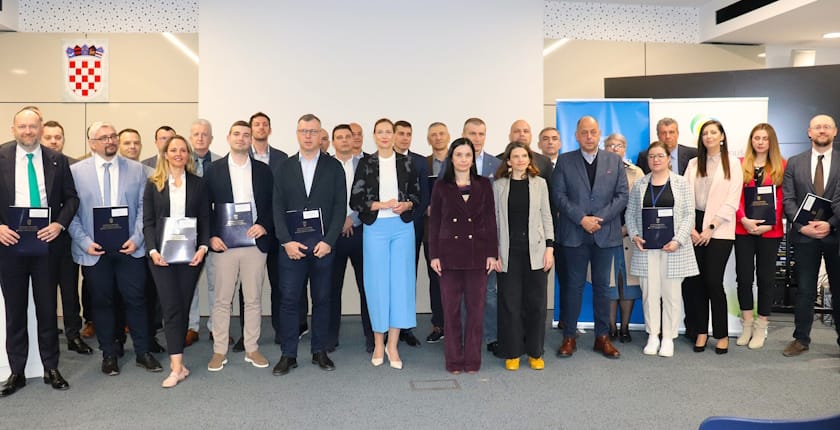
The Ministry of Environmental Protection and Green Transition and the Environmental Protection and Energy Efficiency Fund (EPEEF or FZOEU) have awarded 46 grant contracts to companies for projects focused on generating electricity from renewables and energy efficiency in the processing industry.

The proposals were selected via the European Union’s Modernisation Fund under the public calls ‘Production of electricity from renewable energy sources in the processing and heating industry’ and ‘Investment in energy efficiency measures and high-efficiency cogeneration in the processing industry’.

The ministry has received 141 applications

A total of 141 project proposals were submitted within the first call, with 103 involving photovoltaic plants and one for a biomass power facility. The second public call attracted 37 projects.

According to Luka Balen, manager of the Environmental Protection and Energy Efficiency Fund, the contracts should serve as business drivers for entrepreneurs promoting renewable energy production and supporting the green transition.

Energy self-sufficiency and renewable energy production are key priorities of the Government of Croatia, he argued.

Projects with a total value of almost EUR 90 million have received grants

Minister of Environmental Protection and Green Transition Marija Vučković revealed that EUR 30 million was allocated to the projects, with a total value exceeding EUR 87 million.

In her words, they are intended for the production of electricity from renewable sources and measures for energy efficiency and highly efficient cogeneration in the processing industry. Vučković pointed out the projects would result in significant electricity savings and a reduction in greenhouse gas emissions.

The companies will benefit from cost savings, opportunities to adopt new technologies, and a quick rise in income, the minister added.

Of note, the Modernisation Fund is an EU program financially supporting upgrades in energy systems and the improvement of energy efficiency in 13 lower-income member states.

Established in 2018 for the 2021-2030 period, it aims to help the beneficiary countries achieve their climate targets and the objectives of the European Green Deal. It is financed by revenues from the auctioning of emission allowances under the EU Emissions Trading System (EU ETS).

by in News

Kosovo* gets EUR 12.6 million for waste management

Kosovo Landfill Management Company (KMDK) has signed a EUR 12.6 million grant agreement with Kosovo’s* Ministry of Finance, Labor and Transfers and Germany’s KfW Development Bank for waste management in Prishtina, Prizren and Gjilan.

The European Union provided the funding while the KfW would be in charge of the project implementation.

Kosovo Landfill Management Company (KMDK) CEO Dardan Velija said the project is essential for the company and Kosovo*. The activities would drastically change the condition of landfills operating without adequate permits, he added.

The sites would be transformed into sanitary ones with modern infrastructure in line with European standards and environmental regulations.

According to Minister Hekuran Murati, the project aims to improve the quality of life of citizens by securing a cleaner environment. It would provide adequate infrastructure for waste management, he noted.

Müller: It is urgent to take action in this sector

KfW’s director for Southeast Europe and Turkey Klaus Müller expressed the bank’s willingness to support the Government of Kosovo. It is urgent to take action in this sector, to overcome the problems with waste and to finish the project on time, he stressed.

The signing was attended by KfW’s director for Kosovo* and North Macedonia Moritz Remé, leader of the German Development Cooperation at the Embassy of Germany in Kosovo* Daniel Alker, and Deputy Head of Cooperation at the EU Office in Kosovo Alessandro Bianciardi.

Of note, in August last year, the EU suspended grants and investments in wastewater treatment systems in Kosovo* as part of sanctions against Prime Minister Albin Kurti and his government.

At the time, Mayor of Hani i Elezit Mehmet Ballazhi said the EU suspended a wastewater treatment project that was supposed to tackle pollution including asbestos. The town and municipality on the border with North Macedonia is also known as Elez Han and Đeneral Janković.

* This designation is without prejudice to positions onstatus and is in line with UNSCR 1244/99 and the ICJ Opinion on the Kosovo declaration of independence.
  • 1
  • 2