by in News

Third Regional Power Sector Exchange in Ohrid: Power grids at core of energy transition

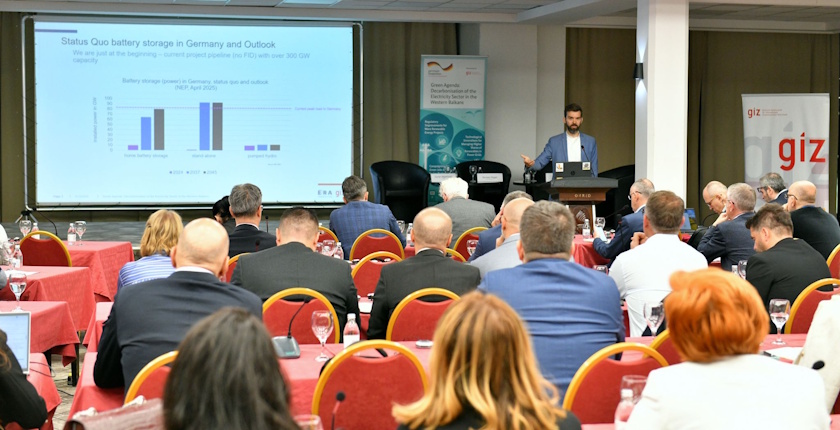
The third Regional Power Sector Exchange of the Western Balkans in Ohrid in North Macedonia gathered over 80 energy professionals from the region to discuss the future of electricity decarbonization and the urgent need to modernize power infrastructure.

Organised under the framework of the Regional Climate Partnership between Germany and the Western Balkans, the conference brought together representatives of transmission and distribution system operators, energy regulators, and energy ministries to accelerate coordinated action toward a greener, more resilient power system.

“No grids, no glory. This slogan captures the challenge in front of us. Without investment in power grids, adaptable regulation, and skilled professionals, the renewable energy transition cannot succeed,” Project Manager at GIZ Nicolas Heger said in his welcoming remarks.

Oberhuber: The Western Balkans have the potential to become a major exporter of clean electricity

Opening addresses were delivered by David Oberhuber, GIZ Country Director in North Macedonia, Anca-Iulia Cimpeanu, European Commission (DG ENER), and Davor Bajs, Energy Community Secretariat.

In his keynote speech, Oberhuber stressed the region’s strategic importance in the Regional Climate Partnership.

The Western Balkans has the potential to become a major exporter of clean electricity to Western Europe and a hub for investment and innovation in renewable energy, he said.

North Macedonia is advancing its energy transition by expanding renewables – solar power capacity reached 506 MW in 2023 – and reducing coal dependency, although thermal power plants still accounted for 47.3% of total electricity production in early 2024.

In 2023, renewables made up 33.15% of electricity generation, with households, transport, and industry as the top energy consumers.

To accelerate the shift, tailored support projects were launched. The Energy, Water Services and Municipal Waste Management Services Regulatory Commission is tackling the surge in renewables applications. Distribution system operator (DSO) EVN is focusing on smart grids and energy quality, and transmission system operator (TSO) MEPSO is exploring options to reduce balancing costs through regional market mechanisms.

Six tailored support projects presented

The event included three sessions on tailored support projects.

Professor Nermin Suljanović presented the project Concept on Data Exchange Between System Operators in Bosnia and Herzegovina.

The data platform enables automatic data exchange among all actors in the electricity market in Bosnia and Herzegovina, ensuring data interoperability and harmonized communication interfaces, according to Suljanović.

He also outlined the project Technical Specification and Requirements for Integration of Renewables into DSO Telecommunication Network.

E-mobility is not only related to energy but also to transportation, telecommunication, data security

A project titled Procedure for Handling RES Connection Requests to the Grid – Queue Management was presented by expert Miltos Aslanoglou, and the Roadmap for Creating a Legal and Regulatory Framework for EV Charging by expert Dejan Stojadinović.

“EU legislation on this matter is a good base for the Western Balkan countries to prepare relevant legal and regulatory frameworks. E-mobility is not only related to energy but also to transportation, telecommunication, data security, and other issues,” Stojadinović said.

Goran Majstrović, Deputy Director and Head of the Energy Transmission and Distribution Department at Energy Institute Hrvoje Požar (EIHP), gave an insight into the project Feasibility Analysis and Funding Assessment for using Dynamic Line Rating (DLR) on the Kosovo* Transmission Grid.

Simplification of Procedures for Prosumer Connection to the Distribution Network in the Federation of BiH was the name of the project introduced by expert Goran Dobrić.

The need for regionally integrated networks has never been greater

Blackouts in both Southern and Southeastern Europe have highlighted vulnerabilities in grid infrastructure amidst growing shares of renewable energy. The need for modern, flexible, and regionally integrated networks has never been greater.

The event was part of a wider regional project implemented by GIZ on behalf of the German government, supporting the integration of renewables and enhancing energy security across the WB6.

In just two years, the project has supported over 30 institutions, trained more than 135 energy professionals, and facilitated the development of the Action Plan for Power Grids in the Western Balkans, in cooperation with the Energy Community Secretariat.

Network redesigns are lagging behind renewables by seven to ten years

Goran Majstrović from Energy Institute Hrvoje Požar presented the Action Plan for Power Grids in the Western Balkans.

“The path to integration of renewables is not just replacing power plants but redesigning the entire system to accommodate them. Network redesigns are lagging behind renewables by seven to ten years,” he asserted.

In the plan, the required grid investments by 2030 in the six countries of the Western Balkans (WB6) are estimated at EUR 10 billion to EUR 14 billion. Investments in primary equipment are seen at EUR 6 billion to EUR 8 billion. As for secondary equipment (digitalization), the forecasted tally is EUR 4 billion to EUR 6 billion.

Phase 2 of the project Green Agenda: Decarbonisation of the Electricity Sector in the Western Balkans is scheduled for completion in 2028. The Regional Power Sector Exchange will remain a key platform for cooperation, helping ensure the energy transition in the region is just and inclusive.

* This designation is without prejudice to positions onstatus and is in line with UNSCR 1244/99 and the ICJ Opinion on the Kosovo declaration of independence.
by in News

Workshop on power grid development in Western Balkans held by GIZ, Energy Community Secretariat

The development of grid infrastructure in the Western Balkans is a crucial step in the region’s energy transition. In support of the Green Agenda for the Western Balkans, GIZ, in cooperation with the Energy Community Secretariat, organized a Strategic Workshop on Power Grids, with a focus on a concrete action plan for the entire region.

Without the development of grid infrastructure, large-scale electrification based on clean energy sources is not possible. The process requires significant investments and new solutions for operating the grid. Existing power lines will need to be reinforced, while new infrastructure, especially on low and medium voltage levels, as well as interconnectors, must be built over the next ten years.

The recent large-scale power outage in Southern Europe, and the one in the Western Balkans in 2024, are a stark reminder of the importance of ensuring system stability amid the growing use of renewables and the need for preventive safety measures. A functional and reliable electricity supply is key to gaining broad public support for alternative energy sources and green policies.

The Strategic Workshop on Power Grids, organized by GIZ in Vienna as part of the project Green Agenda: Decarbonization of the Electricity Sector in the Western Balkans, in cooperation with the Energy Community Secretariat, brought together representatives from transmission and distribution system operators, along with experts from the Hrvoje Požar Energy Institute (EIHP), intending to develop the Action Plan for Power Grids in the Western Balkans.

The action plan provides a clear roadmap for grid development in the Western Balkans

Electricity networks in Western Balkan countries were not designed to meet the challenges of the 21st century. Although the countries in the region have adopted very ambitious decarbonization and renewable energy integration targets, around two thirds of electricity generation comes from coal-fired power plants, according to Goran Majstrović, Deputy Director and Head of the Energy Transmission and Distribution Department at EIHP.

“Regional power networks remain constrained by outdated assets, insufficiently utilized interconnection capacities, administrative bottlenecks, and inadequate digitalization. Without urgent and coordinated action, the power network in the Western Balkans will become a serious bottleneck to secure operation and progress rather than a platform for transformation and development,” Majstrović explains.

Without urgent and coordinated action, the electricity network in the Western Balkans could become a serious obstacle to secure operation and progress, instead of being a platform for transformation and development, he warned.

The Western Balkan Action Plan for Power Grids directly addresses the root causes of recent blackouts, including extreme weather events, aging infrastructure, and the growing share of variable renewable energy sources, particularly wind and solar, as their output is sensitive to any changes in weather conditions.

By focusing on grid modernization, regional coordination, and system resilience, the plan offers a concrete roadmap for preventing future outages. It also promotes investment in smart grid technologies, cross-border interconnectors, and digital system monitoring, all of which are essential for adapting to growing demand and fluctuations in electricity production.

The action plan is a strong expression of regional cooperation in the power sector

Crucially, the plan strengthens operational cooperation among system operators across the Western Balkans region, enabling a more flexible and integrated regional grid. In doing so, it lays the foundation for a stable and secure energy transition based on renewables, helping the region become a reliable supplier of clean electricity to Europe.

According to Goran Majstrović, the Action Plan for Western Balkans Grids provides a forward-looking and regionally harmonized strategy to address the challenges. It is built on the vision of the European Union’s Action Plan for Grids and aligns closely with the Sofia Declaration on the Green Agenda for the Western Balkans, the Energy Community framework, and each country’s national energy and climate plan (NECP).

The document is a strong expression of collaboration of the Western Balkans power sector in a matter of high mutual interest – mobilizing attention, human and financial resources for a rapid energy transition, enabled by sustainable, interconnected, and resilient power infrastructure.

by in News

Representatives of Western Balkan DSOs take part in Global Outage Management Forum in Berlin

Representatives of distribution system operators (DSOs) from Albania, Kosovo*, and Montenegro, partners in the GIZ project Green Agenda – Decarbonization of the Electricity Sector in the Western Balkans, took an active part in the 10th Annual Global Outage Management Forum for DSOs, held in Berlin. The event brought together DSOs, experts, and innovators to address the pressing challenges of ensuring grid stability while navigating regulatory, technological, and environmental transformations.

The two-day event featured engaging discussions on a wide range of critical topics related to outage management and the future of electricity distribution. One key issue was the integration of electricity generated by prosumers into the low-voltage grid. Participants explored innovative methods for managing outages more efficiently and enhancing the overall resilience of the grid.

The forum also addressed the evolution of electricity distribution networks and their importance in ensuring supply security, especially given the increasing demand and the rise of distributed generation. Another significant topic was the implementation of Advanced Distribution Management Systems (ADMS).

Discussions covered the transition toward automated fault management and the development of digital substations. Additionally, participants examined how environmental factors, such as changes in groundwater levels, can impact the reliability of medium-voltage networks.

Workshop on DSO Roadmaps

The project partners also took part in a half-day workshop focusing on the topic of DSO Roadmaps. The purpose of a DSO Roadmap is to outline the strategic direction and actions required to modernize the distribution network, integrate renewable energy sources, enhance grid reliability, and support the overall energy transition in the Western Balkans. It aims to provide a clear pathway for DSOs to adapt to changing energy landscapes, regulatory requirements, and technological advancements.

Photo: GIZ

“We used the workshop in Berlin with the DSO representatives to introduce State of the Art on DSO-Roadmapping and sound primary results for Albania, Kosovo, and Montenegro, which were mainly based on a pre-assessment of items based on the ETI of the World Economic Forum, which we used as a Strategic Reference Framework”, said Dr. Marcus Merkel, Senior Strategy Manager at EWE AG.

“Furthermore, we introduced a PESTEL-Methodology to jointly identify further items, which we are now transferring together with more than 500 items identified in the reports of the Energy Community, IEA, ACER, DSO Entity (DSO Vision), EDSO for Smart Grids (Technology Radar) and results from our Questionnaire as well as other Best Practices in the final Draft of the DSO Roadmap. We will present preliminary results and an implementation proposal towards the Energy Community in June and further sound the results with DSOs by July 2025,” he added.

Photo: GIZ

Rodon Miraj, Energy Advisor at GIZ, emphasized the vital role of distribution system operators in driving the energy transition at the local level. He noted that the capillary grid managed by DSOs represents the first line of distributed decarbonization efforts, enabling end-consumers to participate through technologies like prosumption and battery storage.

Miraj highlighted the responsibility of DSOs in the Western Balkans for creating the necessary technical and administrative conditions for these innovations to take root quickly.

“GIZ’s Decarbonization Project is supporting all distributors of the region to plan and have a clear roadmap towards established and new goals for 2030 and beyond. DSO roadmaps can be the missing link that connects the high-level Vision, Mission, and Target set by DSOs to the immediate implementation and budgeting efforts,” he said.

He described the Berlin workshop and participation in the Global Forum as a valuable opportunity for Western Balkan DSOs to collaborate on roadmap development and engage directly with leading industry experts.

by in News

Regional webinar on gender-responsive energy transition and workforce empowerment

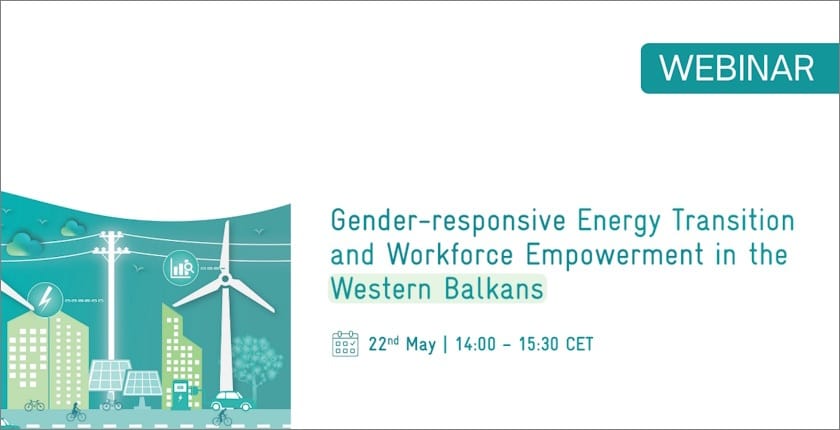
A regional webinar titled Gender-responsive Energy Transition and Workforce Empowerment in the Western Balkans will be held on May 22. The aim of the webinar, organized by GIZ, is to initiate a dialogue on the social and gender aspects of the transition from fossil fuels to renewable energy sources.

The energy transition in the Western Balkans is bringing significant changes. The shift to renewable energy leads to a restructuring of the labor market. More than 138,000 jobs are currently linked to coal-based industries, raising questions about the social impacts and the need for workforce reskilling.

Investing in skill development and workforce adaptation is essential to mitigating social challenges, particularly gender inequalities, during the energy transition process.

GIZ recently conducted the first comprehensive analysis of the impact of the energy transition on the labor market in the Western Balkans. The study outlines the expected job losses and gains, identifies the skills needed for future employment in the renewable energy sector, and highlights the crucial role of technical and vocational education in this process.

Everyone interested can register via a link

The the findings of the study will be presented at the webinar Gender-responsive Energy Transition and Workforce Empowerment in the Western Balkans, scheduled for May 22 from 14:00 to 15:30. The event will be held online via Microsoft Teams, and all interested participants can register via this link.

The discussion will feature Valentina Vučković, a socio-economic expert from the Institute for Development and International Relations (IRMO), who will present the research findings. Fiona Imami from the organization Co-Plan will speak about policy solutions for coal mine regions within the concept of a just transition, and Marta Schulte-Fischedick from the Energy Community Secretariat will address gender inequality issues and potential systemic solutions.

Special emphasis will be placed on the need for greater synergy between the education and energy sectors to ensure that the workforce can effectively adapt to new conditions. The discussion will also cover issues of gender equality, the inclusion of women in the green energy sector, and ways to reduce existing gender disparities in employment and career advancement in the field.

by in News

Energy Advisory Center established in Knjaževac in Serbia for citizens, firms

Knjaževac in Serbia got an Energy Advisory Center, intended for all citizens and small entrepreneurs who want to save energy, reduce costs, and improve their living and working conditions, as well as for those considering or already implementing energy efficiency measures.

The opening of the Energy Advisory Center in Knjaževac, a town in eastern Serbia, was marked by holding a roundtable discussion with local partners. At the event, the representatives of institutions, public companies, organizations, and the business sector were invited to join the facility’s mission and contribute to the dissemination of knowledge within their respective fields.

“Energy efficiency needs to become a higher priority for everyone. That’s why we need an Energy Advisory Center that communicates with all members of the local community, and not just subsidy beneficiaries,” said Daniela Kostadinova, senior advisor in the project Promotion of Renewable Energy Sources and Energy Efficiency in Serbia, implemented by GIZ.

She added that investing in expanding the scope of the center – which provides not only financial but also advisory support – contributes to an improved quality of life for a greater number of citizens and to a better understanding of their needs.

The Energy Advisory Center in Knjaževac will offer free advice to all interested citizens and entrepreneurs on energy efficiency and investment opportunities in renewable energy sources. Visitors will also be able to get information on subsidies and other financing options for such investments and learn from examples of good practice.

“The opening of the Energy Advisory Center represents an important step toward improving the quality of life of our fellow citizens. By providing relevant information and advice, we are enabling both citizens and businesses to use energy more efficiently, reduce their costs, or even generate new income,” said Milan Đokić, Mayor of Knjaževac.

The center will be operated by the municipality’s enterprise for development, urban development and construction. It is located in its premises, too. The public firm’s director Mladen Radosavljević stated at the opening that the center would be open for one-on-one consultations, group discussions on various topics, and for providing all necessary advice related to energy efficiency.

The establishment of the Energy Advisory Center in Knjaževac was supported by the German Federal Ministry for Economic Cooperation and Development (BMZ), in cooperation with the Regional Development Agency of Eastern Serbia (RARIS). The project was implemented by Deutsche Gesellschaft für Internationale Zusammenarbeit (GIZ) GmbH.

by in News

Energy efficiency, renewables in rural communities in Serbia’s Zlatibor region

Author: Stevan Vujasinović

The population in rural areas in the municipalities of Priboj, Čajetina and Arilje in Serbia have been heavily affected for years with frequent and prolonged interruptions in electricity supply. The interruptions not only disturb everyday life but they also substantially hinder the development of family businesses, especially in tourism and agriculture. However, solutions do exist.

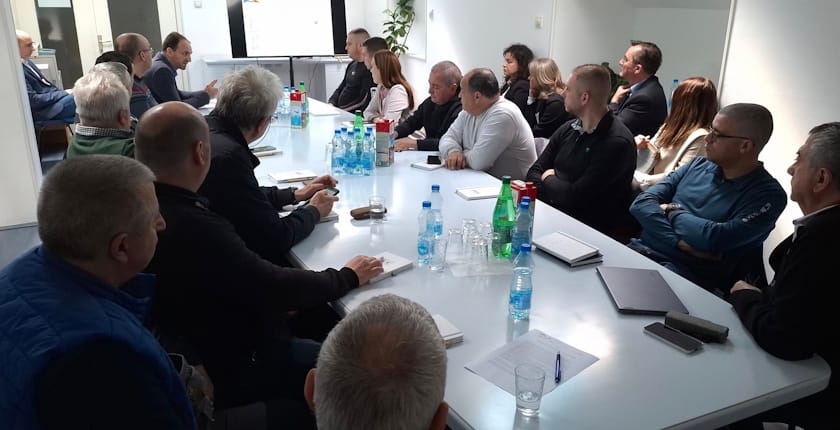
Regional Development Agency Zlatibor almost simultaneously marked World Energy Efficiency Day (March 5) and International Women’s Day (March 8) last week. On the occasion, it organized “energy discussions” with members of women’s associations in rural areas of these municipalities, and the main topics were energy efficiency and renewable energy sources for rural households.

The Zlatibor mountain is one of Serbia’s main tourist and skiing resorts. It partly spans the territories of Priboj, Čajetina and Arilje.

Energy needs and challenges in rural households

“We are without power for several hours at a time in the winter. It is not only discomfort, but a serious problem for heating and preserving food, and especially for us who have guests in rural tourism”, said one of the participants at a discussion in Čajetina. The event gathered the members of the Čajetina Rural Women’s Association and Zlata association.

It became clear from the discussions that there is great interest in installing solar panels, among private households as well as hospitality facilities. However, the access to these technologies is often difficult because of high initial costs and complex procedures for obtaining subsidies, which despite growth in the available volume for the purpose still don’t meet all the existing demand.

High initial expenses and complex procedures for obtaining subsidies make the availability of solar panel installations more difficult

The problem is exacerbated by the fact that many houses in the villages were built illegally, making it more difficult to access energy efficiency subsidies. Besides, the calls are too often only accessible for the beneficiaries that already have initial capital to invest, while the village population often doesn’t know about them.

The Municipality of Čajetina acknowledges the significance of energy efficiency. Last year it issued a public call for cofunding energy efficiency measures in family houses and apartments. However, targeted support for users with the vulnerable energy buyer statuses still hasn’t been provided. Assistance could additionally improve the availability of these measures to the wider population, and in fact the very people who need help the most.

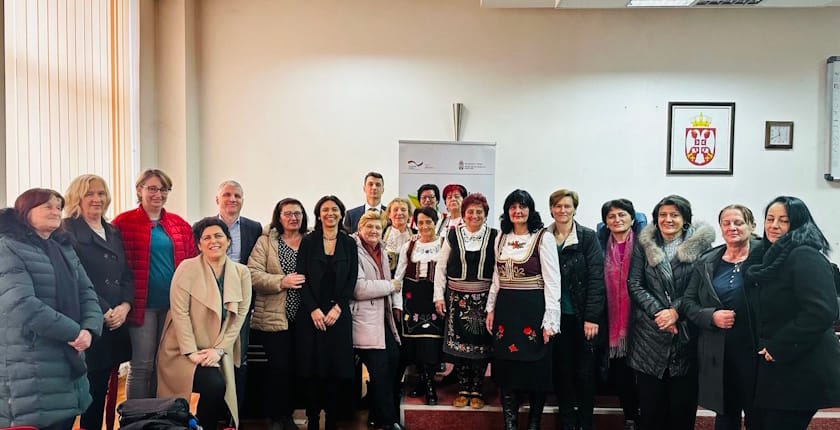
Photo: Members of the Čajetina Rural Women’s Association and Zlata association (Miloš Radojević)

Possibilities for using renewable energy sources

One of the key conclusions of the discussion was that solar panels and heat pumps can significantly improve the situation. Aleksandar Macura from RES Foundation pointed out that the law already enables households to produce their own energy and exchange it with state-owned power utility Elektroprivreda Srbije (EPS). “There are sufficient examples of good practice – around 2,500 households in Serbia already use rooftop power plants and work as buyers-producers,” Macura stated.

Buyers-producers are Serbia’s legal category for prosumers.

Nevertheless, solar panels still require initial investments of several thousand euros, which is an insurmountable obstacle for many. The participants in the discussion proposed solutions such as subsidized loans with delayed payment, in installments, to make the technology more accessible both to retirees and socially disadvantaged persons.

Assembling and energy communities

Another important aspect of the discussion was the possibility of establishing energy communities. In line with European regulations, Serbia is opening the space for joint production and use of solar energy within local communities.

It means any village council could install a solar power plant and distribute the energy among households. It would be especially useful for women running family businesses in agriculture and tourism, as it would provide them with a stable energy source without leaning on an unpredictable power distribution network.

Wood is traditional but inefficient energy source

Wood biomass usage still dominates in many rural households. Some said in Arilje: “Wood is irreplaceable” and “we believe in wood!” However, for people in villages, wood is almost never, even though it is the most accessible, never the most efficient solution for heating. It is partly because of moisture in the solid fuel, and mostly because of inefficient devices.

There are fewer and fewer people in the countryside, so it is getting more difficult and more expensive to timely obtain the wood felling and preparation service, even in one’s own forest. “We have been using wood for decades, but who today can afford quality dried wood? We often heat ourselves using wet wood, which only increases consumption and air pollution,” said one of the participants in an event in Arilje, describing her experience. It was attended by women from two associations: Sibirka and Ariljka.

Photo: Members of associations Sibirka and Ariljke (Miloš Radojević)

How to proceed?

It is clear that rural communities mustn’t be left behind in the energy transition process. Solar panels, energy communities and subsidies for more efficient heating are solutions that can bring concrete changes. However, the key to success lies in a greater accessibility of these solutions for all citizens, regardless of their financial situation or the place of residence.

Energy sustainability in rural communities is not just a matter of comfort but also of the survival and development of local communities. If we want villages to be vital and economically stable, it is necessary to facilitate a stable, sustainable and affordable energy source for them. Through smart investments, better subsidy organization and the development of energy communities it is possible to significantly improve the quality of life in these areas. In addition, additional training in the usage and maintenance of energy-efficient systems can contribute to a greater deployment of the technologies.

The energy discussions with the women of the Zlatibor county was organized within the project Improving the Use of Sustainable Energy in the Zlatibor region, financed by the German Organization for International Cooperation (GIZ) by order of the Government of the Federal Republic of Germany (Federal Ministry for Economic Cooperation and Development – BMZ).

  • 1
  • 2