by in News

EU4CAET project pre-selects 43 ideas for first renewable energy communities in BiH

A total of 43 project ideas from 28 local authorities for establishing the first renewable energy communities in Bosnia and Herzegovina have been pre-selected to receive assistance under the EU for Collective Action for Energy Transition project.

The EU for Collective Action for Energy Transition (EU4CAET) project is jointly financed by the European Union and the German Federal Ministry for Economic Cooperation and Development (BMZ). Under the slogan ‘Together for Energy Transition,’ the EUR 3 million project is implemented by GIZ.

The initiative aims to empower local municipalities, citizens, and private actors to develop sustainable energy solutions that create jobs, improve energy efficiency, and advance climate goals, according to the EU Delegation to Bosnia and Herzegovina.

A total of 51 municipalities submitted 89 project ideas

In the project’s development phase, 51 municipalities submitted a total of 89 project ideas, such as solar power plants, heat pumps, biomass heating systems, public lighting upgrades, and electric vehicle charging stations.

The proposed projects also included kindergartens, youth centers, sports halls, theaters, health centers, and other public facilities. Following the evaluation, 28 local self-governments submitted their first concept notes, and 43 ideas were pre-selected.

“The final selection, based on detailed concept notes, is currently ongoing. The number of final projects will depend on the quality of submitted concepts and available funding under EU4CAET,” the Communication Office of the Delegation of the EU to BiH & EU Special Representative in BiH told Balkan Green Energy News.

The evaluation will begin in January 2026

The deadline for the pre-selected local authorities to submit their detailed concept notes was December 20. The evaluation of the submitted concepts will begin in January 2026.

Selected local authorities will be invited to present and discuss their ideas in more detail, according to the Communication Office.

The strongest concepts will receive assistance for capacity development, business planning, feasibility studies, and the preparation of technical design documentation.

The 28 municipalities pre-selected for further evaluation are as follows: Bijeljina, Bileća, Centar Sarajevo, Doboj, Donji Vakuf, Drvar, Goražde, Ilijaš, Kakanj, Kalesija, Laktaši, Maglaj, Milići, Modriča, Mostar, Novi Grad, Novi Travnik, Novo Sarajevo, Šamac, Sokolac, Srebrenica, Teslić, Travnik, Višegrad, Vogošća, Zenica, Živinice, and Zvornik.

BiH does not yet have renewable energy communities, but one of its two entities – the Republic of Srpska – managed to adopt the necessary regulations for their establishment in May this year, becoming the first in the region to do so.

Hahr: The grant call is planned for February 2026 and 2027

Mareike Hahr, Head of EU4CAET, said the project is now focused on tailored technical assistance to further refine the ideas and prepare high-quality applications for the grant call, planned for February 2026 and 2027.

“What has been particularly encouraging is the remarkable level of interest and readiness shown by local communities from both entities to ‘enter new terrain’—to propose their own project concepts, explore innovative solutions, and actively shape their energy future,” she explained.

by in News

EU4CAET project pre-selects 43 ideas for first renewable energy communities in BiH

A total of 43 project ideas from 28 local authorities for establishing the first renewable energy communities in Bosnia and Herzegovina have been pre-selected to receive assistance under the EU for Collective Action for Energy Transition project.

The EU for Collective Action for Energy Transition (EU4CAET) project is jointly financed by the European Union and the German Federal Ministry for Economic Cooperation and Development (BMZ). Under the slogan ‘Together for Energy Transition,’ the EUR 3 million project is implemented by GIZ.

The initiative aims to empower local municipalities, citizens, and private actors to develop sustainable energy solutions that create jobs, improve energy efficiency, and advance climate goals, according to the EU Delegation to Bosnia and Herzegovina.

A total of 51 municipalities submitted 89 project ideas

In the project’s development phase, 51 municipalities submitted a total of 89 project ideas, such as solar power plants, heat pumps, biomass heating systems, public lighting upgrades, and electric vehicle charging stations.

The proposed projects also included kindergartens, youth centers, sports halls, theaters, health centers, and other public facilities. Following the evaluation, 28 local self-governments submitted their first concept notes, and 43 ideas were pre-selected.

“The final selection, based on detailed concept notes, is currently ongoing. The number of final projects will depend on the quality of submitted concepts and available funding under EU4CAET,” the Communication Office of the Delegation of the EU to BiH & EU Special Representative in BiH told Balkan Green Energy News.

The evaluation will begin in January 2026

The deadline for the pre-selected local authorities to submit their detailed concept notes was December 20. The evaluation of the submitted concepts will begin in January 2026.

Selected local authorities will be invited to present and discuss their ideas in more detail, according to the Communication Office.

The strongest concepts will receive assistance for capacity development, business planning, feasibility studies, and the preparation of technical design documentation.

The 28 municipalities pre-selected for further evaluation are as follows: Bijeljina, Bileća, Centar Sarajevo, Doboj, Donji Vakuf, Drvar, Goražde, Ilijaš, Kakanj, Kalesija, Laktaši, Maglaj, Milići, Modriča, Mostar, Novi Grad, Novi Travnik, Novo Sarajevo, Šamac, Sokolac, Srebrenica, Teslić, Travnik, Višegrad, Vogošća, Zenica, Živinice, and Zvornik.

BiH does not yet have renewable energy communities, but one of its two entities – the Republic of Srpska – managed to adopt the necessary regulations for their establishment in May this year, becoming the first in the region to do so.

Hahr: The grant call is planned for February 2026 and 2027

Mareike Hahr, Head of EU4CAET, said the project is now focused on tailored technical assistance to further refine the ideas and prepare high-quality applications for the grant call, planned for February 2026 and 2027.

“What has been particularly encouraging is the remarkable level of interest and readiness shown by local communities from both entities to ‘enter new terrain’—to propose their own project concepts, explore innovative solutions, and actively shape their energy future,” she explained.
by in News

Germany’s energy and climate cooperation with Serbia improves people’s lives

Projects implemented by Deutsche Gesellschaft für Internationale Zusammenarbeit (GIZ) GmbH and the KfW Development Bank in Serbia have introduced modern heating systems to many towns, improved insulation in public buildings and promoted renewable energy to benefit citizens and local communities. Anke Konrad, the German Ambassador to Serbia highlighted these achievements during the interview with the Balkan Green Energy News, commemorating the 25th anniversary of the German Development Cooperation in the country. She emphasized that these initiatives enhance people’s quality of life, reduce emissions and contribute to environmental protection.

Ambassador Konrad also pointed out that the long-term Regional Climate Partnership with the Western Balkans is based on shared values and goals, aimed at investing in more secure and climate-resilient future.

Ambitious reductions of harmful emissions go hand in hand with a strong economy, German Ambassador to Serbia Anke Konrad says. GIZ and KfW are supporting the country’s green transition, which includes a rising solar power capacity, she noted and called it an enormous success.

Climate action is not a cost, but a strategic investment, Ambassador Konrad pointed out.

This year marks the 25th anniversary of development cooperation between the Federal Republic of Germany and the Republic of Serbia. What are the cornerstones of this partnership, and what significant achievements have been realised over the years?

This year, we look back with pride on 25 years of successful development cooperation that has delivered tangible benefits to people all over Serbia, has brought our two countries closer together, and Serbia closer to the European Union. From the outset, Germany’s support has focused on strengthening institutions, supporting economic growth, and improving living standards. Together with our Serbian partners, we have achieved progress in training and vocational education, good governance, environmental protection, and infrastructure development.

For example, thousands of students and hundreds of companies participate in dual education programmes every year. In digitalization projects, more than 2,000 small and medium-sized companies improved their productivity and competitiveness through digitalizing internal procedures. Another great example are digital services for individuals, such as the seasonal worker portal or the Register of Administrative Procedures, an online register for all administrative services with over 2.2 million registered “e-citizens”.

We look forward to continuing to implement projects that will improve the lives for people in Serbia and support Serbia on its path towards the EU

In 2022, the installed capacity for solar energy generation was at 6 MW. Now it stands at 84.4 MW. This equals a reduction of 118,000 tons of CO2 emissions per year. Where there were 400 solar energy prosumers in 2022, now there are almost 4,000. This represents an enormous success toward combating climate change and creating a sustainable economy. We have supported this transition both through technical advice by GIZ and investments by KfW.

What makes our partnership special is its continuity, reliability and spirit of co-creation. We work together with Serbian partners and citizens, building on a strong foundation of dialogue, cooperation and shared responsibility. In this spirit, we look forward to continuing to implement projects that will improve the lives for people in Serbia and support Serbia on its path towards the EU.

Let us turn our attention to energy and climate-related matters. Germany plays a vital role as one of Serbia’s primary partners in supporting the country’s energy transition and climate efforts. Which specific areas of collaboration would you like to highlight?

Combatting climate change and the transition to green energy are some of the most pressing questions of our time. As we are following the 30th UN Climate Change Conference taking place in Brazil in November, it’s clear that international partnerships, innovation and practical initiatives to reduce emissions are key to preserving our environment and, with that, our prosperity and security. Reduction of CO2 emissions will lead to significant health benefits as a result of cleaner air.

That is one of the reasons why energy and climate cooperation has become one of the most visible parts of our partnership with Serbia. Together, we are enabling Serbian citizens to use more clean energy from wind, sun and water, and to make homes, schools and businesses more sustainable and more energy efficient.

Through our projects that are implemented by GIZ and KfW, many towns now have modern heating systems, better-insulated public buildings, and new renewable energy projects that benefit local communities.

This work is not only about technology – it is about improving people’s daily lives, lowering harmful emissions, and protecting the environment for future generations.

Germany energy climate cooperation Serbia improves people lives Ambassador Anke Konrad interview
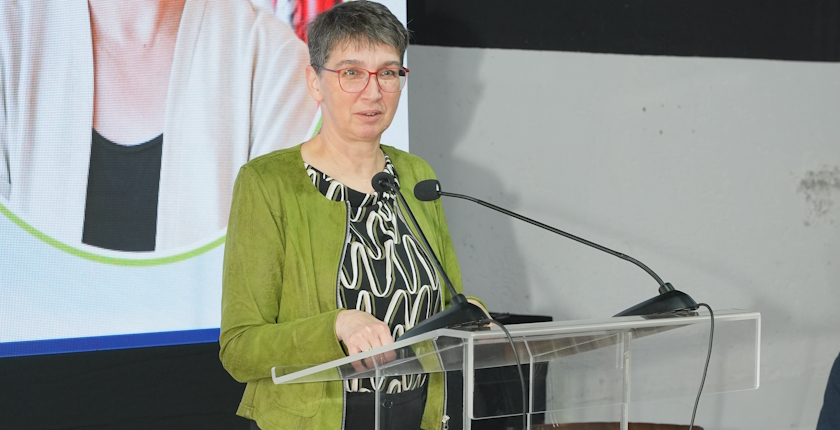
Anke Konrad, the German Ambassador to Serbia delivered a speech at the opening ceremony of the annual event of WISE Serbia network of women in sustainable energy, climate action and environmental protection (photo: Balkan Green Energy News)

What is the current landscape for German companies operating in Serbia’s energy sector? We have noticed a notable presence of technology firms compared to development companies, which raises questions about the level of interest from German investors in Serbia and the wider Western Balkan region. What factors might contribute to this observed reluctance among German investors?

German investors very much believe in Serbia, its business environment and its progress on the path towards the European Union. That is a major factor why over 900 companies with German capital are operating in Serbia.

Altogether, they account for 6% of Serbia’s GDP and provide employment to over 80,000 people. German companies in Serbia are here to stay.

Future investment decisions will depend on a wide variety of factors. Apart from global developments and trends, Serbia’s reform efforts, the efficiency of public institutions, transparency, rule of law and the fight against corruption are important factors when it comes to investment decisions. A predictable and fair investment environment and steady progress towards the EU offer the best prospects for growth and prosperity.

The ongoing efforts to decarbonise the energy sector and transform the economy towards greener and more climate-friendly solutions have been pivotal in the policies of both the European Union and the German government, which is an integral member of the EU. In light of the current economic stagnation and heightened security concerns that are impacting the budget, will Germany continue to uphold its commitment to this crucial agenda to the same extent?

The European Union aims to become climate-neutral by 2050. This binding goal is enshrined in the EU Climate Law and it is the basis for our commitment to reduce emissions and achieve climate targets. Germany will continue to lead by example. We want to demonstrate that ambitious emissions reductions go hand in hand with a strong economy. And we will continue to invest in climate action worldwide because decarbonization offers vast potential for innovation and economic development.

Here in the region, we have partnered with the Western Balkans to establish Germany’s first regional climate partnership in 2022. At the 2022 summit of the Berlin Process, Germany has pledged EUR 1.5 billion by 2030 to support the fight against climate change and the use of renewable energy in the region. Much of this support has already been commissioned.

Much of the EUR 1.5 billion in Germany’s support for climate action and renewable energy has been materialized

We see climate action not as a cost, but as a strategic investment in our future. It contributes to diversification of energy sources and helps with energy security and thus stability. It can have a positive impact on long-term economic competitiveness. Crucially, joint climate action protects our planet as a place where we can all continue to prosper.

Within the Regional Climate Partnership, we have a structured dialogue on carbon-pricing readiness, renewable energy deployment, power market integration and just transition. This long-term cooperation aims to help partners in the region to advance their energy and climate goals in line with EU standards, ensuring that the benefits of the energy transition reach citizens, communities, and businesses. For Germany, this is a long-term partnership grounded in shared values, shared goals, and an investment in a more secure and climate-resilient future considering the need for strong interconnectivity within Europe.

Anke Konrad, the German Ambassador to Serbia (photo: Balkan Green Energy News)

Germany is Europe’s solar and wind energy front-runner. What valuable insights can be gleaned from this experience that may be beneficial for Serbia in its pursuit of renewable energy advancements?

Germany’s experience shows that the energy transition is achievable when there is clear political will, a stable regulatory environment, and strong public participation. Success depends on combining large-scale renewable projects with opportunities for citizens and municipalities to invest and benefit directly.

Serbia has great potential to apply these insights, building on its natural resources, skilled engineers, and growing public interest in clean energy.

GIZ has been actively supporting WISE Serbia, a network dedicated to empowering women in the fields of sustainable energy, climate action, and environmental protection. In your opinion, does the energy sector provide equitable opportunities for both men and women in Serbia and globally? Also, would you advise girls and young women to pursue careers in those industries?

The energy sector is changing rapidly, and this transformation opens new doors for women to take leading roles in technology, management, and innovation. While there is still progress to be made, both in Serbia and globally, we already see many talented women engineers, researchers, and entrepreneurs shaping the transition to clean energy.

To give some perspective, change is already very visible at the university level, where around 40% of power engineering students at the University of Belgrade are women.

Initiatives such as WISE Serbia play a key role in giving visibility, confidence, and networks to women

We can look to role models in this field, such as this year’s recipient of the Female Leader in Sustainable Energy award, Ljiljana Velimirović. Initiatives such as WISE Serbia play a key role in giving visibility, confidence, and networks to women in this field, which still has great further potential.

My advice to girls and young women is clear: follow your curiosity and ambition, the energy transition needs your creativity and commitment just as much as it needs new technology.

by in News

Energy communities reduce power bills for members, improve electricity market

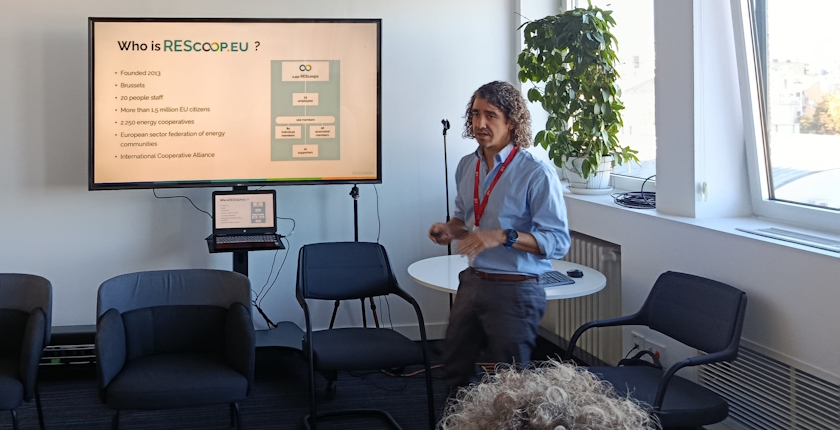
Citizen energy communities make the energy system greener and benefit society at a local level, Josh Roberts from European federation of energy communities REScoop said in his presentation, organized in Belgrade by Deutsche Gesellschaft für Internationale Zusammenarbeit (GIZ) GmbH. It is a form of association that also lowers costs for households, institutions and small firms and entrepreneurs, and contributes to the deployment of progressive technologies. Furthermore, it is a framework for democratic control.

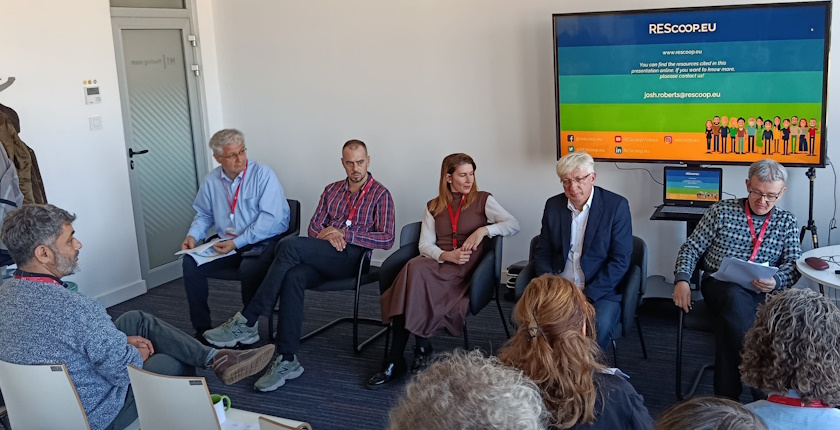
The event included developers from the emerging segment of energy communities and cooperatives in Serbia. They outlined the current initiatives and pointed to challenges regarding market entry, financing and policies.

The establishment and operation of energy communities is arranged through the European Union’s latest legislation, as well as in Serbia and other Western Balkan countries, but they are not a new concept. For instance, such entities still accounted for almost half of wind power output in Denmark in late 1990s, according to Senior Policy Advisor Josh Roberts from REScoop, the European federation of energy communities and cooperatives.

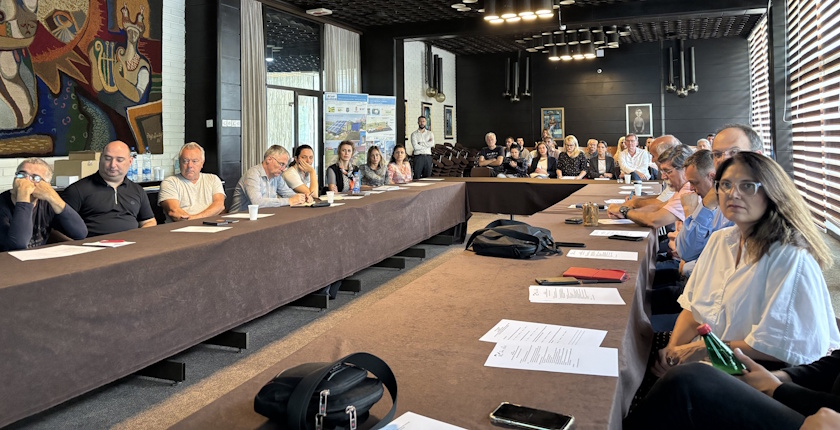
Speaking at a gathering that GIZ organized in Belgrade he pointed to the benefits for citizens, small firms and entrepreneurs and for institutions from setting up or joining energy communities. Initiatives in Serbia were also presented, and their progress in the same field, and the event included dialogue on the necessary technical solutions for connecting to the distribution grid.

Brussels-based REScoop was founded in 2013. In its membership are organizations from 22 European countries. They include Serbian energy cooperative Elektropionir. It gained the most ground regarding association and the implementation of projects.

One coal town has put up signpost for energy communities in Slovenia

Among other examples, Roberts highlighted Slovenia’s first energy community with a rooftop solar power plant for joint use. The facility is on the roof of an elementary school. The project involves aid for people living in energy poverty and it is free to join the group.

It is in the town of Hrastnik in a former coal industry area. The participants already lowered their power bills by 30%, and the gains will be even greater when they pay off the loan, Roberts said.

There are more than 1,600 energy communities in Austria

The representative of the REScoop federation stressed that municipalities in the Belgian region of Wallonia have succeeded in obtaining the right for citizens to participate in investments in green energy projects. It resulted in the foundation of a range of energy communities.

Roberts especially commended Austria’s legal framework with regard to enabling citizens to participate. The country hosts more than 1,600 energy communities.

Udruzivanje energetske zajednice smanjuje troskove trziste elektricne energije Dzos Roberts Josh REScoop GIZ

Energy community eases grid operator’s job

Energy communities are envisaged to return the invested funds to society at the local level. Subsidies are especially favorable for that, Roberts explained. Income is directed to education, infrastructure and aid against energy poverty.

The essence is that the community controls the distribution of the proceeds. In addition, grid operators can communicate more easily with one entity than with a hundred prosumers, Roberts underscored. Prosumers – or buyers-consumers, as they are formally called in Serbia, generate electricity for their own needs.

Pooling together enables providing services in the market, where energy communities can supply and store energy as well as conduct energy efficiency services, among other activities.

It means an entity of such type can ease the evening grid load, in moments of the highest demand, using energy from its batteries. That way, price peak shaving is achieved.

Registration process must be separate from defining activity

As for the procedure, Roberts said registration needs to be only for acknowledgement, rather than for approving specific activities.

“It’s about acknowledging the legal form and it’s about checking about how that legal form ensures compliance with the eligibility criteria. We have found very complex registration procedures. This does not work. It needs to be simple,” he stressed.

There are many activities that energy communities can undertake and they need to be able to enter them gradually, without complex procedures for licenses and permits

Conversely, in some jurisdictions there are simplified ways to get a supplier license. It enables an energy community to enter the activity gradually, instead of having to fulfill the requirements for all segments, even without having a comprehensive business model, the members or a business case, Roberts said.

He mentioned at the same time that one of the basic ideas is promoting inclusiveness.

“It’s already hard to set up an energy community, but it’s even harder to involve members who may have a hard time paying their bills, or have a lot less disposable income. So we found that the best models at the moment are for energy communities either to front the membership fees or for local authorities to pay for this upfront. And in energy sharing, we’re seeing more and more of energy donated to vulnerable households,” he stated.

Energy cooperatives helping improve rural areas from which people are leaving

Energy communities are giving people an opportunity for climate action and to contribute to their community, Roberts said. He added that such projects improve the area where they are conducted, stressing that it is especially important for rural areas from which many people are leaving.

A key point is that they enable participants to control their costs, production, consumption and energy sharing.

 The main challenge in Serbia is how to obtain a grid connection, alongside the matter of accessibility of incentives and loans

Importantly, energy communities are linked to the tradition of cooperatives, for which Serbia used to be known, but there is still much left to do around the legal framework.

There was word at the said gathering with representatives of institutions about the complexity of adjusting the electricity network to the production’s decentralization, as well as about the possibility to streamline the procedure for the establishment of energy communities and their operation.

Serbia is yet to address the accessibility of subsidies and financing, while currently the main issue is how to get grid connection approvals.

Energetsko zadrugarstvo smanjuje troskove trziste elektricne energije GIZ

Enterprise, association or cooperative

The speakers and other participants in the event agreed that the electricity market isn’t complete without energy communities, while that they modernize and democratize it.

When it comes to Serbian regulations, such legal entities have the right to conduct aggregation, but they need a license for it. Notably, aggregators have balancing responsibility, so they need to cover the deviations from the forecasted output.

Energy communities were introduced in the latest version of the Law on Energy. When they become regular in practice, the framework will need to be adjusted gradually to the situation. Citizens, firms and municipal authorities establish energy communities as enterprises, associations or cooperatives.

The bottom line is to enable citizens to take part in the clean energy transition and achieve local environmental, economic and social benefits, as opposed to prioritizing profits. It implies collective ownership, democratic control and reinvestment into the community with the goal of reducing energy poverty and promote energy independence.

The basic technical requirement for members is to have a smart electricity meter.

Elektropionir pioneering agrisolar in Serbia

The event’s organizers gathered the people who achieved the first steps in Serbia – from the Sunčani krovovi (Sunny Roofs) energy cooperative, created in 2019, to Platform for Energy Transition, which participated in uniting three residential buildings in Niš, which have a joint solar power plant and electric vehicle chargers. It is one of the first six prosumers in Serbia in the category of homeowner associations.

The Elektropionir energy cooperative managed through crowdfunding to install two cooperative-owned rooftop solar power systems on the territory of the City of Pirot, on the buildings of a local community council and a cultural center. As part of the Solarna Stara project, on Mt. Stara planina, the two villages receive the income from the sale of surplus electricity.

Srem is set to become the main region in Serbia for community energy

Next, the same organization built the first agrisolar power plant in Serbia. The 20 kV facility is at an organic farm, Organela, near the city of Valjevo.

Another recent undertaking is a rooftop photovoltaic unit on a school in the town of Ruma, envisaged to be the basis for an energy community. In the same area, Elektropionir is working on the installation of several prosumer power plants on house roofs and on aggregating them, inspired by the enthusiasm and the solar system of its member Nenad Maričić.

Owners and neighbors can jointly invest and they will be able to become an energy community and share energy among themselves.

Center for Sustainable Development to integrate string of energy systems of various technologies

Near Ruma, which is in the Srem (Syrmia) region, the City of Sremska Mitrovica and Regional Development Agency Srem have launched a major project. It is for the establishment of renewable energy communities (RECs), which are essentially a subset of citizen energy communities (CECs).

The local authority provided land for research and development. It is next to the regional waste landfill and a wastewater treatment plant. The plan is that the Center for Sustainable Development builds and integrates a string of energy systems.

They would include combined heat and power (CHP) production – cogeneration – from biomass, small wind turbines and a PV plant. The project also involves heat pumps and a storage facility assembled from old batteries.

There would be a facility running on biogas from the landfill within the center, and a magnet electric generator. Residents of the adjacent village of Jarak would be able to join the energy community.

Belgrade Energy Community is focused on equity, solidarity

Another group emerging in community energy is Belgrade Energy Community. It intends to apply a model of collective self-consumption in an urban area, with a focus on trust, equity and solidarity.

Its idea is to enable people to generate, share and use green energy. The plan is to map roofs and consumption and set up the first pilot installations.

According to the Belgrade Energy Community, it will donate 5% of the output to households affected by energy poverty. It consists of a cooperative, a civil society organization, two small enterprises, several prosumers and citizens.

by in News

Ljiljana Velimirović is the Female Leader in Sustainable Energy for 2025

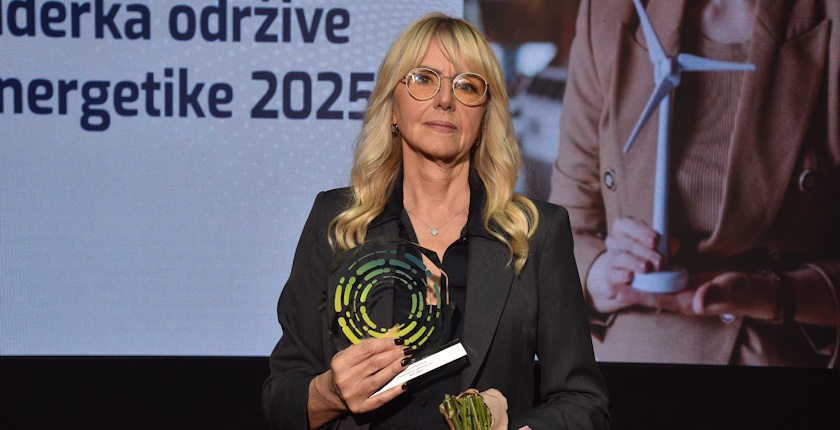
Ljiljana Velimirović, Project Manager 1, Investment Sector, Serbian state-owned power utility Elektroprivreda Srbije, received the Female Leader in Sustainable Energy 2025 award. The award recognizes outstanding results and dedication in advancing the energy sector in the Republic of Serbia.

At the annual event of WISE Serbia Women’s Network in sustainable energy, climate action, and environmental protection, Ljiljana Velimirović received the Female Leader in Sustainable Energy 2025 award. The announcement of the leader has been organized for the third consecutive year with the support of Deutsche Gesellschaft für Internationale Zusammenarbeit (GIZ) GmbH.

WISE Serbia has existed since 2018. It is one of the first networks of its kind in the world, with over 250 members currently.

The award competition featured 10 remarkable women whose leadership, exceptional achievements, and vision play a key role in the sustainable development of the sector, accelerating the energy transition, improving energy security and safety, and promoting greater recognition of women in the field.

During the public voting process, which was held from September 24 to October 10, a total of 2,842 votes were cast. Ljiljana Velimirović, a mechanical engineer with over 35 years of professional experience, received the highest number of votes. GIZ Project Director Till Barmeier presented the award.

Photo: GIZ Project Director Till Barmeier with the laureate Ljiljana Velimirović, Project Manager 1, Investment Sector, EPS

On receiving the award, Velimirović thanked the WISE network for its dedication and for promoting women in energy, as well as all her colleagues, whom she highlighted as her greatest support.

“I am very proud to have been chosen to represent Elektroprivreda Srbije in the Female Leader in Sustainable Energy of 2025 competition. It is an honor that, by leading projects to build desulfurization plants in our largest thermal power plants, I have contributed to the ecological modernization not only of EPS but of the entire Serbian energy sector,” Velimirović said.

The event was officially opened by Branislava Jovičić, co-founder of WISE Serbia, founder and editor of the Balkan Green Energy News portal, and director of the Belgrade Energy Forum conference, H.E. Anke Konrad, Ambassador of the Federal Republic of Germany to Belgrade, and Jovana Joksimović, Assistant Minister for International Cooperation, European Integration, and Project Management, Ministry of Mining and Energy.

Jovičić: WISE network has built a strong community of women over eight years

In her speech, Branislava Jovičić emphasized that over seven years, WISE Serbia has built a strong community of 250 professionals whose knowledge, experience, and vision contribute to the development of sustainable energy and climate policy in Serbia.

Thanks to the support of international partners and the dedication of its members, the network has conducted two major studies on the role of women in energy, launched a mentoring program connecting different generations of professionals, and become an important platform for knowledge exchange, inspiration, and joint initiatives.

Photo: Branislava Jovičić, co-founder of WISE Serbia, founder and editor of the Balkan Green Energy News portal, and director of the Belgrade Energy Forum conference

“Today, when dark clouds of geopolitical turmoil and denial of climate reality hang over the world, I dare say that the fight for sustainability, climate, and peace is a task that each of us must embrace, regardless of our profession. This is our generational mission. Our responsibility to ourselves and future generations,” Jovičić said.

Konrad: Women Remain Undervalued Drivers of Change

Sustainable strengthening of energy supply is important in Serbia, Germany, and around the world, emphasized German Ambassador Anke Konrad in her speech.

“The energy transition requires organizations that symbolize this transition. Therefore, I thank the Center for the Promotion of Sustainable Development through the WISE Serbia project for their engagement over the past years, which the German Federal Government has supported through GIZ for many years.”

Photo: H. E. Anke Konrad, Ambassador of the Federal Republic of Germany in Serbia

Konrad highlighted that people are the most important factor in the energy transition and reminded that women remain undervalued drivers of change.

Konrad: The Female Leader in Sustainable Energy award shows what can be achieved when leadership, innovation, and social responsibility go hand in hand

“The WISE project has evolved into a unique platform, a space where professionals build networks, share knowledge, mentor young talents, and create visible role models. The Female Leader in Sustainable Energy award shows what can be achieved when leadership, innovative strength, and social responsibility go hand in hand,” she concluded.

Jovana Joksimović, at the opening, noted that she has been a member of WISE Serbia since its foundation, highlighting the importance of unity and support among women in the energy sector.

Emphasizing that the green transition is not only about meeting international obligations, Joksimović reminded that the plan is for every second megawatt produced by 2030 to come from renewable sources, leading to a cleaner and healthier environment for current and future generations.

Jovana Joksimović, Assistant Minister for International Cooperation, European Integration, and Project Management, Ministry of Mining and Energy

Citing data from the International Renewable Energy Agency (IRENA), Joksimović pointed out that women make up 32% of employees in the global renewable energy sector, but their share is still below the global average of 45.9% of women in the overall economy.

“Every percentage point of women’s participation reminds us how much more progress can be made, and how much we have already achieved. I am proud of every one of us who is part of the energy transition—in wind farms, solar power plants, banking, engineering, management, innovation, education, and law.”

Photo: WISE Serbia women’s network and nominees for Female Leader in Sustainable Energy 2025 award

Women’s Leadership in Times of Geopolitical Challenges – Excellence, Achievements, and a Sustainable Vision

After the award ceremony, a panel discussion was held under the title “Women’s Leadership in Times of Geopolitical Challenges – Excellence, Achievements, and a Sustainable Vision.” The panel was moderated by Maja Turković, Executive Vice President of CWP Europe and recipient of the Female Leader in Sustainable Energy award in 2023.

Photo: Panel discussion “Women’s Leadership in Times of Geopolitical Challenges – Excellence, Achievements, and a Sustainable Vision”

Panel participants included Svetlana Cerović, Director of the Specialized Financing Department at UniCredit Bank Serbia and last year’s Female Leader in Sustainable Energy 2025 award; Marija Rošulj, Credit Risk and ESG Specialist at ProCredit Bank and participant in the WISE mentoring program; Jasmina Grbović Novaković, Director of the Center for Excellence in Hydrogen and Renewable Energy at the Vinča Institute of Nuclear Sciences; and Amalija Pavić, Deputy Executive Director at AmCham Serbia.

The panelists shared their experiences on the role of women in shaping the energy transition in a complex geopolitical environment, emphasizing the importance of collaboration and leadership based on knowledge and sustainability values.

by in News

Dušan Jerković Primary School in Ruma – first prosumer school in Serbia’s Srem district

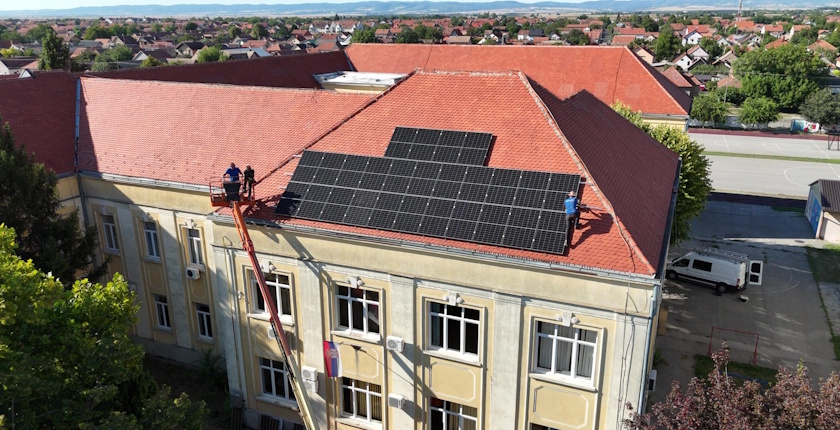
The Dušan Jerković Primary School in Ruma is the first school in the Srem (Syrmia) region, in Serbia’s north, with a solar power plant installed on its roof, and it is in the process of obtaining the prosumer status. The project was implemented in cooperation with the Elektropionir energy cooperative and funded by German Development Cooperation. The Deutsche Gesellschaft für Internationale Zusammenarbeit (GIZ) GmbH implemented the endeavor.

Although the number of prosumers in Serbia is growing, it still remains relatively small compared to the vast potential of rooftops and the abundance of sunshine that the country enjoys. According to recent data from electricity distribution system operator Elektrodistribucija Srbije (EDS), there were 5,310 registered prosumers, formally called buyers-producers.

Their total installed capacity was over 113 MW. Most were households (3,848), followed by legal entities (1,457), while the number of residential communities producing their own energy remains very small, only five.

A few years ago, upon an assessment of rooftop areas in Serbia suitable for solar panel installation, the surface was estimated at as much as 600 square kilometers. Installing solar panels on just 10% would translate to 6 GW of solar power capacity.

On a bright note, awareness of renewable energy sources and their importance is steadily increasing, as shown by the growing number of institutions — including kindergartens, primary and secondary schools — choosing to take steps toward energy independence and become prosumers. One such example is in the Syrmia area, locally called Srem, and specifically in Ruma, where the Dušan Jerković Primary School recently became the proud owner of a rooftop solar power plant. The town is located west of Belgrade.

[wpcc-iframe title=”Solarna elektrana na krovu škole Dušan Jerković u Rumi prva škola prozjumer u Sremu” width=”500″ height=”281″ src=”https://www.youtube.com/embed/9w4_aGTyiEU?feature=oembed” frameborder=”0″ allow=”accelerometer; autoplay; clipboard-write; encrypted-media; gyroscope; picture-in-picture; web-share” referrerpolicy=”strict-origin-when-cross-origin” allowfullscreen=””]

According to school principal Ivana Milojević, the idea was born in September 2024, when representatives of the energy cooperative Elektropionir first visited the school and proposed a partnership.

Elektropionir organized a series of lectures and workshops for students, parents, and school staff

Before the solar installation began, Elektropionir organized a series of lectures and workshops for students, parents, and school staff, focusing on renewable energy sources and the benefits of installing solar panels. The proposal to set up a photovoltaic system on the school’s roof was enthusiastically supported by both the school administration and the Municipality of Ruma, which owns the building.

Foto: Elektropionir

The power plant will significantly reduce the school’s electricity bill

The German Development Cooperation fully funded the installation of a 10 kW solar power plant in a project implemented by GIZ. The system was completed in late August, and the process of obtaining the prosumer status from DSO Elektrodistribucija Srbije (EDS) is underway.

It means that the generated electricity will be used to cover the building’s energy needs, and any surplus will be delivered to the grid, while the school will be able to utilize the excess energy later, when its consumption exceeds production.

“I am very proud that the Dušan Jerković Primary School is the first school in Srem to have a solar power plant. Our school, known for its yellow color, has now got a touch of green, symbolizing our commitment to protecting nature and raising environmental awareness among our students and fellow townspeople. We sincerely thank GIZ and the Elektropionir energy cooperative for their effort, work, and financial support in materializing a wonderful idea,” principal Ivana Milojević said.

The new solar plant will significantly reduce the school’s electricity bills, allowing it to use the savings for other improvements — such as upgrading classrooms or purchasing teaching materials to enhance the learning process.

by in News

WISE Serbia Annual Women’s Network Event – October 16 in Belgrade

The Center for the Promotion of Sustainable Development and Deutsche Gesellschaft für Internationale Zusammenarbeit (GIZ) GmbH are organizing the annual WISE Serbia Women’s Network event, which will take place on October 16 at Fabrika Events in Belgrade.

The WISE Serbia Women’s Network in sustainable energy, climate action, and environmental protection has been in existence since 2018 and is one of the first networks of its kind worldwide. WISE Serbia brings together over 250 female experts from the energy sector and related fields, promoting their role in the energy transition, as well as in the democratization and decentralization of the energy sector. The network is recognized as a platform that connects knowledge, experience, and vision of women shaping a sustainable energy and climate future in Serbia.

Registration is open until October 10 or until places are filled via this LINK. The program begins at 4:30 PM at Fabrika Events, Poenkareova 32, Belgrade. Participation in the event is free of charge.

This year, 10 outstanding women have been nominated for the Female Leader in Sustainable Energy 2025 award. Voting is open until October 10 on the WISE Serbia website. Take the opportunity to support the woman you believe deserves the title of leader in sustainable energy.

“This is the third edition of the Female Leader in Sustainable Energy award. Year after year, we celebrate exceptional women professionally engaged in the energy sector, climate action, and environmental protection. Each nominee could rightfully earn the title of leader. Their biographies and professional achievements speak for themselves. They are recognized in their teams as women who drive change and serve as inspiration and motivation for all of us to continue building a sustainable present and future,” emphasized Branislava Jovičić, cofounder of the WISE Serbia Women’s Network.

Photo: Branislava Jovičić, co-founder of the WISE Serbia women’s network, and Svetlana Cervovic, last year’s winner of the Female Leader in Sustainable Energy award.

The event will be officially opened by H.E. Anke Konrad, Ambassador of the Federal Republic of Germany, and Jovana Joksimović, Assistant Minister for International Cooperation, European Integration, and Project Management at the Ministry of Mining and Energy.

The program will continue with a panel discussion moderated by Maja Turković, Executive Vice President at CWP Europe and the 2023 Leader in Sustainable Energy awardee.

Following the panel discussion, the finalists for the Leader in Sustainable Energy award will be announced, followed by the winner’s presentation and the ceremonial award presentation.

The media sponsor of the event is Balkan Green Energy News.

by in News

Green solutions in practice: Roundtable in Knjaževac points the way to a sustainable, energy-efficient future

A roundtable titled Green Solutions in Practice, held in the eastern Serbian town of Knjaževac, brought together local government officials, experts, rural tourism providers, entrepreneurs, and citizens to exchange experiences on renewable energy sources and energy efficiency.

The event was organized by the Regional Development Agency of Eastern Serbia (RARIS) as part of the Promotion of Renewable Energy Sources and Energy Efficiency in Eastern Serbia project, implemented by German Cooperation in Serbia GIZ. The gathering demonstrated that eastern Serbia is becoming an increasingly active player in implementing green solutions and strengthening energy sustainability.

The roundtable Green Solutions in Practice was opened by Saša Petrović, Deputy Mayor of Knjaževac, who highlighted the importance of the green transition for promoting rural development and improving the quality of life.

Daniela Kostadinova, a representative of GIZ, presented the organization’s contribution to achieving energy sustainability in Serbia. She said that the project’s results so far have been highly significant, but added that she believes further development and awareness-raising are still necessary.

Photo: RARIS

Kostadinova also stressed the importance of financial support for citizens to implement energy efficiency measures, and she pointed out that energy poverty should be the next priority to address. She expressed hope that some ideas would be realized by the end of the Promotion of Renewable Energy Sources and Energy Efficiency in Serbia project, which runs until December.

Expressing her satisfaction at the opportunity to visit partner municipalities, Kostadinova noted that GIZ strives to provide both advice and support to its partners in the implementation of projects. She added that long-term success is extremely important to GIZ, which seeks to maintain its reputation as a high-quality and reliable partner.

Empowering eastern Serbia through renewable energy

Vladan Jeremić, Director of RARIS, presented the results of the Promotion of Renewable Energy Sources and Energy Efficiency in Eastern Serbia project. Four key results have been achieved: establishing a regional platform for renewable energy and energy efficiency in Eastern Serbia as a mechanism for aligning the positions, interests, and policies of key local and regional stakeholders; strengthening regional capacities; opening the Energy Advisory Center; and raising public awareness about the importance of renewable energy sources and energy efficiency.

Jeremić: People are eager to learn about renewable energy sources and energy efficiency

As a result of the regional platform’s work, the first renewable energy and energy efficiency fair was held in Zaječar. Numerous workshops and training sessions have been organized, and a guide on applying renewable energy and energy efficiency in rural tourism has been produced.

According to Jeremić, the project has shown that people are eager to acquire the knowledge they need to improve their lives in practice, making them more cost-effective, affordable, and sustainable, while also contributing to the energy transition.

“At the initiative of citizens, although it wasn’t planned within the project, we organized the fair. Even though we didn’t have an appropriate exhibition space, and despite the demanding nature of such events, we worked with great enthusiasm. The fair brought together technicians, engineers, and representatives of local governments and the private sector, many of whom are here today, which we see as a strong indicator of our success,” he said.

Managing energy efficiently in rural tourism

As part of the project, an interesting guide has been prepared for owners of rural tourism households, offering practical tips for improving energy efficiency, reducing costs, and introducing sustainable solutions into their business.

Ivan Svetozarević, the author of the guide and owner of a rural tourism household called Gorski konak in the village of Zubetinac, presented the guide through an engaging presentation filled with personal examples. The presentation addressed the question of how to manage energy efficiently in rural tourism. Situated on the slopes of Stara Planina, Gorski konak stands out as a model of sustainability.

Photo: Ivan Svetozarević / RARIS

The Svetozarević family equipped the household with solar panels, solar collectors for water heating, and a heat pump. Guests can use electric bicycles to reduce car use and emissions. Cooperation with neighbors and local producers further enhances the sustainability of the entire complex.

“My wife and I have been in this for over 20 years, but only a few years ago did we have the opportunity to install solar panels and a heat pump. Sustainability is actually our way of life,” said Svetozarević.

Multidisciplinary approach as a key to communication

Maja Lalić, Creative Director of the Mikser Festival, emphasized the importance of communication in promoting sustainable practices and raising public awareness about renewable energy sources and energy efficiency.

“The Mikser Festival is a partner of GIZ in popularizing these topics, seeking to involve the culture and creative industries sector, which has so far been rarely represented in discussions on renewable energy and energy efficiency. As a multidisciplinary platform, Mikser brings together numerous actors from different fields and engages in citizen education to bring these important topics closer to a wider audience,” she said.

For years, the organization has been staging events in revitalized abandoned industrial facilities as part of circular economy measures, applying various sustainable practices, such as issuing e-tickets, using reusable cups, and avoiding PVC branding.

Photo: RARIS

In cooperation with GIZ, this year’s edition of the festival developed an interactive educational program to increase energy literacy among three target groups: architecture and design professionals, young people, and the general population. The program included a panel discussion titled New Citizen Energy, where experts and prosumers dispelled myths about energy, shared experiences, and presented local challenges and solutions.

A special focus was placed on youth and children through workshops, empowering them to become agents of community change and develop creative ways to raise energy awareness and sustainable habits.

Mikser as a communicator and a dissemination platform

Maja Lalić highlighted the importance of decentralization, noting that successful initiatives from different parts of Serbia are encouraging, though they often remain less known to the wider public.

“Mikser positions itself as a communicator and a platform for disseminating success stories, giving people and communities space to share their experiences and inspire others. It is precisely this openness that makes the festival a dynamic place of meeting and exchange, supporting the further development of sustainability,” she said.

Examples of good practice

The application of renewable energy sources and energy efficiency measures goes far beyond installing solar panels or replacing windows, as demonstrated by various innovative examples of good practice.

Ilija Stevanović from the Mihajlo Pupin Institute presented innovative solutions developed in cooperation with farmers, schools, and festivals. As a special example, he cited the “digitalized field” implemented in collaboration with farmer Nikola Lončar from Belegiš and the smart device Mobisan – a mobile solar power generator.

Mobisan combines soil sensors, a weather station, and wireless communication to collect data on microclimate and soil conditions, enabling automated irrigation and fertilization. The device is controlled remotely and powered by solar panels, saving resources and reducing the use of chemicals.

Ognjen Tomašević from the Exit Foundation presented the “Green Exit” initiative and plans to improve the energy efficiency of one of the region’s largest events.

Innovative solutions are contributing to the festival’s energy efficiency

In addition to recycling, which has been a focus of the Exit Festival’s activities for five years, a “solar guitar” and gramophone-shaped solar collectors have been developed in cooperation with the Mihajlo Pupin Institute. These two devices provide electricity and hot water to Exit camp users, aiming to improve its energy efficiency.

Photo: Solar guitar / Mihajlo Pupin Institute

Aleksandar Branković, the owner of one of the first home solar power plants in eastern Serbia, presented his 6.7-kilowatt system installed back in 2013, making it one of the first in Serbia.

Vladan Dragićević, energy manager at the Municipality of Knjaževac, presented the achievements of the Energy Advisory Center. “The Energy Advisory Center is not just a place – it is a network of trust, a space where knowledge turns into savings and the energy transition into an opportunity for all,” he emphasized.

More than 70 citizens have received support at the Energy Advisory Center

The center provides relevant information and advice enabling citizens and businesses to use energy more efficiently, reduce costs, and even generate additional income. To date, more than 70 citizens have received advisory support.

The center is open for both individual consultations and group discussions on various topics, and it offers all necessary advice related to energy efficiency.

by in News

September 15 – new deadline for applications for 2025 Female Leader in Sustainable Energy

WISE Serbia, women’s network in sustainable energy, climate action, and environment, under the auspices of the German development cooperation GIZ, has extended the deadline for applications within the 2025 Female Leader in Sustainable Energy award. The new application deadline is September 15.

The call for nominations aims to recognize women who, through their leadership, outstanding achievements, and vision, have demonstrated significant contributions to the sustainable development of Serbia’s energy and related sectors, energy transition acceleration, improvement of energy efficiency, energy security, and safety, as well as the greater recognition of women in this field.

Information about the Award competition

Women professionally engaged in the energy sector, climate action, or environmental protection in Serbia are eligible to apply, both citizens of Serbia and foreign nationals working in Serbia. The candidates themselves can submit applications, as well as their employers, colleagues, or teams who wish to highlight the outstanding achievements of their associates.

The invitation is open to all profiles – decision-makers, employees in business, public enterprises, academia, civic energy, non-governmental sector, international organizations, consulting teams, legal and financial institutions, IT experts, as well as media representatives.

The application needs to be emailed by September 15, 2025, to [email protected]. It needs to include:

  1. Nomination letter presenting the candidate and listing the significant results and achievements nominating her for the selection.
  2. Professional résumé.
  3. A short nomination statement to present to the wider public on the WISE Serbia website and social media platforms. The statement should be up to 100 words.
  4. Photo portrait in high resolution.
  5. Contact info – email address, phone number, social network accounts that the candidate is actively using.

Applications should be sent by email to [email protected].

After processing the submitted applications, the candidates’ profiles will be published on the WISE Serbia network website – wisesrbija.org, and the voting will be open to the public. The candidate with the highest number of votes will be awarded the title of Female Leader in Sustainable Energy.

The announcement ceremony for the Leader in Sustainable Energy 2025 will take place during the WISE Serbia women’s network annual conference in mid-October in Belgrade.

by in News

Applications for 2025 Female Leader in Sustainable Energy Award in Serbia opened

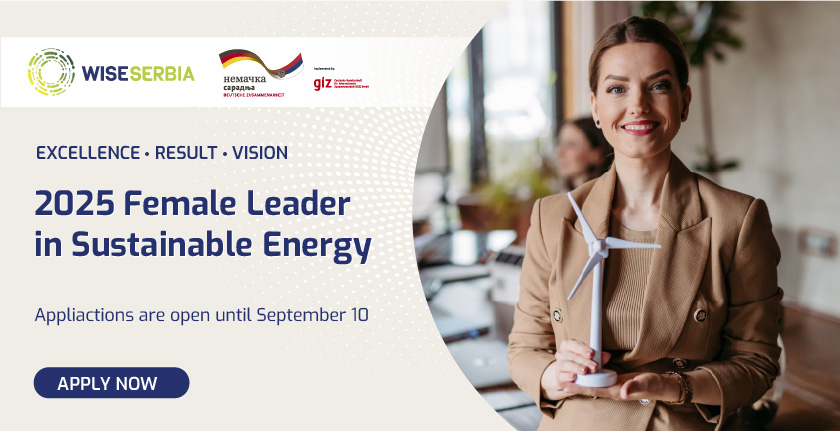
WISE Serbia, the Network of Women in Sustainable Energy, Climate Action, and Environment, under the auspices of the German development cooperation GIZ, announces the call for nominations for the 2025 Female Leader in Sustainable Energy Award. The call is intended for women who are professionally engaged in the energy and related sectors in the Republic of Serbia and who have demonstrated outstanding results in their careers. Application process is open until September 10.

The call for nominations for the 2025 Female Leader in Sustainable Energy Award aims to recognize women who, through their leadership, outstanding achievements, and vision, have demonstrated significant contribution to the sustainable development of the Serbia’s energy and related sectors, energy transition acceleration, improvement of energy efficiency, energy security, and safety, as well as the greater recognition of women in this field.

The Female Leader in Sustainable Energy award was established in 2023 by the Center for the Promotion of Sustainable Development, the founder of the WISE Serbia women’s network, under the auspices of the German development cooperation GIZ. The WISE Serbia network was established in 2018 and is among the first of its kind globally.

The recipient for the previous year, was Svetlana Cerović, Director of Specialized Financing at UniCredit Bank Serbia

The title of the Female Leader of Sustainable Energy has been awarded to several notable individuals. For 2023, the recipients are Dubravka Đedović Handanović, Minister of Mining and Energy in the Government of the Republic of Serbia; Maja Turković, Executive Vice President at CWP Global; and Ana Džokić, co-founder of the energy cooperative Elektropionir. The recipient for the previous year, 2024, was Svetlana Cerović, Director of Specialized Financing at UniCredit Bank Serbia.

Photo: GIZ’s Project Director Till Barmeier with the laureate, Svetlana Cerović from UniCredit Bank Serbia

“The Female Leader in Sustainable Energy Award is an opportunity to learn more about the achievements, initiatives, and enthusiasm of women who push boundaries through their engagement and contribution to sustainable energy. It is also an exceptional opportunity for networking and exchanging knowledge and experiences within the WISE initiative and beyond,” said Cerović.

Last year’s award winner invited all interested women to take part in this year’s award process and emphasized that she looks forward to future cooperation and joint initiatives.

Information about the Award competition

Women professionally engaged in the energy sector, climate action, or environmental protection in Serbia are eligible to apply, both citizens of Serbia and foreign nationals working in Serbia. The candidates themselves can submit applications, as well as their employers, colleagues, or teams who wish to highlight the outstanding achievements of their associates.

The pannel discussion at 2024 annual event of the WISE Serbia women’s network : pictured from left: Maja Turković, Ankica Babulov, Dušan Macura, Ana Džokić

The call is open to all profiles – decision-makers, employees in business, public enterprises, academia, civic energy, non-governmental sector, international organizations, consulting teams, legal and financial institutions, IT experts, as well as media representatives.

The call is open from August 25 to September 10.

The call for nominations for the Leader of Sustainable Energy is open from August 25 to September 10, 2025. The application needs to be emailed by September 10, 2025, to [email protected]. It needs to include:

  1. Nomination letter presenting the candidate and listing the significant results and achievements, nominating her for the selection.
  2. Professional résumé.
  3. A short nomination statement to present the shortlisted candidate to the wider public (on the WISE Serbia website and social media platforms). The statement should be up to 100 words.
  4. Photo portrait in high resolution.
  5. Contact info – email address, phone number, social network accounts that the candidate is actively using.

Applications should be sent by email to [email protected].

After processing the submitted applications, the candidates’ profiles will be published on the WISE Serbia Network website – wisesrbija.org, and the voting will be open to the public. The candidate with the highest number of votes will be awarded the title of Leader in Sustainable Energy.

The announcement ceremony for the Leader in Sustainable Energy 2025 will take place during the WISE Serbia Women’s Network annual conference in mid-October in Belgrade.

  • 1
  • 2