by in News

ENNA measures even higher temperatures at its Zagocha geothermal well

ENNA Geo completed additional production testing of the well at the site of the planned geothermal power plant GTE Zagocha in northeastern Croatia. It found even higher temperatures at the reservoir than before. In addition, drilling of the exploratory well Babina Greda GT-1 for another geothermal power plant began this week.

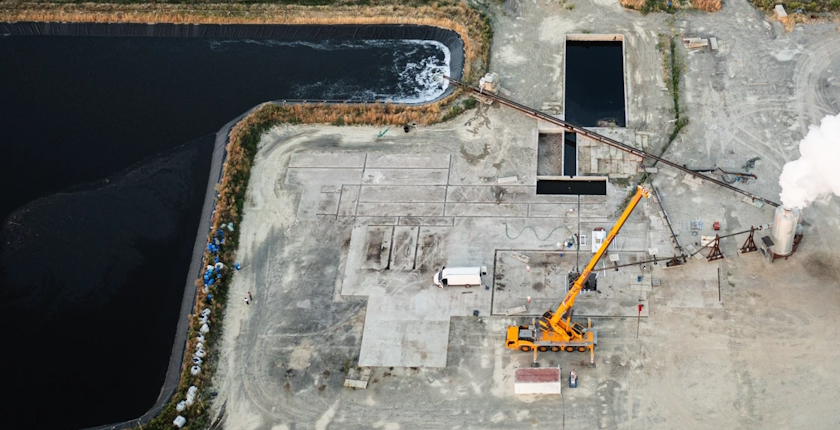
ENNA Geo, a member of the ENNA Group, said the additional production testing in Čađavica near Slatina was successful. It is the well for its planned 20 MW geothermal power plant GTE Zagocha. Furthermore, so-called rigless testing at the site, in northeastern Croatia, was carried out earlier this month on the well called Podravska Slatina GT-6beta (PSGT-6beta), said GTE Zagocha’s Project Manager Boris Vidoš.

The primary objective was to collect water samples from the geothermal reservoir at a depth of 4,582 metres and to measure additional production parameters essential for the development of the power plant project.

“Two downhole samples of geothermal water were collected under dynamic conditions, along with several surface samples of water and gas, which have been sent for detailed analysis to several internationally recognised geothermal laboratories (New Zealand, France, Turkey and Croatia). We are particularly pleased that the geothermal reservoir itself, only a few months after completion of the well, is showing higher measured temperature values both at reservoir level (well bottom) and at the surface,” he asserted.

Slatina 2 field’s significant potential confirmed

A maximum temperature of 211 degrees Celsius was recorded at the bottom of the PSGT-6beta well, versus 180 degrees at the surface, Vidoš said.

He explained that all downhole and surface flow measurements, geochemical analyses of water, and gas analyses would provide a broader picture of the geothermal potential of the Slatina 2 field, enabling the ENNA Geo team to begin concrete discussions with suppliers of the process equipment for the geothermal power plant.

The drilling of the well was completed in March, followed by initial production testing, which confirmed the significant geothermal potential of the Slatina 2 field. The additional rigless testing – planned petroleum engineering operations – was successfully carried out, Vidoš added.

Waiting for market premium tender for almost two years

Croatia has considerable geothermal potential, but currently not a single operational geothermal power plant. Namely, the Velika 1 facility in Ciglena near Bjelovar has been long offline due to an ownership dispute.

GTE Zagocha is the most advanced geothermal power plant project in Croatia to date. It depends on the launch of a public tender for the allocation of a market premium.

ENNA Group noted that Germany subsidizes geothermal power plants over a 20-year period with a guaranteed price of EUR 252 per MWh, and that Italy offers a guaranteed price of EUR 200 per MWh over 25 years.

The Zagocha project has been prepared for a public call since November 2023, but the Croatian Energy Market Operator (HROTE) has not issued a public call for three years, the company said in its update.

Drilling starts at Babina Greda 2 field for 15 MW geothermal power plant

ENNA Geo, through the project company Geo Power Babina Greda, is also developing a geothermal power plant project in Babina Greda in Croatia’s northeast, planning 15 MW. On the geothermal exploration field Babina Greda 2, drilling of the exploratory well Babina Greda GT-1 (BaGGT-1) began this week.

The plan is to drill the deep geothermal well Babina Greda 1 and conduct production testing over the next 110 days. Additionally, the company revealed it expects surface flow of 110 liters per second of geothermal water of 170 degrees Celsius.

ENNA Solar agreed in April to take over an 87.5 MW ready-to-build photovoltaic project in Romania from Austria-based Kraftfeld Energy.
by in News

Dozens of airports in Southeastern Europe invest in solar power, energy efficiency

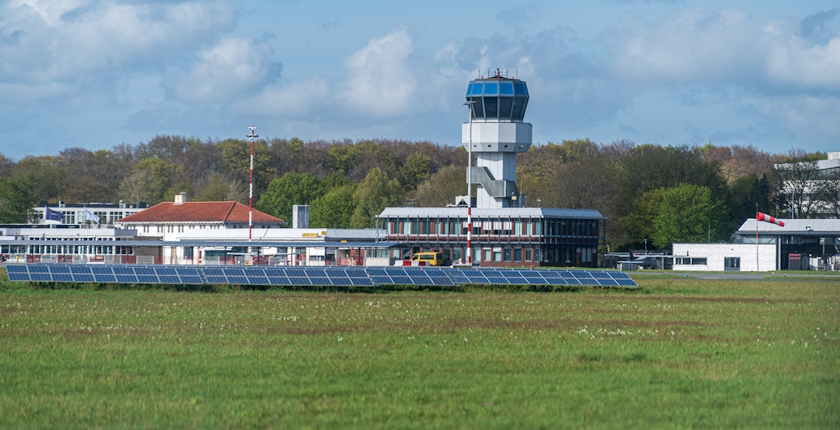
Airports in Istanbul and Athens are becoming completely self-reliant with their large solar power projects. Many other airports in Southeastern Europe are investing in photovoltaics as well. Together with energy efficiency, electric mobility and waste and wastewater management projects, they aim to decarbonize their operations and reduce their environmental impact.

Surfaces around infrastructure such as railways and motorways are convenient for solar power as there are few alternatives for their use and the technology can directly provide them with electricity. Airports, too, have embraced the global trend of introducing photovoltaics and electrifying operations, and Southeastern Europe is no exception, with several notable investments.

The largest ones in Istanbul and Athens are about to switch 100% to solar power, which would make them some of the first in the world. In addition, airports in the region are increasing energy efficiency and rolling out electric vehicle fleets. They are introducing resource, waste and wastewater management systems to decarbonize their operations and reduce their environmental impact.

Airport operator in Albania expanding to solar power market

In other recent news, the operator of Kukës International Airport Zayed in Albania’s northeast is in the process of obtaining a license to generate and trade electricity. Namely, the company, Global Technical Mechanics, received a concession five months ago in consortium with local construction firm Bami to build and operate a 12 MW solar power plant.

The location at the village of Shtiqen is in the municipality of Kukës. The airport, built with investments by Emaar Properties from the United Arab Emirates, was inaugurated in 2021. However, it ceased operations in the meantime as Wizz Air withdrew from the facility.

The entire Vlora International Airport, which is under construction, will be covered with solar panels, Albanian officials said earlier. The PV project is for 5.2 MW. A consortium led by Swiss-based Mabco Constructions is building and financing the construction. The firm is part of Mabetex Group, controlled by Behgjet Pacolli, Kosovar businessman and former president, deputy prime minister and foreign minister.

Zagreb Airport starts with small PV unit

Zagreb Airport, which installed a 250 kW photovoltaic unit this year, said it plans to expand it soon. In addition, it switched to 100% renewable energy supply.

Like other airports in the region, the main one in Croatia replaced conventional, halogen lighting with LED. The operator has committed to cutting its emissions in accordance with the recommendations from the Intergovernmental Panel on Climate Change (IPCC).

Zagreb Airport is renovating its buildings and increasingly using solar energy for heating water. Interestingly, it plans to switch from diesel-fueled generators to hydrogen-ready systems.

Athens to integrate strong battery with its arrays

Athens International Airport Eleftherios Venizelos commissioned an 8.05 MW solar park in 2011, followed by another one in 2023, with 15.8 MW in peak capacity.

This year two more units with a combined peak capacity of 35.5 MW are coming online, together with a battery energy storage system (BESS) of 82 MWh.

The operator of Turkey’s largest airport is completing a photovoltaic park of nearly 200 MW and aiming to cover almost all its energy needs from renewable sources by the end of the decade

IGA Istanbul Airport reported that its greenhouse gas emissions in 2024 were 10.5% lower than its goal. Moreover, its operator increased its 2030 renewable energy target from 50% to 90%.

Namely, it expects its Eskişehir solar farm of a whopping 199.3 MW to begin operations before the end of the year. The location spans 300 hectares and the investment amounts to EUR 212 million. The PV park will generate an estimated 340 GWh per year.

Dalaman Airport hosts world’s largest rooftop solar power plant among airport terminals

Several other airports in Turkey are also decarbonizing their electricity systems. TAV Airports Holding (TAV Havalimanları Holding), part of Groupe ADP, completed a solar power plant 6.7 MW in peak capacity at its Milas-Bodrum Airport in the country’s southwest. Within the same project for setting up PV systems at parking areas, the Izmir Adnan Menderes Airport is getting a 5.9 MW unit.

The Izmir Adnan Menderes Airport is getting a 5.9 MW solar power system at parking areas

Dalaman Airport, near Bodrum, operates a solar power plant of 8.3 MW in peak capacity. It is the world’s largest on the roof of an airport terminal building.

The facility now covers more than 55% of its consumption from solar energy. The investment was worth EUR 5.4 million. The operator, YDA Airport Investment and Management, has vowed to reach 100% in phase two. The airport has completely switched to electric vehicles.

In 2023, airports Milas-Bodrum, Gaziantep, Erzurum and Ordu-Giresun all commissioned smaller PV systems.

Romanian operators leaning on EU funds

Iași International Airport is about to expand its 1 MW solar power plant, installed in 2023. It was the first in Romania in the sector. The management intends to add 5 MW and a 2 MW energy storage unit.

The investment will reportedly be supported with a grant from the European Union’s Modernisation Fund. The hybrid power plant is supposed to cover a fifth of the electricity consumption of the facility in Romania’s far northeast.

Maramureş International Airport (AIM) is also seeking funding, for a system of 2.6 MW in peak capacity on parking canopies. It would include battery storage.

The PV unit would feature 25 inverters of 100 kW each. The project, worth EUR 12.1 million, should be complete by the end of next year, the management said. The facility is in Romania’s northwest, near the border with Ukraine and Hungary.

Cluj International Airport Avram Iancu said in December that it would install a PV system with batteries. It claimed it would make it energy independent in 2026. According to the facility’s website, the solar power project is for 2 MW.

Bacau International Airport George Enescu is another one that applied for funds. The management envisages a 1.25 MW solar power unit and a BESS of 2.1 MWh in capacity, to fully cover electricity consumption.

Sibiu International Airport is developing a project for a ground-mounted unit of 1.7 MW in peak capacity. The site is two kilometers from the terminal.

The management is expecting to cover the costs mainly with a grant via the Modernisation Fund. It said the PV park would be completed within a year and a half and suggested that it would introduce electric cars and buses and charging stations.

Notably, National Company Bucharest Airports (CNAB) has a geotermal energy project.

Hermes Airports equipped its two facilities with PV systems in 2023

Hermes Airports commissioned two solar power plants in Cyprus two years ago. The unit at Larnaka International Airport has 3.5 MW in peak capacity and the one at Pafos International Airport has 1.1 MW. They cover 25% and 30%, respectively, of the facilities’ electricity needs.

Belgrade Nikola Tesla Airport in Serbia commissioned a PV system of 1 MW in peak capacity in 2022. The facility’s concessionaire, Vinci Airports, has also set up solar-powered LED lighting.

International airports in Sarajevo and Tuzla in Bosnia and Herzegovina unveiled plans for PV systems a few years ago.

by in News

Slovenia awards first concession for geothermal exploration

The Government of Slovenia has awarded a concession for geothermal exploration in the municipality of Lendava to Verde Energy. Slovenia doesn’t yet use geothermal energy for electricity production.

It is the first concession awarded for geothermal energy, marking an important step toward decarbonizing the Pomurje region, according to the Government of Slovenia.

Lendava is also the site of an innovative project for the use of geothermal energy in Slovenia. It is being implemented by Slovenian companies Dravske Elektrarne Maribor (DEM), Petrol, and Nafta Lendava.

The government said the Ministry of the Environment, Climate and Energy has received an initiative from Verde Energy to start the process of approving a concession for geothermal exploration. The procedure is based on the Law on the Introduction of Devices for the Production of Electricity from Renewable Energy Sources, adopted in 2023.

The concession includes three phases

The initiative relates to an area in the municipality of Lendava, the government said. It determined, after a thorough review, that it met all legal requirements.

The concession for geothermal exploration involves a comprehensive exploration of geothermal potential and the development of technology for producing electricity from renewable sources.

The project consists of several phases. The first is the exploration of geothermal energy potential, which includes geophysical surveys and the drilling and testing of geothermal wells.

The concession was awarded without a tender

Next is the preparatory phase, involving the creation of a spatial implementation plan, obtaining necessary permits, drilling wells, and constructing a geothermal power plant. The third phase is for an electricity production study.

According to local media, the concession was granted without a tender, which is allowed by law.

Verde Energy, registered in Ljubljana, is owned by Turkish company Soyak Yenilenebilir Enerji, part of the Soyak Holding group, Lendava Info reported.

In neighboring Croatia, Soyak is planning to build an 80 MW geothermal power plant. It would be the largest in the country. Soyak has established seven project firms in the country.

by in News

Romania preparing EUR 300 million in subsidies for geothermal heating, cooling

The Romanian Government has drafted a state aid mechanism for the production and transport of geothermal energy for district heating or cooling systems. The proposed scheme would be worth EUR 300 million, sourced from the European Union’s Modernisation Fund.

In addition to solar and wind energy, hydropower and battery energy storage systems, Romania is increasingly counting on geothermal potential for its energy transition and decarbonization efforts. The government in Bucharest is preparing EUR 300 million in subsidies for geothermal district heating or cooling systems, Profit.ro reported.

It drafted a state aid package that would be covered from the Modernisation Fund. It is a tool for supporting investments in renewables, energy efficiency, storage and networks and a just transition in 13 European Union member states with lower incomes. The funds are from the proceeds of the sales of greenhouse gas emission certificates within the EU Emissions Trading System (EU ETS).

The proposed subsidies are aimed at the production and transport of heat from geothermal energy, including modernization projects, to the points of connection with the district heating network, according to the document.

No need for auction as budget is sufficient for all mature projects

The budget would be divided into EUR 50 million per year through 2030. The funds are intended to cover the net additional costs of the projects – funding gaps. Typically, they are determined as the difference between the net present value of the factual scenario and the counterfactual scenario over the life of the project, the update reveals.

The government estimated that nine projects would split the available funds

There would be nine beneficiary projects, translating to EUR 33.3 million each, the government estimated. Eligible are thermal energy producers and municipal authorities and their units.

There won’t be a competitive bidding process for allocating the state aid, as the Ministry of Energy received too few mature proposals since 2023, within its exploratory public call, the document adds. The government has concluded the budget would cover the potential demand.

Bucharest, Timișoara among potential beneficiaries

State-owned Electrocentrale București (ELCEN), which produces thermal energy for the district heating system in the capital Bucharest, and National Company Bucharest Airports (CNAB), are among the entities interested in the subsidies.

Bucharest’s Sector 1 administrative authority and the Municipality of Timișoara are in the group as well. The latter, Romania’s fifth-largest city, established cooperation last year with OMV Petrom for district geothermal heating.

The article noted that Green Tech International, listed on the Bucharest Stock Exchange (BSE or BVB), is on the list. It operates geothermal wells in Călimănești-Căciulata in the country’s south. The company also supplies heat and sanitary hot water in Nădlac in Arad county in the northwest.

One other company interested in the state aid scheme is Transgex. The city of Oradea, where it is based, inaugurated an 18 MW geothermal district heating plant two months ago.

The government recently launched a EUR 56 million grant program for municipal authorities for geothermal energy projects.

In other relevant news from Southeastern Europe, Slovenia launched a EUR 51.2 million cofunding package for green district heating and cooling ten days ago, for companies and cooperatives.

by in News

Turkish renewables firm to drill for geothermal lithium

Margün Energy intends to search for lithium in geothermal waters in Seferihisar in western Turkey, where it took over a 12 MW geothermal power plant. It also launched a project to add a photovoltaic unit of 5.4 MW to the existing facility and create a hybrid power plant.

Turkey, the fourth in the world in geothermal power capacity, also has significant potential for lithium extraction. The production of the mineral used in batteries can increase the cost-effectiveness of geothermal energy projects. Margün Energy, listed at the Istanbul Stock Exchange since 2021, said it would conduct exploration works on 3,125 hectares in Izmir province.

The company recently bought a geothermal power plant in the area for USD 16 million from RSC Elektrik. The 12 MW facility is in Kavakdere in Seferihisar district. Margün Energy denied speculation that it would mine lithium.

If it finds a valuable amount of the mineral in geothermal water, it will build an extraction plant, according to the update. Margün Energy issued the statement after local residents expressed concern over potential environmental damage from lithium mining.

“We have not obtained any mining permits. Furthermore, Margün Energy is not a mining company… Mining lithium, which is used in battery production, and extracting lithium from geothermal fluid by separating it are very different things,” the announcement reads.

Margün Energy to look for precious metals as well

The company said it would continue its investments in geothermal energy such as electricity production and greenhouse farming, arguing it would create jobs for locals. It suggested it could extract carbon dioxide for commercial use as well.

Margün Energy added it would explore the presence of precious metals in geothermal fluids.

Planned PV unit to generate 10 GWh per year

In addition, it submitted a proposal to the country’s Energy Market Regulatory Authority (EMRA or EPDK) for the installation of a photovoltaic unit with 5.4 MW in peak capacity. It would be added to the existing facility, creating a hybrid power plant. The solar power system would generate 10 GWh per year and increase revenue by USD 1.05 million, the company estimated.

The PV plant would lift Margün Energy’s total capacity to 135.4 MW. The company mostly operates solar power plants and works as a contractor for engineering, procurement and construction (EPC) and operations and maintenance.

Notably, it owns the largest stake in Enda Energy Holding. The affiliate operates four hydropower plants, five wind power plants, one geothermal power plant and three solar power plants of 200 MW altogether.

Margün Energy rallied 109% since the beginning of the year.

by in News

IRENA: 91% of new renewables units are more cost-effective than fossil fuel alternatives

The fossil fuel age is crumbling, according to UN Secretary-General António Guterres. Renewables maintained their cost leadership in global power markets, the International Renewable Energy Agency said in an annual report. In 2024, onshore wind farms were the cheapest of all versus the lowest-cost fossil fuel alternatives, by 53% on average, while photovoltaic systems were 41% cheaper.

Onshore wind power was also the cheapest in levelized cost of electricity (LCOE) terms, followed by solar power. At the same time, 91% of newly commissioned utility-scale capacity was delivering power at a cost lower than for the cheapest electricity from new fossil fuel–fired units.

The Renewable Power Generation Costs in 2024 report confirmed the price advantage of renewables over fossil fuels, with cost declines driven by technological innovation, competitive supply chains and economies of scale, the International Renewable Energy Agency said. IRENA expects cost reductions to continue, but highlighted the short-term challenges.

Geopolitical shifts including trade tariffs, raw material bottlenecks, and evolving manufacturing dynamics, particularly in China, could temporarily raise costs.

Asia, Africa and South America, with stronger learning rates and high renewable potential, could see pronounced cost declines.

Higher costs are likely to persist in Europe and North America, driven by structural challenges such as permitting delays, limited grid capacity, and higher balance-of-system expenses, according to the update. In contrast, regions like Asia, Africa and South America, with stronger learning rates and high renewable potential, could see pronounced cost declines.

The organization pointed to the need for stable and predictable revenue frameworks to lower investment risk and attract capital.

“Clean energy is smart economics – and the world is following the money,” United Nations Secretary-General António Guterres stressed. In his view, the fossil fuel age is crumbling.

Capital costs inflating LCOE in developing countries

Mitigating financing risk is central to scaling renewables in both mature and emerging markets. Instruments such as power purchase agreements (PPAs) play a pivotal role in accessing affordable finance, while inconsistent policy environments and opaque procurement processes undermine investor confidence, IRENA added.

In many developing countries of the Global South, high capital costs, influenced by macroeconomic conditions and perceived investment risks, significantly inflate the levelized cost of electricity (LCOE) of renewables.

Onshore wind power production cheapest by far of all kinds of electricity

In 2024, onshore wind farms were the cheapest of all versus the lowest-cost fossil fuel alternatives, by 53% on average, while photovoltaic facilities were 41% cheaper. Of note, the cost of battery energy storage systems (BESS) declined by 93% from 2010 to 2024, to USD 192 per kWh.

Onshore wind remained the most affordable source of new renewable electricity, with a global weighted average LCOE at USD 0.034 per kWh (USD 34 per MWh), followed by new solar, at USD 0.043 per kWh, and new hydropower plants, USD 0.057 per kWh.

Again per the levelized cost of electricity, 91% of newly commissioned utility-scale renewables capacity was delivering power at a lower cost than the most affordable new fossil fuel–based units.

That said, LCOE increased slightly for solar power, by 0.6%. Onshore wind power was 3% more expensive than in 2023, compared to 4% for offshore wind and 13% for the bioenergy segment. Meanwhile, costs declined for concentrated solar power (CSP), by 46%, followed by electricity from geothermal units, 16%, and hydropower, which slipped 2%.

Solar and wind energy prices have begun to stabilize, which is a natural sign of market maturity, the authors underscored.

Photo: Renewable energy LCOE 2010-2024, in United States dollars per kilowatt-hour (IRENA)

Clear path to affordable, secure, sustainable energy

The addition of 582 GW of renewables capacity in 2024 led to significant cost savings, avoiding fossil fuel use valued at about USD 57 billion, new data shows. Looking at all renewables in operation, the avoided fossil fuel costs in 2024 reached up to USD 467 billion, IRENA’s Director-General Francesco La Camera stated.

New renewable power outcompetes fossil fuels on cost, offering a clear path to affordable, secure and sustainable energy, he pointed out.

by in News

Croatia confirms major geothermal resource for district heating

The Croatian Hydrocarbon Agency’s exploratory activities at a preliminary exploration site in Velika Gorica have confirmed significant geothermal potential. The output from this single geothermal well could meet nearly 60% of the thermal energy needs of the city’s district heating system, the agency said.

The recorded reservoir temperature exceeds 100 degrees Celsius, and the well’s capacity meets the projected targets in full, the agency stated. The exploratory activities in Velika Gorica are part of a wider project to develop geothermal potential for district heating in Croatia, covering six cities.

To fully realize the geothermal system’s potential for district heating in Velika Gorica, a second well is planned. This would create a so-called production-injection pair, allowing for the continuous and safe use of this natural resource, the agency said.

A second well is planned in Velika Gorica to fully utilize the geothermal potential

In addition to its application in district heating, the geothermal potential in the Velika Gorica area also holds promise for agricultural production, it added.

“This is one of the first concrete steps in the use of geothermal energy for heating in continental Croatia. The project is financed through the National Recovery and Resilience Plan (NRRP), and the works were carried out by CROSCO, a member of the INA Group,” the agency said.

The project to explore the geothermal potential in six cities – Vinkovci, Vukovar, Osijek, Sisak, Zaprešić, and Velika Gorica – was launched earlier this year, with a total budget of EUR 50 million. The agency plans to complete the project and determine the geothermal energy potential for all six cities by June next year.

by in News

Turkey aims to become major lithium producer with its geothermal wells

Turkey is using only 10% of its geothermal potential, according to Chairman of the Geothermal Power Plant Investors Association (JESDER) Ufuk Şentürk. He said existing wells alone could open the way for the country to become one of the world’s major producers of lithium.

Studies are underway to determine the accessibility of valuable minerals in Turkey’s geothermal waters. There are already some one thousand wells with 100,000 tons of water coming out every hour, Chairman of JESDER Ufuk Şentürk told Anadolu Agency Energy Terminal. He pointed to the potential for the extraction of lithium, cesium, selenium and silicon.

Turkey is utilizing only 10% of its geothermal potential, Şentürk stressed. An inventory is under development of wells that were drilled to find oil and left unused, he added. The temperatures are as high as 150 degrees Celsius and the said resources can provide heat for 5,000 hectares of greenhouses, the organization’s chief said.

Researchers have found a lithium source in Turkey of 20 parts per million in geothermal water

The İzmir Institute of Technology (İYTE) and Afyon Kocatepe University have been conducting studies for two years, within the Turkish-German Energy Partnership, on obtaining minerals, Şentürk noted. He said there are 100 parts per million of lithium in one geothermal source in Germany, while 20 parts per million were found in Turkey.

Investment costs are much lower without exploratory drilling, if lithium is extracted from geothermal water already coming to the surface. The head of JESDER, Geothermal Power Plant Investors Association, estimated that Turkey could produce 35,000 tons per year and said global production came in at 36,000 tons last year.

“Even if we obtain 10%, we will still be one of the countries with the largest lithium resources in the world,” he stated.

Volumes of lithium extracted from geothermal waters are still symbolic

As Şentürk didn’t elaborate, it remains unclear if he compared the country’s potential to the output from so-called direct lithium extraction (DLE) or perhaps evaporation from brine pumped from underground. They make up one tenth and one quarter, respectively, of the 240,000 tons of lithium produced last year in the world. The rest is mined.

A different benchmark, the lithium carbonate equivalent or LCE, is almost five times larger. Additionally, about 5% of lithium ion batteries are recycled. The volumes of lithium extracted from geothermal waters are still symbolic.

Investors are betting on the combination with geothermal energy, to make lithium production cost effective, as it is found in very small quantities in underground water. Direct extraction of the alkali metal from water has an immeasurably lower environmental impact than mining.

Existing geothermal power plants can provide heat to 4,000 hectares of greenhouses

Şentürk pointed out that Turkey hosts 65 geothermal power plants of 1.74 GW overall. They generated 11.2 TWh in 2024 of the total 350 TWh.

Geothermal energy currently heats 7,000 hectares of greenhouses in Turkey and 160,000 homes, Şentürk said. The Ministry of Agriculture and Forestry is providing incentives for greenhouse zones of 2,800 hectares in total. But existing geothermal power plants alone could, with such support, provide for 3,500 to 4,000 hectares of greenhouses, the association’s chief estimated.

On a global scale, Turkey trails only the United States, Indonesia and the Philippines in geothermal power. Nevertheless, after several years of rapid growth, it only added 120 MW in capacity since 2020.

A recent study, conducted within the project called Li+Fluids, showed geothermal waters in north Germany and its Thuringia state contain between 0.39 and 26.5 million tons of lithium. The country’s demand for 2030 is projected at 0.17 million tons.

by in News

Turkey discovers its hottest geothermal well to date

Turkey’s Sanko Holding has discovered the country’s hottest geothermal well with access to a geothermal source, with temperatures reaching 308 degrees Celsius, according to an announcement from JESDER, the Turkish association of geothermal power plant developers.

“After a difficult and determined search, we learned with great pride that the hottest geothermal production well […] in Turkey, which reached 308°C, has been successfully discovered,” reads a Facebook post by JESDER.

Describing the discovery as a landmark achievement highlighting a strategic position of geothermal energy among renewable energy sources, the association congratulated everyone involved on what it called a giant step for Turkey’s energy future.

The well is a giant step for Turkey’s energy future

A geothermal resource reaching 341 degrees Celsius, at a depth of 3,845 meters, had previously been discovered in Turkey, but it never reached the production stage, according to media reports. Geothermal resources are considered suitable for investment if their temperatures range between 140 and 370 degrees, the Yeni Akit news website writes.

The temperatures in geothermal sources that can generate electricity vary between 103 and 295 degrees. The ones below are usually utilized for thermal spa tourism or heating, the Turkish media outlet added.

Turkey ranks fourth in the world in geothermal power capacity

Turkey’s geothermal power capacity is equivalent to that of the European Union and Iceland combined, making it fourth in the world in the field. It reached 1.73 GW in 2024, or about 1.5% of its overall power capacity, Deputy Minister of Energy and Natural Resources Abdullah Tancan revealed.

According to JESDER, geothermal power plants accounted for 3.2% of electricity output in Turkey last year, providing 11.2 TWh out of a total of 350 TWh.

by in News

Romanian town Beiuș to boost geothermal distring heating to 100%

The local authority in Beiuș, a trailblazer in geothermal district heating in Romania, should apply for European funding to cover the entire area, according to a new study. The town already has the cheapest energy in the country.

Beiuș is the only town in Romania where geothermal energy accounts for more than 70% of the district heating of homes, institutions and firms. A new technical study is opening the way to a system upgrade by using European grants, state news agency Agerpres reported.

The project was funded by Innovation Norway, a state-owned development bank based in Oslo. Mayor of Beiuș Gabriel Popa said at a presentation marking its completion that his municipality aims to achieve 100% coverage. Iceland managed the endeavor and a company from the island country conducted the study on the geology of the local geothermal water reservoir.

The research covered possibilities to prevent losses in the geothermal district heating system. Beiuș, in Bihor county in northwestern Romania, has just under 10,000 inhabitants.

According to the authors, European development programs are accessible. A new guide is under public consultation.

Dozens of local authorities including capital Bucharest are developing geothermal heating projects.

EEA funding available to get full coverage

The speakers at the conference presented prospects for development using subsidies from the European Economic Area (EEA). The region consists of European Union member states and Iceland, Liechtenstein and Norway.

Engineer Horia Ban said heat pumps could save 30% to 50% of the energy of the water returned from the geothermal district heating system. He is the head of the Oradea-based SRG association, which promotes heat pump solutions for geothermal heating, ventilation and air conditioning (HVAC), and of local renewable energy company Termoline.

The European Commission and European Geothermal Energy Council (EGEC) funded complementary research into air conditioning from geothermal wastewater.

Agriculture can tap water from geothermal district heating system in Beiuș

To lower the losses, the study’s authors recommend insulated PE-Xa pipes and directing the exit flow from the geothermal district heating system to greenhouses, wood dryers and fish farms.

Transgex, based in the county’s capital Oradea, supplies the geothermal water in Beiuș. The reservoir was discovered in 1996 at a depth of 2.6 kilometers. The temperature is 85 degrees Celsius.

The prefeasibility study was funded in 2017 in partnership with Iceland, through EEA Grants. Beiuș is now a town with the cheapest energy in Romania, the article adds.

An EU project worth EUR 33.6 million began a year ago for the construction of an aquapark. It envisages a facility with eight outdoor pools of 6,691 square meters overall in Beiuș. The grant amounts to EUR 12.5 million.

Looking at entire Southeastern Europe, Turkey sticks out as one of the main global players in geothermal energy including power plants, a more complex technology. The potential in Romania and Greece is among the highest in the EU. Bulgaria is also working with EEA funds. Serbia only has small projects for now.

Croatia hosts one geothermal power plant, though is currently offline due to an ownership dispute. Numerous municipal and private projects are underway.

  • 1
  • 2