by in News

Croatia Confirms Fourth Geothermal Discovery Near Zaprešić, Marking 100% Exploration Success

Geothermal Reservoir Confirmed near Zaprešić; Croatian Hydrocarbon Agency (AZU) Reports Four-for-Four Exploration Success, geothermal, Croatia, district heating, energy independence, exploration

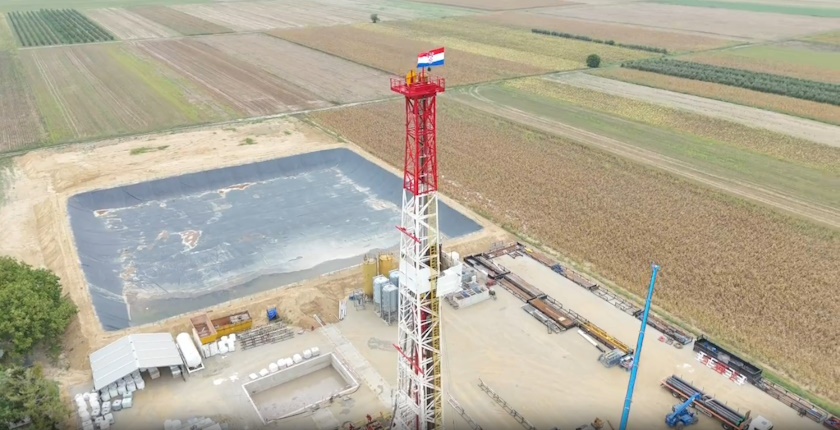
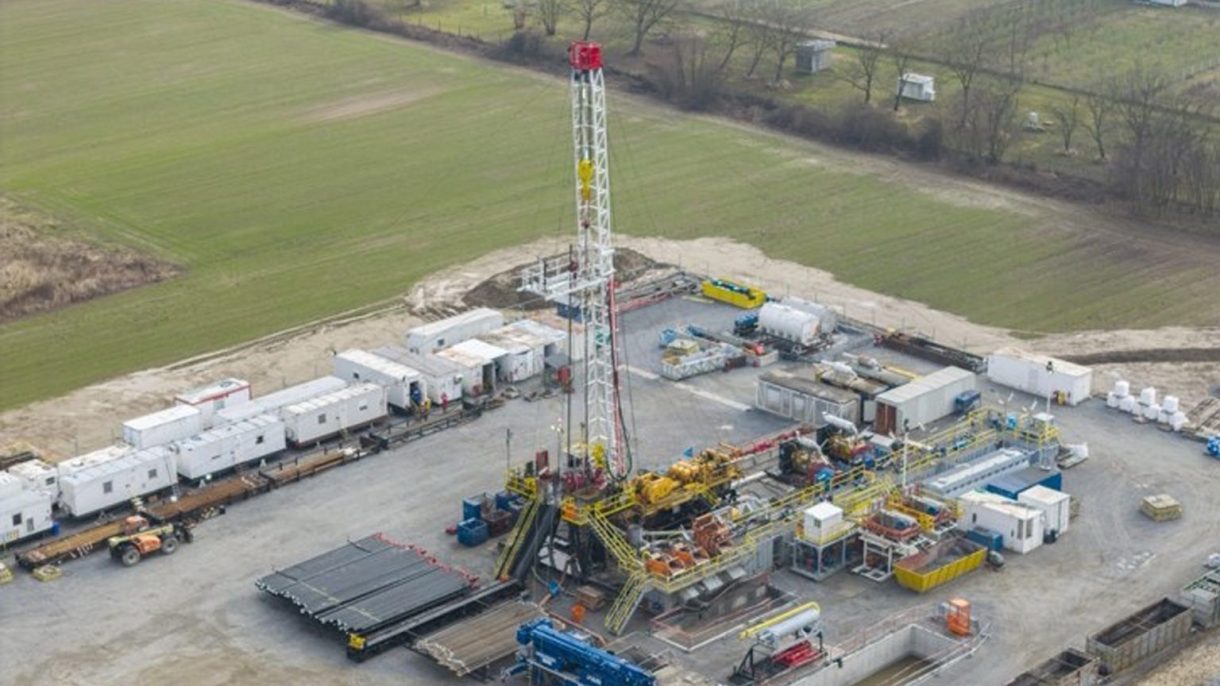
The Croatian Hydrocarbon Agency (AZU) has completed exploration activities at all four sites under the project Preparation and Exploration of Geothermal Potential in the Context of Centralized Heating, confirming substantial geothermal resources near Zaprešić. This site is the fourth positive discovery following successful exploration campaigns in Velika Gorica, Osijek and Vinkovci.

AZU President Marijan Krpan said the agency achieved a 100% success rate at the planned locations, delivering maximum project effectiveness and demonstrating full operational capability. He emphasized that the results validate the agency’s technical expertise and ability to execute complex subsurface exploration and resource assessment, and noted ambitions to export that expertise internationally.

Independent analysis has also pointed to strong national potential: a recent study by think tank Ember outlined significant geothermal prospects across Croatia.

Temperature and geology at Zaprešić
Exploration near Zaprešić — in Zagreb County — confirmed a geothermal reservoir primarily developed in dolomitic formations at depths exceeding 1,600 metres, with measured temperatures above 95 °C. The work in the area included two-dimensional seismic surveys, magnetotelluric measurements and the drilling and testing of an exploratory well; the site had been the least well-documented by prior geophysical and borehole data.

“Just two months ago we announced the start of works on a project of exceptional importance for our citizens and economy. I am pleased that today we can confirm positive results, creating the prerequisites for a step toward sustainable and long-term solutions for our community,” said Mayor Željko Turk.

Historic milestones for national heating capacity
AZU described the cumulative findings in the Pannonian region as historic for Croatia’s energy independence. In June, exploration near Velika Gorica recorded reservoir temperatures exceeding 100 °C; subsequent analyses indicated the source could supply nearly 60% of a local district-heating system’s demand. The investment in that site exceeded EUR 11 million.

In August, a site near Osijek also yielded temperatures above 100 °C with an estimated capacity close to 5 MW; that programme, valued at more than EUR 8 million, has been presented as an opportunity to support local agricultural and broader economic development.

Late last year, exploration in Vinkovci returned a record temperature of 131 °C at a depth of 2,700 metres, a result that AZU described as offering exceptional commercial potential for district heating and industrial applications.

Project funding and implementation
The exploration programme is financed under the National Recovery and Resilience Plan (NRRP), with a total allocation of EUR 50.8 million. Drilling and field operations were carried out by Crosco, a contractor within the INA Group.

Current state of geothermal power in Croatia
Despite the renewed momentum in exploration, Croatia presently has no active geothermal power plants. The Velika 1 facility in Velika 1 plant (Ciglena, near Bjelovar) has been out of operation for three years owing to an ownership dispute, underscoring a gap between resource discovery and commercial generation that authorities and investors will need to address to translate these exploration successes into operational capacity.

by in News

Serbia plans to stop using coal, fuel oil in district heating by 2040

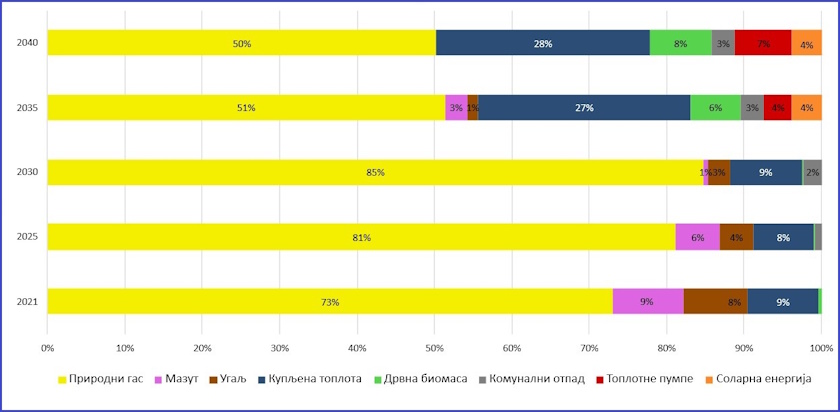
By 2040, Serbia intends to replace fuel oil and coal in district heating plants with solar, wood biomass, heat pumps, municipal waste and geothermal energy.

Maja Vukadinović, acting Assistant Minister of Mining and Energy for Energy Efficiency and Climate Change, has said that the goal for the district heating sector is to phase out fuel oil and coal by 2040.

She explained that the idea is to replace fossil fuels with solar energy, wood biomass, heat pumps, municipal waste and geothermal energy.

“The list of programs and projects until 2028 is defined in the draft Program for the Implementation of the Energy Development Strategy of the Republic of Serbia until 2040 with projections to 2050, for the period from 2026 to 2028,” Vukadinović told Balkan Green Energy News.

The share of renewables should increase from 2.4% to 5.5%

According to the draft, implementation of decarbonization projects in district heating systems by 2028 should lift the share of renewable energy sources in heat production from 2.4% to 5.5%.

The fuel mix in 2023 was 75% natural gas, 8% petroleum products, 2% coal, 2% wood biomass, and 13% purchased heat. The structure of purchased heat production is 46.8% natural gas, 48.8% coal, 3.3% wood biomass, and 1.1% fuel oil.

serbia decarbonization district heating mix 2040

Natural gas will remain the dominant source of thermal energy, as it is today, although its share is expected to decrease from 73% to 50% by 2040, according to Vukadinović.

The decarbonization of the district heating system would reduce air pollution in cities, especially where coal or fuel oil is currently used, the ministry added.

A strategic plan for the district heating decarbonization policy is being prepared

“It’s very important that the fuels conversion is carried out in parallel with energy renovation of buildings and a reduction of the energy consumption for heating. It would significantly improve living conditions,” Vukadinović underlined.

Decarbonization would also have to lead to the improvement of the overall operation of the heating plants, as well as a reduction in network losses, the modernization of substations, and the introduction of daily and seasonal thermal energy storage, in her opinion. The operation of the district heating systems should depend less on the price volatility of imported fuels, Vukadinović stressed.

Serbia is preparing a strategic plan for the district heating decarbonization policy. The document is under development in cooperation with the European Bank for Reconstruction and Development (EBRD) and the business association of Serbian heating plants, Toplane Srbije.

The document, she explained, will outline steps to improve the district heating system, including the rollout of thermal energy storage, heat pumps, and heat production from waste, as well as the development of the country’s first district cooling systems.

by in News

Croatia discovers series of geothermal sources suitable for heating

The results of exploration at the Vinkovci GT-1 well have confirmed the area’s significant geothermal potential, Croatian Hydrocarbon Agency said. Maximum temperature is 131 degrees Celsius.

Vinkovci is the third location in Croatia with positive results, as reservoir temperatures exceeding 100 degrees were earlier confirmed in Velika Gorica and Osijek, Croatian Hydrocarbon Agency revealed. The activities are part of a wider project to develop geothermal potential for district heating for six cities and towns.

“The positive findings of the geothermal exploration in Vinkovci, after Velika Gorica and Osijek, are proof that Croatia has significant geothermal potential and the knowledge to use it. Croatian Hydrocarbon Agency is bringing concrete results through its systematic approach and exploration investment, creating the foundations for further projects for renewable energy sources. Namely, geothermal energy is not only a stable and clean source, but a strategic resource that can contribute to the security of energy supply in Croatia. The results show at the same time that Croatian experts can independently and effectively conduct complex energy projects,” President of the Management Board Marijan Krpan said.

Success at 2,700 meters below ground

Crosco naftni servisi (Crosco Integrated Drilling and Well Services), a member of INA Group, ois conducting the works. At a depth of 2,700 meters in the Vinkovci GT-1 exploratory well, an expert team has measured a maximum temperature, 131 degrees, pointing to the possibility of commercial application of geothermal energy in the heating system.

The location is in Croatia’s northeast, in Slavonia area.

“The exploration in Vinkovci has been conducted in line with the highest technical standards and the project’s planned dynamic. Upon the completion of the exploration at the remaining location, in Zaprešić, Croatian Hydrocarbon Agency plans the development of additional wells at sites with confirmed potential. That way we will establish the production-injection pairs required for a secure and long-term geothermal energy use,” the geothermal energy sector’s Director Martina Tuschl stated.

Opportunity for improving local agriculture

Except for heating, access to heat opens up possibilities for companies. Geothermal potential could be used in agricultural production in the municipality of Jarmine, where the exploratory well is located.

The agency is conducting the project with funding from the National Recovery and Resilience Plan (NRRP or, in Croatian, NPOO), within which EUR 50.8 million was secured for exploration in four locations: in Velika Gorica, Osijek, Vinkovci and Zaprešić.

Works at the Zaprešić GT-1 (ZapGT-1) site are underway.

by in News

Margün Energy takes over licenses for potential 505 MW in geothermal power plants

Turkish contractor and solar power plant operator Margün Energy, which is expanding to geothermal energy including lithium extraction, acquired nine geothermal licenses that enable access to a potential power production capacity of 505 MW. It counts on USD 405 million per year from electricity sales alone.

Margün Energy, listed at the Istanbul Stock Exchange since 2021, said it would establish a subsidiary called Margün Jeotermal. It would be responsible for nine geothermal licenses in the provinces of Denizli, in southwestern Turkey, and Manisa, in the west.

The company said it is targeting 3.86 TWh in annual electricity output upon completing the investments. In a regulatory filing, Margün Energy revealed that it conducted the transaction through its fully-owned subsidiary Bosphorus Yenilenebilir Enerji, which would own 77.5% of the new business.

Having a potential new power production capacity of 505 MW overall, the company counts on USD 405 million in sales. It translates to an annual earnings before interest, tax, depreciation and amortization of USD 324 million, it added.ž

Turkey is the fourth in the world in geothermal power capacity.

The company mostly operates solar power plants and works as a contractor for engineering, procurement and construction (EPC) and operations and maintenance.

Notably, it owns the largest stake in Enda Energy Holding. The affiliate operates four hydropower plants, five wind power plants, one geothermal power plant and three solar power plants of 200 MW altogether.

Margün Energy intends to search for lithium in geothermal waters in Seferihisar in western Turkey, where it took over a 12 MW geothermal power plant earlier this year. It also launched a project to add a photovoltaic unit of 5.4 MW to the existing facility and create a hybrid power plant.

Turkey is the fourth in the world in geothermal power capacity.

by in News

Romania’s coal town Turceni starts EUR 380 million green energy transformation

Turceni is dependent on the local coal power plant, so the municipal authority is turning to agrivoltaics, energy storage and green hydrogen to replace it. The small town in southwestern Romania is kickstarting a EUR 380 million project.

The coal plant in Turceni used to be one of the biggest in Europe, at 2.3 GW. Located next to the eponymous town in Romania’s Gorj coal region, only two units of 660 MW in total are still operational. At the same time, dozens of such facilities across Europe are shutting down ahead of schedule. The power plant and its associated mines within Complexul Energetic Turceni have been essential for the local economy, which is under threat of devastation amid the country’s coal phaseout.

As with other coal regions in the European Union, the solution is in green energy and new technologies. The town hall has signed a contract with the European Investment Bank for agrisolar parks, energy storage units and the production and storage of green hydrogen.

Turceni town hall secures municipal land for green energy projects

The project is worth a whopping EUR 380 million, Mayor Constantin Popescu revealed. Turceni and its administrative area have fewer than seven thousand inhabitants.

More than 123 hectares of municipal land (pastures) and more than 200 hectares of private land were designated for the renewable energy hub, the mayor stressed.

Bankwatch: The coal region is transitioning to a future based on innovation, sustainability and strong partnerships

Partners in the project are Bankwatch Romania and GAL Sudul Gorjului, the so-called local action group for southern Gorj. Bankwatch said over 370 hectares would be switched to clean and sustainable energy production.

“We are glad that we had an important role in developing the project plan and aligning it with European environmental policies, as well as in applying for technical assistance. For a region that has been, for decades, a pillar of coal-fired energy, this project marks a strategic transformation: a transition to a future based on innovation, sustainability and strong partnerships,” the organization added.

Investments to start in 2026

Implementation is scheduled to begin next year. The project will contribute to a just transition of the region by increasing the production of electricity from renewable energy sources, Popescu asserted. In his words, it will be complementary to the local authority’s other ongoing and future decarbonization investments.

The mayor also highlighted the plans to use geothermal energy for district heating and agriculture.

Complexul Energetic Turceni is part of state-owned Complexul Energetic Oltenia (CE Oltenia). According to the company’s restructuring and decarbonization plan, the coal business will be separated from green energy and other investments.

They include projects for CCGT (combined-cycle gas turbine) power plants of 475 MW in Turceni and 800 MW in nearby Ișalnița, as the main replacement for coal plants. Both are suffering heavy delays.

Minister of Energy Bogdan Ivan said last week that CE Oltenia’s Ișalnița coal plant in neighboring Dolj county would be closed on January 1. Romania has asked the European Commission to delay the closure of several coal plant units, scheduled for this year, until 2030.

Earlier this year, a joint venture between CE Oltenia and OMV Petrom hired contractors for four solar power plants at former coal land, with a combined capacity of about 550 MW. One of the sites is in Ișalnița.

by in News

Romanian company to build geothermal hydroponic greenhouses on 50 hectares

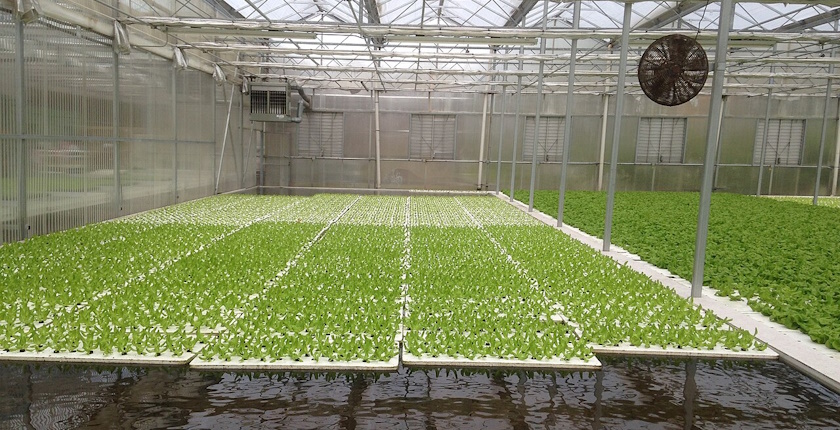
Geothermal well developer and operator Green Tech International started the construction of a geothermal hydroponic greenhouse complex on ten hectares in western Romania. It is part of a five-year plan to reach 50 hectares.

Green Tech International, listed this year on the Bucharest Stock Exchange (BSE or BVB), said it has started the works on the largest hydroponic greenhouse complex in Romania, heated with geothermal water.

The company’s strategy is to develop at least 50 hectares over the next five years. It has 12 years of experience in the development and operation of geothermal wells. Green Tech International, which is also a platform for geothermal energy solutions, directly owns 42 wells and operates another 41. It is one of the largest portfolios in Europe.

The company is conducting the current project through its subsidiary Horti Green Invest. Hydroponics are a method of growing plants without soil. The roots are suspended in a nutrient solution or in an inert medium retaining the nutrients.

Geothermal heat has significant competitive advantage

Geothermal energy has a significant competitive advantage to traditional sources, with renewable heat available 24 hours a day, regardless of the weather, and with a predictable cost in the long term, Green Tech International noted.

Gavriluță: The project will position Green Tech International among the top three greenhouse vegetable producers in Romania

“We are well-positioned to capitalize on our geothermal resources and generate value in complementary sectors with high growth potential. Our strategy focuses on investments in synergistic industries such as sustainable agriculture, where geothermal energy provides a major competitive advantage due to lower costs and supply stability,” Chief Operating Officer Dragoș Gavriluță said in a stock exchange filing.

First phase to cover ten hectares

Green Tech International has started the construction of its first modern geothermal hydroponic greenhouse project, covering an area of 10 hectares in western Romania, he stressed. The project will position Green Tech International among the top three greenhouse vegetable producers in Romania, Gavriluță claimed.

The update reveals that the company intends to invest in the rehabilitation of existing geothermal wells in the area and in the modernization of a thermal power plant to supply heat to the greenhouses. Green Tech International Group also includes Geotherm Distribution and Apoterm Nădlac.

According to an earlier news report, the company is interested in subsidies via the European Union’s Modernisation Fund for the production and transport of geothermal energy for district heating or cooling systems.

As for the rest of the region that Balkan Green Energy News covers, Turkey is one of the world’s biggest geothermal energy producers, including the greenhouses segment.

by in News

Slovenia allocates EUR 375 million for sustainable mobility

Slovenia has allocated EUR 835 million from the Climate Fund for climate change mitigation and adaptation. The funds should be used over the period 2025-2028.

The Government of Slovenia has adopted a decree on the allocation plan for the Climate Fund for 2025-2028. The plan follows the key measures from the previous plan for the period 2023-2026 and adds funds for 2027 and 2028. The amount is determined based on expected revenues from emission allowance auctions.

Emission allowances are part of the European Union Emissions Trading System (EU ETS).

The funds will be directed to sectors addressing the main climate challenges, both in mitigation and adaptation to climate change. Measures supporting the green transition and increasing the country’s resilience to climate change will also be supported, according to the Government of Slovenia.

EUR 121 million was allocated for decarbonizing the economy

The largest chunk will go to sustainable mobility – EUR 375 million. The funds will be used for investments in public transport – purchase of new trains and buses, renovation of ticketing and information systems, co-financing of zero-emission vehicles and charging infrastructure, promotion of cycling and walking, and shifting freight transport from roads to rail.

EUR 121 million is designated for decarbonizing the economy. The government will co-finance successful European Union projects, support the introduction of a circular economy and sustainable reporting for small and medium-sized enterprises, as well as investments in industrial decarbonization.

Energy renovation of public and residential buildings, measures to reduce energy poverty, and the construction of nearly zero-energy buildings are also part of the allocation plan. There is EUR 111 million for such activities.

EUR 26 million is set for awareness raising and education

EUR 95 million is designated for renewable energy sources. The funds will be used to replace outdated household heating devices with modern ones and heat pumps, as well as for energy storage, geothermal energy, and measures to increase the energy self-sufficiency of buildings.

The Climate Fund will support additional climate change adaptation measures. The activities include reducing flood risks, preserving biodiversity, adaptation in forestry and agriculture, and strengthening the resilience of local communities. The allocated funds amount to EUR 49 million.

Slovenia has envisaged EUR 12 million for international climate change financing and EUR 26 million for awareness raising and education.

by in News

North Macedonia adopts Law on Energy Efficiency

North Macedonia’s new Law on Energy Efficiency brings a long-term strategy for the reconstruction of buildings and the obligation to set up solar collectors on public buildings. It envisages financial support for investments in solar panels, geothermal systems and smart technologies.

The Assembly of North Macedonia adopted the Law on Energy Efficiency at its last session. The new legal framework, aligned with European standards, will directly contribute to lowering bills for citizens and businesses, a cleaner environment and the creation of new green jobs, the Ministry of Energy, Mining and Minerals said.

The law is a substantial step forward in reducing energy consumption, integrating renewable sources and reducing greenhouse gas emissions, the statement reads. It will bring the country closer to fulfilling European climate goals and to a green transition, the ministry added.

The new legislation introduces the European Union’s principle “energy efficiency first,” according to the announcement. One of the novelties is a long-term strategy for the reconstruction of residential, public and commercial buildings.

At least 3% of public buildings must be reconstructed every year

The law mandates tripling energy savings in the public sector. At least 3% of public buildings must be reconstructed every year. In the construction or reconstruction of schools, kindergartens and public institutions, it will be obligatory to install solar collectors.

New measures include financial support for investments in solar panels, geothermal systems and smart technologies. The ministry said the law brings high standards in public procurement, digital transparency and professionalization of energy audits. Energy performance certificates will be included in the real estate cadastre.

The Law on Energy Efficiency is part of the package of reform laws that lay the foundation for a stable, sustainable and competitive energy sector – with energy security, better quality of life for citizens and accelerated accession to the European Union, the ministry underscored.

Of note, public calls are ongoing for households in energy poverty, for free inverter air conditioners and financial aid.

by in News

Turkey launches solar, wind power auctions with November deadlines

The Ministry of Energy and Natural Resources of Turkey issued a public call for solar and wind power auctions for 2 GW in total. It will receive the applications on November 4 and November 18, respectively. One competitive bidding process is for a floating solar power project of 35 MW.

Following the successful auctions for renewable energy projects that were completed early this year, Turkey kicked off another round. It is also for 2 GW of overall connection capacity, in light of the country’s ambition to grow its combined solar and wind power capacity to 120 GW by 2035. The two technologies reached 37.1 GW together a month ago, out of 120.2 GW in total.

Auctions are held under the Renewable Energy Zones (REZ) state support mechanism. The scheme is better known by its Turkish acronym YEKA.

Ten solar power areas in eight provinces

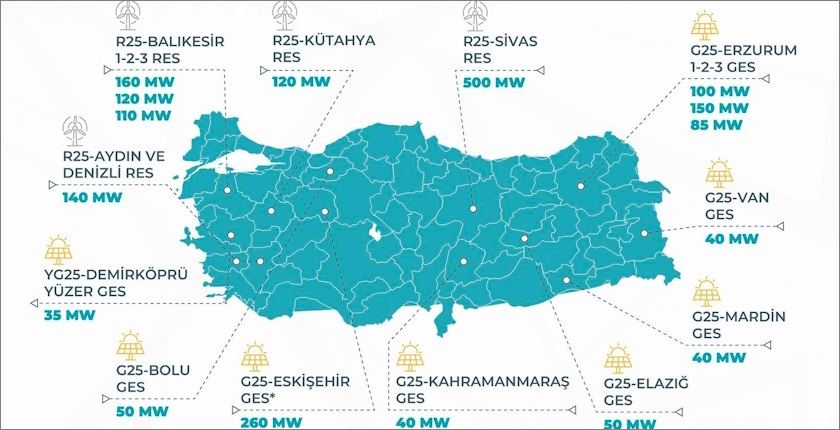
The upcoming solar energy auctions, REZ SPP 2025 (YEKA GES 2025), are for 850 MW altogether. There are ten areas in eight provinces designated for bidding: Kahramanmaraş, Mardin and Van, with 40 MW each, Bolu and Elazığ (50 MW each), Erzurum 1-3 (100 MW, 150 MW and 85 MW), Eskişehir (260 MW) and Demirköprü in Manisa province, with 35 MW.

The upcoming solar power auctions will include Turkey’s first bidding for a floating photovoltaic plant

Notably, the last one is for a planned floating solar power plant on the reservoir of the Demirköprü hydropower plant. The facility on the Gediz river, east of Izmir, is owned by state-owned Electricity Generation Corp. (EÜAŞ). Turkey now hosts only two small floating photovoltaic units, and the auction will be the first of its kind.

Applications will be received on November 4, the ministry said and added it would subsequently publish a schedule for bidding.

Wind power capacity quota is 1.15 GW

Participants can apply on November 18 for the wind energy round of auctions, REZ WPP 2025 (YEKA RES 2025). It is for an overall 1.15 GW in six areas.

Investors will compete for 500 MW in Sivas province, a 140 MW project in Aydın and Denizli, 120 MW in Kütahya and three areas in Balıkesir – 160 MW, 120 MW and 110 MW.

Winners to submit guarantees of EUR 75,000 per MW for PV projects, EUR 100,000 per MW for wind

Potential bidders will pay a fee of EUR 1,550 for each auction they apply for. They must submit letters of guarantee lasting one year and worth EUR 15,000 per MW for photovoltaics and EUR 20,000 per MW for wind power. Winners will submit 10-year guarantees before signing their contracts: EUR 75,000 per MW and EUR 100,000 per MW, respectively.

The ceiling or starting price is EUR 55 per MWh and the floor prices are EUR 32.5 per MWh for solar power and EUR 35 per MWh for wind. If bids hit the floor, another auction will be held between the competitors, like in the previous round. It is for a so-called contribution share that they are ready to pay. The minimum is EUR 10,000 per MW of planned capacity and the highest bid wins.

Successful participants can sell electricity on the free market for five years in the case of solar power plants, while the period lasts six years for wind. After that, both categories enter a 20-year scheme with a guaranteed price.

Turkey tops 120 GW in total electricity capacity

At the end of July, electricity capacity in Turkey totaled 120.2 GW, the ministry revealed. Hydropower accounted for 26.9% or 32.3 GW, compared to 23.4 GW in photovoltaics (19.5%) and 13.7 GW of wind power, translating to 11.4%.

The share of biofuel and waste was 1.9%, with 2.34 GW, and geothermal power plants had 1.73 GW altogether, which is 1.4%. Gas power plants in Turkey had 24.7 GW in combined capacity (20.6%). The remainder is coal: 21.9 GW or 18.3%.

by in News

Croatia identifies another city with geothermal potential for district heating

The testing of an exploratory well near the Croatian city of Osijek has confirmed the area’s geothermal potential, according to the Croatian Hydrocarbon Agency.

This marks the second successful completion of exploratory activities within a broader project aimed at developing geothermal potential for district heating in Croatia. At the end of June, good news came from an exploration site in Velika Gorica.

The exploratory activities in Osijek have cost an estimated EUR 8 million, with the funding secured from the National Recovery and Resilience Plan (NRRP).

Testing and measurements of the Osijek GT-1 (OsGT-1) well revealed a reservoir temperature exceeding 100 degrees Celsius, with an estimated thermal capacity of nearly 5 MW.

Temperatures are lower than in Velika Gorica

These results confirm that Osijek possesses significant geothermal resources with potential applications in district heating, agriculture, and the area’s economic development, according to the Croatian Hydrocarbon Agency.

“Geothermal energy is one of the most stable renewable energy sources, and our research confirmed the substantial potential of reservoirs in the Pannonian Basin and a strategic opportunity for achieving long-term supply security and decarbonization of the energy system,” stressed Marijan Krpan, president of the agency’s management board.

Exploratory activities continue in other locations

Due to local geological specifics and the shallower depth of the reservoir, temperatures in Osijek are lower than those in Velika Gorica. The agency noted that although the geological conditions and reservoir depths differ between Velika Gorica and Osijek, geothermal energy is flexible enough to be adapted to local needs and used efficiently and sustainably.

According to Osijek’s mayor, Ivan Radić, geothermal energy is becoming a locally available and sustainable heating source not only for Osijek residents but also for businesses.

Following Osijek and Velika Gorica, exploratory activities will continue in Vinkovci, and later in Zaprešić. After completing all exploratory activities, additional wells are planned at sites with confirmed geothermal potential.

In addition to the state-funded activities, private companies such as ENNA Geo are also engaged in geothermal research.

  • 1
  • 2