by in News

Bulgaria partners with Citi to secure financing for new nuclear power units in Kozloduy

US-based bank Citi and Bulgaria have established a partnership to secure funding for the construction of units 7 and 8 at the existing 2,000 MW Kozloduy nuclear power plant.

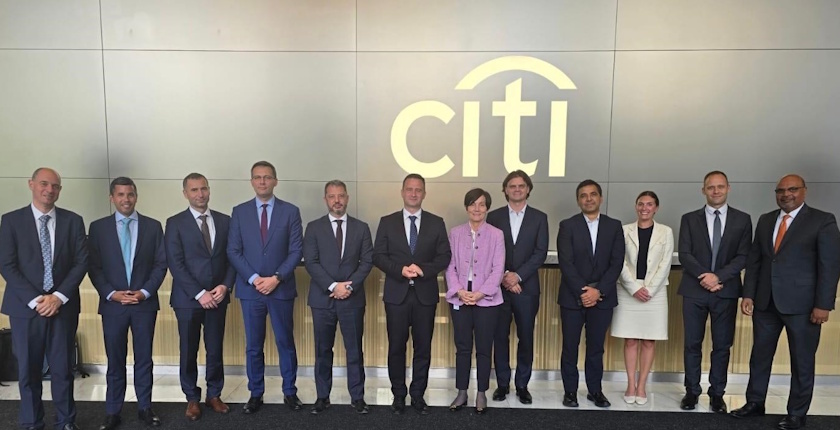
Bulgaria’s Ministry of Energy said minister Zhecho Stankov and his delegation have held final talks in New York with Citi’s management.

Following a detailed review and analysis of a technical proposal, both sides agreed to make a partnership between Kozloduy NPP – New Builds and Citi to secure funding for new nuclear power units at the Kozloduy Nuclear Power Plant site, according to the ministry.

Stankov stressed the agreement with Citi is a significant step toward the implementation of the energy project, pointing out it is a priority for the government.

Units 7 and 8 would be the first in Europe with Westinghouse’s AP1000 reactors

The construction of units 7 and 8, which would be the first in Europe to deploy Westinghouse’s AP1000 technology, will ensure the country’s energy independence and long-term stability, Stankov stressed at his meeting with Stephanie von Friedeburg, Global Head of Public Sector Banking at Citi.

With the lender’s proven expertise and strong global network, Kozloduy NPP – New Builds will provide the necessary financial framework to deliver safe, sustainable, and affordable energy for future generations, according to the project company’s Executive Director Petyo Ivanov.

Citi was picked as the exclusive coordinator and lead arranger of the export credit package

The ministry explained that Citi is becoming the exclusive coordinator and lead arranger of the export credit package. It would be the bank’s largest nuclear financing project in Central and Eastern Europe, the statement reads.

“Citi is proud to be at the forefront of financing low-carbon energy solutions. The Kozloduy expansion represents a landmark transaction, one of the first large-scale projects of its kind. This project is pivotal for Bulgaria’s energy future, and Citi is committed to providing the financial expertise to make it a reality,” Stephanie von Friedeburg said.

Of note, in November 2024, Hyundai Engineering and Construction Co., Westinghouse Electric Co., and Kozloduy NPP – New Builds signed an engineering services contract for two AP1000 reactors.
by in News

EU nuclear ambitions: EUR 241 billion in investment needed by 2050

The European Commission has estimated that EUR 241 billion in investment is needed for the implementation of member states’ plans for nuclear energy until 2050. It includes extending the lifetime of existing power plants and building new large-scale reactors.

Additional investment is needed for small modular reactors (SMRs), advanced modular reactors (AMRs), and microreactors, as well as for fusion for the longer-term future, according to the European Commission’s eighth Nuclear Illustrative Programme (Programme Illustrative Nucleaire – PINC).

A few days ago, the World Bank decided to lift its 2013 moratorium on financing nuclear energy projects amid growing global electricity demand.

The commission has now underlined that for some EU countries, nuclear energy is an important component of decarbonization, industrial competitiveness, and security of supply strategies. The commission estimates that over 90% of electricity in the EU in 2040 will be produced from decarbonized sources, primarily renewables, complemented by nuclear energy.

Jørgensen: To truly deliver the clean energy transition, we need all zero- and low-carbon energy solutions

Nuclear installed capacity across the EU is projected to grow from 98 GWe in 2025 to 109 GWe by 2050.

The commission recognizes that all zero- and low-carbon energy solutions are needed to decarbonize the EU’s energy system. Accordingly, the Nuclear Illustrative Programme is intended to help drive member states’ actions towards priority areas.

“To truly deliver the clean energy transition, we need all zero- and low-carbon energy solutions. Nuclear energy has a role to play in building a resilient and cleaner energy system. Ensuring the necessary framework conditions will allow the EU to keep its industrial leadership in this sector while also upholding the highest safety standards and responsible management of radioactive waste,” said Dan Jørgensen, Commissioner for Energy and Housing.

The highest standards of nuclear safety are among the EU’s top priorities

The commission highlighted the highest nuclear safety standards and a responsible management of radioactive waste as a top priority for the EU.

The commercialization and market uptake of cutting-edge nuclear technologies, including SMRs, AMRs, microreactors, and fusion for the longer term, will also be central for the sector’s future in Europe and beyond, according to the EU’s executive arm.

A requirement under Article 40 of the Euratom Treaty, PINC provides a comprehensive, fact-based overview of nuclear development trends, as well as the scope of investment needs across the EU.

The commission will publish the final version of PINC after receiving the Opinion of the European Economic and Social Committee.

by in News

SunCarlito Beta issues tokens to raise funds for 2.2 MW solar power plant in Serbia

SunCarlito Beta has offered tokens worth EUR 1.7 million to raise funds for installing a 2.2 MW solar power plant near the northern Serbian city of Subotica. The deadline to purchase the tokens is July 9.

Investors can buy 3,402 tokens called Solar Token ST_1, priced at EUR 500 each.

This is the second token offering in Serbia’s energy sector. In mid-March, AVR Solar Park successfully completed the first tokenization in the energy sector, introducing this innovative financing method to the Serbian market.

So far, SunCarlito Beta has invested EUR 450,000 in land acquisition, permitting, and digital token technology. The total project value is estimated at EUR 2.1 million, according to the White Paper, approved by the Securities Commission.

A building permit has been obtained for the construction of the solar power plant

A construction permit for the solar power plant has been granted, and the installation is well underway. Trial operation is expected to begin by the end of 2025, with an anticipated annual output of 1.2 GWh.

The company has identified two main goals: to finance the project with funds raised via tokenization and to allow interested parties to invest in digital assets.

A digital token has the characteristics of a dematerialized bond, the company explained.

The tokens yield an annual return of 6%

The tokens are issued for a period of 15 years and yield an annual return, a fixed interest rate of 6% per year calculated on the remaining principal, according to the White Paper.

During the investment period, token owners are entitled to principal repayments. The first two repayments are set at 33% of the principal every five years, with the final repayment at 34% of the principal.

The tokens can be purchased by individuals or legal entities, including entrepreneurs, with residence in the Republic of Serbia, who must also pass the accreditation process.

by in News

Serbia shelves plan for strategic partnership for 1 GW in wind farms

Serbia has revised its Baselines of the Energy Infrastructure Development Plan and Energy Efficiency Measures for the period up to 2028, with projections up to 2030. It defines priority projects in the energy sector.

The Baselines of the Energy Infrastructure Development Plan and Energy Efficiency Measures were adopted in mid-2023 at the proposal of the Ministry of Mining and Energy. In the new document, the construction of 1 GW wind farms is no longer among the priority projects. The plan was to involve with a strategic partner, similar to the project for 1 GW of solar power plants, which is currently being developed by state-owned power utility Elektroprivreda Srbije (EPS) with a strategic partner.

The development plan serves as a basis for the implementation of Serbia’s Energy Development Strategy and the National Energy and Climate Plan (NECP).

The ministry outlined projects across six sectors

The investment cycle planned for the upcoming strategic period represents the backbone of the Energy Development Strategy. It provides the foundation for further assessments and projections of the targeted energy mix through 2030 and 2050. It aligns with the international commitments undertaken in the process of European Union accession as well as with the obligations within the Energy Community, the document reads.

The plan includes projects in six sectors: electricity generation, transmission network, distribution network, natural gas, oil and petroleum products, and energy efficiency. It ranks the projects within each sector.

The most significant change in renewable energy is that the construction of wind farms with a combined capacity of 1 GW is no longer on the list of priority projects.

Solar power plants Kolubara and Morava on the priority list

The 1 GW of solar power and the Kostolac wind farm remained among the four most important endeavors, while the new items are the Morava and Kolubara photovoltaic projects. The Klenovnik solar power plant has been removed from the list. According to the document, the projects on the list are the most advanced.

In total, EPS has 41 projects for power generation or 20 less than in the original document.

Fewer projects, but more realistic

The authors explained that the number of renewable energy projects is lower, but more realistic and better optimized. The entire EPS investment portfolio across all areas requires significant funds and loans, so it would not be realistic to pursue a larger number of high-value projects that cannot be financially or physically implemented within a reasonable timeframe, the document underlined.

It was also taken into account that many private projects, mainly wind farms, are being developed through the auction system, so the focus of EPS’s projects is primarily on solar power plants, to create a balanced ratio between wind and solar power plants in the system. The company’s project for the wind farms with a strategic partner remained a backup option, in case an additional capacity is needed, according to the document.

There are new items on the list for the electricity distribution network

There were no changes in the transmission network segment. The priority projects are the third and fourth sections of the Trans-Balkan Corridor, the Pannonian Corridor, and Beogrid 2025. The list contains 66 investments, five fewer than in the original plan.

Changes have been made regarding investments in the power distribution network. The most important projects now are the 110/10 kV substations National Stadium and Surčin. Automation of the medium-voltage network was kept, together with the ongoing replacement of wooden poles with concrete ones and the replacement of electricity meters with smart ones.

The integrated system for remote monitoring, diagnostics, and control of the low-voltage distribution network has been removed from the list. Instead of replacing transformers at 10 kV, 20 kV, 35 kV, and 110 kV voltage levels, the new focus is on the reconstruction of 25 substations of 110/35 kV.

Planning the first district cooling systems

The energy efficiency part of the baselines was changed the most.

The previous document was primarily focused on reviewing and securing financial support for ongoing projects, while the current one is envisaging expanding the scope and considering new financial mechanisms and sectors that require additional support.

Among other initiatives, the Strategic Plan for the Decarbonization Policy of the District Heating and Cooling Sector in the Republic of Serbia is being prepared. It is a joint endeavour of the European Bank for Reconstruction and Development (EBRD), the Association of Serbian Heating Plants, and the Ministry of Mining and Energy.

The project aims to define steps to improve the district heating system, including heat storage, the use of heat pumps, utilization of heat generated from waste treatment, and the development of the first district cooling systems, according to the document.

Special attention will be devoted to developing guidelines for expanding the district heating system by connecting new users while simultaneously shutting down fossil fuel boilers. It will directly contribute to reducing CO2 emissions and pollution, the authors noted.

by in News

BEF 2025: Technologies for energy transition are here, getting cheaper every day

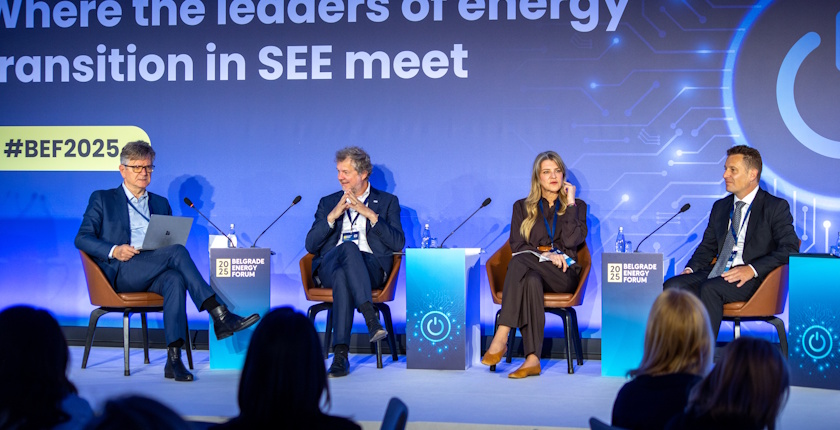
Technologies for the energy transition already exist, and their use is increasing thanks to falling costs. Investors and bankers claim they are ready to invest and that money isn’t an issue. The missing part are upgraded transmission grids, along with policies and regulations to integrate everything into a suitable environment, according to investors and lenders gathered at Belgrade Energy Forum 2025.

The third Belgrade Energy Forum, BEF 2025, welcomed four hundred participants from more than 30 countries from the region, Europe, and beyond. The two-day conference was organized by Balkan Green Energy News.

Participants in the panel Energy revolution underway – uniting efforts to deliver green, intelligent, and sustainable energy solutions were Maja Turković, Senior Vice President of CWP Europe, Aleš Prešern, Vice President and Head of Southeast Europe of Siemens Energy, and Christian Beynio, Head of Advisory of Kommunalkredit Austria AG.

According to panel moderator Mirza Kušljugić, a member of the Board of the Regional Center for Sustainable Energy Transition (RESET) from Bosnia and Herzegovina, the energy transition is actually a revolution, given the technological changes.

“The region is still burdened by tradition. We know the transition is inevitable, but we aren’t fully aware that it will be disruptive,” Kušljugić stated.

Technology is here, and so is financing

Mirza Kušljugić, Aleš Prešern and Maja Turković (photo: Balkan Green Energy News)

Maja Turković, Senior Vice President of CWP Europe, stressed that technology, currently undergoing a revolution, is the best card the world has in the transition. She even suggested that financing isn’t a problem and that there are more financial resources available than projects qualified to receive funding.

However, she is surprised by the rapid growth in solar power installations. Turković argued that market-based projects cannot achieve double-digit internal rates of return on equity. Part of the explanation may lie in the fact that panel prices have dropped by 60% over two years.

Battery prices have also fallen. The largest drop was last year, 40%, with a further 5% decline this year alone, according to Turković. Prices have slipped below EUR 100,000 per MWh.

Turković: Regarding CAPEX and technology, we’re ready

The latest trend is the integration of batteries with solar power plants. While transmission system operators in the region still don’t allow it, in some countries a grid connection approved for solar can also be used for batteries. “Regarding CAPEX and technology, we’re ready,” Turković underlined.

Aleš Prešern, Vice President and Head of Southeast Europe in Siemens Energy, is particularly impressed with the speed of change.

“We who are working in the energy sector are used to very slow changes. Energy was a conservative industry. In 2004, 1 GW of solar was built, but now data shows that it is how much is installed in one day. Batteries cost EUR 1 million per MWh not that long ago, and now they are ten times cheaper,” he noted.

Prešern: Transmission networks are the bottleneck of the transition

They are indeed dramatic changes, for which the existing power system wasn’t prepared. It is clear why Siemens Energy, as a technology company, considers transmission networks to be the bottleneck in the transition, Prešern said.

To illustrate the slowness of grid investments, he pointed to Austria, as one of the examples, where it took 10 years to build one important segment of the 400 kV network.

Both Turković and Prešern agree that nowadays the keyword is flexibility.

Maja Turković and Christian Beynio (photo: Balkan Green Energy News)

She explained there are operating battery management systems at low voltage levels that incorporate artificial intelligence and use market signals for activation when prices are low.

Prešern added that the required stability through balancing could be provided by gas power plants. Siemens Energy has never seen such high demand for gas turbines like today, he asserted.

Beynio: Don’t forget the non-banking institutions when looking in new financing

“If you ask about availability of financing, yes, it’s there,” Christian Beynio, Head of Advisory at Kommunalkredit Austria AG, confirmed. In his view, prices or, rather, the drop in prices of equipment, is the biggest innovation. Earlier, he said, it was a completely different game, heavily subsidized, while nowadays no subsidies are required per se.

The trend that Kommunalkredit Austria AG identified is the pooling of smaller assets, and a shift from financing projects toward financing developers and companies as corporates. It is yet to come to the region, he added.

Investment in grids, in his words, has to be initiated by the government. They have two solutions – go to the sovereign debt market or engage private investors. “Don’t forget the non-banking institutions when looking for new financing. This is a trend across Europe, and it will be relevant for the Balkans,” Beynio advised.

Battery projects won’t go so smoothly

Aleš Prešern (photo: Balkan Green Energy News)

Maja Turković expressed the belief that installing batteries won’t go as smoothly as solar. The main reason is the difficulty of securing a stable cash flow for batteries, unlike for production facilities. Cash flow enables financing, so batteries will likely need to be financed with internal funds, she underlined.

Turković noted that batteries are best monetized by providing system services and arbitrage, but pointed out they can also participate in capacity mechanisms, a scheme that could involve power purchase agreements (PPAs).

She said the development of the regulatory framework should be faster, to facilitate investments in batteries. Investors are ready to commit their funds to battery installation, and everyone in the market agrees that batteries are essential, Turković stressed.

Prešern: People and not technology are a guarantee that networks will exist and function properly

Amid the widespread discussions about technology and regulations, Aleš Prešern highlighted another issue. Energy, in his opinion, has always been an exciting sector, but the message hasn’t been getting through to young people in recent years. It was the case not only in the region but also in Europe, and beyond, leading to a shortage of skilled personnel.

However, he expressed the belief that things are changing and enthusiasm is returning. Prešern even suggested it could be a major advantage for the region, well known for its high-quality engineers.

Siemens Energy strives to employ as many good engineers as possible because, ultimately, people and not technology are a guarantee that networks will exist and function properly, he stressed.

The solution is also in using new technologies to better utilize existing grids

Christian Beynio (photo: Balkan Green Energy News)

The combination of rapid changes in the energy sector and slow investments in the grids threatens to put the transition to a standstill.

Better utilization of existing infrastructure could be the solution. Siemens Energy fits well there, as several years ago it established a division called Digital Grid. According to Prešern, the idea was to be quicker in data utilization, something that other sectors like automotive have long advanced, while energy has lagged.

The company recently acquired a Slovenian-Austrian firm that produces sensors installed directly on power lines, a technology called dynamic line rating. The devices provide real-time data about the conditions in power lines, potentially enabling their use beyond original design limits.

“With this technology, we believe we can increase the capacity of existing networks by an average of 30%,” Prešern revealed.

New technologies have changed bankers’ jobs as well

New technologies have changed bankers’ jobs as well, Christian Beynio admitted. He recalled that it was easy to finance wind farms in Serbia because they had feed-in tariffs from the government. The only risk element was the wind blowing or not blowing, Beynio said.

Nowadays there are merchant power producers that combine their facilities with batteries and use algorithms in electricity trading, he added. It means bankers need to sit with market consultants to identify all outcomes, he stressed.

“You won’t find singular cash flow streams. It’s going to be multi-dimensional and people simply need to adjust. It’s going to be more short term also on the lending side. It’s rather going to be corporate lending to people and companies who know what they are doing and can credibly demonstrate that with a track record. That is the digitalization impact we see”, Beynio said.

Maja Turković (photo: Balkan Green Energy News)
by in News

BEF 2025: Regional cooperation can facilitate energy transition, energy security

Montenegro, Serbia, and the Republic of Srpska don’t have a problem attracting investments in electricity production, but they do have issues when it comes to investments in transmission networks. If the introduction of CBAM is not postponed, it will greatly burden their economies. Hungary is interested in strengthening energy ties with them as well as the rest of the Western Balkans, which would bolster energy security for the whole region. Croatia could also assist it in strengthening employment in the green technologies sector, to counter the loss of jobs due to decarbonization. These are the main messages from the High-ministerial panel on SEE regional cooperation and energy transition strategies.

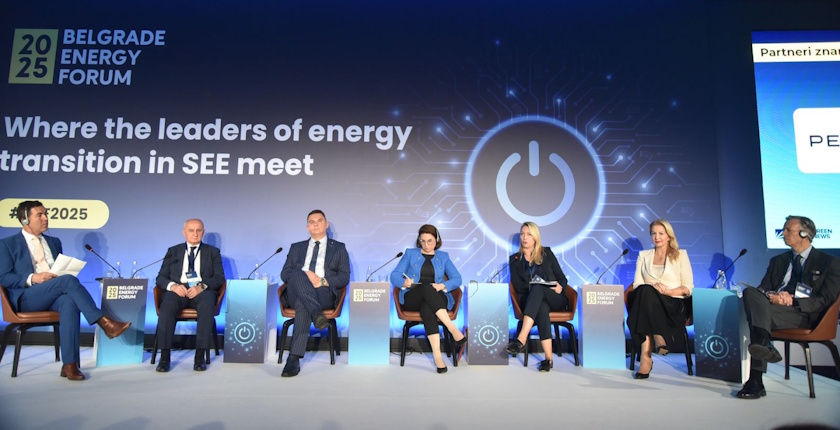
The ministerial panel was the first of eight at this year’s Belgrade Energy Forum 2025 (BEF 2025). The conference, organized by Balkan Green Energy News, welcomed four hundred participants from more than 30 countries from the region, Europe, and beyond.

The panel featured representatives of the governments of Montenegro, Croatia, Hungary, the Republic of Srpska – one of the two political entities in Bosnia and Herzegovina – Serbia, and the United Nations Economic Commission for Europe (UNECE). The moderator of the panel was Dirk Buschle, who until recently was a key figure in the Energy Community Secretariat, and now is a partner at law firm Becker Büttner Held.

He noted it is a mistake to say that the contracting parties of the Energy Community are lagging behind EU countries in the energy transition. They all face the same issues, which are energy accessibility, supply security, and sustainability, Buschle added.

Additional proof, in his words, are the similar issues faced by investors – in grid connections and permitting.

Investments in production are coming, the issues are grids, CBAM

Dirk Buschle, Petar Đokić and Admir Šahmanović

According to Minister of Energy and Mining of the Republic of Srpska Petar Đokić, the entity has made significant progress in defining a regulatory framework that aligns with the rules of the Energy Community and the European Union.

He noted that with the help of the Energy Community Secretariat, the two entities of BiH recently reached an agreement on adopting a law on the electricity regulator, transmission, and market. It is one of the cornerstones for establishing an organized electricity market.

The Republic of Srpska was successful in attracting investments in green energy in recent years, Đokić added. It established concessions and partnerships for the construction of 2,200 MW of renewable energy power plants – wind, solar, and hydropower.

However, large investments in transmission networks are also necessary, he pointed out and said he expects assistance from the European Union’s financial institutions such as the European Bank for Reconstruction and Development (EBRD) and the European Investment Bank (EIB), as well as the World Bank.

Đokić: CBAM to hit hard BiH’s economy

The minister called on them to set up such partnerships.

Regarding the EU’s Carbon Border Adjustment Mechanism (CBAM), he said that measures have been taken to change the domestic energy mix. Until recently, the share of fossil fuels was 62%, but it has now dropped to 54%, he recalled.

By 2028, the Republic of Srpska will have two new hydropower plants, of 159 MW and 36 MW, and new solar power plants with a total capacity of 250 MW, the minister asserted. It would additionally green the energy mix, Đokić said.

CBAM, in his words, could harm the economy of the Republic of Srpska and BiH.

If it is applied the way it is apparently envisaged, it would result in a significant increase in costs, with a severe negative impact, he underlined. Đoković expressed hope that the rollout would be separately discussed in the case of BiH.

Šahmanović: Montenegro is finishing its NECP

Montenegro also enjoys great interest from investors. It has received applications for building solar power plants and wind farms with a total capacity of 5.5 GW, said Admir Šahmanović, Minister of Energy and Mining.

The country’s current capacity is slightly over 1 GW.

It is, in his words, the result of improving the regulatory framework including the adoption of laws on renewable energy sources and energy. However, investment in the transmission grid is also necessary. The government plans to discuss with Italy the possibility of installing another subsea cable for electricity transmission, while the national energy and climate plan (NECP) will be completed by the end of next month, the minister revealed.

Montenegro is requesting a postponement of CBAM until 2030

In addition, renewable energy auctions are being prepared with the EBRD, and a memorandum on market coupling with Italy will be signed, he added.

As for CBAM, the minister stressed that Montenegro doesn’t believe the EU wants to harm its economy, but argued that the country isn’t ready for the mechanism’s implementation.

“Perhaps we are now in a situation similar to where our EU partners were 20 years ago. So, we need to invest a lot in our production capacities, grid, storage. It will take years, so if we don’t receive an exemption by 2030, I believe we won’t be able to handle this challenge,” Šahmanović stressed.

Secure supply of the national market is the highest priority

Boglárka Illés, Admir Šahmanović and Jovana Joksimović

Jovana Joksimović, Serbian assistant minister of mining and energy for international cooperation, European integration, and project management, expressed the opinion that the energy transition is a long and intensive process, technically, operationally, and financially.

Since October 2022, renewable energy in the energy mix has increased by 83%, which demonstrates the progress of the energy transition in Serbia, Joksimović asserted.

“We need to be realistic, as well as socially aware, because a fair and sustainable transition is something that should be carefully considered when changing the energy mix, where coal accounts for 60%,” she noted.

Joksimović: The priority is to ensure a sufficient supply of electricity at the most affordable prices for citizens and the economy

It is necessary, in her words, to be ambitious and dedicated to the energy transition goals, but she is convinced that there is a higher objective.

At the country level, it is to ensure enough electricity at the most affordable prices for both citizens and the economy, she underlined. “That’s what our top priority is,” Joksimović underscored.

Guided by the said goal, Serbia is also considering the use of nuclear energy and a study on possible options is currently being prepared.

Boglárka Illés, State Secretary for Bilateral Relations at Hungary’s Ministry of Foreign Affairs and Trade, also stressed that the government’s primary duty is to ensure not only climate neutrality and sustainable energy but also affordable energy with a stable supply for households and businesses.

She pointed out that diversifying energy imports and the energy mix plays a key role in securing energy sovereignty. It is the reason why cooperation with the Western Balkans, and especially Serbia, is important to Hungary, Illés asserted.

Illés: Europe’s energy security has been demolished

A few days before, Hungary’s Prime Minister Viktor Orbán said the EU has abandoned a successful economic strategy, based on cheap Russian gas and advanced German technology.

“And now we don’t see any other strategy within the EU,” she stated.

Due to ideologically driven sanctions against Russia, and the European Green Deal, the energy security of Europe is demolished, in Illés’s opinion. The region is located at the intersection of essential energy routes, connecting the East and the West, and also South and North, she underlined.

“We, as an EU member country, can act as a bridge between non-EU member countries and also the EU,” the state secretary stressed.

As an example of good cooperation with Serbia, she highlighted the supply of gas through the TurkStream pipeline and the Pannonian Corridor project for doubling the capacity for power exchange between the two countries.

The energy transition is an opportunity

Jovana Joksimović, Marija Pujo Tadić and Dario Liguti

In one respect, Marija Pujo Tadić, Special Envoy for Climate Action from the Government of Croatia, doesn’t share the opinion of the Hungarian official. She argued it isn’t true that Europe lacks a plan.

The EU has a clear plan and a well-defined strategy – it is the Clean Industrial Deal, she stressed.

She highlighted two important strategies relevant to the region: the Paris Agreement and the Green Agenda for the Western Balkans.

As a member of the scientific advisory board for the COP 29 presidency, she recalled that this year a review of nationally determined contributions (NDCs) would be conducted. It is an assessment of how countries are meeting their plans for lowering CO2 emissions.

Pujo Tadić: Education and workforce specialization are essential

She underlined the Green Agenda for the Western Balkans also envisages reducing net greenhouse gas emissions to zero by 2050, which is essentially the shared goal of the EU.

However, Pujo Tadić expressed the belief that policies and laws alone are not enough. Public education and workforce specialization are also necessary because the transition will create many new jobs, she added.

Croatia could be of great support to the Western Balkans, having launched such educational programs five years ago, according to Pujo Tadić.

The link between the energy transition and the creation of new jobs was also stressed by Dario Liguti, Director of Sustainable Energy at UNECE. In his view, the region has a huge opportunity to become part of the supply chains for green technologies by greening the domestic power generation and by leaning on the EU’s energy transition.

He sees the main factors for it in the region’s geographic proximity to the large European market, and the large, skilled workforce that can be educated for other tasks. Liguti drew a connection with the expected job loss from decarbonization measures and the related need for a just transition.

Liguti: There is great potential for energy efficiency in the region

Liguti praised the forthcoming investments in renewable energy production, but warned it is only one side of the story, arguing that the other one is energy efficiency. He reminded the audience that the region’s energy intensity is high, saying there is room for savings.

The installation of big solar plants and wind farms, in his words, is great because it’s very visible.

“It’s a great investment and makes a lot of sense. The harder part is making energy efficiency investments, whether in buildings or the industrial processes in large, small, or medium enterprises,” Liguti stated.

As an example, he recalled that UNECE is running a project with the EBRD in North Macedonia to support households and small and medium enterprises to lower the costs of liquid fuels and electricity.

by in News

Serbia’s first-ever tokenization in energy sector: Saraorci solar project yields 6% interest

The first tokenization in Serbia’s energy sector has been completed, with AVR Solar Park selling 80% of AVR Solar Tokens, worth EUR 600,300, out of EUR 725,000 on offer. The company emphasized that this innovative financing model has the potential to address the issue of unfavorable financing conditions in the Serbian market.

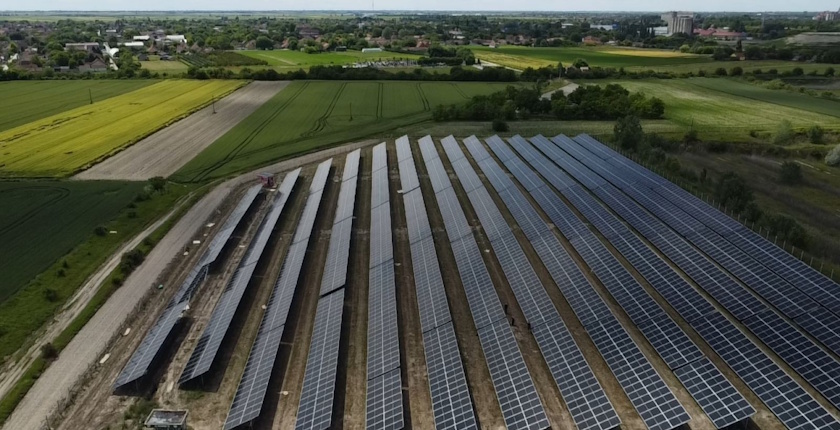
The recepits from the sale of AVR tokens will finance the expansion of the Saraorci solar power plant. The facility, with a capacity of 9,856 MW, was built by Power China and commissioned in May last year. Until a few days ago, along with the DeLasol plant, it was the largest photovoltaic plant in Serbia.

Marko Đurić, who is in charge of finance at AVR Solar Park, told Balkan Green Energy News that even during the construction of  Saraorci power plant, there was an idea to expand it and increase production by 10-12%. The annual output would rise from 15.1 GWh to 16.8 GWh, with the capacity remaining at 9.856 MW.

Đurić: The investors are struggling to meet financing requirements

“Our company had already invested significant funds in the preparatory works for the expansion. Among other things, we had already secured a building permit. With tokenization, we tried to raise the rest of the funding needed for the expansion,” he said, noting that the expansion has been completed.

According to Đurić, the construction of solar power plants in Serbia has slowed considerably. The demanding financing requirements, which investors find difficult to meet, are among the main contributors. In most cases, companies are required to have ten-year power purchase agreements (PPAs) at a fixed price.

However, PPAs on the Serbian market are signed for a maximum of five years, he noted.

In his words, a fixed price can be achieved through auctions, but this implies fixed income over 15 years, and there is no progress. Also, financial institutions cannot back a project unless the investors secure 60% of the cost from their own funds, which very few can do, according to Đurić.

Token buyers receive 6% interest

AVR Solar Park offered 7,250 tokens with a nominal value of EUR 100 apiece, payable in RSD. The initial offering of AVR Solar Tokens started on November 22, 2024, and ended on February 19.

Buyers of the token acquired the right to receive 10% of the principal at the end of each year and a fixed 6% interest. The minimum investment amount per investor was EUR 3,000. The tokenization was approved by the Securities Commission. The table below shows an example of an investment in 100 AVR Solar Tokens.

Digital tokens make it possible to bypass the bank as the chief intermediary in financing, and AVR Solar Park sees this as a benefit, especially for those who want to invest their money in a specific project – institutional investors or individual, small investors.

Đurić: the opportunity to be part of the green transition

The company has opted for tokenization as a way of financing, primarily because it enables transparency. “By purchasing AVR Solar Tokens, you not only ensure a stable financial return, but you also get the opportunity to be part of the green transition in the energy sector and thereby contribute to reducing pollution in our country and on our planet,” Đurić stressed.

Compared to other investment opportunities, investors in tokens could benefit from the fact that tokens are denominated in euros.

Also, the 6% interest is more than what any bank or bond offers, especially for such a long period, Đurić asserted. Another benefit for investors is the simplicity of investing in tokens as it can be done “from the comfort of one’s bed.”

How are token buyers protected?

Solar power plant Saraorci (photo: AVR Solar Park)

Đurić said there are various measures to reduce the risk for investors. First and foremost, the solar plant is fully operational, generating income.

“The return for investors is guaranteed based on a 10-year PPA signed with a licensed electricity trader. It could be annexed to add the output from the expanded facility. This contract is the biggest guarantee for the interest payments, enabling steady income,” Đurić pointed out.

In addition, the project also includes additional security measures. For example, if production is lower than projected, the contractor Boffetti Balcan, a subsidiary of Italy-based Boffetti SPA, is required to compensate for the difference. The project is also fully insured.

The construction of a new solar power plant is underway

AVR Solar Park said tokenization was a pilot project to test the market. The company also sees it as a crucial step toward the broader use of tokenization in Serbia and the region.

According to Đurić, the company aims to finance much larger projects in the future. Anyone who invested in this pilot project will have an advantage in investing in the next ones, he added.

The firm is currently building the Zvečka solar power plant, with a capacity of 9.95 MW, in the municipality of Obrenovac. The plan is to put it into operation by June 2026.

  • 1
  • 2