by in News

CGES Secures €15 Million Investment to Upgrade Tri-Nation Power Infrastructure in the Western Balkans

Crnogorski Elektroprenosni Sistem (CGES), Montenegro’s national transmission system operator, has successfully secured a €15 million loan to finance the modernization of the 220-kilovolt (kV) power line connecting Montenegro, Bosnia and Herzegovina, and Albania.

This strategic initiative is designed to enhance the efficiency and reliability of Montenegro’s domestic electricity transmission network while simultaneously fortifying cross-border energy connectivity throughout the Western Balkans. According to CGES, the project represents a critical step toward the broader regional integration of power systems.

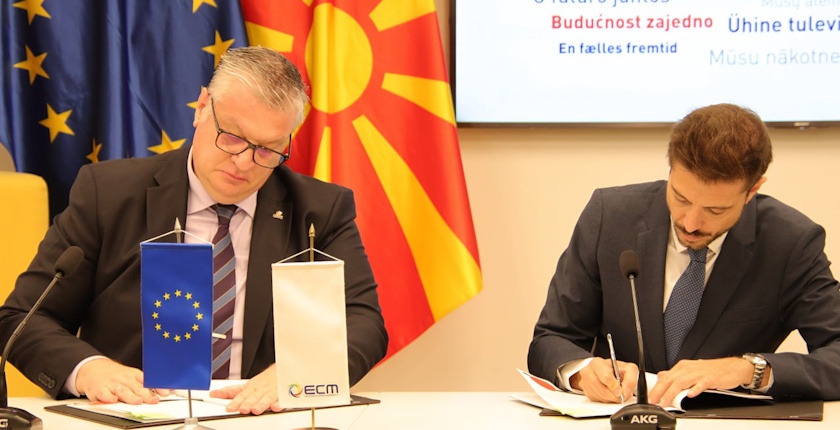
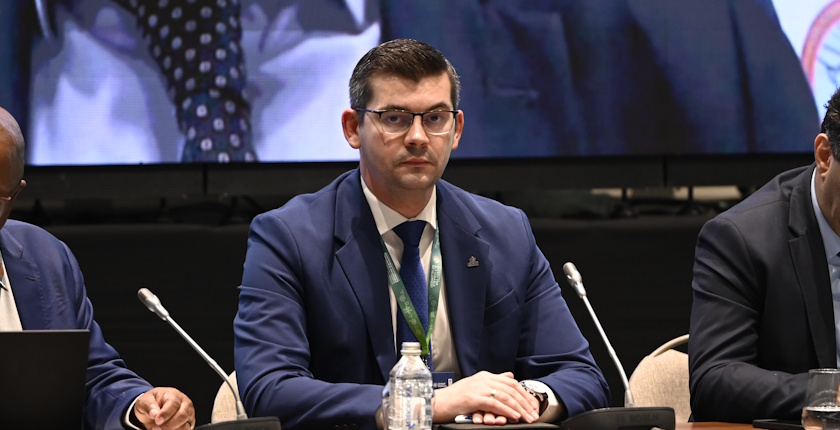
The financial agreement was formally signed by CGES Chief Executive Officer Ivan Asanović, European Bank for Reconstruction and Development (EBRD) Vice President Mark Bowman, and Montenegrin Minister of Finance Novica Vuković. The Ministry of Finance backed the initiative by issuing a state guarantee, underscoring the government’s steadfast commitment to supporting strategic investments that bolster both national infrastructure and regional connectivity.

Detailing the technical improvements, CEO Ivan Asanović noted that the modernization project will effectively double the transmission line’s current capacity from 300 megawatts (MW) to approximately 600 MW. He characterized the upgrade as a foundational investment in a secure, stable, and integrated energy future for the region, resulting in a more resilient grid capable of meeting increasing systemic demands and facilitating deeper regional cooperation.

EBRD Vice President Mark Bowman echoed these sentiments, emphasizing that reinforcing transmission networks is essential for securing long-term energy security and regional integration in the Western Balkans. Bowman noted that the project will overhaul vital infrastructure in Montenegro, aligning with the EBRD’s mandate to foster sustainable and resilient infrastructural development.

Looking forward, this project falls under a broader capital expenditure strategy for CGES, which plans to invest a total of €200 million into transmission infrastructure over the next five years.
by in News

Econergy secures financing for 87 MW Oradea solar plant in Romania

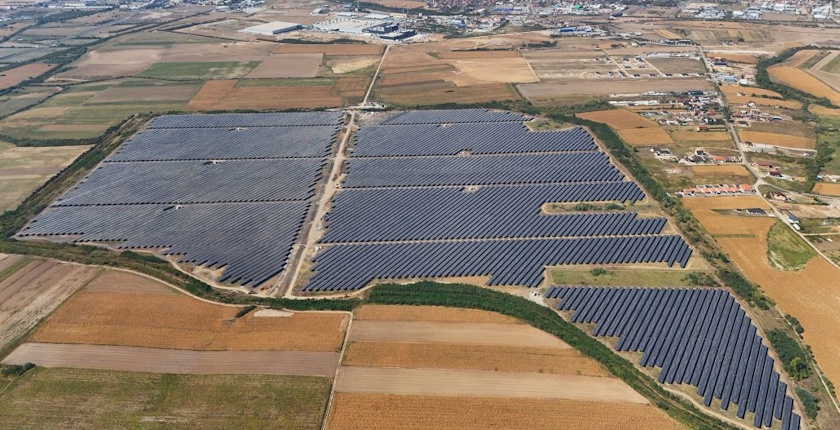
Econergy Renewable Energy has signed a EUR 40.5 million project finance agreement with UniCredit Bank for its 87 MW Oradea solar power plant in the Crișana region in north-west Romania.

The Oradea photovoltaic facility has been fully connected to the grid since August 2025, and is generating revenues, according to Israel-based Econergy.

The proceeds will be used for various purposes including refinancing of the loans spent to construct the power plant, the company explained.

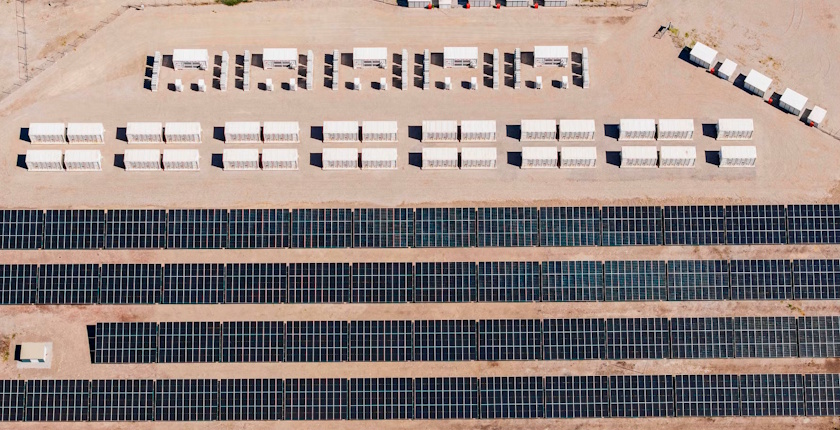
Within a strategy to hybridize its Romanian solar portfolio, Econergy plans to add a 68 MW BESS component at the Oradea site.

It is the second project finance agreement secured with UniCredit

The expected investment in energy storage is about EUR 21 million, with an estimated annual contribution of EUR 8.4 million in revenues and EUR 6.7 million in EBITDA, based on the first five full operating years, the update reads.

The company said it is its second project finance agreement secured with UniCredit.

Econergy Group is operating in key European markets, including Germany, the UK, Italy, Spain, Romania, Poland, and Greece. It develops photovoltaic, wind, and energy storage projects.

The current project pipeline exceeds 14 GW, according to the company’s website.

Econergy is the owner of the largest PV facility in Romania

The company generates revenue by selling electricity, earning development and operation fees, and selling projects at various stages of development.

Of note, Econergy is the owner of the largest PV facility in Romania. In October it agreed to buy out Nofar’s 50% stake in the 155 MW Rătești solar power plant. The firm plans to add a 120 MW BESS.

Econergy has four PV plants in Romania. With the inauguration of Oradea, the company’s operational and ready-to-connect capacity in the country has reached 447 MW. It is building another 788 MW and expects to start the construction of 559 MW more by the end of 2025.

The project was developed with Phoenix Holdings.

by in News

Premier Energy acquires 400 MWh battery energy storage project

Premier Energy has acquired a project for a 400 MWh battery energy storage system at a site near Iași, Romania’s third-largest city.

Premier Energy Group has announced the acquisition of 100% of a ready-to-build project for a battery energy storage system (BESS).

The planned power input and output is 200 MW, while the energy storage capacity would be 400 MWh.

Premier Energy Group is an electricity producer, distributor and supplier as well as natural gas distributor and supplier in Romania and Moldova. It owns and operates a total capacity of 1,100 MW.

The investment is estimated at EUR 75 million

The company has 328 MW in renewable energy projects under construction and in the pipeline.

Premier Energy revealed that the total development and construction cost of the battery near Iași is estimated at EUR 75 million. The firm’s management is currently in advanced discussions on financing options for the project, the update reads.

It expects to secure a long-term financial structure, while the BESS project would be commissioned in late 2026 or early 2027.

Garza: It will be among the largest battery plants in Southeastern Europe

In a market characterized by significant 15-minute price fluctuations and an increasing number of prosumers, the facility will enhance flexibility, reduce system costs and support the efficient integration of renewable generation, the company underscored.

According to José Garza, Premier Energy Group CEO, the project aligns naturally with its strategy of building a more flexible, integrated electricity platform in Romania.

“Its scale places it among the largest battery plants in Southeastern Europe, and it will support the market by helping to alleviate intraday price volatility, improve grid stability and complement our renewable production and supply activities,” he added.

Stohr: Large-scale storage enhances the efficiency of the entire value chain

Peter Stohr, Premier Energy Group CFO, explained that large-scale storage enhances the efficiency of the entire value chain, from production to supply, and creates important synergies with the company’s existing portfolio.

“We are already engaged in discussions with a major CEE financial institution regarding the project’s financing, and we are confident that this asset will integrate seamlessly into our broader energy platform,” he stated.

by in News

Serbia’s EPS starts trial operation of its first wind park Kostolac

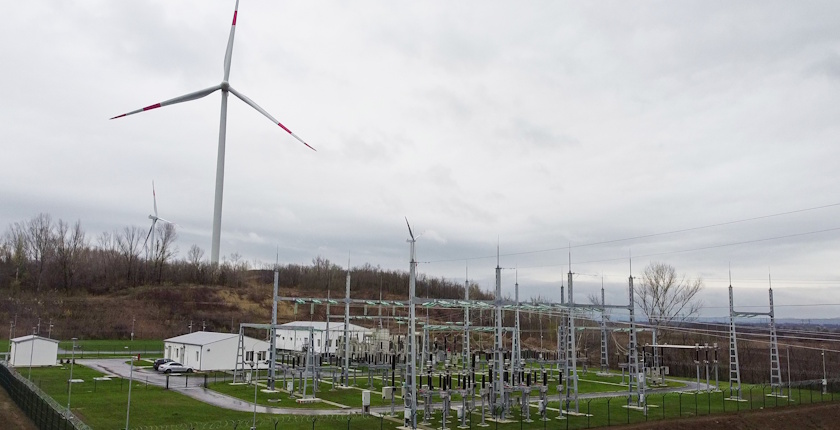
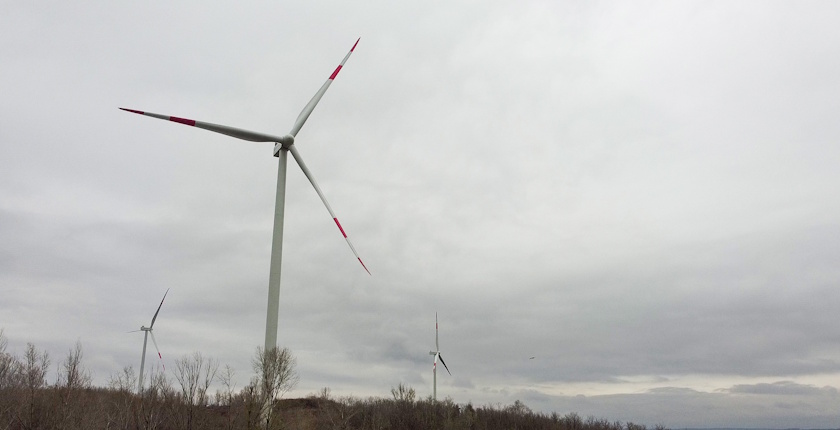
Serbia’s state-owned power utility Elektroprivreda Srbije put the 66 MW Kostolac wind farm into trial operation.

The construction of Kostolac is complete, and Elektroprivreda Srbije’s (EPS) first wind farm has generated its first megawatt-hours, EPS announced.

Upon receiving approval for connecting to the transmission system, the substation was energized and the blades of wind turbine 1 began to spin. It marked the start of the trial operation of the new generation capacity, the company said, and added that the kickoff of the remaining wind turbines is underway.

EPS’s first wind power plant, with 20 generators, is located at sites called Drmno, Petka, Ćirikovac and Klenovnik, at an area of closed open-pit mines of its subsidiary Termoelektrane i kopovi Kostolac (TE-KO Kostolac). It operates coal-fired power plants and open-pit coal mines.

Živković: It is a historic moment for EPS

Closed coal mines are ideal locations for installing wind farms and solar power plants, due to existing infrastructure. The concept has become widespread in Balkan countries.

“This is a historic moment for EPS. In addition to energy from water, coal, and the sun, now the first wind farm is online. This is a big step toward increasing the share of renewable energy and achieving sustainable energy development for EPS and the entire Serbian energy sector,” CEO Dušan Živković underlined.

He pointed out that the wind farm is just the beginning of future intensive development of new green capacities. It is very significant that it was built on the site of an old mining landfill and that the space has been given a completely new, sustainable purpose, he added.

The wind farm is expected to produce 187 million kWh annually

serbia eps wind farm Kostolac trial operation coal mine
Photo: EPS/Zoran Gavrilović

Živković recalled that the construction of the wind farm was a major challenge, but also a real opportunity for experienced engineers and young, new professionals at EPS to gain new knowledge and experience for future projects.

The planned annual production of the wind farm is 187 million kWh, which is enough to supply about 30,000 households with green electricity, according to EPS.

The project is financed by a EUR 110 million loan from Germany’s KfW Development Bank and a EUR 30 million grant from the European Union via the Western Balkans Investment Framework (WBIF), while the company provided a part of the needed funds, EPS said.

Serbia’s Minister of Mining and Energy, Dubravka Đedović Handanović said in January 2024, at the signing of an agreement with the EU for the EUR 30 million grant, that it has completed the financing of the project.

According to WBIF’s update from December 2024, the project was valued at EUR 145.1 million. It comprised EUR 81.8 million from a KfW loan and EUR 31 from WBIF in the form of a grant, while EPS provided EUR 32.3 million.

by in News

ESM secures EUR 1.5 million grant to accelerate North Macedonia’s energy transition

North Macedonia’s power utility Elektrani na Severna Makedonija has secured a EUR 1.5 million grant to strengthen its capacity and accelerate the energy transition.

Elektrani na Severna Makedonija (ESM) made a major step toward a market-driven green transformation with a grant implementing agreement with Germany’s KfW Development Bank.

The agreement formalizes a EUR 1.5 million technical assistance grant to boost the state-owned utility’s corporate and green transition processes.

The support will strengthen ESM’s institutional and commercial capacities, enable further investments in renewable energy, and prepare the company for integration into the European energy market, according to a social media post by Steffen Hudolin, Head of Cooperation at the European Union’s Delegation to North Macedonia.

Uzunčev: The grant represents a strategic cornerstone for the company’s institutional transformation

The grant is part of a wider EUR 13 million EU programme supporting the market-oriented green transformation of state-owned energy utilities across the Western Balkans and Eastern Neighbourhood, the post reads.

Lazo Uzunčev, EMS General Manager, said that the grant represents a strategic cornerstone for the company’s institutional transformation to a comprehensive, green, and market-oriented enterprise.

Hudolin, Uzunčev, Obrador (photo: ESM)

For ESM, it is a profound commitment to becoming a modern and commercially competitive force within the European energy market, he underlined.

“The funding will be instrumental in bolstering our internal capacities and corporate governance through the financing of critical modeling and strategic planning initiatives,” Uzunčev asserted.

​Hudolin: Accelerating the green transition has never been so close and so possible

According to Steffen Hudolin, accelerating the green transition has never been so close and so possible.

“With the support of the EU and the European Fund for Sustainable Development Plus (EFSD+) guarantees, the country will receive financial means and technical guidance by our partners in KfW to accelerate the transformation and decarbonisation of the energy sector,” he stated.

Pablo Obrador Alvarez, KfW Head of Division Energy and Transport for Southeast Europe and Türkiye, said the energy transition requires fit energy utilities able to cope with challenging conditions.

“With this project, KfW will support ESM’s transformation that will position and help them improve their performance and market readiness,” he added.

by in News

Sunotec, Shell join forces to develop BESS in Europe

Sofia-based Sunotec signed an agreement with oil and gas major Shell on the development of battery energy storage systems in Central Eastern Europe.

Sunotec is developing projects for large solar and battery energy storage systems (BESS) in Europe while Shell is one of the leading oil and gas companies in the world.

Sunotec said it signed a cross-border agreement with Shell Energy Europe B.V. It marks a milestone in advancing innovative financial mechanisms for the development of battery energy storage systems in Central Eastern Europe, the Bulgaria-based company added.

The five-year agreement is linked to a 600 MW BESS project owned by Sunotec. The battery is under development and expected to enter commercial operation by Q2 2026, the update reads.

The deal helps Shell to diversify its wider power portfolio in the region

“The agreement provides long-term price stability for the project, supporting its financial viability. For Shell, the deal helps to diversify its wider power portfolio in the region. The agreement was facilitated by Enery Portfolio Optimisation,” Sunotec said.

The transaction is among the first of its kind in Central Eastern Europe and it helps to establish battery project development in the region, according to the renewables developer.

Kaloyan Velichkov, Sunotec founder and CEO, stressed that agreements like the one with Shell highlight the company’s commitment to working with leading energy players who share its vision for a sustainable and forward-looking energy future.

Velichkov: The agreement demonstrates the power of collaboration in advancing flexibility and renewable-energy driven independence

“This pioneering agreement demonstrates the power of collaboration in advancing flexibility and renewable-energy driven independence. By uniting technical expertise with financial ingenuity, we are helping to build a more resilient and integrated energy system,” he underlined.

The transaction demonstrates how cross-border cooperation and forward-looking financial mechanisms can enhance regional energy market integration and facilitate the deployment of large-scale renewable energy assets, in Kaloyan’s view.

Of note, Sunotec has been very active in the market over the last few months.

In October, the firm secured financing for a portfolio of seven projects in Bulgaria.

Three months prior, it signed an agreement with Sungrow on installing 2.4 GWh of BESS in Europe.

by in News

North Macedonia’s ESM needs investments of EUR 3 billion to replace coal power

Power utility Elektrani na Severna Makedonija estimated that it requires EUR 3 billion by 2040 to replace electricity from its lignite-fired power plants. According to member of the Board of Directors Ivan Stojanovski, the state-owned company is preparing investments in gas power plants, solar, wind, hydropower and energy storage. He highlighted its plans for a 300 MWh battery and the Bogdanci hybrid energy park.

North Macedonia’s utility Elektrani na Severna Makedonija (ESM), the country’s main electricity producer, generated 60% of the 2024 output in the Bitola and Oslomej coal plants.

A rough estimate is that ESM would have to invest around EUR 3 billion in the next 15 years to replace its power production from lignite, which is baseload energy, Ivan Stojanovski, a member of the Board of Directors and the company’s Chief Financial Officer, told Balkan Green Energy News on the sidelines of the International Forum on Energy for Sustainable Development (IFESD-14).

He explained that the transition to green energy is quite expensive. ESM needs to replace the 840 MW in baseload production that the Bitola and Oslomej thermal power plants provide, the executive added.

Hydropower is a domestic electricity source, unlike natural gas

The company opted for investments in diverse energy sources to achieve it, Stojanovski stressed.

Gas power plants provide baseload energy, but at the same time, they turn the spotlight on national security as well as the security of supply, in his words.

Lignite is currently mined in North Macedonia while natural gas must be imported, so gas supply interruption is possible, ESM’s CFO added.

Gas power plants are required, but it is necessary to invest in hydropower as it is a domestic resource, Stojanovski said. On the other hand, hydroelectric plants are more expensive and it takes longer to build them, he noted.

ESM launched the Bitola 3 solar power project

ESM is developing wind and solar power projects as well. Stojanovski highlighted the planned expansion of its Bogdanci wind farm. The European Bank for Reconstruction and Development (EBRD) is participating in the development of the Miravci wind power project, of at least 100 MW, he recalled.

The company is working on solar power projects Oslomej 1 (10 MW), Oslomej 2 (10 MW), Bitola 1 (20 MW) and Bitola 2 (60 MW), Stojanovski asserted. Bitola 3 endeavor is underway, too, and the financing contract is expected to be signed by the end of the year, he revealed.

The photovoltaic system will have at least 100 MW, Stojanovski asserted.

“We plan to sign a contract next year with Agence Française de Développement (AFD) for a solar power plant in Bogdanci of at least 30 MW and to create a hybrid energy park there – wind, solar, and a battery,” he stated.

According to Stojanovski, the company is developing a battery energy storage project with the EBRD, for up to 300 MWh in capacity. The site is within the REK Bitola coal complex and the facility will be a systemic solution for all the solar power plants there, he explained.

Blended financing as a solution

“EUR 1 billion to EUR 1.3 billion is needed just for solar, wind and batteries. We will need between EUR 500 million and EUR 700 million for gas power plants. Another EUR 1 billion to EUR 1.3 billion would be for large hydropower plants such as Čebren and Vardar Valley, and some smaller projects,” Stojanovski explained.

Asked how the company plans to secure financing, he pointed to blended financing – own sources combined with some participation from international financial institutions. It is important to diversify the sources by opening cooperation with as many financial institutions as possible, in Stojanovski’s view.

ESM traditionally cooperates with the EBRD and KfW. Stojanovski announced that the company would diversify financing by launching cooperation with the World Bank, Italy’s development bank Cassa Depositi e Prestiti, and AFD.

“It will enable us to access more sources and complement them with financing from local banks. We also tend to obtain support from the state budget over a longer period, 10-15 years, and state guarantees, but also additional funds. This is a financial model that can secure long-term and sustainable financing of infrastructure projects,” Stojanovski said.

by in News

EU launches EUR 17.5 billion energy efficiency initiative for SMEs

The European Union plans to double its support to small and medium-sized enterprises in the 2025-2027 period for investments in energy efficiency and decarbonization.

The European Commission and the European Investment Bank (EIB) Group have launched a EUR 17.5 billion financing initiative.

According to the commission, more than 350,000 companies across Europe are set to make energy efficiency and decarbonization gains through the scheme.

The initiative for energy efficiency for small and medium-sized enterprises (SMEs) is led by the EIB Group. It aims to help firms utilize proven energy-saving technologies to reduce their energy bills and enhance their resilience and competitiveness, the commission underscored.

The EU expects to mobilize over EUR 65 billion in overall investments

The program will use a combination of existing and new financial products, including debt and equity instruments. The EU expects to mobilize over EUR 65 billion of investments in the segment by 2027.

To streamline access and support for businesses, the initiative will introduce a “one-stop shop for energy efficiency for SMEs,” the update adds. The commission explained that a single-entry point would integrate EIB Group’s intermediated lending offering and added it would simplify engagement and accelerate implementation.

The backing by the commission will include EU budget guarantees

The commission’s backing will include EU budget guarantees offered through the InvestEU mechanism and LIFE environmental program.

EU Commissioner for Energy and Housing Dan Jørgensen pointed out that SMEs invest in energy efficiency at only half the rate of larger companies. “This EIB initiative supported by the commission will be key to closing the investment gap, simplifying access to financing, and accelerating the deployment of energy efficiency solutions,” he added.

According to EIB Group President Nadia Calviño, the initiative represents a significant step up in support to help companies cut energy costs.

“Servitisation” or energy efficiency as a service

The EIB said it is partnering with the Solar Impulse Foundation, a nonprofit organization, to promote a model known as “servitisation” or energy efficiency as a service.

For example, instead of purchasing energy-efficient heating or lighting equipment, SMEs pay for the warmth or light they use. The service provider retains ownership of the equipment and ensures its performance. EIB stressed that the model eliminates upfront investment costs for businesses, making it easier and faster to adopt energy efficiency measures.

“The Solar Impulse Foundation has already identified over 1,600 profitable solutions that prove efficiency is not a cost but a gain. With this initiative, we can now bring these innovations to hundreds of thousands of SMEs across Europe,” said Bertrand Piccard, initiator and chairman of the Solar Impulse Foundation.

by in News

Croatian Bank for Reconstruction and Development secures EUR 50 million for firms for green investments

The Croatian Bank for Reconstruction and Development has secured EUR 150 million from the European Investment Bank, of which at least one third is dedicated to green investments by businesses in the country.

A new finance contract with the European Investment Bank (EIB) provides EUR 150 million to finance projects of mid-caps, large private companies and public entities in Croatia, the Croatian Bank for Reconstruction and Development (HBOR) said.

The loan particularly promotes green investments. It is the first tranche of a new EUR 350 million financing agreement between the EIB and HBOR to expand access to financing for Croatian companies.

The package will be deployed via direct lending by HBOR and through commercial banks and other financial intermediaries.

At least 30% of the financing is for projects contributing to green transition

At least 30% of the financing is for projects contributing to green transition, including investments in energy efficiency, renewable energy sources, sustainable construction and clean transport, Croatia’s bank noted.

According to EIB Vice-President Teresa Czerwińska, the initiative will expand financial support to a broad range of Croatian companies and public entities, with a strong emphasis on climate action and sustainability.

The operation is structured as a multi-beneficiary intermediated loan (MBIL). In addition to advancing the European Union‘s goals to promote climate action and environmental sustainability, it will help foster economic activity and social cohesion across Croatia, HBOR said.

The EIB and HBOR have concluded 28 finance contracts worth EUR 3.8 billion overall

HBOR will ensure, as it has so far in cooperation with EIB, that all end-beneficiaries comply with relevant national and EU legislation, with a special focus on preserving environmental, climate and social standards.

The new financing further reinforces HBOR’s role in supporting green and climate-resilient projects, contributing to the achievement of the strategic goals of Croatia and the European Union for the ​​green transition, according to Hrvoje Čuvalo, President of the Management Board of HBOR.

EIB and HBOR have concluded 28 finance contracts so far, worth EUR 3.8 billion, for financing more than 8,000 projects across Croatia.

by in News

INVL fund secures loan for 71 MW of solar projects in Romania

INVL Renewable Energy Fund I has secured a EUR 29.3 million loan for the installation of solar power plants with a capacity of 71 MW in Romania.

INVL Renewable Energy Fund I, managed by INVL Asset Management, invests in renewable energy projects.

The new EUR 29.3 million loan agreement has been signed with Kommunalkredit Austria AG, the fund revealed.

It is its second loan to the fund. In November 2023, the bank approved EUR 25 million for the construction of solar power plants in Romania.

Kommunalkredit’s long-term support plays an important role in accelerating the transition to green energy in the region, according to Liudas Liutkevičius, Managing Partner at INVL Renewable Energy Fund I.

INVL Renewable Energy Fund I is focusing on the Polish and Romanian markets

Construction of the facilities of an overall 71 MW in Dolj County is scheduled for completion by the end of September next year, according to the update. It is the fund’s third large-scale solar energy project in Romania.

INVL Renewable Energy Fund I is focusing on the Polish and Romanian markets, having a combined portfolio of projects in development of 389 MW.

In Romania, the fund is planning eight photovoltaic units with a total capacity of 356 MW. Its future solar parks in Poland would have 32 MW overall. All are due to be completed by the end of 2027.

Ponomarenko: The bank is committed to enabling the energy transition in high-growth markets

Investments in Romania and Poland are expected to exceed EUR 250 million altogether, the fund added.

Konstantin Ponomarenko, a Senior Structurer at Kommunalkredit Austria, said the development of solar energy infrastructure in Romania reflects both the fund’s strategic vision and the bank’s commitment to enabling the energy transition in high-growth markets.

The transaction underlines Kommunalkredit’s dedication to delivering bespoke financing solutions that empower sustainable development across Europe, he added.

  • 1
  • 2