by in News

Public voting open for EUSEW Awards

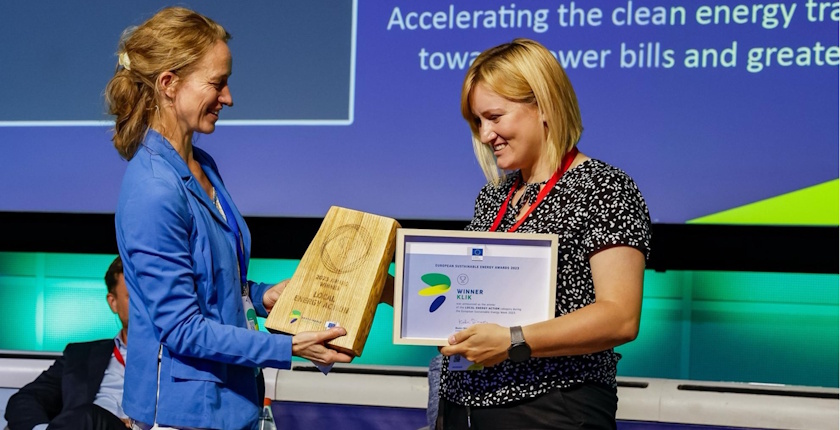
EUSEW Awards will be presented on June 10, within the European Sustainable Energy Week (EUSEW), to outstanding individuals and organisations driving Europe’s energy transition. A jury has selected nine finalists across three categories: Innovation, Local Energy Action, and Woman in Energy. The public now gets to decide the winners.

Online public voting for EUSEW Awards is open until June 1. Voters can support one finalist in each category.

The winners will be announced during the official awards ceremony in Brussels on June 10.

Innovation category

The Innovation Award recognises outstanding projects funded by the European Union that are ongoing or recently completed, demonstrating original and innovative approaches to the energy transition and delivering tangible results.

Dutch company AquaBattery has launched a pilot project in Delft for a long-duration energy storage (LDES) battery system that uses only salt and water as storage medium.

During charging, renewable electricity converts saltwater into acid and base, which are stored in separate tanks, effectively storing the electricity. During discharge, the acid and base are recombined into saltwater, generating electricity. This enables a stable power supply even when there is no sun or wind, without relying on critical raw materials like lithium.

[wpcc-iframe title=”EUSEW2025 Finalist | Dutch saltwater battery commercialises groundbreaking energy storage solution” width=”500″ height=”281″ src=”https://www.youtube.com/embed/1xs2khpQB2k?list=PLMKHMvnaraHMd4y5rZuvjnnW1veToA8qm” frameborder=”0″ allow=”accelerometer; autoplay; clipboard-write; encrypted-media; gyroscope; picture-in-picture; web-share” referrerpolicy=”strict-origin-when-cross-origin” allowfullscreen=””]
The LIFE4GreenBroadband project in Croatia, led by telecom operator A1 Hrvatska, is the second finalist in the Innovation category. It aims to reduce emissions in the telecommunications sector by introducing solar panels and passive cooling systems to mobile base stations.

[wpcc-iframe title=”EUSEW2025 Finalist | Project cutting emissions in Croatian telecoms sector” width=”500″ height=”281″ src=”https://www.youtube.com/embed/UHkQHJ4e9ls?start=7&feature=oembed” frameborder=”0″ allow=”accelerometer; autoplay; clipboard-write; encrypted-media; gyroscope; picture-in-picture; web-share” referrerpolicy=”strict-origin-when-cross-origin” allowfullscreen=””]
The third finalist is the Spanish-Italian project LIFE Turbines, focused on developing smart cities and generating green electricity by using surplus pressure in water pipelines. By integrating microturbines directly into existing infrastructure, the project demonstrates how to harness urban hydropower without affecting water quality or supply.

[wpcc-iframe title=”EUSEW2025 Finalist | Spanish-Italian project harnessing hydropower from urban water systems” width=”500″ height=”281″ src=”https://www.youtube.com/embed/E2VLw49_WCs?list=PLMKHMvnaraHMd4y5rZuvjnnW1veToA8qm” frameborder=”0″ allow=”accelerometer; autoplay; clipboard-write; encrypted-media; gyroscope; picture-in-picture; web-share” referrerpolicy=”strict-origin-when-cross-origin” allowfullscreen=””]

Local Energy Action

The Local Energy Action Award celebrates implemented sustainable energy initiatives carried out by citizens or consumers at the local level, contributing to their community’s energy transition. It also aims to inspire similar efforts across the EU by showcasing economic and environmental benefits. This year’s finalists are: Amiestas, proKlima, and Shared Energy for Social Housing in Otterbeek.

Amiestas is a public, non-profit organisation managing a centre for energy-efficient renovation of residential buildings in Vilnius, Lithuania. It streamlines processes for residents and provides technical and financial support to improve building energy efficiency by 50% to 60%.

[wpcc-iframe title=”EUSEW2025 Finalist | non-profit supporting multi-apartment renovations in Vilnius” width=”500″ height=”281″ src=”https://www.youtube.com/embed/nTZG3NTDI_E?list=PLMKHMvnaraHMd4y5rZuvjnnW1veToA8qm” frameborder=”0″ allow=”accelerometer; autoplay; clipboard-write; encrypted-media; gyroscope; picture-in-picture; web-share” referrerpolicy=”strict-origin-when-cross-origin” allowfullscreen=””]
ProKlima is a public-private partnership funding clean energy projects in and around Hanover. It brings together municipal utility enercity, local authorities, and NGOs. Nearly 40,000 clean energy projects were funded so far within the endeavor.

The partners created a fundraising instrument independent of municipal budgets. The money, sourced from gas sales, profit sharing from the said energy supplier and from concession fees, is distributed to local projects addressing climate change and raising awareness about global warming.

[wpcc-iframe title=”EUSEW2025 Finalist | German clean energy fund” width=”500″ height=”281″ src=”https://www.youtube.com/embed/RsKK4HZ4w1I?list=PLMKHMvnaraHMd4y5rZuvjnnW1veToA8qm” frameborder=”0″ allow=”accelerometer; autoplay; clipboard-write; encrypted-media; gyroscope; picture-in-picture; web-share” referrerpolicy=”strict-origin-when-cross-origin” allowfullscreen=””]

Shared Energy for Social Housing in Otterbeek, Belgium, gives access to renewable energy to residents in vulnerable groups. Two hundred social housing units have been equipped with solar panels, allowing residents to receive green electricity at a fixed, lower-than-market rate.

[wpcc-iframe title=”EUSEW2025 Finalist | Belgian social housing energy initiative” width=”500″ height=”281″ src=”https://www.youtube.com/embed/Q30AOi-58ck?list=PLMKHMvnaraHMd4y5rZuvjnnW1veToA8qm” frameborder=”0″ allow=”accelerometer; autoplay; clipboard-write; encrypted-media; gyroscope; picture-in-picture; web-share” referrerpolicy=”strict-origin-when-cross-origin” allowfullscreen=””]

Woman in Energy

The Woman in Energy Award recognises the efforts of women whose actions, if replicated, can accelerate the transition to clean energy in Europe. Special attention is given to promoting gender equality and equal opportunities in the energy sector.

This year’s finalists are Carmen Sánchez-Guevara, Sofie Loots, and Stella Tsani.

Spanish architect and professor Carmen Sánchez-Guevara is a leading voice in the fight against summer energy poverty, which affects vulnerable households exposed to extreme heat. Through projects like Cooltorise, she has helped people in five countries protect themselves through education, greening initiatives, and improved public spaces.

[wpcc-iframe title=”EUSEW2025 Finalist | Spanish architect tackling summer energy poverty” width=”500″ height=”281″ src=”https://www.youtube.com/embed/LqwFIljOk1c?list=PLMKHMvnaraHMd4y5rZuvjnnW1veToA8qm” frameborder=”0″ allow=”accelerometer; autoplay; clipboard-write; encrypted-media; gyroscope; picture-in-picture; web-share” referrerpolicy=”strict-origin-when-cross-origin” allowfullscreen=””]

Sofie Loots advocates for local energy cooperatives in Belgium. For 16 years, she worked as a sustainability advisor in the Municipality of Edegem near Antwerp, focusing on climate action through energy efficiency and building renovation.

In 2016, Sophie co-founded the energy cooperative ZuidtrAnt with a group of other volunteers. Their goal was to prioritise citizens’ interests in the energy transition and to make renewable energy more affordable.

[wpcc-iframe title=”EUSEW2025 Finalist | Pioneer of Flemish energy cooperatives” width=”500″ height=”281″ src=”https://www.youtube.com/embed/x-uyBKLxXPU?list=PLMKHMvnaraHMd4y5rZuvjnnW1veToA8qm” frameborder=”0″ allow=”accelerometer; autoplay; clipboard-write; encrypted-media; gyroscope; picture-in-picture; web-share” referrerpolicy=”strict-origin-when-cross-origin” allowfullscreen=””]

Stella Tsani, an associate professor at the University of Athens, links academic research with real-world energy policy, focusing on economic incentives for a sustainable energy transition.

Through work with organisations such as the United Nations Environment Programme (UNEP) and the Intergovernmental Panel on Climate Change (IPCC), her research informs policies that balance economic growth with environmental protection. She is also dedicated to empowering young women in the energy sector through mentorship and education, believing that future female leaders are key to achieving the EU’s climate goals.

[wpcc-iframe title=”EUSEW2025 Finalist | Greek academic driving country’s energy transition” width=”500″ height=”281″ src=”https://www.youtube.com/embed/YIizBrFETqc?feature=oembed” frameborder=”0″ allow=”accelerometer; autoplay; clipboard-write; encrypted-media; gyroscope; picture-in-picture; web-share” referrerpolicy=”strict-origin-when-cross-origin” allowfullscreen=””]

by in News

An EU budget that works for the people: unlocking finance for energy communities

Authors: Dirk Vansintjan, President of REScoop.eu, EUSEW’s digital ambassador; Sara Tachelet, ACCE project coordinator and Chris Vrettos, policy advisor finance, also EUSEW’s young energy ambassador.

Europe’s transition to a clean energy system requires unprecedented investment, but today’s financing tools fail to unlock the full potential of citizen-led energy initiatives. Energy communities can mobilise billions of euros in renewable energy investments, yet their potential remains untapped due to complex state aid rules, inaccessible funding mechanisms, and burdensome regulations. Considering the broader policy landscape of the Clean Industrial Deal and the ongoing negotiations around the Multiannual Financial Framework, how can Europe close this gap and ensure fair access to finance for energy communities?

Financing the future: the role of citizens’ investments

Europe needs major investments in renewable energy, energy efficiency, and grids to meet its decarbonisation goals. The European Commission estimates an annual €400 billion shortfall by 2030. While the Action Plan for Affordable Energy Prices acknowledges the potential of energy communities in stabilising and lowering energy prices, the Clean Industrial Deal (CID) ignores their potential in mobilising investment.

A study shows that citizens could contribute €176 billion to wind energy alone by 2030. These citizens’ investments boost local economies while helping to democratise the energy system and stabilise prices. Every euro invested in citizen energy projects generates two to eight euros locally.

In contrast, up to 75% of the profits from investments in energy projects by large energy companies are distributed as shareholder dividends, limiting their local impact. Interestingly, energy communities are increasingly investing in industrial-scale projects such as offshore wind and large-scale district heating, demonstrating their ability to contribute to Europe’s reindustrialisation objectives. However, without tailored financial support, their expansion remains constrained.

Foto: Dirk Vansintjan, President of REScoop.eu, EUSEW’s digital ambassador and Chris Vrettos, policy advisor finance, also EUSEW’s young energy ambassador

Breaking barriers: state aid rules and public funding gaps

Energy communities face financial and regulatory barriers, particularly restrictive state aid regulations and a lack of investment mechanisms tailored to their needs. Many Member States fail to use EU funds effectively to support energy communities, while commercial banks often hesitate to lend, disregarding the social and economic benefits these communities can bring.

To fill this gap, national federations of energy communities in countries such as the Netherlands, France, and Spain have created ‘Community Energy Financing Schemes’ (CEFS), designed to support and finance energy community projects. These schemes effectively pool investments from citizens, public institutions, and private investors. Experience from the Netherlands and France shows their impact: every euro of public funding in the early stages can attract up to 60 euros in private investment for project implementation.

While revised EU State aid Guidelines have improved conditions for renewable energy communities, the framework remains difficult to navigate. Member States need clearer guidance on designing support schemes that are accessible to energy communities. Additionally, administrative and regulatory hurdles, such as grid connection fees and complex licensing processes, continue to slow down community-led projects.

Foto: Sara Tachelet, ACCE project coordinator

A call to action: targeted financial support for energy communities:

To fully unlock energy communities’ potential, the EU should support the creation of dedicated financial instruments tailored to their needs. This includes:

  • An EU Guarantee Facility, similar to InvestEU’s SME window
  • Simplified State Aid procedures for energy communities
  • Stable financing mechanisms for energy communities in the next Multiannual Financial Framework
  • Technical assistance for Member States to help ensure that energy communities can access the Social Climate Fund and Just Transition Fund
  • Support for national federations in scaling up financing models like CEFS can also help advance and professionalise community-led energy projects across Europe

Unlocking community potential in the energy transition

The EU’s energy transition cannot be left solely in the hands of large corporations and institutional investors. Energy communities have shown they can drive the shift to renewables, help citizens access affordable local production, and invest in industrial-scale projects like offshore wind and district heating. However, the right financial and policy tools are needed to help scale up. By improving these tools, policymakers can empower energy communities to become a cornerstone of Europe’s clean energy future.

This opinion editorial is produced in co-operation with the European Sustainable Energy Week (EUSEW) 2025. See ec.europa.eu/eusew for open calls.

by in News

Europe must finance its clean future now

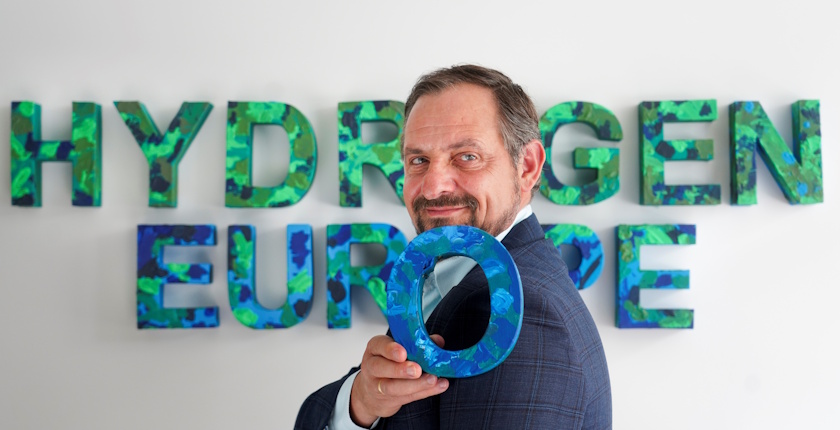
Author: Jorgo Chatzimarkakis, CEO of Hydrogen Europe, EUSEW’s partner organisation.

‘The best time to plant a tree was 20 years ago. The second-best time is now.’ In a world of short-term thinking and instant gratification, this old adage continues to hold true. In the context of the energy transition, and the race against time to offset the worst effects of climate change, it is even more relevant.

In fact, we in Europe can say that we did start investing properly in wind and solar power 20 years ago (although we would be in a much stronger position had we started 20 years before that, immediately after Professor James Hansen’s landmark testimony to the US Senate committee on energy in 1988).

But rather than look back in disappointment or despair at humanity’s delayed climate action, we can resolve not to make the same mistakes again. Hydrogen, one of the enablers of the energy transition, offers us a new solution with which to decarbonise.

Clean hydrogen is a versatile energy carrier with multiple applications across our society. You can use it to sustainably produce steel, fertilisers, and chemicals – hard-to-abate sectors which cannot be easily electrified – or fuels for road, maritime, or aviation mobility systems, where smaller size and longer ranges compared with batteries make fuel cell propulsion systems more desirable for long-haul journeys. You can also use it for long-term energy storage, grid balancing, and flexibility, which will grow in importance as we move to a fully renewable electricity grid. This is just a short summary of the vast potential held within this clean molecule.

Hydrogen is a helpful addition to electricity

Hydrogen is thus a complementary tool to electrification, reaching where electrons cannot. Already several projects around Europe are showing how. In Sweden, H2 Green Steel – Europe’s first greenfield steel mill in 50 years – replaced coal with green hydrogen to power the steelmaking process, cutting CO2 emissions by up to 95% compared to traditional steelmaking. In France, Lhyfe produces renewable hydrogen from wind energy and sells it to industrial end-users, as well as zero emission bus and freight fleets. In Italy, one of the world’s largest shipbuilders, Fincantieri, is designing hydrogen-based cruise and cargo ships.

These success stories can be built upon, and Europe could lead a global market based on the production, transport, and use of renewable hydrogen. But there is a risk that moving too slowly will see Europe lose out to global competitors, as seen in the solar and battery industries, where decades of European-led research and development could not prevent profits from going elsewhere once the technologies came to market.

Despite a substantial pipeline of projects up and down the hydrogen value chain, Final Investment Decisions (FID) have been comparatively rare – only 4% of global hydrogen projects reached FID last year, and most of those were in China. This is due in large part to the cost of producing renewable hydrogen in Europe still exceeding that of fossil fuel-based hydrogen. With a strong support system, we can make clean hydrogen a viable option for all those businesses looking to achieve emissions reduction.

We need to think more pragmatically. China has achieved massive success through state-led innovation and the development of clean technologies to the point that it is now a global market leader in most subsectors. And climate change means we do not have the time to simply wait for the economics to work out. These two facts show us that it is not only desirable but necessary, to spend in the short-term in order to reap the benefits in the long term. Sow the seeds. Plant the tree now.

More effort required to accelerate hydrogen market development in Europe

This is not to say that Europe has not already taken important steps to close the financing gap. The European Hydrogen Bank auctions, under the Innovation Fund call, are and will continue to be a successful endeavor to provide key support to hydrogen production projects. The Important Projects of Common European Interest (IPCEI) program has already awarded support to more than 120 projects involving nearly 100 European companies and should raise over €43 billion from a blend of public and private funds. This is positive, but more is needed both at the European and national level if we are to seriously get the hydrogen market moving here before it is too late to compete.

In the latest draft of the European Commission’s ‘Clean Industrial Deal’ regulatory package, the state aid framework introduces relevant capital expenditure (CAPEX) support, with aid intensities of up to 50% for hydrogen use in industry and 45% for renewable energy rollout, creating a strong foundation for hydrogen deployment. Europe wants to stake its claim as a clean technology leader, but to do so we must stop pulling the rug out from under our own feet.

Europe has repeatedly and publicly professed its support for hydrogen, and as a result, hundreds of companies have invested time and money into building up the sector. We have some existing, successful funding schemes in place and a mammoth pipeline of projects. But we must go further, for example by encouraging national governments to accelerate the transposition of EU legislation and to consider implementing their own funding mechanisms for hydrogen projects. By planting these trees now, we will be able to sit in the shade of a robust, competitive hydrogen market for years to come – with all the new jobs, decarbonization potential, added resilience, and global competitiveness that it will bring.

This opinion editorial is produced in co-operation with the European Sustainable Energy Week 2025. See ec.europa.eu/eusew for more details.

by in News

EUSEW 2025: Registration open for the European Sustainable Energy Week

Registration is now open for participation in the 19th edition of the European Sustainable Energy Week – EUSEW 2025, which will be held from June 10 to 12. Participants can register to attend the event in Brussels or join online.

EUSEW is the largest annual event dedicated to renewable energy and efficient energy use in Europe. It is organized by the European Climate, Infrastructure and Environment Executive Agency (CINEA) in cooperation with the European Commission’s Directorate-General for Energy.

In order to ensure competitiveness and achieve clean energy goals, Europe must take concrete action. The rapid deployment of renewable energy sources and the implementation of energy efficiency measures will be key elements in supporting industry, the European Commission said. It added that Europe would need to respond to the challenges of energy price spikes and market instability, which affect both businesses and citizens.

In line with the challenges, the slogan of this year’s European Sustainable Energy Week is ‘Powering a fair and competitive green transition’.

The number of in-person seats is limited

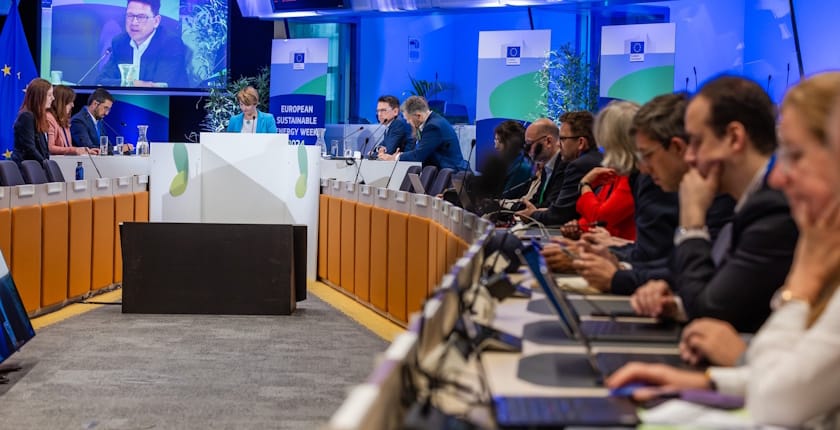
This year, EUSEW will be held in a hybrid format, from June 10 to 12. The gatherings are in the European Commission’s Charlemagne building and the nearby Martin Hotel in Brussels. All sessions will be livestreamed via a dedicated online event platform.

As the number of in-person seats is limited, organizers are encouraging interested participants to register as soon as possible.

Photo: EUSEW

EUSEW 2025 features a variety of events. The high-level conference, with over 60 sessions, will feature prominent speakers exploring five main themes: competitiveness and investments in clean energy, energy affordability, renewables, energy efficiency, decarbonization, and international cooperation. The conference will be officially opened on June 10 by European Commissioner for Energy and Housing Dan Jørgensen.

Following the opening, the EUSEW Awards ceremony will take place. They recognize outstanding individual and collective achievements in the fields of energy efficiency and green energy and are presented in three categories: Innovation, Local Energy Action, and Women in Energy.

EUSEW will also offer opportunities for informal networking during the Energy Fair. Additionally, for the sixth year in a row, the European Youth Energy Day will be held. A group of 30 young energy ambassadors will organize their own sessions and side events, including workshops with energy experts.

Dozens of locally organized Sustainable Energy Days will also be held across the world before and after the main week of the event.

by in News

Energy efficiency: the jack of all trades of EU electrification

By Arianna Vitali, Secretary General at the Coalition for Energy Savings, EUSEW’s partner organisation, highlighting the importance of energy efficiency in EU electrification, including cost savings, better grid flexibility, and protecting consumers.

It is no secret that for the EU to reach climate neutrality, the progressive electrification of our energy system will be essential – and with it, a sound strategy to achieve it in a cost-effective manner. With an Electrification Action Plan on the books for the new European Commission, it is crucial to ensure that the potential of energy efficiency to enable, accelerate, and lower the costs of EU electrification is not overlooked, but rather fully leveraged.

Energy efficiency and electrification: a match made in heaven

Shifting away from fossil fuels and towards renewable energy sources will require accelerating the electrification of both energy production and end-uses. While we all agree that electrification boosts energy efficiency, it is important to remember that this relationship is a two-way street where energy efficiency also has something to offer to the EU electrification process.

Indeed, by reducing overall energy demand, energy efficiency can ease grid congestion, reduce the costs of electrifying the EU energy system, and stabilise the prices paid by consumers. In that vein, the European Commission recently stressed that combined action on electrification and energy efficiency can reduce the EU’s fossil fuel import bill by €32.5 billion every year by 2030 (representing 25% of the total savings that would result from implementing the Action Plan). With the top priorities for this mandate focusing on improving competitiveness and affordability, leveraging the joint potential of energy efficiency and electrification is more relevant than ever.

Flexibility is key

A resilient energy system starts with a flexible energy system. Beyond supporting the EU’s climate neutrality goal, reducing energy demand through demand-side measures eases stress on the grid, allows for more flexible consumption patterns, and ultimately ensures a more adaptable and resilient energy system. The evidence is there: by adopting ambitious demand-side measures (both efficiency and flexibility), peak demand can be reduced by up to 39% in 2030 compared to a scenario without such improvements. This, by extension, lowers the need for additional infrastructure, making the overall electrification process faster and more manageable.

Lowering costs, boosting affordability, and protecting citizens

Energy efficiency’s potential to reduce infrastructure costs, and therefore overall system costs, is significant. For instance, ambitious demand-side measures respectively lower total energy system costs and reduce annual investments in distribution grids by around €40 billion.

These saved costs, which will ultimately not be paid by businesses and citizens, contribute to energy affordability by keeping electricity prices in check, helping European industries decarbonise while improving their competitiveness.

Finally, energy efficiency measures would also cut energy costs for households, helping to protect the most vulnerable. With ambitious demand-side measures, households could save significantly on their annual energy bills. Annual average household energy spending could go down to €900 by 2030, a considerable drop from today’s average of €1,190. This proves particularly useful for heating and road transport, which are expected to increase fossil fuel prices.

Time to put energy efficiency first

The EU transition towards decarbonisation and electrification of the energy system will require careful planning and substantial investment. Luckily, the EU has a jack of all trades on hand. With its wide range of benefits, from reducing infrastructure needs and costs, increasing energy security, cutting energy bills, and supporting both businesses and vulnerable citizens, energy efficiency offers readily available solutions to many of the challenges ahead and must be prioritised.

As stressed in the Action Plan for Affordable Energy, the EU needs a ‘decarbonised energy system, driven by a substantial scale-up of clean energy and electrification, with energy efficiency at its centre’. Prioritising the implementation of energy efficiency solutions on the ground will be key to building an affordable, secure, and competitive energy system for the future.

This opinion editorial is produced in co-operation with the European Sustainable Energy Week 2025. See ec.europa.eu/eusew for more details.

Disclaimer: This article is a contribution from a partner. All rights reserved.

Neither the European Commission nor any person acting on behalf of the Commission is responsible for the use that might be made of the information in the article. The opinions expressed are those of the author(s) only and should not be considered as representative of the European Commission’s official position.

by in News

Bring clean heating and cooling to buildings: a circular energy economy in urban environments

Author: Thomas Nowak, EUSEW’s digital ambassador

Efficient heating and cooling is essential, yet much thermal energy goes to waste. What if we could avoid this thermal pollution and instead establish a circular energy economy in urban areas by recovering and recycling waste heat? Thermal networks as heat collectors and transport means, heat pumps as energy lifts, storage, and clean renewable energy sources can turn this dream into reality today.

Clean heating and cooling in cities is not happening

As the climate crisis worsens and urban populations grow, cities face increasing pressure to improve infrastructure and services. Cities need to be made more resilient against extreme weather incidents and heat waves. The use of fossil energy must be replaced by clean alternatives. This is not only a response to climate change, but also an obligation codified in EU law, notably the EU Energy performance of buildings and the Renewable Energy Directives.

The symbiosis of heat pumps, low temperature energy grids and the use of renewable electricity/heat provides a solution.

Low temperature thermal networks to unlock “the energy chest” of cities

Traditional district heating and cooling distributes high temperature thermal energy generated in central plants to its clients. Even using insulated pipes, some energy is lost in the distribution. Changing from central to decentralised networks and reducing operating temperature avoids this disadvantage. Low temperature, multi-input-output networks connect all types of buildings requiring heating and cooling. They collect waste heat from many different sources (e.g. industrial processes, offices, data centres, or public infrastructure) and distribute it where it is needed.  Heat pumps raise the temperature to the required level at the point of demand.

Photo: The symbiosis of heat pumps, thermal energy grids and multiple energy sources for clean heating and cooling of apartments and buildings in cities. Source: Qvantum Industries
© Qvantum Industries AB

Heat pumps for clean thermal energy

Heat pumps extract heat from a source (air, water, ground or a thermal network), lifting it to a higher temperature level to provide heating. At the same time the source is slightly cooled. Heat pumps always provide useful heating and cooling and it depends on the system design which of these services can be used.

Connecting the many energy users and (waste) heat providers in a city through a thermal network and adding heat pumps of different types and capacities in apartments and buildings (see circles) enables the collection of waste heat and highest heating and cooling efficiency. One user’s waste heat becomes another users heat source (see figure 1).

Multiple benefits for cities

The benefits for cities of transforming their heating and cooling infrastructure are plentiful.

  • Replacing fossil fuels with clean energy reduces CO₂ emissions and air pollution, leading to better air quality.
  • Collecting waste heat from cooling limits the heat island effect in cities. Buildings equipped with cooling help citizens withstand heat waves. Cities and citizens are more resilient to already observable climate change.
  • Storage tanks and the energy grid itself operate as thermal battery, balancing the electric grid.
  • Local energy sources, used by European technology solutions and designed and installed by a European workforce, help Europe become largely independent of fossil energy.

Breaking barriers to adoption

Implementing heat pump technology and thermal networks faces challenges. Upfront investment costs, regulatory hurdles, and limited public awareness can slow progress. Cities and policymakers should incentivise modern heat pump-based heating and cooling by making deployment easy and economically attractive. Cities should make thermal networks part of their public waste heat collection infrastructure.

Convincing humans is also key. Campaigns explaining policy, highlighting the benefits of clean heating and cooling and explaining how end users will be supported in their decision making will create trust and accelerate adoption by decision makers.

A path to sustainable cities

Urban heating can become decarbonised, efficient and sustainable while creating cleaner, more affordable, and more resilient communities. The technology exists, its potential is enormous. Let’s make use of it. Clean heating and cooling is not just a choice – it is the cornerstone of Europe’s energy and climate policy.

This opinion editorial is produced in co-operation with the European Sustainable Energy Week 2025. See ec.europa.eu/eusew for open calls.

Disclaimer: This article is a contribution from a partner. All rights reserved.

by in News

Building resilient cities: how to align competitiveness and sustainability in Europe’s energy transition?

By Filipe Araùjo, Deputy Mayor of Porto, Portugal and Vice President of Energy Cities,one of EUSEW partner organisations

With the new EU Institutions taking office, it seems that the main discourse has shifted from the EU Green Deal to competitiveness. This new narrative presents both a challenge and an opportunity for European cities. We want our territories to prosper, but this can’t happen at the expenses of our health and safety.

Resilient local economies for a competitive Europe

A city that is thriving is a place where there is community wealth: the needs of its inhabitants are met, preferably by local economic actors. This contributes to reinforcing the local economic system, the social bonds and overall help withstand crisis situations. Resilient local economies are a precondition to EU’s competitiveness.

This community wealth approach applies to many sectors, but I believe it’s quite effective when it comes to energy. Nowadays, very few are questioning the need to have more renewable energy fed into the grid, not only to fight climate change, but also to ensure everyone (businesses and citizens alike) has access to energy at a relatively stable and affordable price, no matter the geopolitical context. But if we want to speed up RES deployments, we need to ensure everyone is on board. Not in my backyard behaviours (NIMBY) are still a reality many local leaders are confronted with. According to our experience in Porto, local ownership of renewable energy is a way for cities to address NIMBY, but also to help tackling energy poverty and contribute to thriving local economies.

Community energy addressing energy poverty in Porto

That is why Porto is planning to include all municipal social housing, around 12% of buildings in the municipality, in community energy projects. 6MW of solar power is going to be installed, providing clean electricity to vulnerable families at a lower price.

While some of the projects are still being tendered, some are already in the implementation phase. For example, the energy community in the Agra do Amial district, active since May 2024, is already providing its members with renewable energy, with around 50% of the energy generated consumed by vulnerable families

While our ambition is high, we can’t ignore the many challenges we are confronted with – some are common to many European municipalities. Cities frequently lack staff and financial resources to lead highly participatory process, often involving citizens who are very difficult to engage (such as vulnerable households) or even to provide information to their community on energy related issues. This, combined with the complexity of such topics, makes our work even more difficult.

In addition, burdensome administrative processes and challenging legal frameworks at national level can halt innovative projects and discourage citizens and small businesses from participating. When setting up Porto’s first energy community, it took us 2 years to get social housing units connected to the solar panels we installed.

Leveraging on local ecosystems for a more resilient Europe

Luckily, solutions do exist to ensure local communities can play their part to contribute to a more resilient and democratic Europe. Aside from ensuring legislation is properly transposed so that everyone across Europe can benefit from the same energy rights, we need capacity building programmes, develop local One Stop Shops to inform/engage citizens on the opportunities available to them and energy literacy programs.

For this to happen, cities will have to access finance, and the integration among the different initiatives at all levels that aim at increasing renewable energy deployment (and energy security) is fundamental. Another important aspect will be to ensure multilevel governance, so that cities can participate in the decision making around what concerns them, and not just been asked to implement.

In the coming period, the new European Commission is set to work on a new Citizens Energy Package, but also to develop a Clean Industrial Deal and reform the EU Cohesion Policy. This presents as a unique opportunity to align the EU approach to competitiveness with its energy and environmental targets, by establishing proper governance mechanisms and funnelling the necessary resources accordingly.

This opinion editorial is produced in co-operation with the European Sustainable Energy Week (EUSEW) 2025. See ec.europa.eu/eusew for open calls.

  • 1
  • 2