by in News

Empowering the next generation: Youth engagement as a pillar of the Energy Transition

Author: Anna Cocchi, Project Officer,  ‘Fast & FairRenewables’ (FFRes) and Meie Kleijburg, Stakeholder Officer for Youth-lead Organisations  ‘Fast & FairRenewables’ (FFRes) at the European Youth Energy Network (EYEN), a partner organisation of EUSEW  

The 2050 net zero target is often talked about as a distant milestone on a map, but for us as young people, 2050 isn’t just a target; it’s our future. If we really want to achieve net zero, it is essential to recognize young people as essential, local partners today. Including youth as professional actors of the energy transition goes hand in hand with the “Local Projects – Local Influence” principle, showing that early and meaningful engagement of local groups is key to accelerating renewable deployment. From our experience as a European youth network, it is clear that youth must be involved from the start.

Positioning youth at the heart of the clean energy transition: a youth-led perspective

The mission of the European Youth Energy Network (EYEN) is to place young people at the heart of the clean energy transition: we believe in a future where European youth is instrumental in shaping a just and sustainable transition. As a volunteer-based think tank, EYEN works to build intergenerational collaboration and trust, equip young people with the necessary knowledge and skills, and create concrete spaces for them to act.

EYEN addresses a knowledge gap among decision-makers on how to meaningfully involve youth and respond to the needs and challenges of future generations. While the EU’s decarbonisation framework sets ambitious 2050 targets, implementation at the local level often lacks the structured engagement needed to ensure youth participation. Young people are ready to contribute but frequently face closed decision-making processes due to limited resources or unclear entry points. Beyond inclusion, youth represent an untapped energetic force in the energy transition: the more young people are involved, the faster policies and projects translate into real-world impact. When young people are meaningfully involved in decision-making, momentum increases, innovation flourishes, and implementation capacity is strengthened. Young people bring long-term vision and strong local networks, making them essential partners in the transition happening today.

At EYEN, our stance is clear: young people are not merely the “owners of the future,” but essential, professional partners whose participation must be embedded beyond tokenism into the core of energy policy, infrastructure planning, and grid development.

Local projects, local influence: delivering fast & fair renewables

A strong belief in action at the local level is a central pillar of EYEN’s work. In 2024, EYEN collaborated with ICLEI, a global network of more than 2,500 local and regional governments, to develop European baseline principles for the so-called Fast & Fair Renewables project. These principles emphasise that early and meaningful engagement of local interest groups is a prerequisite for successful renewable deployment, not an optional extra. Partnerships between municipalities, networks like ICLEI, and youth organisations demonstrate how youth engagement can be scaled beyond isolated initiatives.

It is within this gap that EYEN seeks to intervene, identifying effective ways to connect municipalities with youth organisations: this requires transparent communication, adequate resources, and feedback mechanisms to build trust. When meaningfully involved, young people act as catalysts at the local level, amplifying awareness of renewable projects and translating policy objectives into community-wide action.

Energy communities as intergenerational infrastructure

The transition to a decarbonised Europe is a shared journey. Empowering young people to influence energy infrastructure in their own local contexts through energy communities is, therefore, a crucial policy topic. In this context, the Fast & Fair Renewables project is closely connected to the Renewable Energy Directive (RED III), which provides the legal framework for Renewable Energy Communities (RECs). RECs enable citizens to take direct ownership of energy production and governance. By aligning youth engagement with RED III, municipalities can transform energy projects from top-down impositions into community-led initiatives, building more resilient, transparent, and equitable energy systems.

From the perspective of youth organisations across Europe, a joint and collaborative public engagement strategy is needed, built on early youth involvement, dedicated resources, transparent communication, and dialogue formats tailored to younger audiences. Equipping youth with knowledge builds trust; professionalising this dialogue ensures that young people’s input is traceable and reflected in final decisions. In this way, youth-led organisations become credible partners for municipalities, ensuring that climate objectives are not only ambitious on paper but achievable in practice.

This opinion editorial is produced in co-operation with the European Sustainable Energy Week (EUSEW) – the biggest annual event dedicated to renewables and efficient energy use in Europe. #EUSEW2026 marks the 20th edition and will once again bring together the community of people who care about building a secure and clean energy future for the next generations.  Check the currently open calls to join.

Disclaimer: This article is a contribution from a partner. All rights reserved. Neither the European Commission nor any person acting on behalf of the Commission is responsible for the use that might be made of the information in the article. The opinions expressed are those of the author(s) only and should not be considered as representative of the European Commission’s official position.
by in News

From bystanders to partners: How to ensure the new Citizens Energy Package effectively engages EU citizens in a clean energy future?

Authors:  Niklavs Tamanis, Veronica Saletti, Marco Costa, Marina Fernández-Campoamor – EUSEW  Young Energy Ambassadors

Citizens still struggle to join Europe’s clean energy transition. This article tests two practical approaches that turn hosts into partners: energy communities, where citizens co-own and share power, and community-benefit clauses, which distribute value locally. We, Young Energy Ambassadors, show how targeted One-Stop Shops (OSS), Renewable Energy Sources (RES)-ID, and interoperability among other solutions could make these mechanisms work more effectively, fairly, and at scale.

Across the EU, households still struggle to engage in energy markets. Awareness of tangible gains is low, and trust in safeguards from extractive corporations is limited. Although credible mechanisms exist, their implementation remains complex, uneven, and inaccessible.

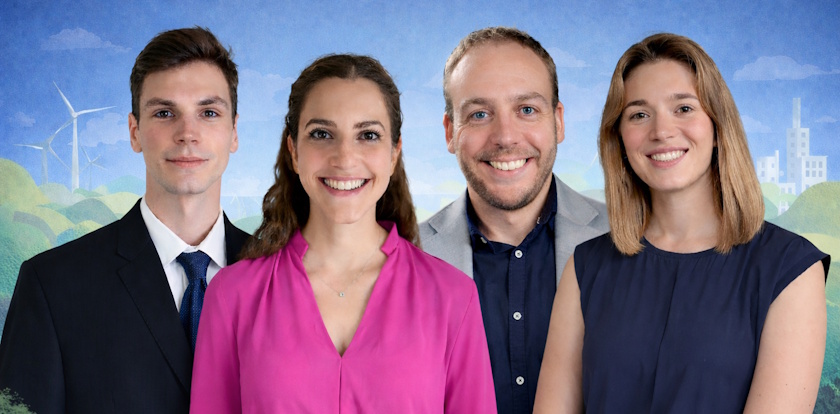
From left to right, Niklavs Tamanis, Veronica Saletti, Marco Costa, Marina Fernández-Campoamor, EUSEW Young Energy Ambassadors
Photo: From left to right: Niklavs Tamanis, Veronica Saletti, Marco Costa, Marina Fernández-Campoamor, EUSEW Young Energy Ambassadors. Illustration created using AI tools, based on original photographs.

EU momentum, Citizens Energy Package, & Our YEA inputs

The Citizens Energy Package, building on the Clean Energy Package and the 2025 Action Plan for Affordable Energy, aims to empower consumers and enable energy sharing. Our contribution to the public consultation as Young Energy Ambassadors (YEA) focused on practical delivery, through such solutions as development of targeted OSS, recognition of youth/renters as a vulnerable group, creation of audience-specific outreach, and improvements to two key levers for citizen participation in energy markets: energy communities and community-benefit clauses. In this article, we focus on the latter two.

Two practical levers

Energy Communities (EComms)

Despite clear EU direction for energy community initiatives, barriers persist: REC definition and implementation differs widely across Member States; low awareness; perceived high effort from practitioners involved in the REC creation process; complex bureaucratic set-up and operations; limited benefits for students, young workers, and low-income renters; costly, non-interoperable metering/platforms; and risks of capture by large market actors.

Our EComms Solutions

To make Energy Communities (EComms) easier to start, join, and manage, we propose a set of complementary solutions that address both organisational and technical barriers.

Primarily, energy community-focused One-Stop Shops (OSS) would act as single-entry hubs where citizens, small and medium-sized enterprises (SMEs), and local authorities can access ready-to-use documentation (statutes, by-laws, and communication templates), energy-sharing evaluations, and clear guidance on data management and regulatory steps, as well as information on how to make their homes more energy efficient.

Young people should receive formal recognition as a vulnerable group within national social frameworks

Moreover, young people, especially those renting apartments as students or early-career professionals, should receive formal recognition as a vulnerable group within national social frameworks. This would enable them to access dedicated benefits and support schemes, like other vulnerable groups, helping to remove structural barriers to their participation and ensuring that energy communities become an inclusive, rather than niche, option.

Then, a dedicated civil-service track for energy communities would also enable young professionals to gain first-hand experience while supporting communities with day-to-day management and citizen engagement activities that are otherwise costly if fully outsourced to external experts. Building on emerging examples from France and Italy, these hubs would also connect communities to grants, soft loans, and local financial partners, making investment more accessible and de-risking early-stage initiatives.

Finally, to simplify participation from a technical and bureaucratic point of view, we propose a Renewable Energy System Identifier (RES-ID): a standardised and recognized technical and administrative data set that citizens and SMEs can fill in once and then reuse across different national portals procedures, such as permit applications, grid-connection requests, EComms affiliation, and incentive schemes requests. Such a tool would store all the renewable energy systems technical data required by different national authorities and retrieve it, when necessary, at each access point, similarly to the Italian SPID or dutch DigID, personal digital identity systems.

EComms Case Studies

1) In Alto Vicentino (Italy), 16 municipalities set up an energy community, added 650 kW of photovoltaics on public buildings, made accessible national grants (up to 40% of the initial investment) for residents and small firms, and a youth team is taking it forward, organizing a buying club for building energy retrofit.

Policy takeaway: back clusters of neighbouring municipalities building from existing energy info points, keep supporting public-building solar installation as “lead by example” lever, and encourage young professionals to actively engage with local communities via dedicated support grants, civil service specific paths, and learning opportunities.

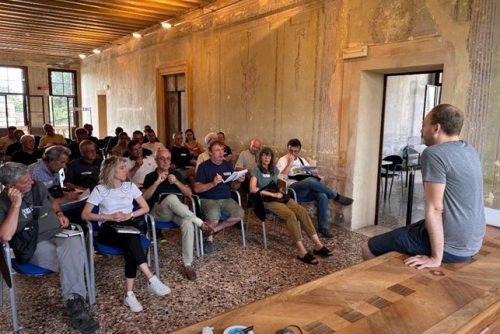
Alto Vicentino REC example, Marco Costa, Young Energy Ambassador
Photo: Marco Costa, Young Energy Ambassador, co-author of this article

2) The Hyperion Energy Community in Athens (Greece), founded in 2020 and mainly composed of families and NGOs, aims to evolve into an ESCO to support the renovation of apartments in multi-unit residential buildings. The project operates in several neighbourhoods of the capital, aiming to ensure gender balance and representation of diverse social groups among its 123 members.

Policy takeaway: Use the Citizen Energy Community (CEC) regulatory framework to create new, citizen-led business structures (ESCOs) to accelerate urban energy renovation in multi-unit buildings, ensuring broad social representation.

3) Energie Samen Rivierenland (The Netherlands): The neighbourhood association in Rivierenland, founded in 1936 and citizen-led, is revitalizing its dated housing stock (60% built before 1950) through a co-design process for interventions. The project covers 133 dwellings, with a specific focus on energy poverty and elderly residents.

Policy takeaway: Leverage existing neighbourhood associations with a long history of community trust to promote the co-design of renovation interventions, focusing specifically on the most vulnerable groups.

4) Renoss (Italy): it is the network of One Stop Shops dedicated to Renewable Energy Communities, run by public local energy agencies backed by the Environmental Ministry. It covers the whole national territory with at least one OSS per region, aligned with the Energy Performance in Building Directive. Each agency supports energy communities via dedicated services which spans from information to grant applications, feasibility studies, and member engagement campaigns.

Policy takeaway: support cluster organizations of public-led OSS to offer a structured and homogeneous technical assistance approach across Europe

Community-benefit clauses

While energy communities are a promising and innovative concept with clear environmental benefits, they don’t always address the social equity concerns from renewable energy projects, such as externalised siting costs. This is why the introduction of benefit-sharing mechanisms, such as community funds and shared equity ownership, is also building momentum among Member States.

Still, progress is uneven: many schemes are complex, opaque, and engage residents too late; youth, renters, and other underrepresented groups are barely reached; participation stays low, and legitimacy suffers. As Young Energy Ambassadors, we thus argue that just transition must go beyond compensation to create shared community value, especially where skills and alternative jobs are scarce.

Our community-benefit Solutions

To make renewable energy projects fairer and more inclusive, national governments can set out simple rules to ensure that local communities share in the benefits.

For example, benefit criteria can be built directly into auction schemes, with clear guidance on eligible uses such as local energy relief or community facilities. A “one-stop shop” (OSS) can then help communities check who qualifies, access funds or compensation, and connect to training or re-skilling opportunities.

Furthermore, governments could develop risk-sharing models that make it easier for low-income households to take part in projects without bearing financial losses.

Finally, targeted communication through youth groups, schools, community centres, and local media can raise awareness, using an EU-adapted model that considers both income and housing conditions.

Community-benefit case studies

We once again explored two national models in detail to see what fair community value-sharing can look like.

1) In Ireland’s RESS auctions, every supported project pays EUR 2/MWh into a local Community Benefit Fund and appears on a national SEAI register with guidance on eligible uses – from energy-poverty relief to community facilities. There’s also a community-led auction lane for locally developed projects.

Policy takeaway: set a fixed €/MWh payment into a local fund, keep a public register and simple annual reporting, and retain a community-led track so locals can lead and access the value.

2) Denmark’s VE-loven goes further by pairing money with ownership and protection. Developers of new onshore wind must offer 20% local shares (within 4.5 km) on equal terms, compensate any loss of property value, and pay into a Green Scheme for local amenities.

Policy takeaway: make it a package – local shares, property compensation, and a community fund – to align incentives and build durable acceptance.

Why does all of this matters

Coupling Ecomms and Community-Benefit mechanisms with functional OSS, RES-ID, interoperability, and guardrails, among other improvements, builds trust, accelerates their deployment, improves affordability, and broadens participation – especially for youth, renters, and other vulnerable groups.

As the EU’s modern citizen energy participation transitions from a consultation phase, equitable codification of mechanisms must follow: targeted OSS must be scaled, trusted tools must be standardised across the MS, mainstream risk-sharing principles must be integrated, and community-benefits must provide tangible value beyond mere compensation.

The European Commission already provides a foundation for this through tools such as the Energy Communities Facility and the Citizen-led Renovation Initiative, which help local actors access guidance, finance, and capacity-building. In parallel, EU-wide networks like REScoop.eu support renewable energy cooperatives and peer learning across Member States.

Building on and scaling these efforts will be essential to ensure our future citizens become genuine partners in Europe’s renewable energy build-out.

This opinion editorial is produced in co-operation with the European Sustainable Energy Week 2026. See ec.europa.eu/eusew for open calls.

Disclaimer: This article is a contribution from a partner. All rights reserved.

Neither the European Commission nor any person acting on behalf of the Commission is responsible for the use that might be made of the information in the article. The opinions expressed are those of the author(s) only and should not be considered as representative of the European Commission’s official position.
by in News

From bystanders to partners: How to ensure the new Citizens Energy Package effectively engages EU citizens in a clean energy future?

Authors:  Niklavs Tamanis, Veronica Saletti, Marco Costa, Marina Fernández-Campoamor – EUSEW  Young Energy Ambassadors

Citizens still struggle to join Europe’s clean energy transition. This article tests two practical approaches that turn hosts into partners: energy communities, where citizens co-own and share power, and community-benefit clauses, which distribute value locally. We, Young Energy Ambassadors, show how targeted One-Stop Shops (OSS), Renewable Energy Sources (RES)-ID, and interoperability among other solutions could make these mechanisms work more effectively, fairly, and at scale.

Across the EU, households still struggle to engage in energy markets. Awareness of tangible gains is low, and trust in safeguards from extractive corporations is limited. Although credible mechanisms exist, their implementation remains complex, uneven, and inaccessible.

From left to right, Niklavs Tamanis, Veronica Saletti, Marco Costa, Marina Fernández-Campoamor, EUSEW Young Energy Ambassadors
Photo: From left to right: Niklavs Tamanis, Veronica Saletti, Marco Costa, Marina Fernández-Campoamor, EUSEW Young Energy Ambassadors. Illustration created using AI tools, based on original photographs.

EU momentum, Citizens Energy Package, & Our YEA inputs

The Citizens Energy Package, building on the Clean Energy Package and the 2025 Action Plan for Affordable Energy, aims to empower consumers and enable energy sharing. Our contribution to the public consultation as Young Energy Ambassadors (YEA) focused on practical delivery, through such solutions as development of targeted OSS, recognition of youth/renters as a vulnerable group, creation of audience-specific outreach, and improvements to two key levers for citizen participation in energy markets: energy communities and community-benefit clauses. In this article, we focus on the latter two.

Two practical levers

Energy Communities (EComms)

Despite clear EU direction for energy community initiatives, barriers persist: REC definition and implementation differs widely across Member States; low awareness; perceived high effort from practitioners involved in the REC creation process; complex bureaucratic set-up and operations; limited benefits for students, young workers, and low-income renters; costly, non-interoperable metering/platforms; and risks of capture by large market actors.

Our EComms Solutions

To make Energy Communities (EComms) easier to start, join, and manage, we propose a set of complementary solutions that address both organisational and technical barriers.

Primarily, energy community-focused One-Stop Shops (OSS) would act as single-entry hubs where citizens, small and medium-sized enterprises (SMEs), and local authorities can access ready-to-use documentation (statutes, by-laws, and communication templates), energy-sharing evaluations, and clear guidance on data management and regulatory steps, as well as information on how to make their homes more energy efficient.

Young people should receive formal recognition as a vulnerable group within national social frameworks

Moreover, young people, especially those renting apartments as students or early-career professionals, should receive formal recognition as a vulnerable group within national social frameworks. This would enable them to access dedicated benefits and support schemes, like other vulnerable groups, helping to remove structural barriers to their participation and ensuring that energy communities become an inclusive, rather than niche, option.

Then, a dedicated civil-service track for energy communities would also enable young professionals to gain first-hand experience while supporting communities with day-to-day management and citizen engagement activities that are otherwise costly if fully outsourced to external experts. Building on emerging examples from France and Italy, these hubs would also connect communities to grants, soft loans, and local financial partners, making investment more accessible and de-risking early-stage initiatives.

Finally, to simplify participation from a technical and bureaucratic point of view, we propose a Renewable Energy System Identifier (RES-ID): a standardised and recognized technical and administrative data set that citizens and SMEs can fill in once and then reuse across different national portals procedures, such as permit applications, grid-connection requests, EComms affiliation, and incentive schemes requests. Such a tool would store all the renewable energy systems technical data required by different national authorities and retrieve it, when necessary, at each access point, similarly to the Italian SPID or dutch DigID, personal digital identity systems.

EComms Case Studies

1) In Alto Vicentino (Italy), 16 municipalities set up an energy community, added 650 kW of photovoltaics on public buildings, made accessible national grants (up to 40% of the initial investment) for residents and small firms, and a youth team is taking it forward, organizing a buying club for building energy retrofit.

Policy takeaway: back clusters of neighbouring municipalities building from existing energy info points, keep supporting public-building solar installation as “lead by example” lever, and encourage young professionals to actively engage with local communities via dedicated support grants, civil service specific paths, and learning opportunities.

Alto Vicentino REC example, Marco Costa, Young Energy Ambassador
Photo: Marco Costa, Young Energy Ambassador, co-author of this article

2) The Hyperion Energy Community in Athens (Greece), founded in 2020 and mainly composed of families and NGOs, aims to evolve into an ESCO to support the renovation of apartments in multi-unit residential buildings. The project operates in several neighbourhoods of the capital, aiming to ensure gender balance and representation of diverse social groups among its 123 members.

Policy takeaway: Use the Citizen Energy Community (CEC) regulatory framework to create new, citizen-led business structures (ESCOs) to accelerate urban energy renovation in multi-unit buildings, ensuring broad social representation.

3) Energie Samen Rivierenland (The Netherlands): The neighbourhood association in Rivierenland, founded in 1936 and citizen-led, is revitalizing its dated housing stock (60% built before 1950) through a co-design process for interventions. The project covers 133 dwellings, with a specific focus on energy poverty and elderly residents.

Policy takeaway: Leverage existing neighbourhood associations with a long history of community trust to promote the co-design of renovation interventions, focusing specifically on the most vulnerable groups.

4) Renoss (Italy): it is the network of One Stop Shops dedicated to Renewable Energy Communities, run by public local energy agencies backed by the Environmental Ministry. It covers the whole national territory with at least one OSS per region, aligned with the Energy Performance in Building Directive. Each agency supports energy communities via dedicated services which spans from information to grant applications, feasibility studies, and member engagement campaigns.

Policy takeaway: support cluster organizations of public-led OSS to offer a structured and homogeneous technical assistance approach across Europe

Community-benefit clauses

While energy communities are a promising and innovative concept with clear environmental benefits, they don’t always address the social equity concerns from renewable energy projects, such as externalised siting costs. This is why the introduction of benefit-sharing mechanisms, such as community funds and shared equity ownership, is also building momentum among Member States.

Still, progress is uneven: many schemes are complex, opaque, and engage residents too late; youth, renters, and other underrepresented groups are barely reached; participation stays low, and legitimacy suffers. As Young Energy Ambassadors, we thus argue that just transition must go beyond compensation to create shared community value, especially where skills and alternative jobs are scarce.

Our community-benefit Solutions

To make renewable energy projects fairer and more inclusive, national governments can set out simple rules to ensure that local communities share in the benefits.

For example, benefit criteria can be built directly into auction schemes, with clear guidance on eligible uses such as local energy relief or community facilities. A “one-stop shop” (OSS) can then help communities check who qualifies, access funds or compensation, and connect to training or re-skilling opportunities.

Furthermore, governments could develop risk-sharing models that make it easier for low-income households to take part in projects without bearing financial losses.

Finally, targeted communication through youth groups, schools, community centres, and local media can raise awareness, using an EU-adapted model that considers both income and housing conditions.

Community-benefit case studies

We once again explored two national models in detail to see what fair community value-sharing can look like.

1) In Ireland’s RESS auctions, every supported project pays EUR 2/MWh into a local Community Benefit Fund and appears on a national SEAI register with guidance on eligible uses – from energy-poverty relief to community facilities. There’s also a community-led auction lane for locally developed projects.

Policy takeaway: set a fixed €/MWh payment into a local fund, keep a public register and simple annual reporting, and retain a community-led track so locals can lead and access the value.

2) Denmark’s VE-loven goes further by pairing money with ownership and protection. Developers of new onshore wind must offer 20% local shares (within 4.5 km) on equal terms, compensate any loss of property value, and pay into a Green Scheme for local amenities.

Policy takeaway: make it a package – local shares, property compensation, and a community fund – to align incentives and build durable acceptance.

Why does all of this matters

Coupling Ecomms and Community-Benefit mechanisms with functional OSS, RES-ID, interoperability, and guardrails, among other improvements, builds trust, accelerates their deployment, improves affordability, and broadens participation – especially for youth, renters, and other vulnerable groups.

As the EU’s modern citizen energy participation transitions from a consultation phase, equitable codification of mechanisms must follow: targeted OSS must be scaled, trusted tools must be standardised across the MS, mainstream risk-sharing principles must be integrated, and community-benefits must provide tangible value beyond mere compensation.

The European Commission already provides a foundation for this through tools such as the Energy Communities Facility and the Citizen-led Renovation Initiative, which help local actors access guidance, finance, and capacity-building. In parallel, EU-wide networks like REScoop.eu support renewable energy cooperatives and peer learning across Member States.

Building on and scaling these efforts will be essential to ensure our future citizens become genuine partners in Europe’s renewable energy build-out.

This opinion editorial is produced in co-operation with the European Sustainable Energy Week 2026. See ec.europa.eu/eusew for open calls.

Disclaimer: This article is a contribution from a partner. All rights reserved.

Neither the European Commission nor any person acting on behalf of the Commission is responsible for the use that might be made of the information in the article. The opinions expressed are those of the author(s) only and should not be considered as representative of the European Commission’s official position.

by in News

Shared power, shared security: Nordic lessons for Europe’s energy resilience

Author: Parvathy Sobha, Brida Mbuwir and Bart Overdevest,EUSEW Young Energy Ambassadors

Renewables are transforming Europe’s energy landscape, but the rapid green transition is testing grid stability. The Iberian blackout exposed the risks of ambition outpacing the system’s flexibility. Yet the story looks different in the north. Nordic countries have integrated vast shares of renewables while keeping the lights on, proof that reliability and decarbonisation can go hand in hand. What can the rest of Europe learn from the Nordics to safeguard its energy security in a net-zero grid?

Europe’s energy security test

As wind and solar replace conventional power plants that once provided system inertia, maintaining voltage and frequency stability grows more fragile. Recent fuel market volatility and supply shocks have also exposed the limits of isolated national grids. This is no reason to slow the green transition, but a reminder that Europe must now build a power system that combines scale, resilience and low carbon intensity.

The Nordic blueprint

The Nordic countries—Sweden, Norway, Finland and Denmark—have built one of the world’s most reliable and decarbonised power systems, known for their unique combination of resources, coordination and market integration. A complementary energy mix forms its backbone: dispatchable hydropower balances variable wind, while nuclear and bioenergy add stability and seasonal flexibility. This is further complemented by growing contributions from batteries and demand response.

Moreover, the cross-border links allow electricity to flow to where it is most needed, easing local shortages and damping price volatility. Additionally, strong regional cooperation, harmonised grid codes, shared market rules and coordinated system planning enable national operators to function as a single, interconnected network. Finally, deeply integrated day-ahead, intraday and balancing markets turn variability into an asset by smoothing prices, reducing reserve needs and strengthening reliability as renewable shares rise.

Author, Parvathy Sobha, Brida Mbuwir and Bart Overdevest, EUSEW Young Energy Ambassadors

Adapting Nordic lessons for Europe’s energy future

Adopting the Nordic model requires adaptation to Europe’s diverse realities. Not every region has the hydropower that underpins the Nordics’ flexibility. Balancing variable renewables in other parts of Europe will depend on smarter combinations of storage, flexible demand and interconnections. The Nordic example shows that strong coordination, consistent investment and shared market rules can overcome resource disparities and geography alike. Infrastructure gaps, uneven market maturity and regulatory differences remain obstacles, but none are insurmountable.

The EU must strengthen not only its physical grids but also the cooperation that connects them. Accelerating interconnectors and internal reinforcements through programmes such as TEN-E and REPowerEU will allow renewable electricity to flow across borders, turning surplus wind in one region into stability in another. Equally important is market integration. Deepening day-ahead, intraday and balancing market coupling will ensure that flexibility—whether storage, demand response, or variable renewables—reaches where it creates the greatest value. Treating flexibility as core infrastructure and valuing fast frequency response and grid-scale storage within capacity and balancing mechanisms, will anchor reliability in a cleaner and more dynamic power mix.

Operational harmony will be the glue that binds this system together. Aligning grid codes, planning standards and market rules across Member States can enable transmission and distribution operators to act as one coordinated European network. A shared digital backbone, built on real-time data, forecasting and automation will add the visibility and speed needed to manage decentralised generation. Citizens remain central to this transformation. Cross-border projects must deliver tangible local benefits: fair prices, clean air and sustainable jobs. Earning public trust through transparency and equitable outcomes will sustain momentum and legitimacy.

This opinion editorial is produced in co-operation with the European Sustainable Energy Week 2026. See ec.europa.eu/eusew for open calls.

Disclaimer: This article is a contribution from a partner. All rights reserved. Neither the European Commission nor any person acting on behalf of the Commission is responsible for the use that might be made of the information in the article. The opinions expressed are those of the author(s) only and should not be considered as representative of the European Commission’s official position.

by in News

Applications open for EUSEW2026 Awards

Applications are now open for the European Sustainable Energy Awards (EUSEW) 2026. They recognise individuals, initiatives, and projects that promote best practices and raise awareness of the importance of sustainable energy solutions across Europe.

EUSEW is Europe’s largest event dedicated to renewable energy and energy efficiency. It features a wide range of activities, including the European Sustainable Energy Awards ceremony.

The EUSEW Awards recognise and celebrate people, projects, and initiatives that contribute to Europe’s transition to clean energy. They highlight achievements that support the goals of the EU’s Clean Industrial Deal and encourage others to adopt best practices in building a sustainable energy future.

The awards are presented in three categories: Local Energy Action, Women in Energy, and, for the first time, Small and Medium-Sized Enterprises (SMEs) as Energy Efficiency Leaders.

The competition showcases innovative approaches to shaping Europe’s energy future and culminates in an awards ceremony held during the EUSEW conference, which will take place from June 9 to 11 next year in a hybrid format. Participants and speakers will be able to attend both online and in person in Brussels. The slogan of this year’s edition, 20th EUSEW, is ‘A clean, secure and competitive Energy Union’.

Finalists will be selected by an expert jury, which will assess applications based on three criteria: concept, implementation, and impact. Each criterion carries a maximum of ten points. The winners will be chosen through a public vote.

Interested applicants may apply directly by January 29 or nominate someone who has made an outstanding contribution to the energy transition.

SMEs as energy efficiency leaders

This year, a new award category has been introduced to recognise the creativity and impact of small and medium-sized enterprises developing innovative business or financing models to improve energy efficiency.

Eligible applicants include SMEs operating in at least one EU member state that have a pilot or commercial project representing an innovation in energy efficiency or financing.

The European Commission and the European Investment Bank have announced a EUR 17.5 billion financing initiative aimed at improving energy efficiency among SMEs, which is expected to benefit around 350,000 businesses across the EU.

Local Energy Action Award

This category recognises clean energy initiatives that demonstrate the strength of community action. It includes associations, organisations, and groups of citizens delivering long-term, real-scale sustainable energy solutions through local and regional projects, with wider social, economic, and environmental benefits.

Last year’s winner was the Community Energy for Social Housing in Otterbeek. The project provides vulnerable residents with access to renewable energy in the Belgian city of Mechelen. Around 200 households in the Otterbeek social housing district have been equipped with solar panels and receive green electricity at a fixed price below market rates.

Women in Energy: leadership that transforms

The Women in Energy Award celebrates women who are shaping Europe’s clean energy transition and redefining leadership in the energy sector, with a particular focus on gender equality and equal opportunities.

Last year’s winner in this category was Stella Tsani, a scientist and associate professor at the University of Athens.

She was recognised for her work linking economics, sustainability, and social wellbeing to help shape fair and effective energy policies across Europe and the Mediterranean. In addition to her influential research, Tsani is a dedicated mentor to young women in the energy sector, contributing to an inclusive and future-oriented clean energy transition.

by in News

EUSEW2026: Focus on clean, secure, competitive Energy Union

The European Sustainable Energy Week (EUSEW), Europe’s largest annual gathering dedicated to renewable energy and energy efficiency, will take place from June 9 to 11, 2026, under the theme ‘A clean, secure and competitive Energy Union’. The 20th edition of EUSEW will be held in a hybrid format, both in Brussels and online. The event will highlight the importance of building a secure, resilient Energy Union while ensuring clean and affordable energy for all.

EUSEW2026 will feature a diverse program of events, including the EUSEW Policy Conference, the EUSEW Awards, the Energy Fair, the seventh edition of the European Youth Energy Day, and Sustainable Energy Days.

The EUSEW Policy Conference will host over 60 engaging and innovative sessions organized by the clean energy community. The European Commission has opened a call for policy session proposals until January 22, inviting industry stakeholders, policymakers, civil society representatives, and academics to contribute their insights and expertise.

EUSEW Awards will be presented in three categories

The EUSEW Awards will recognize outstanding individuals and projects that drive progress in energy efficiency and renewable energy. This year, awards will be presented in three categories: Local Energy Action, Women in Energy, and, for the first time, Small and Medium-sized Enterprises (SMEs) Driving Energy Efficiency. Applications and nominations are open until January 29.

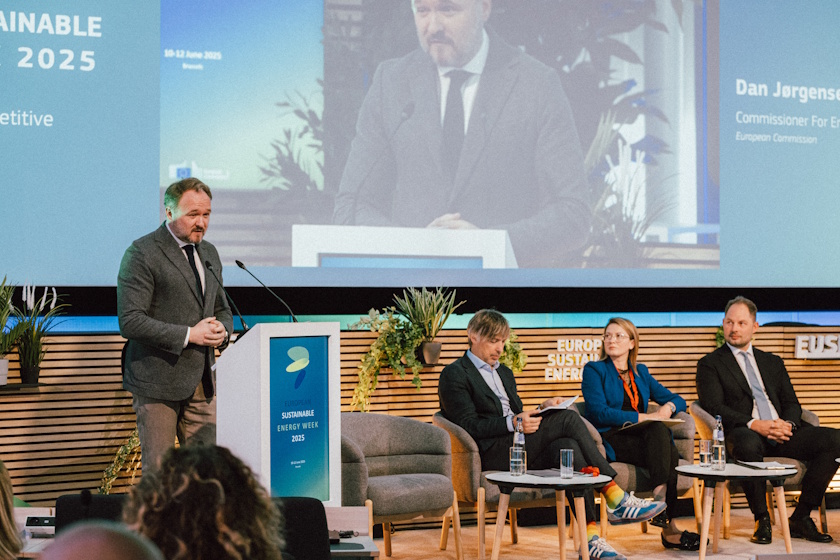
European Commissioner for Energy and Housing Dan Jørgensen at EUSEW 2025

Interested participants can also join an online info session on Wednesday, December 3, from 11:00 to 12:30 CET. Representatives of the European Commission will present this year’s theme, key milestones leading up to and during the conference, and the requirements and selection criteria for policy sessions and EUSEW Awards contributions. A timeline, Q&A, and a recording of the info session will be made available on the EUSEW2026 info page.

Additional opportunities to get involved will be announced in January and February, including options to exhibit at the Energy Fair, become a Young Energy Ambassador, or organize a local Sustainable Energy Day.

by in News

Winners of EUSEW Awards announced

Stella Tsani is this year’s winner of the EUSEW Woman in Energy Award. The Innovation Award went to the Dutch company AquaBattery, while the initiative Community Energy for Social Housing in Otterbeek won in the Local Energy Action category.

EUSEW Awards honor outstanding individuals and projects for their innovation and efforts in energy efficiency and renewable energy. After a high-level jury selected nine finalists, the winners were chosen through online public voting in three categories: Innovation, Local Energy Action, and Woman in Energy.

The award ceremony took place on the first day of the European Sustainable Energy Week (EUSEW) in Brussels. This year’s winners are Stella Tsani, AquaBattery, and Community Energy for Social Housing in Otterbeek.

EUSEW, the largest event in Europe dedicated to sustainable energy, was opened by European Commissioner for Energy and Housing Dan Jørgensen. In his speech, he stressed the European Union would need to become fully independent from Russian energy. “The way we will do it is by banning the import of gas. By the end of this year, we plan to ban spot market gas purchases, and by the end of 2027, we will also ban long-term contracts,” he stated.

The European Union imports fossil fuels worth EUR 400 billion annually, which, according to Jørgensen, is neither economically nor environmentally sustainable.

“Instead of constantly buying expensive energy, we must start producing our own sustainable and renewable energy,” he stressed.

Climate change is here and now

Jørgensen noted that in addition to the energy crisis, Europe is now facing a climate crisis.

“Climate change is here. It’s not something that might happen in the future. It’s not something that we fear could be a prospect. It’s here and now”, he emphasized, adding that Europe has a moral responsibility to combat climate change because, historically, the West, including Europe, has polluted for more than a hundred years.

The third crisis Europe faces, according to the commissioner, is a competitiveness crisis. He pointed out that energy in Europe is two to three times more expensive than in the United States or China, and that last year, 47 million Europeans were unable to adequately heat their homes.

“To address these three challenges, security, climate change, and competitiveness, we need to stay on track. The green transition is not the reason for these problems. The green transition is the answer for these challenges”, Jørgensen concluded.

Energy produced in Europe is always better and more competitive than imported energy

Poland’s Secretary of State at the Ministry of Climate and Environment, Krzysztof Bolesta, also spoke at the opening. He highlighted three key elements for a successful energy transition: affordable energy, fairness, and sustainable energy independence.

Bolesta stressed that citizens must feel tangible benefits from the energy transition through more affordable energy. He also underlined the importance of a just transition, particularly for workers in hard-to-decarbonize industries.

According to him, energy produced in Europe is always better and more competitive than imported energy. “We don’t want to swap one dependency on Russian oil, say, with tech import dependency from Asia. So let’s not swap oil for batteries. Let’s try to bring as much of the value chain to Europe as possible,” the Polish official said.

Woman in Energy – Stella Tsani

Stella Tsani, a scientist and associate professor at the University of Athens, is this year’s winner of the EUSEW Woman in Energy Award. She combines scientific research in energy transition with active participation in high-level policymaking, contributing to practical progress through evidence-based recommendations.

Through work with organisations such as the United Nations Environment Programme (UNEP) and the Intergovernmental Panel on Climate Change (IPCC), her research informs policies that balance economic growth with environmental protection. She is also dedicated to empowering young women in the energy sector through mentorship and education, believing that future female leaders are key to achieving the EU’s climate goals.

In her speech at the award ceremony, Tsani highlighted her belief in the vast, untapped potential of youth. “That’s what I’m trying to do at the University of Athens support all future leaders, the future changemakers. So I truly believe in you and I urge everyone in this room, the European Commission, to support young people,” she stated.

[wpcc-iframe title=”EUSEW2025 Finalist | Greek academic driving country’s energy transition” width=”500″ height=”281″ src=”https://www.youtube.com/embed/YIizBrFETqc?feature=oembed” frameborder=”0″ allow=”accelerometer; autoplay; clipboard-write; encrypted-media; gyroscope; picture-in-picture; web-share” referrerpolicy=”strict-origin-when-cross-origin” allowfullscreen=””]

Innovation category – AquaBattery

The Innovation Award recognises outstanding projects funded by the European Union that are ongoing or recently completed, demonstrating original and innovative approaches to the energy transition and delivering tangible results.

This year’s winner is AquaBattery from the Netherlands. Its pilot project in Delft could soon commercialize a sustainable and affordable solution for long-duration energy storage based on kitchen salt and water. The unique innovation, using widely available and environmentally friendly materials, could help Europe reduce its reliance on critical raw materials and develop better energy storage solutions.

[wpcc-iframe title=”EUSEW2025 Finalist | Dutch saltwater battery commercialises groundbreaking energy storage solution” src=”https://www.youtube.com/embed/1xs2khpQB2k?list=PLMKHMvnaraHMd4y5rZuvjnnW1veToA8qm” width=”500″ height=”281″ frameborder=”0″ allowfullscreen=”allowfullscreen” data-mce-fragment=”1″]

Local Energy Action – Community Energy for Social Housing in Otterbeek

The Local Energy Action category highlights citizen or consumer-led initiatives at the local level that contribute to the energy transition in their communities. Such initiatives are meant to inspire others across the EU by demonstrating both economic and environmental benefits.

This year’s winner is Community Energy for Social Housing in Otterbeek, based in the city of Mechelen, Belgium. The project provides socially vulnerable tenants with access to renewable energy. Two hundred households in the Otterbeek social housing district have been equipped with solar panels, receiving green energy at a fixed rate below market prices.

Supported by the EU under the TANDEMS project, the initiative has developed a EUR 1 million investment model funded through citizen contributions, showcasing the power of community-driven change.

“By demonstrating how social inclusion can accelerate the clean energy transition, we advocate policies that support energy sharing, community-driven renewable projects, and affordable access to clean energy for low-income households,” says Bart De Bruyne, Energy Sharing Expert at the City of Mechelen.

[wpcc-iframe title=”EUSEW2025 Finalist | Belgian social housing energy initiative” width=”500″ height=”281″ src=”https://www.youtube.com/embed/Q30AOi-58ck?list=PLMKHMvnaraHMd4y5rZuvjnnW1veToA8qm” frameborder=”0″ allow=”accelerometer; autoplay; clipboard-write; encrypted-media; gyroscope; picture-in-picture; web-share” referrerpolicy=”strict-origin-when-cross-origin” allowfullscreen=””]

by in News

Electrify Europe – to be competitive and sustainable, the EU needs to speed up electrification

Author: Ulrich Adam, director general of Orgalim, EUSEW’s partner organisation

As Europe grapples with sluggish economic growth and soaring energy costs, electrification has emerged as the linchpin for reversing industrial decline, accelerating decarbonisation, and restoring global competitiveness. In this opinion piece, Ulrich Adam, Director General of Orgalim, outlines why a bold push for electrification must be at the heart of Europe’s Clean Industrial Deal – not just to meet climate goals, but to power a resilient, innovative, and future-proof industrial base.

Europe is facing a competitiveness crisis. First estimates put annual growth for 2024 at 0.7% in the euro area and 0.8% in the EU. Compare that to 4.5% growth in China and 2.2% in the US, and it is clear that something is seriously wrong.

For Europe’s technology industries, 2024 was even worse, with a combined downturn of 4.8% across the metal technology, mechanical engineering, and electrical engineering, electronics and ICT sectors. And the outlook for 2025 is not much better. Orgalim’s Economics & Statistics working group predicts a further -0.5% contraction in real turnover, with knock-on effects on employment, which is forecast to shrink by 0.9%.

High electricity prices and over-regulation are two of the main hurdles holding back European industries. Europe pays around two to three times what the US does for electricity, and between 2019 and 2024 introduced much more regulation.

So, what should Europe do to compete globally, re-establish itself as a leader in tech innovation, and meet the goals of the Green and Clean Industrial Deals? Electrify.

The double win of electrification: speed up decarbonisation, regain competitiveness

Ensuring a low-carbon, low-cost, independent energy source for Europe is key to boosting competitiveness and achieving the aims of the Green and Clean Industrial Deals.

While increasing energy efficiency and reducing overall consumption are important, electrification is the real key. It will enable Europe to massively reduce its carbon emissions while also contributing to increased independence from geopolitics and a more secure energy supply. It can also help create jobs and boost the clean-tech sector.

For example, according to a recent study by Danfoss, deploying electricity demand-side flexibility technologies on energy systems in the EU and UK could help save more than 40 million tonnes of CO2 emissions each year by 2030, and achieve annual cost savings of EUR 10.5 billion.

Decarbonisation can help us grow

Introduced in February 2025, the Clean Industrial Deal aims to turn decarbonisation into a driver of growth for European industries by lowering energy prices, creating lead markets for clean tech, and providing a significant boost to public and private investments.

The Affordable Energy Action Plan is a crucial part of the Clean Industrial Deal, aiming to provide EU industry with stable energy prices, more in line with our international competitors.

A perspective from technology industries

The Action Plan’s push for electrification, digitalisation, flexibility, grid infrastructure deployment, and a single market approach for boosting energy efficiency solutions are all positive. At Orgalim, we strongly support these aims. To be successful, we need access to reliable and affordable low-carbon energy.

However, some important questions need to be clarified:

  • Will non-binding recommendations and guidance to member states on network charges and energy taxation be sufficient to lower bills?
  • Will measures for energy-intensive industry benefit the wider manufacturing sector?

These issues must be addressed if the plan is to succeed.

Reaching net zero

Europe’s technology industries are global leaders in carbon-neutral energy, electrification, and clean manufacturing technologies needed to get to net zero. But we need a secure and competitive energy supply, provided by broad-scale electrification, to achieve faster scale-up of carbon-neutral energy capacity, unlock massive energy efficiency savings, and make Europe competitive again.

This opinion editorial is produced in co-operation with the European Sustainable Energy Week (EUSEW) 2025. See ec.europa.eu/eusew for more details.

by in News

2-in-1: carbon footprint as a quality criterion in the NZIA – solving sustainability and resilience together

By Heike Winkler,EUSEW’s digital ambassador on how fair tendering and sustainability in offshore wind can drive competitiveness and a just energy transition.

We are transitioning from an economy based on fossil energy to an economy based on renewable resources. What could be more obvious than for us to support this development and strengthen our renewable industries, the maritime industry, the circular economy, and the green steel industry? The motto of EUSEW 2025, ‘Powering a fair and competitive green transition’, fits perfectly with the European offshore wind industry.

The motto of this year’s WindEurope Annual Event 2025, which has just taken place in Copenhagen, was ‘Scale up, Electrify, Deliver – Putting wind at the heart of Europe’s competitiveness.’ At the recent WindEurope conference, the offshore wind industry jointly proposed a new Offshore Wind Deal to European governments in order to achieve Europe’s ambitious expansion targets. Resilience and sustainability require close cooperation between business and politics to successfully meet the challenges of the ongoing transformation. Sufficient volume and stable supply chain expansion paths are crucial.

Sustainability requires resilience

For more than two decades, the offshore wind industry has been characterised by an impressively fast-growing know-how, a strong resilience, remarkable innovative power and harmonious synergies from various European industries.

A considerable reduction in the levelised cost of energy (LCOE) of offshore wind energy has been achieved to date, more than the fossil industry has ever had to achieve. This development resulted in permanent cost pressure, which harms the sector.

Decarbonisation of the offshore wind industry itself has been part of the industrialisation process from the very beginning. A current example is the Nordlicht 1 and 2 project in the German North Sea, where a major reduction in CO2 steel emissions is expected to be realised (i.e. by using steel towers).

Level playing field and competitiveness

The level playing field has been repeatedly called into question in recent years due to competitive distortions and discontinuities, e.g. with the thread break (‘Fadenriss’) in Germany starting in 2016, when no more new offshore wind projects were put out to tender, or more recently with the construction stop in the USA. In Germany, many companies went out of business, a lot of experience was lost, thousands of employees lost their jobs and their experience was also lost to the industry. With the current geopolitical uncertainties, particularly regarding energy supply, the sector’s resilience is crucial.

With a level playing field and a robust expansion path, the wind industry would have grown significantly faster.

Net Zero Industry Act and qualitative criteria in tendering processes

At the same time, in line with the Draghi Report on EU competitiveness, the Clean Industrial Deal, together with the Net Zero Industry Act, European competitiveness requires accelerating re-industrialisation and the transformation of energy-intensive companies.

Industrial resilience and sustainability require close cooperation between business and policy, where better procurement practices can advance European interests in the wind sector. For example, the carbon footprint tender criterion should be applied in more than 50% of the coming renewable energy tenders. This is critically important, as it could increase the likelihood of realisation, resilience, while at the same time enhancing the market readiness of European renewable energy industries and thus Europe’s competitiveness.

Every long transport route increases the carbon footprint and reduces the added value of the project in general and where it is to be installed. The EU developed a consultation process to strengthen the net-zero industries, which includes auctions for renewable energies and an implementing law on non-price criteria. The results are currently eagerly awaited.

‘In order to reach a sustainable energy transition that creates added value for European industry, there is no alternative to a sustainable, resilient (2in1) domestic offshore wind supply chain. The carbon footprint criterion in offshore wind tenders is crucial if the transformation of the energy-intensive industry is to deliver climate protection, energy sovereignty and industrial growth at the same time.’ There will be no cost-efficient sustainable energy system in Europe without offshore wind energy.

This opinion editorial is produced in co-operation with the European Sustainable Energy Week (EUSEW) 2025. See ec.europa.eu/eusew for more details.

by in News

Cities are driving the transition to climate neutral and fair housing

Author: Anna Iafisco, policy adviser for housing at Eurocities, EUSEW’s partner organisation

City governments are ready to lead the transition to climate-neutral buildings by 2050, but they cannot do it alone. To ensure a fair transition, they need EU and national support to help low- and middle-income households access renovation support. With better funding, aligned policies, and tools like one-stop shops, cities can deliver warmer homes, lower bills, and a liveable future for everyone.

The road to climate neutrality runs through our homes – and cities are taking the lead. Buildings account for 40% of Europe’s energy use and 36% of emissions, making the decarbonisation of our built environment both a major challenge and a vital opportunity.

By improving energy efficiency, particularly in the residential housing stock, cities are not only cutting emissions and boosting energy security, but they are also improving people’s quality of life. Crucially, this transformation offers a chance to tackle energy poverty, which still leaves too many households without adequate heating, cooling or lighting, while also addressing the question of equitable access to green and healthy living spaces.

For the transition to succeed, it must be fair. At Eurocities, we believe no one should be left behind, especially vulnerable and low- to middle-income households, often exposed to high energy bills and inadequate living conditions.

Reaching a climate-neutral building stock by 2050 will depend on inclusive, well-funded renovation policies that reflect the realities of Europe’s diverse housing systems, and on empowering cities to lead the way.

A diversity of housing systems, a common challenge

Europe’s housing systems are highly diverse, from strong social and cooperative housing sectors in some countries to more privatised or market-driven systems in others. Any EU-wide building policy must allow for flexibility, enabling local, regional and national governments to tailor solutions to their specific situations.

A one-size-fits-all approach to financing renovation risks excluding those who fall outside strict income thresholds or tenancy rules, particularly in private rental markets, where incentives often do not reach either landlords or tenants. Elsewhere, outdated ownership structures or limited municipal control over social housing create further obstacles.

This diversity must be explicitly acknowledged in EU policy frameworks. We need adaptable rules that empower local authorities to reach those most in need, protect tenants from the risk of displacement, and ensure that EU funding tools match the real conditions on the ground.

One-stop shops: making renovation simple and inclusive

One of the most effective ways cities can support households through the transition to energy-efficient and sustainable homes is by setting up one-stop shops. These local services provide clear, accessible information about renovation options, available grants and loans, technical support, and trusted contractors – all in one place.

In Milan, the ‘Sportello Energia’ (Energy Desk) helps residents navigate energy efficiency improvements, with a special focus on reaching low-income and energy-poor households. The city combines this advisory service with targeted financial support, enabling families to carry out renovations they otherwise could not afford.

Similarly, in Rotterdam, the ‘WoonWijzerWinkel’ offers a physical and digital one-stop-shop, where residents can get free independent advice tailored to their homes. The shop has become a trusted go-to point for citizens who may otherwise be excluded from renovation schemes.

These examples show how local services, when designed with people’s needs in mind, can build trust and boost the renovation rate, especially among the most vulnerable.

Targeting support where it matters most

We know that comprehensive renovations are costly, and many households cannot afford them. That is why targeted public investment is vital. Renovation efforts must focus first on the worst-performing buildings, which are often home to people at risk of energy poverty. This is where we can achieve the greatest impact, both for the climate and for residents’ wellbeing.

In Vienna, a long-standing commitment to affordable housing has positioned the city as a leader in socially inclusive climate action. The city is implementing a large-scale renovation programme for its social housing stock, combining energy efficiency improvements with tenant protection measures and cost control.

Meanwhile, in Ghent, Belgium, the city has partnered with social organisations to reach vulnerable households and co-develop tailored renovation plans. This collaborative model ensures that support reaches those who need it most, while building long-term capacity within communities.

These experiences offer valuable lessons for the implementation of the EU’s revised Energy Performance of Buildings Directive. Cities are ready to roll out building upgrades, but they need clear standards, funding and flexibility to adapt to their local realities.

Decarbonising heating, improving lives

Renovating buildings is only part of the solution. Most homes in Europe are still heated with fossil fuels, particularly natural gas. To meet the EU’s 2050 climate targets, we must rapidly phase out fossil fuel boilers and invest in renewable, efficient heating and cooling systems. This is a crucial step to reduce emissions and protect residents from rising fuel costs and energy insecurity.

Cities are already taking action. In Paris, the city is expanding its district heating network based on renewable energy sources, prioritising connections for social housing and public buildings. This approach not only cuts emissions but also shields residents from volatile energy prices, demonstrating the power of public infrastructure to deliver a just transition.

A vision for truly affordable climate-neutral homes

To fully realise the transformation of the built environment, Europe must also advance a shared agenda for affordable, inclusive, and healthy housing. The upcoming European Affordable Housing Plan presents an opportunity to address the affordability crisis by supporting investment in affordable housing, improving existing stock through deep renovation, and aligning climate, environment and social objectives.

Cities are implementing change, but they need greater support to deliver renovation programmes for social and affordable housing, to develop new housing construction that meets climate neutrality and environmental objectives, affordability and accessibility standards. At the same time, EU funding instruments must be better coordinated and easier to access, so they reflect local priorities and realities.

By embedding the principle of housing as a human right into the green transition, the EU can drive a shift towards housing systems that are not only sustainable, but also fair, resilient and inclusive.

A call to action

If we want to reach climate neutrality by 2050, there is no time to lose. A swift, ambitious implementation of the Energy Performance of Buildings Directive, in alignment with the EU Nature Restoration Law, is essential to meet the 2030 targets and to lay the foundation for a fair, sustainable future.

Despite political pressure, the EU should remain focused on putting the recently adopted directive and regulation into practice, rather than adding further uncertainty to an already complex political landscape.

Cities stand ready to lead this transformation. But they cannot do it alone. We call on the EU and Member States to work closely with city governments, empower them through direct access to funding, and ensure that climate, environment and housing policies support the same goal: better homes, healthier lives, and a liveable planet for all.

The building transition must be about more than cutting emissions. It must ensure that everyone, regardless of income or housing tenure, can live in a decent, energy-efficient and quality home.

If we get this right, we will not just reduce carbon and help restore nature, we will ensure a better future for the people of Europe.

This opinion editorial is produced in co-operation with the European Sustainable Energy Week (EUSEW) 2025. See ec.europa.eu/eusew for more details.

  • 1
  • 2