by in News

Clean energy, grid upgrade projects in Western Balkans to be backed under EU’s Growth Plan

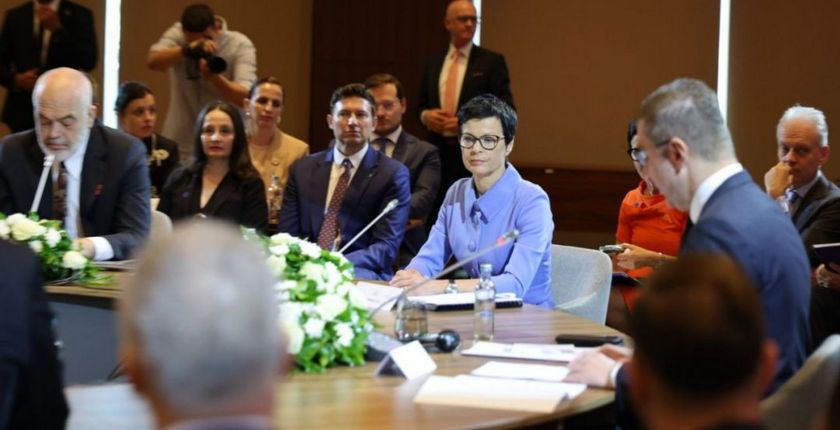
The European Commission has proposed the first support package, of EUR 87.7 million, under the European Union’s Growth Plan for the Western Balkans, to help implement EUR 487.3 million worth of hydropower, solar district heating, and grid modernization projects in Albania, Montenegro, and Serbia. The package was announced following a high-level meeting between European Commissioner for Enlargement Marta Kos and Western Balkan partners in North Macedonia’s capital, Skopje.

The package, funded from the EUR 6 billion Reform and Growth Facility (RGF), set up under the Growth Plan, will be rolled out through the Western Balkans Investment Framework (WBIF). The proposal was made to the WBIF Operational Board, according to a press release from the commission.

The eight proposed projects include building a new generation unit and upgrading existing ones at Serbia’s Potpeć hydropower plant, which would increase its annual production to 236 GWh while reducing CO2 emissions. The investment is valued at EUR 72.1 million, with the RGF support amounting to EUR 15.8 million. The project is targeted for completion in 2030, according to the commission’s fact sheet.

Serbia could get support for introducing solar energy in district heating

The other project in Serbia is the construction of a 31 MW solar-thermal plant and 17 MW heat pump in Novi Sad, which will introduce renewable energy sources to the district heating system. The project would cost a total of EUR 114.3 million, with the RGF support at EUR 25 million. The targeted completion date is 2028.

In Montenegro, the package would support three projects. The first is an EUR 18.3 million investment in building a 38-kilometer 110kV overhead transmission line between Vilusi and Herceg Novi, aimed at increasing transmission capacity and reducing energy losses. It would receive EUR 3.1 million from the RGF.

The EU plans to back Montenegro’s SCADA roll-out

The second project in Montenegro is the introduction of SCADA in the power distribution system, estimated at EUR 26.5 million, with the proposed RGF support of EUR 5 million. The third one is a planned upgrade of the Brezna substation on the Trans-Balkan Electricity Corridor. The EUR 35.6 million investment would be backed with EUR 6.3 million from the RGF.

Albania plans to digitalize its transmission network in EUR 64.2 million project

The support package also includes Albania’s EUR 95.3 million investment in upgrading the Fierza hydropower plant, aimed at increasing its capacity by 10% and extending its lifespan by at least 30 years. The support from the RGF would amount to EUR 10.5 million. The other project to be supported in Albania is the EUR 64.2 million digitalization of the transmission network, which would receive 13.6 million from the RGF.
by in News

EU nuclear ambitions: EUR 241 billion in investment needed by 2050

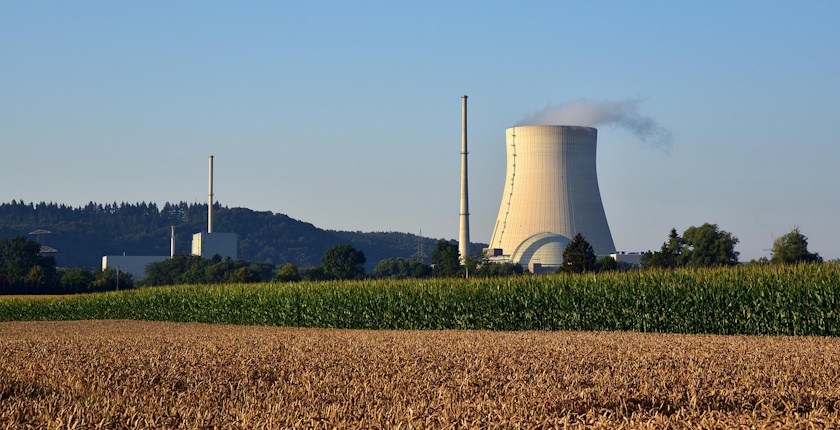
The European Commission has estimated that EUR 241 billion in investment is needed for the implementation of member states’ plans for nuclear energy until 2050. It includes extending the lifetime of existing power plants and building new large-scale reactors.

Additional investment is needed for small modular reactors (SMRs), advanced modular reactors (AMRs), and microreactors, as well as for fusion for the longer-term future, according to the European Commission’s eighth Nuclear Illustrative Programme (Programme Illustrative Nucleaire – PINC).

A few days ago, the World Bank decided to lift its 2013 moratorium on financing nuclear energy projects amid growing global electricity demand.

The commission has now underlined that for some EU countries, nuclear energy is an important component of decarbonization, industrial competitiveness, and security of supply strategies. The commission estimates that over 90% of electricity in the EU in 2040 will be produced from decarbonized sources, primarily renewables, complemented by nuclear energy.

Jørgensen: To truly deliver the clean energy transition, we need all zero- and low-carbon energy solutions

Nuclear installed capacity across the EU is projected to grow from 98 GWe in 2025 to 109 GWe by 2050.

The commission recognizes that all zero- and low-carbon energy solutions are needed to decarbonize the EU’s energy system. Accordingly, the Nuclear Illustrative Programme is intended to help drive member states’ actions towards priority areas.

“To truly deliver the clean energy transition, we need all zero- and low-carbon energy solutions. Nuclear energy has a role to play in building a resilient and cleaner energy system. Ensuring the necessary framework conditions will allow the EU to keep its industrial leadership in this sector while also upholding the highest safety standards and responsible management of radioactive waste,” said Dan Jørgensen, Commissioner for Energy and Housing.

The highest standards of nuclear safety are among the EU’s top priorities

The commission highlighted the highest nuclear safety standards and a responsible management of radioactive waste as a top priority for the EU.

The commercialization and market uptake of cutting-edge nuclear technologies, including SMRs, AMRs, microreactors, and fusion for the longer term, will also be central for the sector’s future in Europe and beyond, according to the EU’s executive arm.

A requirement under Article 40 of the Euratom Treaty, PINC provides a comprehensive, fact-based overview of nuclear development trends, as well as the scope of investment needs across the EU.

The commission will publish the final version of PINC after receiving the Opinion of the European Economic and Social Committee.

by in News

Olympus carbon capture project breaks ground in Greece

Carbon capture, utilization and storage (CCUS) is a must for the future of the cement industry, Greek Prime Minister Kyriakos Mitsotakis said at the launch ceremony for Heracles Group’s Olympus project.

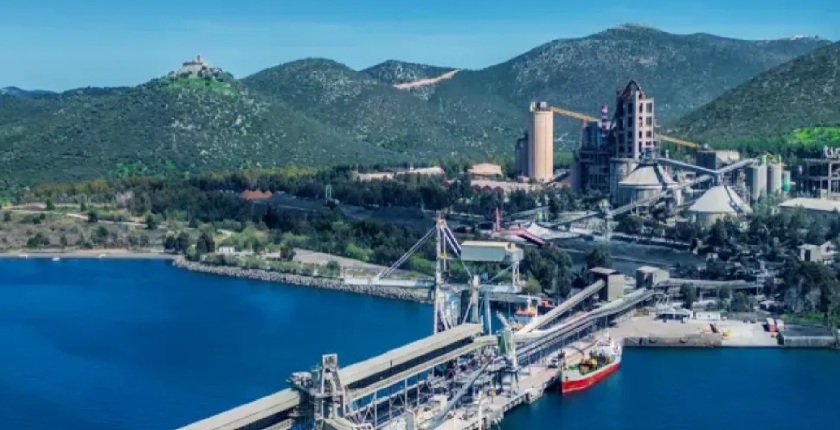
It is one of the very first CCUS plants in Greece, valued at EUR 380 million. The unit in the group’s Milaki cement production complex in the island of Evia (Euboea) is expected to capture up to one million tons of CO2 annually. Emissions from the facility are expected to decrease to net zero by 2029.

Other industrial players also have plans to introduce CCUS.

Cement producer Titan Group is moving forward with a EUR 583 million investment in Boeotia (also Beotia and Viotia) called Ifestos. The carbon capture installation is scheduled for launch in December 2029. In its first year, it is expected to reduce CO2 emissions to the atmosphere by 1.9 million tons.

Motor Oil Hellas aims to install a unit in its Agioi Theodoroi oil refinery for a cost of EUR 300 million to EUR 400 million. The project is called IRIS – Innovative low caRbon hydrogen and methanol productIon by large Scale carbon capture. It is for the construction and operation of a CCUS and e-methanol production system that would cut the refinery’s CO2 emissions by a quarter.

Motor Oil and Titan have won grants from the European Union’s Innovation Fund.

“Support is needed to make these investments viable. Greece is at the forefront of convincing European institutions to provide it,” said Mitsotakis.

The companies’ executives discussed CCUS market developments this week in Athens with European Commissioner for Climate, Net Zero and Clean Growth Wopke Hoekstra.

Prinos CO2 project to store industrial carbon

Captured carbon from these industries would be transferred to the former underground oil deposit in Prinos, offshore Kavala, for storage. Energean is developing the site, aiming for an annual capacity of three million tons, which would be doubled in the second phase.

The first drilling in Prinos is expected in 2026. Energean’s subsidiary EnEarth has signed 15 memoranda of understanding with various Greek and foreign companies.

The facility would be able to store up to six million tons after the second phase is complete. The National Natural Gas System Operator (DESFA) is tasked with delivering the gas there, under a project called Apollo CO2.

by in News

Croatia earmarks EUR 1.6 billion for Social Plan for Climate Policy

Croatia plans to achieve an efficient and just green transition by implementing its EUR 1.6 billion Social Plan for Climate Policy.

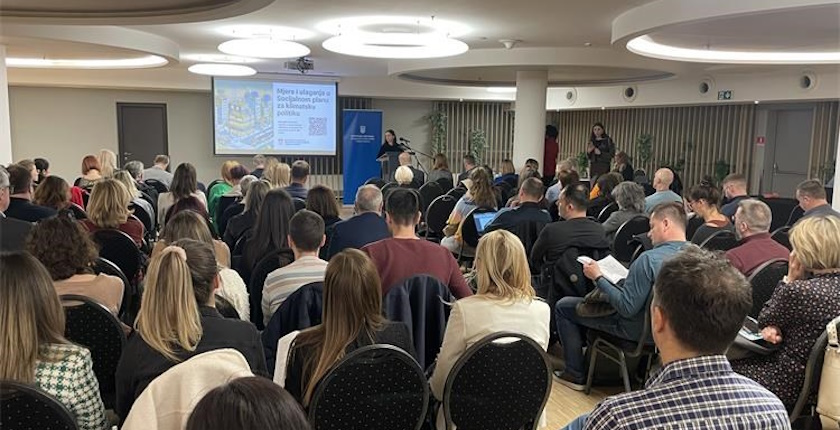
The Ministry of Environmental Protection and Green Transition has presented the Social Plan for Climate Policy and the European Union’s upcoming Emissions Trading System 2 (EU ETS 2) in Croatia’s capital Zagreb.

The event was organized as part of the process of developing the country’s Social Plan for Climate Policy. According to the ministry, the document outlines the green transition and includes measures and investments that would benefit vulnerable households, micro businesses, and users of transportation services.

The plan is being prepared within the framework of the Social Fund for Climate Policy, which is part of the EU’s Fit-for-55 legislative package. The aim is to reduce greenhouse gas emissions by 55% by 2030 from the 1990 level.

The social plan will be funded with proceeds from EU ETS 2

The new EU ETS 2 will cover CO2 emissions from buildings, road traffic, and small firms. Funding for the social plan will be secured from proceeds from the supplementary carbon pricing mechanism.

Minister Marija Vučković noted that after the public debate is over, the Social Plan for Climate Policy needs to be sent to the European Commission for adoption.

“With more than EUR 1.6 billion, our goal is to secure an efficient and just green transition that won’t leave behind the most vulnerable members of our society – households at risk of energy poverty, micro enterprises with limited adaptation capacities, but also the citizens that have difficulties accessing public transportation,” she pointed out.

The ministry is aware of the challenges that the transition carries, so it places special focus on mitigating socio-economic consequences and preventing risks affecting the most vulnerable people, as well as on education.

The plan defines various measures

The plan includes various measures. Some examples are renovating family houses with the worst energy performances, improving the availability of public transport in suburban, rural, and remote areas, subsidizing the purchase of vehicles with zero emissions, and providing direct financial incentives.

Representatives of the ministry Ana Juras and Predrag Božac described the operation and the establishment of the new part of the Emissions Trading System and presented the sectors that it would cover. They also spoke about the first round of measures and investments from the plan.

In another presentation, the audience learned the effect of EU ETS 2 on the prices of fossil fuels, the ministry said.

by in News

European Commission launches call for investment in green transition, critical raw materials in Western Balkans

As part of its Growth Plan for the Western Balkans, the European Commission has invited private businesses from the EU, the European Economic Area (EEA), and the region itself to express interest in investing in sectors including the green transition, critical raw materials, sustainable transportation, and digitalization.

The objective is to open a dialogue on concrete investment opportunities and identify ways to overcome related constraints in the Western Balkans region, according to the call for expressions of interest.

Although financial support is not guaranteed, the European Commission could potentially back some projects with its available policy, technical, and financial instruments. It may also facilitate contact with partner financial institutions for potential financial cooperation on eligible projects.

Financial support is not guaranteed, but some projects could be backed by the European Commission or referred to financial institutions

Proposed investments must take place in one or more of the following economies: Albania, Bosnia and Herzegovina, Kosovo*, North Macedonia, Montenegro, and Serbia. The minimum investment threshold is EUR 10 million, and the required participation by the project promoter is at least 15% of the total value of the investment project.

The deadline to submit expressions of interest is May 21

The first phase of the call is open for submissions until May 21, but it may be reopened for subsequent phases, depending on the number and scope of submissions received.

Investment in green transition, critical raw materials, sustainable transportation

The priority areas are based on the strategic priorities of the Growth Plan for the Western Balkans and the Western Balkans Investment Framework (WBIF), focusing on key economic sectors where foreign investment is needed.

In the area of the green transition, investments are required in renewable energy, energy efficiency, and innovative energy technologies in order to reduce dependence on fossil fuels, foster a circular economy, mitigate climate change, and modernize energy, water, wastewater treatment, and waste management infrastructure, according to the call.

Ensuring environmentally responsible access to critical raw materials

When it comes to critical raw materials, investments are needed to ensure reliable and environmentally responsible access to such materials, in order to support the development of key industries across all supply chain stages, according to the European Commission.

The other areas envisaged by the call are sustainable transportation, including urban mobility; the digital transition, including the roll-out of 5G; integration into the EU industrial supply chains; sustainable tourism; human capital development; and impact finance, including setting up private funds to invest in projects with a strong green and/or social impact.

by in News

EU mission in Serbia handed 100,000 signatures against declaring Rio Tinto’s Jadar a strategic project

Informal environmentalist organization Eko Straža has submitted a letter to the Delegation of the European Union to Serbia urging the EU not to grant strategic status to Rio Tinto’s Jadar project in the country. The letter opposing the lithium mining and processing project is backed by the signatures of 100,000 citizens.

Bojan Simišić of Eko Straža said the signatures had been submitted because of the European Commission’s upcoming decision on strategic projects to produce critical raw materials in third countries. The decision is expected to be adopted this week, Fonet reported.

The letter, supported by 100,000 signatures, is the first concrete step by environmental associations and citizens after the announcement that the EU could grant Jadar the status of a strategic project. The site of Rio Tinto’s underground mine and processing unit is near the Western Serbian city of Loznica.

The EU has adopted the first list of strategic projects

On Tuesday, the European Commission approved the first 47 strategic projects, within EU territory, for the production of critically important raw materials. According to the announcement, the decision on the potential selection of proposals for facilities in third countries will be adopted at a later stage.

Under the EU’s Critical Raw Materials Act (CRMA), such strategic projects are eligible for administrative and financial support.

Shortly after the decision was announced, Serbian President Aleksandar Vučić said that within seven or eight days, the EU would also declare the Jadar lithium project as strategic. He made the claim the same evening in Brussels, where he met with the bloc’s top officials.

Eko Straža: If the EU designates Jadar as strategic, protests will follow

Eko straža stressed that the EU does not have jurisdiction to designate Jadar as a strategic project. The organization also pointed out that Jadar was canceled by the Serbian government’s decision in 2022.

“If the EU puts the Jadar project on its list of strategic projects, we will press ahead with protests. However, we will no longer address the Serbian government, which has resigned, but will instead turn to international institutions,” said Eko Straža.

Balkan Green Energy News has compiled a chronological overview of the most important events concerning Jadar since 2001, when Rio Tinto established a subsidiary in Serbia.

by in News

Serbian organizations, academic community urge EU against declaring lithium project Jadar strategic

The National Convention on the European Union in Serbia has sent a letter to European officials, expressing concern over the potential consequences of designating Rio Tinto’s Jadar lithium project as an EU strategic project. The body warns that such a decision could further erode the support for the country’s European integration. Members of the academic community and numerous citizens also urged the administration in Brussels to reject the company’s application.

The National Convention on the European Union is a platform for cooperation and consultations between civil society and the Government of Serbia in the EU accession negotiation process. It sent the letter to European Commission President Ursula von der Leyen, High Representative of the EU for Foreign Affairs and Security Policy Kaja Kallas, Commissioner for Enlargement Marta Kos, European Commission Vice-President for Prosperity and Industrial Strategy Stéphane Séjourné, and Commissioner for Trade and Economic Security Maroš Šefčovič. The convention expresses concern over the possible consequences of including the Jadar lithium project in the EU’s list of strategic projects under the Critical Raw Materials Act (CRMA).

“Given the immense public distrust surrounding the preparation process of the Jadar project, its designation as a project of strategic importance to the European Union, especially in the current geopolitical climate and during Serbia’s institutional and societal crisis, would further undermine citizens’ confidence in the benefits of European integration. Additionally, the long-term geopolitical orientation of Serbia could be affected, potentially jeopardizing the political stability of the Western Balkans,” the letter states.

The convention added that Serbian citizens’ trust in the European Union has been eroded, pointing to the results of a recent public opinion survey. For the first time, more citizens have expressed opposition to EU membership than support for European integration, the body stressed.

EU strategic projects and reactions

The European Commission has approved the first 47 strategic projects in EU territory for important raw materials. The decision for candidate projects in third countries, including Serbia, has been postponed. Under the EU’s Critical Raw Materials Act, such strategic projects are eligible for administrative and financial support.

Shortly after the European Commission’s decision, Serbian President Aleksandar Vučić stated in Brussels that the EU would declare the Jadar project strategic “in seven or eight days.”

Together with nongovernmental organizations and community associations from Romania, Germany, Spain, and Portugal, the Marš sa Drine group from Serbia reacted to the European Commission’s decision, and later also to Vučić’s statement. They said they would legally challenge the strategic status designation for disputed mining projects.

The convention recalled that over 60% of Serbian citizens currently oppose the Jadar project, which includes technology that has never been deployed anywhere in the world.

Citizens’ opposition to the Jadar project should be understood primarily as a reflection of distrust in Serbian institutions

“This opposition primarily reflects a deep mistrust in Serbian institutions and their ability to impartially assess the public interest in such a complex project, as well as to enforce environmental and other regulatory standards should the project proceed,” the document reads.

Transparency in decision making has been lacking, and the reactions of Rio Tinto have been inadequate, it added.

“The local community was not adequately informed about earlier phases of research or the project’s potential consequences. Furthermore, the documents forming the basis of the draft environmental impact assessment study have yet to be made public, further fueling doubts about the objectivity and thoroughness of the decision-making process,” the convention said.

It warned that including projects in Serbia in the list of EU strategic projects, before the rule of law is established and before compliance with European environmental standards is ensured, could be perceived as support for maintaining the current state of affairs.

Letters to the European Commission

Environmentalist organization Eko straža previously submitted a letter to the representatives of the European Union in Belgrade, supported by 100,000 citizens with their signatures. They urged the European Commission to leave Jadar off the list of strategic projects.

In addition to the general public, the academic community has also voiced its opposition and concern. Around 2,800 of its members of Serbia’s academic community signed an initiative to reject the Jadar project.

The academic community and a group of student protesters submitted letters to the EU Delegation in Serbia, addressed to the European Commission, opposing the designation of the Jadar project as strategic.

“The right to clean water, land, nature, and health must take precedence over corporate profit,” the Serbian student blockade organization wrote on its Instagram account.

The Kreni-promeni movement also submitted a petition, signed by more than 300,000 citizens, demanding from the EU to reject the Jadar proposal.

by in News

EU gives European carmakers more time to comply with CO2 standards

The European Commission has decided to give more time to the automotive industry to meet CO2 standards for new cars and vans. Transport & Environment says the delay must be the final concession.

The European Commission has proposed an amendment to the regulation that sets CO2 emission performance standards for new cars and vans. It would add a flexibility measure within the targets for 2025-2027, the commission said.

According to the EU’s executive arm, manufacturers’ compliance with the CO2 targets for the three calendar years would be assessed over the entire period, averaging the performances, instead of annually.

The solution allows the companies to balance any excessive annual emissions by outperforming the target in the remaining years, the commission added.

European Commission says it would help the industry to invest in the clean transition while maintaining the 2025 target

It sees the additional flexibility as help to the industry to invest in the clean transition while maintaining the 2025 target and keeping the industry on track for the next round of emissions reductions.

The proposal was announced as part of the European Commission’s Industrial Action Plan for the European automotive sector, adopted on March 5.

According to President of the European Commission Ursula von der Leyen, the EU’s highly innovative automotive industry is decarbonizing to contribute to the fight against climate change but also to maintain its competitive edge in the world markets.

“We grant more flexibility to this key sector, and at the same time we stay the course of our climate goals,” she stated.

T&E: European carmakers used unrepresentative 2024 sales data to argue for flexibilities

Transport & Environment pointed out that the commission has formally proposed legislation to give carmakers until 2027 to comply with their 2025 emissions reduction targets. The delay to EU car climate rules must be the final concession to European carmakers which used unrepresentative 2024 sales data to argue for flexibilities, the organization added.

It expressed the belief that the concession was a mistake, arguing that battery electric car sales in Europe increased by 28% over the first two months of the year as the industry prepared to comply with the existing 2025 target.

According to Julia Poliscanova, senior director for vehicles and e-mobility supply chains at T&E, the EV sales rebound shows that the existing EU target is working.

“Require carmakers to sell more electric cars and the buyers will come. This must be the last flexibility carmakers are given. Let’s allow the 2030 and 2035 targets to do their work and bring affordable EVs and cleantech investment into Europe,” she stressed.

by in News

European Commission – Official scenarios

European Commission

Baseline scenarios provide a reference comparison for a range of alternative scenarios and energy policy options. The reference scenario from IEA and the Commission on wind power are described here. In earlier reports the data was not separated from other renewables such as solar and geothermal.

The European Commission made no estimates for wind energy in 1992.

In 1996 under a ‘Conventional wisdom’ scenario it projected a market for wind and solar to be 4.38 GW in 2000, 6.1 GW in 2005, 8.01 GW in 2010, 10.1 GW in 2015 and 12.34 GW in 2020. The 2020 figure was reached in 2000 by wind alone.

The 1996 ‘advanced scenario’ projected a market of 6.82 GW in 2000, 11.62 GW in 2005, in 2010, 17.68 GW in 2010, 23.67 GW in 2015 and 30.28 in 2020. The 2020 fi gure was reached in early 2004 by wind alone. The 1999 Commission base scenario projections for wind, solar and geothermal was 9.4 GW in 2000, 16 GW in 2005, 23 GW in 2010, 34.4 GW in 2015 and 46.2 GW in 2020. The 2015 figure has already been reached at the end of 2004 by wind alone.

In 2003 the Commission Baseline scenario projections for wind and solar were 28.6 GW in 2005, 74 GW in 2010, 92.6 GW in 2015, 105.3 GW in 2020, 126.4 GW in 2025 and 149.4 GW in 2030

Between 1996 and 2003, the Commission’s estimate of how much wind power would be built in 2010 was increased ninefold.

In 2004 the Commission Baseline scenario projections for wind and solar were 28 GW in 2005, 73.2 GW in 2010, 91.7 GW in 2015, 104.1 GW in 2020, 125.2 GW in 2025 and 149.2 GW in 2030.

Advanced scenarios on wind energy

The 2003 European Commission scenario presented a number of different scenarios with an increased role for renewables and wind energy. The advanced scenario is ‘Gothenburg type targets’ which provides details for wind energy on its own.

The ‘Gothenburg type targets’ projected installed wind energy capacity of 79.8 GW in 2010, 144.8 GW in 2020 and 213.5 GW in 2030.