by in News

Serbia to sign agreement on gas power plant with Azerbaijan

Serbia has completed the negotiations with Azerbaijan on the construction of a natural gas power plant near the city of Niš, according to Ana Brnabić, the Speaker of the National Assembly. She also said an agreement has been reached on additional quantities of gas that would be supplied to Serbia from the Caucasian country.

The negotiations for the construction of a gas power plant in Niš have been completed, Ana Brnabić said. She added that the facility would be a joint project between Azerbaijan and Serbia, RTS reported.

In mid-November last year President of Serbia Aleksandar Vučić revealed that the government was starting talks with Azerbaijan on a possible joint construction of a 1 GW gas power plant in Niš, or two smaller units.

The agreement would likely be signed during the first meeting of the strategic cooperation council

Speaking during her visit to Azerbaijan, Ana Brnabić underlined that the signing of the gas power plant agreement would likely occur in the first meeting of the bilateral strategic cooperation council, when it is most convenient for the presidents, Aleksandar Vučić and Ilham Aliyev.

The investment near Niš would serve as an additional, significant stimulus and guarantee for Serbia’s energy security and stability, she stressed. The gas power plant will have a capacity of around 500 MW, which is of huge significance for Serbia, according to Brnabić.

The investment is estimated at EUR 600 million, she added.

An agreement reached on additional quantities of natural gas will be signed in the coming weeks

The country’s draft 2040 energy strategy includes a plan for a gas-fired cogeneration plant in Niš of 150 MW in electricity capacity and another 100 MW for heat. Another one would be built in Novi Sad. It is envisaged at 350 MW and 100 MW, respectively.

Earlier, Serbia’s Minister of Mining and Energy Dubravka Đedović Handanović stressed that the gas power plant project is important for generating baseload energy and providing the security of supply.

Brnabić also said an agreement on additional quantities of gas has been reached and that the plan was to sign it in the coming weeks. Serbia already has quantities contracted with Azerbaijan, but additional amounts have been secured at the request of President Aleksandar Vučić for the winter months, she explained.
by in News

Montenegro plans to develop LNG terminal with JERA

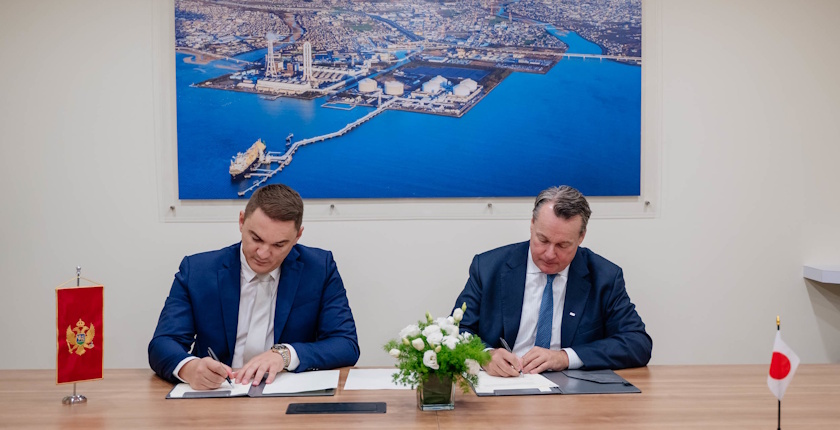
The Ministry of Energy and Mining of Montenegro and Japanese company JERA have signed a memorandum of cooperation in the development of projects for a liquefied natural gas (LNG) terminal and gas power plant.

The memorandum was signed at the Gastech 2025 conference in Italy by Minister of Energy and Mining Admir Šahmanović and Steve Winn, chief global strategist of JERA. They agreed to explore the possibilities for developing a project of an LNG terminal and associated gas power plant in Montenegro, according to the Ministry of Energy and Mining.

Within the strategic partnership, the government will use JERA’s extensive global experience to enhance its national energy mix, strengthen supply security, support decarbonization goals, and position Montenegro as an important energy hub in the Western Balkans.

The Japanese company and the ministry will conduct a feasibility study for the project

They will carry out a comprehensive feasibility study, covering the technical, commercial, and financial viability of the proposed LNG terminal and associated gas power plant, including an analysis of multiple potential locations.

According to the ministry’s press release, the study will provide detailed data on the cost-effectiveness and future expansion in the use of LNG in Montenegro, making a solid ground for strategic decisions beneficial to the country’s energy security and sustainable development.

Of note, in May 2023 Montenegro signed a cooperation memorandum on the planned LNG terminal and gas power plant with companies Enerflex Energy Systems and Wethington Energy Innovation, based in the United States. The European Union has also expressed its interest in the project.

Šahmanović: The study will provide data on the profitability of developing LNG in the country

Admir Šahmanović and Steve Winn (photo: Ministry of Energy and Mining of Montenegro)

Minister Admir Šahmanović said JERA is a renowned and credible global player in the areas of energy and LNG.

In his words, Japan is recognized for innovation and advanced technologies, and the cooperation will give Montenegro access to knowledge and experience necessary for the further development of its energy sector.

“The planned feasibility study will provide us with concrete data on potential locations and the profitability of developing liquefied natural gas in Montenegro, creating the basis for making strategic decisions in the interest of our country’s energy security and sustainable development,” Šahmanović underlined.

Winn: JERA is an ideal partner to support Montenegro in achieving its strategic energy goals

Steve Winn, JERA’s chief global strategist, said its extensive experience in LNG infrastructure and proven results in implementing complex international energy projects make it an ideal partner to support Montenegro in reaching its strategic energy objectives.

“We look forward to supporting Montenegro’s vision of strengthening energy security and decarbonization through practical and economically viable solutions,” he stressed.

by in News

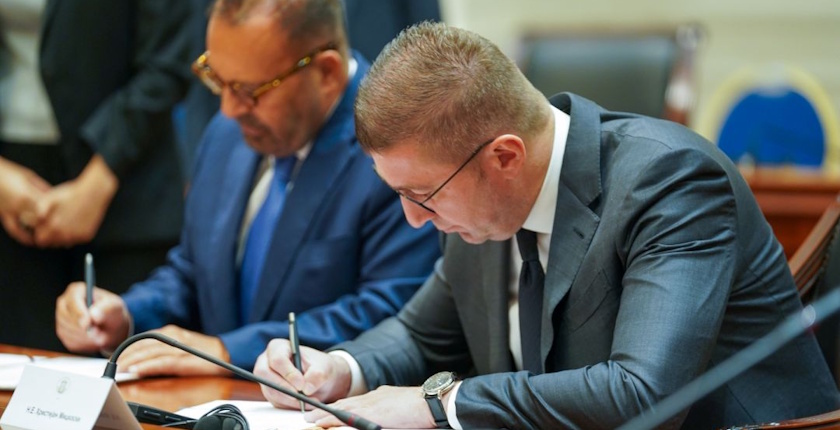
North Macedonia, Kazancı sign memorandum on gas power plants

The Government of North Macedonia and Kazancı Holding have signed a memorandum of understanding that paves the way for a EUR 1 billion investment in the country’s energy sector.

The memorandum of understanding was signed by Prime Minister Hristijan Mickoski and Cemil Kazancı, President of the Board of Directors of Kazancı Holding.

In February, Mickoski announced that the company would invest EUR 1 billion in gas power plants, gas and heat distribution grids.

Now he stressed that the memorandum demonstrates the country’s determination and plan to secure its energy sovereignty and protect its economic interests.

Mickoski: We are reducing import dependence and the impact of external price and political risks

According to the government, the document creates the conditions for a project with a long-term impact on the country’s energy sector.

It consists of three segments: development of new power production facilities, construction of natural gas and heat distribution grids, and implementation of measures to increase gas supply security, Mickoski explained.

Photo: Government of North Macedonia

In his view, a domestic energy source and a stable energy distribution system represent security, predictability, and control over one of the country’s most vital systems.

By developing domestic production facilities, North Macedonia is reducing its reliance on imports and minimizing exposure to external price and political shocks, the prime minister added.

Kazancı: The project is already prepared

Cemil Kazancı recalled that discussions about the investment began a long time ago. The project, in his words, is already prepared. Now research will be conducted, after which the implementation of the EUR 1 billion endeavor will start, he claimed.

It will be a strategic center in the Balkans, according to Kazancı. He expressed confidence that the project would be implemented shortly.

The government has not disclosed details of the memorandum with the company, which operates in the energy sector through its Aksa brand.

Earlier, Prime Minister Mickoski said the two sides were considering cogeneration facilities of 500 MW in combined capacity. They would produce 4.1 TWh of electricity and 720 GWh of heat per year.

The construction of a distribution grid for gas and heat would enable gas and heat to be distributed to as many citizens as possible.

by in News

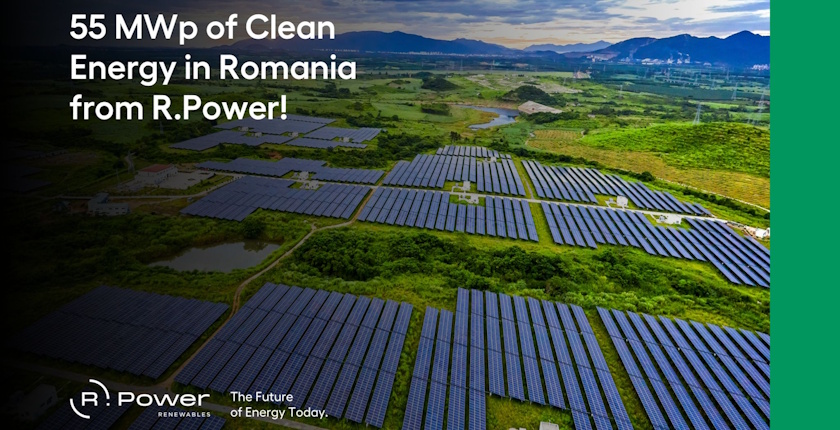
R. Power Renewables to start construction of 55 MW PV project in Romania

Polish company R. Power Renewables is about to build a solar power plant in Romania of 55 MW in peak capacity.

R. Power Renewables published the main details ahead of the start of construction of its Lazuri Solar Park, located in Satu Mare county in Romania.

The company said it is a major step forward in its commitment to expanding sustainable energy infrastructure in Central and Eastern Europe.

The works are set to begin before the end of September, according to the update. The facility is scheduled to come online in the third quarter of 2026.

The Lazuri Solar Park will be connected to the national grid through a newly constructed 110 kV switching station

The Lazuri Solar Park will be connected to the national grid through a newly constructed 110 kV switching station, implementing a loop-in/loop-out connection on the existing Vetiș–Abator 110 kV overhead transmission line, according to R. Power Renewables.

The project will not only contribute to Romania’s renewable energy targets but also strengthen local energy security and grid resilience, the Warsaw-based company underlined.

The solar farm of 55 MW in peak terms would generate approximately 70 GWh of clean electricity per year — enough to meet the annual needs of over 48,000 households and avoid nearly 17,000 tonnes of CO2 emissions.

Lazuri is one of five R. Power’s solar farms in Romania that secured a 15-year power purchase contract

Lazuri is one of five R. Power’s solar power projects in Romania that secured 15-year contracts-for-difference (CfDs) through the national auction scheme, the firm said and added that in total, it won support for 85 MW of installed capacity.

In December 2024, after years of delays, the Ministry of Energy finally selected projects of an overall 1.53 GW, slightly more than the quota, in the first round of auctions.

Wind and solar power projects are eligible for subsidies under the CfD scheme. The first round of auctions resulted with ten and eleven winning bids, respectively.

by in News

Impact Report 2024: GGF grows direct lending, committed to energy transition, energy security

In its Impact Report 2024, the Green for Growth Fund outlined how it powers the green transition across Southeast Europe, the Caucasus and beyond – from repurposing coal sites and decarbonizing industries to strengthening energy security and building climate resilience. It ended last year with EUR 1.09 billion in assets under management and an outstanding investment portfolio of EUR 1.03 billion.

Luxembourg-based GGF has become one of the largest green blended-finance funds. It marked its 15th anniversary in 2024 by passing the EUR 1 billion mark in its portfolio.

“To date, we have delivered over EUR 2 billion in green finance through 70+ active financial institutions, companies, and infrastructure projects. This is impact on a systematic level and reflects the dedication of our partners, teams, and investors. We delivered many landmark projects as we continue to grow our direct lending,” the fund said in its 2024 Impact Report: Breaking the billion for lasting green impact.

GGF highlighted its role in transforming legacy energy systems into clean energy sites in North Macedonia. “We are also investing in corporate decarbonization across resource-intensive sectors in Turkey, including the country’s second-largest retail chain. Working with our financial institution partners, Ukraine’s energy security – and the security of the wider region – remains our focus,” the update reads.

Driving the energy transition and strengthening energy security is an urgent task, the fund said and stressed that its commitment remains strong. It ended 2024 with EUR 1.09 billion in assets under management and an outstanding investment portfolio of EUR 1.03 billion.

Energy-intensive sectors in region can decarbonize

The cumulative volume invested in partner lending institutions has reached EUR 2 billion. GGF is active in 18 countries.

“Passing the EUR 1 billion mark brings greater responsibility. We must continue to show the world that energy-intensive sectors in the region can decarbonize and renewables can lead to energy stability and security,” Chairperson of the Board of Directors Simon Gupta stated.

Headline figures include 1.4 million tons of carbon dioxide emission savings per year, which is the equivalent of taking 949,000 cars off the road. GGF supported 1.76 GW of renewable energy capacity through 2024, which is a whopping 36.4% more than one year before. Its activity resulted in 2.16 million cubic meters of water saved or treated per annum, which translates to 865 swimming pools.

GGF strategically manages impact through supporting measures that mitigate climate change and promote sustainable economic growth in Southeast Europe including Turkey, the European Eastern Neighborhood Region, and the Middle East and North Africa.

From coal pit to solar plant

Recognizing the need for energy independence, the Western Balkans are prioritizing projects that support the green energy transition, GGF pointed out.

“But financing is essential to help countries shift to domestic and clean renewable power. We arranged EUR 25.7 million in project financing for a 50 MW solar power generation project on the site of the former Oslomej coal mine in Kičevo, North Macedonia,” it added.

GGF arranged a EUR 25.7 million package for a PV plant on former coal mining land in the REK Oslomej complex in North Macedonia

The region’s reliance on legacy coal-fired power plants has resulted in outages, shortfalls, closures and volatile energy costs, GGF warned. “Governments recognize this and are increasingly prioritizing sustainable power projects aimed at reducing fossil fuel imports, lowering costs and stabilizing energy supply. To fulfill this ambitious agenda, they need support,” the fund stressed.

Oslomej is GGF’s second project finance transaction in North Macedonia, following its investment as a minority shareholder in the 36 MW Bogoslovec wind farm in 2021.

“Our investment in the Oslomej solar project underscores our commitment to North Macedonia’s green energy transition. By reducing reliance on fossil fuels and enhancing energy security, this project aligns with our mission to mitigate climate change and promote sustainable energy solutions,” said Fund Director for GGF at Finance in Motion Borislav Kostadinov.

Of note, he was one of the keynote speakers at this year’s edition of Belgrade Energy Forum (BEF 2025), organized by Balkan Green Energy News. Finance in Motion is GGF’s advisor.

Future-proofing Turkish businesses

The fund provided USD 26 million to Sanko Tekstil, one of the largest yarn producers in Turkey. It financed the full cost of a 20 MW rooftop photovoltaic system and partially covered the construction of a fiber recycling facility in Gaziantep.

Meanwhile, a USD 18 million investment into A101, the country’s second-largest retail chain, is decarbonizing store operations across 81 cities via a large-scale solar installation. It supported a 30 MW solar power project, expected to meet 10% of the company’s electricity needs.

Embedding sustainability

GGF complements its financing with advisory and capacity-building services, and risk-management support. It includes environmental and social due diligence, as well as monitoring, to keep projects aligned with international best practices.

The advisory and capacity-building activities in 2024 focused on embedding sustainability and advancing green finance across partner institutions.

A key highlight was the completion of four Deep Greening Mainstreaming projects, which supported financial institutions in developing strategies in the environmental, social, and governance (ESG) sector, green products, and internal sustainability structures.

by in News

GGF grows direct lending, committed to energy transition, energy security

In its Impact Report 2024, Green for Growth Fund outlined how it powers the green transition across Southeast Europe, the Caucasus and beyond – from repurposing coal sites and decarbonizing industries to strengthening energy security and building climate resilience. It ended last year with EUR 1.09 billion in assets under management and an outstanding investment portfolio of EUR 1.03 billion.

Luxembourg-based GGF has become one of the largest green blended-finance funds. It marked its 15th anniversary in 2024 by passing the EUR 1 billion mark in its portfolio.

“To date, we have delivered over EUR 2 billion in green finance through 70+ active financial institutions, companies, and infrastructure projects. This is impact on a systematic level and reflects the dedication of our partners, teams, and investors. We delivered many landmark projects as we continue to grow our direct lending,” the fund said in its 2024 Impact Report: Breaking the billion for lasting green impact.

GGF highlighted its role in transforming legacy energy systems into clean energy sites in North Macedonia. “We are also investing in corporate decarbonization across resource-intensive sectors in Turkey, including the country’s second-largest retail chain. Working with our financial institution partners, Ukraine’s energy security – and the security of the wider region – remains our focus,” the update reads.

Driving the energy transition and strengthening energy security is an urgent task, the fund said and stressed that its commitment remains strong. It ended 2024 with EUR 1.09 billion in assets under management and an outstanding investment portfolio of EUR 1.03 billion.

Energy-intensive sectors in region can decarbonize

The cumulative volume invested in partner lending institutions has reached EUR 2 billion. GGF is active in 18 countries.

“Passing the EUR 1 billion mark brings greater responsibility. We must continue to show the world that energy-intensive sectors in the region can decarbonize and renewables can lead to energy stability and security,” Chairperson of the Board of Directors Simon Gupta stated.

Headline figures include 1.4 million tons of carbon dioxide emission savings per year, which is the equivalent of taking 949,000 cars off the road. GGF supported 1.76 GW of renewable energy capacity through 2024, which is a whopping 36.4% more than one year before. Its activity resulted in 2.16 million cubic meters of water saved or treated per annum, which translates to 865 swimming pools.

GGF strategically manages impact through supporting measures that mitigate climate change and promote sustainable economic growth in Southeast Europe including Turkey, the European Eastern Neighborhood Region, and the Middle East and North Africa.

From coal pit to solar plant

Recognizing the need for energy independence, the Western Balkans are prioritizing projects that support the green energy transition, GGF pointed out.

“But financing is essential to help countries shift to domestic and clean renewable power. We arranged EUR 25.7 million in project financing for a 50 MW solar power generation project on the site of the former Oslomej coal mine in Kičevo, North Macedonia,” it added.

GGF arranged a EUR 25.7 million package for a PV plant on former coal mining land in the REK Oslomej complex in North Macedonia

The region’s reliance on legacy coal-fired power plants has resulted in outages, shortfalls, closures and volatile energy costs, GGF warned. “Governments recognize this and are increasingly prioritizing sustainable power projects aimed at reducing fossil fuel imports, lowering costs and stabilizing energy supply. To fulfill this ambitious agenda, they need support,” the fund stressed.

Oslomej is GGF’s second project finance transaction in North Macedonia, following its investment as a minority shareholder in the 36 MW Bogoslovec wind farm in 2021.

“Our investment in the Oslomej solar project underscores our commitment to North Macedonia’s green energy transition. By reducing reliance on fossil fuels and enhancing energy security, this project aligns with our mission to mitigate climate change and promote sustainable energy solutions,” said Fund Director for GGF at Finance in Motion Borislav Kostadinov.

Of note, he was one of the keynote speakers at this year’s edition of Belgrade Energy Forum (BEF 2025), organized by Balkan Green Energy News. Finance in Motion is GGF’s advisor.

Future-proofing Turkish businesses

The fund provided USD 26 million to Sanko Tekstil, one of the largest yarn producers in Turkey. It financed the full cost of a 20 MW rooftop photovoltaic system and partially covered the construction of a fiber recycling facility in Gaziantep.

Meanwhile, a USD 18 million investment into A101, the country’s second-largest retail chain, is decarbonizing store operations across 81 cities via a large-scale solar installation. It supported a 30 MW solar power project, expected to meet 10% of the company’s electricity needs.

Embedding sustainability

GGF complements its financing with advisory and capacity-building services, and risk-management support. It includes environmental and social due diligence, as well as monitoring, to keep projects aligned with international best practices.

The advisory and capacity-building activities in 2024 focused on embedding sustainability and advancing green finance across partner institutions.

A key highlight was the completion of four Deep Greening Mainstreaming projects, which supported financial institutions in developing strategies in the environmental, social, and governance (ESG) sector, green products, and internal sustainability structures.

by in News

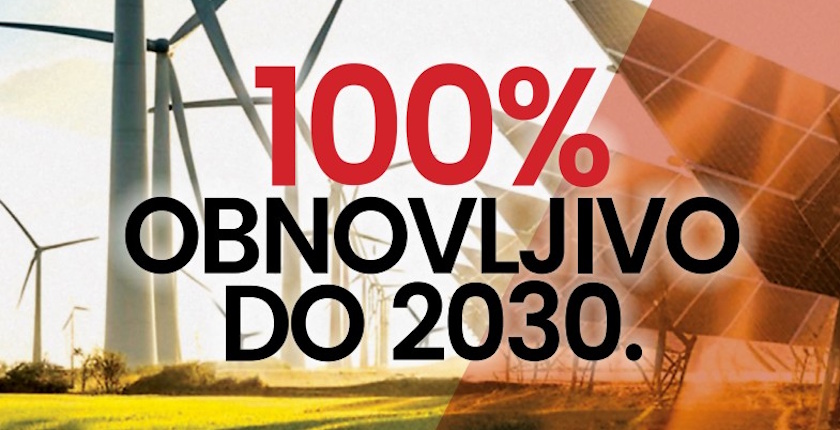
Greenpeace maps Croatia’s path to 100% renewable power by 2030

Croatia can fully transition to using only renewable electricity by 2030, according to Greenpeace. The organization presented its study: 100% Renewable by 2030 – A Plan for the Green Transition of Croatian Power Sector in the country’s capital Zagreb. Political will is the precondition for materializing the goal, it said.

The study was conducted by an expert team led by Professor Goran Krajačić from the Faculty of Mechanical Engineering and Naval Architecture in Zagreb. Of note, at the end of 2023, the share of electricity produced from renewables in total power consumption in the country exceeded 55%.

Greenpeace Croatia said the climate crisis, fueled by the fossil fuel industry, affects the entire world, including Europe and Croatia. The results are lost human lives and increasing material damage caused by extreme weather conditions, the organization noted.

Its ambitious goal for Croatia, to source all electricity from renewables by 2030, is based on a shift to solar and wind energy, as well as investments in the transmission network. The study puts the necessary solar power capacity at 5 GW, compared to 4.2 GW from wind.

In just five years, Greece, installed 7 GW of solar capacity, and Hungary added 5.5 GW

Greenpeace cites examples from the region. Croatia has five years until 2030, and the same period was enough for Greece to install 7 GW of solar capacity, while Hungary added 5.5 GW. Croatia has only recently reached 1 GW from photovoltaic system, despite ranking among the top countries in Europe in terms of solar potential, Greenpeace said.

According to Professor Goran Krajačić, the results of the study indicate that a firm political decision is needed to achieve 100% renewable electricity consumption in Croatia.

Andrić: A strong shift toward renewable energy is a strategic move for energy security, reduced dependence on fossil fuels, and economic opportunities

“Such a decision should include clear signals toward improving the power system, building and strengthening the grid and ensuring energy storage. Renewables also promote the democratization of society by involving citizens in energy communities to produce, store, and share energy,” Krajačić said.

Petra Andrić, program lead at Greenpeace in Croatia, stressed that a strong shift toward renewable energy as an ecologically sound decision. But it is also a strategic move for strengthening energy security, reducing dependence on fossil fuels, and creating economic opportunities, she added.

Calculation: large investments but even greater savings


Power generation mix

The authors estimate the costs of building facilities and underwater cables and strengthening cross-border grid capacities at EUR 12.2 billion by 2030. If it were financed through commercial loans at a 5% interest rate with a 25-year repayment period, the annual payment would be EUR 864 million, according to the calculation.

The repayment would be financed from savings and additional revenues, the study revealed.

Savings from allowances for CO2 emissions from electricity production, using 2023 as a reference year with a CO2 price of EUR 83 per ton, would amount to EUR 198 million by 2030.

The presentation of the study also featured a panel discussion

Fuel cost savings for electricity production were estimated at EUR 231.2 million in 2030, and profits from net exported electricity would bring in EUR 360 million.

The savings and profits would cover the annual repayments of loans needed to build the facilities, making them financially viable under commercial terms, the study claimed.

The event also hosted a panel discussion featuring Professor Krajačić, member of the Croatian Parliament Dušica Radojčić, Mario Stipetić (Ministry of Environmental Protection and Green Transition), Davor Škrlec (Faculty of Electrical Engineering and Computing – FER), Melani Furlan (Green Energy Cooperative – ZEZ), and Nina Domazet (Croatian Chamber of Commerce – HGK). It was moderated by Robert Pašičko from the United Nations Development Programme (UNDP).

by in News

BEF 2025: Regional cooperation can facilitate energy transition, energy security

Montenegro, Serbia, and the Republic of Srpska don’t have a problem attracting investments in electricity production, but they do have issues when it comes to investments in transmission networks. If the introduction of CBAM is not postponed, it will greatly burden their economies. Hungary is interested in strengthening energy ties with them as well as the rest of the Western Balkans, which would bolster energy security for the whole region. Croatia could also assist it in strengthening employment in the green technologies sector, to counter the loss of jobs due to decarbonization. These are the main messages from the High-ministerial panel on SEE regional cooperation and energy transition strategies.

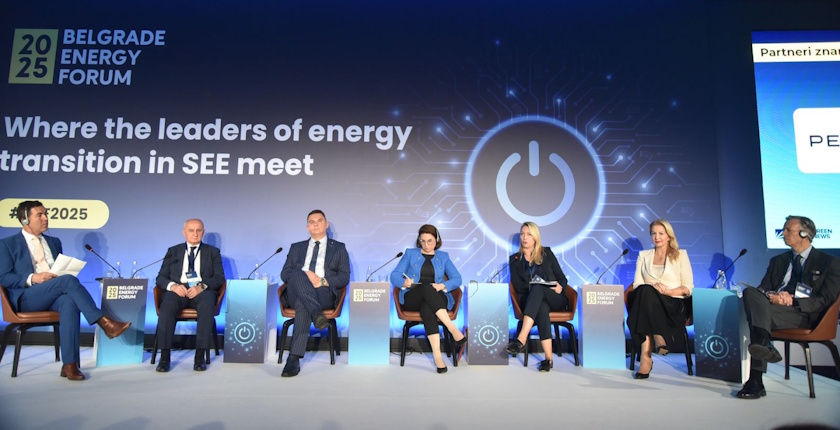
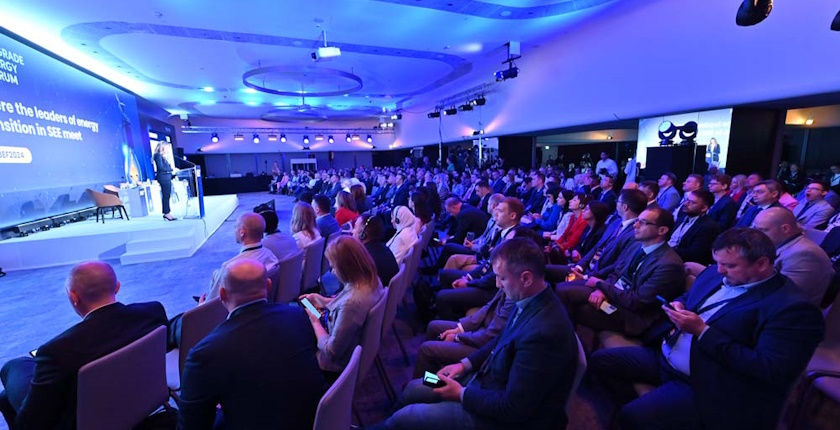
The ministerial panel was the first of eight at this year’s Belgrade Energy Forum 2025 (BEF 2025). The conference, organized by Balkan Green Energy News, welcomed four hundred participants from more than 30 countries from the region, Europe, and beyond.

The panel featured representatives of the governments of Montenegro, Croatia, Hungary, the Republic of Srpska – one of the two political entities in Bosnia and Herzegovina – Serbia, and the United Nations Economic Commission for Europe (UNECE). The moderator of the panel was Dirk Buschle, who until recently was a key figure in the Energy Community Secretariat, and now is a partner at law firm Becker Büttner Held.

He noted it is a mistake to say that the contracting parties of the Energy Community are lagging behind EU countries in the energy transition. They all face the same issues, which are energy accessibility, supply security, and sustainability, Buschle added.

Additional proof, in his words, are the similar issues faced by investors – in grid connections and permitting.

Investments in production are coming, the issues are grids, CBAM

Dirk Buschle, Petar Đokić and Admir Šahmanović

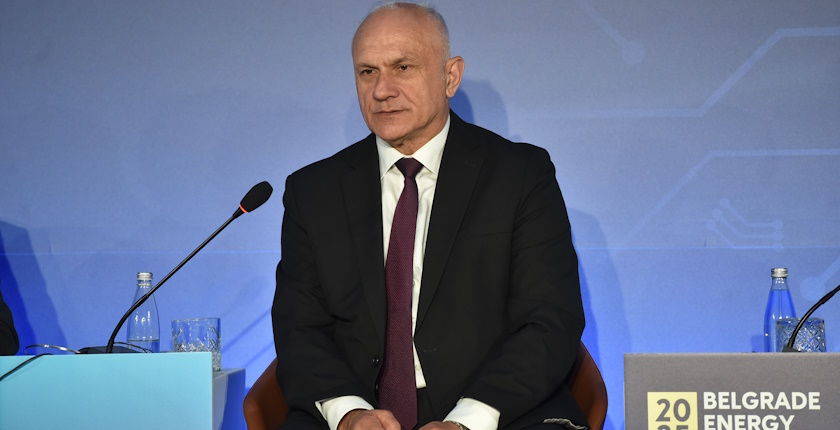
According to Minister of Energy and Mining of the Republic of Srpska Petar Đokić, the entity has made significant progress in defining a regulatory framework that aligns with the rules of the Energy Community and the European Union.

He noted that with the help of the Energy Community Secretariat, the two entities of BiH recently reached an agreement on adopting a law on the electricity regulator, transmission, and market. It is one of the cornerstones for establishing an organized electricity market.

The Republic of Srpska was successful in attracting investments in green energy in recent years, Đokić added. It established concessions and partnerships for the construction of 2,200 MW of renewable energy power plants – wind, solar, and hydropower.

However, large investments in transmission networks are also necessary, he pointed out and said he expects assistance from the European Union’s financial institutions such as the European Bank for Reconstruction and Development (EBRD) and the European Investment Bank (EIB), as well as the World Bank.

Đokić: CBAM to hit hard BiH’s economy

The minister called on them to set up such partnerships.

Regarding the EU’s Carbon Border Adjustment Mechanism (CBAM), he said that measures have been taken to change the domestic energy mix. Until recently, the share of fossil fuels was 62%, but it has now dropped to 54%, he recalled.

By 2028, the Republic of Srpska will have two new hydropower plants, of 159 MW and 36 MW, and new solar power plants with a total capacity of 250 MW, the minister asserted. It would additionally green the energy mix, Đokić said.

CBAM, in his words, could harm the economy of the Republic of Srpska and BiH.

If it is applied the way it is apparently envisaged, it would result in a significant increase in costs, with a severe negative impact, he underlined. Đoković expressed hope that the rollout would be separately discussed in the case of BiH.

Šahmanović: Montenegro is finishing its NECP

Montenegro also enjoys great interest from investors. It has received applications for building solar power plants and wind farms with a total capacity of 5.5 GW, said Admir Šahmanović, Minister of Energy and Mining.

The country’s current capacity is slightly over 1 GW.

It is, in his words, the result of improving the regulatory framework including the adoption of laws on renewable energy sources and energy. However, investment in the transmission grid is also necessary. The government plans to discuss with Italy the possibility of installing another subsea cable for electricity transmission, while the national energy and climate plan (NECP) will be completed by the end of next month, the minister revealed.

Montenegro is requesting a postponement of CBAM until 2030

In addition, renewable energy auctions are being prepared with the EBRD, and a memorandum on market coupling with Italy will be signed, he added.

As for CBAM, the minister stressed that Montenegro doesn’t believe the EU wants to harm its economy, but argued that the country isn’t ready for the mechanism’s implementation.

“Perhaps we are now in a situation similar to where our EU partners were 20 years ago. So, we need to invest a lot in our production capacities, grid, storage. It will take years, so if we don’t receive an exemption by 2030, I believe we won’t be able to handle this challenge,” Šahmanović stressed.

Secure supply of the national market is the highest priority

Boglárka Illés, Admir Šahmanović and Jovana Joksimović

Jovana Joksimović, Serbian assistant minister of mining and energy for international cooperation, European integration, and project management, expressed the opinion that the energy transition is a long and intensive process, technically, operationally, and financially.

Since October 2022, renewable energy in the energy mix has increased by 83%, which demonstrates the progress of the energy transition in Serbia, Joksimović asserted.

“We need to be realistic, as well as socially aware, because a fair and sustainable transition is something that should be carefully considered when changing the energy mix, where coal accounts for 60%,” she noted.

Joksimović: The priority is to ensure a sufficient supply of electricity at the most affordable prices for citizens and the economy

It is necessary, in her words, to be ambitious and dedicated to the energy transition goals, but she is convinced that there is a higher objective.

At the country level, it is to ensure enough electricity at the most affordable prices for both citizens and the economy, she underlined. “That’s what our top priority is,” Joksimović underscored.

Guided by the said goal, Serbia is also considering the use of nuclear energy and a study on possible options is currently being prepared.

Boglárka Illés, State Secretary for Bilateral Relations at Hungary’s Ministry of Foreign Affairs and Trade, also stressed that the government’s primary duty is to ensure not only climate neutrality and sustainable energy but also affordable energy with a stable supply for households and businesses.

She pointed out that diversifying energy imports and the energy mix plays a key role in securing energy sovereignty. It is the reason why cooperation with the Western Balkans, and especially Serbia, is important to Hungary, Illés asserted.

Illés: Europe’s energy security has been demolished

A few days before, Hungary’s Prime Minister Viktor Orbán said the EU has abandoned a successful economic strategy, based on cheap Russian gas and advanced German technology.

“And now we don’t see any other strategy within the EU,” she stated.

Due to ideologically driven sanctions against Russia, and the European Green Deal, the energy security of Europe is demolished, in Illés’s opinion. The region is located at the intersection of essential energy routes, connecting the East and the West, and also South and North, she underlined.

“We, as an EU member country, can act as a bridge between non-EU member countries and also the EU,” the state secretary stressed.

As an example of good cooperation with Serbia, she highlighted the supply of gas through the TurkStream pipeline and the Pannonian Corridor project for doubling the capacity for power exchange between the two countries.

The energy transition is an opportunity

Jovana Joksimović, Marija Pujo Tadić and Dario Liguti

In one respect, Marija Pujo Tadić, Special Envoy for Climate Action from the Government of Croatia, doesn’t share the opinion of the Hungarian official. She argued it isn’t true that Europe lacks a plan.

The EU has a clear plan and a well-defined strategy – it is the Clean Industrial Deal, she stressed.

She highlighted two important strategies relevant to the region: the Paris Agreement and the Green Agenda for the Western Balkans.

As a member of the scientific advisory board for the COP 29 presidency, she recalled that this year a review of nationally determined contributions (NDCs) would be conducted. It is an assessment of how countries are meeting their plans for lowering CO2 emissions.

Pujo Tadić: Education and workforce specialization are essential

She underlined the Green Agenda for the Western Balkans also envisages reducing net greenhouse gas emissions to zero by 2050, which is essentially the shared goal of the EU.

However, Pujo Tadić expressed the belief that policies and laws alone are not enough. Public education and workforce specialization are also necessary because the transition will create many new jobs, she added.

Croatia could be of great support to the Western Balkans, having launched such educational programs five years ago, according to Pujo Tadić.

The link between the energy transition and the creation of new jobs was also stressed by Dario Liguti, Director of Sustainable Energy at UNECE. In his view, the region has a huge opportunity to become part of the supply chains for green technologies by greening the domestic power generation and by leaning on the EU’s energy transition.

He sees the main factors for it in the region’s geographic proximity to the large European market, and the large, skilled workforce that can be educated for other tasks. Liguti drew a connection with the expected job loss from decarbonization measures and the related need for a just transition.

Liguti: There is great potential for energy efficiency in the region

Liguti praised the forthcoming investments in renewable energy production, but warned it is only one side of the story, arguing that the other one is energy efficiency. He reminded the audience that the region’s energy intensity is high, saying there is room for savings.

The installation of big solar plants and wind farms, in his words, is great because it’s very visible.

“It’s a great investment and makes a lot of sense. The harder part is making energy efficiency investments, whether in buildings or the industrial processes in large, small, or medium enterprises,” Liguti stated.

As an example, he recalled that UNECE is running a project with the EBRD in North Macedonia to support households and small and medium enterprises to lower the costs of liquid fuels and electricity.

by in News

Weakness in Serbian energy system is no option

Serbia’s state-owned power utility Elektroprivreda Srbije (EPS) is committed to its own and the country’s goals for green energy and emission cuts, but it is sustainable only if it doesn’t jeopardize energy security, Chief Executive Officer Dušan Živković said. Weakness in the energy system is not an option, he underscored.

The recent blackout in entire Spain and Portugal and the one last year in the Balkans have imposed the topic of large energy storage facilities which would support the integration of renewables, CEO of EPS Dušan Živković said at Belgrade Energy Forum (BEF 2025). The company is committed to its own and the country’s goals for green energy and emission cuts, he asserted.

“We will work on that, of course, believing in these objectives, but without compromising energy security and the energy sovereignty of the state of Serbia. It was proven to be the only sustainable path and that if we don’t follow it, it can result in situations that are not a good message toward consumers, and they are not a good message toward investors either. Weakness in the energy system is certainly not an option”, Živković stated.

In its Integrated National Energy and Climate Plan (INECP or NECP), Serbia is targeting for 2030 a 45.2% share of renewable energy sources in electricity production and a decrease of greenhouse gases by 40.3% from the 1990 level.

Decarbonization is not easy without serious storage

Among its other activities, EPS is working on its small green energy projects on open cast coal mines, while the strategic partner, a consortium of UGT Renewables (UGTR) and Hyundai Engineering, is tasked with building a group of solar power plants of 1 GW in combined connection capacity alongside 200 MW of battery energy storage, and transfer them to Serbia’s government-controlled power utility, Živković noted. But the process of decarbonization with necessary renewable energy capacity won’t be easy “without serious storage,” he stressed.

Serbia hosts fossil fuel power plants of 4 GW in total

Big energy storage projects are financially challenging, only marginally cost effective, and they are not easy to build, EPS’s head claims. They are necessary to be able to draw enough baseload energy, and in Serbia they need to contribute replacing a large fossil fuel capacity – currently it amounts to 4 GW, Živković said.

Pumped storage hydropower project Bistrica, existing facility Bajina Bašta enable comfort for signing PPAs

EPS primarily focuses on the Bistrica pumped storage hydropower project and the possibility to develop the one for Đerdap 3, he added. That way conditions would be created for the facilities to provide new services in the market, so “the region feels safer, too,” Živković underscored.

Counting on Bistrica and the existing pumped storage hydropower plant, Bajina Bašta, EPS is in “a comfortable zone” for signing power purchase agreements (PPA) with companies for their green power plants, Živković explained. Bajina Bašta is undergoing the second half of reconstruction works.

Turning back to the April 28 collapse of the Iberian electricity system, Živković pointed to the adverse interest of private investors – get profit in the short term – and companies responsible for energy security. In his view, it is necessary to act “more intergenerationally responsibly” and very important to find balance in relation to profits.

by in News

Belgrade Energy Forum 2025 – 50 speakers at eight panels to track pace of SEE energy transition

The agenda of the third Belgrade Energy Forum, taking place on May 14-15, has been finalized with the addition of further prominent energy experts and companies. The conference, organized by Southeast Europe’s leading energy news portal, Balkan Green Energy News, will feature eight panels covering key topics in the energy sector, with an impressive lineup of speakers. Make sure you register on time via this link.

The Belgrade Energy Forum will once again be a meeting place for representatives of regional and international institutions and organizations, as well as the business community from across the region, Europe, and the world.

Eight panels featuring more than 50 speakers will offer an overview of the current challenges in the energy sector. Conference participants will hear in-depth analyses of the current situation, but also projections for the future. The thread that connects everything at this year’s BEF is digitalization – it permeates energy production, consumption, and storage and allows enough flexibility for the stable functioning of the energy systems of the future, where renewable energy will dominate.

Chikán: Electricity knows no borders

One of the key speakers at the conference, Alteo Group CEO Chikán Attila, will lead the company’s high-level delegation. Alteo has recently launched a regional expansion drive, aiming to establish a green platform of up to 2 GW in energy production, including operation, software, maintenance, storage, and waste management.

The Hungarian company primarily targets its home market, Slovakia, Croatia, and Serbia.

“Electricity knows no borders, therefore partnerships and collaborations among energy market players are essential, even at the regional level. Such cooperation is vital to ensuring the security and reliability of electricity supply, facilitating the integration of renewable energy sources, and providing essential digital solutions, supported by expertise and professional know-how,” Chikán stressed.

Decarbonization strategies for power generation in Southeast Europe 2040/2050

  • Dejan Paravan, CEO, GEN Energija
  • Dušan Živković, CEO, EPS
  • Eric Scotto, CEO, AKUO
  • Milutin Đukanović, Chairman, EPCG Board of Directors
  • Neda Lazendić, Country Manager, WV-International

Although at the heart of national energy systems, state-owned power utilities are faced with an environment that has changed and continues to change rapidly. The key shift is the entry of private capital into electricity production through the construction of solar power plants and wind farms.

The energy transition, at this stage, requires cooperation between state power utilities and private companies. With decarbonization as the main objective, the key challenge lies in choosing appropriate strategies and electricity generation technologies.

Moderating the panel will be Dražen Jakšić, Director of the Energy Institute Hrvoje Požar (EIHP).

“The transition to a low-carbon energy system is a key challenge for our region, demanding innovation, investment, and cooperation. As a sponsor of the Belgrade Energy Forum, EIHP is committed to fostering dialogue and driving sustainable energy solutions. I look forward to an insightful discussion,” he stressed.

Jakšić: The transition to a low-carbon energy system is a key challenge for our region, demanding innovation, investment, and cooperation

In recent years, nuclear energy has emerged as a possible alternative. There is hardly a better interlocutor on this topic in the region than Dejan Paravan, the top man of GEN Energija, the Slovenian company developing the Krško 2 nuclear power plant project.

Dušan Živković, CEO of Elektroprivreda Srbije (EPS), will tell us about the Serbian power utility’s plans when it comes to nuclear energy.

Živković: Without decarbonization, the region’s energy sector has no future

“Without decarbonization, there is no future for the region’s energy sector, and that is the biggest challenge ahead of us. It is essential to accelerate decisions and ensure sustainable project financing mechanisms that will provide energy security for every country and power utility in the decades to come. By investing in existing capacities and new renewable energy projects, EPS, as the biggest utility in the region, will make its own contribution to energy security. That’s why we have initiated a transformation process – because we need to be more profitable, more efficient, and fully prepared to tackle any challenge,” Živković pointed out.

The energy transition, in his words, is the path EPS has chosen, and all its plans will align with that goal, based on the belief that the diversification of energy sources and new technologies are essential for achieving it. “These are just some of the key messages I will share with the participants of this year’s BEF,” said Živković.

Eric Scotto, co-founder and CEO of French company Akuo, will share the latest information on the energy transition from across the globe.

The company’s portfolio consists of 1.9 GW of power plants in operation and under construction, with a further 12 GW in the pipeline in more than 20 countries around the world, including a number of countries in the Southeast Europe region.

Integration of Western Balkans electricity markets into internal European market through market coupling

  • Anže Predovnik, Director, ADEX Group
  • Ivan Asanović, Executive Director, CGES
  • Marko Bislimoski, President, Energy, Water Services and Municipal Waste Management Services Regulatory Commission of the Republic of North Macedonia
  • Zoran Vujasinović, Policy Officer, ACER

The integration of the Western Balkans’ electricity markets with the European Union (EU) markets is a process that deserves much greater public attention than it currently receives. It is safe to say that its true importance will become evident only once it is completed.

Full integration will unlock significant synergies, maximizing the benefits of a unified market by enhancing supply security, accelerating the integration of renewable energy sources, and fostering greater competition and transparency.

Moderator Dejan Stojčevski, CTO of the SEEPEX power exchange, says the panel seeks to encourage dialogue on the importance of cross-border collaboration and market efficiency in bolstering energy security and sustainability in the region.

Bislimoski: The time for inspiring speeches is over. Geopolitical developments demand action – now!

Since market integration is largely the job of regulators, the challenges they face will be analyzed by Marko Bislimoski, president of North Macedonia’s Energy and Water Services Regulatory Commission (RKE).

He says that three things are essential for the regional integration of electricity markets into a single European market: investment, investment, and nothing but investment. In his words, the energy crisis demonstrated that limitations become a reality when governments fail to prioritize the implementation of key energy infrastructure capacities in their budgets.

“This past winter, the region faced the highest electricity prices compared to the rest of Europe. Why? Because the implementation of energy investments is not just a ribbon-cutting ceremony. Today, more than ever before, the countries of the former Yugoslavia must demonstrate maturity. These are the years when energy independence will be built through action. The time for inspiring speeches is over. Geopolitical developments demand action – now!” he stressed.

Energy revolution underway – uniting efforts to deliver green, intelligent and sustainable energy solutions

  • Aleš Prešern, VP, Head of Southeast Europe, Siemens Energy
  • Maja Turković, SVP, CWP Europe
  • Ann-Catherine de Tourtier, Managing Director Mediterranean, Nordex Group

As much as contesting the energy transition may be futile, there are still those who find such a view meaningful, especially in light of certain global political developments. That’s why it is important to give the floor to some of the transition leaders and let them testify that an energy revolution is indeed underway in the region.

The panel’s moderator Mirza Kušljugić – professor, energy expert, and one of the founders of Bosnia and Herzegovina’s Centre for Sustainable Energy Transition Centre (RESET) – goes one step further to show that change is not only happening but also accelerating.

“The key words are a new energy paradigm driven by the four Ds – decarbonization, digitalization, decentralization, and democratization. But now we also have another D: disruption, or radical change in the industry and market caused by technological innovation. Of course, we must focus the discussion – from global processes (China, the US, the EU, the Global South) to where the region stands in all of this,” Kušljugić points out, providing a perfect introduction to the panel.

Turković: It’s more important than ever to have open discussions about real solutions

Aleš Prešern, Vice President and Head of Southeast Europe at Siemens Energy, has worked in the energy sector for more than 20 years. He recalls that digitalization is key, along with grid resilience and electricity transmission.

With nearly 100,000 employees in more than 90 countries, Siemens Energy develops the energy systems of the future, ensuring that the growing energy demand of the global community is met reliably and sustainably. The technologies created in the company’s research departments and factories drive the energy transition and provide the base for one sixth of the world’s electricity generation.

As a leader in renewable energy development, CWP is actively working on several large-scale projects across the SEE region with a total capacity exceeding 7 GW, positioning the company at the forefront of the region’s energy transition. Given its global expertise and insights into the regional energy market, CWP’s contribution to this year’s conference will be invaluable.

Maja Turković, Executive Vice President of CWP Europe, says that BEF 2025 is a key gathering of leading experts driving the energy transition in Southeast Europe.

“As this shift gains momentum, it’s more important than ever to have open, action-driven discussions about real solutions to the challenges and opportunities ahead,” says Turković.

PPAs as a key to renewable energy growth in SEE

  • Nikola Gazdov, Chairman, Association for production, storage and trading of electricity – APSTE
  • Natalija Ljubić, Manager PPA & BESS Transactions, Pexapark
  • Ivana Đurović, Category Manager Renewable Energy, Knauf Group

Power Purchase Agreements (PPAs) are, like flexibility, a tool for fixing the imperfections of renewable energy sources, and they are recognized as a key mechanism within the new electricity market design. They ensure price stability, attract new investment, and accelerate the decarbonization of industry.

Is the region ready for PPAs? What are the dominant models? What is the current market practice? How are PPAs viewed by financial institutions? What do they offer to end consumers and what to investors in new power plants? Answers to these questions will be sought at the panel moderated by Mislav Slade-Šilović, Energy, Utilities & Resources Consulting Leader for Southeast Europe and member of the core PPA team at consultancy PwC.

Experience with PPAs for more than 500 GWh of electricity

Slade-Šilović’s experience in concluding PPAs for the production and consumption of over 500 GWh of electricity per year in the SEE region will certainly be of help.

Nikola Gazdov, Chairman of Bulgaria’s association for electricity production, storage, and trading (APSTE) and member of the Board of Directors of the European solar industry association SolarPower Europe, has no shortage of experience either. As CEO of three companies – Enery Element GmbH, Element Power Group, and Renergy – he is involved in the development of a large number of projects.

Pexapark, a company that provides logistics to businesses in the renewable energy market, is synonymous with PPAs in Europe. Natalija Ljubić is the Manager for PPA and BESS Transactions at Pexapark, which has helped conclude contracts for facilities with a combined capacity exceeding 35 GW.

The views of electricity buyers – without whom there would be no PPAs – will be conveyed by Ivana Đurović, Category Manager for Renewable Energy at Knauf Group.

Market flexibility: the backbone of a resilient energy system

  • Roman Bernard, CEO, NGEN
  • Luka Renko, COO, KOER
  • Alteo Group representative
  • Nikolaj Candellari, Project Manager and Market Intelligence, CyberGrid
  • Marko Zarić, EMS

Moderating the panel will be Elena Boškov Kovač, co-founder and CEO of Blueprint Energy Solutions, and a leading voice on market flexibility in Europe.

She will host representatives of the sector’s leading companies: NGEN, Alteo, KOER, CyberGrid, as well as Serbia’s transmission system operator Elektromreža Srbije (EMS).

“Excited to moderate a high-impact panel on ‘Market Flexibility: The Backbone of a Resilient Energy System’ at the Belgrade Energy Forum 2025,” says Boškov Kovač, whose work has shaped smart grid strategies and digitalization innovation agendas across the EU and under ETIP SNET.

As Europe accelerates its shift to renewables, market flexibility is emerging as the cornerstone of reliable, affordable, and decarbonized energy systems. With the European flexibility market promising to unlock over EUR 20 billion in savings, this session will explore how digital tools, flexible assets, and new market designs are unlocking value and resilience across the grid.

Slovenia’s NGEN is the technology sponsor of BEF 2025

Slovenian energy company NGEN, the technology sponsor of the conference, has managed to establish itself as a significant player in European markets in just five years of operation and is now ready to enter the Western Balkans’ markets.

Specializing in premium battery storage systems and smart energy solutions, the company is developing systems with a total capacity of 1.6 GWh in European countries. Its founder, Roman Bernard, will be speaking at the panel.

Also taking part in the panel will be Luka Renko, COO of KOER, a pioneer in virtual power plants in the region.

Rounding off the lineup of exceptional panelists will be Nikolaj Candellari, who is responsible for project management at CyberGrid. The software company was acquired a few years ago by Austria’s EVN, one of the first to demonstrate that greater integration of renewable energy sources, battery storage, and prosumers is not possible without digitalization and software solutions.

In a nutshell, this innovative company stands for the digitalization of the energy sector, with a focus on virtual power plants.