by in News

Several EU member states face uncertainty amid looming Russian gas ban

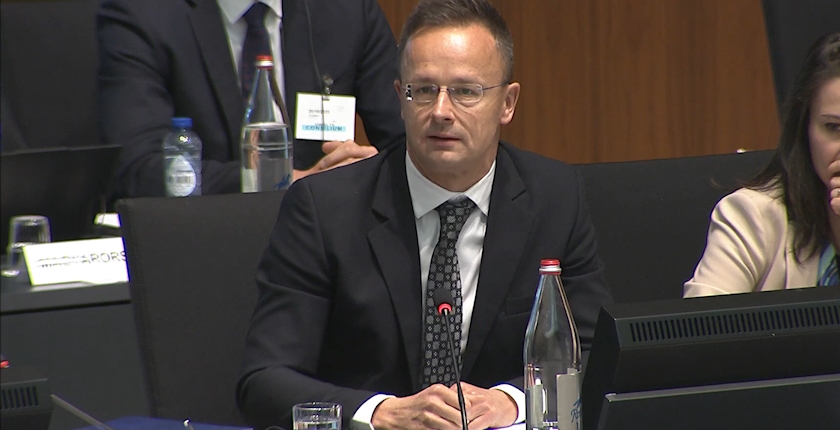
The European Union’s proposed measures to phase out imports of Russian oil and gas would destroy Hungary’s security of supply, according to Minister of Foreign Affairs and Trade Péter Szijjártó, who spoke at the meeting of energy ministers in Luxembourg. Slovakia is in a similar situation, while Romania pointed to the difficulty of proving the origin of foreign gas.

The draft regulation that the Council of the EU adopted doesn’t explicitly call for a ban on the transit of gas to third countries, while it foresees a temporary suspension for member states in case of supply disruption. The proposal also allows the possibility of importing non-Russian gas through the TurkStream pipeline.

The meeting of the so-called Energy Council highlighted several issues and concerns among EU member states about the proposed ban on Russian natural gas, including liquefied natural gas (LNG). Energy ministers in the Council of the EU adopted their position ahead of negotiations with the European Parliament on measures that they plan to introduce on January 1.

There would be a transition period for existing contracts for Russian fossil gas. Short-term ones concluded before June 17 this year would remain in force until June 17, 2026. Long-term contracts may run until January 1, 2028. It is also the targeted date for ending imports of Russian oil.

Szijjártó: The remaining infrastructure, physically and capacity-wise, is not able to supply Hungary

“The real impact of this regulation is that our safe supply of energy in Hungary is gonna be killed,” the country’s Minister of Foreign Affairs and Trade Péter Szijjártó stressed at the meeting.

He clarified that he wasn’t speaking about prices, and warned of damage from the proposed regulation – in the name of diversification.

“As now we are phasing out supply routes towards Hungary, the remaining infrastructure, physically and capacity-wise, is not able to supply the country. This has nothing to do with politics. This has nothing to do with Russia. This has nothing to do with the war in Ukraine. This is mathematics and physics,” Szijjártó stressed.

He also reiterated that his country would be left dependent on one oil supply route, via Croatia. It would leave Hungary “totally defenseless to a monopoly” as the transit fee doubled since the start of the war and it is five times higher than the current European benchmark, the minister underscored.

Bulgaria asks for protection from arbitration for gas TSOs

Slovak Deputy Prime Minister and Minister of Economy Denisa Saková said the supply of gas to her country is limited. There are interconnections with all neighbors, but external capacity bottlenecks remain, she argued. Bulgaria asked for provisions protecting gas transmission system operators (TSOs) from arbitration and financial penalties.

Romania voted for the draft regulation, but warned that identifying the origin of imported gas would be difficult

Secretary of State in Romania’s Ministry of Energy Cristian Bușoi urged for a workable and harmonized verification system and for the development of clear guidelines.

“This is not a matter of energy policy, but of strategic autonomy and European solidarity. At the same time, as we move from political vision to implementation, we believe it is important that the new authorization and verification system remains practical, transparent and proportionate. The additional requirements to demonstrate the exact country of production represent a new level of responsibility that, while understandable, and we support this in principle, may be difficult to fulfill in practice, particularly for pipeline [and] natural gas traded on hubs, and shipments transport, including LNG cargos that involve multiple sources and blending,” Bușoi told the ministers.

Council of EU proposes suspension clause

Notably, the Energy Council’s position, part of the REPowerEU plan and sanctions against Russia, is that the regulation should contain a suspension clause. The European Commission could temporarily lift the ban on Russian gas and LNG in case of significant disruptions of supply.

Another important element is the possibility of importing non-Russian gas through the TurkStream pipeline if the fuel’s origin is proven.

Gas transit through EU not subject to prohibition

Energy ministers said the EU should ensure that natural gas which crosses the 27-member bloc under a transit procedure is not ultimately entering into free circulation in the union.

It would imply that Serbia, Bosnia and Herzegovina and North Macedonia, non-EU countries, could continue to buy Russian gas that is delivered through Balkan Stream. It is the extension of TurkStream running through Bulgaria and Serbia to Hungary.

“Any gas which, before its import into the EU, was exported from the Russian Federation, either via direct export from Russia to the EU or via indirect export through a third country, should, except in case of transit, be subject to the prohibition”, the document reads.

Serbia still hasn’t signed a long-term gas supply contract with the Russian side, and the previous one expired in May. Moreover, the United States have imposed sanctions on Gazprom-controlled NIS, Serbia’s national oil importer, refiner and operator of a chain of service stations.

On top of it all, hydropower output is at a record low due to chronic drought, while coal is being imported as domestic mines don’t produce enough lignite.

by in News

Von der Leyen: EU is guarantee that Serbian families will be warm in winter

The European Union is connecting Serbia to its energy market, and it is the true guarantee that Serbian families will be safe and warm in winter, European Commission President Ursula von der Leyen said in Belgrade. She expressed preparedness to invest further in the country’s gas interconnector with Bulgaria.

In her speech during the visit to Serbia, European Commission President Ursula von der Leyen didn’t address the looming energy crisis caused by the sanctions that the United States imposed on Russian-owned oil company NIS. Moreover, she demanded greater alignment with the EU foreign policy from President of Serbia Aleksandar Vučić, including on sanctions against Russia.

“The EU membership offer is an opportunity. It is the promise of peace. Of prosperity. And of solidarity. Especially in times of crisis. You have seen this in practice,” she stated and pointed to the energy crisis of 2022.

EU showed equal solidarity with Western Balkans

After Russia invaded Ukraine, the EU introduced the same measures of solidarity to its Western Balkan partners as to its own member states, Von der Leyen stressed. “This is what it means to be a reliable partner. You can continue to count on us. We are connecting Serbia to the EU’s energy market. This is the true guarantee that Serbian families will be safe and warm in winter,” she stated.

The head of the 27-member bloc’s executive body pointed to ongoing investments like the Trans-Balkan Electricity Corridor. The mostly completed route stretches from Romania to Bosnia and Herzegovina and Montenegro and its MONITA undersea link with Italy.

Von der Leyen: Collective market power to secure better energy prices

Von der Leyen highlighted the Serbia-Bulgaria gas interconnector as well. The pipeline was completed almost two years ago. “We are prepared to invest further in it. We also invited Serbia to join the EU’s joint gas procurement mechanism. Together we are using our collective market power to secure better energy prices,” she said.

The administration in Brussels introduced the AggregateEU platform for joint procurement of gas in 2023. It expired earlier this year, but the EU is preparing another mechanism.

Serbia is planning an oil interconnector with Hungary and gas links with Romania and North Macedonia. Vučić said the upcoming winter would not be an easy one for Serbia.

by in News

Serbia warns of gas crisis as EU transit ban threatens Balkan Stream supply

Serbia is in a very difficult situation because, as of January 1, 2026, it won’t be able to receive Russian natural gas via Bulgaria, according to the Ministry of Mining and Energy.

Serbia receives natural gas from Russia via the Balkan Stream. The pipeline is an extension of TurkStream that passes through Bulgaria and Serbia. Bosnia and Herzegovina and Hungary, Serbia’s neighbors, are also supplied via Balkan Stream. TurkStream delivers gas from Russia across the Black Sea to Turkey.

Serbia is facing a very difficult and almost dead end situation due to the European Union’s ban on the transit of Russian gas through the EU to third countries, which will come into effect on January 1, 2026, according to Serbia’s Minister of Mining and Energy Dubravka Đedović Handanović.

Đedović Handanović: Bulgaria won’t allow the flow of Russian gas through the Balkan Stream

Bulgaria won’t allow the flow of Russian gas through Balkan Stream, which will negatively impact Serbia, she stressed.

The European Commission set out a plan in May to phase out the purchases of Russian natural gas, including in liquefied natural gas (LNG), and oil, by the end of 2027. The council now confirmed that imports of Russian gas will be prohibited from January 1, 2026, while maintaining a transition period for existing contracts.

Đedović Handanović: We are doing everything in our power, but the situation is almost hopeless, considering the current situation regarding NIS

Yesterday, the Council of the European Union agreed on its negotiating position on the European Commission’s draft regulation to phase out imports of Russian natural gas. When the European Parliament adopts its own position, it can start negotiating with the council.

When the two institutions approve a regulation, it directly applies to all member states.

Đedović Handanović expressed hope that a solution would be found due to, as she put it, President Aleksandar Vučić’s excellent relations with world leaders.

“We are doing everything in our power, but it is an almost dead end situation, considering the current situation regarding Naftna industrija Srbije [NIS]. Our country, which is not involved in any conflict, has found itself affected through no fault of its own. Despite everything, we will do our best, as we have so far, so that citizens don’t feel the problems we are facing,” Đedović Handanović underlined.

Namely, the United States imposed sanctions on October 9 against NIS, Serbia’s national oil importer, refiner, and operator of a chain of service stations.

by in News

Hungary’s Szijjártó: MOL to supply more oil, fuel to Serbia amid sanctions

Minister of Foreign Affairs and Trade of Hungary Péter Szijjártó said Serbia can count on an increase in supply of oil and fuel from MOL, as NIS is now under US sanctions. However, it cannot fully replace the volume that was coming through Croatia, he warned and stressed that it shows the risk of depending on a single oil pipeline.

The United States has imposed sanctions on Serbian oil refiner and fuel distributor NIS, controlled by Russian Gazprom’s subsidiaries. Except for a small share of domestic production, the company was getting all its oil through the Croatian Jadranski naftovod (JANAF) pipeline. Serbian President Aleksandar Vučić said the country’s only refinery, in Pančevo, can only operate until the end of the month, while that the current stockpiles of derivatives can last until the end of the year.

Hungarian Minister of Foreign Affairs and Trade Péter Szijjártó promised assistance. “Of course, we stand by our Serbian friends. We are in constant contact, and since MOL, as the largest energy company in the region, plays an important role in the supply of crude oil and fuel in Serbia, of course our Serbian friends can also count on MOL’s increased deliveries,” he stated.

Serbia’s only refinery has oil only until the end of the month

At the same time, the Hungarian official acknowledged that it cannot fully replace the volume that was coming via Croatia.

“Therefore, everyone should remember once again as a very important lesson: there are very serious risks in the situation when a country depends on a single oil pipeline, especially if it comes from Croatia,” Szijjártó stressed.

Namely, the government in Budapest has been complaining that JANAF’s oil transport fees were too high and it disputed the Croatian state-owned pipeline operator’s ability to cover the entire needs of MOL’s refineries in Hungary and Slovakia. The company still gets Russian oil through the Druzhba pipeline as well.

According to the Energy Community Secretariat, oil and petroleum product stocks in Serbia in July amounted to 43.8 days of average net imports, compared to the required 90 days.

by in News

Serbia’s economy in uncharted territory amid imminent US sanctions against oil company NIS

For NIS in Serbia, doing business will become exceptionally difficult from tomorrow, when the United States imposes sanctions, starting with payment systems. The same goes for any enterprise cooperating with the oil refiner and distributor, majority owned by Russia’s Gazprom Neft and another firm controlled by Gazprom.

Nine months after the US announced sanctions against NIS, which were postponed several times, they are coming into force tomorrow morning. Apparently, the American Office of Foreign Assets Control (OFAC) is imposing restrictive measures for Serbia’s national oil importer, refiner and operator of a chain of service stations. Croatian company Jadranski naftovod (JANAF), which depends to a great extent on supplying NIS, said the deliveries can last until October 15.

The US and the United Kingdom announced sanctions early this year against Russian state-owned Gazprom Neft, which at the time held 50% of ownership, while its parent Gazprom controlled another 6.2%. After a reshuffle, Gazprom Neft now has 44.9% of NIS, and Intelligence, a firm within Gazprom’s system, owns 11.3%. Serbia’s stake is 29.9%.

Plan B has numerous unknowns

The oil refinery in Pančevo is the only diesel and gasoline producer in Serbia and it dominates the market by far. According to media reports, NIS has considered switching to cash payments, with the exception of the domestic currency system DinaCard, and transferring all its accounts to the state-owned Postal Savings Bank.

It is unlikely that the company would be able to cover all the logistics and finances that way. At the same time, the entire Serbian economy is at risk, together with basic services for citizens. Organizing fuel imports will take time, which may lead to shortages and price hikes. Officials and the representatives of the oil sector claim that the current stockpiles can last several months.

Forced nationalization may switch energy crisis to gas supply from Russia

Back in January, President of Serbia Aleksandar Vučić immediately estimated that Russia would have to completely and urgently exit ownership. There was no success in the meantime in talks with the Kremlin and Gazprom.

“There is one possibility. If I said: I may seek nationalization of the property tomorrow. That is the last thing i would say, if I had to. I don’t want that,” Vučić stated late last week.

In case of a forced purchase of the Russian stake, the focus would turn to the supply of Russian gas through the Balkan Stream pipeline, an extension of TurkStream. Serbia still hasn’t signed a long-term contract with the Russian side, and the previous one expired in May.

To make matters worse, Bulgaria said it would end the transit of Russian gas, through Balkan Stream, for short-term arrangements. The move is part of the European Union’s measures to end the purchases of Russian fossil fuels. A total halt is scheduled for 2028. If the supply chain isn’t drastically changed, it would heavily impact Hungary, Slovakia and Serbia, together with Bosnia and Herzegovina and North Macedonia.

by in News

Croatia among EU’s top three emitters of methane from oil, gas industry

Croatia is one of the three European Union member countries with the highest methane emissions from the oil and natural gas industry, according to research by Greenpeace Croatia and the Clean Air Task Force (CATF). Greenpeace Croatia noted that methane has 84 times greater global warming potential than carbon dioxide on a 20-year timescale.

Methane emissions from oil and gas infrastructure in Croatia have been comprehensively analyzed for the first time, according to Greenpeace Croatia.

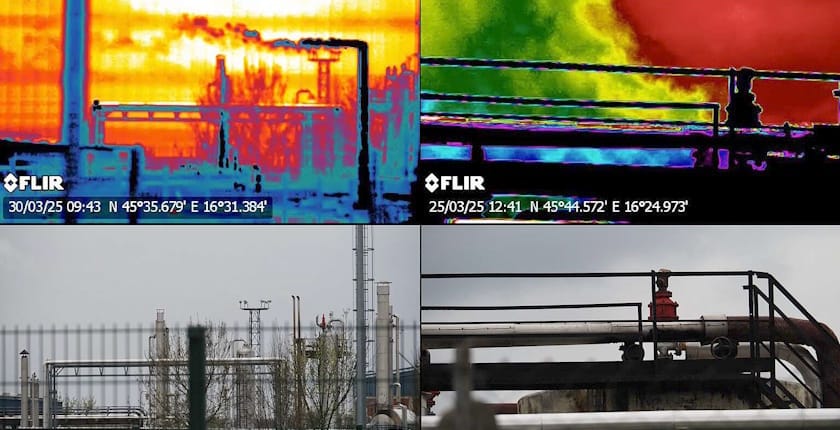
“Methane hunter” Théophile Humann-Guilleminot from the international climate organization Clean Air Task Force (CATF) has examined more than 500 locations all around the world. He also recently visited 27 locations in Croatia, measuring methane emissions at all but one of them.

Greenpeace stressed it is an astonishing 96% of the investigated sites and the highest score by CATF in any EU member state.

Emissions were documented in detail by CATF at each site

The two organizations have visited several locations in Croatia with facilities for the production, transportation, and storage of oil and gas. The infrastructure is owned or operated by INA, Plinacro, and Okoli Underground Storage.

At 26 locations, methane emissions were documented in the form of gas release, venting, and flaring, which could also harm human health, Greenpeace underlined.

CATF carefully documented emissions at each location using infrared (IR) videos and IR and digital photos. The collected evidence is part of the group’s Cut Methane campaign in Europe and the world.

Humann-Guilleminot: Companies are releasing methane and accelerating climate change, all in pursuit of short-term profits

Théophile Humann-Guilleminot said the research strongly confirmed what scientists have been warning about for years – methane is leaking or being released along the entire oil and gas supply chain.

From the vast gas fields of Texas to Plinacro’s pipelines, companies are releasing methane and accelerating climate change, all in pursuit of short-term profits, he added. In his words, out of all the countries he visited, Croatia ranks amongst the worst three in terms of results.

“The scenes of methane gushing from open, rusted reservoirs in the Ivanić-Grad area, as well as leaks from wells at the Okoli location, are extremely worrying. During the energy crisis, this level of waste demonstrates a clear disregard for the climate and Croatian citizens,” Humann-Guilleminot stated.

Andrić: Greenpeace calls on the government to take seriously the implementation of new regulations on methane

Petra Andrić from Greenpeace Croatia pointed out the researchers could have assumed that methane emissions would be registered in some locations, but that they couldn’t have predicted such shocking results.

“Greenpeace is calling on the Government of the Republic of Croatia to take seriously the implementation of the new regulations on methane. In the long term, it is even more important to phase out fossil gas by 2035 and ban new gas and other fossil projects. The solutions are energy efficiency and renewable energy sources, in which Croatia has enormous potential, especially solar and wind,” she stressed.

Eszter Mátyás from Greenpeace Central and Eastern Europe said the new regulations would be much stricter for the operators in the fossil fuel industry. Therefore they will have to regularly carry out measurements and submit reports to regulatory bodies to prevent the release of methane from their infrastructure, she added.

  • 1
  • 2