by in News

Croatia, Serbia jointly install solar power plants at 30 public buildings

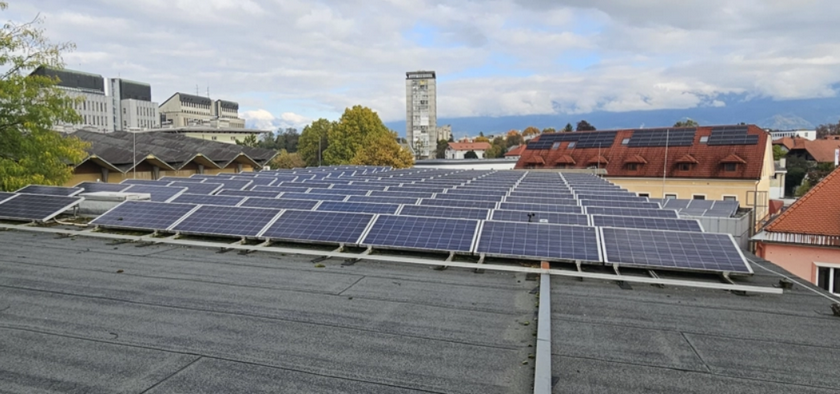
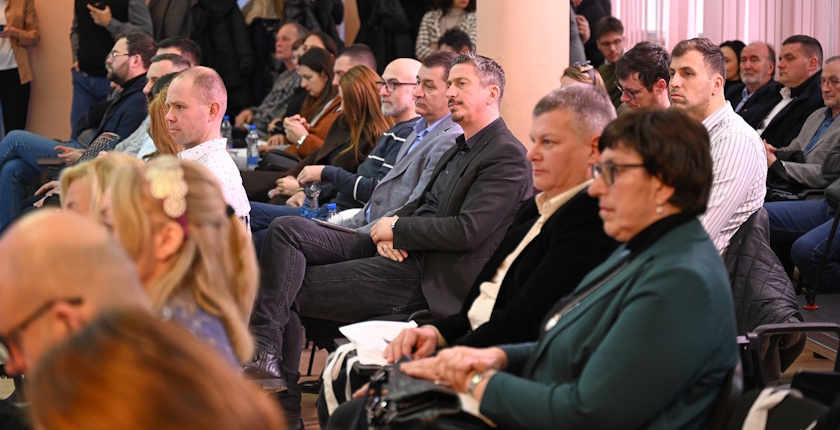
As part of a cross-border cooperation initiative, 30 public buildings in the Serbian city of Subotica and the Croatian municipalities of Vladislavci, Gorjani, and Strizivojna have installed solar power plants. The project also included the construction of smart bus stops and the upgrade of public lighting.

The investments were implemented through the Energy Efficient Communities – ENGAGE project, worth more than EUR 2 million. It was financed with the support of the European Union and implemented with expert support from the National Alliance for Local Economic Development (NALED).

Local authorities from Serbia and Croatia have demonstrated how cross-border cooperation can bring concrete and measurable benefits to citizens – from lower energy costs to cleaner air, NALED said.
serbia croatia solar engage project public buildings NALED eu

Panić: The most important result is a change in awareness about the role of institutions and citizens in energy efficiency

The total installed capacity of the photovoltaic plants within the project is 0.8 MW, of which 0.5 MW is in Subotica and 0.3 MW in the Croatian municipalities.

The City of Subotica has announced it would set up a renewable energy community, paving the way for citizens, institutions, and local businesses to jointly produce and consume energy from renewable sources.

Lulić: The project included training on energy communities

Zagorka Panić, City Manager and Deputy Mayor of Subotica, stressed that the most important result is a change in awareness about the role of institutions and citizens in energy efficiency. The completion of the project does not mean the end of cooperation, but rather a foundation for new joint steps toward a sustainable future, she added.

“The project included training on energy communities, sustainable energy sources, and the strengthening of local communities’ resilience. The key results include the development of a model and pilot activities for establishing energy-efficient communities in rural cross-border areas,” said Natali Lulić, Minister Plenipotentiary at the Embassy of the Republic of Croatia in Serbia.

Trifunović: A model that meets the real needs of local communities

According to Nataša Trifunović, Head of the Renewable Energy Sources Group at the Serbian Ministry of Mining and Energy, the project was implemented at a time of significant changes in the energy sector, both globally and nationally.

The world is undergoing a rapid energy transition, with a strong growth of renewables, especially solar and wind energy, she added.

Vasiljević: CO2 emissions reduced by about 520 tons annually

The project, in her view, is a good example of how cross-border cooperation and joint effort can be used to develop models that meet the real needs of local communities.

Trifunović said that one of the important strategic commitments is the further development of decentralized energy solutions, by encouraging the role of local authorities, citizens, and the business community in energy production and consumption.

Dušan Vasiljević, Director for Competitiveness and Investments at NALED, stressed that these investments contribute to reducing CO2 emissions by 520 tons annually. It is the amount of pollution produced by about 120 cars in a year, or the amount of CO2 that approximately 18,000 trees can absorb over the same period, he added.

by in News

Empowering the next generation: Youth engagement as a pillar of the Energy Transition

Author: Anna Cocchi, Project Officer,  ‘Fast & FairRenewables’ (FFRes) and Meie Kleijburg, Stakeholder Officer for Youth-lead Organisations  ‘Fast & FairRenewables’ (FFRes) at the European Youth Energy Network (EYEN), a partner organisation of EUSEW  

The 2050 net zero target is often talked about as a distant milestone on a map, but for us as young people, 2050 isn’t just a target; it’s our future. If we really want to achieve net zero, it is essential to recognize young people as essential, local partners today. Including youth as professional actors of the energy transition goes hand in hand with the “Local Projects – Local Influence” principle, showing that early and meaningful engagement of local groups is key to accelerating renewable deployment. From our experience as a European youth network, it is clear that youth must be involved from the start.

Positioning youth at the heart of the clean energy transition: a youth-led perspective

The mission of the European Youth Energy Network (EYEN) is to place young people at the heart of the clean energy transition: we believe in a future where European youth is instrumental in shaping a just and sustainable transition. As a volunteer-based think tank, EYEN works to build intergenerational collaboration and trust, equip young people with the necessary knowledge and skills, and create concrete spaces for them to act.

EYEN addresses a knowledge gap among decision-makers on how to meaningfully involve youth and respond to the needs and challenges of future generations. While the EU’s decarbonisation framework sets ambitious 2050 targets, implementation at the local level often lacks the structured engagement needed to ensure youth participation. Young people are ready to contribute but frequently face closed decision-making processes due to limited resources or unclear entry points. Beyond inclusion, youth represent an untapped energetic force in the energy transition: the more young people are involved, the faster policies and projects translate into real-world impact. When young people are meaningfully involved in decision-making, momentum increases, innovation flourishes, and implementation capacity is strengthened. Young people bring long-term vision and strong local networks, making them essential partners in the transition happening today.

At EYEN, our stance is clear: young people are not merely the “owners of the future,” but essential, professional partners whose participation must be embedded beyond tokenism into the core of energy policy, infrastructure planning, and grid development.

Local projects, local influence: delivering fast & fair renewables

A strong belief in action at the local level is a central pillar of EYEN’s work. In 2024, EYEN collaborated with ICLEI, a global network of more than 2,500 local and regional governments, to develop European baseline principles for the so-called Fast & Fair Renewables project. These principles emphasise that early and meaningful engagement of local interest groups is a prerequisite for successful renewable deployment, not an optional extra. Partnerships between municipalities, networks like ICLEI, and youth organisations demonstrate how youth engagement can be scaled beyond isolated initiatives.

It is within this gap that EYEN seeks to intervene, identifying effective ways to connect municipalities with youth organisations: this requires transparent communication, adequate resources, and feedback mechanisms to build trust. When meaningfully involved, young people act as catalysts at the local level, amplifying awareness of renewable projects and translating policy objectives into community-wide action.

Energy communities as intergenerational infrastructure

The transition to a decarbonised Europe is a shared journey. Empowering young people to influence energy infrastructure in their own local contexts through energy communities is, therefore, a crucial policy topic. In this context, the Fast & Fair Renewables project is closely connected to the Renewable Energy Directive (RED III), which provides the legal framework for Renewable Energy Communities (RECs). RECs enable citizens to take direct ownership of energy production and governance. By aligning youth engagement with RED III, municipalities can transform energy projects from top-down impositions into community-led initiatives, building more resilient, transparent, and equitable energy systems.

From the perspective of youth organisations across Europe, a joint and collaborative public engagement strategy is needed, built on early youth involvement, dedicated resources, transparent communication, and dialogue formats tailored to younger audiences. Equipping youth with knowledge builds trust; professionalising this dialogue ensures that young people’s input is traceable and reflected in final decisions. In this way, youth-led organisations become credible partners for municipalities, ensuring that climate objectives are not only ambitious on paper but achievable in practice.

This opinion editorial is produced in co-operation with the European Sustainable Energy Week (EUSEW) – the biggest annual event dedicated to renewables and efficient energy use in Europe. #EUSEW2026 marks the 20th edition and will once again bring together the community of people who care about building a secure and clean energy future for the next generations.  Check the currently open calls to join.

Disclaimer: This article is a contribution from a partner. All rights reserved. Neither the European Commission nor any person acting on behalf of the Commission is responsible for the use that might be made of the information in the article. The opinions expressed are those of the author(s) only and should not be considered as representative of the European Commission’s official position.

by in News

From bystanders to partners: How to ensure the new Citizens Energy Package effectively engages EU citizens in a clean energy future?

Authors:  Niklavs Tamanis, Veronica Saletti, Marco Costa, Marina Fernández-Campoamor – EUSEW  Young Energy Ambassadors

Citizens still struggle to join Europe’s clean energy transition. This article tests two practical approaches that turn hosts into partners: energy communities, where citizens co-own and share power, and community-benefit clauses, which distribute value locally. We, Young Energy Ambassadors, show how targeted One-Stop Shops (OSS), Renewable Energy Sources (RES)-ID, and interoperability among other solutions could make these mechanisms work more effectively, fairly, and at scale.

Across the EU, households still struggle to engage in energy markets. Awareness of tangible gains is low, and trust in safeguards from extractive corporations is limited. Although credible mechanisms exist, their implementation remains complex, uneven, and inaccessible.

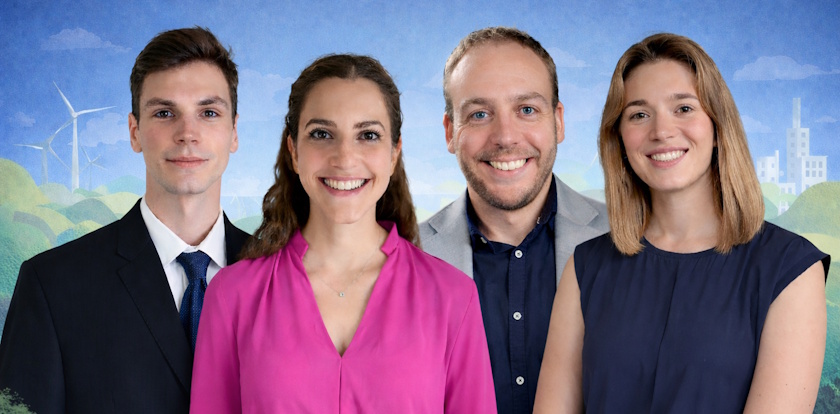
From left to right, Niklavs Tamanis, Veronica Saletti, Marco Costa, Marina Fernández-Campoamor, EUSEW Young Energy Ambassadors
Photo: From left to right: Niklavs Tamanis, Veronica Saletti, Marco Costa, Marina Fernández-Campoamor, EUSEW Young Energy Ambassadors. Illustration created using AI tools, based on original photographs.

EU momentum, Citizens Energy Package, & Our YEA inputs

The Citizens Energy Package, building on the Clean Energy Package and the 2025 Action Plan for Affordable Energy, aims to empower consumers and enable energy sharing. Our contribution to the public consultation as Young Energy Ambassadors (YEA) focused on practical delivery, through such solutions as development of targeted OSS, recognition of youth/renters as a vulnerable group, creation of audience-specific outreach, and improvements to two key levers for citizen participation in energy markets: energy communities and community-benefit clauses. In this article, we focus on the latter two.

Two practical levers

Energy Communities (EComms)

Despite clear EU direction for energy community initiatives, barriers persist: REC definition and implementation differs widely across Member States; low awareness; perceived high effort from practitioners involved in the REC creation process; complex bureaucratic set-up and operations; limited benefits for students, young workers, and low-income renters; costly, non-interoperable metering/platforms; and risks of capture by large market actors.

Our EComms Solutions

To make Energy Communities (EComms) easier to start, join, and manage, we propose a set of complementary solutions that address both organisational and technical barriers.

Primarily, energy community-focused One-Stop Shops (OSS) would act as single-entry hubs where citizens, small and medium-sized enterprises (SMEs), and local authorities can access ready-to-use documentation (statutes, by-laws, and communication templates), energy-sharing evaluations, and clear guidance on data management and regulatory steps, as well as information on how to make their homes more energy efficient.

Young people should receive formal recognition as a vulnerable group within national social frameworks

Moreover, young people, especially those renting apartments as students or early-career professionals, should receive formal recognition as a vulnerable group within national social frameworks. This would enable them to access dedicated benefits and support schemes, like other vulnerable groups, helping to remove structural barriers to their participation and ensuring that energy communities become an inclusive, rather than niche, option.

Then, a dedicated civil-service track for energy communities would also enable young professionals to gain first-hand experience while supporting communities with day-to-day management and citizen engagement activities that are otherwise costly if fully outsourced to external experts. Building on emerging examples from France and Italy, these hubs would also connect communities to grants, soft loans, and local financial partners, making investment more accessible and de-risking early-stage initiatives.

Finally, to simplify participation from a technical and bureaucratic point of view, we propose a Renewable Energy System Identifier (RES-ID): a standardised and recognized technical and administrative data set that citizens and SMEs can fill in once and then reuse across different national portals procedures, such as permit applications, grid-connection requests, EComms affiliation, and incentive schemes requests. Such a tool would store all the renewable energy systems technical data required by different national authorities and retrieve it, when necessary, at each access point, similarly to the Italian SPID or dutch DigID, personal digital identity systems.

EComms Case Studies

1) In Alto Vicentino (Italy), 16 municipalities set up an energy community, added 650 kW of photovoltaics on public buildings, made accessible national grants (up to 40% of the initial investment) for residents and small firms, and a youth team is taking it forward, organizing a buying club for building energy retrofit.

Policy takeaway: back clusters of neighbouring municipalities building from existing energy info points, keep supporting public-building solar installation as “lead by example” lever, and encourage young professionals to actively engage with local communities via dedicated support grants, civil service specific paths, and learning opportunities.

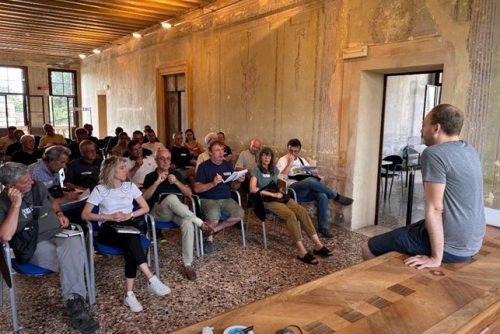
Alto Vicentino REC example, Marco Costa, Young Energy Ambassador
Photo: Marco Costa, Young Energy Ambassador, co-author of this article

2) The Hyperion Energy Community in Athens (Greece), founded in 2020 and mainly composed of families and NGOs, aims to evolve into an ESCO to support the renovation of apartments in multi-unit residential buildings. The project operates in several neighbourhoods of the capital, aiming to ensure gender balance and representation of diverse social groups among its 123 members.

Policy takeaway: Use the Citizen Energy Community (CEC) regulatory framework to create new, citizen-led business structures (ESCOs) to accelerate urban energy renovation in multi-unit buildings, ensuring broad social representation.

3) Energie Samen Rivierenland (The Netherlands): The neighbourhood association in Rivierenland, founded in 1936 and citizen-led, is revitalizing its dated housing stock (60% built before 1950) through a co-design process for interventions. The project covers 133 dwellings, with a specific focus on energy poverty and elderly residents.

Policy takeaway: Leverage existing neighbourhood associations with a long history of community trust to promote the co-design of renovation interventions, focusing specifically on the most vulnerable groups.

4) Renoss (Italy): it is the network of One Stop Shops dedicated to Renewable Energy Communities, run by public local energy agencies backed by the Environmental Ministry. It covers the whole national territory with at least one OSS per region, aligned with the Energy Performance in Building Directive. Each agency supports energy communities via dedicated services which spans from information to grant applications, feasibility studies, and member engagement campaigns.

Policy takeaway: support cluster organizations of public-led OSS to offer a structured and homogeneous technical assistance approach across Europe

Community-benefit clauses

While energy communities are a promising and innovative concept with clear environmental benefits, they don’t always address the social equity concerns from renewable energy projects, such as externalised siting costs. This is why the introduction of benefit-sharing mechanisms, such as community funds and shared equity ownership, is also building momentum among Member States.

Still, progress is uneven: many schemes are complex, opaque, and engage residents too late; youth, renters, and other underrepresented groups are barely reached; participation stays low, and legitimacy suffers. As Young Energy Ambassadors, we thus argue that just transition must go beyond compensation to create shared community value, especially where skills and alternative jobs are scarce.

Our community-benefit Solutions

To make renewable energy projects fairer and more inclusive, national governments can set out simple rules to ensure that local communities share in the benefits.

For example, benefit criteria can be built directly into auction schemes, with clear guidance on eligible uses such as local energy relief or community facilities. A “one-stop shop” (OSS) can then help communities check who qualifies, access funds or compensation, and connect to training or re-skilling opportunities.

Furthermore, governments could develop risk-sharing models that make it easier for low-income households to take part in projects without bearing financial losses.

Finally, targeted communication through youth groups, schools, community centres, and local media can raise awareness, using an EU-adapted model that considers both income and housing conditions.

Community-benefit case studies

We once again explored two national models in detail to see what fair community value-sharing can look like.

1) In Ireland’s RESS auctions, every supported project pays EUR 2/MWh into a local Community Benefit Fund and appears on a national SEAI register with guidance on eligible uses – from energy-poverty relief to community facilities. There’s also a community-led auction lane for locally developed projects.

Policy takeaway: set a fixed €/MWh payment into a local fund, keep a public register and simple annual reporting, and retain a community-led track so locals can lead and access the value.

2) Denmark’s VE-loven goes further by pairing money with ownership and protection. Developers of new onshore wind must offer 20% local shares (within 4.5 km) on equal terms, compensate any loss of property value, and pay into a Green Scheme for local amenities.

Policy takeaway: make it a package – local shares, property compensation, and a community fund – to align incentives and build durable acceptance.

Why does all of this matters

Coupling Ecomms and Community-Benefit mechanisms with functional OSS, RES-ID, interoperability, and guardrails, among other improvements, builds trust, accelerates their deployment, improves affordability, and broadens participation – especially for youth, renters, and other vulnerable groups.

As the EU’s modern citizen energy participation transitions from a consultation phase, equitable codification of mechanisms must follow: targeted OSS must be scaled, trusted tools must be standardised across the MS, mainstream risk-sharing principles must be integrated, and community-benefits must provide tangible value beyond mere compensation.

The European Commission already provides a foundation for this through tools such as the Energy Communities Facility and the Citizen-led Renovation Initiative, which help local actors access guidance, finance, and capacity-building. In parallel, EU-wide networks like REScoop.eu support renewable energy cooperatives and peer learning across Member States.

Building on and scaling these efforts will be essential to ensure our future citizens become genuine partners in Europe’s renewable energy build-out.

This opinion editorial is produced in co-operation with the European Sustainable Energy Week 2026. See ec.europa.eu/eusew for open calls.

Disclaimer: This article is a contribution from a partner. All rights reserved.

Neither the European Commission nor any person acting on behalf of the Commission is responsible for the use that might be made of the information in the article. The opinions expressed are those of the author(s) only and should not be considered as representative of the European Commission’s official position.

by in News

From bystanders to partners: How to ensure the new Citizens Energy Package effectively engages EU citizens in a clean energy future?

Authors:  Niklavs Tamanis, Veronica Saletti, Marco Costa, Marina Fernández-Campoamor – EUSEW  Young Energy Ambassadors

Citizens still struggle to join Europe’s clean energy transition. This article tests two practical approaches that turn hosts into partners: energy communities, where citizens co-own and share power, and community-benefit clauses, which distribute value locally. We, Young Energy Ambassadors, show how targeted One-Stop Shops (OSS), Renewable Energy Sources (RES)-ID, and interoperability among other solutions could make these mechanisms work more effectively, fairly, and at scale.

Across the EU, households still struggle to engage in energy markets. Awareness of tangible gains is low, and trust in safeguards from extractive corporations is limited. Although credible mechanisms exist, their implementation remains complex, uneven, and inaccessible.

From left to right, Niklavs Tamanis, Veronica Saletti, Marco Costa, Marina Fernández-Campoamor, EUSEW Young Energy Ambassadors
Photo: From left to right: Niklavs Tamanis, Veronica Saletti, Marco Costa, Marina Fernández-Campoamor, EUSEW Young Energy Ambassadors. Illustration created using AI tools, based on original photographs.

EU momentum, Citizens Energy Package, & Our YEA inputs

The Citizens Energy Package, building on the Clean Energy Package and the 2025 Action Plan for Affordable Energy, aims to empower consumers and enable energy sharing. Our contribution to the public consultation as Young Energy Ambassadors (YEA) focused on practical delivery, through such solutions as development of targeted OSS, recognition of youth/renters as a vulnerable group, creation of audience-specific outreach, and improvements to two key levers for citizen participation in energy markets: energy communities and community-benefit clauses. In this article, we focus on the latter two.

Two practical levers

Energy Communities (EComms)

Despite clear EU direction for energy community initiatives, barriers persist: REC definition and implementation differs widely across Member States; low awareness; perceived high effort from practitioners involved in the REC creation process; complex bureaucratic set-up and operations; limited benefits for students, young workers, and low-income renters; costly, non-interoperable metering/platforms; and risks of capture by large market actors.

Our EComms Solutions

To make Energy Communities (EComms) easier to start, join, and manage, we propose a set of complementary solutions that address both organisational and technical barriers.

Primarily, energy community-focused One-Stop Shops (OSS) would act as single-entry hubs where citizens, small and medium-sized enterprises (SMEs), and local authorities can access ready-to-use documentation (statutes, by-laws, and communication templates), energy-sharing evaluations, and clear guidance on data management and regulatory steps, as well as information on how to make their homes more energy efficient.

Young people should receive formal recognition as a vulnerable group within national social frameworks

Moreover, young people, especially those renting apartments as students or early-career professionals, should receive formal recognition as a vulnerable group within national social frameworks. This would enable them to access dedicated benefits and support schemes, like other vulnerable groups, helping to remove structural barriers to their participation and ensuring that energy communities become an inclusive, rather than niche, option.

Then, a dedicated civil-service track for energy communities would also enable young professionals to gain first-hand experience while supporting communities with day-to-day management and citizen engagement activities that are otherwise costly if fully outsourced to external experts. Building on emerging examples from France and Italy, these hubs would also connect communities to grants, soft loans, and local financial partners, making investment more accessible and de-risking early-stage initiatives.

Finally, to simplify participation from a technical and bureaucratic point of view, we propose a Renewable Energy System Identifier (RES-ID): a standardised and recognized technical and administrative data set that citizens and SMEs can fill in once and then reuse across different national portals procedures, such as permit applications, grid-connection requests, EComms affiliation, and incentive schemes requests. Such a tool would store all the renewable energy systems technical data required by different national authorities and retrieve it, when necessary, at each access point, similarly to the Italian SPID or dutch DigID, personal digital identity systems.

EComms Case Studies

1) In Alto Vicentino (Italy), 16 municipalities set up an energy community, added 650 kW of photovoltaics on public buildings, made accessible national grants (up to 40% of the initial investment) for residents and small firms, and a youth team is taking it forward, organizing a buying club for building energy retrofit.

Policy takeaway: back clusters of neighbouring municipalities building from existing energy info points, keep supporting public-building solar installation as “lead by example” lever, and encourage young professionals to actively engage with local communities via dedicated support grants, civil service specific paths, and learning opportunities.

Alto Vicentino REC example, Marco Costa, Young Energy Ambassador
Photo: Marco Costa, Young Energy Ambassador, co-author of this article

2) The Hyperion Energy Community in Athens (Greece), founded in 2020 and mainly composed of families and NGOs, aims to evolve into an ESCO to support the renovation of apartments in multi-unit residential buildings. The project operates in several neighbourhoods of the capital, aiming to ensure gender balance and representation of diverse social groups among its 123 members.

Policy takeaway: Use the Citizen Energy Community (CEC) regulatory framework to create new, citizen-led business structures (ESCOs) to accelerate urban energy renovation in multi-unit buildings, ensuring broad social representation.

3) Energie Samen Rivierenland (The Netherlands): The neighbourhood association in Rivierenland, founded in 1936 and citizen-led, is revitalizing its dated housing stock (60% built before 1950) through a co-design process for interventions. The project covers 133 dwellings, with a specific focus on energy poverty and elderly residents.

Policy takeaway: Leverage existing neighbourhood associations with a long history of community trust to promote the co-design of renovation interventions, focusing specifically on the most vulnerable groups.

4) Renoss (Italy): it is the network of One Stop Shops dedicated to Renewable Energy Communities, run by public local energy agencies backed by the Environmental Ministry. It covers the whole national territory with at least one OSS per region, aligned with the Energy Performance in Building Directive. Each agency supports energy communities via dedicated services which spans from information to grant applications, feasibility studies, and member engagement campaigns.

Policy takeaway: support cluster organizations of public-led OSS to offer a structured and homogeneous technical assistance approach across Europe

Community-benefit clauses

While energy communities are a promising and innovative concept with clear environmental benefits, they don’t always address the social equity concerns from renewable energy projects, such as externalised siting costs. This is why the introduction of benefit-sharing mechanisms, such as community funds and shared equity ownership, is also building momentum among Member States.

Still, progress is uneven: many schemes are complex, opaque, and engage residents too late; youth, renters, and other underrepresented groups are barely reached; participation stays low, and legitimacy suffers. As Young Energy Ambassadors, we thus argue that just transition must go beyond compensation to create shared community value, especially where skills and alternative jobs are scarce.

Our community-benefit Solutions

To make renewable energy projects fairer and more inclusive, national governments can set out simple rules to ensure that local communities share in the benefits.

For example, benefit criteria can be built directly into auction schemes, with clear guidance on eligible uses such as local energy relief or community facilities. A “one-stop shop” (OSS) can then help communities check who qualifies, access funds or compensation, and connect to training or re-skilling opportunities.

Furthermore, governments could develop risk-sharing models that make it easier for low-income households to take part in projects without bearing financial losses.

Finally, targeted communication through youth groups, schools, community centres, and local media can raise awareness, using an EU-adapted model that considers both income and housing conditions.

Community-benefit case studies

We once again explored two national models in detail to see what fair community value-sharing can look like.

1) In Ireland’s RESS auctions, every supported project pays EUR 2/MWh into a local Community Benefit Fund and appears on a national SEAI register with guidance on eligible uses – from energy-poverty relief to community facilities. There’s also a community-led auction lane for locally developed projects.

Policy takeaway: set a fixed €/MWh payment into a local fund, keep a public register and simple annual reporting, and retain a community-led track so locals can lead and access the value.

2) Denmark’s VE-loven goes further by pairing money with ownership and protection. Developers of new onshore wind must offer 20% local shares (within 4.5 km) on equal terms, compensate any loss of property value, and pay into a Green Scheme for local amenities.

Policy takeaway: make it a package – local shares, property compensation, and a community fund – to align incentives and build durable acceptance.

Why does all of this matters

Coupling Ecomms and Community-Benefit mechanisms with functional OSS, RES-ID, interoperability, and guardrails, among other improvements, builds trust, accelerates their deployment, improves affordability, and broadens participation – especially for youth, renters, and other vulnerable groups.

As the EU’s modern citizen energy participation transitions from a consultation phase, equitable codification of mechanisms must follow: targeted OSS must be scaled, trusted tools must be standardised across the MS, mainstream risk-sharing principles must be integrated, and community-benefits must provide tangible value beyond mere compensation.

The European Commission already provides a foundation for this through tools such as the Energy Communities Facility and the Citizen-led Renovation Initiative, which help local actors access guidance, finance, and capacity-building. In parallel, EU-wide networks like REScoop.eu support renewable energy cooperatives and peer learning across Member States.

Building on and scaling these efforts will be essential to ensure our future citizens become genuine partners in Europe’s renewable energy build-out.

This opinion editorial is produced in co-operation with the European Sustainable Energy Week 2026. See ec.europa.eu/eusew for open calls.

Disclaimer: This article is a contribution from a partner. All rights reserved.

Neither the European Commission nor any person acting on behalf of the Commission is responsible for the use that might be made of the information in the article. The opinions expressed are those of the author(s) only and should not be considered as representative of the European Commission’s official position.

by in News

Bulgaria proposes changes to electricity trading rules to include new market participants

The Energy and Water Regulatory Commission of has proposed its amendments to Bulgaria’s electricity trading rules.

The changes aim to align electricity trading rules with recent updates to the country’s Energy Act and a legal and operational framework for new categories of market participants, according to law firm CMS Bulgaria.

New categories include active customers (active buyers), citizen energy communities, self-consumers (prosumers) of electricity from renewable sources, and renewable energy communities.

The Energy and Water Regulatory Commission (EWRC) held a public consultation event today on its draft changes in electricity trading rules. Representatives of the three distribution system operators (DSOs), the Sofia Municipality and the Bulgarian Association for Electrical Engineering and Electronics (BASEL) participated in the discussion.

These changes are designed to encourage electricity production for self-consumption

These changes are designed to encourage electricity production for self-consumption, minimize distribution losses, and foster more predictable energy pricing, a CMS e-alert reads. Furthermore, the amendments would ensure the Bulgarian rules comply with EU law, specifically directives 2018/2001 and 2019/944 and Regulation 2019/943.

The proposed draft introduces several specific provisions to facilitate the participation of the said new entities, CMS stressed.

It explicitly defines how new participants can join the market and the types of contracts they are permitted to conclude.

The new rules allow for the grouping of different sites for joint electricity production or consumption. They also set technical mandates for commercial metering devices, including remote reading capabilities.

The new rules also define calculation of generated, shared and sold electricity

The authors outlined procedures for registering or deregistering participants and groups with network operators. The update would impose an obligation to maintain a public register of these participants.

The proposed rules define the calculation of generated, shared and sold electricity. The framework guarantees that data is exchanged between suppliers, network operators, and group members, ensuring it is reflected in monthly bills.

Stakeholders were invited to submit their proposals from January 8 until January 22, CMS underscored.

by in News

Bulgaria proposes changes to electricity trading rules to include new market participants

The Energy and Water Regulatory Commission of has proposed its amendments to Bulgaria’s electricity trading rules.

The changes aim to align electricity trading rules with recent updates to the country’s Energy Act and a legal and operational framework for new categories of market participants, according to law firm CMS Bulgaria.

New categories include active customers (active buyers), citizen energy communities, self-consumers (prosumers) of electricity from renewable sources, and renewable energy communities.

The Energy and Water Regulatory Commission (EWRC) held a public consultation event today on its draft changes in electricity trading rules. Representatives of the three distribution system operators (DSOs), the Sofia Municipality and the Bulgarian Association for Electrical Engineering and Electronics (BASEL) participated in the discussion.

These changes are designed to encourage electricity production for self-consumption

These changes are designed to encourage electricity production for self-consumption, minimize distribution losses, and foster more predictable energy pricing, a CMS e-alert reads. Furthermore, the amendments would ensure the Bulgarian rules comply with EU law, specifically directives 2018/2001 and 2019/944 and Regulation 2019/943.

The proposed draft introduces several specific provisions to facilitate the participation of the said new entities, CMS stressed.

It explicitly defines how new participants can join the market and the types of contracts they are permitted to conclude.

The new rules allow for the grouping of different sites for joint electricity production or consumption. They also set technical mandates for commercial metering devices, including remote reading capabilities.

The new rules also define calculation of generated, shared and sold electricity

The authors outlined procedures for registering or deregistering participants and groups with network operators. The update would impose an obligation to maintain a public register of these participants.

The proposed rules define the calculation of generated, shared and sold electricity. The framework guarantees that data is exchanged between suppliers, network operators, and group members, ensuring it is reflected in monthly bills.

Stakeholders were invited to submit their proposals from January 8 until January 22, CMS underscored.

by in News

Croatia drafts EUR 1.68 billion Social Climate Plan

Croatia has prepared a Social Climate Plan for the period 2026-2032, worth EUR 1.68 billion. It would introduce measures for the buildings and road transport sectors aimed at supporting households and small businesses.

The draft of Croatia’s Social Climate Plan is under public discussion, which will last until December 22.

The process of adopting the most important national instrument for protecting citizens from the adverse effects of climate transition and the introduction of the European Union’s Emissions Trading System 2 (EU ETS 2) has begun, the Ministry of Environmental Protection and Green Transition stressed.

The plan will be financed with EUR 1.26 billion from the EU’s Social Climate Fund, and the remainder from Croatia’s national budget. Essentially, all the funds are coming from the auctions of emission allowances in the EU and Croatia under the EU ETS 2. It is an expansion of the EU ETS to the buildings sector (heating and cooling) and road transport.

The EU established the Social Climate Fund in May 2023 to protect households and small businesses

The expansion could increase the costs of heating, cooling, and transport. In May 2023, the EU established the Social Climate Fund to protect low-income households, micro enterprises, and transport users that could be affected by the cost increase.

The measures and investments also contribute to the implementation of the goals of the National Energy and Climate Plan (NECP).

The Social Climate Plan allocates EUR 658.1 million (39%) for the buildings sector, and EUR 958.4 million (57%) for road transport. Technical assistance is the third component, with EUR 42 million (2.5%).

The measures planned for the buildings sector include support for the establishment of energy communities and subsidies for the energy renovation of family homes. In the road transport sector, the plan envisages investments in cycling, on-demand mobility services, zero-emission vehicles, and railway infrastructure.

Vučković: Restoration planned for 180 kilometers of bike trails

croatia social climate policy plan EU ets 2 marija vuckovic plenkovic
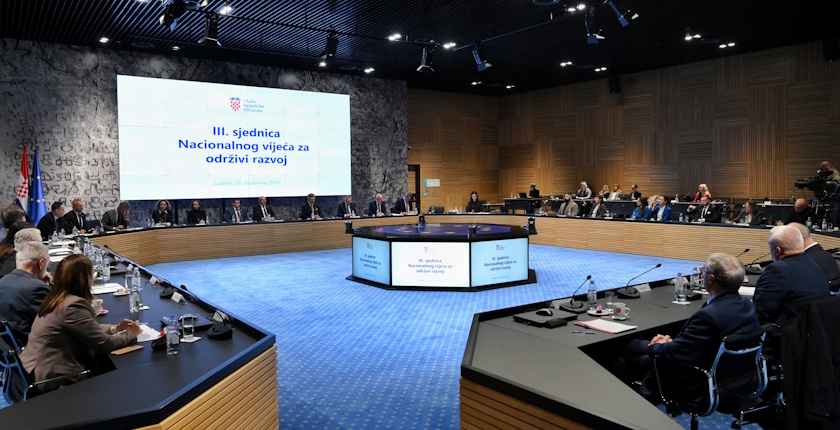
Photo: Government of Croatia

​While presenting the draft plan at a session of the National Council for Sustainable Development, Minister of Environmental Protection and Green Transition Marija Vučković said it identifies two groups: the energy poor or vulnerable, and transport poor or vulnerable.

“The plan provides for 10 measures, four of which relate to so-called stationary or energy poverty, and the remaining six to achieving affordable and favorable mobility and reducing the risk of transport poverty,” she explained.

According to the ministry, the plan provides for the renovation of 180 kilometers of bicycle paths, 80 kilometers of railway lines, as well as the procurement of 30 electric trains, 80 electric buses, and 3,000 electric cars.

Prime Minister Andrej Plenković stressed that the plan isn’t just a technical and administrative document, arguing that it determines what Croatia would become in ten, twenty, and fifty years.

“And we want a Croatia that is economically strong, socially just, and sovereign,” Plenković underlined.

by in News

Greece’s first municipal energy community to be launched in its coal capital Kozani

The city of Kozani in northern Greece, home of the country’s dwindling lignite industry, is seeking a contractor for seven photovoltaic systems of 7 MW overall. The municipality said the power plants would supply its buildings, public lighting, pumps and drilling rigs as part of the country’s first energy community led by a local authority. Under a virtual net metering scheme, the facilities are also intended for combating energy poverty.

Energy communities are present all over Greece, but private capital is dominant – instead of individuals, local institutions and small firms. The concept can be especially beneficial for local authorities in coal regions, which are undergoing rapid decarbonization and turning toward cutting-edge technologies.

Job losses and a lack of skills jeopardize communities in such areas. The Municipality of Kozani, the capital of Greece’s coal land, the region of Western Macedonia, is one of them. It was among the first in the country that launched initiatives for energy communities led by local authorities.

Deadline for applications is January 12

Kozani has opened a tender for the selection of a contractor that would build seven photovoltaic plants. The municipal solar power units would operate under a virtual net metering scheme.

It would enable supplying municipal buildings, street lighting, schools, sports facilities, pumps and drilling rigs, but also the means to fight against energy poverty. The municipality received funding via the European Union for the project, under a just development and transition program.

The city claimed that it would be the country’s first energy community of its kind. Prospective candidates can apply by January 12, and the selection is scheduled for January 16. The budget amounts to EUR 6.25 million including value-added tax, and the local authority participates with 20%.

Kozani already invested EUR 650,000 in its energy community

The project is placing the Municipality of Kozani in the lead in energy self-sufficiency and autonomy in the country, Mayor Yiannis Kokkaliaris said.

He revealed that the local authority managed to secure grid connection terms in time not to lose the EUR 650,000 that it spent so far for the purpose.

The Kozani area is already hosting some of Greece’s largest photovoltaic plants and projects. It is envisaged for one of six waste incinerators in the country. Government-controlled Public Power Corp. (PPC Group) plans to build pumped storage hydropower plants on its depleted open pit coal mines in the region.

Of note, Greece recently lost EUR 100 million from the European Union’s Recovery and Resilience Facility (RRF) for the Apollo program. It was aimed for self-consumption for vulnerable households through forming an energy community.

by in News

Energy communities reduce power bills for members, improve electricity market

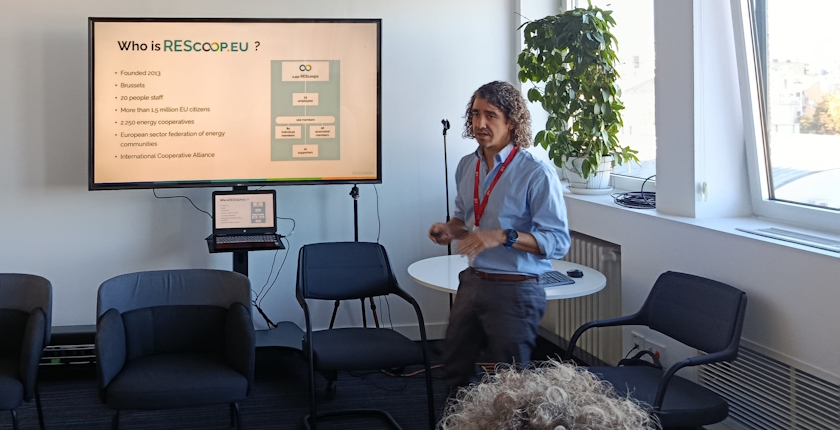
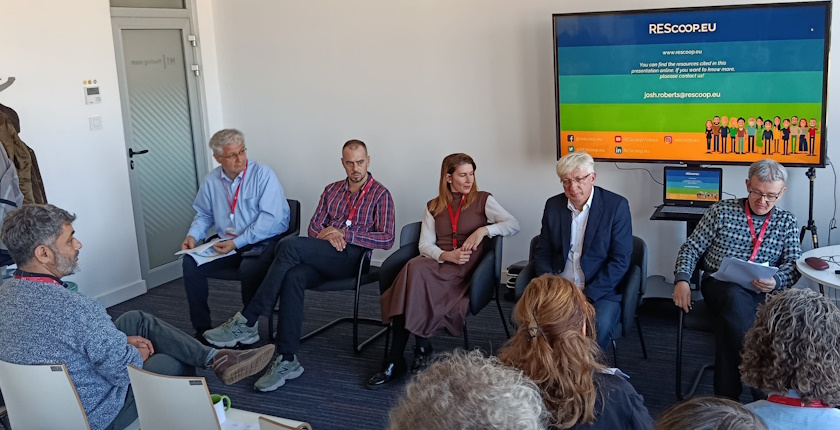
Citizen energy communities make the energy system greener and benefit society at a local level, Josh Roberts from European federation of energy communities REScoop said in his presentation, organized in Belgrade by Deutsche Gesellschaft für Internationale Zusammenarbeit (GIZ) GmbH. It is a form of association that also lowers costs for households, institutions and small firms and entrepreneurs, and contributes to the deployment of progressive technologies. Furthermore, it is a framework for democratic control.

The event included developers from the emerging segment of energy communities and cooperatives in Serbia. They outlined the current initiatives and pointed to challenges regarding market entry, financing and policies.

The establishment and operation of energy communities is arranged through the European Union’s latest legislation, as well as in Serbia and other Western Balkan countries, but they are not a new concept. For instance, such entities still accounted for almost half of wind power output in Denmark in late 1990s, according to Senior Policy Advisor Josh Roberts from REScoop, the European federation of energy communities and cooperatives.

Speaking at a gathering that GIZ organized in Belgrade he pointed to the benefits for citizens, small firms and entrepreneurs and for institutions from setting up or joining energy communities. Initiatives in Serbia were also presented, and their progress in the same field, and the event included dialogue on the necessary technical solutions for connecting to the distribution grid.

Brussels-based REScoop was founded in 2013. In its membership are organizations from 22 European countries. They include Serbian energy cooperative Elektropionir. It gained the most ground regarding association and the implementation of projects.

One coal town has put up signpost for energy communities in Slovenia

Among other examples, Roberts highlighted Slovenia’s first energy community with a rooftop solar power plant for joint use. The facility is on the roof of an elementary school. The project involves aid for people living in energy poverty and it is free to join the group.

It is in the town of Hrastnik in a former coal industry area. The participants already lowered their power bills by 30%, and the gains will be even greater when they pay off the loan, Roberts said.

There are more than 1,600 energy communities in Austria

The representative of the REScoop federation stressed that municipalities in the Belgian region of Wallonia have succeeded in obtaining the right for citizens to participate in investments in green energy projects. It resulted in the foundation of a range of energy communities.

Roberts especially commended Austria’s legal framework with regard to enabling citizens to participate. The country hosts more than 1,600 energy communities.

Udruzivanje energetske zajednice smanjuje troskove trziste elektricne energije Dzos Roberts Josh REScoop GIZ

Energy community eases grid operator’s job

Energy communities are envisaged to return the invested funds to society at the local level. Subsidies are especially favorable for that, Roberts explained. Income is directed to education, infrastructure and aid against energy poverty.

The essence is that the community controls the distribution of the proceeds. In addition, grid operators can communicate more easily with one entity than with a hundred prosumers, Roberts underscored. Prosumers – or buyers-consumers, as they are formally called in Serbia, generate electricity for their own needs.

Pooling together enables providing services in the market, where energy communities can supply and store energy as well as conduct energy efficiency services, among other activities.

It means an entity of such type can ease the evening grid load, in moments of the highest demand, using energy from its batteries. That way, price peak shaving is achieved.

Registration process must be separate from defining activity

As for the procedure, Roberts said registration needs to be only for acknowledgement, rather than for approving specific activities.

“It’s about acknowledging the legal form and it’s about checking about how that legal form ensures compliance with the eligibility criteria. We have found very complex registration procedures. This does not work. It needs to be simple,” he stressed.

There are many activities that energy communities can undertake and they need to be able to enter them gradually, without complex procedures for licenses and permits

Conversely, in some jurisdictions there are simplified ways to get a supplier license. It enables an energy community to enter the activity gradually, instead of having to fulfill the requirements for all segments, even without having a comprehensive business model, the members or a business case, Roberts said.

He mentioned at the same time that one of the basic ideas is promoting inclusiveness.

“It’s already hard to set up an energy community, but it’s even harder to involve members who may have a hard time paying their bills, or have a lot less disposable income. So we found that the best models at the moment are for energy communities either to front the membership fees or for local authorities to pay for this upfront. And in energy sharing, we’re seeing more and more of energy donated to vulnerable households,” he stated.

Energy cooperatives helping improve rural areas from which people are leaving

Energy communities are giving people an opportunity for climate action and to contribute to their community, Roberts said. He added that such projects improve the area where they are conducted, stressing that it is especially important for rural areas from which many people are leaving.

A key point is that they enable participants to control their costs, production, consumption and energy sharing.

 The main challenge in Serbia is how to obtain a grid connection, alongside the matter of accessibility of incentives and loans

Importantly, energy communities are linked to the tradition of cooperatives, for which Serbia used to be known, but there is still much left to do around the legal framework.

There was word at the said gathering with representatives of institutions about the complexity of adjusting the electricity network to the production’s decentralization, as well as about the possibility to streamline the procedure for the establishment of energy communities and their operation.

Serbia is yet to address the accessibility of subsidies and financing, while currently the main issue is how to get grid connection approvals.

Energetsko zadrugarstvo smanjuje troskove trziste elektricne energije GIZ

Enterprise, association or cooperative

The speakers and other participants in the event agreed that the electricity market isn’t complete without energy communities, while that they modernize and democratize it.

When it comes to Serbian regulations, such legal entities have the right to conduct aggregation, but they need a license for it. Notably, aggregators have balancing responsibility, so they need to cover the deviations from the forecasted output.

Energy communities were introduced in the latest version of the Law on Energy. When they become regular in practice, the framework will need to be adjusted gradually to the situation. Citizens, firms and municipal authorities establish energy communities as enterprises, associations or cooperatives.

The bottom line is to enable citizens to take part in the clean energy transition and achieve local environmental, economic and social benefits, as opposed to prioritizing profits. It implies collective ownership, democratic control and reinvestment into the community with the goal of reducing energy poverty and promote energy independence.

The basic technical requirement for members is to have a smart electricity meter.

Elektropionir pioneering agrisolar in Serbia

The event’s organizers gathered the people who achieved the first steps in Serbia – from the Sunčani krovovi (Sunny Roofs) energy cooperative, created in 2019, to Platform for Energy Transition, which participated in uniting three residential buildings in Niš, which have a joint solar power plant and electric vehicle chargers. It is one of the first six prosumers in Serbia in the category of homeowner associations.

The Elektropionir energy cooperative managed through crowdfunding to install two cooperative-owned rooftop solar power systems on the territory of the City of Pirot, on the buildings of a local community council and a cultural center. As part of the Solarna Stara project, on Mt. Stara planina, the two villages receive the income from the sale of surplus electricity.

Srem is set to become the main region in Serbia for community energy

Next, the same organization built the first agrisolar power plant in Serbia. The 20 kV facility is at an organic farm, Organela, near the city of Valjevo.

Another recent undertaking is a rooftop photovoltaic unit on a school in the town of Ruma, envisaged to be the basis for an energy community. In the same area, Elektropionir is working on the installation of several prosumer power plants on house roofs and on aggregating them, inspired by the enthusiasm and the solar system of its member Nenad Maričić.

Owners and neighbors can jointly invest and they will be able to become an energy community and share energy among themselves.

Center for Sustainable Development to integrate string of energy systems of various technologies

Near Ruma, which is in the Srem (Syrmia) region, the City of Sremska Mitrovica and Regional Development Agency Srem have launched a major project. It is for the establishment of renewable energy communities (RECs), which are essentially a subset of citizen energy communities (CECs).

The local authority provided land for research and development. It is next to the regional waste landfill and a wastewater treatment plant. The plan is that the Center for Sustainable Development builds and integrates a string of energy systems.

They would include combined heat and power (CHP) production – cogeneration – from biomass, small wind turbines and a PV plant. The project also involves heat pumps and a storage facility assembled from old batteries.

There would be a facility running on biogas from the landfill within the center, and a magnet electric generator. Residents of the adjacent village of Jarak would be able to join the energy community.

Belgrade Energy Community is focused on equity, solidarity

Another group emerging in community energy is Belgrade Energy Community. It intends to apply a model of collective self-consumption in an urban area, with a focus on trust, equity and solidarity.

Its idea is to enable people to generate, share and use green energy. The plan is to map roofs and consumption and set up the first pilot installations.

According to the Belgrade Energy Community, it will donate 5% of the output to households affected by energy poverty. It consists of a cooperative, a civil society organization, two small enterprises, several prosumers and citizens.

by in News

Rooftop solar on public buildings gains momentum in Slovenia

The trend of installing rooftop solar on public buildings to create energy communities is gaining momentum in Slovenia, with two more cities, Velenje and Kranj, joining the initiative. Similar projects were recently announced in Celje, Šoštanj, and Novo Mesto.

Velenje plans to install solar power plants on 13 public buildings in cooperation with ECE, a subsidiary of state power utility Holding Slovenske Elektrarne (HSE). The total capacity of the proposed installations is about 1.97 MW, with an estimated annual electricity output of more than 2.1 GWh.

The project, valued at EUR 1.97 million, is expected to save the municipality over EUR 157,000 in electricity costs annually. Financing is provided through the European Union’s Recovery and Resilience Facility (RRF) and the National Recovery and Resilience Plan. The municipality itself is contributing EUR 530,755.

This model involves the internal exchange of produced electricity, enabling municipalities to optimize consumption and reduce dependence on the market. Photovoltaic plants are installed on the roofs of structures such as sports facilities, administrative buildings, health centers, bus stations, schools, and kindergartens.

Energy communities help municipalities increase energy independence

In Kranj, 16 rooftop solar power plants, with a total capacity of 2 MW, will be installed on public buildings, in a EUR 1.5 million public-private partnership project carried out in cooperation with GEN-I. The municipality has obtained a state subsidy of EUR 700,000, while the remaining amount will be provided by the private partner.

The new solar power plants should be installed by next summer. They are expected to provide electricity for a total of 22 public buildings, cutting their electricity bills in half, according to a statement from the local authority. Kranj already has two rooftop solar plants on public buildings, installed in 2012 and 2013 respectively, it recalled.

In September, contracts were signed in Celje, Šoštanj, and Novo Mesto to install rooftop solar power plants on public facilities.

The project in Celje involves 11 installations with a total capacity of 1.4 MW, which is expected to bring about EUR 200,000 in annual savings. The contract in Šoštanj is for power plants at four public facilities, totaling 500 kW, with expected annual savings of EUR 70,000. In Novo Mesto, a private partner plans to build and operate ten new solar power plants on municipal land and structures.