by in News

Greece’s energy transition at risk amid gridlock with batteries, new tech

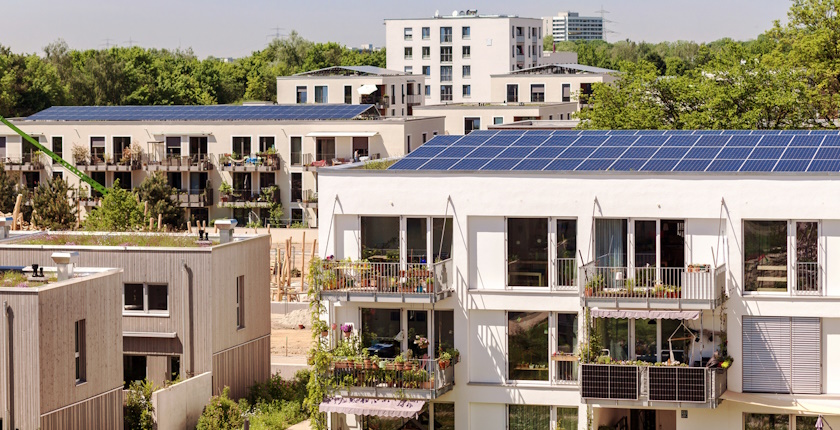
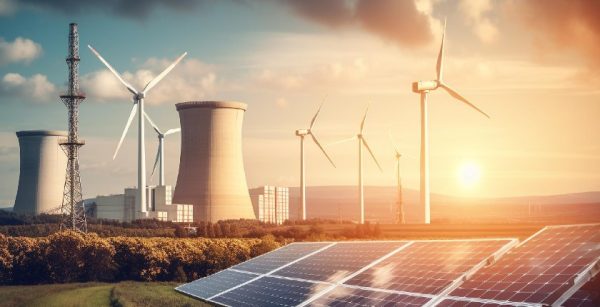
An overreliance on photovoltaics, combined with slow growth in the deployment of new technologies and storage, threatens Greece’s renewable energy future.

The country achieved rapid growth in renewable energy in the past five years, and penetration has surpassed 50% of the electricity mix.

However, the very success of the energy policies also led to significant issues that the government must address to achieve its 2030 goals.

Curtailments slashing profits as storage lags

This year, curtailments doubled from 2024, alongside a rising number of hours of zero or negative prices in the day-ahead market (DAM). It means that producers are subject to a loss of profits. Some investors have exited the Greek market as a result of worsening conditions.

At the same time, there is a huge licensing queue, as more than 15 GW of projects have acquired connection terms from the network operators. This is more than enough to cover the country’s 2030 goal and even beyond.

Energy storage is expected to provide a solution to curtailments and zero pricing. However, the first standalone battery projects have been pushed back nine months, as the original deadline was deemed too strict. Developers are competing against time to secure European funding through the Recovery and Resilience Facility (RRF), via the National Recovery and Resilience Plan Greece 2.0.

Energy mix diversification needed

Photovoltaics dominate the energy mix and this year they are expected to surge by 2 GW. There is growth in every segment of the solar market, although small investors complain of a preferential policy towards larger players. This is especially evident in the case of energy communities and farmers‘ photovoltaics, where such issues are abundant.

Wind installations have stalled in recent years and the offshore wind program has not made any progress towards the 2030 goal. The European Commission warned that investments in carbon capture and storage (CCS) are in danger of losing RRF funding at the current pace. Pilot projects in hydrogen are advancing, but it remains uncertain when they will become operational and at what scale.

The special renewables account turned red this summer, with an ever-growing deficit. There is also uncertainty surrounding projections about the country’s future electricity demand. Sales of electric cars and heat pumps are lagging behind the European average, while large data centers are seen as a way to increase consumption and support more power production.

All these issues mean that Greece may not achieve all its 2030 goals from the final National Energy and Climate Plan (NECP). The country initially presented a highly ambitious first version, but later reduced it to keep costs low for consumers.
by in News

Greek regulator steps in to prevent energy communities misuse

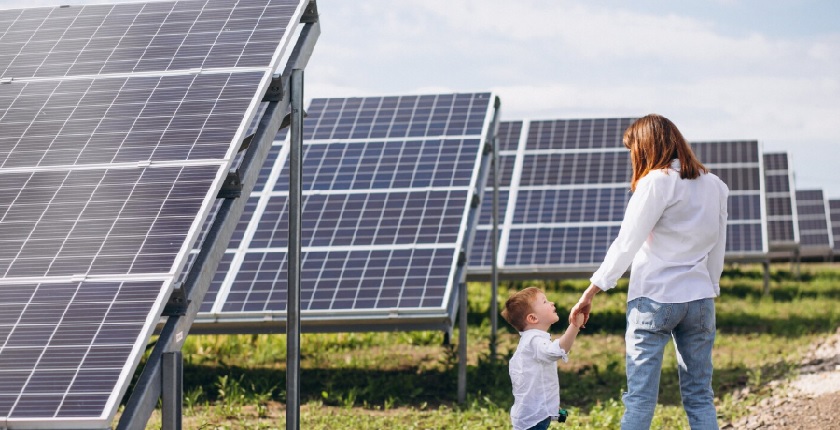
Legitimate energy communities have suffered in Greece, as private investors have been taking advantage of the status to promote disguised commercial projects.

Normally, energy communities are set up to help citizens, businesses and other special consumer groups to benefit from lower energy costs using renewable energy.

There are two categories: renewable energy communities (RECs) and citizens energy communities (CECs). They have priority in obtaining licenses compared to commercial investments. They are exempt from letters of guarantee and have access to national and European funding and a higher feed-in tariff.

A law was adopted in 2023 to restrict production licenses for energy communities. It also had the goal of excluding other market actors from participating. However, it appears that the attempt was unsuccessful.

A gap in the regulatory framework allowed private companies and individuals to create energy communities and benefit from the various licensing and financial benefits to promote projects that would otherwise not be eligible. In short, such investors appear as legitimate small participants, while actually representing larger private companies.

Psomas: Just 2.8% of installations are for self-consumption

By April 2025, energy communities installed facilities totaling 2.24 GW, of which just 62 MW (or 2.8%) for self-consumption. They also held about 22% of total licensed capacity for photovoltaics in the country, according to energy consultant Stelios Psomas.

The law stipulates that legal entities participating in REC and CEC management boards must be mutually independent and not connected directly or indirectly through other businesses or natural persons.

According to the Regulatory Authority for Energy, Waste and Water (RAAEY or RAEWW), the minimum of 15 legal entities to set up a community refers to 15 independent entities. Otherwise, there is no guarantee they would act towards the benefit of local communities and not as a vehicle to promote the commercial interests of individuals or business groups, it pointed out.

RAAEY said it would intervene to enforce the essence of the law more aggressively. It added that if irregularities are discovered, an energy community may lose its production license. The regulator revealed it would conduct investigations both due to complaints and on its own.

Greece downgraded because of lost EU funds

The government recently lost of EUR 100 million from the European Union’s Recovery and Resilience Facility (RRF), aimed at promoting self-consumption for vulnerable households through forming an energy community.

The loss of funds for the Apollo program triggered a downgrade by REScoop, the European federation of energy communities. It said there were no more dedicated European funds to support energy communities in Greece.

EECF to provide a second chance

Greek energy communities may gain another source of European funding through the European Energy Communities Facility (EECF).

More than 140 of them across Europe will be supported through the program with EUR 45,000 per project. Greece submitted 29 proposals in the recent first call that took place at the end of September. The final list of beneficiaries will be announced in December, with a second call expected in May 2026.

by in News

Bulgarian capital Sofia to create its first energy community in Vitosha district

Citizens and businesses in Sofia will be able to invest in a photovoltaic system on a school rooftop as part of the first energy community. It would be a partnership between the city’s Vitosha District, individuals and legal entities.

Following a few early initiatives in Bulgaria, the capital city decided to establish its first energy community. The Sofia Municipal Council voted to call on individuals and firms to invest in the installation of a rooftop solar power plant of 74.8 kW in peak capacity.

The system, expected to become operational within a few months, would be on the Acad. Emilian Stanev secondary school in the district of Vitosha. The plan is to use the electricity for the building’s needs and for other municipal facilities.

Participants can invest EUR 260 to EUR 2,600 each

The project is worth BGN 90,000 (EUR 46,000), including value-added tax, according to the local authority. The Vitosha District has earmarked just over EUR 1,000 for the endeavor. Citizens and businesses in Sofia would be invited to invest between EUR 260 and EUR 2,600 per participant in the energy cooperative.

Dzhambazov: I believe that local government should be the driver for decentralized energy

“I believe that local government should be the driver for decentralized energy,” Deputy District Mayor Krasimir Dzhambazov said. There are 24 districts under the Sofia Municipality, also known as Stolichna (capital) Municipality. It provided the school roof free of charge.

After ten years, the city administration becomes the owner of the PV system. It unveiled the project almost a year ago. Bulgarian-Austrian Consulting Co. (BACC) and the Sofia Energy Agency (SOFENA) are consultants in the endeavor.

Vitosha energy community may integrate planned PV self-consumption systems for kindergartens

As 11 more units are about to be installed in Vitosha for self-consumption for kindergartens, including them in the energy community is under consideration, the update reveals.

Earlier this year, the Ministry of Energy, Electricity System Operator (ESO) and the Bulgarian Development Bank (BDB) agreed to introduce a solar power program for municipalities, schools, kindergartens, hospitals and small businesses, without any upfront costs. Minister of Energy Zhecho Stankov said the aim was to create the largest energy community in Europe.

Gabrovo and Burgas have launched the most notable municipal energy community initiatives in Bulgaria. The concept is gaining popularity across the European Union and beyond as an essential segment of the energy transition. In addition, households, small firms and local authorities, utilities and institutions can benefit from energy sharing or becoming prosumers.

Moreover, municipal and regional administrations have the opportunity to strengthen their energy self-sufficiency and achieve savings without burdening their public finances.

by in News

Celje, Šoštanj among Slovenian municipal authorities pursuing energy independence

The City of Celje in Slovenia plans to install 11 solar power plants on its public buildings, and the Municipality of Šoštanj agreed contracted four such units. The photovoltaic systems would be part of energy communities. Šoštanj expects to save EUR 70,000 per year while Celje is counting on EUR 200,000.

Novo Mesto, another municipality in Slovenia, recently made a similar move toward achieving energy independence.

The total capacity of the solar power plants in Celje and Šoštanj is 1.9 MW. They have signed contracts with ECE, a subsidiary of state-owned power utility Holding Slovenske Elektrarne (HSE). The projects are funded from the National Recovery and Resilience Plan (NRRP) and by the two municipal authorities.

Šoštanj is set to get solar power plants with a capacity of 500 kW altogether, at four locations: the sports hall of the Karel Destovnik Kajuh elementary school, a music school, health center, and the Pilon Center.

The total investment is EUR 500,000, with the local authority receiving a EUR 450,000 grant via the NRRP.

Both municipal authorities now have energy communities

In Celje, approximately 1.4 MW would be installed at several locations including the Z’dežele Stadium, Celje Summer Pool, Celje Health Center, elementary schools and kindergartens.

The City of Celje secured a EUR 1 million grant from NRRP, and the total investment is estimated at EUR 1.4 million.

Sebastijan Roudi and Boris Goličnik (photo: Municipality of Šoštanj)

In addition to building solar power plants, the contract includes five years of maintenance, offtaking surplus electricity production, and supply during insufficient power generation. It also involves managing the energy community.

In Šoštanj, the energy community would involve more than 15 public buildings, and the one in the City of Celje would consist of PV units on more than 40 public buildings.

The two projects are scheduled for completion in December and November, respectively.

Šoštanj aims to produce 70% of the electricity consumed by its public buildings

When the power plants are built, the municipality expects to cover 70% of the consumption of all public buildings, and the third-largest city in Slovenia aims for a 15% share.

The Šoštanj project is envisaged for 500 MWh of clean electricity output per year, reducing electricity costs by about EUR 70,000. Total savings over the entire lifespan of the solar power systems is seen at EUR 2 million.

Celje’s PV plants would produce 1,462 MWh of energy annually and save approximately EUR 200,000, translating to around EUR 5 million throughout their service life.

Investment for the long-term benefit of the community

Mayor of Šoštanj Boris Goličnik said the contract signifies the continuation of the municipality’s vision of energy independence.

“This is an investment in the future, in the green transition, and for a permanent benefit of our community,” he stated.

According to Celje’s Mayor Matija Kovač, it is a strategic decision on managing energy, costs, and the environment in the future. He said the planned PV units are just the beginning.

Sebastijan Roudi, ECE CEO, asserted that as part of the HSE group, the firm places grea t emphasis on demanding energy projects, developing new billing models, and seeking ways to accelerate the green transition.

by in News

Greece loses EU grant intended for renewable electricity for vulnerable consumers

The ambitious Apollo program, which the Greek government outlined in late 2023, is losing EUR 100 million. The European Union earlier approved the grant for investments in renewable energy and storage, intended to lower energy costs for vulnerable consumers through self-consumption.

The first phase of the Apollo program was envisaged to help vulnerable households. It aimed to support renewable energy projects, through auctions, of 400 MW to 500 MW overall, combined with battery systems.

Each of Greece’s 13 regions, also known as peripheries, would get a green power plant, and eligible consumers who join a local energy community get discounted electricity bills. Therefore, the program is in the form of virtual self-consumption. It is the first of its kind in the region that Balkan Green Energy News tracks.

Apollo fails to take off on time

The scheme was supposed to benefit from an EUR 100 million grant from the European Union’s Recovery and Resilience Facility (RRF). It is implemented via the National Recovery and Resilience Plan Greece 2.0.

However, Apollo was significantly delayed and now the deadlines are considered impossible to achieve, even if they are extended. It means RRF funds are going to be lost. Energypress reported that they have already been removed from the budget.

Namely, the issue is with the batteries. Now their costs would have to be covered entirely by the producers. In turn, they are expected to lock higher prices in Apollo’s auctions, possibly passing them on to end consumers and making the whole initiative less effective at combating energy poverty.

It should be noted that the rest of Apollo remains intact for the time being, despite the setback. The loss of funds concerns household consumers with special tariff A. Funding is still available, in theory, for the other category of vulnerable households, defined by different income criteria.

The entire initiative also aims to lower energy costs for municipal authorities, water utilities and irrigation associations. They haven’t been affected so far.

Standalone battery plants also at risk

Another Greek initiative, for subsidized standalone battery plants, faces very short deadlines. It is eligible for EUR 341 million in RRF funding. In total, projects for 900 MW overall have been selected through three auctions.

The first wave of investors should declare connection readiness this month, so their facilities can become operational by the end of 2025.

HAESS: Selected projects may not receive support

They have complained of a lengthy licensing process and logistical difficulties. The investors asked the Ministry of Environment and Energy for an extension.

In July, the Ministry of Finance submitted a request for the sixth RRF tranche, EUR 2.1 billion in grants, after completing 39 more targets. If it is approved by the administration in Brussels, Greece will have secured EUR 23.4 billion overall, or 65% of allotted funds.

by in News

Romanian prosumers propose measures to cut electricity bills by up to 60%

The Association of Energy Prosumers and Communities in Romania has called on the government to implement five measures that could swiftly reduce electricity bills.

The measures target both individual homes and multi-apartment buildings, and results could be visible in up to 12 months, according to the Association of Energy Prosumers and Communities (APCE).

The association pointed out that the measures are needed because consumers in Romania pay some of the highest energy prices in Europe.

The first measure is related to energy communities, as the country is lagging in implementing the relevant EU legislation. The association claims that the introduction of energy communities lowered energy bills in Spain by 60%.

The association called on the authorities to involve civil society in the lawmaking process

Such structures allow citizens to directly manage their energy production, distribution, and storage, achieving independence from traditional suppliers and producers, the APCE noted.

The association called on the authorities to involve civil society in the lawmaking process, and underlined that adoption could be completed in three months, with bill reductions within 3–12 months.

The second measure involves multi-apartment buildings. Through a simple legislative change, residents could become direct beneficiaries of solar energy produced on the roofs of their buildings, the APCE pointed out.

Romania could install up to 4,000 MW of rooftop solar on multi-apartment buildings

Romania, the association notes, could install up to 4,000 MW of solar power plants on 4,200 hectares of apartment building roofs. The proposed legislative changes could be adopted within three months, with results visible after 3–12 months.

Mini-PV systems for balconies have the potential to lower electricity bills by 60%, according to the APCE’s calculation. In Germany, over a million such systems have already been installed, leading to monthly bill reductions of more than 60%.

The association estimates that the legislation needed for their rollout could be adopted within 30 days, and results could be visible immediately after installation.

Tackling suppliers’ excessive profit margins

The regulation of the supply margin for energy produced by prosumers is the fourth proposed measure. The association said that in 2025, a surplus of almost 2 billion kWh of renewable energy would be injected into the grid by prosumers.

Romania’s regulator, ANRE, left it to suppliers to set their profit margins, resulting in high prices for electricity resold to consumers.

PACE calls for a clear regulation of the supply margin to ensure that electricity produced by prosumers reduces consumer bills.

Reducing transmission tariffs for the TSO

The estimated timeframe is up to three months for the measure to be adopted, with visible reductions in bills expected immediately after implementation.

The final measure is a reduction of transmission tariffs for the transmission system operator (TSO) Transelectrica.

Even though the TSO does not transport prosumers’ surplus electricity, it still charges them for the service. It collected over EUR 18 million in 2024, the APCE claims, adding that the figure for 2025 is estimated to be EUR 35 million.

by in News

EU preparing roadmap on digitalization, AI in energy

The European Commission has launched a public consultation to help shape its upcoming strategic roadmap for digitalization and artificial intelligence (AI) in the energy sector. The roadmap aims to support the rollout of digital solutions, including AI, in areas important for decarbonization.

The areas where the application of digital solutions and AI should be accelerated include electricity grid optimization, energy efficiency in buildings and industry, and demand-side flexibility, according to a press release from the commission.

The consultation should also address the increasingly heavy energy consumption of data centers and look at how they can be more sustainably integrated into the energy system.

The consultation should address the rising energy demand of data centers

Another area of interest is the need to implement safeguards to mitigate potential challenges linked to the large-scale deployment of AI solutions in the energy sector, according to the press release.

The initiative, part of the European Union’s Affordable Energy Action Plan, also aims to facilitate access to energy data via the Common Energy Data Space and unlock innovative services such as demand-side flexibility and bidirectional charging of electric vehicles, according to a LinkedIn post by former Smart Grids Team Leader at the European Commission Manuel Sánchez.

All individuals and organizations are welcome to contribute to the consultation, which is open until November 5. The adoption of the roadmap is planned for the first quarter of 2026.

The roadmap is expected to be adopted in Q1 2026

The target audience for the consultation and the accompanying call for evidence includes stakeholders from digital and energy value chains, such as grid operators, energy intensive industries, data center operators, building operators, car manufacturers, providers of e-mobility solutions, energy communities, aggregators, consumers, researchers, IT suppliers, digital solutions providers, cloud service providers, and appliance manufacturers.

by in News

North Macedonia’s draft law envisages renewable energy auctions for CfDs

North Macedonia drafted the Law on the Use of Energy from Renewable Sources to facilitate a decrease in fossil fuel consumption and a rise in the share of green energy. The legislation introduces market premiums under two-way contracts for difference (CfDs), which would be approved through renewable energy auctions. It also regulates net metering and net billing for prosumers and defines renewable energy communities.

The Ministry of Energy, Mining and Minerals of North Macedonia called on citizens, experts and stakeholders to submit opinions and proposals for the draft Law on the Use of Energy from Renewable Sources. It will regulate the segment separately for the first time, “following the example of a large number of countries in the region and the EU,” the statement adds.

The public debate lasts until August 30. According to the ministry, the most significant novelty is the two-way contract for difference (CfD). It is defined in Macedonian as contract for market settlement of the price difference. The bill envisages awarding such market premiums through renewable energy auctions.

It is a mechanism that guarantees financial stability for renewable energy producers and protects consumers from extreme price fluctuations, the ministry argued. The draft is fully aligned with the European Union’s energy legislation including the Renewable Energy Directive (RED3), the update adds.

Basis for renewables deployment in heating, cooling, transportation

The proposed measures aim to lower the use of fossil fuels and grow the share of renewables in gross energy consumption, the ministry added. They facilitate support for long-term investments and faster deployment of renewable energy in heating, cooling and transportation, it underscored.

Guarantees of origin of electricity are included in the bill, together with a framework for international cooperation and energy markets.

The draft establishes the basis for the establishment of renewable energy communities of citizens and companies and other legal entities such as local authorities. The scope also involves net metering and net billing for prosumers – “consumers-producers.”

Multiapartment structures can become prosumers with units up to 50 kW

While the ministry earlier said it would raise the upper capacity limit for prosumers in the segment of households to 10 kW, the ceiling in the draft law is 10.8 kW for individual homes and 50 kW for multiapartment structures. The draft also introduces the collective prosumer, a group of citizens and commercial entities residing in the same building or apartment complex.

Prosumers with units up to 16 kW would be in the net metering mechanism. Net billing is for 16 kW to 50 kW, and larger facilities are envisaged for a commercial supply scheme.

Notably, prosumers operating power plants of over 300 kW are obligated to cover the balancing expenses, the text reads.

by in News

European Energy Communities Facility to award EUR 45,000 per project

The European Energy Communities Facility has launched its first call for proposals to support the development of comprehensive business plans for community energy projects. Emerging energy communities in 27 European Union member states, Iceland, Moldova, North Macedonia, and Ukraine can apply for a lump sum grant of EUR 45,000 per beneficiary.

The European Energy Communities Facility grants are intended to support the development of comprehensive business plans for community energy projects in 31 countries. A total budget of over EUR 3 million will be distributed among 73 selected initiatives to empower citizens to drive a fair, democratic, and sustainable energy transition. The application deadline is September 30.

The application deadline is September 30

The funding will cover all preparatory steps needed to develop a sound, viable, and bankable business plan, from technical and financial assessments to legal and administrative procedures, including feasibility studies.

In addition to financial support, successful applicants will gain access to peer-to-peer exchanges and a capacity-building programme, tailored to help them develop and implement their business plans.

Existing communities also can apply

While the call is primarily aimed at emerging energy communities, existing communities exploring new services or business models are also eligible to apply.

To qualify, the applicant must be registered as a legal entity and comply with one of the EU definitions for energy communities, be based in an eligible country (EU27, Iceland, Moldova, North Macedonia, and Ukraine), and commit to fulfilling all grant obligations.

To ensure fairness, applications will be assessed within two regional categories, based on the legal framework for energy communities of each country. This approach guarantees that initiatives developed in countries facing more challenging conditions for community energy will not be in competition with those emerging from countries with more favorable conditions.

Independent experts will evaluate proposals based on project ambition, readiness, quality, and local impact. The evaluation results are expected to be communicated by December.

by in News

Public call for funding for energy communities in Western Balkans

The Emilia-Romagna Region in northern Italy is supporting the creation and strengthening of renewable energy communities (RECs) in five countries in the Western Balkans. Ten projects can receive up to EUR 200,000 each, alongside technical and other support.

For-profit and non-profit entities in Albania, Bosnia and Herzegovina, Montenegro, North Macedonia and Serbia are eligible for an open call for the setup, empowerment and potential investment in renewable energy communities (RECs). Within a project funded by the European Commission’s Directorate-General for Regional and Urban Policy (DG Regio), the Emilia-Romagna Region invited expressions of interest.

The initiative is called Better Cohesion through Development of Energy Communities in the Western Balkans. The administration of the northern Italian region is conducting the activity with the support of its consortium ART-ER Attractiveness Research Territory. It includes universities, research institutions, the regional chamber of commerce, local authorities and other stakeholders.

Up to 10 projects, or two per country, would receive a maximum of EUR 200,000, together with support in financial planning and community governance, technical assistance and mentoring and access to a digital energy management tool.

Phase 2 is for existing renewable energy communities

Eligible applicants in phase 1 include municipalities, nongovernmental organizations, associations, cooperatives, small and medium-sized enterprises and informal citizen groups with the capacity to formalize. All project activities must be carried out on a not-for-profit basis, meaning any surplus must be reinvested in the community.

Cross-border projects with partners in Croatia, Greece, Slovenia and Italy are eligible

Phase 1 is for candidates looking to activate a new energy community from the ground up — from stakeholder mobilisation to legal establishment. Existing renewable energy communities can enter in phase 2, to assess feasibility and conduct small-scale energy infrastructure investment.

The Emilia-Romagna Region pointed out that the call is also open for cross-border projects with partners in Croatia, Greece, Slovenia, and Italy – the European Union member states within the EU Strategy for the Adriatic and Ionian Region (EUSAIR).

Second deadline to submit drafts is October 20

Applicants are encouraged to engage with the process even at an early or conceptual stage of their initiative, as technical support and guidance will be provided to strengthen and finalize proposals, according to the documentation. The call will consist of two rounds.

The first draft proposal submission deadline is July 16, followed by the negotiation phase until August 22 and a deadline for final proposals on September 8. The respective dates for the second round are October 20, November 21 and December 5.

Applicants that are not yet ready can participate in the second round. It is also the opportunity to fulfill the quota of two projects per country.

Members of RECs must be located near their projects

The Western Balkans are introducing the legal framework for citizen energy communities (CECs) and renewable energy communities (RECs).

Shareholders or members of a renewable energy community are located in the proximity of the renewable energy project that it owns and develops. They are natural persons, small and medium-sized enterprises and local authorities.

A private enterprise can participate in RECs if it isn’t its primary commercial or professional activity

RECs utilize technology for energy production only from renewable sources, encompassing electricity, gas and heat. Private enterprises can participate in such a community only if it isn’t their primary commercial or professional activity.

CECs are limited to electricity but they can use fossil fuels

Citizen energy communities gather individuals, local authorities including municipalities and small enterprises. They engage in generation, distribution, supply, consumption, aggregation, energy storage, energy efficiency services and charging services for electric vehicles. CECs can also provide other energy services to its members or shareholders.

They can operate on a national scale and have the flexibility to employ both fossil fuel– and renewables-based technologies, but solely for electricity production. The range of activities of CECs is broader than for RECs.