by in News

Kelag International strengthens European presence with brand unification

Kelag International has unified its subsidiaries under its single brand. The move is strengthening the group’s European identity, it said. It reflects the group’s ambition to become a key driver of Europe’s green energy transition through long-term, sustainable investments and strong regional partnerships, according to Kelag International.

International entities now operating under the Kelag International brand, including Interenergo, were already part of the group. They have completed their legal and brand transition. The company based in Klagenfurt, Austria, said the alignment of brand identity was designed to enhance visibility, strengthen cooperation and facilitate the transfer of expertise across markets, while ensuring a consistent strategic and operational approach across the group.

Kelag International, which has offices in nine other countries, is active across 14 European markets. The broader platform is covering Southeast Europe, the Mediterranean and the Iberian Peninsula.

“Uniting our international activities under the Kelag International brand is a strategic decision that positions us among the most ambitious players in Europe’s energy transition,” said Managing Director of Kelag International Christian Schwarz.

Local roots remain, strengthened by European network

Long-standing partnerships remain at the core of the company’s approach, the announcement reads. What changes is the scale and connectivity. Local expertise is now supported by a wider European network, shared resources and coordinated strategic development, Kelag International pointed out.

Schwarz: Uniting our international activities under the Kelag International brand is a strategic decision that positions us among the most ambitious players in Europe’s energy transition

It operates 54 renewable energy facilities with a total installed capacity of 280 MW, producing more than 680 GWh of green electricity annually. It is enough to supply nearly 200,000 households. The company has more than 160 employees.

Balanced technology mix for resilient energy future

Kelag International follows a clear guiding principle: the balanced development of all key renewable energy technologies, from solar and wind to hydropower, tailored to the specific requirements of each market, the update adds. In response to the growing share of renewables in Europe’s power system, the group is increasingly focusing on flexibility solutions, system stability and security of supply.

A particular emphasis is placed on the development of energy storage and battery systems, which are essential for grid balancing, price stability and long-term decarbonization, the company said.

Kelag International revealed that its development activity is strongest in Italy, followed by Croatia and the wider Balkan region, where several new renewable energy projects are in advanced stages of development and nearing completion. It aims to reach 818 MW of installed capacity by 2035 and generate 1.69 TWh of renewable electricity per year. The company stressed that it is offering stable, long-term and sustainable energy supply solutions to large electricity consumers.

“Alongside project development and operations, we are also active in the wholesale supply of electricity, including the structuring and management of long-term power purchase agreements (PPAs) for industrial customers and energy markets — supporting the integration of renewable energy into Europe’s energy system,” it added.
by in News

D.Trading to offtake 200 MW of solar in PPA with Econergy in Romania

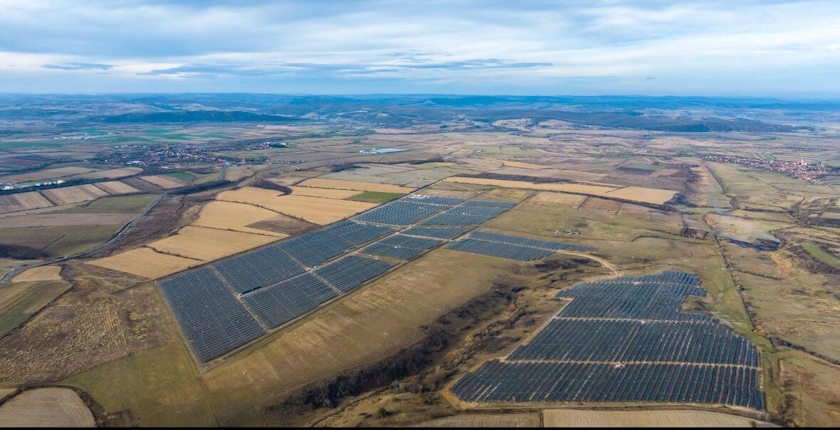
D.Trading, the pan-European trading arm of DTEK Group, signed a renewable electricity offtake deal for 200 MW of installed solar power capacity in Romania with renewable energy developer and operator Econergy. The power purchase agreement (PPA) includes the country’s largest photovoltaic plant.

D.Trading announced that it would purchase electricity from solar power plants Rătești and Părău in Romania. The deal for Econergy’s assets is for 200 MW. The PPA reflects growing market demand for structured renewable offtake products and marks an important milestone in the commercialisation of the two photovoltaic facilities, the announcement adds.

“Partnering with leading companies such as Econergy supports our long-term strategy of expanding renewable energy integration across the region. This agreement strengthens our green power portfolio and represents another step more towards becoming the leading provider of solutions for renewable assets and battery storage in Eastern Europe,” said Head of D.Trading Power Desk EU Stanislav Dudka.

The company operates in Central, Eastern, and Southeastern Europe. D.Trading is the pan-European trading arm of DTEK Group, which also owns DRI.

Econergy is planning to add a 120 MW battery energy storage system to its Rătești solar power plant

As Romania’s power market continues to evolve, shaped by price volatility, regulatory development, and the growing need for flexible solutions to support grid stability, Econergy has successfully executed multiple bankable commercial agreements, the update reads.

Rătești, Romania’s largest solar power plant, was completed in late 2023. The facility northwest of Bucharest, in Argeș county, has 155 MW in peak capacity. Econergy is planning to add a 120 MW battery energy storage system.

Părău was commissioned in late 2024. The PV plant of 92 MW is in Brașov county in the central part of Romania.

The Părău 2 project is for 342 MW, together with 150 MW of battery storage. It won a 15-year contract for difference (CfD) at the country’s first round of renewable energy auctions.

by in News

EU’s amendments to CBAM: possibility of relief, but January 1 brought market uncertainty

Long-awaited implementing acts and amendments to the CBAM Regulation brought only a minor relief for the Western Balkans, investors in renewables, and electricity traders. The documents has been analyzed that the European Commission published in December 2025, and the impact of the proposed measures on Energy Community contracting parties – Albania, BiH, Kosovo*, Montenegro, North Macedonia and Serbia.

From January 1, European firms importing aluminum, cement, electricity, iron and steel, hydrogen and fertilizers are obliged to pay a carbon price within the European Union’s Carbon Border Adjustment Mechanism (CBAM).

Last year, the CBAM Regulation was criticized by experts from the Western Balkans (Ljubo Maćić, Zoran Gjorgjievski), European think-tanks (Bruegel), and organizations (Energy Traders Europe). Even the European Network of Transmission System Operators for Electricity (ENTSO-E) requested that the transitional period be prolonged.

They said charging the tax, which started on January 1 as scheduled, would harm countries outside the EU, but also EU member states, market coupling of Western Balkan countries, and electricity trade.

Uncertainty surrounding electricity transit and trade remains high

The analysis showed that the European Commission is proposing changes to the CBAM regulation that would introduce a more favorable method for calculating the national emissions factor and actual emissions values. This benefits non-EU countries that export electricity to the EU, owners of operational renewable energy power plants in these countries, and future green energy investments.

The proposal foresees amendments to the procedure for market coupling, but it is unclear whether these will bring any concrete changes. The commission didn’t propose changes regarding transit, and consequently, electricity trading.

Provided that the proposal is accepted as proposed, it will bring the said positive changes in calculating the national emissions factor and actual emissions values only by the end of the year, meaning that uncertainty in the market will persist until then.

Uncertainty surrounding electricity transit and trade remains high. The impact on the Western Balkans, as well as on the EU member states Bulgaria, Croatia, Greece, Hungary, Romania, and Slovenia, will become clear in the coming weeks and months.

There are two legislative streams

There are two relevant streams currently ongoing in EU legislation for CBAM for electricity. The first are the so-called implementing acts, which are similar to secondary legislation in national law. They further define the technical details of the CBAM regulation.

The other part is the commission’s proposal to amend the CBAM Regulation itself. It will become part of the law when the other co-legislators in the EU – the Council of the EU, which includes the member states, and the European Parliament – together agree on it.

Nobody can say exactly when that process will be finished, but most likely not before the autumn.

National emissions factors, actual emission values: improvement

eu western balkans cbam electricity market coupling amendments
Photo: iStock

There is a proposal to change the way the national emission factors are calculated in the main CBAM Regulation. Currently it only includes the part of the electricity mix based on fossil fuels, regardless of their share in the country’s power generation mix.

For example, for Serbia, a contracting party of the Energy Community, this factor is 1.04. If the national power mix is taken into account, it would go down to 0.7, making the cost of CBAM about 40% lower.

The commission proposed to replace the electricity mix based on fossil fuels, in its accounting system, with one encompassing all energy sources.

The commission also intends to change the requirements for switching to actual emission values

The commission also intends to change the requirements for switching to actual emission values. These are relevant for the producers of renewable energy in non-EU countries. Current conditions are very strict and, to some stakeholders, not achievable.

For example, if a wind farm in the Western Balkans, owned by a domestic or foreign investor, cannot meet these conditions the CBAM payments for the electricity from the facility exported to the neighboring Croatia would be calculated based on the national emissions factor.

The commission suggested that an importer shouldn’t need to have a power purchase agreement (PPA) with a producer directly, which is one of the conditions, but that it could be done through intermediaries. It also proposed the removal of the requirements related to congestion.

These proposals could remove negative impacts on renewable electricity exports and development in non-EU countries, including contracting parties.

Transit: nothing new

The issue of transit hasn’t been addressed in the acts and amendments.

Under the CBAM Regulation, it is unclear how electricity transit costs would be calculated. For example, from Bulgaria to Hungary via Serbia, and who would be required to cover them.

The commission clarified several times that transit isn’t subject to CBAM. However, the physical, practical implementation is the problem.

For example, a trader buys electricity from Greece, transits it through North Macedonia, and puts it on the Serbian SEEPEX power exchange. Somebody else buys it and sells it in Hungary.

It would be very difficult or impossible to say that electricity from Greece was sold into Hungary.

This is why stakeholders take a conservative approach and say that they cannot prove. So, most likely they wouldn’t opt for these countries – non-EU countries, like contracting parties – for transit.

Retroactivity: possibility for improvement

eu western balkans electricity market cbam amendments
Photo: iStock

One of the provisions in the commission’s proposal to amend the CBAM Regulation is that the changes in the electricity sector could apply retroactively, starting from January 2026.

Just as a reminder, EU firms are obliged since the start of this month to pay a CBAM fee for importing designated goods and raw materials and electricity via purchasing so-called CBAM certificates.

Obviously, an importer will try to pass on this cost partly or fully to its counterparts in the third countries. But, importantly, EU firms won’t be able to purchase CBAM certificates yet this year, but only from February 1, 2027.

If the amendment on national emissions factor is adopted, for example in October, this could mean lower CBAM costs for EU importers of electricity from non-EU countries.

Without details on the path forward, market participants lack certainty about the level of CBAM costs

The commission intended to remedy some of the negative impacts on the electricity markets with amendments with retroactive effect. But without details on the path forward, market participants lack certainty about the level of CBAM costs to be paid for 2026.

Based on the current rules, CBAM costs for countries which have lignite in their generation mix could be EUR 70 per MWh to EUR 80 per MWh if the EU ETS price is around 80 EUR per ton of CO2. In some cases, the fee is almost 100% above the electricity price itself.

It is clear that it would rarely make sense to import electricity to the EU from third countries. The price difference, let’s say between Hungary and Serbia, would need to be more than EUR 70 per MWh to EUR 80 per MWh to make the business case.

Market coupling: nothing new or possibility for improvement

eu cbam western balkans electricity market amendments
Photo: Sergio Cerrato – Italia from Pixabay

There are several references to market coupling in the proposal. Energy Community contracting parties are in different phases of market coupling with EU countries.

The commission has proposed signing memoranda of understanding with third countries. It would set out the timeline and conditions for an exemption from CBAM on electricity.

This could be done after the commission approves the so-called verification process of a contracting party’s transposition of the Electricity Integration Package (EIP). It would be a green light for the next stage, which entails the technical tests, leading up to the completion of market coupling.

The current wording in the proposal leaves room for various interpretations

The current wording in the proposal leaves room for various interpretations, one being that the MoU may open the door for an exemption already when the “point of no return” is reached. It is when the contracting party has done all its homework and only the technical tests remain.

However, the commission didn’t propose the other conditions for CBAM exemption to be changed, such as the development of a roadmap on the introduction of a CO2 price that would be equivalent to the level in the EU’s Emissions Trading System (EU ETS).

The question is what the MoU would exactly be about, and if “equivalent” could be defined more precisely.

Why is this important?

No contracting party has yet met the conditions to receive a CBAM exemption in the electricity sector. A critical requirement is to agree to charge an emissions price from 2030 equivalent to the EU ETS.

The CBAM regulation says that the tax cannot technically be implemented on a market which is coupled with the EU internal energy market

If equivalent means the same price, here is the outcome for Serbia, for example: The current CO2 price in the EU is EUR 80 per ton of CO2 equivalent, but is expected to rise to above EUR 100 by 2030, or even reach EUR 150. It would raise prices to consumers by about EUR 75 per MWh and EUR 110, respectively.

The CBAM regulation says that the tax cannot technically be implemented on a market which is coupled with the EU internal energy market. This is why there is a possibility for an exemption for electricity for imports from those countries which are coupled until a technical solution is found how to implement CBAM.

Starting from January 1, any country that is ready to be coupled would in parallel also need to qualify for and receive an exemption from CBAM for electricity. If you fulfil the conditions, you get coupled and get an exemption and CBAM will disappear.

What next?

It could be said that CBAM implementation as of January 1 will certainly affect market integration in the sense that people, businesses would react to market uncertainty.

Trade will be impacted; imports from contracting parties to the EU will be expected to disappear. Of course, contracting parties will continue to import electricity from the EU member states.

The weeks and months ahead will show to what extent the prices and liquidity would be affected in the contracting parties and neighboring EU member states Bulgaria, Croatia, Greece, Hungary, Romania, Slovenia.

For example, Greece would have only the Bulgaria-Romania route to export electricity, and it is already congested. Greece could face curtailments in renewable electricity.

We will also see what the effect on the renewables deployment in contracting parties will be. Are investors going to postpone investments until they see if the changes proposed by the commission are adopted, or are they going to leave for other markets?


Pozsgai: Amendments point in the right direction

Péter Pozsgai, Lead of the EU Carbon Border Adjustment Mechanism Readiness Task Force in the Energy Community Secretariat:

“The European Commission’s proposed amendments point in the right direction, reflecting a consideration of the progress of contracting parties in electricity market coupling, and better outlining the operational details of an exemption via an MoU. The refinement of the rules on national emission factors and the conditions for using actual emission values also demonstrate the intention to minimize the unintended impacts of CBAM on renewable development in contracting parties”.


by in News

D.Trading to offtake 200 MW of solar in PPA with Econergy in Romania

D.Trading, the pan-European trading arm of DTEK Group, signed a renewable electricity offtake deal for 200 MW of installed solar power capacity in Romania with renewable energy developer and operator Econergy. The power purchase agreement (PPA) includes the country’s largest photovoltaic plant.

D.Trading announced that it would purchase electricity from solar power plants Rătești and Părău in Romania. The deal for Econergy’s assets is for 200 MW. The PPA reflects growing market demand for structured renewable offtake products and marks an important milestone in the commercialisation of the two photovoltaic facilities, the announcement adds.

“Partnering with leading companies such as Econergy supports our long-term strategy of expanding renewable energy integration across the region. This agreement strengthens our green power portfolio and represents another step more towards becoming the leading provider of solutions for renewable assets and battery storage in Eastern Europe,” said Head of D.Trading Power Desk EU Stanislav Dudka.

The company operates in Central, Eastern, and Southeastern Europe. D.Trading is the pan-European trading arm of DTEK Group, which also owns DRI.

Econergy is planning to add a 120 MW battery energy storage system to its Rătești solar power plant

As Romania’s power market continues to evolve, shaped by price volatility, regulatory development, and the growing need for flexible solutions to support grid stability, Econergy has successfully executed multiple bankable commercial agreements, the update reads.

Rătești, Romania’s largest solar power plant, was completed in late 2023. The facility northwest of Bucharest, in Argeș county, has 155 MW in peak capacity. Econergy is planning to add a 120 MW battery energy storage system.

Părău was commissioned in late 2024. The PV plant of 92 MW is in Brașov county in the central part of Romania.

The Părău 2 project is for 342 MW, together with 150 MW of battery storage. It won a 15-year contract for difference (CfD) at the country’s first round of renewable energy auctions.

by in News

China completes grid connection of world’s largest open sea PV plant

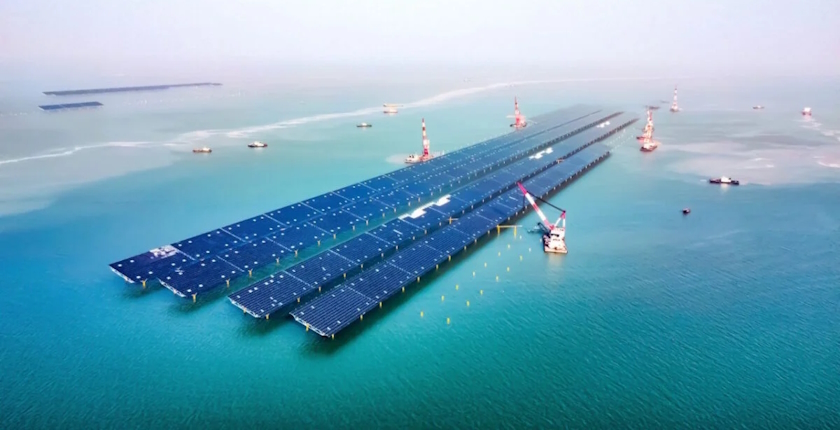
CHN Energy declared a 1 GW solar power system that it built off the coast of China’s Shandong province, on the open sea, fully connected to the grid. The facility consists of steel truss platforms on bottom-fixed piles. Just in the past month, the state-owned company commissioned solar power plants of 600 MW and 425 MW, a coal power station of 4 GW and China’s largest gas power unit.

China continues to dominate the energy realm with the world’s largest projects and innovative design. The latest example, on the open sea, is eight kilometers from Kenli district in the city of Dongying in the country’s east. It is a giant solar power plant, but not a floating one.

The Shandong Dongying Kenli (Guohua HG14) facility is on steel truss platforms on bottom-fixed piles. China Energy Investment Corp., also known as CHN Energy, declared the photovoltaic system fully connected to the grid. The initial project of the state-owned enterprise was for 1 GW.

China State Construction Engineering Corp. (CSCEC) so far installed 930 platforms out of 2,934 planned. Each is on four piles, at water depth of one to four meters.

The project on the open sea off Shandong province spans 1,223 hectares. Its developer is CHN Energy’s subsidiary Guohua Energy Investment Co.

Project involves 100 MW in battery storage

According to the latest reports, Guohua HG14 consists of bifacial double-glass modules of 710 W and the annual output, when the facility is completed, is estimated at 1.78 TWh. In earlier updates, 2.37 million monocrystalline solar panels of 550 W each were planned, translating to 1.3 GW in peak capacity. Total investment was valued at CNY 8.1 billion (USD 1.16 billion).

The company reportedly switched to stronger, bifacial solar modules for the project offshore Dongying

The offshore solar power plant on the open sea is connected to the mainland grid with a 66 kV cable. Its first segment came online in November 2024. The project involves a battery energy storage system of 100 MW in capability and 200 MWh in capacity.

Giant solar plant comes online at altitude of 3,000 meters

Just in the past month, CHN Energy commissioned several landmark facilities. A new 600 MW solar power plant is in the Xinjiang province in the west, in Qitai county, near the border with Mongolia.

The company completed another PV system, of 425 MW, via Qinghai Gonghe Co. Part of a 1 GW project with storage, called Guoneng Canadian Solar Hainan, it is located in Gonghe county in Qinghai Province. It is at an altitude of 3,000 meters and above.

Just last week, CHN Energy put into operation the fourth and last 1 GW unit of its coal-fired Guangxi Beihai Power Plant. The complex in Guangxi province in southern China includes a 27.3 MW solar power plant for electric car chargers.

The utility has also launched regular production of the first of two units in its gas power plant Anji in Zhejiang province. It is the largest and most efficient in the country, CHN Energy pointed out. When the second unit comes online in early 2026, the power plant will have 1.69 GW in capacity.

by in News

China completes grid connection of world’s largest open sea PV plant

CHN Energy declared a 1 GW solar power system that it built off the coast of China’s Shandong province, on the open sea, fully connected to the grid. The facility consists of steel truss platforms on bottom-fixed piles. Just in the past month, the state-owned company commissioned solar power plants of 600 MW and 425 MW, a coal power station of 4 GW and China’s largest gas power unit.

China continues to dominate the energy realm with the world’s largest projects and innovative design. The latest example, on the open sea, is eight kilometers from Kenli district in the city of Dongying in the country’s east. It is a giant solar power plant, but not a floating one.

The Shandong Dongying Kenli (Guohua HG14) facility is on steel truss platforms on bottom-fixed piles. China Energy Investment Corp., also known as CHN Energy, declared the photovoltaic system fully connected to the grid. The initial project of the state-owned enterprise was for 1 GW.

China State Construction Engineering Corp. (CSCEC) so far installed 930 platforms out of 2,934 planned. Each is on four piles, at water depth of one to four meters.

The project on the open sea off Shandong province spans 1,223 hectares. Its developer is CHN Energy’s subsidiary Guohua Energy Investment Co.

Project involves 100 MW in battery storage

According to the latest reports, Guohua HG14 consists of bifacial double-glass modules of 710 W and the annual output, when the facility is completed, is estimated at 1.78 TWh. In earlier updates, 2.37 million monocrystalline solar panels of 550 W each were planned, translating to 1.3 GW in peak capacity. Total investment was valued at CNY 8.1 billion (USD 1.16 billion).

The company reportedly switched to stronger, bifacial solar modules for the project offshore Dongying

The offshore solar power plant on the open sea is connected to the mainland grid with a 66 kV cable. Its first segment came online in November 2024. The project involves a battery energy storage system of 100 MW in capability and 200 MWh in capacity.

Giant solar plant comes online at altitude of 3,000 meters

Just in the past month, CHN Energy commissioned several landmark facilities. A new 600 MW solar power plant is in the Xinjiang province in the west, in Qitai county, near the border with Mongolia.

The company completed another PV system, of 425 MW, via Qinghai Gonghe Co. Part of a 1 GW project with storage, called Guoneng Canadian Solar Hainan, it is located in Gonghe county in Qinghai Province. It is at an altitude of 3,000 meters and above.

Just last week, CHN Energy put into operation the fourth and last 1 GW unit of its coal-fired Guangxi Beihai Power Plant. The complex in Guangxi province in southern China includes a 27.3 MW solar power plant for electric car chargers.

The utility has also launched regular production of the first of two units in its gas power plant Anji in Zhejiang province. It is the largest and most efficient in the country, CHN Energy pointed out. When the second unit comes online in early 2026, the power plant will have 1.69 GW in capacity.

by in News

Israel, Greece, Cyprus reaffirm commitment to joint energy projects

Amid chronic delays in the projects for offshore gas and the Great Sea Interconnector and Turkey’s warnings, the leaders of Israel, Greece and Cyprus said after a trilateral summit that they would safeguard their sea lanes and critical infrastructure against emerging threats.

Prime Minister of Israel Benjamin Netanyahu, Prime Minister of Greece Kyriakos Mitsotakis and President of Cyprus Nikos Christodoulides agreed to reinforce trilateral cooperation on security, defense and military matters. In a declaration from their summit in Jerusalem, they reaffirmed the importance of the dialogue in a 3+1 format with the United States.

The joint statement came amid chronic delays in the projects for offshore gas and the Great Sea Interconnector. The latter, an undersea electricity link, is planned to run from the island of Crete in Greece to Cyprus and, from there, to Israel.

Turkey has been openly opposing such projects and even sending its navy to disturb research and exploration. Countering the Great Sea Interconnector, the government in Ankara is apparently planning to establish a power link with the northern Cypriot Turkish-dominated entity.

Netanyahu, Mitsotakis and Christodoulides particularly emphasized the importance of the Great Sea Interconnector project

“Today’s trilateral summit reaffirms our unwavering commitment to strengthen our cooperation, enhancing the security and resilience of our nations for generations to come… We reaffirm our determination to advance joint energy projects, including natural gas development, electricity interconnectors, and renewable energy initiatives, as a solid foundation for cooperation in the region, based on international law, including the law of the sea and the respect of all states to exercise their rights in their respective EEZ / continental shelf,” the document reads.

EEZ is exclusive economic zone, a maritime area in which a country claims exclusive rights. Netanyahu, Mitsotakis and Christodoulides particularly emphasized the importance of the Great Sea Interconnector project.

“We underscore the importance of maritime security and pledge to deepen collaboration in safeguarding sea lanes and critical infrastructure against emerging threats,” they said. The three leaders added they would collaborate regional interconnectivity projects within the so-called India – Middle East – Europe Economic Corridor (IMEC).

by in News

Elektroprivreda BiH to invest EUR 885 million over next three years

Government-controlled power company Elektroprivreda BiH plans to invest BAM 1.73 billion (EUR 884.6 million) over the next three years, according to its 2026-2028 business plan.

The investments would be financed through loans, and BAM 538 million (EUR 275 million) from own funds of Elektroprivreda BiH (EPBiH), which operates in the Federation of BiH. Of note, it is one of the two entities making up Bosnia and Herzegovina. The other one is the Republic of Srpska.

In line with available funds and restructuring plans, the company intends to continue investing in coal mines within the EPBiH group over the three-year period.

The goal is a stable and sustainable coal production at the volume needed for the planned operation of the thermal power plants, the utility said.

The previous business plan, for the 2025-2027 period, provided for investments of BAM 2.1 billion (EUR 1.074 billion).

The three-year period should be marked by the construction of a large number of PV plants

EPBiH has highlighted the construction of new renewable energy power plants as a long-term strategic and priority goal. The construction of several solar power plants at already identified locations are particularly significant, the plan reads.

The upcoming three-year period should be marked by the construction of a large number of PV facilities at multiple locations on mining sites, company-owned land, on the roofs of its own facilities and those of its customers, EPBiH explained.

EPBiH also plans to acquire operational renewable energy facilities as well as projects in development. The plan envisages the purchase or lease of land suitable for the construction of solar power plants.

Positive business performance and maintaining the position as the dominant electricity supplier in BiH are also outlined in the business plan, adopted by the company’s assembly.

Desulfurization and denitrification of flue gases projects are planned for two thermal power plants

EPBiH has launched flue gas desulfurization and denitrification projects for its Tuzla and Kakanj coal-fired power plants. It would also upgrade unit 7 in Kakanj, unit 4 in Tuzla, and the Salakovac hydropower plant.

The document envisages the establishment of the distribution system operator (DSO), based on the provisions of the Law on Electricity of the Federation of BiH. It came into force in August 2023.

The law stipulates unbundling the distribution activity from EPBiH and establishing the DSO as a separate legal entity, a 100%-owned subsidiary, the company underlined.

by in News

Athens International Airport builds biggest photovoltaic-BESS plant

Athens International Airport (AIA) Eleftherios Venizelos completed its comprehensive energy makeover program. It is now operating a photovoltaic facility of 51.5 MW and a battery energy storage system of 82 MWh. It is the largest hybrid power plant of its kind within the premises of any airport in Europe and, reportedly, even the entire world.

At the same time, the Bucharest Henri Coandă International Airport is about to build 12.6 MW in peak PV capacity and a BESS of 17.9 MWh, in the first phase of a larger project.

Following European and global trends, airports in Southeastern Europe are introducing resource, waste and wastewater management systems. Energy is the largest segment of the decarbonization push. With the completion of its Route 2025 program, Athens International Airport Eleftherios Venizelos covered all its electricity needs with photovoltaics, becoming the only such airport in Europe.

In the groundbreaking project, the operator extended the existing solar power plant by 35.5 MW in peak capacity, reaching 51.5 MW, and added a battery energy storage system. The facility has 124 MWh in nominal capacity, of which 82 MWh is usable.

The hybrid system is the largest of its kind inside the fence of any airport in Europe, while the Greek press has even called it the largest in the world. Some of the world’s largest airports are set to follow soon. For instance, IGA Istanbul Airport is investing EUR 212 million in an external solar power plant of 199.3 MW, in Eskişehir.

Athens International Airport builds biggest photovoltaic BESS plant
Photo: Athens International Airport

Hybrid power plant to keep Athens International Airport at net zero through 2046

AIA’s PV-BESS plant will generate an estimated 88 GWh per year, which is equivalent to the consumption of 22,000 households. The storage system is only for self-consumption. Importantly, the hybrid system can cover the entire planned expansion up to 2046, when the concession period ends.

AviAlliance, which controls 50.2% of the public-private partnership, is a wholly-owned subsidiary of Public Sector Pension Investment Board (PSP Investments) from Canada. The government holds 25.6% through Superfund, officially Growthfund – The National Fund of Greece.

AIA launched Route 2025 six years ago, with the aim to cut net greenhouse gas emissions to zero by the end of this year. It compares to the 2050 net zero goal of the European airports sector.

The Route 2025 program was worth EUR 70 million

The investments totaled EUR 70 million. A significant portion was financed through loans from the European Union’s Recovery and Resilience Facility (RRF), the update adds.

Heat pumps have eliminated the need for natural gas in buildings at AIA in normal winter conditions. The electric vehicle fleet consists of 19 buses, 13 follow-me vehicles and 29 vans. A network of chargers also serves passenger cars.

“In the airport company, we operate on the basis of the principle that sustainability, and environmental responsibility in particular, are and will increasingly be prerequisites for what we call the social license to operate and grow,” said outgoing Managing Director of AIA Yiannis Paraschis.

Two airports in Romania receive EU funds for solar-BESS projects

As for other recent developments in the Balkans, operators of two airports in Romania received grants via the European Union’s Modernisation Fund for solar power plants with battery storage.

National Company Bucharest Airports (CNAB) signed a contract for RON 132.04 million (EUR 25.9 million) excluding value-added tax. It is for 12.6 MW in peak PV capacity and a BESS of 17.9 MWh at the Bucharest Henri Coandă International Airport in Otopeni.

The entire investment amounts to RON 176.9 million (EUR 34.7 million) excluding VAT. The Romanian state-owned company said it is the first phase of a project for 31.5 MW and 30 MWh overall, valued at EUR 55.7 million.

Bacău International Airport George Enescu will build a solar power plant of 1.25 MW and a BESS of 2.06 MWh. Bacău County Council will also provide support for the on-site project on 2.2 hectares, worth more than EUR 4.9 million.

by in News

Elektroprivreda BiH to invest EUR 885 million over next three years

Government-controlled power company Elektroprivreda BiH plans to invest BAM 1.73 billion (EUR 884.6 million) over the next three years, according to its 2026-2028 business plan.

The investments would be financed through loans, and BAM 538 million (EUR 275 million) from own funds of Elektroprivreda BiH (EPBiH), which operates in the Federation of BiH. Of note, it is one of the two entities making up Bosnia and Herzegovina. The other one is the Republic of Srpska.

In line with available funds and restructuring plans, the company intends to continue investing in coal mines within the EPBiH group over the three-year period.

The goal is a stable and sustainable coal production at the volume needed for the planned operation of the thermal power plants, the utility said.

The previous business plan, for the 2025-2027 period, provided for investments of BAM 2.1 billion (EUR 1.074 billion).

The three-year period should be marked by the construction of a large number of PV plants

EPBiH has highlighted the construction of new renewable energy power plants as a long-term strategic and priority goal. The construction of several solar power plants at already identified locations are particularly significant, the plan reads.

The upcoming three-year period should be marked by the construction of a large number of PV facilities at multiple locations on mining sites, company-owned land, on the roofs of its own facilities and those of its customers, EPBiH explained.

EPBiH also plans to acquire operational renewable energy facilities as well as projects in development. The plan envisages the purchase or lease of land suitable for the construction of solar power plants.

Positive business performance and maintaining the position as the dominant electricity supplier in BiH are also outlined in the business plan, adopted by the company’s assembly.

Desulfurization and denitrification of flue gases projects are planned for two thermal power plants

EPBiH has launched flue gas desulfurization and denitrification projects for its Tuzla and Kakanj coal-fired power plants. It would also upgrade unit 7 in Kakanj, unit 4 in Tuzla, and the Salakovac hydropower plant.

The document envisages the establishment of the distribution system operator (DSO), based on the provisions of the Law on Electricity of the Federation of BiH. It came into force in August 2023.

The law stipulates unbundling the distribution activity from EPBiH and establishing the DSO as a separate legal entity, a 100%-owned subsidiary, the company underlined.