by in News

BiH’s power utility ERS sees EUR 14.8 million loss in 2025

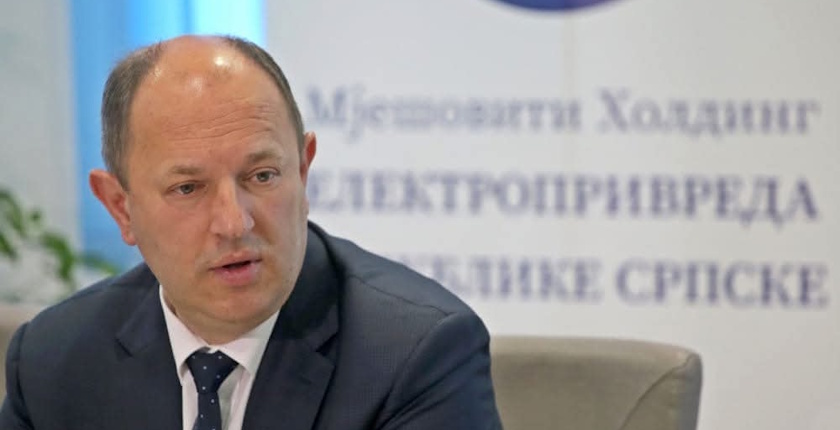
Elektroprivreda Republike Srpske expects a loss of BAM 29 million (EUR 14.8 million) this year, according to the power utility’s CEO Luka Petrović.

The reasons for the poor business results of Elektroprivreda Republike Srpske (ERS) are bad hydrological conditions and an increase in electricity imports, Luka Petrović said, as quoted by news agency Srna.

ERS is one of the three state-owned power utilities in Bosnia and Herzegovina. It is in charge of the electricity production and supply in the Republic of Srpska, one of the country’s two political entities.

Of note, a week ago, the new Prime Minister of the Republic of Srpska Savo Minić called the situation in the electricity sector extremely complex. He has also set a 15-day deadline for setting up plans to overcome the issues.

Petrović: Electricity is imported for EUR 72 per MWh and sold to citizens for EUR 34 per MWh

Following the meeting of ERS’s management in Trebinje, Luka Petrović emphasized that the company’s electricity production would be significantly reduced, to 4,500 GWh. He previously said hydropower output decreased by 50% this year on an annual basis.

He recalled that ERS already purchased about 13% of electricity for domestic supply at high prices. The difference between purchase and sales prices will produce a loss of about BAM 29 million (EUR 14.8 million), Petrović added.

He noted that in 2023, when the hydrological situation was good, ERS achieved a record profit of BAM 146 million (EUR 74.6 million).

Of note, the company recorded a BAM 3.2 million (EUR 1.6 million) profit in 2024.

Petrović stressed that the electricity deficit would have to be purchased on the power exchange, at EUR 72 per MWh, while it is sold to citizens for EUR 34 per MWh, compared to the price for businesses of EUR 75 per MWh.

Imports this year reached BAM 60 million to BAM 70 million (EUR 30.7 million to EUR 35.8 million)

Two consecutive years with drought can disrupt the cash flow because there is no export capacity, Petrović explained.

He asserted that ERS’s electricity exports over the past few years were worth BAM 100 million to BAM 200 million (EUR 51.1 million to EUR 102.2 million) per annum, while imports were between BAM 30 million and BAM 60 million. This year, electricity bought abroad amounted to between BAM 60 million and BAM 70 million (EUR 30.7 million to EUR 35.8 million).

Of note, in previous years, BiH was the largest net exporter of electricity in the region. However, imports were nearly 4.5 times higher in the first half of the year than in the same period of 2024. Another power utility, Elektroprivreda BiH (EPBiH), is increasing losses.

Government to hold a session about ERS

Petrović noted that the company has repaid a loan of BAM 78 million (EUR 39.9 million) and another of BAM 60 million (EUR 30.7 million).

A government session about ERS is planned. He will propose that it be held at the Ugljevik thermal power plant, from which a third of the electricity is delivered to Slovenia.

In addition, the management of ERS has requested further rationalization of all operating costs.
by in News

RES Croatia to Brussels: Renewables have no future in Croatia

RES Croatia, together with SolarPower Europe and WindEurope, has sent a letter to the European Commission to raise concerns about the crisis in Croatia’s renewable energy sector.

The three associations emphasized that for several years, 60 projects for investments in solar, wind, geothermal, and batteries have been blocked, and that if nothing is done, many of them would soon be abandoned.

Without urgent deblocking of renewable energy projects, Croatia will lose investments, increase fossil fuel imports, which already exceed 25%, and miss the European Union’s and national target of at least 42.5% of energy consumption coming from renewables by 2030, according to Renewable Energy Sources of Croatia (RES Croatia), SolarPower Europe and WindEurope.

The national organization warned that the government is gradually phasing out subsidies for electricity prices for citizens and entrepreneurs. At the same time, the development of renewable energy sources as the only sustainable solution for lower bills and lowering imports is at a complete standstill, it added.

Projects with a total capacity of 3.5 GW and investments of EUR 3 billion are blocked

Croatia is currently subject to infringement proceedings due to delays in implementing the European Union’s RED II and RED III directive. They aren’t just a piece of paper, but a mechanism to ensure energy security and independence, which is of strategic interest for Croatia and its citizens, RES Croatia underscored.

The organizations are urging the European Commission to use its tools to demand from the government to determine the grid connection fee, but at EUR 0 per kWh, open up the balancing market for renewable energy producers, and integrate battery energy storage systems (BESS) and electrification into national planning.

Currently, 60 projects for solar power plants, wind farms, geothermal power plants, and batteries with a total capacity of 3.5 GW and investments of EUR 3 billion are blocked, according to the letter, accompanied by an annex.

The domestic industry is unable to sign long-term PPAs

For these projects, the state has already charged EUR 25 million through energy approvals— the first in a series of documents that requires payment to the state, which, due to the blockage, are beginning to expire at the end of this year.

Organizations stressed that these projects are permanently losing the paid money, while local communities are losing significant revenues that would have been allocated to them from the implementation of renewable energy projects.

They also drew attention to the domestic industry’s inability to sign long-term power purchase agreements (PPAs) with renewable energy producers, securing more favorable market conditions and thereby increasing its competitiveness in European and global markets.

Of note, the European Commission advised Croatia in June to speed up the installation of renewable energy capacities.

If nothing is done, projects of as much as 2.5 GW overall will be abandoned as early as next week

The associations pointed out that the development of new projects larger than 10 MW has stalled since 2022 because the Croatian Energy Regulatory Agency (HERA) has not set a transmission network connection fee for renewable power plants.

Instead, they added, Croatia’s transmission system operator (TSO) HOPS is trying to shift the costs of network modernization – planned over ten years ago and not related to new projects – to new renewable energy projects.

The minister of economy said in March that the upcoming connection fee would be EUR 0 per kW

It is increasing the project cost by 30% to 40%, making them unprofitable, RES Croatia said.

Such a model for financing the network is not from European practice, because 80% of member states rely on EU funds and their national budgets, rather than on producers.

They also recalled that the minister of economy announced in March that a connection fee would be set at EUR 0 per kW and that developers would be offered flexible contracts to encourage investment in battery storage. But that promise has not yet been fulfilled.

The three organizations warn that if nothing is done, projects of up to 2.5 GW altogether would be abandoned as early as next week after HOPS’s decision,. It means companies would withdraw from the Croatian market and lose millions in investments that would have permanently lowered energy prices in the country, RES Croatia claimed.

The balancing market is not functional

An additional problem is the non-functional balancing market, according to the letter.

HEP Proizvodnja, a subsidiary of state-owned utility Hrvatska Elektroprivreda (HEP), is the dominant provider of balancing services, and often the only one. HOPS is legally obliged to ensure market-based procurement of these services, yet it is itself a wholly owned subsidiary of HEP.

It creates an obvious conflict of interest and undermines market competition, the signatories underlined.

“Despite the demonstrated technical ability of solar and wind power plants to provide balancing services, HOPS doesn’t allow these plants to participate in balancing markets. As a result, HOPS frequently activates extremely expensive balancing resources, often at maximum regulated prices even during hours of high renewable generation and positive market prices,” the letter reads.

Croatia has no serious electrification plan

The organizations pointed out that such pricing constitutes a clear violation of the EU principle that balancing services must reflect only the actual costs incurred by the TSO.

They also stressed that Croatia lacks a concrete electrification plan. In 2022, renewable energy accounted for only 2.4% of final energy consumption in transport, with electricity from renewables contributing just 0.2%.

The target for renewable electricity in transport by 2030 is only 5.8%, reflecting limited ambition compared to the EU ambitions, according to the letter.

Electrification of railways could significantly reduce emissions and accelerate the transition, however, it remains an untapped potential, the signatories organizations noted.

by in News

Montenegro’s state power utility posts EUR 24.5 million loss in H1 2025

Montenegro’s state-owned power utility, Elektroprivreda Crne Gore, posted a EUR 24.5 million loss in the first half of 2025, a 620% increase compared to the same period last year.

The main reasons for the poor results were a production halt at the Pljevlja coal power plant and a wide gap between the purchase price of imported electricity and the selling price for consumers connected to the distribution network, according to Elektroprivreda Crne Gore (EPCG).

EPCG’s total revenue in the first half of 2025 amounted to EUR 208.1 million, while total expenses reached EUR 234.7 million.

The operating result was a EUR 24.5 million loss, which is EUR 21 million more than in the first half of 2024, when the loss was EUR 3.5 million. This represents a 620% increase compared to the same period in 2024, according to EPCG’s half-year report.

Total electricity production was nearly 25% lower year-on-year

A significant factor affecting the business result was the halt in production at the Pljevlja thermal power plant from March 31 this year due to final works on environmental reconstruction and the regular annual overhaul. As a result, the plant’s utilization rate for the first six months was only 48.8%.

In the first half of 2025, TPP Pljevlja produced nearly 400 GWh of electricity, 7.9 GWh or 2.02% above the plan, but almost 18%, or around 87 GWh, less than in the same period in 2024.

The total output at hydropower plants – Piva, Perućica, and small hydropower plants (SHP) – was 658 GWh, which is 22% or 159 GWh less than in 2024.

The company spent EUR 35.8 million more on electricity imports

The total output of all power plants was 1,058 GWh, or 78.8% of the plan, according to the report. This also represents a decrease of 26%, or 278 GWh.

During the first half of 2025, EPCG imported 656 GWh of electricity for EUR 62.4 million. The average price was EUR 95.09 per MWh. In the same period last year, imports totaled 430.3 GWh, at an estimated cost of EUR 26.6 million, according to the report. This marked a 52% increase in the volume of imports.

The company has received consent to borrow EUR 50 million to finance electricity imports.

The report underlined that the price charged to consumers on the distribution grid is significantly lower than the purchase price of imported electricity. The gap has a major negative impact on EPCG’s results, the company noted.

Electricity is imported at above EUR 100 per MWh and supplied to distribution consumers at an average price of around EUR 45 per MWh, according to the report.

by in News

Serbia’s power utility to take no loans in 2025, fund coal projects on its own

For the first time, Elektroprivreda Srbije (EPS) will not take out loans this year, but will finance all investments from its own resources, according to General Manager Dušan Živković. However, it has affected the financial performance of Serbia’s state-owned power utility, with profit in the first half of 2025 coming in lower than in the same period last year.

One of the major investments underway is in coal mining, including the construction of several systems needed to enable the opening of the Radljevo open pit mine in the Kolubara mining basin. However, since financial institutions are unwilling to finance fossil fuels, EPS must rely entirely on its own funds, Živković told national broadcaster RTS.

EPS is financing the coal mine on its own, as financial institutions are unwilling to invest in fossil fuels

To ensure sufficient coal supplies, EPS has contracted imports from Indonesia, which Živković explained as a strategy to diversify sources. He described it as the best way to ensure the security of supply.

He said that the installation of machinery at Radljevo is underway and that EPS expects the mine to start producing overburden and coal early next year.

EPS posted a RSD 27.4 billion (EUR 233.8 million) profit in the first half of 2025, compared to RSD 32.8 billion (EUR 280.3 million) in the same period last year.

Kostolac wind farm set to begin operation

Speaking about other key projects, Živković revealed that the commissioning of the 66 MW Kostolac wind power plant is in the final phase and expressed hope that electricity production would begin within a month. He also recalled that the 10 MW Petka solar power plant, built at the tailings dump in the Kostolac coal complex, was put into trial operation about a month ago.

He also said pumped storage hydropower plant Bistrica and the planned 1 GW of solar facilities could come online in the medium term.

Commenting on the announced 7% electricity price increase in October, Živković stressed the process has been initiated and that he expects it to be completed within one to one-and-a-half months.

Electricity consumption during the summer is lower than last year

On the surge in electricity consumption during the summer months, he said the situation this year has been “calmer” than in 2024, with consumption at around 90 GWh, compared to 114 GWh in 2024. It means total demand can be covered from EPS’s own capacities, according to him.

by in News

Kosovo* power distributor KEDS cuts off businesses without supplier after market liberalization

Kosovo’s distribution system operator, KEDS, has disconnected around 90% of electricity meters belonging to businesses that have not signed an agreement with a licensed supplier following the power market liberalization. KEDS, owned by Turkish companies Çalik Holding and Limak, claims the law prohibits it from keeping any consumers on the grid who do not have a licensed supplier, while the Kosovo Chamber of Commerce says it will press ahead with a legal battle.

KEDS’ spokesperson, Lulzim Krasniqi, stated that as of August 16, around 90% of some 1,400 designated business electricity meters had been disconnected from the grid, while the remaining companies would be cut off in the coming days unless they reached an agreement with a supplier, the media in Kosovo* reported.

KEDS has disconnected over 1,400 electric meters at firms without a licensed supplier

The move comes after the appeals chamber of the Commercial Court ruled against postponing electricity market liberalization for businesses with more than 50 employees and an annual turnover exceeding EUR 10 million. Previously, the Commercial Court had granted a request by some companies to delay their obligation to purchase electricity on the free market, a decision that was interpreted as overturning the entire market liberalization process.

The decision to liberalize the electricity market in Kosovo*, which stripped large companies of the right to regulated prices, officially took effect on June 1.

The Kosovo Chamber of Commerce (KCC or OEK), which opposes the adopted liberalization model, claims the entire process is riddled with legal and procedural irregularities and urges the Government of Kosovo* and the Energy Regulatory Office (ERO) to immediately suspend its implementation and launch a transparent review. The chamber also stated that, if necessary, it would take the case to the Supreme Court and the Constitutional Court.

The Kosovo Chamber of Commerce has warned of severe economic consequences

The KCC warns that the model chosen by the ERO will have severe consequences for the economy, including a significant increase in the price of electricity and other products, a potential loss of 22,000 jobs, a decline in domestic production and increased imports, as well as the closure of a large number of businesses.

The chamber had earlier demanded that businesses be allowed a fair transitional period in the electricity market liberalization process.

* This designation is without prejudice to positions onstatus and is in line with UNSCR 1244/99 and the ICJ Opinion on the Kosovo declaration of independence.
by in News

US electricity prices soar 40% in H1 2025, outpacing EU’s 30% increase

In the first half of 2025, wholesale electricity prices in the European Union were about 30% higher than in same period of 2024, while a 40% increase was recorded in the United States. The penetration of negative prices in the EU continues, with their share doubling in H1 2025, according to the latest report of the International Energy Agency.

Wholesale electricity prices in the EU averaged around USD 90 per MWh as costs were mostly underpinned by natural gas prices, which were on average about 20% above the levels from 2024, IEA’s Electricity Mid-Year Update 2025 reads.

Prices saw upward pressure from a boost in fossil-fired generation due to a year-on-year drop in electricity generation from wind and hydropower.

While average power prices remained below the 2023 levels, they were higher than in 2019, according to IEA. The latter is a reference year because it was the last one before turbulences started – the COVID-19 pandemic, energy crisis, and the war in Ukraine.

Electricity prices in the Nordics remained the lowest in Europe

Latest futures prices in the EU average USD 80 per MWh for 2026, indicating a decline of around 15% from 2025, the report underlines.

High gas prices also affected the electricity market in the US, combined with colder weather. Power prices averaged around USD 48 per MWh. However, the increase was from a low base, as prices in the first half of 2024 were the lowest for the first half of the year since 2020, the report notes.

Average electricity prices in the Nordics remained the lowest in Europe, falling by more than 20% year-over-year in the first six months of 2025 to about USD 40 per MWh. It was the result of an increase in wind power generation and higher hydropower output, according to the report.

The update brings details on Germany, France, Japan, India, Australia, and the United Kingdom as well.

Occurence of negative prices doubled

IEA notes that the frequency of negative wholesale prices is increasing in various markets, underscoring the need for greater flexibility in supply and demand. The authors of the report propose appropriate regulatory frameworks and market designs to boost greater demand response and energy storage.

The share of hours with negative prices on the wholesale market reached 8% to 9% in the first half of the year in countries such as Germany, the Netherlands, and Spain – up from between 4% and 5% in 2024, the report reads.

The average price this year in the EU is expected to be twice as high as in the US and about 50% higher than in China

Electricity prices for energy-intensive industries continued to vary significantly across regions. After declining since their 2022 peak, they are expected to rise year-on-year in 2025 in the EU, driven by higher wholesale price levels.

The average price this year in the EU is expected to be twice as high as in the US and about 50% higher than in China, according to IEA projections. By comparison, in 2019, prices in the EU were approximately 50% higher than in the United States and 20% higher than in China.

The cost differences continue to pose challenges for the competitiveness of energy-intensive industries in the EU, IEA stressed.

by in News

French power prices jump as EDF looks into possible nuclear reactor defect

France’s state-owned power utility Électricité de France (EDF) is investigating apparent corrosion cracks found at a 1.5 GW nuclear reactor in the country’s west, which has been offline for annual maintenance since early April. The potential defect has pushed up electricity prices and raised concerns about energy security.

EDF, which manages France’s nuclear fleet of more than 50 reactors, has said further analysis is needed, while admitting there are indications of a possible defect. The Civaux 2 reactor was shut down for maintenance on April 4 and will now stay offline at least until the end of July, according to Montel.

The Civaux nuclear power plant will remain offline at least until the end of July

The cracks were initially reported as “microcracks,” but Montel’s sources have confirmed that they measure 2–3 mm. The reactor cannot be restarted until EDF replaces the damaged sections.

Front-year contracts rose to a four-month high

The issue prompted a jump in electricity prices in France, with front-year contracts rising EUR 5.20 per MWh to a four-month high of EUR 67.50/MWh, Montel reported. At the same time, Q4 and Q1 2026 contracts rose by over EUR 6. According to Reuters, front-year contracts fell back to EUR 65.80 per MWh in the afternoon.

Reuters also reported that benchmark European front-month gas contracts were 2.3% higher, at EUR 35.58/MWh.

Stress corrosion cracks were the cause of an earlier nuclear power crisis, in 2022-2023, when they were discovered on multiple plants in France. The country’s nuclear power output was at a record low in 2022, Montel recalled.

The shutdown could jeopardize France’s energy security

Some experts have warned that the latest defect could threaten the energy security of France, as well as the European Union (EU) as a whole. France relies heavily on nuclear power, which accounted for over 70% of its electricity output in 2018, the highest percentage in the world.

The news comes amid a global nuclear energy revival, triggered by rising electricity demand. Germany, which shut down its last remaining nuclear power plants in 2023, recently agreed with France not to block new nuclear power technologies within the EU, while the World Bank lifted its 20-year ban on financing nuclear projects.

by in News

Brussels to Croatia: Boost renewables, flexibility for cheaper industrial electricity

The European Commission advised Croatia to speed up the installation of renewable energy capacities and add non-fossil flexibility solutions, to reduce electricity prices for businesses.

Electricity prices for the corporate sector in Croatia in the first half of 2024 were the third-highest in the European Union, according to the European Commission.

At about EUR 0.244 per kWh, only Cyprus and Ireland had higher prices – EUR 0.2578 per kWh and EUR 0.256 per kWh, respectively.

“In the first half of 2024, Croatia had the third-highest electricity price in the EU for business/industrial consumers. This continues to hold back the cost competitiveness of Croatian companies,” the commission said in its Country Specific Recommendations under the 2025 European Semester: Spring Package.

Despite a record increase in solar capacity in 2024, by 397 MW, its share in electricity generation remains low, at less than 6%.

An increase in the uptake of large-scale renewables, including solar, is hampered by an uncertain regulatory framework

Against this background, faster roll-out of new renewable energy capacity, especially solar, and non-fossil flexibility solutions could help reduce price levels, the update reads.

The commission said an increase in the uptake of large-scale renewables, including solar, is hampered by an uncertain regulatory framework as the national energy regulator HERA is yet to adopt updated grid connection fees. The situation creates uncertainty for potential investors and has effectively prevented projects from securing financing, the European Union’s executive arm stressed.

Increased investment in the electricity grid, beyond what’s in Croatia’s National Recovery and Resilience Plan (NRRP), would be crucial for an uptake of renewable energy, according to the commission. In the short term, it would imply incentives for hybrid storage and renewable energy projects, the document reads.

Speed up rollout of smart meters

In 2023, only 24% of household consumers had smart meters installed, which is significantly less than the EU target of 80%.

To be able to fully capitalize on an increased uptake of renewable energy, significant funding for the rollout of smart meters – beyond the measures in the NRRP – and dynamic contracts will be needed to empower consumers and foster demand response, the commission noted.

It advised Croatia to review and simplify administrative procedures for installing renewable energy facilities, including in multi-apartment buildings, and for setting up energy communities.

The measures would help reduce the reliance on fossil fuels and increase the low number of registered energy communities, according to the commission.

by in News

Kosovo’s electricity market liberalization sparks protest by businesses

Kosovo’s decision to liberalize its electricity market threatens to spark a new crisis, as business consumers face significantly higher prices compared to the current, regulated rates. As a warning, disgruntled business owners plan to block the main roads leading into the capital, Prishtina, for two hours on Thursday, May 29.

Starting on June 1, businesses with an annual turnover of over EUR 10 million will be required to buy electricity on the open market, losing the right to regulated prices. Kosovo’s electricity market is the only one in the region that has not yet been opened to competition, and the decision to do so has been postponed several times since 2017.

The Kosovo Chamber of Commerce (KCC) said last week that out of 19 power companies licensed to supply electricity, only KESCO had made an offer to customers, at a price many times higher than the current rate, according to Kosovapress.

AmCham: Businesses are facing electricity price hikes of over 200%

The American Chamber of Commerce in Kosovo* has also expressed its deep concern regarding the significant risks that the liberalization, in its current form, poses to economic activity, employment, and long-term competitiveness of Kosovo*. It warned that businesses are exposed to electricity price increases of over 200%

The protest planned for tomorrow follows a series of meetings and numerous attempts to delay the latest decision on market liberalization. The KCC has said the business community wants the government to enable a fair and manageable transition phase, warning the protests will continue until the demands are met.

Businesses want a transition phase to enable a fair integration into the free market

The transition phase would allow for the gradual preparation of businesses for a sustainable and fair integration into the free energy market, the KCC said in a press release.

“If institutions do not reflect and do not take concrete steps to address the demands of businesses, the protests will continue until they are met,” it added.

The KCC also claims that the Energy Regulatory Office’s (ERO) decision to liberalize the market was made without proper analysis or consultation with stakeholders. It also said it would launch a “legal battle” to challenge the decision.

* This designation is without prejudice to positions onstatus and is in line with UNSCR 1244/99 and the ICJ Opinion on the Kosovo declaration of independence.
by in News

Electrify Europe – to be competitive and sustainable, the EU needs to speed up electrification

Author: Ulrich Adam, director general of Orgalim, EUSEW’s partner organisation

As Europe grapples with sluggish economic growth and soaring energy costs, electrification has emerged as the linchpin for reversing industrial decline, accelerating decarbonisation, and restoring global competitiveness. In this opinion piece, Ulrich Adam, Director General of Orgalim, outlines why a bold push for electrification must be at the heart of Europe’s Clean Industrial Deal – not just to meet climate goals, but to power a resilient, innovative, and future-proof industrial base.

Europe is facing a competitiveness crisis. First estimates put annual growth for 2024 at 0.7% in the euro area and 0.8% in the EU. Compare that to 4.5% growth in China and 2.2% in the US, and it is clear that something is seriously wrong.

For Europe’s technology industries, 2024 was even worse, with a combined downturn of 4.8% across the metal technology, mechanical engineering, and electrical engineering, electronics and ICT sectors. And the outlook for 2025 is not much better. Orgalim’s Economics & Statistics working group predicts a further -0.5% contraction in real turnover, with knock-on effects on employment, which is forecast to shrink by 0.9%.

High electricity prices and over-regulation are two of the main hurdles holding back European industries. Europe pays around two to three times what the US does for electricity, and between 2019 and 2024 introduced much more regulation.

So, what should Europe do to compete globally, re-establish itself as a leader in tech innovation, and meet the goals of the Green and Clean Industrial Deals? Electrify.

The double win of electrification: speed up decarbonisation, regain competitiveness

Ensuring a low-carbon, low-cost, independent energy source for Europe is key to boosting competitiveness and achieving the aims of the Green and Clean Industrial Deals.

While increasing energy efficiency and reducing overall consumption are important, electrification is the real key. It will enable Europe to massively reduce its carbon emissions while also contributing to increased independence from geopolitics and a more secure energy supply. It can also help create jobs and boost the clean-tech sector.

For example, according to a recent study by Danfoss, deploying electricity demand-side flexibility technologies on energy systems in the EU and UK could help save more than 40 million tonnes of CO2 emissions each year by 2030, and achieve annual cost savings of EUR 10.5 billion.

Decarbonisation can help us grow

Introduced in February 2025, the Clean Industrial Deal aims to turn decarbonisation into a driver of growth for European industries by lowering energy prices, creating lead markets for clean tech, and providing a significant boost to public and private investments.

The Affordable Energy Action Plan is a crucial part of the Clean Industrial Deal, aiming to provide EU industry with stable energy prices, more in line with our international competitors.

A perspective from technology industries

The Action Plan’s push for electrification, digitalisation, flexibility, grid infrastructure deployment, and a single market approach for boosting energy efficiency solutions are all positive. At Orgalim, we strongly support these aims. To be successful, we need access to reliable and affordable low-carbon energy.

However, some important questions need to be clarified:

  • Will non-binding recommendations and guidance to member states on network charges and energy taxation be sufficient to lower bills?
  • Will measures for energy-intensive industry benefit the wider manufacturing sector?

These issues must be addressed if the plan is to succeed.

Reaching net zero

Europe’s technology industries are global leaders in carbon-neutral energy, electrification, and clean manufacturing technologies needed to get to net zero. But we need a secure and competitive energy supply, provided by broad-scale electrification, to achieve faster scale-up of carbon-neutral energy capacity, unlock massive energy efficiency savings, and make Europe competitive again.

This opinion editorial is produced in co-operation with the European Sustainable Energy Week (EUSEW) 2025. See ec.europa.eu/eusew for more details.